Tag: voids

  • Mystery of the Void – Emptiness in the Cosmos

    Mystery of the Void – Emptiness in the Cosmos

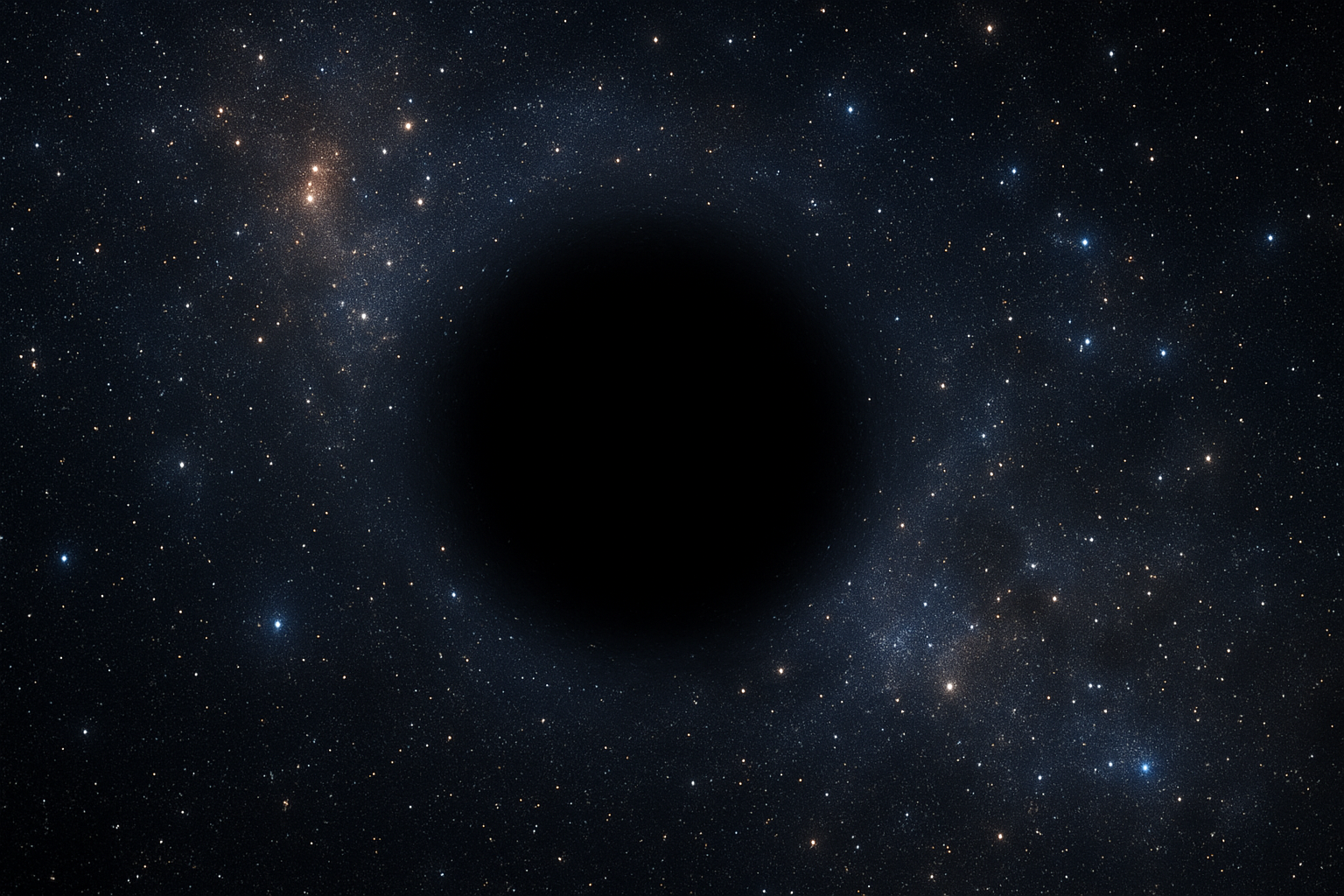
    In the vast expanse of the universe, humans are but mere specks amidst an almost incomprehensible sea of stars and galaxies. Yet, it is not the teeming stars or the brightness of galaxies that capture the imagination the most—it is the overwhelming emptiness that lies between them. This profound void has mystified astronomers and philosophers alike for centuries.

    The Nature of Cosmic Emptiness

    The universe is predominantly made of space that appears empty, a concept both simple and elusive. Known as the “void,” this emptiness accounts for a significant part of the universe. But this does not mean that voids are entirely vacuum—they contain low-density gases and dark matter. According to astrophysicist Brian Greene, “In those vast, cold portions of the universe… the environment is as close to absolute nothingness as any we know of in nature.”

    Cosmic Voids and Their Significance

    Cosmic voids are regions with significantly lower density compared to the average cosmic density. These voids make up about 80% of the universe’s volume and play an essential role in the universe’s large-scale structure, influencing the gravitational dynamics of surrounding galaxies.

    • Dark Matter Mysteries: Voids are expected to be less influenced by dark matter compared to denser regions, providing unique conditions to study this elusive substance.
    • Gravitational Lensing: The interaction between voids and dark matter affects gravitational lensing, helping astronomers map dark matter distribution across the universe.
    • Expansion Insights: Voids expand as the universe does, offering clues about cosmic expansion and the universe’s fate.

    The Philosophical Implications of Emptiness

    The idea of a void is not just a scientific curiosity; it also poses significant philosophical questions. What does it mean to exist in a universe predominantly devoid of matter? The void challenges our notions of presence and absence and compels us to redefine them. Philosopher Parmenides, famously mused, “What is not, is not,” emphasizing the difficulty of speaking about nothingness.

    “For the stuff of the universe, take the emptiness of space and everything in it,” —Brian Greene, The Elegant Universe.

    Emptiness and Human Understanding

    Our understanding of the void has evolved over time. Aristotle believed that “nature abhors a vacuum,” a view superseded by discoveries in physics demonstrating that emptiness is an integral part of our cosmos. Quantum mechanics further complicates the picture by suggesting that even the emptiest space teems with virtual particles popping in and out of existence.

    1. From Aristotle to Einstein: The shift from Aristotle’s interpretations to Einstein’s theories of relativity marks a profound evolution in comprehending the void.
    2. Quantum Fluctuations: Subatomic interactions showcase that even the void is full of potential activities, challenging our perception of ’emptiness.’
    3. Cognitive Reflection: Human perception has always grappled with the notion of the void, mostly filling it with myth, art, and philosophy.

    The Emotional and Existential Impact

    On an emotional and existential level, the void resonates deeply. It symbolizes the unknown, the unexplained, and sometimes, the feared. This emptiness is often used allegorically to express existential dread or the feeling of insignificance. Carl Sagan eloquently remarked, “The cosmos is within us. We are made of star-stuff. We are a way for the universe to know itself.” This interplay of connection and detachment can lead to a deeper understanding of our place in the universe.

    Conclusion

    The mystery of the void goes beyond science, touching the realms of philosophy, psychology, and art. It forces a reflection on the nature of existence and our place within the universe. The cosmic void, far from being a barren wasteland, is a field rich in scientific and existential inquiries. As we continue to explore these vast, empty spaces, we may inch closer to understanding not just the universe, but ourselves.

    In considering the mystery of the void, we are reminded of the complexity of the universe and the fact that sometimes, the truest mysteries are not about what is there, but what is not.
  • Infernal Emptiness – Demonic Archetypes of Absence

    Infernal Emptiness – Demonic Archetypes of Absence

    In the realm of demonic lore, few concepts are as intriguing and paradoxical as the idea of infernal emptiness. This is the notion that demonic entities are not merely malevolent forces, but also represent profound absences. These archetypes of absence compel us to explore the spaces where darkness reigns not by the presence of evil, but by the vacuum of light, hope, and essence.

    The Nature of Absence in Demonology

    Throughout history, demons have often been seen as agents of chaos and destruction. However, a deeper examination reveals that many demonic figures embody a more profound absence. This absence takes on various forms, from the lack of empathy and compassion to the void of meaning and purpose.

    “For indeed, darkness is largely the absence; and it is not the forces of evil that invade but rather the voids in which light fails to suffice,” suggests C.G. Jung, the renowned Swiss psychiatrist. This perspective reframes demons not just as invaders, but as entities that thrive in the spaces left unguarded by human neglect or spiritual deficiency.

    Demonic Archetypes Representing Absence

    • Astaroth: The Space of Forgotten Knowledge

      Astaroth, a demon often associated with laziness, is considered a major source of emptiness concerning knowledge and wisdom. This figure represents the forgotten lore, the abandoned wisdom that once was and could be again if not for humanity’s neglect.

    • Baal: The Void of Community

      Representing the absence of community, Baal embodies the breakdown of societal structures and the isolation of the individual. Where unity should strengthen, Baal’s influence creates divides, ensuring that solidarity crumbles into the emptiness of alienation.

    • Azazel: The Gentleness Left Behind

      Azazel, often associated with scapegoating and atonement, signifies the existence of absence within the soul. This demon thrives in the voids where gentleness and empathy are intentionally abandoned, leaving behind a barren inner landscape.

    The Psychological Implications of Demonic Absence

    Understanding demons as archetypes of absence allows us to confront our own deficiencies. The notion of infernal emptiness acts as a mirror, forcing individuals to acknowledge the parts of their lives and societies that they have neglected.

    “The demons are content to gnaw away at our souls, not by presenting an overwhelming force, but by letting us fall into our own emptiness,” says Psychology Today.

    This perspective invites a re-evaluation of how individuals approach personal growth and community development. By recognizing these absences, people can work towards filling them with positive action and intention, reclaiming these voids from demonic influence.

    Cultural Reflections on Infernal Emptiness

    The archetypes of absence observed in demonic figures are not just limited to the confines of folklore and myth. They permeate culture, literature, and modern media, reflecting humanity’s deep-seated fears and shortcomings. From Shakespeare’s Macbeth to modern horror narratives, the theme of a void where something vital is missing recurs as a central motif.

    In literature, the absence can often symbolize a deeper societal commentary. Shakespeare’s exploration of ambition without conscience, for instance, can be viewed as a reflection of infernal emptiness within the soul. Similarly, modern horror films, such as The Babadook, exploit the idea of absence within familial relationships and mental health to create narratives that resonate with contemporary audiences.

    Reclaiming the Void: A Pathway Forward

    To counteract the effects of infernal emptiness, individuals and communities must strive to fill their voids with purpose and positive values. This involves active participation in creating connections, seeking knowledge, and nurturing empathy.

    The New York Times highlights this journey as essential, noting that, “It’s our urgent task to heal the divides of absence left by our own inattention.”

    In doing so, people can transform spaces of absence into areas of abundance, warding off the metaphorical demons that seek to inhabit those voids. By understanding and confronting the archetypes of absence, humanity gains a chance to reclaim its narrative from the clutches of infernal emptiness.

    Demonic archetypes, while daunting, provide a valuable lens through which to examine the human condition. As humanity advances further into the 21st century, these figures offer both a warning and an opportunity: to recognize the voids within and strive to fill them with light, rather than letting them be consumed by darkness.

  • The Cosmic Web – Strings of Matter Holding Empty Death

    The Cosmic Web – Strings of Matter Holding Empty Death

    The Cosmic Web: Strings of Matter Holding Empty Death

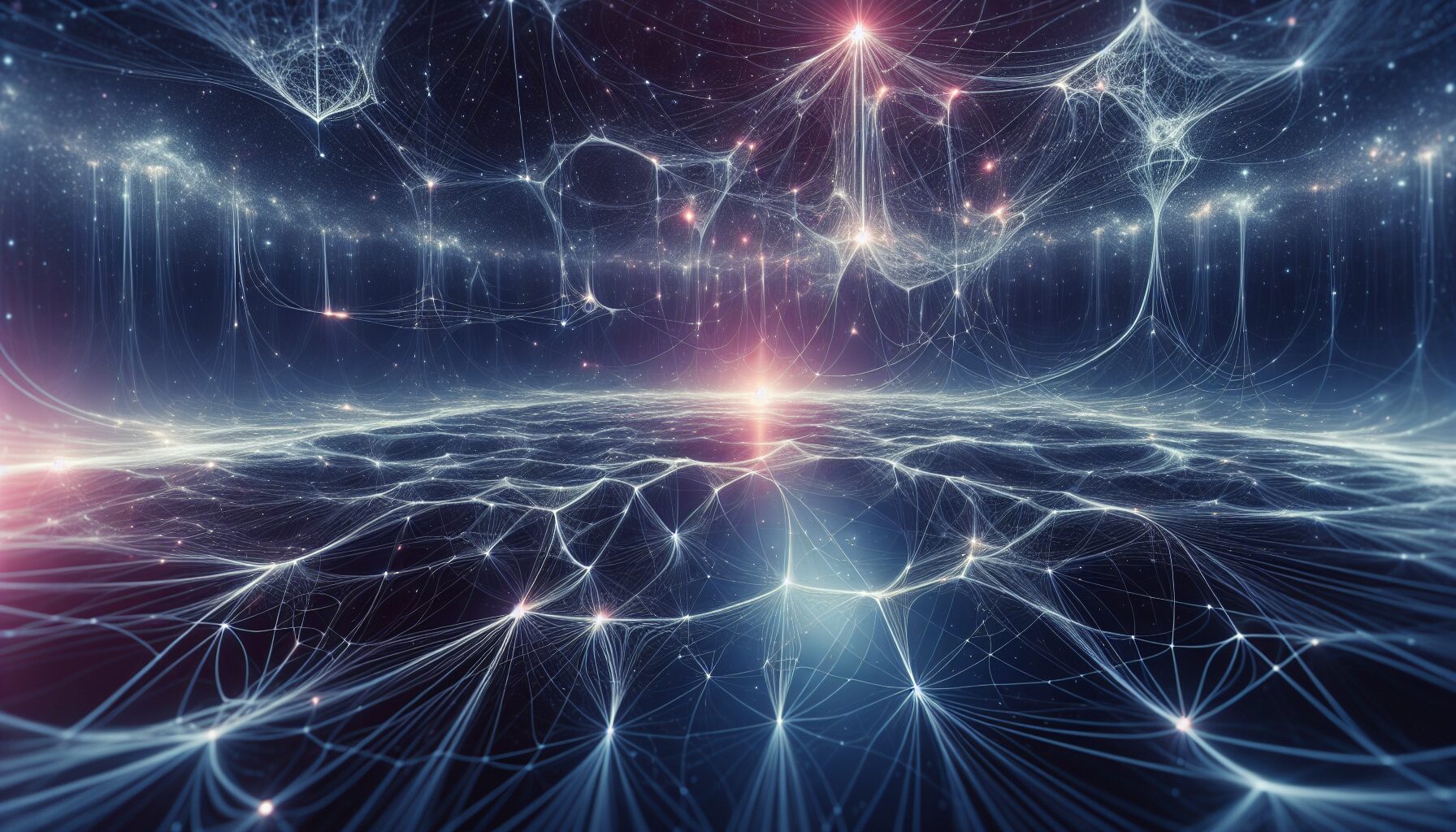
    The universe, in its vastness, often confronts us with enigmatic and complex structures that challenge our understanding of space and time. Among these mysteries, the Cosmic Web stands out as one of the most intriguing—a grand tapestry of matter weaving across the universe, connecting galaxies and galaxy clusters with tendrils of dark matter and baryonic material. This intricate network not only forms the large-scale structure of the cosmos but also holds within it the secrets of empty spaces—regions of ‘voids’ that reflect the enigmatic character of the universe’s evolution.

    The Structure of the Cosmic Web

    Scientists categorize the Cosmic Web as a colossal network comprising four main components:

    • Galaxy Filaments: These are the dense, elongated threads connecting large structures of galaxies across the universe.
    • Galaxy Clusters: At the intersections of the web are clusters, enormous gatherings of galaxies bound by gravity.
    • Walls: The broad sheets that outline the boundaries of voids and connect the filaments.
    • Voids: Vast expanses of seemingly empty space, containing fewer galaxies and matter than other regions.

    The cosmic web’s architecture arises from fluctuations in the density of matter following the Big Bang. Over billions of years, gravity amplified these fluctuations, sculpting the expansive web-like structure observed today.

    The Role of Dark Matter

    Dark matter is an essential component of the Cosmic Web. Invisible and detectable only through its gravitational effects, dark matter forms the scaffolding over which visible matter accumulates. Dr. Katie Mack, a cosmologist at North Carolina State University, explains, “The strings of the Cosmic Web are cosmic ‘superhighways’ of dark matter, calling ordinary matter to them with their gravitational pull” (Astrobites).

    Simulations such as the Millennium Simulation have visualized these structures, highlighting how the gravity of dark matter influences the distribution of galaxies and intergalactic gas within the web.

    The Mystery of Cosmic Voids

    Contrasting starkly with the dense filaments and clusters are the Cosmic Voids, which comprise a significant portion of the universe’s volume. Despite being mostly empty, cosmic voids are crucial for understanding the universe’s origin and fate. According to a study in the Astronomy & Astrophysics journal: “Cosmic voids are unique laboratories for testing models of cosmic geometry, gravitational physics, and the influence of dark energy” (A&A Journal).

    “In the absence of dark matter’s pull, the voids reveal the universe’s accelerated expansion,” adds cosmologist Dr. Sabine Hazan, emphasizing the role these empty regions play in studying dark energy.

    The Web in the Grand Design

    The Cosmic Web’s beauty lies in its ability to underline both the complexity and simplicity of the universe. On one hand, it reflects the intricate dance of gravity and relativity where immense structures emerge from minute quantum fluctuations. On the other, it is evidence of a coherent pattern that underlies the diverse array of galactic phenomena.

    Researchers at the National Institute of Astrophysics posit that studying the cosmic web not only unravels the universe’s intricate past but also guides us in predicting its future (INAF). The dynamic movements within these cosmic highways continue to shape galaxy evolution, star formation, and even influence the potential habitability of planets.

    Conclusion

    The Cosmic Web, in all its grandeur and mystery, presents an everlasting frontier for astronomical research. As technology and methodology advance, future explorations will delve deeper into these cosmic corridors, to not only map its structure but decode the phenomena it presents—from dark matter’s elusive nature to the eerie expanse of voids.

    In the words of astrophysicist Dr. Neil deGrasse Tyson, “We are part of this universe, and maybe more importantly, the universe is in us”—a sentiment that the study of the Cosmic Web deeply legitimizes, uniting all cosmic phenomena in a sublime expression of universal unity.