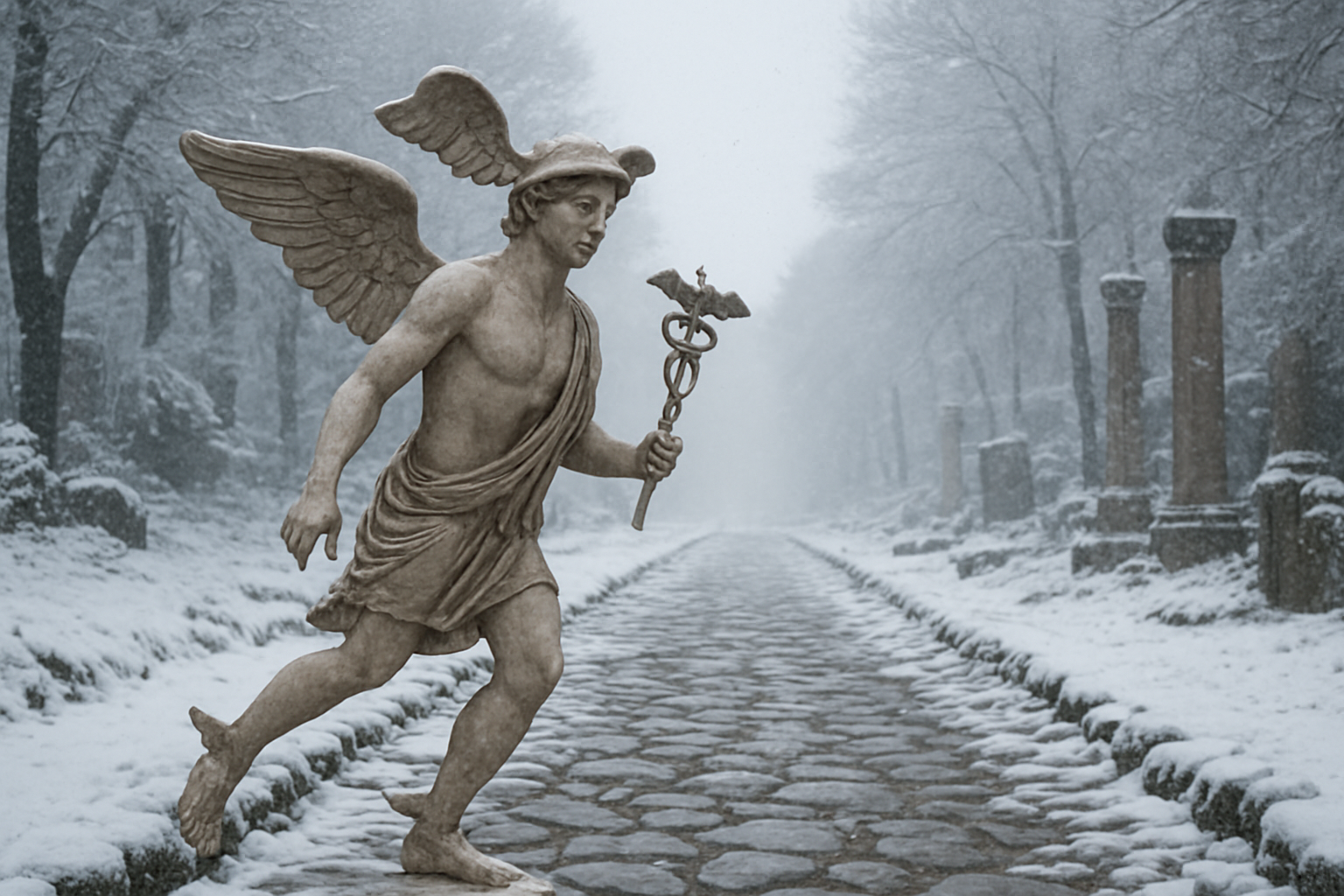
Throughout history, the winter months have conjured visions of resplendent landscapes, wrapped in a blanket of snow and peaceful solitude. Yet, for the ancient travelers who dared to cross these icy terrains, the journey was often treacherous and filled with uncertainty. Among the myths and folklore that emerged from these cold expeditions, the tale of Hermes and his snowy messengers has captured imaginations for centuries.
Hermes: The Fleet-Footed Guardian
In the ancient Greek pantheon, Hermes was revered as the god of travel, commerce, and communication. Known for his winged sandals and his role as the messenger of the gods, Hermes was believed to traverse great distances in the blink of an eye. More than just a deity of speed, Hermes symbolized the guidance and protection necessary for travelers to navigate the perilous pathways of the world.
During winter, when roads became laden with ice and snow, Hermes’ guidance was sought more earnestly. As the icy fingers of the season gripped the earth, the ancient Greeks imagined Hermes dispatching his snowy messengers—certain winged creatures or divine apparitions—to shepherd wayfarers through the snowbound paths.
Winged Guides Through Treacherous Terrains
The myths surrounding Hermes’ wintry aides were emblematic of the ancients’ need to explain the inexplicable. As travelers braved the winter roads, they often encountered phenomena that they could only attribute to the workings of the divine. A sudden clearing of a blizzard or the sudden appearance of a natural landmark to redirect their journey was seen as the work of Hermes’ messengers.
- The Snow Owl: One of the creatures often linked to these legends was the snow owl. With its ethereal appearance and silent flight, the snow owl became a symbol of guidance and wisdom in the wilderness. Its ability to navigate and hunt in the harshest conditions made it an ideal candidate for Hermes’ emissary.
- The North Wind: Myths also spoke of the North Wind as one of Hermes’ allies. Known in Greek mythology as Boreas, the North Wind could clear paths and disperse snow with its powerful gusts. Travelers claimed that sudden shifts in the wind that cleared pathways were heralded as divine intervention.
- Divine Apparitions: Some tales went so far as to mention ghostly figures or spectral lights guiding individuals on their journey. These interpretations, often variations of the will-o’-the-wisp phenomena seen in other cultures, reinforced the belief in divine guidance.
Cultural Crossroads: From Hermes to Herne
The idea of divine intervention through winged creatures or ethereal guides is not limited to Greek mythology. Similar motifs can be found in various cultural traditions across the world. Herne the Hunter from English folklore, for example, is believed to lead the Wild Hunt, a spectral procession that could bring fortune or disaster, depending on the observer’s perspective. Such legends echo Hermes’ role as both protector and trickster, indicating the fluid nature of mythological archetypes.
In Norse mythology, the all-powerful god Odin is often associated with ravens, Huginn and Muninn, who serve as his eyes and ears across the Nine Realms. The concept resonates with the notion of winged creatures serving as guides and messengers between the worlds of men and gods.
Modern Reflections: Navigating Winter’s Challenges
Today, as we traverse the carefully laid roads and highways that meander through our snow-blanketed landscapes, we rely less on the intervention of gods and more on modern technology to ensure safe passage. Yet, the allure of these ancient tales persists. They remind us of a time when nature’s raw power commanded respect and the divine hand was never too far from human affairs.
“Mythology gave the Greeks a way to explain the world. These stories conveyed important lessons about power, creation, and life and death.”
— History.com
As we marvel at the winter landscape and the myths it inspired, we are reminded of our continued journey—a voyage through both literal and metaphorical snow-laden paths. With the advent of global positioning systems and all-wheel drive, our modern-day snowy messengers may not wear winged sandals, but they still embody Hermes’ spirit of adventure, movement, and communication.
Conclusion: Embracing the Mythic Journey
In essence, the legend of Hermes and his snowy messengers captures the timeless human desire for guidance and protection against the uncertainties of life. Whether through the whisper of the wind, the sudden presence of a guiding owl, or the realm of technological devices, the echoes of these ancient tales still resonate, serving as a testament to humanity’s enduring relationship with the unpredictable forces of nature.