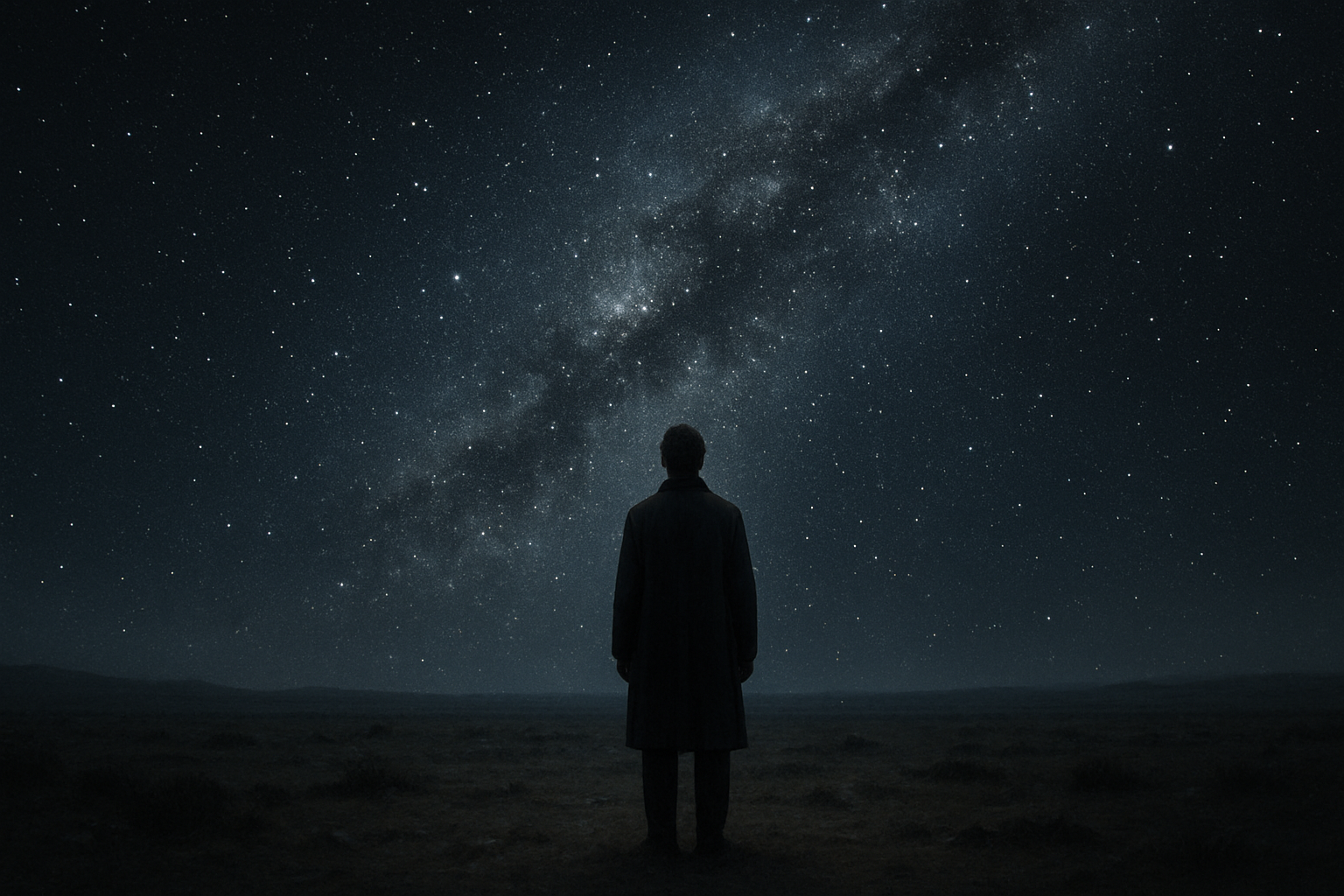
The universe is expansive, filled with complexities and unknowns that often lead us to ponder the great mysteries of existence. Among these, the enigma of death continues to be one of the most profound. As we navigate through life, death remains the ultimate horizon we cannot see beyond—a cosmic silence that echoes with unanswered questions.
The Biological Perspective: End of a Cycle
From a biological standpoint, death is merely the cessation of bodily functions. Cells fail to regenerate, and vital systems come to a halt. Yet, even with this clinical understanding, the mystery deepens when we consider the intricate processes that precede this finality. Is there more to death than the mere stopping of the biological mechanisms?
- Cellular Death: Our cells undergo a process called apoptosis, or programmed cell death, which is essential for growth and maintenance. Through this lens, death is an integral part of life itself.
- Aging: Aging, the gradual decline of biological functions, leads to death. Despite advances in medicine, the mystery behind why we age and die is still largely unresolved.
Cultural and Philosophical Views on Death
Across cultures and throughout history, death has been a central theme of philosophical inquiry, art, and religion. It is through these lenses that we seek to find meaning or solace in the end of life.
- Religious Perspectives: Many religions offer interpretations of what lies beyond death. For instance, Buddhism discusses the cycle of rebirth, while Christianity speaks of an eternal life. These beliefs provide comfort, suggesting a continuation beyond physical death.
- Philosophical Considerations: Philosophers like Socrates viewed death as a gateway to the ultimate truth. In Plato’s “Phaedo,” Socrates argues that the soul is immortal and that death is the philosopher’s soul’s release into a higher state of existence (Plato, Phaedo).
Scientific Theories on Consciousness After Death
The question of consciousness after death remains one of science’s most tantalizing mysteries. While empirically elusive, several theories offer perspectives worth considering:
- Quantum Consciousness: Theories like that of physicist Roger Penrose suggest that consciousness arises from quantum processes. This line of thought implies that consciousness might persist after bodily death in some form, though this remains theoretical and highly controversial.
- Near-Death Experiences (NDEs): Stories of NDEs often describe seeing bright lights or experiencing a sense of peace. Research, such as by Dr. Sam Parnia, has explored these phenomena, suggesting they might be evidence of consciousness continuing post-mortem. Still, scientific validation remains incomplete.
Death in Literature and Art
Through literature and art, humanity has long sought to interpret and give voice to the elusive concept of death. Creators have portrayed it both as an end and a transmutation into something greater:
- Literary Explorations: In poetry and prose, death often symbolizes not just an ending but a complex transition. Emily Dickinson, for instance, frequently wrote about death as a journey, evident in poems such as “Because I could not stop for Death” (Dickinson).
- Artistic Depictions: Death in art is often symbolized through allegories and abstract representations that seek to capture its ineffable essence. The Renaissance period, in particular, was rife with sumptuous paintings exploring mortality and the afterlife, such as Hieronymus Bosch’s “The Garden of Earthly Delights.”
Personal and Collective Reflection
Death’s mystery prompts introspection on both personal and collective levels. The conversations about mortality lead to deeper inquiries into the value and temporality of life:
- Personal Contemplation: Facing the inevitability of death often leads individuals to re-evaluate life choices and seek deeper fulfillment.
- Societal Impact: As seen during global events such as pandemics, collective encounters with mortality spur shifts in cultural values and priorities.
“No one wants to die. Even people who want to go to heaven don’t want to die to get there. And yet death is the destination we all share. No one has ever escaped it. And that is as it should be, because Death is very likely the single best invention of Life. It is Life’s change agent. It clears out the old to make way for the new.”
—Steve Jobs
Conclusion: Embracing the Mystery
Despite centuries of inquiry and reflection, death remains one of life’s greatest mysteries. While science, philosophy, and religion each offer partial answers, the full truth eludes us. Perhaps, in accepting the mystery of death, we find a fuller appreciation for life. As we ponder the cosmic silence, we are reminded of our own temporary existence, prompting us to live with greater urgency and respect for the unknown.
Comments