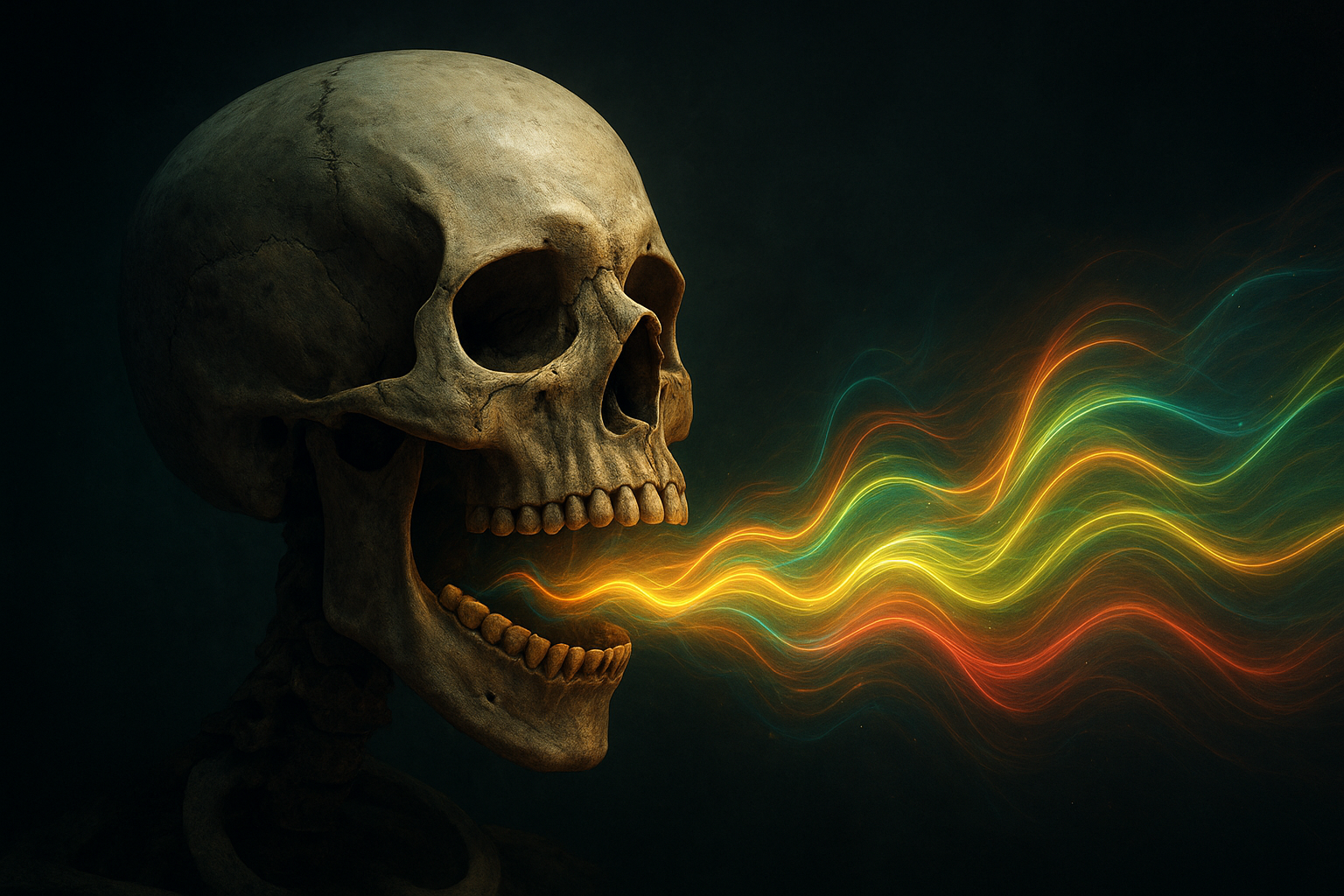
The concept of petit mort, or “little death,” is often associated with the momentary sensation of post-orgasmic release, yet the metaphor extends well beyond the confines of human sexuality. This mystical phrase suggests a diminutive experience of cessation, a microcosmic reflection of life’s final chapter—death. Understanding death as a form of energy transformation is an age-old notion found in various philosophical and spiritual traditions around the world.
In much of the occult and esoteric literature, the idea that death represents a transformation rather than an end is a recurrent theme. The French term petit mort symbolizes transitions and temporary states of consciousness that mimic the discontinuity of life processes. This idea is poetically encapsulated by the philosopher Ralph Waldo Emerson, who wrote,
“Our life is an apprenticeship to the truth that around every circle another can be drawn; that there is no end in nature, but every end is a beginning.”
The Energetic Continuum
The concept of energy never truly disappearing but merely transforming is a cornerstone of both scientific and mystical inquiry. In physics, energy cannot be created or destroyed, only changed from one form to another—a principle known as the Law of Conservation of Energy. Similarly, many spiritual beliefs hold that the soul or spirit carries on beyond the physical cessation of the body, altering in form and frequency.
- Hinduism: The cycle of birth, death, and reincarnation underscores energy’s perpetual motion through numerous lives.
- Ancient Egyptian Beliefs: Death was seen not as an end but a journey through the afterlife, guided by sacred texts like the Book of the Dead.
- Modern Mysticism: Many contemporary practitioners view death as a vibrational shift, a transition into another plane of existence.
Resonance of the “Little Death”
Experiencing a petit mort involves a temporary release that some compare to an ephemeral taste of what lies beyond. This momentary seductive dance with death can offer insight into the cyclical nature of life and energy. It is not merely an erotic phenomenon but also a symbolic passage that echoes the broader journey of life and death.
Suzanne Somers, an American actress and author, once said,
“Forgiveness is a gift you give yourself. It’s not a tool to manipulate others, nor is it something to be taken lightly. It releases the thing that holds energy and allows it to transform.”
This suggests deeper levels of release and transformation, resonating with the ideological essence of petit mort.
In contemplating the energetic aspects of death, individuals may find comfort and understanding in accepting that death is not merely a point of cessation but a transmutative passage of energy—a step along the continuum of existence.
Comments