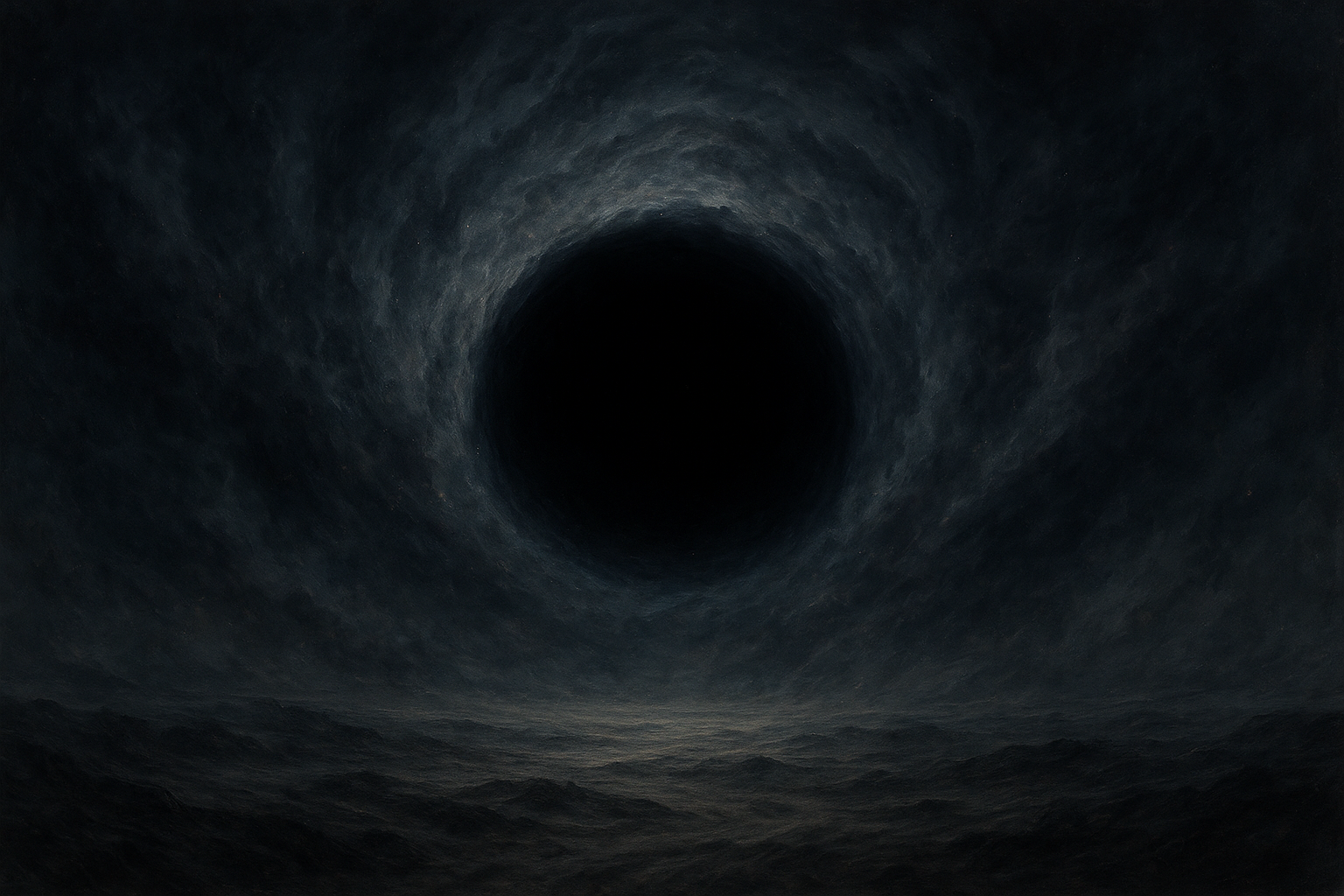
The Arcane Void: Mystery Encoded in Emptiness
The concept of the void, an enigmatic emptiness that resonates across various disciplines, stretches beyond mere absence. It embodies profound philosophies, stirring emotions and inciting a relentless quest for understanding. What makes the void so captivating is its ubiquity and its haunting presence that continues to challenge our perceptions of reality. In delving into the arcane void, we explore a space where science, art, psychology, and philosophy intersect, creating a tapestry rich with mysteries encoded in emptiness.
The Philosophical Perspective
The void as a philosophical concept dates back to ancient Greek thought, particularly with the pre-Socratic philosopher Parmenides, who posited that emptiness, or “nothingness,” was an impossibility. In direct contrast, the atomists, including Democritus, perceived the void as essential for motion and existence. This dichotomy set the stage for ongoing debates.
“Nothingness—or the void—engages philosophers’ minds since it raises questions about existence itself, challenging assumptions about space, time, and the nature of reality.”
The existentialists, such as Jean-Paul Sartre, later explored the void in human emotions and psychology, suggesting that humans often face an inherent void at the core of their existence. This void can evoke anxiety, compelling individuals to seek meaning or face an unsettling freedom. Sartre is famously quoted as stating, “Existence precedes essence,” interpreting the void as a backdrop against which humans define themselves.
The Scientific Enigma
In the realm of science, the void takes on a tangible form in terms of cosmic spaces and quantum physics. The universe’s vastness, marked by dark voids between celestial bodies, is both a literal and figurative expanse of emptiness. In cosmology, these voids challenge our understanding of the universe’s structure.
Astronomically speaking, voids are large expanses between galaxy filaments, with few or no galaxies. Dr. J. Richard Gott, a professor of astrophysical sciences, remarked in a Space.com article, “Our current understanding of the universe’s architecture emerges largely from studying these cosmic voids—they are as informative as the galaxies themselves.”
Quantum Mechanics and the Void
In quantum theory, the emptiness of the void is deceptive. According to the principles of quantum mechanics, what appears as empty space is teeming with transient quantum particles that continuously flicker in and out of existence. The vacuum, therefore, is a seething medium of potentials—a background that challenges the very definition of emptiness.
“These virtual particles lend the vacuum a curious kind of presence, capable of affecting the real world in observable, albeit extremely subtle, ways.”
The Artistic Interpretation
The void has served as a potent source of inspiration for artists throughout history, often used to reflect existential themes and the human condition. Artists employ the concept to evoke emotion, leaving spaces deliberately unfilled to generate tension and evoke contemplation.
Yves Klein, the French artist known for his monochrome paintings, famously explored the void through his work. In his “Leap into the Void” photograph, he symbolized a transcendence into nothingness—engaging viewers in a conversation about the nature of existence and the role of the unknown in art.
“The void not only frames the known but becomes part of the narrative, provoking the viewer to engage with the absence and its implications.”
Psychological Dimensions
On the psychological front, the void often symbolizes an emotional state of emptiness or alienation. It is akin to feelings of hollow despair or the lack of meaning that individuals may experience. Viktor Frankl, a psychologist and Holocaust survivor, identifies this sense of a void or “existential vacuum” in his work “Man’s Search for Meaning.”
Frankl observed:
“This emptiness manifests in boredom and apathy, which he refers to as the ‘existential vacuum,’ a reflection of the loss of meaning in modern life.”
In modern psychology, the void is often explored within existential therapies, which focus on helping individuals find meaning amidst the emptiness. This approach aligns with humanistic theories that emphasize personal growth and self-actualization.
Concluding Thoughts
The arcane void persists as a canvas upon which humanity projects its fears, inquiries, and creative impulses. From ancient philosophy to contemporary science, art, and psychology, the void remains a space that is both forbidding and inviting, drawing us into its depths. In attempting to decode the mysteries held within the void, we embark on an endless journey of exploration, discovery, and, perhaps, occasional comprehension.
The void, it seems, might always remain partly elusive, inviting us to engage with its enigma, prompting us to define our own existence against its shadowy backdrop. As we continue to explore, both physically and intellectually, we may seek not to fill the void, but to understand and embrace the profound truths it harbors.
Comments