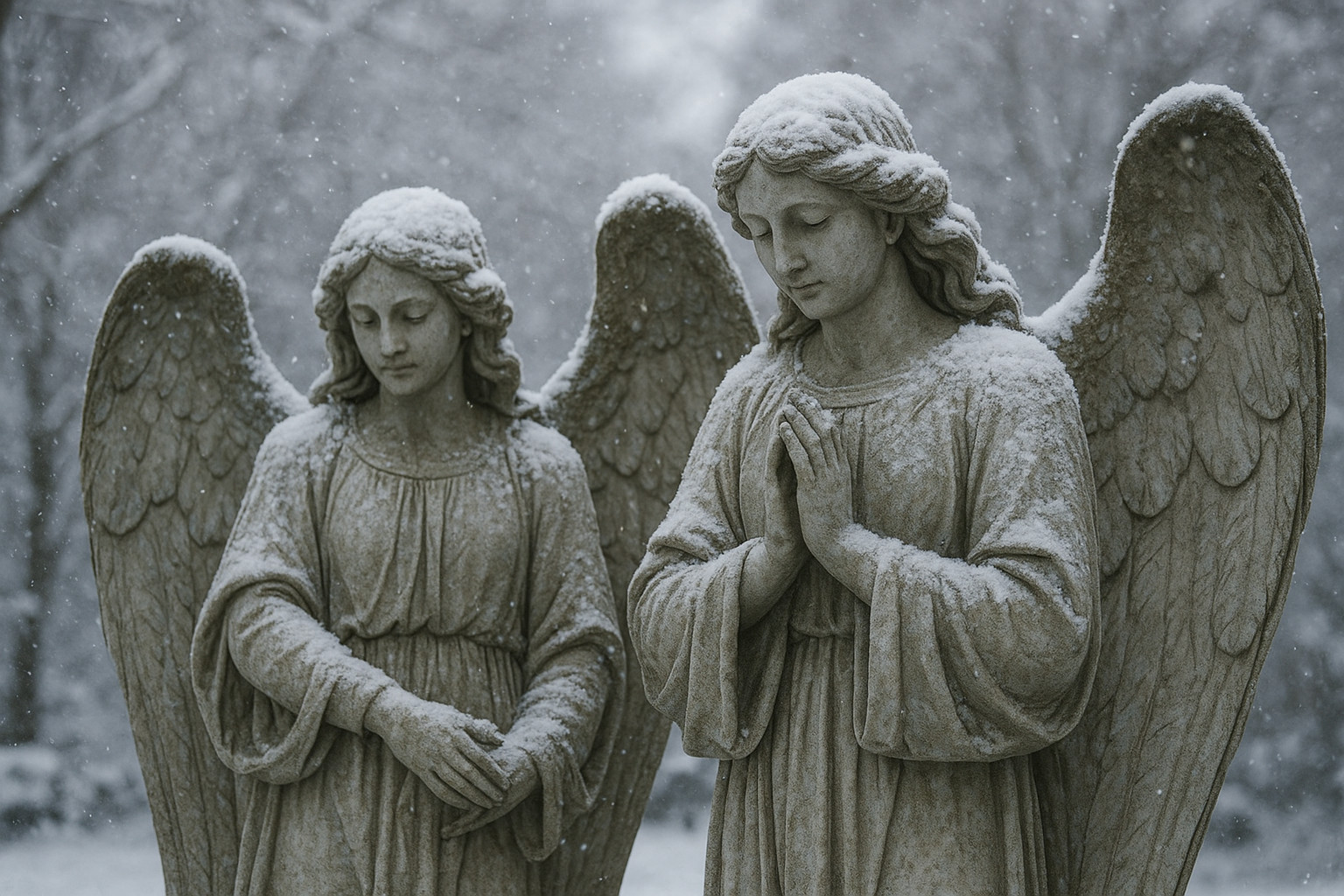
As winter casts its serene, white spell across the landscape, a mystical transformation occurs. The trees stand naked and humble, their branches lightly adorned with frost. In the stillness that follows the fall of snow, a realm quite different from our everyday existence is revealed. It is a world guarded by invisible sentinels, often referred to as the Angels of the Quiet Hours.
The Myth and Magic of Winter Angels
Across various cultures, winter has always been shrouded in lore and legend. The stark silence following a snowfall often evokes a sensation of the ethereal, as if unseen forces are guarding the peace. In folklore, these are the angels of winter—messengers and protectors who bring solace and calm. These beings are depicted not as winged creatures of shimmering light but as silent custodians ensuring the tranquility of the cold months.
“Winter, a lingering season, is a time to gather golden moments, embark upon a sentimental journey, and enjoy every idle hour.” – John Boswell
Nature’s Symphony in Silence
The beauty of winter lies in its quietude, a sharp contrast to the cacophony of other seasons. This stillness is often seen as a canvas that these winter angels adorn with their grace. The phenomena of winter—such as the mesmerizing dance of the snowflakes, the delicate ice patterns on windows, and the muffling effect that snow has on sound—are attributed to their handiwork.
The psychological effect of this silence is profound. According to a study by the National Institutes of Health, exposure to natural quiet and serene environments like those of winter can significantly reduce stress and improve mental health.
A Season of Reflection
In the soft glow of long winter nights, introspection becomes a natural inclination. The season’s austerity encourages reflection and contemplation. The angels of winter are seen as guides for this introspective journey. Their presence is a reminder of the beauty in simplicity, and the need to pause and appreciate the quiet moments.
- Sheltered Fireside Hours: With shorter days and longer nights, there is more time to spend in the warmth of one’s home, reflecting on life’s journey.
- Stories of Old: The tradition of storytelling by the fireside is rooted in winter’s invitation to gather close, share memories, and pass down stories.
- Nature’s Respite: Just as nature takes a rest, we too are encouraged to slow down, find peace in the pause, and ready ourselves for the rejuvenation of spring.
The Guardians’ Call: Preservation and Protection
The role of these winter guardians extends beyond the atmospheric and spiritual. In a more literal sense, the wintry conditions help protect the earth, giving ecosystems a vital period of rest. The cold months allow for the conservation of energy in wildlife and the preservation of plant life, ensuring that the vibrancy of spring can occur.
Recent environmental discussions emphasize the importance of these natural cycles more than ever. The beauty of a snowy landscape is not merely aesthetic; it is essential for maintaining ecological balance. According to research published in Nature, seasonal cycles are crucial for biodiversity and ecological health, highlighting the angels of winter as protectors of this crucial balance.
An Invitation to Embrace Winter’s Stillness
As we journey through the months of chill, a unique opportunity presents itself. Winter calls to us to embrace its gifts: the silent mornings, the crisp air, and the gentle touch of snow. These experiences, often orchestrated by the unseen guardians of winter, invite us to find contentment in the quiet hours.
In conclusion, winter’s soft guardians, the angels of the quiet hours, remind us of the beauty found in silence and stillness. They guide us to a deeper appreciation of the world, revealing truths often obscured by the noise of daily life. Let us embrace their wisdom and the serene charm of this season, finding peace in the pause.
“In the depths of winter, I finally learned that within me there lay an invincible summer.” – Albert Camus
Comments