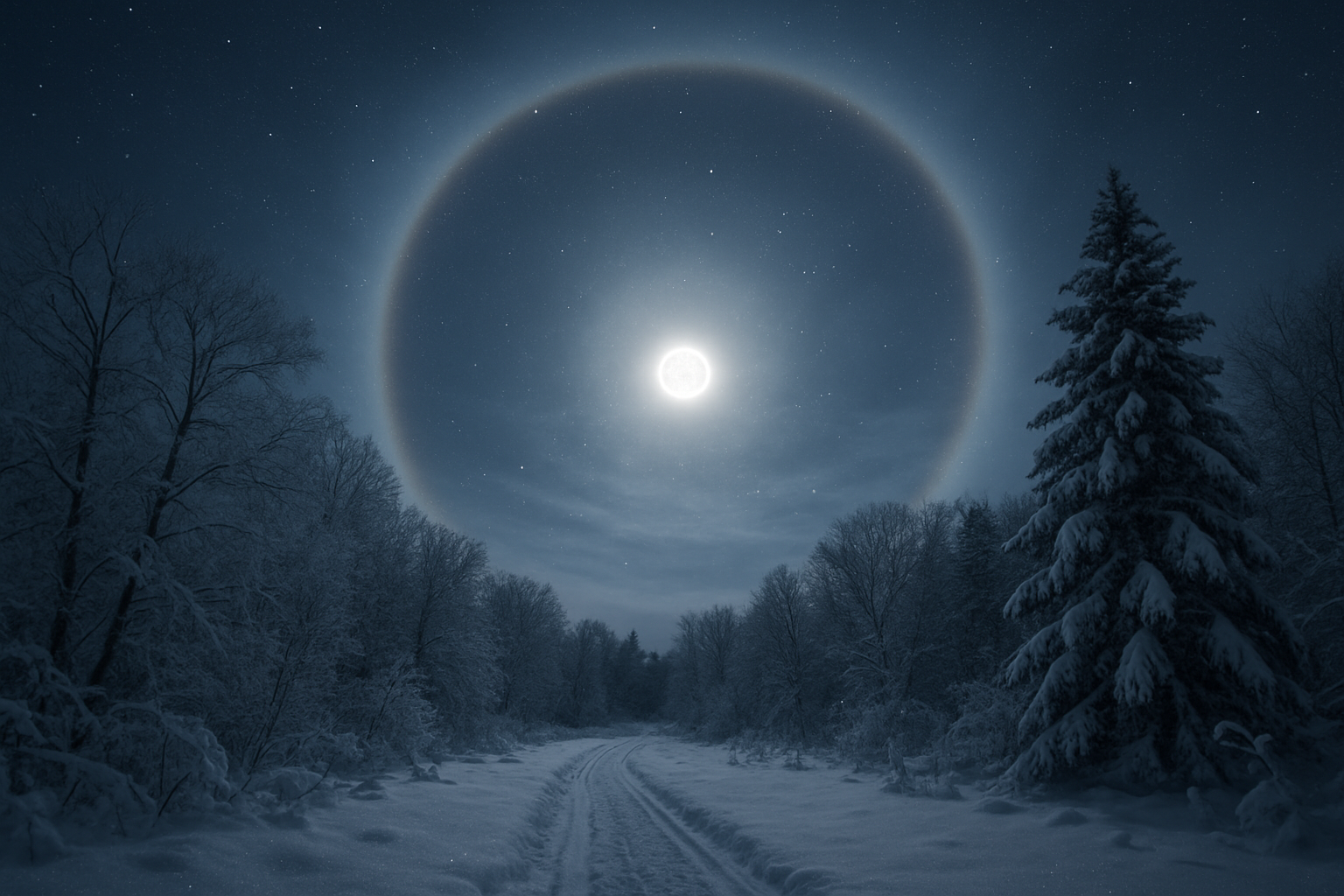
The winter months bring with them a magical phenomenon that captivates and mesmerizes those fortunate enough to witness it: the winter halo. These celestial circles of light, often surrounding the sun or the moon, are not just enchanting occurrences but also offer intriguing insights into atmospheric conditions.
The Science Behind Winter Halos
Winter halos occur when high-altitude ice crystals in cirrus clouds refract and reflect light. As sunlight or moonlight passes through these hexagonal ice crystals, it is bent at a 22-degree angle, creating a halo effect. According to the Scientific American, “ice crystals act like prisms and mirrors, refracting and reflecting light to cause different visual phenomena.”
Types of Winter Halos
- 22-Degree Halo: The most common type, visible as a bright circle with a radius of approximately 22 degrees around the celestial body.
- Sundogs: Also known as parhelia, these are bright spots that appear on either side of the sun, often during sunrise or sunset.
- Pillar of Light: Vertical shafts of light extend above and sometimes below a light source, caused by reflection of light off the surfaces of falling ice crystals.
- Moonbows: A rare sight, these halos are similar to rainbows but appear around the moon.
The Cultural Significance of Halos
Beyond their scientific explanation, winter halos have long been intertwined with folklore and mythology. Historically, they have been seen as omens or heavenly signs. For instance, in Norse mythology, halos around the sun were considered harbingers of stormy weather or even divine messages from the gods.
“Halos have been interpreted in various ways, from weather predictions to spiritual alerts, each culture adding its unique significance to the phenomenon.” – Wired
When to Spot a Winter Halo
The best time to observe a halo is during cold, clear days, especially when cirrus clouds are present. Locations with minimal light pollution increase your chances of witnessing these stunning displays.
Winter halos remind us of the intricate beauty of nature, highlighting how simple ice crystals can transform into extraordinary spectacles of light. For more information on when and how to see them, NASA’s Climate Science website offers practical insights from atmospheric scientists.
Comments