Tag: archetype

  • The Eternal Archetype – Patterns Beyond Humanity

    The Eternal Archetype – Patterns Beyond Humanity

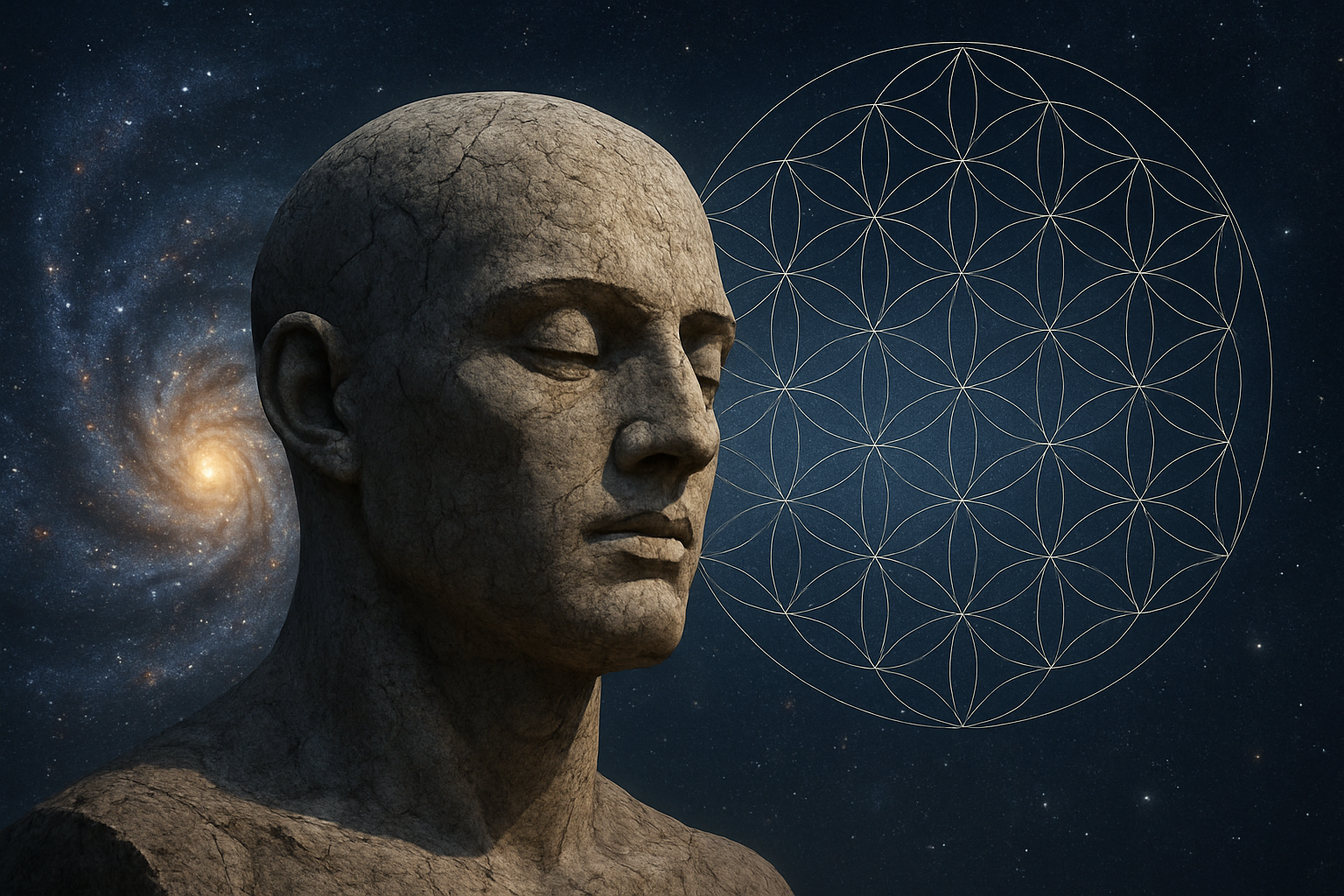
    Throughout history, humanity has grappled with the concept of eternal archetypes, those transcendent, non-material patterns that shape our consciousness and the structure of reality. These patterns seem to transcend cultures and epochs, appearing time and again in the myriad manifestations of human thought. As we delve into this concept, we expose the intricate web of repeated themes that exist beyond our individual narratives and personal experiences.

    The Origin of Archetypes

    The term “archetype” was popularized by psychologist Carl Jung, who saw it as a universal symbol that ties together the collective unconscious of the human experience. According to Jung, archetypes are inherited potentials which are actualized when they enter consciousness as images or manifest in behavior on encountering an external stimulus.

    “Archetypes are like riverbeds which dry up when the water deserts them, but which it can find again at any time.” — Carl Jung

    Yet, these archetypes do not exist solely within the realm of the psychological. They permeate every facet of human life, from mythology and religion to literature and art, implying a deeper undercurrent within the cosmos that orchestrates these patterns.

    Archetypes in Mythology

    Throughout global mythologies, we encounter numerous recurring archetypes: the Hero, the Mother, the Trickster, and the Wise Old Man, among others. These myths are reflections of these inner patterns, portraying our psychological drives and functions on a cosmic scale.

    • The Hero’s Journey: Popularized by Joseph Campbell, the Hero’s Journey is an archetype representing personal transformation and adventure. The hero often faces trials, overcomes them, and returns home transformed, a metaphor for personal growth and self-discovery.
    • The Great Mother: Found in deities like Gaia or Isis, this archetype embodies creation, fertility, and nurturing but also destruction, emphasizing the duality of life.
    • The Trickster: Represented by figures like Loki or Anansi, the Trickster archetype reminds us of the complexity of duality and the thin veil between chaos and order.

    These recurring themes suggest a shared tapestry of human experience, weaving together our fears, hopes, and aspirations into the broader narrative of existence.

    Archetypes in Literature and Art

    Beyond mythology, archetypes extend their influence into literature and art. The persistence of certain motifs in storytelling over time provides evidence of these underlying patterns.

    “All literature is one story, there is the same revolt, attempted escape, lost terrain, and individually heroic combat.” — Northrop Frye

    The structure of many stories, particularly in Western literature, echoes the omnipresent Hero’s Journey archetype. Characters like Frodo from J.R.R. Tolkien’s The Lord of the Rings or Harry Potter in J.K. Rowling’s celebrated series embody this universal narrative of struggle and triumph.

    Archetypes Beyond Humanity: A Cosmic Pattern

    While archetypes significantly shape human culture, some patterns suggest a reality that transcends our human-centric view. The concept of fractals in mathematics and the structured chaos of biological forms are compelling evidence of such universal patterns.

    • Fractals in Nature: The repetition of geometric shapes that create clouds, coastlines, and even galaxies suggests a cosmic archetype of symmetry and repetition, speaking to a universal design not confined to biological life.
    • Mathematics and the Golden Ratio: This number, approximately 1.618, appears in art, architecture, and nature, indicating a universal aesthetic that extends beyond human interpretation.

    The intersection of science and spirituality may hint at a cosmic architecture, where archetypes are embedded into the very fabric of reality. This raises profound philosophical questions about the nature of existence itself.

    Beyond the Human Perspective

    Considering archetypes as a lens through which we can understand reality urges us to adopt broader perspectives, surrendering anthropocentric paradigms for more holistic, interconnected viewpoints. This challenges us to expand our consciousness and open dialogues about our place in the universe.

    Astrobiologist and author David Grinspoon offers insight into how imagining cosmic stories can widen our philosophical perspectives, encouraging broader contemplation of life’s interconnected motifs.

    “A truly planetary perspective is hard. But it can also be transformative, providing, to borrow Einstein’s phrase, ‘a widening circle of compassion.’” — David Grinspoon

    The Future of Archetypes

    As humanity advances technologically, the prospect of artificial intelligences grappling with these archetypes is inevitable. As these entities evolve, understanding whether they intrinsically develop similar archetypes could redefine our comprehension of consciousness itself.

    The exploration of such possibilities beckons not merely philosophical or artistic inquiry but multidisciplinary collaboration. This junction of technology, philosophy, and science heralds a thrilling frontier in understanding the metaphysical bonds that unite us at the core of existence.

    Conclusion

    The eternal archetypes compel us to look beyond our immediate realities, exploring the grand tapestry of life and its underlying patterns. They inspire us to question our origins, our narratives, and the cosmos itself in a pursuit of deeper meaning and connectivity.

    Embracing the universality of archetypes may be our passage to a more conscious, interconnected future—a renaissance where we honor the timeless patterns that hold the cosmos together.
  • The Shadow Archetype – Darkness as Human Pattern

    The Shadow Archetype – Darkness as Human Pattern

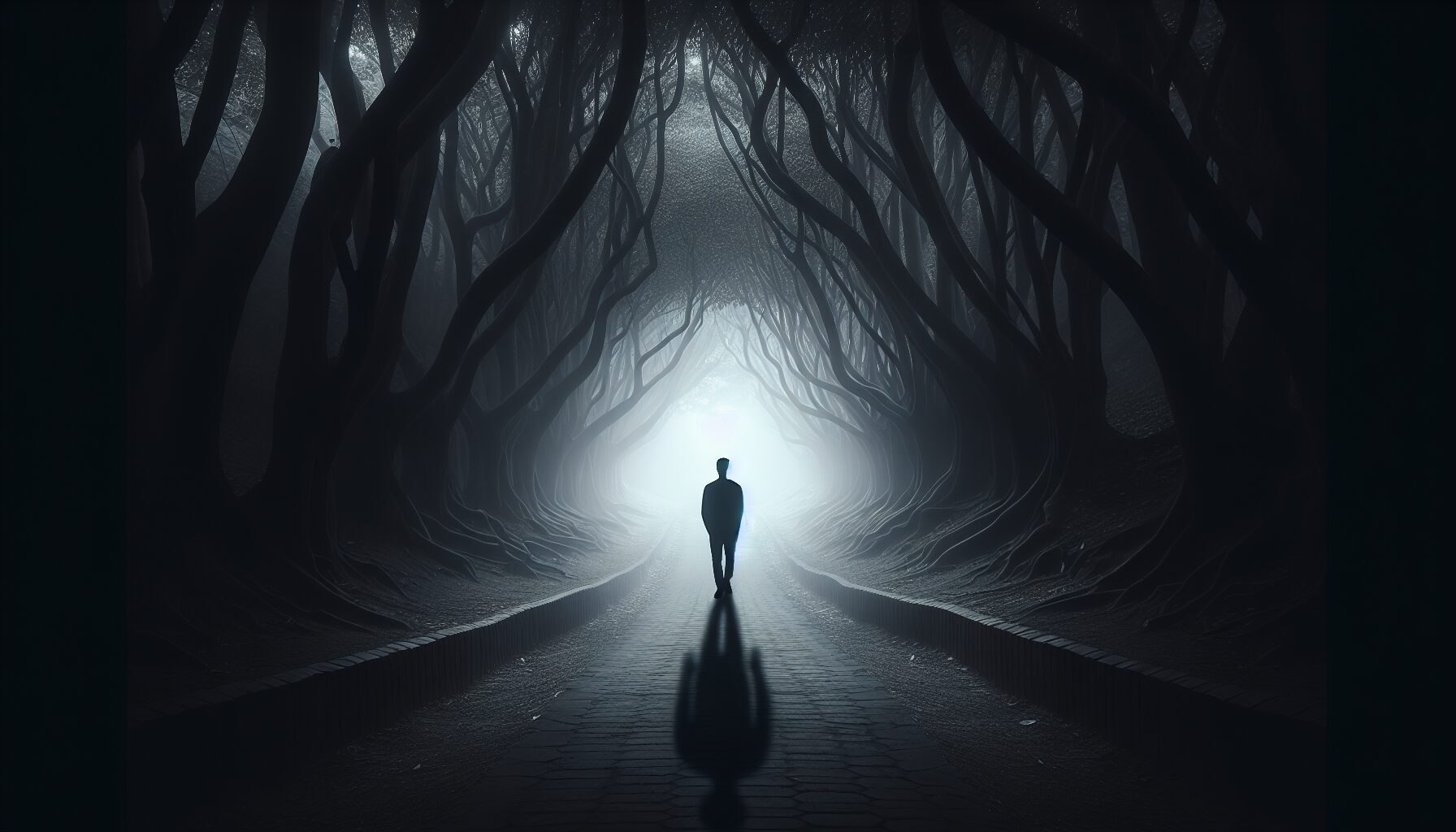
    In the rich tapestry of human psychology, the shadow archetype holds a place of intrigue and complexity. Originally coined by Carl Jung, the shadow represents the unconscious part of the psyche where repressed desires, memories, and emotions reside. This archetype embodies the dark aspects of one’s personality, those parts we wish to conceal from the world and often, from ourselves.

    “Until you make the unconscious conscious, it will direct your life and you will call it fate.” – Carl Jung

    The shadow exists in everyone, a fundamental component influencing behavior and perception. Rather than viewing it as wholly negative, Jung believed facing our shadow is essential for achieving personal growth and self-awareness. This confrontation leads to what he termed individuation, the process of integrating different elements of the psyche to form a well-rounded personality.

    • Origins and Meaning: Derived from the depths of the unconscious mind, the shadow archetype can contain everything outside the light of consciousness. It is often perceived as chaotic or unruly, yet it holds the keys to creativity and insight, providing a deeper understanding of human emotions and motivations.
    • Recognition and Acceptance: Recognizing one’s shadow involves acknowledging parts of oneself that might be deemed unacceptable or uncomfortable. This includes negative traits like anger, envy, and greed, but also positive qualities that may seem too overwhelming or threatening, such as assertiveness or ambition.
    • Integration and Growth: Integration is the process of embracing these dark elements and using them constructively. By harmonizing the shadow with the conscious self, individuals can experience a more authentic and fulfilled life, as understanding the full spectrum of their inner world leads to a balanced existence.

    In literature and myth, the shadow often manifests as a character or force acting against the hero, symbolizing internal struggles reflected outwardly. From Frankenstein’s monster to Jekyll and Hyde, these narratives explore the consequences of ignoring or denying the shadow, illustrating how repression can lead to destruction or chaos.

    “The shadow is a moral problem that challenges the whole ego-personality, for no one can become conscious of the shadow without considerable moral effort.” – Carl Jung

    Recognizing and reconciling with the shadow requires courage and honesty. In doing so, we unlock deeper layers of self-awareness, nurturing connections between our light and dark sides. This integration not only cultivates personal harmony but also fosters empathy and understanding toward others, as we become more attuned to the hidden aspects of human nature.

    For more insights into Jung’s theories, you can visit the C. G. Jung Page.

  • The Alien Skull – Archetype of the Other’s Death

    The Alien Skull – Archetype of the Other’s Death

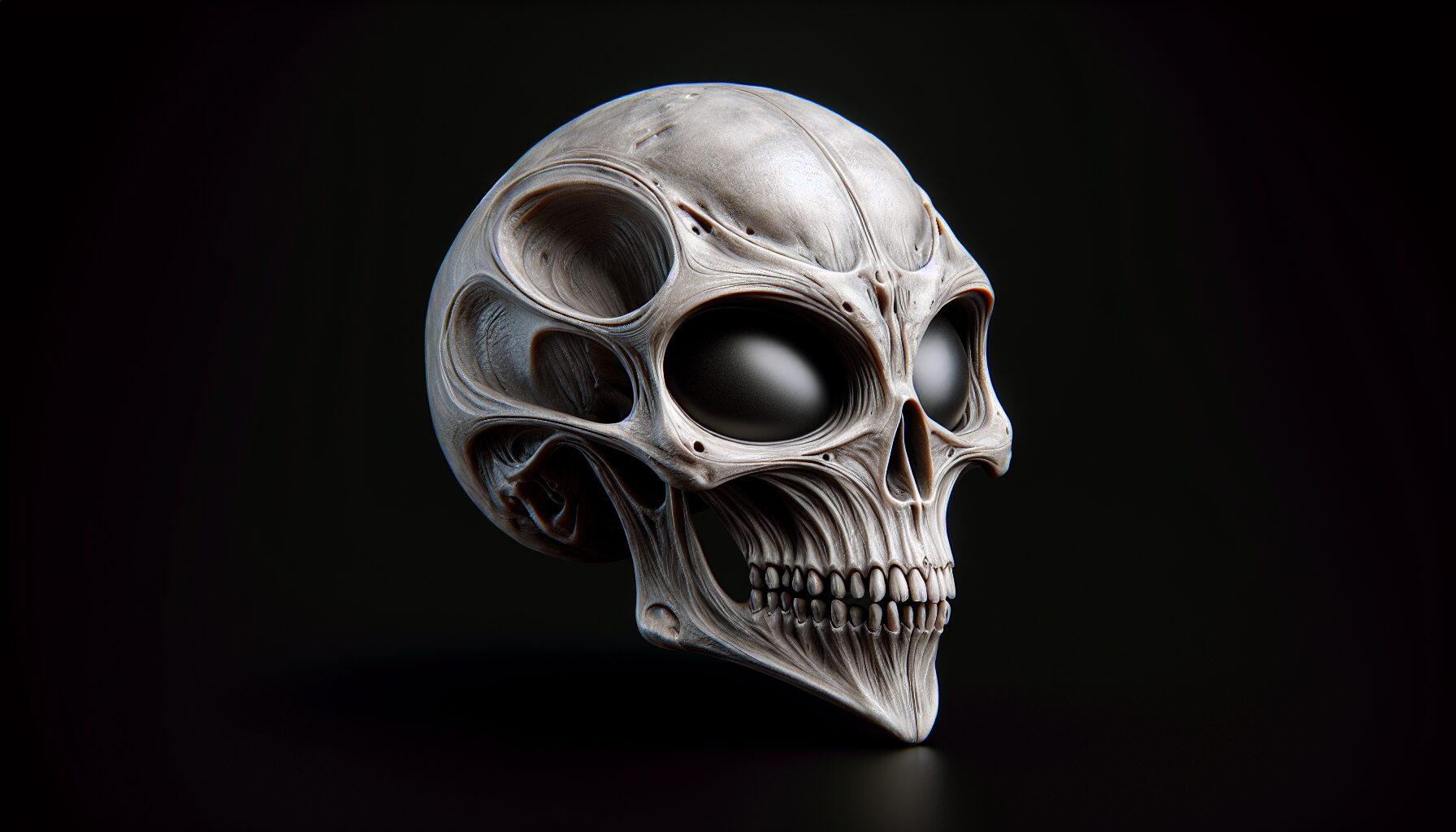
    The concept of the alien skull has intrigued and disturbed humanity for centuries. As an enduring archetype, it serves as a profound symbol of the “Other”—the unknown, the unfamiliar, and ultimately, the realm of death and what lies beyond.

    The Alien Skull as a Symbol

    The skull, in general, epitomizes death. When depicted in the context of an alien entity, it becomes a fusion of fear, curiosity, and the mystery of the unknown universe. From ancient times, cultures have been fascinated with the notion of extraterrestrial life, often depicting such beings with exaggerated cranial structures, which has perpetuated the alien skull as an enduring symbol.

    Joseph Campbell, an eminent scholar of mythology, noted that, “the alien represents the death of the normal way of understanding the world, it is the ultimate Other.” (The Joseph Campbell Foundation) This quote highlights the alien’s role in challenging human perception, forcing an encounter with the unfamiliar which often results in a metaphoric ‘death’ of old ideas and beliefs.

    Encountering the Unknown

    Alien skulls have become iconographic in art, literature, and media, standing as emblems of the confrontation with the unexplored. They serve as the quintessential image evoking the uneasy balance between fascination and dread. As humans gaze into the eye sockets of these hypothetical skulls, they peer into the void, confronting existential questions about life, mortality, and identity.

    “The alien skull is much more than a relic from space, it is the ultimate memento mori, a reminder of our own mortality and the fragility of life as we know it.”
    Dr. Elisa Fernandez, Anthropologist

    Modern Interpretations and Depictions

    In contemporary science fiction, alien skulls are often depicted in various forms—from the sleek, elongated craniums of the classic ‘greys’ to the rugged, bony structures of more monstrous creations. These depictions, whether in films like ‘Alien‘ or games such as ‘Halo,’ continue to capture the public imagination, serving as a canvas upon which human fears and fascination with the cosmos can be projected.

    Through these narratives, we are continually reminded that the alien skull is not merely a symbol of something foreign but also a reflection of our eternal quest to understand the very nature of existence.

    In analyzing the alien skull, we recognize it as both a literal and figurative archetype of death—the end of certainty, the unsettling presence of the unknown, and the death of the familiar.