Gothic Horizons: Dark Aesthetics in Contemporary Culture
From the eerie allure of Edgar Allan Poe to the shadowy elegance of modern fashion runways, the Gothic aesthetic has permeated contemporary culture far beyond its literary origins. This darkly romantic and often morose style offers a unique perspective on the beauty found in the unconventional, providing a rich tapestry of creativity in art, fashion, music, and beyond.
The Historical Roots of Gothic Aesthetics
The Gothic aesthetic originally emerged in the 18th and 19th centuries. It was a reaction to the Enlightenment’s rationalism, an artistic movement that embraced the mysterious and the supernatural. Gothic literature, characterized by its dark settings and themes of decay and terror, served as a precursor to today’s dark aesthetics.
“Female Gothic…is a fiction that reveals a woman’s collision with a male society, particularly one where women are looked upon as second-class citizens.” – Ellen Moers
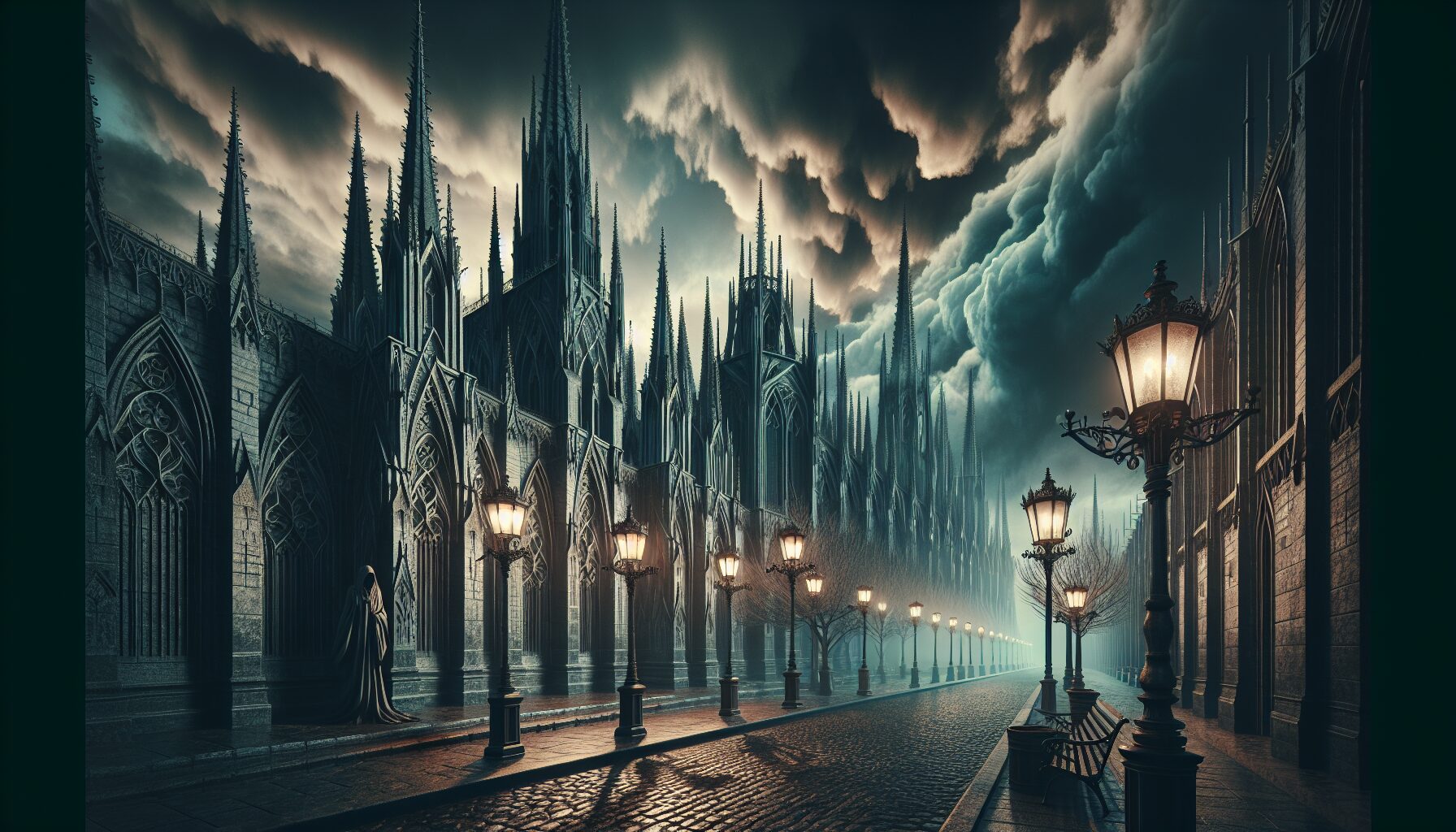
The Gothic has evolved over centuries, manifesting in various forms such as architecture, literature, fashion, and film. The architectural grandeur of pointed arches and vaulted ceilings is mirrored in the romantic yet macabre worlds imagined by authors and filmmakers, creating an enduring affection for the dark and mysterious.
Gothic Influences in Modern Fashion
In contemporary fashion, the Gothic aesthetic is characterized by a preference for dark colors, intricate patterns, and a blend of modern and historical styles. Designers such as Alexander McQueen and Rick Owens have popularized Gothic elements in their collections, combining ethereal beauty with a somber, often theatrical flair.
- Alexander McQueen: Known for his hauntingly beautiful collections that often incorporate Victorian influences, McQueen uses Gothic motifs to challenge conventional beauty standards.
- Rick Owens: Renowned for his minimalist Gothic approach, Owens mixes sleek lines with dark, muted tones to create a contemporary yet timeless appeal.
These designers have helped cement Gothic fashion as a symbol of individuality and nonconformity, appealing to those who find beauty in darkness.
Gothic Music and its Cultural Resonance
Music has also played a crucial role in the evolution of the Gothic aesthetic. From the moody post-punk sounds of bands like The Cure to the ethereal gloom of Bauhaus and Siouxsie and the Banshees, the music encapsulates the introspective and often melancholic spirit of the Gothic sensibility.
“Goth is an evocative, ever-evolving cultural movement that has kept a powerful allure for four decades.” – The Guardian
This musical genre, often associated with themes of alienation and existential reflection, resonates with audiences seeking emotional depth and authenticity in a world that often seems superficial and disconnected.
Gothic Cinema: Visual Storytelling in Shadow and Light
The influence of the Gothic extends into cinema, where filmmakers have utilized its thematic richness and visual drama to craft haunting stories.
- Tim Burton: Known for his unique visual style, Burton draws on Gothic elements to create whimsical yet somber narratives. Films like “Edward Scissorhands” and “Sleepy Hollow” illustrate his distinctive approach to Gothic storytelling.
- Guillermo del Toro: With masterpieces like “Crimson Peak” and “Pan’s Labyrinth”, del Toro blends Gothic horror with fairy tale elements to explore themes of love, loss, and the supernatural.
These directors showcase how Gothic cinema captivates audiences by weaving intricate stories that balance beauty, fear, and longing.
The Enduring Power of Gothic Aesthetics
The Gothic aesthetic continues to influence contemporary culture, inviting exploration and reinterpretation. Its appeal lies in its ability to offer a sense of comfort in the macabre and to evoke beauty in spaces where others might see only darkness.
As society evolves, so too does the Gothic. Its presence in fashion, music, and film ensures that it remains a dynamic and meaningful element of artistic expression. Through its embrace of the shadows, the Gothic offers a unique lens through which to view the nuances of the human experience.
The Gothic horizon is one of mystery, elegance, and endless possibility, continually transforming and shaping contemporary culture in its indelible, dark beauty.