Tag: death

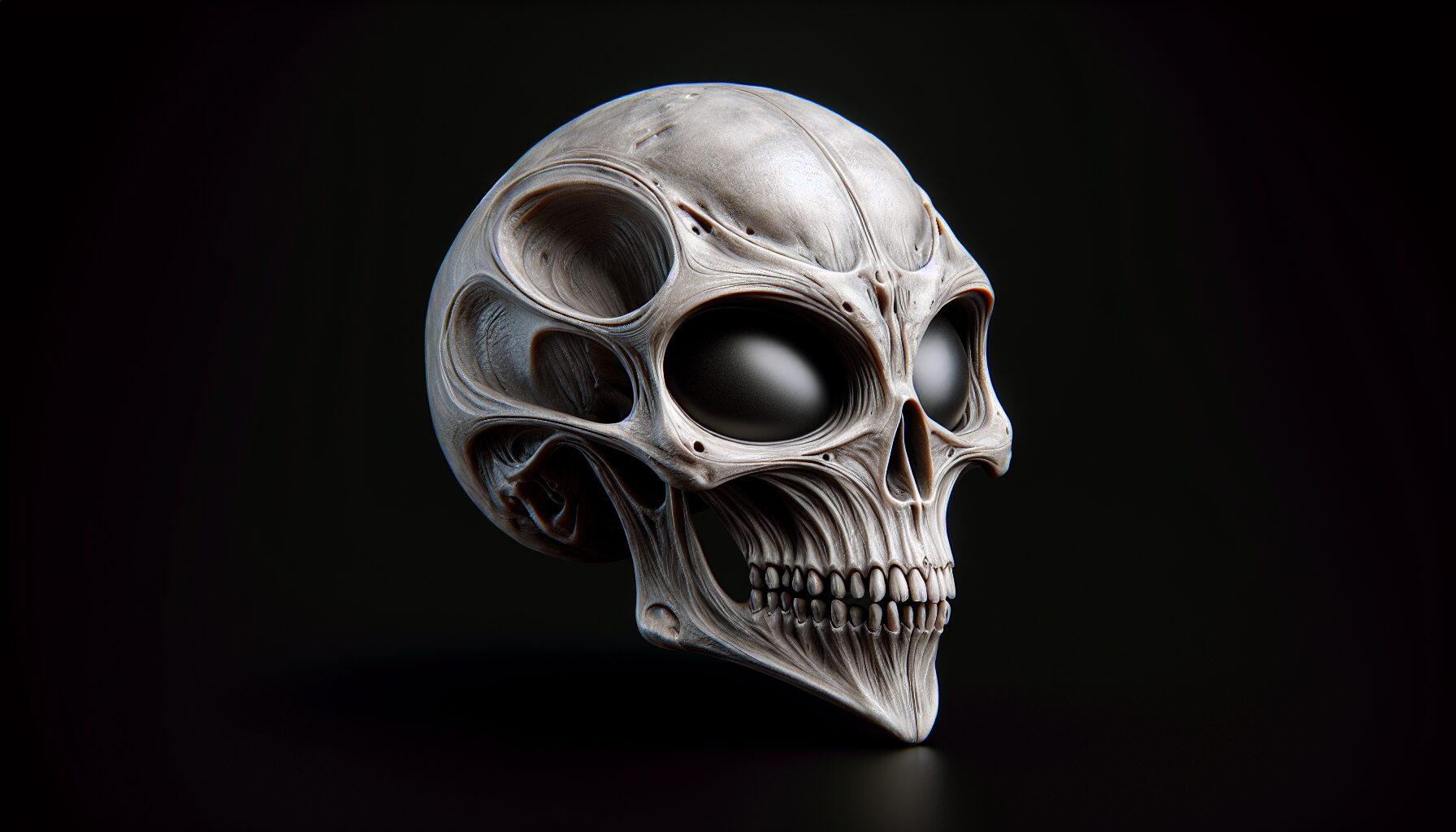
  • Alien Rituals – How Other Beings Might Face Mortality

    Alien Rituals – How Other Beings Might Face Mortality

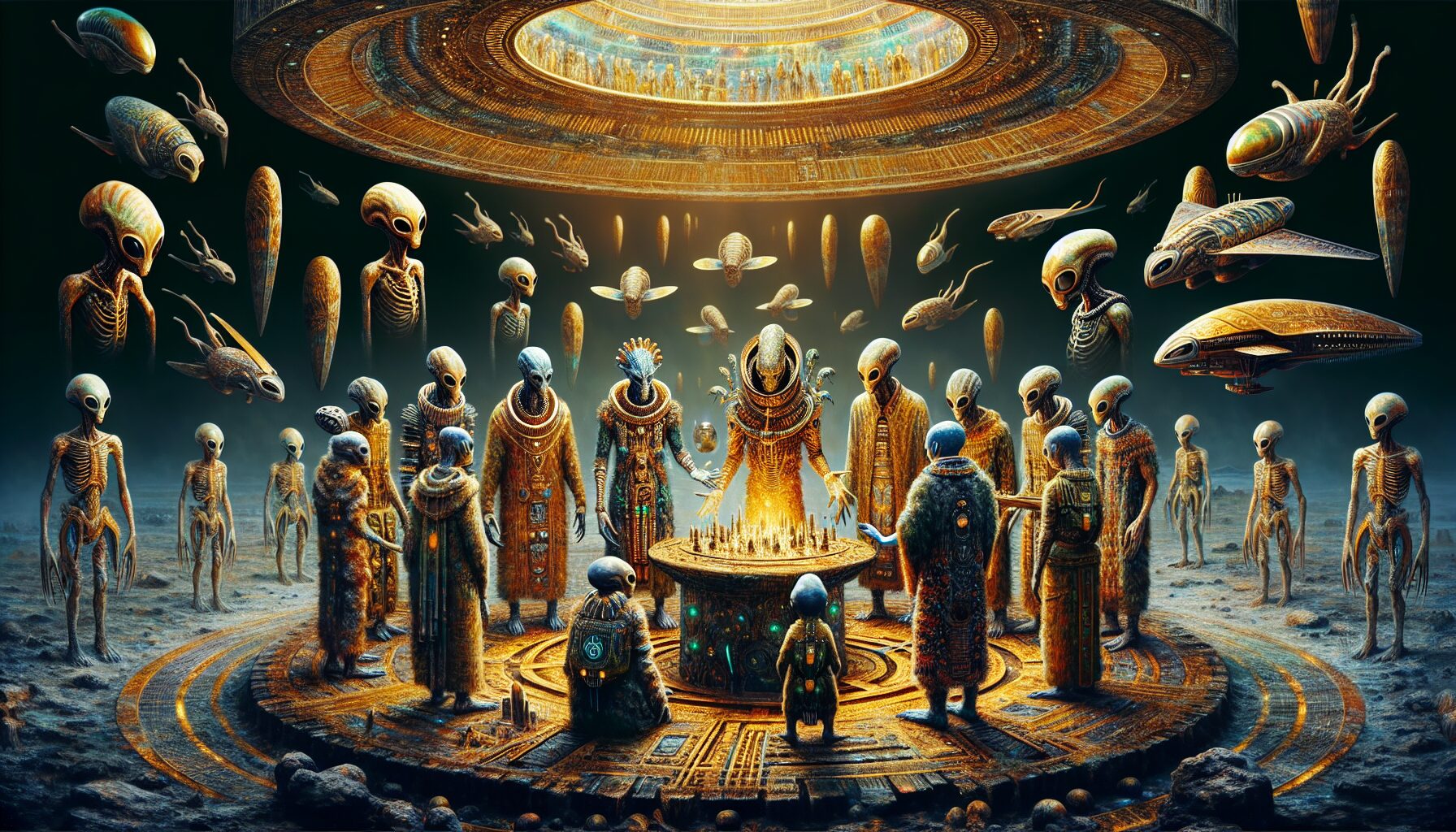
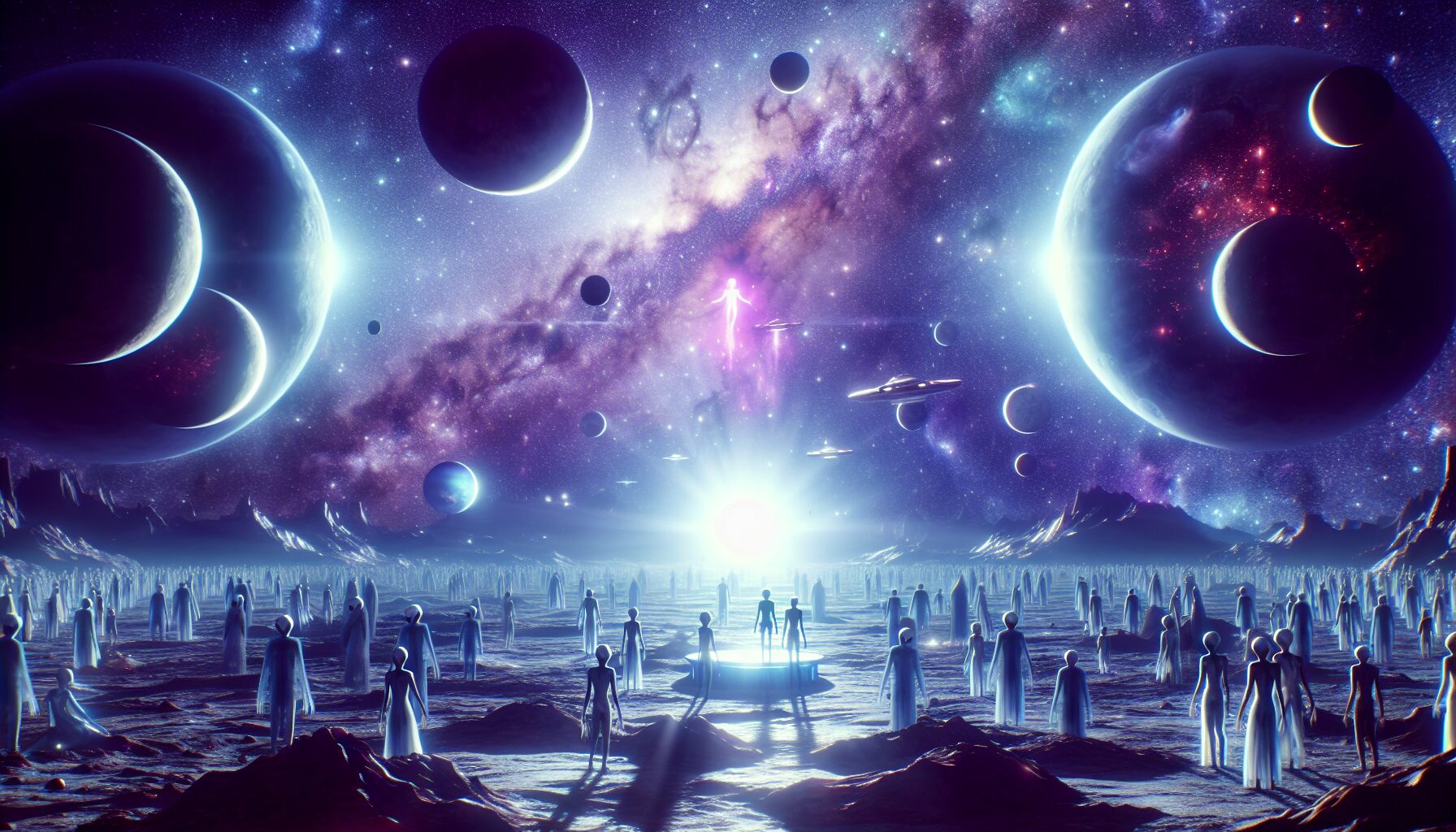
    As humans contemplate existence beyond Earth, one intriguing question surfaces: How might alien civilizations confront the concept of death? The idea that extraterrestrial beings could have their own unique death rituals offers a fascinating lens into the diversity of life forms across the cosmos.

    On Earth, rituals surrounding death vary widely, from the ancient Egyptian embalming processes to modern-day cremations and celebrations of life ceremonies. What then, might alien cultures practice when facing mortality?

    Potential Alien Rituals

    • Energy Reconversion: Advanced civilizations might harness scientific understanding that allows them to convert the life force of the deceased back into usable energy. In this view, death becomes a practical process rather than a sorrowful departure.
    • Memory Preservation: Aliens with a networked consciousness could upload memories of the deceased into communal consciousness systems, allowing individuals to live on in collective memory. This could echo the idea of a digital afterlife that humans speculate about today.
    • Elemental Return: According to some theories, aliens may practice a ritual akin to sky burial, where the bodies are returned to nature’s elements, feeding their planet’s ecosystem in a circular life process.
    • Ritualistic Storytelling: Cultures focused on oral traditions may engage in ritualistic storytelling, retelling the lives and achievements of the deceased as an act of remembrance, potentially accompanied by communal contact with spiritual planes.

    Cultural Insights from Earth

    To imagine these alien rituals, we can draw parallels from Earth’s own traditions. The philosopher Alan Watts once said,

    “We need a mythology that will help us identify not with the individual but with the universe and with the age.”

    His words underline how cultural expression surrounding death often seeks to transcend the individual.

    In a cosmos potentially teeming with life, understanding alien approaches to death could enrich our perspective on mortality, life, and existence. As Arthur C. Clarke suggested,

    “Two possibilities exist: either we are alone in the Universe or we are not. Both are equally terrifying.”

    As we ponder this dichotomy, imagining how other beings might cope with death broadens our understanding of the possible avenues through which life itself is understood in the vast universe.

    While the idea of alien life remains speculative, thinking about how extraterrestrial life forms contemplate their mortality helps humans reflect on their own rituals and the universal quest for meaning in the face of the inevitable.

  • The Death of Worlds – Planets Destroyed by Their Suns

    The Death of Worlds – Planets Destroyed by Their Suns

    The Death of Worlds: Planets Destroyed by Their Suns

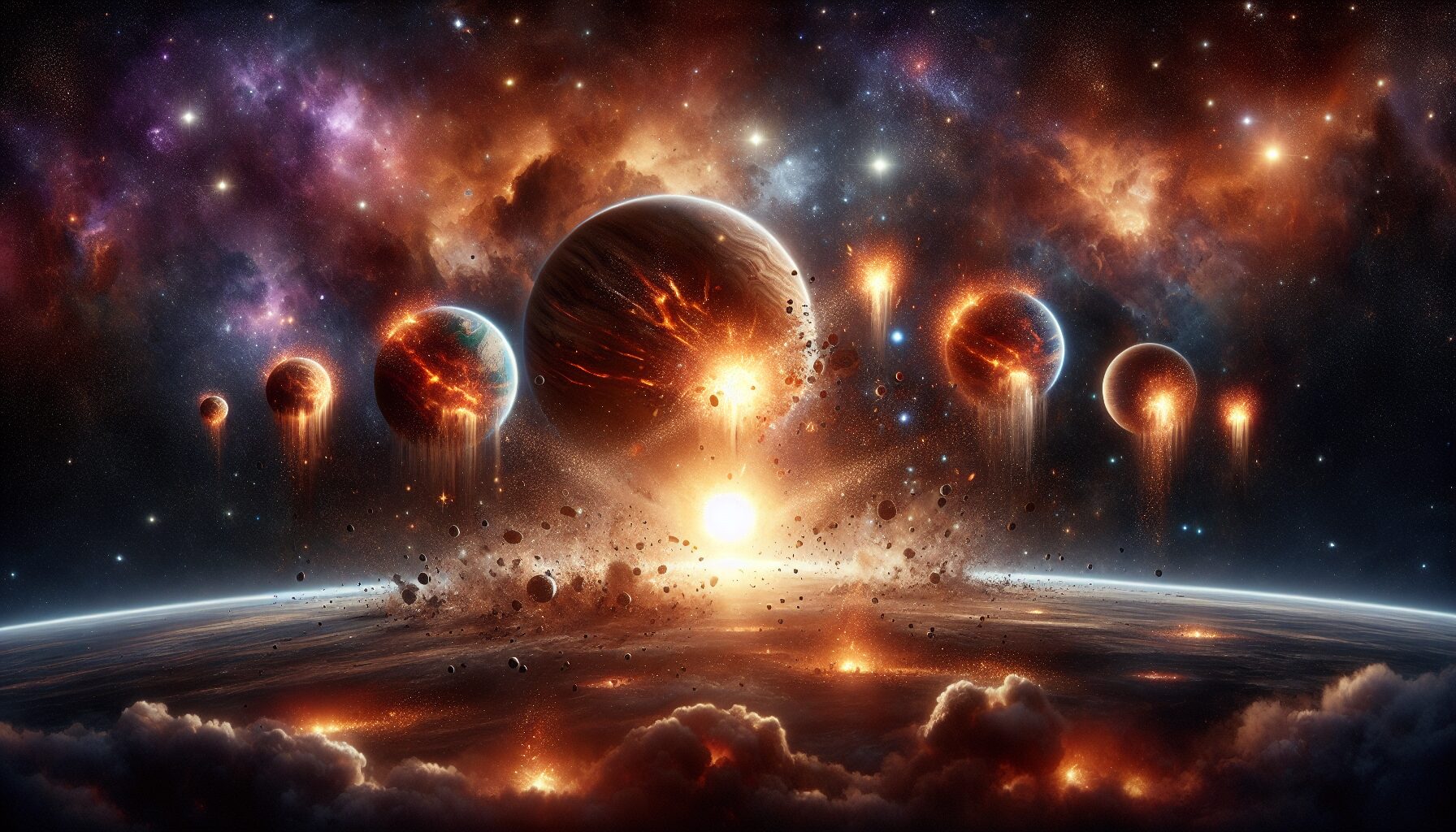
    In the vast and mysterious universe, the inevitable life cycle of stars can lead to catastrophic consequences for their orbiting planets. As stars age, they undergo transformative stages that can result in the destruction of nearby celestial bodies. This stellar evolution paints a dramatic picture of cosmic death, where planets meet their fiery end at the hands of their own suns.

    The Life and Death of Stars

    Stars like our Sun have a finite lifespan, measured in billions of years. Throughout their lives, stars burn hydrogen in a process known as nuclear fusion, which provides the light and heat essential for life on planets such as Earth. However, this process cannot last forever.

    As stars exhaust their hydrogen fuel, they undergo a series of transformations. For instance, stars similar to the Sun become red giants. As they expand, their outer layers move closer to orbiting planets, sometimes engulfing them. Astrophysicist Dr. Alex Filippenko from the University of California notes, “When the Sun becomes a red giant, it will likely expand beyond Earth’s orbit, ending all life on our planet.”[1]

    Case Study: Kepler-56

    A striking real-world example is the star Kepler-56 and its planetary system. Kepler-56 is a red giant with two of its planets, Kepler-56b and Kepler-56c, predicted to be consumed by the star in a few million years. The expulsion of energy from the giant star’s core pushes it outward, leading to the gradual engulfment of these planets.[2]

    The Cosmic Dance of Destruction

    The destruction of planets is not limited to stars like our Sun. Some massive stars end their life cycles as supernovae, cataclysmic explosions that obliterate everything in close proximity. These supernovae release incredible amounts of energy, outshining entire galaxies and often leaving only a neutron star or black hole in their wake.

    “The death of one star is the catastrophe of the worlds that lie within its grasp.”

    Conclusion

    The universe is a constantly changing stage where celestial bodies are both born and obliterated in cosmic cycles. The death of worlds, specifically planets destroyed by their suns, serves as a humbling reminder of our own planet’s eventual fate. While our Sun is not expected to reach red giant status for billions of years, observing these phenomena enriches our understanding of the universe’s dynamic nature—echoing the adage that change is the only constant.


    For more information, check out the full articles on Universe Today and Space.com.

  • Alien Afterlife – Imagining Death Beyond Earth

    Alien Afterlife – Imagining Death Beyond Earth

    What happens after death? This universal question extends into the curious domain of extraterrestrial life. If intelligent beings exist beyond our planet, how might they conceive of an afterlife? Or would they view death through an entirely different lens altogether?

    Exploring Concepts of Life Beyond Earth

    As humans, our notions of the afterlife are deeply intertwined with cultural, religious, and philosophical beliefs. From the grand halls of Valhalla in Norse mythology to the eternal cycle of reincarnation in Hinduism, these concepts shape our understanding of existence beyond death. Considering the potential for alien life forms introduces a vast array of possibilities and challenges us to think beyond earthly constraints.

    Alien Theologies and Philosophical Thought

    Imagining how extraterrestrial civilizations might perceive death requires understanding the cultural and intellectual frameworks they might have developed. Would their societies formulate religious beliefs, scientific hypotheses, or philosophical theories about life and death?

    • Religious Constructs: Just as humanity has developed diverse religious beliefs, alien societies might possess their own spiritual traditions. These could center around energy, cosmological cycles, or entirely unknown elements.
    • Scientific Perspectives: Perhaps alien civilizations, driven by advanced technology, lean more towards scientific explanations, viewing death as a transformation of energy or a temporary state until reanimation is possible.
    • Philosophical Musings: Alien thought might focus on existential philosophies, contemplating consciousness and the universe in ways humans have yet to conceive.

    Astrobiologist Douglas Vakoch suggests, “By considering the diversity of life on Earth, we open our minds to the myriad possibilities of alien life and their unique perspectives on death and an afterlife” (Daily Galaxy).

    Cultural Constructs and Their Impact on Alien Afterlife Perceptions

    Cultural differences on Earth elucidate how varied alien cultures could perceive death. Consider:

    • Community vs. Individuality: Alien societies that prioritize communal existence might see death as a transition to a collective consciousness, while those that value individuality could focus more on personal continuity.
    • Technological Influence: Societies with advanced technology could view immortality or consciousness transfer as realistic outcomes.
    • Environmental Factors: The environment of an alien planet—such as extreme climates—could foster unique survival strategies that influence beliefs about life and death.

    Scientific Speculations: From Energy to Entropy

    Physicist Michio Kaku posits that “an alien civilization might have overcome death, potentially achieving a form of immortality through technology” (Scientific American). Imagine a society that has mastered the manipulation of consciousness, transferring it seamlessly from one vessel to another, sidestepping the traditional notion of death.

    “We are not bound to the same cosmic laws and limitations to which we believe ourselves enslaved,” writes Arthur C. Clarke. “Each new wave of discovery presses back the envelop of the known universe—opening further mysteries” (Goodreads).

    Speculative Narratives in Fiction

    Science fiction literature and media have long explored the concept of alien afterlife, crafting narratives that stretch the imagination. The Orville, Star Trek, and other series explore civilizations with unique afterlife beliefs. Authors such as Arthur C. Clarke and Philip K. Dick have delved into these themes, proposing myriad possibilities for life after death.

    • The Enhancement of Human Understanding: Such fictional accounts push the boundaries of human creativity, prompting deeper inquiry into our own beliefs about life and death.
    • Anthropocentric Limitations: These narratives remind us of the limitations of projecting human experiences onto alien paradigms, inviting us to embrace broader perspectives.

    Conclusion: The Infinitude of Possibilities

    Whether advanced civilizations have outgrown our perceptions of death, or regard it with as much complexity as we do, only the future knows. They may possess wholly unimagined systems of belief and understanding. When speculating about alien afterlife, one must remain open to the vast, unpredictable possibilities the universe holds.

    The intrigue of imagining an alien afterlife lies not only in what it reveals about hypothetical extraterrestrial beings but also in what it suggests about human limitations and aspirations. Our quest to understand life and death extends beyond earthly confines, inviting us to travel among the stars in search of boundless truths.

    In the words of the astronomer Carl Sagan, “Somewhere, something incredible is waiting to be known.” As we ponder the afterlife, may we continue to look to the cosmos with wonder and humility.

  • Entropy as God – Science’s Final Word on Death

    Entropy as God – Science’s Final Word on Death

    In the grand tapestry of existence, the concept of entropy weaves through both the fabric of the universe and the essence of human life. Often synonymous with disorder and decay, entropy may be perceived as nature’s ultimate verdict on mortality. As the scientific lens brings clarity to the complex nature of entropy, it unveils perspectives that challenge our understanding of death and, perhaps, transcendence.

    The Science of Entropy

    Entropy, a core principle of the second law of thermodynamics, is a measure of the amount of disorder or randomness in a system. The second law posits that in an isolated system, entropy tends to increase over time. This universal tendency towards disorder is the driving force behind many natural processes, from the melting of ice to the eventual heat death of the universe. In terms of physics, entropy is quantified in joules per kelvin, capturing the dispersal of energy that marks each system’s journey towards thermal equilibrium.

    “Entropy is the ultimate metaphysical explanation of the world,” writes Philip Ball in Scientific American. “It drives home the point that day-to-day, and eventually existential, disorder is woven into the fabric of natural law.”

    The Role of Entropy in Life and Death

    For living organisms, entropy manifests in the gradual breakdown of structures and processes. Biological systems, while highly ordered, are not exempt from the universal journey toward disorder. Cellular structures decay, entropy increases, and the once orderly arrangement of matter dissolves, culminating in the end we call death.

    According to a study published in Nature, the concept of programmed decay, where organisms age and eventually die, can be viewed as nature’s method of recycling energy. Thus, life and death are not diametric opposites but rather fluctuating states within the ceaseless dance of entropy.

    Spiritual Parallels and Entropy as “God”

    The philosophical implications of entropy stretch beyond scientific discourse and into the realm of spirituality. If entropy dictates the inception, evolution, and conclusion of the universe, it becomes analogous to a divine force—what some might call “Entropy as God.” It embodies omnipresence, omniscience, and the all-encompassing passage of time.

    “When you consider entropy not as an enemy but as a law-like expression of natural order, it takes on an almost divine essence,” notes physicist Ethan Siegel at Forbes. “It reminds us of the impermanence and yet paradoxically eternal cycle of creation and decay.”

    Challenging the Finality of Death

    While entropy defines life’s finite nature, it also opens doors to new forms of philosophical and existential exploration. If viewed through the lens of ongoing transformation rather than termination, death becomes a transition rather than an absolute end. As each organism dissolves back into the universe, it surrenders its ordered structure yet perpetuates a cycle that fuels new life.

    The cycle of life, death, and rebirth is not foreign to spiritual teachings across cultures. The Hindu concept of Samsara—the cycle of death and rebirth—is a compelling parallel to the scientific interpretation of entropy. Entropy and spiritual rebirth converge in their acknowledgment of continuous, cosmic metamorphosis.

    Implications for the Future

    As science advances, the understanding of entropy and its broader implications continues to evolve. While death remains an absolute in the biological sense, the entropic perspective provides a holistic view of existence that shines a different light on mortality. Within the enormity of the universe, our roles are part of an overarching and interconnected process—essential components within an eternal cycle.

    For scientists and thinkers alike, embracing entropy as a guiding principle could pave the way to revolutionary insights into the universe’s nature. As we unravel the mysteries of our existence, let us consider that entropy, far from being an end, may represent the inexhaustible potential of cosmic reinvention.

    The dance with entropy is one we all share, thus prompting the question: in viewing entropy as “God,” can it transform how we perceive our mortal passage through life into death? In this lens of eternal transformation, perhaps our final moments are not a silence but a continuation—a thread within the larger weave of the universe.

  • The Physics of Silence – Death as the Absence of Vibration

    The Physics of Silence – Death as the Absence of Vibration

    In the realm of physics, every particle, every atom, is in a perpetual state of motion. This movement, a continuous dance among molecular structures, is what defines the very essence of life. When we think about life, we often associate it with sound, movement, and energy. Silence, therefore, can be viewed as an antithesis of life, and in an abstract sense, death can be perceived as the ultimate silence—the complete absence of vibration.

    The Concept of Silence in Physics

    Silence is commonly understood as a lack of audible sound. However, in physics, silence can be more precisely described as an absence of wave vibrations within a particular spectrum detectable by the human ear, typically between 20 Hz to 20 kHz. Yet, true silence in the physical universe is unachievable because, on a microscopic level, everything oscillates.

    • At the atomic level, particles are in constant motion.
    • Even at absolute zero, where classical physics taught us that motion stops, quantum mechanics shows us that particles still possess zero-point energy and continue to fluctuate.

    Vibration and the Essence of Life

    One could argue that vibration is the essence of life itself. Biologically, life is sustained through a series of vibrations and oscillations. The human heart beats due to electrical impulses causing heart muscles to contract. Our neurons communicate through the transmission of electrical signals—again, a form of vibration.

    Thus, life can be conceived as a symphony of cellular vibrations and electromagnetic interactions that create the vibrant tapestry of living organisms. As Dr. Martin Blank of Columbia University elucidates, “Living cells are electromagnetic units… these electromagnetic forces within cells provide the energy needed for cell division, breathing and all life processes” (Biorepository, 2005).

    Death and the Cessation of Oscillation

    With death comes the cessation of these life-sustaining vibrations. When biological systems stop vibrating in their life-sustaining patterns, the organism ceases to live. Hence, death is frequently described as the “end of vibrations” within an organism’s biological framework.

    “The energy of any system that is at rest, or dead, is a measure of the absence of energy swaps, of vibrations within and outside the system that characterize the living state” (The Nature of Life, Schrödinger, 1944).

    As Schrödinger implies, while a deceased body may lie still, devoid of life’s energy exchanges, the particles themselves continue to resonate. This is what makes the concept of absolute silence—a complete systemic halt—near impossible.

    Philosophical Perspectives on Silence and Death

    From a philosophical lens, silence can be viewed as both daunting and profound. Many resonate with the idea encapsulated in the words of Aldous Huxley: “After silence, that which comes nearest to expressing the inexpressible is music.” Silence, in its purest form, challenges our understanding of existence and the universe which is inherently dynamic and vibrative.

    Death, seen through this prism, is an ultimate, inevitable silence that humanity both fears and respects. Philosophers have long debated whether this silence is indeed a void or a transition to another state of being—a cessation of known vibrations but perhaps the beginning of an unknown frequency.

    The Unachievable Silence of the Universe

    As we expand our understanding of the universe, it becomes apparent that silence itself is paradoxical. While we can conceptualize and even seek silence, absolute silence is fundamentally unattainable. The universe is a tapestry of vibrations of varying magnitudes and frequencies, from the low rumble of cosmic microwave background radiation to the high-frequency chirps detected by LIGO from distant colliding black holes.

    On Earth, while localized silences—such as anechoic chambers that absorb sound waves—can provide intense personal experiences of silence, it is but an illusion of the universal vibrations still happening just beyond those walls.

    Conclusion

    Ultimately, the physics of silence teaches us that life and death, vibration and quietude, are not absolute states but rather points along a continuum of motion and stillness. Death as the absence of vibration is in some sense a redirection rather than a termination. Understanding this concept bridges the gap between our existential ponderings and the tangible mechanics of the universe.

    Thus, the silence that accompanies death is less an end and more a transformation—a shift in the cosmic vibrations from which we all, even temporarily, derive our existence.

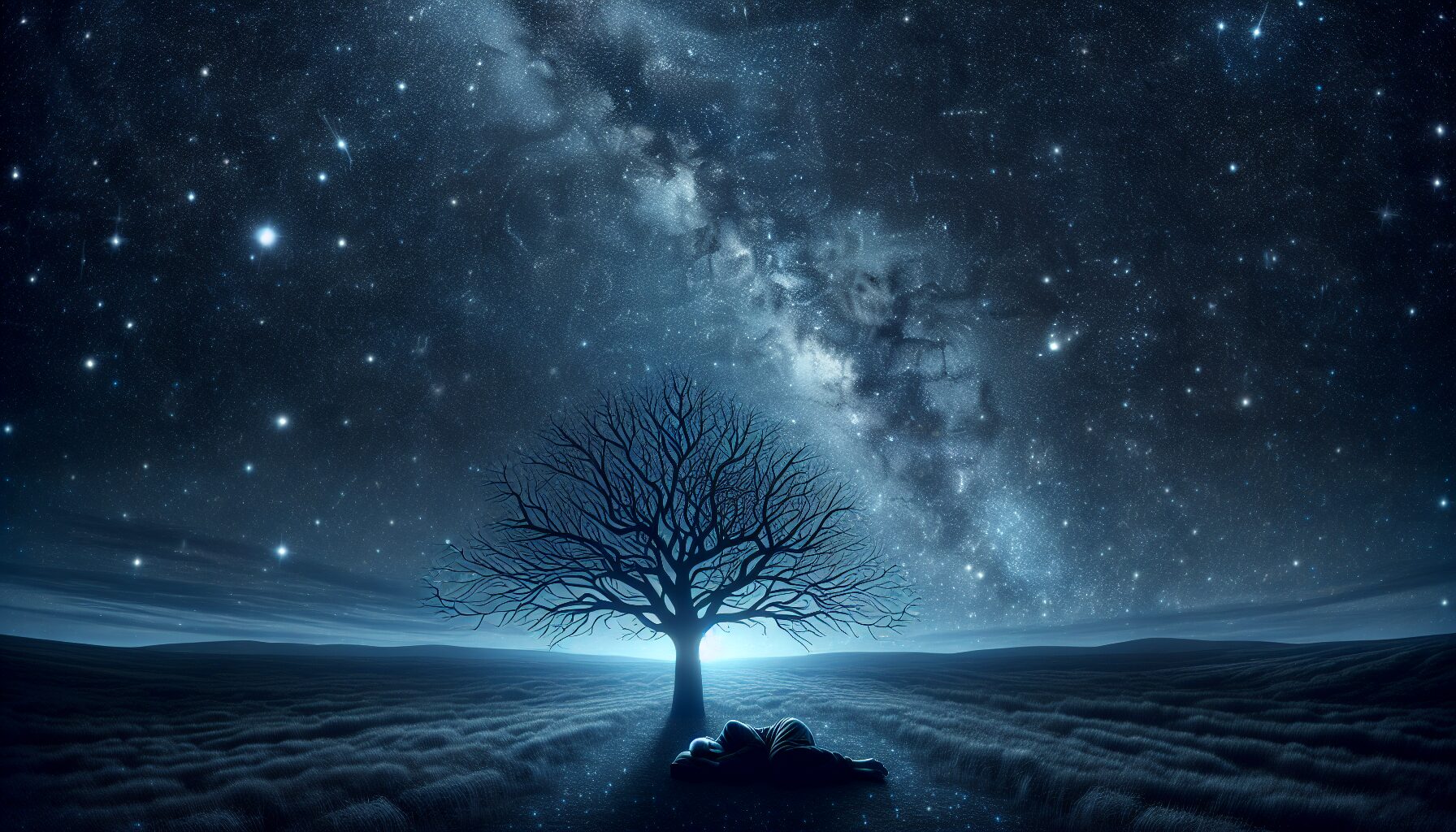
  • Sleep as Mini-Death – Biology’s Daily Practice of Dying

    Sleep as Mini-Death – Biology’s Daily Practice of Dying

    Sleep as Mini-Death: Biology’s Daily Practice of Dying

    Sleep has long been a source of fascination and mystery, often described as a “mini-death” by various cultures and philosophies. The comparison arises from the significant loss of consciousness and physical inactivity, resembling the stillness of death, which occurs every night. But is this analogy purely poetic, or does it hold some biological truth?

    The Biological Perspective

    The phenomenon of sleep as a daily practice of dying can be explored through a biological lens. Matthew Walker, a renowned sleep scientist, explains that during sleep, “we go through cycles of non-REM and REM sleep, essentially disconnecting from our environment as we temporarily ‘die’ to the world” ([source](https://www.sleepfoundation.org/)). This disconnection is critical for numerous bodily functions, including memory consolidation, immune system regulation, and cellular repair.

    Comparative States: Sleep and Death

    • Loss of Consciousness: Just as death leads to a permanent loss of awareness, sleep temporarily suspends conscious experience, bringing a sense of oblivion.
    • Physical Inactivity: During deep sleep, the body experiences temporary paralysis, known as atonia, particularly in the REM phase. This is reminiscent of the immobility observed in death.
    • Metabolic Changes: Sleep induces a state of reduced metabolic rate, which is also a characteristic of biological decay processes after death.

    Philosophical and Cultural Reflections

    The idea of sleep as a mini-death is not just biological but also philosophical. For instance, the ancient Greek philosopher Heraclitus noted, “Even sleepers are workers and collaborators in what goes on in the universe” ([source](https://www.goodreads.com/author/quotes/4090.Heraclitus)). This suggests that despite its apparent inertness, sleep plays an essential role in life’s cyclical process, much like death does in the broader ecological context.

    “The only time I have problems is when I sleep. Perhaps I’m a unique being, being in dormancy while alive.” – René Descartes

    Conclusion

    While sleep is a revival waiting to happen, it serves as a reminder of the temporary nature of life and perpetuates the cycle of birth, growth, and decay. As a biological necessity deeply intertwined with our survival, sleep deserves reverence rather than fear, much like death itself.

    Understanding sleep as a mini-death enhances our appreciation for the necessity and benefits of this nightly ritual, allowing us to embrace it as a rehearsal that sustains and revitalizes our daily lives.

  • Brain Death – The Final Frontier of Science and Law

    Brain Death – The Final Frontier of Science and Law

    Brain Death: The Final Frontier of Science and Law

    In recent decades, the concept of brain death has emerged as a pivotal topic at the crossroads of neuroscience, ethics, and jurisprudence. Defined as an irreversible cessation of all brain activity, brain death is seen as a point at which a person is deemed clinically and legally deceased. Despite scientific advances, brain death remains a controversial subject that challenges our traditional perspectives of life, death, and the human condition.

    Understanding Brain Death

    Brain death is distinct from a coma or a persistent vegetative state. It occurs when there is a total loss of brain function, including the brainstem, which regulates basic life functions such as breathing and heartbeat. According to The American Academy of Neurology, the diagnosis of brain death is “based on clinical criteria, including the absence of a neurological response to any external stimuli.”[1]

    The Science Behind Brain Death

    Advancements in medical technology have allowed doctors to maintain bodily functions even when brain activity has ceased. Mechanical ventilation, for example, can keep the heart and lungs working, giving the appearance of life when, biologically, none exists. The Harvard Criteria established in 1968 were among the first formal guidelines to determine brain death, specifying the need for multiple and comprehensive tests.

    • Apnea Test: Measures the body’s ability to recognize elevated CO2 levels and stimulate breathing – a test often failed in brain-dead individuals.
    • Brainstem Reflexes: Checks for responses such as pupil dilation and gag reflex, which should be absent in brain death.
    • Electrophysiological Methods: These include EEGs and other brain imaging techniques to confirm the absence of electrical activity.

    Ethical and Legal Challenges

    The legal recognition of brain death varies dramatically across the globe. The Uniform Determination of Death Act in the United States, passed in 1981, provides a comprehensive legal framework stating that “an individual who has sustained… irreversible cessation of all functions of the entire brain, including the brain stem, is dead.” Yet, disparities in law arise when cultural and religious convictions come into play.

    Dr. Robert Troug of Harvard Medical School asserts, “Brain death is legally equated to death in most parts of the world, but not all social, religious, and familial contexts accept this definition.”[2] For instance, in Japan and some parts of the Middle East, acceptance of brain death is not universal, reflecting differing beliefs about when life truly ends.

    Implications for Organ Donation

    One significant implication of brain death is its role in organ transplantation. Every year, thousands of lives are saved thanks to organ donations from brain-dead patients. The brain death criteria ensure that organs are only harvested from individuals who are legally dead, thereby aligning medical practices with ethical standards.

    “Organ procurement post-brain death is crucial for timely and effective transplantation, yet it hinges on clear communication and consent procedures,” explains Dr. Laura Siminoff of Temple University.[3]

    Cultural Considerations and Public Perception

    Despite clinical clarity, brain death often evokes emotional and philosophical debate. Cultural attitudes towards death, the body, and the spirit can greatly affect family decisions and public perception. Various research indicates that misconceptions about brain death contribute to deep-seated fears and resistance toward declaring brain death or consenting to organ donation.

    • Misinformation: Many people mistakenly equate brain death with being in a coma or a vegetative state, which fuels distrust in medical practitioners.
    • Religious Beliefs: Different religions offer diverse interpretations of death, impacting acceptance and consent related to brain death.
    • Media Influence: Portrayals of miraculous recoveries from comas in media can distort public understanding and expectations.

    The Future of Brain Death

    As neuroscientific research forges ahead, the criteria for brain death could evolve with improved diagnostic technologies, potentially leading to international consensus. The integration of advanced imaging and biomarker assessments may offer clearer confirmation of loss of brain function, enhancing trust in medical judgments.

    Notably, the ethical implications of redefining death criteria may affect legal policies, organ donation protocols, and end-of-life care. Ethical conversations need to parallel scientific progress, ensuring that societal and individual beliefs continue to be respected in defining these life-and-death boundaries.

    Conclusion

    Brain death, as it stands, encapsulates a profound chapter in the dialogue between science, law, and societal values. It invites introspection into what it truly means to be alive and challenges us to reconcile technological possibilities with diverse human ideologies. As our understanding deepens, so too must our discussions about how to ethically and responsibly navigate this frontier.

    For now, the multifaceted exploration of brain death continues to push the boundaries of both medical capabilities and our collective moral compass—underscoring the interconnectedness of our biological existence and philosophical meaning of life.

    [1] American Academy of Neurology
    [2] Harvard Medical School
    [3] Temple University

  • Forensic Entropy – Measuring Death With Physics

    Forensic Entropy – Measuring Death With Physics

    Forensic science has always been a domain where the boundaries of multiple disciplines intersect. One of the most intriguing intersections is between forensic analysis and the second law of thermodynamics — specifically, the concept of entropy. This principle is gradually reshaping the way we understand and measure death, offering new methodologies for criminal investigations and unraveling the mysteries surrounding mortality.

    Understanding Entropy in Physics

    Entropy, from a physical sciences standpoint, is a measure of disorder within a system. The second law of thermodynamics posits that entropy within a closed system will always increase over time, leading towards a state of equilibrium. This principle explains why natural processes tend to move from order toward chaos, and why perpetual motion machines are impossible.

    “Entropy is a central pillar of the second law of thermodynamics and provides a quantitative measure for understanding the distribution of energy within any given system.” — Entropy Developers Organization

    Application of Entropy in Forensics

    Applying the concept of entropy to forensic science requires rethinking how death can be scientifically analyzed. Forensic entropy seeks to quantify the disorder in the biological system of a deceased organism, interpreting the process’s progression towards thermodynamic equilibrium.

    • Time of Death Estimation: Analyzing entropy provides insights into the rigor mortis process, body temperature changes, and postmortem decomposition. These factors, when understood through the lens of increasing entropy, help forensic scientists pinpoint the time of death with higher accuracy.
    • Decomposition Process: As decomposition results in marked energy redistribution and breakdown of bodily structures, measuring this increase in entropy allows forensic experts to gauge the timeline and environmental factors at play during decomposition.
    • Environmental Interactions: Entropy helps in understanding how external variables like temperature, humidity, and microbial activity accelerate or decelerate the process of decay, providing critical insights in various forensic scenarios.

    Case Studies and Recent Developments

    Consider the notable case of the Challenger Deep investigation, where researchers used entropy measurements in understanding how deep-sea conditions affect necrobiotic processes. The unique interplay of pressure and cold temperatures provided valuable data on entropy trends in extreme environments.

    Recent advancements have further broadened the scope of forensic entropy. Researchers at the University of Forensic Sciences have developed sophisticated algorithms capable of calculating biological entropy changes in cadavers with impressive precision, integrating artificial intelligence to enhance predictive model accuracy. These algorithms have significantly refined methods for determining postmortem intervals.

    Challenges and Ethical Considerations

    Despite its promise, the forensic application of thermodynamic entropy is not without challenges. The variability in environmental conditions, individual biological differences, and the complexity of biochemical reactions all contribute to potential inaccuracies or ambiguities when interpreting entropy-related data.

    Ethically, the use of such technology in forensic investigations raises questions about privacy, consent to postmortem examinations, and the potential misuse of data. It’s imperative for legal frameworks and ethical guidelines to evolve alongside technological advancements to ensure that forensic entropy is applied responsibly and respectfully.

    “The intersection of cutting-edge science and legal practice necessitates a robust ethical framework to safeguard against potential misuse.” — Forensic Ethics Forum

    The Future of Forensic Entropy

    Looking ahead, the integration of entropy in forensic science could revolutionize how death is quantified and understood. From preemptive identification of unusual mortuary patterns in epidemiological studies to advanced forensic reconstructions in criminology, the potential applications are vast.

    Cross-disciplinary collaboration will be essential in optimizing methodologies and tools. As forensic scientists, physicists, biologists, and data scientists pool their expertise, the field of forensic entropy will continue to mature, paving the way for more precise and informed analyses in criminal investigation and beyond.

    Ultimately, the marriage of physical principles and forensic science not only enhances our understanding of death but challenges us to appreciate the complex interplay of life and entropy, urging us to redefine our approach to mortality in scientific and philosophical terms alike.

  • The Death of Species – Extinction as Collective Passing

    The Death of Species – Extinction as Collective Passing

    The Death of Species – Extinction as Collective Passing

    The natural world is in a state of unprecedented change, as species are being lost at a rate that some scientists compare to historical mass extinction events. This phenomenon is often described in ecological terms—habitat destruction, climate change, and overexploitation—but what if we approached extinction as a process akin to collective death and mourning?

    Understanding Extinction Beyond Numbers

    The statistics are daunting. According to the IUCN Red List, over 38,500 species are threatened with extinction. However, each of these numbers represents a lineage lost forever, a biological entity that will no longer be part of the planet’s tapestry. “We are facing a global biodiversity crisis,” says the IUCN, underscoring the gravity of the situation.

    Emotional and Cultural Dissonance

    When we discuss extinction, we often fail to engage with the concept emotionally or culturally. Just as the death of an individual resonates through social and familial networks, the extinction of a species impacts the ecosystems and human communities intertwined with it. Conservationist Aldo Leopold once observed, “To keep every cog and wheel is the first precaution of intelligent tinkering.”

    “The loss of biodiversity and extinction of species hang like a specter over our world, a constant reminder of the fragility of life,” reflects Dr. Jane Goodall, summing up the intertwining of nature and humanity.

    Nature’s Intricate Web

    The ecological implications of extinction are profound. When species vanish, the ecosystems that rely on them can collapse or transform dramatically. The complexities of food webs, pollination networks, and interspecies relationships are altered. As noted by E.O. Wilson, “Each species is a masterpiece, exquisitely adapted to the particular environment in which it has flourished.”

    Mourning the Non-Human

    Considering extinction as a collective death allows us to explore the grief associated with losing a part of our natural world. This perspective can inspire more profound empathy and motivate conservation efforts. Robin Wall Kimmerer, a leading voice in the intersection of ecology and indigenous wisdom, reminds us that “Finding some part of nature that matches your spirit will help restore the broken bond between us and the Earth.”

    • Symbolic Loss: Species that capture the public’s imagination, like polar bears or elephants, become symbols of broader environmental struggles.
    • Loss of Knowledge: Indigenous and local communities who have coexisted with these species often lose cultural practices and traditions.
    • Spiritual Connections: Many cultures view animals and plants as sentient beings; their extinction marks not just a biological loss, but a spiritual one.

    Hope and Action

    While the current situation is dire, understanding extinction in human terms can galvanize action. Efforts to prevent species loss are ongoing, from international treaties like the Convention on Biological Diversity to grassroots movements. Education and awareness are critical in sparking global resolve to preserve our planet’s biodiversity.

    “There are solutions in nature itself,” writes famed ecologist David Attenborough. “If we understand it, then we can stabilize the effects we ultimately experience.”

    Conclusion

    The death of a species is indeed a profound loss, resonating far beyond the environmental realm. By viewing extinction as a form of collective passing, we may find new compassion and motivation to embrace the challenges of conservation with urgency and empathy. The fate of future generations—human and non-human alike—depends on how we respond to this pressing issue.

    In mourning our planet’s lost species, we bear witness not just to what has been, but to what can still be saved through ambitious conservation and profound cultural shifts. Embracing this view may be our greatest service to earth’s legacy.

  • Time Dilation and Death – Relativity at the Edge of Life

    Time Dilation and Death – Relativity at the Edge of Life

    Time Dilation and Death: Relativity at the Edge of Life

    In the realm of astrophysics and human experience, there is a curious intersection where time itself becomes as mutable as our understanding of life and death. This article explores the fascinating concept of time dilation, its roots in Einstein’s theory of relativity, and how it metaphorically—and sometimes literally—relates to the edges of human existence.

    The Roots of Time Dilation

    Time dilation, a cornerstone of Albert Einstein’s Theory of Relativity, is the idea that time passes at different rates for observers who are in different states of motion, or differing gravitational fields. This groundbreaking concept was introduced with the publication of Einstein’s Special Theory of Relativity in 1905, and subsequently, the General Theory of Relativity in 1915.

    “The faster you move through space, the slower you move through time,” explains astrophysicist Neil deGrasse Tyson. “That is time dilation in a nutshell.”

    • Velocity Time Dilation: As an object approaches the speed of light, time relative to a stationary observer slows down.
    • Gravitational Time Dilation: In stronger gravitational fields, time moves more slowly when compared to a position with a weaker gravitational field.

    These effects have been confirmed through rigorous experiments and observations, including measurements involving GPS satellites that adjust for time dilation effects relative to Earth-bound clocks.

    Time Dilation at the End of Life

    While time dilation is often discussed in the context of cosmic phenomena or futuristic travel, it can also serve as a metaphorical lens through which to view the human experience—particularly at the end of life.

    In literature and philosophy, the moments before death are often described as times when the fabric of reality distorts. Life seems to expand into an eternity in a matter of moments. A phenomenon potentially explained by psychological time dilation, where significant emotional experiences slow our perception of time.

    “Time felt as though it had stopped, stretching infinitely as I stared into the face of eternity,” wrote novelist Michel Faber on a near-death experience.

    Psychological Time Dilation

    Psychological time dilation occurs when our internal clocks alter, typically during high-stress or enriching experiences. Researchers at Stanford University have studied this effect, noting that people in danger often report that “everything seemed to slow down”. The last moments—a metaphorical event horizon—can be filled with a richness of recollection and emotional intensity that makes time feel both endless and lightning-quick.

    Quantum and Consciousness

    Further adding to the enigma is the growing body of work linking quantum physics to human consciousness. Could the brain’s neural processes be subject to both psychological and quantum forms of time dilation during significant life events?

    Stanford physicist Roger Penrose and anesthesiologist Stuart Hameroff have pioneering theories correlating consciousness with quantum states in the brain, suggesting our perception of time could literally alter during profound moments.

    “The brain’s microtubules might serve as the seat for quantum computations influencing conscious awareness and perhaps perceived time,” suggests Hameroff in a 2021 interview.

    Time Dilation in a Medical Context

    Practically, understanding time dilation in a medical context can greatly aid in end-of-life care. Hospice and palliative care professionals often emphasize the holistic experience of time during the final stages of life. Recognizing a patient’s internal experience of time can lead to more empathetic and effective care approaches.

    • Extended Time Perception: Patients exhibit differently paced perceptions of time during imminent threats to existence, as documented in various case studies.
    • Cultural Perspectives: Various cultures have depicted death with time-stretching events, valuing the last moments as rich and significant.

    “Understanding and respecting the altered perception of time can truly change the way we provide care to those nearing the end,” notes Dr. Laura Saunders, a leading expert in geriatric care.

    Conclusion: Death on the Edge of Time

    Time dilation, whether experienced in outer space or the more intimate space of a hospital room, invites profound reflections on the nature of reality and our place within it. As we gain deeper insights into both the physical and psychological components of time, we may find ourselves better equipped to face the ultimate unknown with a sense of awe and greater understanding.

    The mysteries of time dilation remind us that time, much like life, is subjective and richly complex. Observing it through both scientific inquiry and human experience offers a unique tapestry of insights, granting us the humility to approach life’s final frontier with wonder.