Tag: demonic

  • Infernal Echoes – Petit Mort of Demons

    Infernal Echoes – Petit Mort of Demons

    Infernal Echoes: Petit Mort of Demons

    Within the shadow-drenched corridors of mythology and religion lies the concept of demonic death. Frequently shrouded in mystery and conjured as harbingers of darkness, demons are entities known to defy the boundaries of life and death. But what if these creatures, steeped in infernal lore, experience a momentary touch of mortality, an ephemeral cessation—a petit mort?

    The Mythical Context

    The idea that demons, entities often viewed as eternal and indestructible, might taste mortality challenges preconceived notions. Historically, demons have been perceived through various cultural lenses. In the Christian tradition, as discussed in the Catholic Encyclopedia, demons are fallen angels, condemned to suffer eternally but nonetheless enduring throughout time.

    The Concept of Petit Mort

    The French term petit mort, often used metaphorically to describe the brief loss of consciousness or feeling following a climax of pleasure, extends intriguingly into the realm of the demonic. How might a demon experience their own ‘little death’? What echoes linger in the wake of such an occurrence?

    Echoes of Literature

    • Dante’s Inferno: In this classic epic, Dante describes the fate of the damned and demonic in vivid detail, yet they continue their torment without end. Perhaps it is their resistance to total annihilation that lends them a sort of undying resilience, thus making their own petit mort a paradoxical moment.
    • Goethe’s Faust: In this notable work by Johann Wolfgang von Goethe, Mephistopheles, the embodiment of cunning evil, is portrayed as trapped in his role, unable to escape his demonic purpose. His metaphoric deaths are those of failed ambitions and the fleeting nature of triumph.

    Mystical Reflections

    As we explore the idea of demonic petit mort, it invites a deeper understanding of the nature of evil and existential endurance. It asks us to recognize that even beings shrouded in malevolence might face vulnerabilities and ephemeral cessation.

    “The idea that the immortal can grasp mortality, even in fleeting moments, blurs the lines between eternity and transience, challenging our understanding of what lies within the shadows of both truth and myth.” — Scholars of the Sublime

    Thus, as we ponder the petit mort of demons, we turn to introspection and question our own fleeting moments of vulnerability that, like infernal echoes, remind us of our mortality even in times of might.

  • Demonic Dissociation – Depersonalization of the Infernal

    Demonic Dissociation – Depersonalization of the Infernal

    Demonic Dissociation: Depersonalization of the Infernal

    In the realm of psychological phenomena and supernatural lore, the concept of demonic dissociation draws a captivating parallel between ancient beliefs and modern-day mental health issues. This intriguing intersection explores the notion of demons possessing or influencing individuals, leading to a state akin to depersonalization. By examining both historical texts and contemporary psychological research, we can better understand how these ideas coexist and intertwine.

    The Essence of Demonic Influences

    The belief in demonic influences is as old as humanity itself, spanning various cultures and religions. Traditionally, demons have been regarded as malevolent supernatural entities intent on causing harm or chaos. These entities are often portrayed as influencing or possessing individuals, leading to unusual or harmful behaviors. In many religious texts, exorcisms are prescribed to rid a person of such an influence, a testament to the deeply rooted fear and awe surrounding demonic possession.

    • A key characteristic of traditional demonic possession involves individuals exhibiting behaviors or speaking in languages unknown to them, suggesting a distinct separation from their usual selves.
    • Historical accounts, such as the Demonology by King James I, describe exorcisms and the perceived science behind identifying and expelling demons.

    Depersonalization in Modern Psychology

    Depersonalization, a term widely recognized in modern psychology, refers to a state in which individuals feel disconnected or estranged from their own self. This phenomenon is part of the broader category of dissociative disorders, which also includes amnesia and identity disturbances.

    • According to the American Psychiatric Association, individuals experiencing depersonalization might feel as if they are observing themselves from outside their body, leading to a distorted sense of identity.
    • Symptoms can be triggered by extreme stress, trauma, or psychological distress, and the condition can persist, affecting daily life and functioning.

    The Parallels Between the Infernal and the Psychological

    On exploring the intersections between historical demonic possession and modern depersonalization, a fascinating question emerges: Could ancient descriptions of possession be early interpretations of psychological dissociation? Both experiences involve a profound sense of alienation from one’s identity and an observable change in behavior.

    `There is a growing interest in the overlap between psychological dissociation and religious experiences,” notes Dr. Elaine Fox, a leading psychologist specializing in the study of emotion and cognition. “Understanding why the mind dissociates can provide insights into both psychological and spiritual experiences.`

    “The supposed possession by demons may reflect the severe dissociation triggered by trauma or distress, being culturally interpreted according to the worldview of the time.” — Dr. Elaine Fox

    Cultural Perceptions and Implications

    The persistence of demonology in popular culture underscores the ongoing intrigue surrounding these phenomena. Films, books, and television series often explore themes of demonic possession not only as entertainment but also as a metaphor for inner turmoil and identity crises.

    • The 1973 film The Exorcist is a classic example, portraying possession with dramatic flair while tapping into the universal fear of losing one’s sense of self.
    • Similarly, texts like The Demonologist by Andrew Pyper explore the psychological and supernatural aspects of possession, suggesting parallels between historical demonic encounters and present-day mental health issues.

    Convergence and Understanding

    To reconcile these narratives of demonic possession and psychological dissociation, one must consider both cultural and scientific perspectives. From the depiction of demons as forces of evil in religious texts to the clinical analysis of dissociation in psychology, both fields attempt to address an age-old question of identity and agency.

    The demonic serves as a potent symbol for aspects of the psyche that remain unknown or repressed, and thus feared. By understanding these symbols, we not only gain insight into historical worldviews but also enrich our understanding of the mind’s complexities and vulnerabilities.

    As scholars continue to explore these connections, bridging ancient beliefs with modern science, the conversation may pave the way towards a more holistic understanding of human consciousness. In doing so, it challenges us to confront and embrace the darker facets of our psyche, whether demonized or dissociated.

    Conclusion

    While demonic dissociation remains a largely theoretical concept, its exploration reveals much about cultural interpretations of identity and mental health. The bridges between historical and contemporary understandings of self-estrangement offer valuable insights into the human condition. As we delve deeper into this crossover of beliefs and science, we inch closer to unraveling the mysteries of our own minds.

  • Demonic Emptiness – Death and Shadow Archetypes

    Demonic Emptiness – Death and Shadow Archetypes

    Demonic Emptiness – Death and Shadow Archetypes

    Demonic Emptiness – Death and Shadow Archetypes

    The concepts of demonic emptiness, death, and shadow archetypes have fascinated human minds across cultures and ages. From the mysterious allure of gothic literature to the scholarly dissections of Carl Jung, the exploration of these archetypes offers insight into the human psyche and our relationship with the darker aspects of existence.

    The Concept of Demonic Emptiness

    Demonic emptiness, as a philosophical construct, refers to the existential void that symbolizes fear, destruction, and nothingness. It is the abstraction of the ultimate terror—the absence of being. Understanding this concept often involves delving into various mediums that capture its essence, from literature to art.

    “Long is the way, and hard, that out of Hell leads up to light.”
    — John Milton, Paradise Lost

    In literature, especially in works like Milton’s Paradise Lost, demonic emptiness represents the profound isolation and despair faced by characters grappling with the aftereffects of their hubris and downfall. Milton’s depiction of Hell itself is not just physical torment but an emotional vacuum devoid of hope and redemption.

    Death as an Archetype

    The archetype of death is perhaps one of the most universal, symbolizing the inevitable conclusion of life and often serving as a gateway to transformation and renewal. Death is frequently depicted as a catalyst for change, a necessary end that paves the way for new beginnings.

    • Mythology: Many cultures have personified death to make sense of its role in the cosmic order. The Grim Reaper, for instance, is a symbol of inevitability and impartiality.
    • Literature: In works such as William Shakespeare’s Hamlet, death is a central theme, providing a lens through which characters explore the morality and consequence of their actions.
    • Psychology: Carl Jung posited that death is not merely an end but a part of the psyche’s growth, asserting that embracing the concept of death can lead to a more profound self-understanding.

    “To sleep: perchance to dream: ay, there’s the rub; For in that sleep of death what dreams may come.”
    — William Shakespeare, Hamlet

    The Shadow Archetype

    Coined by Carl Jung, the shadow archetype embodies the unconscious part of the psyche that contains repressed weaknesses, desires, and instincts. Understanding and integrating the shadow into our conscious awareness is crucial for personal growth and authenticity.

    Jung explains in his writings that the shadow often manifests when individuals resist confronting parts of themselves they find undesirable or shameful. This confrontation is vital not only for self-awareness but for avoiding psychological projections onto others.

    • Confrontation: Accepting the shadow involves a process of embracing the full scope of one’s nature, which can lead to greater empathy and insight into human behavior.
    • Integration: This step involves harmonizing the shadow with the conscious ego, allowing for deeper personal integration and understanding.
    • Projection: Failing to recognize the shadow often results in projecting these unacknowledged aspects onto others, leading to conflict and misunderstanding.

    “One does not become enlightened by imagining figures of light, but by making the darkness conscious.”
    — Carl Jung

    Interplay of Demonic Emptiness, Death, and Shadow Archetypes

    The intersection of these archetypes reveals a complex web of human experience anchored in the tension between life and death, light and shadow. The journey into demonic emptiness, through the face of death, and the confrontation with one’s shadow forms a narrative deeply embedded in human storytelling.

    These archetypes are prevalent in both ancient texts and modern narratives, emblematic of the hero’s journey or the transformative quest. Whether in classical mythologies or contemporary novels, they guide the audience through an exploration of human morality, existential dread, and the quest for self-understanding.

    In essence, the exploration of these archetypes serves as a reminder of the intrinsic darkness and light within us all. They offer profound wisdom on navigating life’s complexities and embracing the realities of our existence. The resonance of these archetypes in cultural consciousness underscores their importance in shaping our understanding of life’s mysteries and human nature.

    Understanding demonic emptiness, death, and the shadow archetype allows for a richer, more nuanced appreciation of literature, art, and psychology. By exploring these concepts, individuals can gain greater insight into their own lives, building a bridge between fear and awareness, destruction and creation, emptiness and fulfillment.

  • Infernal Emptiness – Demonic Archetypes of Absence

    Infernal Emptiness – Demonic Archetypes of Absence

    In the realm of demonic lore, few concepts are as intriguing and paradoxical as the idea of infernal emptiness. This is the notion that demonic entities are not merely malevolent forces, but also represent profound absences. These archetypes of absence compel us to explore the spaces where darkness reigns not by the presence of evil, but by the vacuum of light, hope, and essence.

    The Nature of Absence in Demonology

    Throughout history, demons have often been seen as agents of chaos and destruction. However, a deeper examination reveals that many demonic figures embody a more profound absence. This absence takes on various forms, from the lack of empathy and compassion to the void of meaning and purpose.

    “For indeed, darkness is largely the absence; and it is not the forces of evil that invade but rather the voids in which light fails to suffice,” suggests C.G. Jung, the renowned Swiss psychiatrist. This perspective reframes demons not just as invaders, but as entities that thrive in the spaces left unguarded by human neglect or spiritual deficiency.

    Demonic Archetypes Representing Absence

    • Astaroth: The Space of Forgotten Knowledge

      Astaroth, a demon often associated with laziness, is considered a major source of emptiness concerning knowledge and wisdom. This figure represents the forgotten lore, the abandoned wisdom that once was and could be again if not for humanity’s neglect.

    • Baal: The Void of Community

      Representing the absence of community, Baal embodies the breakdown of societal structures and the isolation of the individual. Where unity should strengthen, Baal’s influence creates divides, ensuring that solidarity crumbles into the emptiness of alienation.

    • Azazel: The Gentleness Left Behind

      Azazel, often associated with scapegoating and atonement, signifies the existence of absence within the soul. This demon thrives in the voids where gentleness and empathy are intentionally abandoned, leaving behind a barren inner landscape.

    The Psychological Implications of Demonic Absence

    Understanding demons as archetypes of absence allows us to confront our own deficiencies. The notion of infernal emptiness acts as a mirror, forcing individuals to acknowledge the parts of their lives and societies that they have neglected.

    “The demons are content to gnaw away at our souls, not by presenting an overwhelming force, but by letting us fall into our own emptiness,” says Psychology Today.

    This perspective invites a re-evaluation of how individuals approach personal growth and community development. By recognizing these absences, people can work towards filling them with positive action and intention, reclaiming these voids from demonic influence.

    Cultural Reflections on Infernal Emptiness

    The archetypes of absence observed in demonic figures are not just limited to the confines of folklore and myth. They permeate culture, literature, and modern media, reflecting humanity’s deep-seated fears and shortcomings. From Shakespeare’s Macbeth to modern horror narratives, the theme of a void where something vital is missing recurs as a central motif.

    In literature, the absence can often symbolize a deeper societal commentary. Shakespeare’s exploration of ambition without conscience, for instance, can be viewed as a reflection of infernal emptiness within the soul. Similarly, modern horror films, such as The Babadook, exploit the idea of absence within familial relationships and mental health to create narratives that resonate with contemporary audiences.

    Reclaiming the Void: A Pathway Forward

    To counteract the effects of infernal emptiness, individuals and communities must strive to fill their voids with purpose and positive values. This involves active participation in creating connections, seeking knowledge, and nurturing empathy.

    The New York Times highlights this journey as essential, noting that, “It’s our urgent task to heal the divides of absence left by our own inattention.”

    In doing so, people can transform spaces of absence into areas of abundance, warding off the metaphorical demons that seek to inhabit those voids. By understanding and confronting the archetypes of absence, humanity gains a chance to reclaim its narrative from the clutches of infernal emptiness.

    Demonic archetypes, while daunting, provide a valuable lens through which to examine the human condition. As humanity advances further into the 21st century, these figures offer both a warning and an opportunity: to recognize the voids within and strive to fill them with light, rather than letting them be consumed by darkness.

  • Infernal Whispers – Demons and the Arcane

    Infernal Whispers – Demons and the Arcane

    The realms of the arcane are often shrouded in mystery and fear, as they venture into territories unknown and infamously dominated by demons, those malevolent beings purported to lurk in the shadows of our reality. The relationship between demons and the arcane arts is a complex web of power dynamics, human ambition, and spiritual peril.

    The Origins of Demonic Lore

    Demons have been a part of human mythology and religious literature for millennia, appearing in ancient texts such as The Epic of Gilgamesh and the Bible. These beings are often portrayed as malevolent creatures, intent on sowing chaos and destruction. In Christian theology, demons are seen as fallen angels, led by the infamous Lucifer in his rebellion against God. This narrative has profoundly influenced Western culture’s perception of demons as sinister and corrupters of the soul.

    Meanwhile, other cultures also have their interpretations of demonic entities. In Hinduism, asuras are aggressive spirits often at odds with the devas, representing a dichotomy between chaos and order. The folkloric tales from diverse cultures collectively contribute to a rich tapestry of demonic mythos, each understanding inferring different attributes and intentions to these beings.

    Arcane Arts and Their Practitioners

    Practitioners of the arcane arts, or mages, have historically been depicted as figures that straddle the worlds of reality and the supernatural. Armed with an understanding of ancient rituals and spells, they wield powers that can heal or harm, create or destroy.

    J.K. Rowling, the renowned author of the Harry Potter series, provides a modern take on the arcane, describing a world where magic is both a gift and a responsibility. She writes,

    “Magic is a particularly tricky business. It sometimes has an outcome that you least expect.”

    (source: J.K. Rowling Official Site).

    The allure of the arcane lies in its potential to transcend the ordinary. However, this power often comes at a steep price. Literature and folklore frequently caution that the pursuit of arcane knowledge can lead to unintended consequences, such as pacts with demons, which promise power but envelop the soul in darkness.

    Demons in Contemporary Fiction

    Contemporary fiction continues to explore the intriguing interplay between demons and magic. Novels such as Cassandra Clare’s The Mortal Instruments series and Neil Gaiman’s Good Omens (co-authored with Terry Pratchett) portray demons as multifaceted characters, sometimes even possessing the capacity for good.

    Cassandra Clare emphasizes the moral ambiguity of demons. In an interview, she noted,

    “Demons can represent the internal struggles we face, those parts of ourselves we must confront and understand.”

    (source: Cassandra Clare Official Site).

    Similarly, Neil Gaiman and Terry Pratchett’s Good Omens whimsically dances with the concept of demonic entities, depicting them not as intrinsically evil but as beings with their own agendas, capable of surprising humanity with acts of kindness.

    The Risks of Summoning

    The act of summoning demons is a risky endeavor within the realm of the arcane arts. Summoners may seek the aid of demons for a plethora of reasons—knowledge, power, revenge, or love—but the peril lies in the costs associated with these deals. Often depicted in literature as cunning bargainers, demons are masterful at exploiting human frailties and desires to their advantage.

    In The Master and Margarita by Mikhail Bulgakov, the arrival of the demonic figure Woland in Soviet Russia illustrates the seductive but ultimately destructive nature of demonic pacts, as he manipulates those around him, leaving chaos and insight in his wake.

    Concluding Thoughts

    The narrative of demons and the arcane is one that resonates with many due to its exploration of the eternal struggle between light and dark, good and evil. As we wrap ourselves in tales of magic and the macabre, we are reminded not only of the possibilities suggested by the arcane but also of the boundaries that guard against the unknown.

    Whether depicted as terrifying creatures or misunderstood forces, demons continue to capture our imagination, reflecting our deepest fears and desires through the mirror of myth and magic. As our world continues to evolve, so too will the legends of demons and the arcane, serving as a cautionary tale and scintillating curiosity from which we may all learn.

  • Demonic Codex – Archetypes of Temptation

    Demonic Codex – Archetypes of Temptation

    In the pantheon of mythical and religious symbolism, demons are more than mere villains; they are complex figures embodying various aspects of human nature and the eternal struggle between good and evil. One of the critical roles they play is that of the tempter, luring individuals away from their moral compass. Here, we delve into the archetypes of temptation as personified by demonic figures across different cultures and texts.

    The Seven Deadly Sins

    No discussion of demonic archetypes is complete without referencing the Seven Deadly Sins. Each of these sins is often associated with a specific demon who tempts humans to indulge their base instincts:

    • Lucifer for Pride
    • Mammon for Greed
    • Asmodeus for Lust
    • Leviathan for Envy
    • Beelzebub for Gluttony
    • Satan for Wrath
    • Belphegor for Sloth

    As outlined by medieval theologians, these demons entice humans, using the sins as pathways to deviate from the path of virtue. According to Britannica, these sins have been pivotal in developing Christian doctrine and literary works.

    The Trickster

    The Trickster archetype is another prevalent form in which demons manifest. Often characterized by their cunning and guile, tricksters are found in cultures worldwide, from the Norse Loki to the Native American Coyote. They tempt not through force but through deception, leading individuals into choices that have unforeseen consequences. In the words of anthropologist Paul Radin, trickster figures “reflect the kind of behavior that grates against the seamless fabric of proper society.” (The Trickster: A Study in American Indian Mythology)

    The Seducer

    The Seducer is an enticing figure, often portrayed stunningly, who plays on desires and emotional needs. From the biblical account of Lilith to Mara, the tempter of the Buddha, these figures offer promises of pleasure and fulfillment. They work masterfully on the mind’s vulnerabilities, drawing people into an alluring web of desires. “Satan’s greatest trick was to make himself invisible,” observes C. S. Lewis The Screwtape Letters, alluding to how seducers work from within, without overt force.

    Conclusion

    Demonic archetypes of temptation serve as a mirror to our own susceptibilities—depictions warning us of the consequences of unbridled desires. Through myth and religion, these figures remind us of the continuous inner battle and the importance of maintaining a robust moral compass.

  • Demonic Labyrinths – Archetypes of Inner Chaos

    Demonic Labyrinths – Archetypes of Inner Chaos

    The concept of demonic labyrinths has fascinated humanity for centuries, representing both the physical and psychological mazes we navigate in our lives. These labyrinths, often depicted in mythology and literature, symbolize the inner chaos and turmoil within the human psyche.

    Historical and Mythical Foundations

    From the Minotaur’s labyrinth in Greek mythology to Dante’s dark, infernal circles in the Divine Comedy, the archetype of the labyrinth has served as a powerful metaphor for the soul’s journey. These mythological mazes are often inhabited by creatures reflecting our deepest fears—monsters that must be confronted to find clarity and peace.

    “In the middle of the journey of our life, I found myself within a dark woods where the straight way was lost.” — Dante Alighieri

    Psychological Interpretations

    • The Inner Quest: Psychologists, such as Carl Jung, have interpreted labyrinths as symbols of the unconscious mind, representing the complex network of thoughts and emotions one must navigate to achieve self-awareness.
    • Shadow Work: Jung emphasized the importance of confronting the ‘Shadow,’ the darker, hidden aspects of our personality, akin to battling the demons in a labyrinth.

    “One does not become enlightened by imagining figures of light, but by making the darkness conscious.”Carl Jung

    Cultural Reflections

    The portrayal of labyrinths in modern culture often mirrors contemporary fears and societal pressures. For instance, films like “The Cell” (2000) use labyrinthine structures to depict the twisted pathways of the mind affected by trauma or evil, portraying how the human spirit can emerge from the darkness.

    Architectural Representations

    Labyrinths are not only abstract concepts but have been physically constructed throughout history. Ancient cathedrals, like the one in Chartres, France, feature labyrinths embedded in flooring, symbolizing a journey towards spiritual enlightenment. These architectural wonders invite introspection and a meditative experience.

    Conclusion

    The metaphor of the demonic labyrinth continues to resonate, providing a canvas onto which individuals project their fears and aspirations. Whether traversing mind or myth, the labyrinth remains a potent symbol of human struggle and triumph over inner chaos.

  • Infernal Codes – Demonic Symbols and Meaning

    Infernal Codes: Demonic Symbols and Meanings

    Throughout history, symbols have served as a powerful means of communication, transcending language barriers and cultural differences. In the realm of the arcane and the esoteric, demonic symbols hold a particularly captivating allure, often shrouded in mystery and misunderstood. This article delves into some of the most intriguing demonic symbols, the meanings ascribed to them, and their cultural significance.

    1. Understanding Demonic Symbols

    Demonic symbols are often associated with occult practices, black magic, and demonology. While many of these symbols originate from ancient religious texts and folklore, they have evolved over time, taking on new interpretations and meanings.

    “Symbols are the imaginative signposts of life.” — Margot Asquith

    2. Notable Demonic Symbols

    Below is an exploration of some of the most prominent demonic symbols and their purported meanings:

    • The Sigil of Baphomet

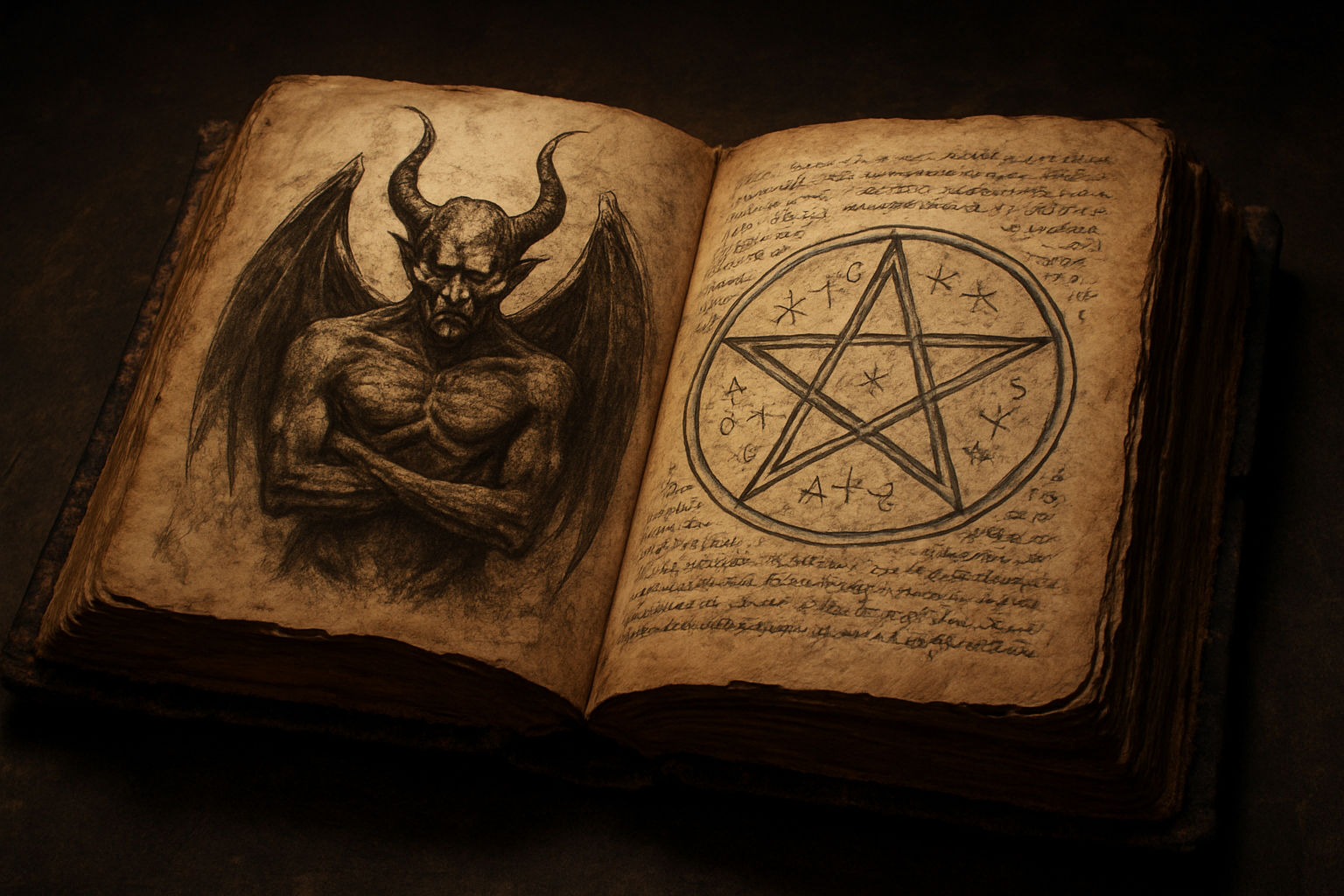
      Often associated with Satanism, the Sigil of Baphomet features a goat’s head enclosed within an inverted pentagram. This symbol is commonly used by the Church of Satan, where it signifies the rejection of traditional religious beliefs in favor of individualism and spiritual freedom.

    • The Leviathan Cross

      Also known as the Satanic cross, the Leviathan Cross consists of an infinity symbol at its base, topped with a double cross. This emblem represents balance between the physical and spiritual realms and is a symbol of the diabolical duality.

    • The Seal of Solomon

      Historically used in the Key of Solomon, a grimoire attributed to King Solomon, this symbol incorporates the Star of David but recontextualized in occult practices. It’s believed to control demons and protect against evil forces.

    • The Black Sun

      With its origins in ancient Germanic mysticism, the Black Sun consists of twelve radial runes forming a circular image. It has been (mis)appropriated by various groups but originally was associated with occult power and esoteric knowledge.

    3. The Cultural and Historical Context

    These symbols and others like them have been imbued with different meanings throughout history, influenced by the contexts in which they were used. Understanding their cultural significance is essential to appreciating their power and allure.

    • Religious Texts and Folklore

      The origins of demonic symbols often lie in ancient religious texts and folklore that aimed to explain and demystify the unknown forces of the world. In the Bible and other sacred texts, demons are frequently depicted as antagonists to divine beings, bestowing these symbols with a sense of fear and reverence.

    • Art and Literature

      Artistic representations of demonic symbolism have appeared in numerous forms, from classic literature like Goethe’s Faust to modern films and video games. These representations help to both cement their cultural significance and transform their meanings over time.

    4. Misconceptions and Stereotypes

    Demonic symbols can often be misinterpreted, especially when removed from their cultural and historical contexts. The modern portrayal of these symbols in popular culture can lead to a one-dimensional view that ignores their rich and varied significance.

    “The symbol of progress is one of direction, not of location.” — James Russell Lowell

    5. Conclusion: The Power of Symbols

    The enduring intrigue of demonic symbols demonstrates the profound impact of symbols as tools of expression, representation, and power. Whether they serve as objects of fear, veneration, or fascination, their meanings evolve with society and continue to inspire—or terrify—generations. For anyone interested in deeper explorations of the occult and the esoteric, understanding these symbols is crucial as a key to unlocking the mysteries of the human psyche and culture.

    Through exploration and education, these ancient and enigmatic symbols reveal their complexity and their capacity to adapt and maintain relevance in an ever-changing world.

  • Demonic Resonance – Archetypes of Fear

    For centuries, demons have been a staple in folklore and mythology, symbolizing the dark side of human nature and the embodiment of our deepest fears. From ancient times to the modern era, the fascination with demonic figures persists, suggesting these archetypes serve critical roles in our understanding of fear and its impact. Through literature, art, and religion, demons illustrate the universal battle between good and evil, making them resonate powerfully across different cultures and times.

    The Universal Appeal of Demonic Figures

    Demons have featured prominently in many cultures, often representing chaos, evil, and spiritual corruption. They were used to explain the inexplicable and to symbolize the natural human tendency toward vice. By manifesting these fears in demonic form, people could tangibly confront, understand, and, to some extent, control their anxieties.

    • Christianity: In Christian theology, demons are seen as fallen angels, originating from scriptures like The Book of Revelation, which foretell a cosmic battle between angelic hosts.
    • Hinduism: Asuras are considered demons, constantly battling with the Devas (gods). This dichotomy illustrates the internal struggle between truth (dharma) and illusion (maya) within an individual.
    • Japanese Folklore: The Oni, fearsome beings from Japanese mythology, reflect societal fears and serve as warnings against certain moral failings or misdeeds.

    Demonic Archetypes and Their Symbolism

    The archetypes of demons often embody specific fears or transgressions, translating internal conflicts into external narratives. Jungian psychology views these archetypes as inherent psychic frameworks residing in our collective unconscious, pointing to their recurring presence and power.

    • The Tempter: Figures like Lucifer and Mephistopheles symbolize temptation and the perils of ambition and pride. By illustrating the consequences of yielding to temptation, these archetypes caution against hubris and moral laxity.
    • The Destroyer: Represented by chaotic beings like Ahriman from Zoroastrianism and Kali from Hinduism, these archetypes embody destruction and the remorseless nature of time, reminding humanity of its fragility.
    • The Trickster: Demonic figures such as the Norse god Loki or the Native American Coyote symbolize mischief and deceit, reflecting the fears associated with moral ambiguity and betrayal.

    Modern Reflections of Demonic Resonance

    In contemporary media, demons continue to captivate audiences, evolving with cultural and societal changes. Whether in films, literature, or video games, demons serve as metaphors for current fears, embracing the unknowns of technology, societal collapse, and existential dread.

    “Demons are the ultimate reflection of our shadow selves—uncensored, implacable, mirroring our worst fears and potentials.” ― Carl Jung

    Films like The Exorcist delve into the stark contrast between faith and doubt, while modern gaming such as the Doom series portrays demons as horrific reminders of existential conflicts and survival instincts. Regardless of the medium, these portrayals encourage audiences to explore both personal and societal fears through engagement with these archetypes.

    Demons as Psychological Forces

    Psychologically, demons in dreams and art can suggest unresolved emotional or psychological issues. According to Sigmund Freud, these figures often represent repressed parts of the psyche, turning conscious fears into manageable symbolisms. Demons can thus prompt introspection and healing, offering a path toward personal understanding and growth.

    Experts propose that facing down our internal demons through narrative and art allows individuals to process fear in a safe and manageable context. The repetition and variation of demonic themes across cultures suggest their vital role in psychological homeostasis, where understanding the “Other” within us can contribute to personal development.

    The Enduring Power of Demonic Archetypes

    Ultimately, the widespread and enduring fascination with demonic resonance speaks to its power in illuminating the human condition. By confronting these archetypes, societies gain valuable insights into maintaining a balance between fear and courage, chaos and order, thereby guiding moral and personal development.

    In their diverse forms and characters, demons are both cautionary figures and catalysts for change, sustaining a resourceful place in our collective imagination and cultural dialogue. As long as fear exists, so too will its demonic embodiments, urging humanity toward self-awareness and resilience.

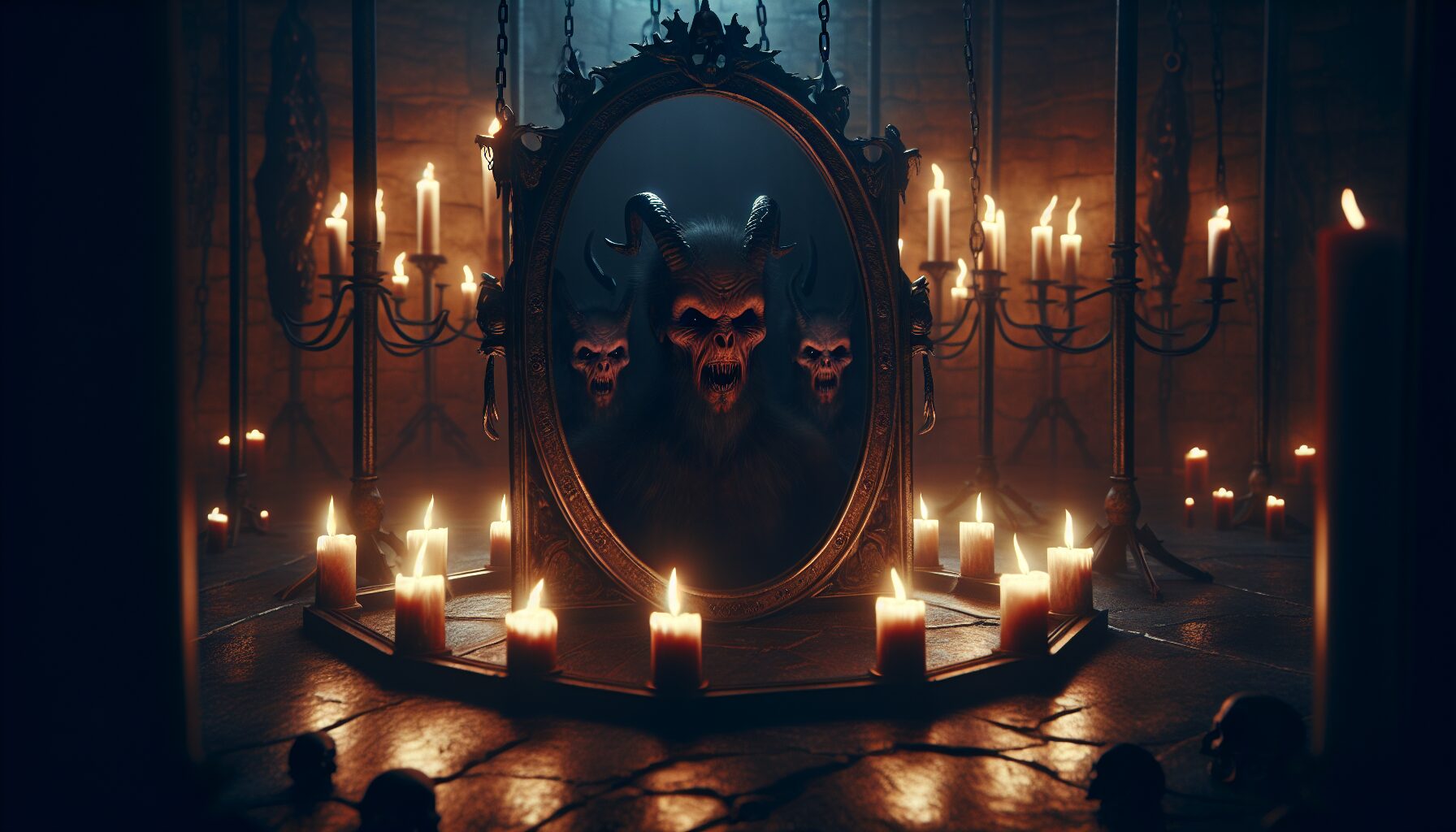
  • The Infernal Mirror – Demons Reflecting the Self

    The Infernal Mirror – Demons Reflecting the Self

    The Infernal Mirror: Demons Reflecting the Self

    For centuries, demons have plagued the imagination, serving as both terrifying adversaries and potent symbols of humanity’s inner struggles. Whether through literature, art, or religion, these diabolical figures manifest an intricate web of meanings that reflect the multifaceted nature of human psychology and morality.

    The Historical Context of Demonic Imagery

    Demons have been a significant part of mythologies and religions throughout history. From the Assyrian Alû spirits to the malevolent forces described in the New Testament, these entities have personified the darker aspects of the human condition. As Jeffrey Burton Russell, a prominent historian of theology, states, “Demons reflect the social, psychological, and moral dilemmas of their times” (Harvard University Press).

    The role of demons evolved from mere external threats to intricate symbols that cast a spotlight on human imperfections and fears. In many early texts, they were seen as literal beings causing havoc, while later interpretations view them as metaphors for internal battles.

    Psychoanalytic Perspectives: Demons as Archetypes

    The psychoanalytic approach offers a compelling framework for understanding demons as projections of the self. Sigmund Freud’s theories on the subconscious mind suggest that our deepest fears and desires often manifest as external symbols. Carl Jung expanded on this by introducing the concept of archetypes.

    “Demons are symbolic of the shadow – the repressed aspects of our psyche that we refuse to acknowledge.” – Carl Jung

    In Jungian analysis, the shadow is a part of the unconscious mind composed of repressed weaknesses and instincts. When these elements remain unexamined, they can project outwardly in the form of ‘demons,’ representing the struggle between our conscious ideals and subconscious drives.

    Demons in Literature: A Mirror to Morality

    Literature has long been a medium through which the struggle between good and evil is explored. Demonic figures in stories often serve as mirrors of the protagonists’ internal conflicts and societal dilemmas. In John Milton’s “Paradise Lost,” Satan is depicted not just as the ultimate evil but as a complex character embodying rebellion, pride, and ambition.

    William Blake, a well-known critic of Milton, argues that Milton was “of the Devil’s party without knowing it,” suggesting that the poet subconsciously aligned more with Satan’s rebellious nature than with divine authority. This notion underscores how demons can symbolize the attractive yet destructive qualities within ourselves.

    Religious Interpretations: Redemption and Damnation

    In religious contexts, demons often embody the struggle between sin and virtue. The Catholic Church’s depiction of demonic possession symbolizes a soul at war, torn between divine grace and mortal sin. Exorcisms traditionally serve as rituals of purification, the ultimate battle between good and evil fought within the individual.

    Father Gabriel Amorth, a renowned exorcist, described in his writings that “demons are terrifying reminders of the consequences of human error and the potential for redemption through faith” (Catholic Education Resource Center).

    The Artistic Depiction: A Reflection of Culture

    In art, demons have been depicted in myriad forms, reflecting cultural attitudes toward sin, morality, and human nature. The Medieval period saw an intense focus on demonic forms as both literal creatures of Hell and allegories for earthly vices. Hieronymus Bosch’s nightmarish landscapes and figures represent not only religious warnings but also a mirror to the human imagination.

    Mary Douglas, a social anthropologist, observed that “artistic depictions of demons often reflect societal boundaries, embodying the chaos and disorder that lie just beyond the borders of accepted norms” (Oxford Reference).

    The Modern Demon: Technology and Isolation

    In contemporary society, demons have taken on new forms, often embodying the challenges presented by modern technology and urban isolation. Films and literature explore themes of technological corruption, where artificial intelligence and digital landscapes spawn new ‘demons’—manifestations of our fear of losing control to an increasingly automated world.

    For instance, the demon in Fyodor Dostoevsky’s The Possessed can be seen as a precursor to modern interpretations of societal upheaval and ideological madness, reflecting fears of personal and communal transformation.

    Conclusion: The Everlasting Presence of Demonic Reflection

    Demons, in their myriad forms, continue to serve as powerful symbols reflecting the deepest conflicts within the human soul. Their presence persists as a testament to our continued struggle with personal and societal challenges. As external manifestations of our inner fears and desires, demons compel us to confront aspects of the self that we would rather hide.

    From ancient texts to modern cinema, these infernal reflections question, challenge, and ultimately, illuminate the complexities of the human experience.

    As we continue to evolve, so too will our demons, adapting to new contexts and challenges, yet always holding up the mirror to our innermost beings, forcing us to question who we are and what we might become.