Tag: dissolution

  • Angelic Dissolution – Depersonalization in the Celestial

    Angelic Dissolution – Depersonalization in the Celestial

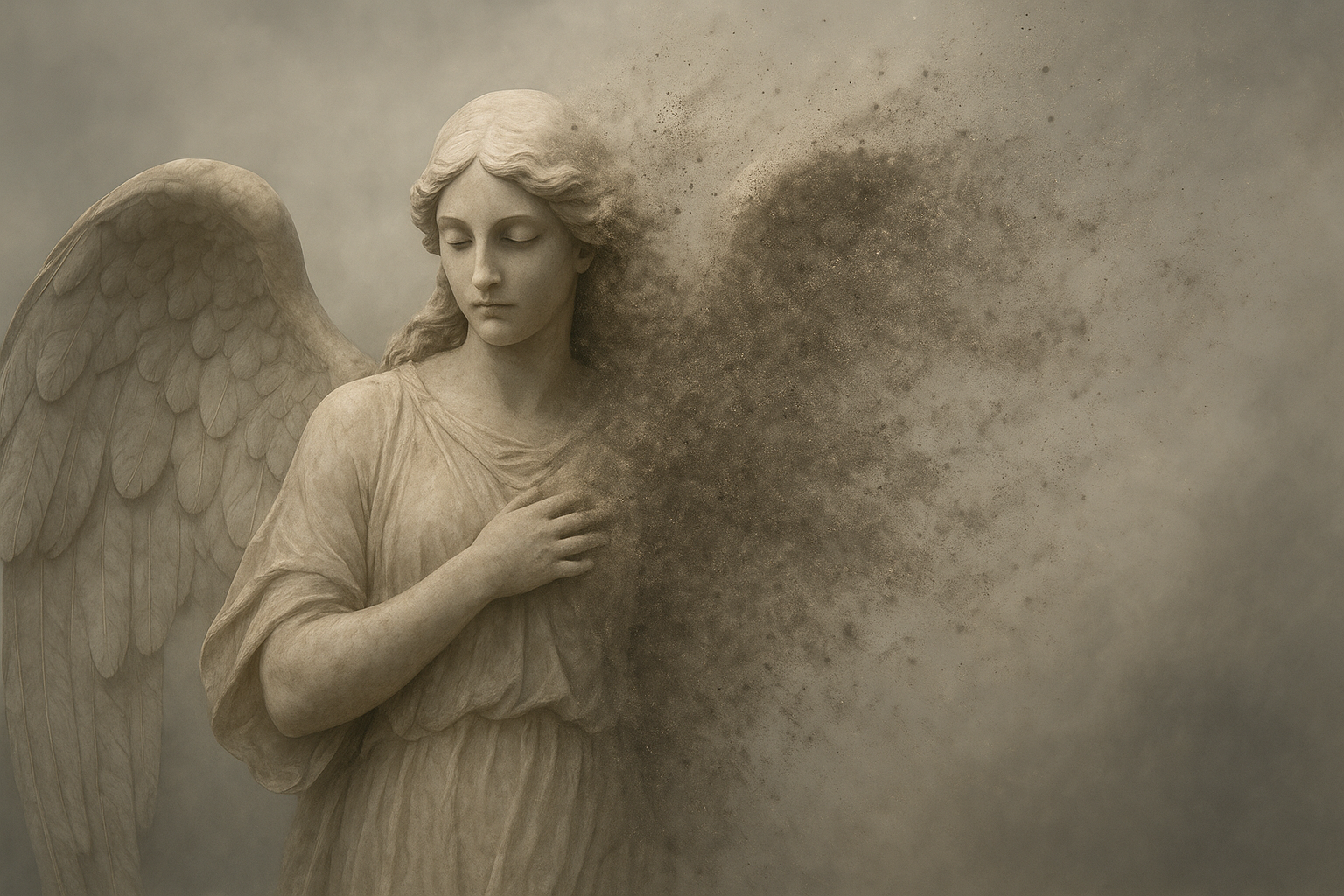
    Throughout history, angels have been depicted as ethereal beings bridging the divine and mortal realms, exuding purity and purpose. Yet, within theological and philosophical discourse, the concept of depersonalization among celestial entities, termed “angelic dissolution,” challenges traditional perceptions. This exploration delves into how these divine figures might experience existential dilemmas akin to human depersonalization disorders.

    The Celestial Conflict

    Angelic beings, as described in various religious texts, are creatures of duty and divine mission. However, what occurs when such perennial purpose becomes monotonous or fades? As C.S. Lewis reflects through his allegorical narratives, angels sometimes experience a form of existential crisis:

    “There are those who refuse the life of the Most High, but it is not perpetual refusal that damns us, it is the refusal to be damned” — C.S. Lewis, The Great Divorce.

    This premise echoes the struggles akin to depersonalization, wherein the harmony between duty and self-awareness disrupts, leading to a crisis in celestial identity.

    Philosophical Perspectives

    Philosophers like Plotinus and theologians such as Saint Thomas Aquinas have pondered the perpetual existence of celestial beings. Plotinus, in his Enneads, considers the individual souls’ quest for union with the divine:

    “The soul, reascending towards its source, longs to become one with what is greater.” — Plotinus, Stanford Encyclopedia of Philosophy.

    Thus, could angels undergoing such existential re-evaluation face dissolution of self, much like humans experiencing a sense of detachment from their identities?

    Modern Interpretations

    In contemporary culture, writers and scholars interpret this heavenly detachment as a reflection of human struggles with identity and meaning. As expressed in Neil Gaiman and Terry Pratchett’s Good Omens, the portrayal of angels in flux conveys the narrative of recognition and reflection:

    “Angels could fly because they take themselves lightly.” — Neil Gaiman and Terry Pratchett, Good Omens.

    • This whimsical observation points towards the inherent tension between duty-bound existence and self-perception.
    • Cultural depictions offer a lens to consider celestial mindfulness, including identity crises across various domains.

    Conclusion

    While theological and artistic renditions may differ, the notion of angelic dissolution subtly intimates shared universals of existence and awareness. The inquiry into whether celestial forces may experience their realms of “depersonalization” propels the boundary between the sacred and the psychological into new, thought-provoking territories.

  • Mystic Dissolution – Petit Mort in Spiritual Practice

    Mystic Dissolution – Petit Mort in Spiritual Practice

    Mystic Dissolution: Petit Mort in Spiritual Practice

    The concept of petit mort, or “little death,” is often associated with the fleeting sensation following an orgasm. However, in spiritual contexts, this phrase points toward a deeper philosophical exploration—the temporary dissolution of the ego and the transcendent experiences that some spiritual practitioners seek.

    The notion of a mystic dissolution has intrigued many spiritual seekers, from the Sufi mystics to Zen practitioners. This state of being often involves profound moments where the boundaries of the self seem to dissolve, allowing for a moment of unity with the universe. As Rumi, the 13th-century Persian poet, elegantly put it, “When you let go of who you are, you become who you might be.”

    Historical Contexts and Practices

    Throughout history, various spiritual practices have pursued this temporary dissolution. In Sufism, intense chanting and rhythmic dance can lead followers to experience divine ecstasy. Similarly, in Tantric Hinduism, rituals and meditations are designed to transcend the ordinary self, achieving a sense of oneness.

    • Sufi Whirling: A dance practice that aims to abandon the ego and achieve spiritual intoxication.
    • Zazen: A meditative discipline in Zen Buddhism, focusing on mindfulness and deep introspection.
    • Tantric Meditation: Employs mantras and visualizations to elevate consciousness beyond ego-identification.

    The Science of Ego Dissolution

    Modern neuroscience also sheds light on the idea of mystic dissolution. Studies have examined the effects of meditation, psychedelics, and ecstatic experiences on the brain. They reveal that during these altered states, there is a decrease in activity within the brain’s default mode network (DMN), which is associated with the sense of self. According to Dr. Robin Carhart-Harris, a leading researcher in psychedelic studies, “The DMN is thought to provide us with a sense of self, so naturally, when its activity is reduced, we experience a diminished sense of ego.”

    “You are not a drop in the ocean. You are the entire ocean in a drop.” — Rumi

    Integrating Mystic Dissolution into Practice

    For those seeking to incorporate this mystical experience into their spiritual practice, it often begins with a commitment to inner work and rituals. Whether through meditation, chanting, or a dance, the goal remains the same: to reach a higher state of consciousness where the ego fades and the experiencer connects with something greater.

    Ultimately, mystic dissolution offers a glimpse into something profoundly spiritual and existential, reminding practitioners of their limitless nature beyond the confines of the self.

  • Ethereal Dissolution – Depersonalization Beyond Flesh

    Ethereal Dissolution – Depersonalization Beyond Flesh

    Ethereal Dissolution: Depersonalization Beyond Flesh

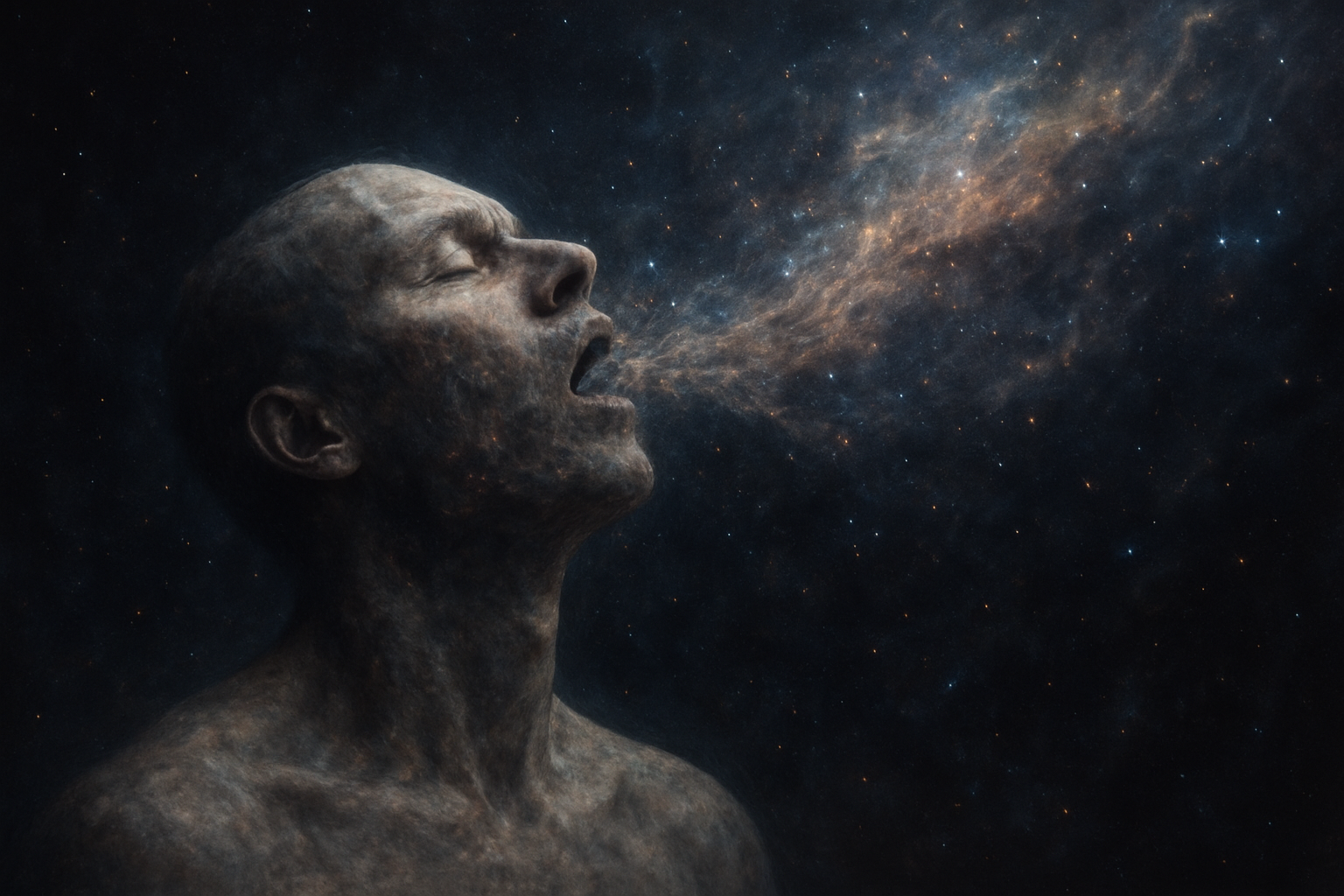
    In the vast expanse of human experience, there exists a phenomenon that transcends the tangible flesh—an experience known as depersonalization. It’s a state where one’s own reality and existence seem mere shadows, where one’s essence feels detached from the confines of the body. This ethereal dissolution challenges our fundamental understanding of self and presence.

    Understanding Depersonalization

    Depersonalization is characterized by the sensation of observing oneself from outside one’s body or feeling estranged from one’s own thoughts and identity. The National Alliance on Mental Illness (NAMI) describes it as a type of dissociative disorder wherein a person experiences a “persistent or recurring feeling of being detached from one’s mind or body.” (Source)

    While this phenomenon can feel alien and unsettling, it serves as a profound reminder of the mind’s complexity. The experience can be likened to a cloudy mirror wherein one’s own image seems intangible and distorted.

    Philosophical Musings on Self

    Philosophers and spiritual leaders have long pondered the nature of self and consciousness. René Descartes famously postulated, “I think, therefore I am,” yet depersonalization prompts us to question the solidity of the “I.” In depersonalized states, thinking continues, but the “I” becomes elusive. This sentiment echoes in the teachings of Eckhart Tolle, who suggests that our true essence isn’t the ephemeral thoughts or body but a state of pure being.

    “The greatest obstacle to experiencing reality as it is … is our fixation on identity.” – Eckhart Tolle

    By challenging our perceptions of reality and self, depersonalization forces us to confront these obstacles and seeks to redefine identity beyond the physical and mental constructs we know.

    The Spiritual Lens: Dissolution and Enlightenment

    From a spiritual perspective, depersonalization can be seen as a form of enlightenment—a dissolution of the ego that allows for divine connection. In Hindu philosophy, Nirvana represents a state beyond suffering and illusion, akin to what some describe in depersonalized episodes. This transcendence is not about negating the self but entering a realm beyond attachments and ego.

    • Buddhism: Encourages detachment from the self through meditation and mindfulness, seeing depersonalization as a potential precursor to spiritual awareness.
    • Sufism: Describes a journey towards the divine as one becoming ‘selfless’ in love and devotion, resonating with depersonalized experiences where personal identity feels secondary.
    • Christian Mysticism: Emphasizes losing oneself to find a deeper unity with God, a sentiment mirrored by those undergoing profound depersonalization.

    Thus, depersonalization need not be purely pathological; it can herald a journey into deeper spiritual realms.

    The Psychological and Physical Interplay

    Science reveals that depersonalization can be linked to stress, trauma, or anxiety, manifesting as the brain’s defensive response to overwhelming situations. Neurobiological studies show abnormalities in areas such as the prefrontal cortex and the limbic system, which are responsible for emotional processing (Source).

    While the psychological and spiritual narratives might diverge, they intersect at the essence of the human condition—grappling with identity, existence, and connection.

    Transcending Fear: Healing through Acceptance

    Even as depersonalization is unsettling, its potential for healing lies in acceptance. When individuals embrace rather than resist these experiences, they can cultivate resilience and greater self-understanding. This approach aligns with Carl Jung’s principle that healing comes from embracing one’s shadow—the unknown, the feared, and the misunderstood parts of oneself.

    “One does not become enlightened by imagining figures of light, but by making the darkness conscious.” – Carl Jung

    By acknowledging and integrating these experiences, individuals can not only overcome the fear of dissolution but also embrace the mystery within.

    Conclusion: Beyond Flesh, Into the Ethereal

    Depersonalization, though enveloped in mystery, can transcend bare pathology to serve as a gateway—leading beyond the flesh, into the boundless realms of the ethereal. This journey navigates through psychological sciences and spiritual doctrines, inviting each to explore what lies beyond tangible identity.

    As society continues to explore these blurred lines between neurotransmitters and enlightenment, the quest for understanding depersonalization remains an exploration of the depths and heights of human consciousness itself.

  • The Final Breath – Petit Mort and Cosmic Dissolution

    The Final Breath – Petit Mort and Cosmic Dissolution

    The delicate dance between life and death has fascinated humans for millennia. In the realm of spiritual and existential exploration, the concept of ‘Petit Mort’ offers a poetic reflection on the inevitable journey towards cosmic dissolution. But what if these two seemingly disparate experiences—orgasm and death—held deeper connections to our cosmic understanding?

    The Meaning of ‘Petit Mort’

    Petit Mort, or “little death,” is a French term that describes the momentary lapse in consciousness experienced during orgasm. This term encapsulates the transcendent experience that mimics, in a diminutive form, the great dissolution—the final breath of life. The very phrase hints at a metaphorical death, a temporary release of the self that echoes the finality of mortality.

    “To experience ‘Petit Mort’ is to transcend the mundane, to momentarily touch the stratosphere of existence where consciousness flirts with its own dissolvement” – Dr. Helen Fisher, anthropologist and author.

    Orgasm as a Metaphor for Death

    The biological processes leading to orgasm involve a complex orchestration of the nervous system, where pleasure and ecstasy culminate in a momentary collapse—a ‘little death.’ This experience, some argue, parallels the biological shutdown at the time of death, where consciousness fades as the body ceases its relentless charge. Thus, orgasm becomes a microcosm, a rehearsal of the cosmic dissolution that awaits us all.

    • Physical Release: Both orgasm and death involve a release—whether of life energy or existential burdens.
    • Transcendent State: Embracing the unknown, each moment offers a temporary escape from reality.
    • Psychological Impact: Both can leave a profound imprint on our emotional and mental states.

    Cosmic Dissolution: Our Final Destiny

    As we contemplate cosmic dissolution, we step into the metaphysical realm, where human life is but a fleeting presence in an expansive universe. The final breath—and what follows—has been explored through myriad lenses: philosophical, scientific, and spiritual. The Vedas of ancient India describe cosmic dissolution as Mahapralaya, where the universe, too, undergoes a cyclical destruction and rebirth, much like the culmination and release experienced in orgasm.

    “In the cosmic dance of Shiva, creation and dissolution are in perpetual harmony, embodying the inevitable cycle of life and death” – Encyclopaedia Britannica.

    Finding Connection Between the Two

    In connecting orgasm and cosmic dissolution, we are reminded of the impermanence of existence. The fleeting nature of ‘Petit Mort’ serves as a reminder of our ultimate fate, igniting a profound understanding of our own mortality. Yet, within this understanding lies a powerful liberation—by recognizing the transient nature of both, we find freedom to fully engage with the present.

    Philosophical Insights: The philosopher Friedrich Nietzsche once pondered, “That which does not kill us makes us stronger.” While Petit Mort is but a fleeting flirtation with mortality, it strengthens our resolve to live vibrantly, in anticipation of our eventual cosmic dissolution.

    Living With Death in Mind

    The juxtaposition of ‘Petit Mort’ and cosmic dissolution compels us to live with intention and awareness of our eventual end. It is a call to embrace life with fervor and authenticity, cherishing every breath and every interaction, conscious that they form the tapestry of our brief narrative on this planet.

    • Mindful Living: Engage fully in each moment, aware of its fleeting nature.
    • Acceptance of Mortality: Understand death as a natural progression, not a fearful unknown.
    • Embrace of Transience: Let the impermanence enhance appreciation for life’s experiences.

    Conclusion

    “The Final Breath – Petit Mort and Cosmic Dissolution” weaves together the threads of life’s ultimate mysteries. By embracing the impermanence that both orgasm and death reveal, we open ourselves to the grand narrative of existence. In doing so, we prepare ourselves—not for an end, but for a renewal with each passing moment.

    In the end, acknowledging ‘Petit Mort’ in relation to cosmic dissolution is not about fearing the end, but about understanding that each step we take brings us closer to a profound transformation, a metaphorical and literal return to the cosmos from which we came.

  • Decay as Liberation – Dissolution of Form Into Spirit

    Decay as Liberation – Dissolution of Form Into Spirit

    Decay as Liberation: Dissolution of Form Into Spirit

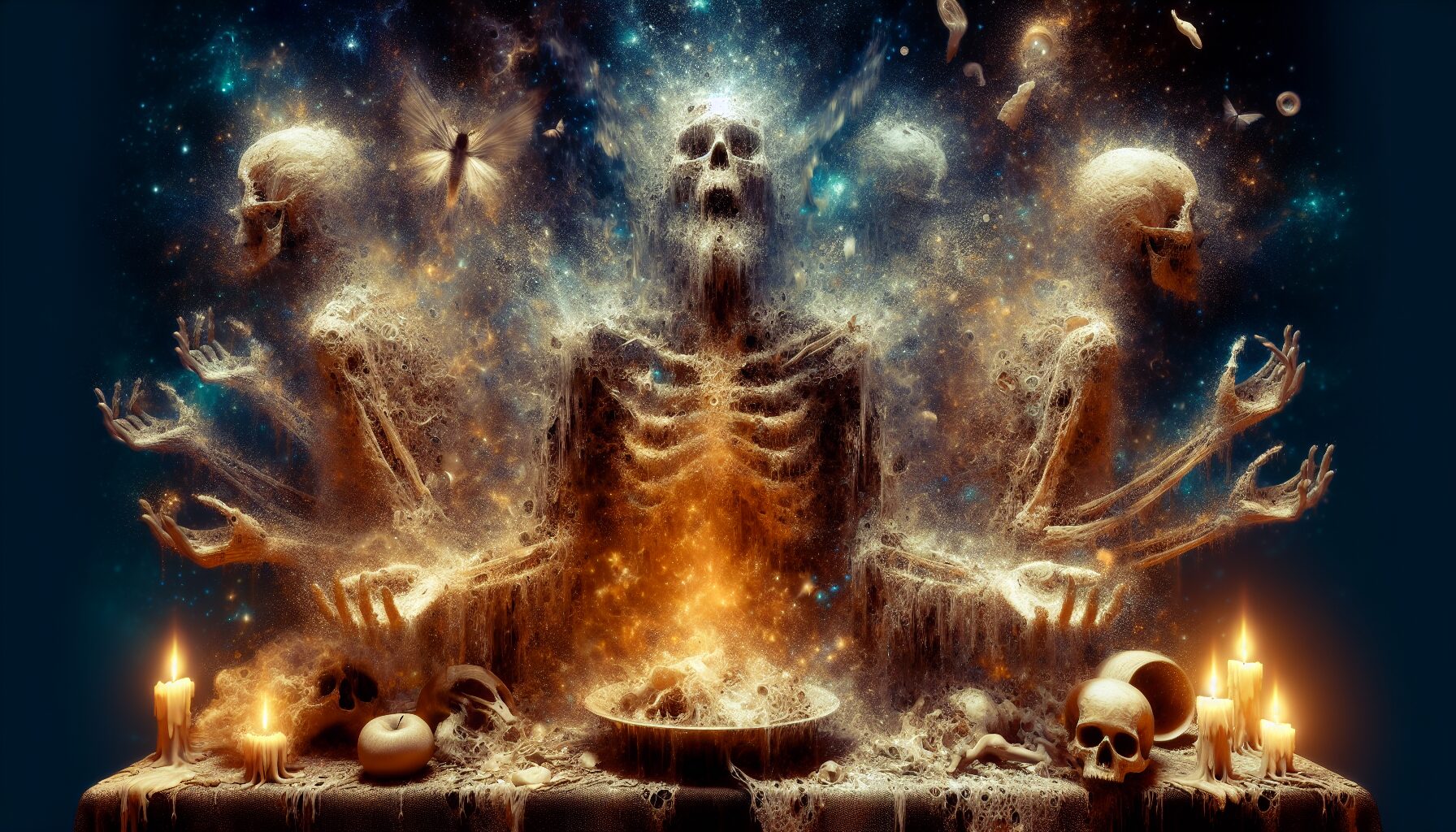
    In a world inherently subjected to change and deterioration, decay often carries negative connotations, a symbol of destruction and loss. However, when viewed through the lens of philosophical inquiry, decay can emerge as a potent metaphor for liberation. It signifies the dissolution of rigid forms, allowing for the emergence of the spirit, the essence, or truth that lies beneath the surface.

    The Philosophical Context of Decay

    Philosophy has long been occupied with the nature of change and transformation. Heraclitus, the pre-Socratic philosopher, famously stated, “No man ever steps in the same river twice.” His assertion captures the essence of constant flux, a recurrent theme in philosophy. Decay, in this context, is not merely a physical process but a necessary precondition for the transformation that fuels creativity and growth.

    Nietzsche embraced decay as a pathway to authenticity and self-overcoming. In his view, traditional structures and values, once rigid and unquestioned, decay over time, making way for new modes of being. Nietzsche’s concept of the “Übermensch” or Overman, is born from the ashes of decayed morality, symbolizing liberation from societal constraints and personal rebirth.

    Decay in Nature and Spiritual Awakening

    In the natural world, decay plays an indispensable role. Decomposition transforms dead matter into fertile soil, nurturing new life. This cycle of decay and renewal is essential for ecological balance and diversity, and offers a profound metaphor for spiritual liberation.

    The Taoist philosophy embraces this perspective, recognizing the harmony and interconnectedness of nature’s processes. Lao Tzu, in the Tao Te Ching, writes of the importance of humility and acceptance of life’s transient nature. By recognizing and accepting decay, we align ourselves with the Tao, the natural flow of the universe, thus achieving spiritual liberation.

    “To the mind that is still, the whole universe surrenders.” – Lao Tzu

    Decay as Liberation in Modern Thought

    Contemporary philosophy and psychology continue to explore the concept of decay as a form of liberation. Existentialists, for example, argue that the awareness of one’s mortality confronts us with the necessity of authentic existence. Jean-Paul Sartre suggests that understanding and accepting the inevitability of decay and death can liberate individuals from superficial attachments, unveiling the true essence of being.

    Similarly, in the modern spiritual framework, the process of self-examination often involves “decomposing” entrenched beliefs and identities. Spiritual teachers like Eckhart Tolle advocate for the dissolution of the ego to achieve enlightenment. Tolle posits that liberation arises when we let go of egoic identities and perceive the deeper, timeless essence of who we are.

    “Realize deeply that the present moment is all you ever have. Make the Now the primary focus of your life.” – Eckhart Tolle

    Art and Literature: Echoes of Weakening Structures

    Art and literature, through various movements, have also captured the aesthetic of decay as a transformative force. Romantic poets, such as Percy Bysshe Shelley, celebrated the ruins as symbols of the sublime—a beauty found in the delicate balance between creation and destruction. Shelley’s poem “Ozymandias” reminds us of the inevitable decay of human power, suggesting a liberation from the hubris that often accompanies it.

    In modern art, movements such as Surrealism and Dadaism have embraced decay as a reaction against established norms. These movements dissolved conventional forms and boundaries, paving the way for liberation and innovation in art and thought. As André Breton, the founder of Surrealism, asserted:

    “The imaginary is what tends to become real.” – André Breton

    Conclusion: Embracing the Liberation of Decay

    Decay, far from being merely a negative process of loss, serves as a powerful emblem of liberation. It navigates us through the dissolution of forms to reveal underlying truths, spiritual awakening, and authentic existence. Both in nature and the realms of human thought, decay dismantles the old, clearing the path for renewal and transformation.

    By reconciling with decay, we may embrace the freedom that lies beyond the dissolution—the freedom to rebuild, to redefine, and to rediscover the spirit within. As philosophers, artists, and spiritual seekers remind us, the liberation wrought by decay invites an inner revolution, propelling us toward deeper understanding and higher planes of existence.