Tag: extraterrestrial

  • Alien Theology – Extraterrestrial Influence on Human Belief

    Alien Theology – Extraterrestrial Influence on Human Belief

    Alien Theology: Extraterrestrial Influence on Human Belief

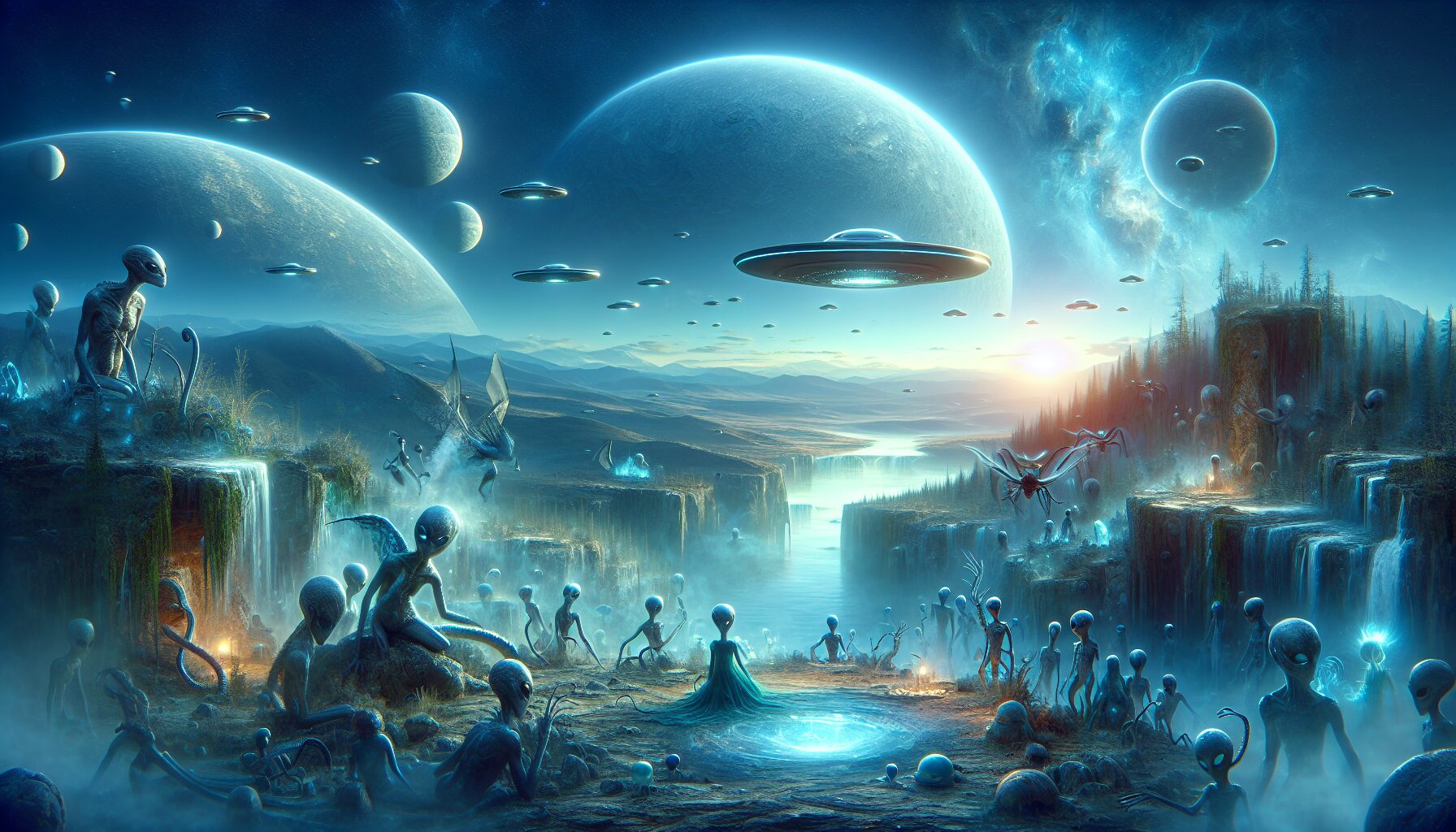
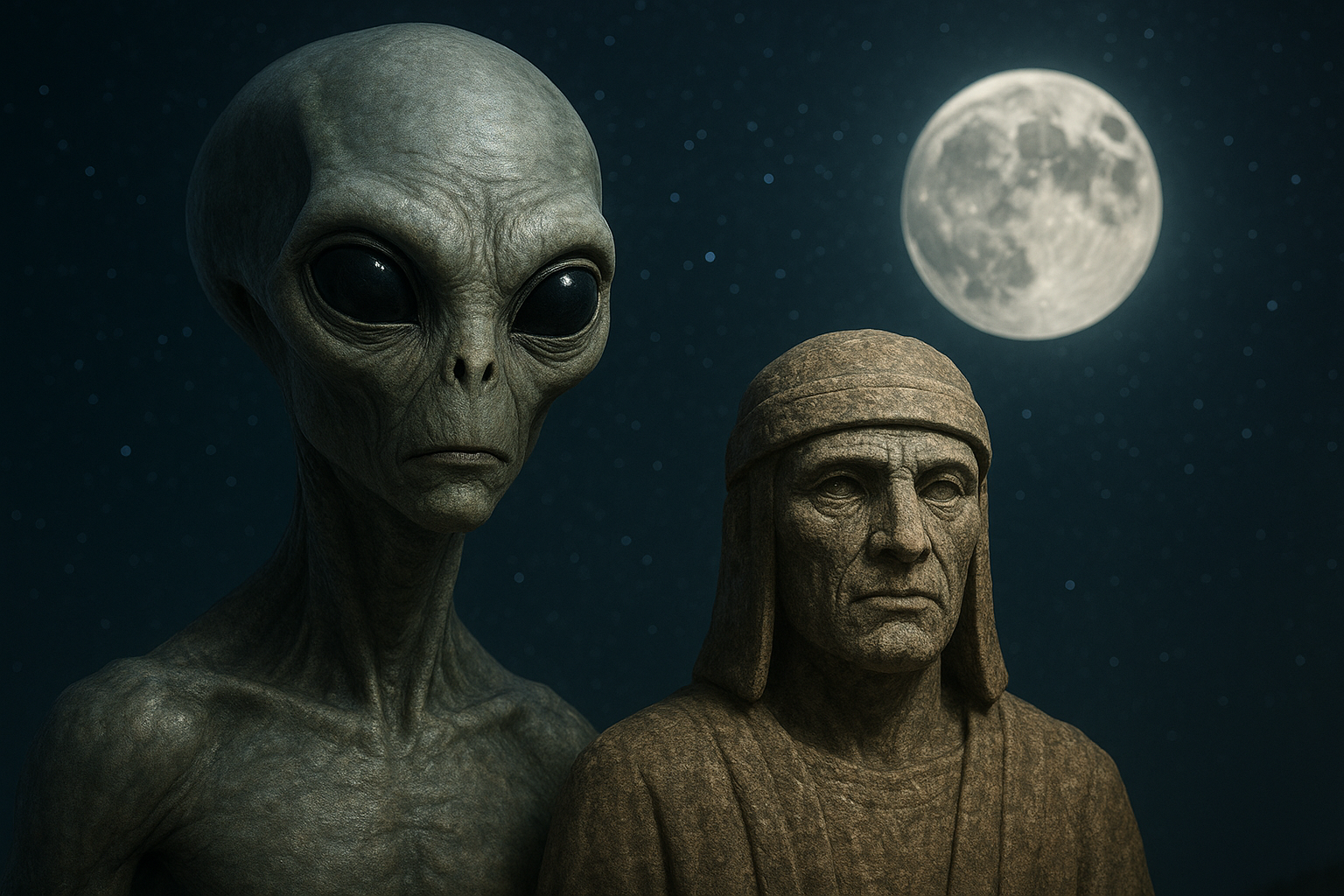
    Throughout the history of humanity, there has been a profound curiosity about the cosmos and our place within it. Alien theology—the study of how encounters, or imagined encounters, with extraterrestrial life have shaped human beliefs—offers a fascinating perspective on this curiosity. From ancient myths to modern religions, evidence of alien influence abounds, challenging traditional narratives and offering new interpretations of spirituality.

    Historical Context: Ancient Myths and Alien Deities

    Before the dawn of contemporary religions, many ancient civilizations documented interactions with beings from the skies. These narratives often describe celestial visitors with god-like qualities.

    • The Sumerians: One of the earliest recorded civilizations, the Sumerians wrote of beings known as the Anunnaki, described in ancient texts such as the Enuma Elish. Many believe these deities came to Earth from the heavens and played crucial roles in shaping humanity.
    • India’s Vedic Texts: Ancient Indian scriptures mention “Vimanas,” flying chariots used by the gods. These descriptions bear striking similarities to modern accounts of UFOs, suggesting possible extraterrestrial interpretations.
    • Native American Legends: Numerous indigenous tribes have myths that describe star people or sky gods descending to Earth, sometimes imparting knowledge or guidance to humans.

    “The phenomenon of myth creation is a collaboration of cosmic imagination mingling with cultural inheritance. Sky-related narratives in many cultures suggest more than mere coincidence.” — History

    Modern Religions and UFOs: A Twentieth-Century Synthesis

    The modern age primarily reshaped the discourse around alien theology through sightings of UFOs and increased interest in extraterrestrial life. This era sparked new conversations about humanity’s spiritual connections with aliens.

    • The Raelian Movement: Founded in the 1970s by Claude Vorilhon, also known as Rael, this religion explicitly believes that life on Earth was created by an extraterrestrial species known as the Elohim. Raelians argue that the Elohim’s teachings are echoed in the world’s religious texts.
    • Scientology: Established by science fiction writer L. Ron Hubbard, Scientology includes belief in past extraterrestrial civilizations and events impacting present-day human spirituality. Although more a science-fiction-based religion, it reflects some alignment with alien theological concepts.
    • Heaven’s Gate: A more extreme case, this cult believed that an approaching spacecraft was linked to an apocalyptic event. Although it ended tragically, the belief structure of Heaven’s Gate underlined the merging of UFO phenomena with religious end-times prophecy.

    Professor Michael Swords, in his examination of UFOs and religion, noted, “The influence of extraterrestrial themes on religiosity reflects a broader pattern—people have always integrated contemporary phenomena into their existential explanations.” — UFO Evidence

    Extraterrestrial Encounters and Their Impact on Belief Systems

    Documented encounters with supposed extraterrestrial entities have sometimes led to substantial shifts in personal and communal belief systems. This shift underscores the power of direct or indirect alien influence on theology.

    Abduction Narratives

    Accounts of alien abductions often come with transformative spiritual revelations. Those who claim to have been abducted frequently report experiences that challenge existing paradigms, often leading to revised spiritual perspectives or the creation of new belief systems.

    Contactee Movements

    During the mid-20th century, the contactee movement gained traction. Ordinary individuals claimed to have made direct contact with benevolent aliens, often returning with messages of peace, environmental stewardship, and spiritual enlightenment. These contacts were believed by some to be new forms of divine intervention.

    Scientific Perspectives: Are We Alone?

    While theologians and philosophers ponder the spiritual implications, scientists continue to explore the question: “Are we alone in the universe?” The search for extraterrestrial intelligence (SETI) has been monitoring space for signals indicating conscious life. The potential discovery of extraterrestrial life would inevitably impact religious beliefs worldwide by challenging the anthropocentric view of life in the cosmos.

    A NASA study in 2014 gathered theologians to discuss the potential impact of finding alien life, reflecting the agency’s understanding of the substantial cultural and religious ramifications such a discovery would entail.

    Astrobiologist Dr. Stephen J. Dick once stated, “The impact of discovering intelligent extraterrestrial life would be profound, fundamentally altering our interpretations of humanity’s identity and cosmic role.” — Space

    Conclusion: Aliens, Belief, and the Future

    The relationship between extraterrestrial life and human belief systems remains a rich field for exploration. Through the lenses of history, religion, and science, we see a tapestry woven with speculation and wonder. As our understanding of the universe expands, so too does the potential for alien revelations to reshape spiritual and theological constructs.

    Alien theology, in its numerous manifestations, asks us to reconsider the narratives that define human spirituality. It invites believers, skeptics, and scholars alike to explore the boundaries of human understanding and the possibilities that lie beyond our earthly existence.

    “As we discover more about our universe, we may find not just answers to the question of alien life, but also discover new dimensions to spirituality once thought beyond our reach.” — National Geographic

    The journey towards understanding is as infinite as the universe itself, and alien theology provides a compelling framework to explore this frontier of thought.

  • UFO Archaeology – Tracing Visitors Across Time

    UFO Archaeology – Tracing Visitors Across Time

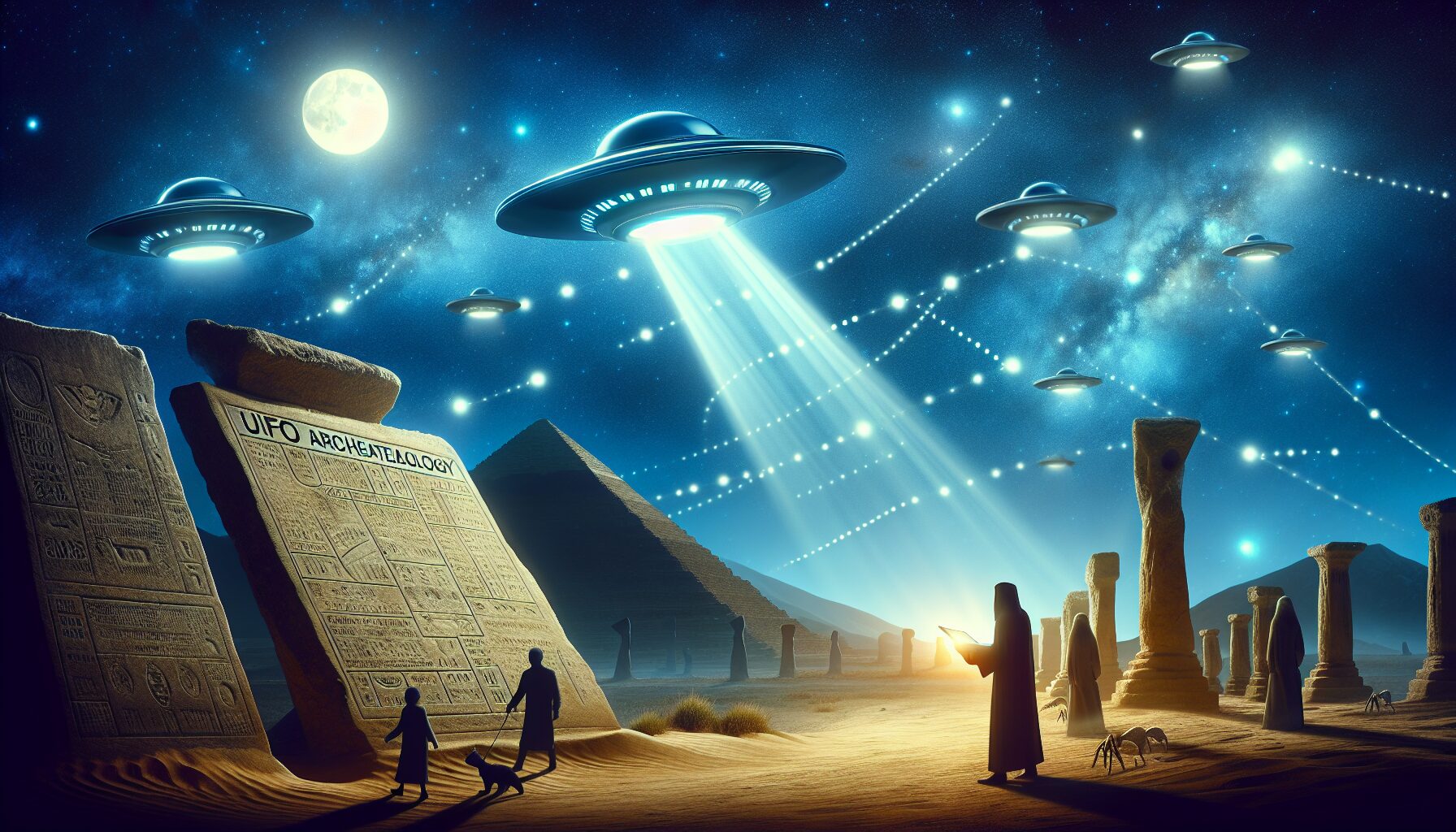
    For decades, stories of unidentified flying objects (UFOs) have captivated the imagination of people worldwide. But what if these visitors have been with us for longer than we thought, perhaps weaving through the tapestry of humanity’s ancient past? Welcome to the burgeoning field of UFO archaeology, where researchers combine the rigorous study of archaeology with the mysterious allure of ufology.

    The Foundations of UFO Archaeology

    UFO archaeology posits that there might be physical evidence of past extraterrestrial visits on Earth, artifacts left by beings from other worlds. This idea, still in its infancy, seeks validation through the reinterpretation of ancient texts, monuments, and structures under a new light—that of potential alien interaction.

    • Ancient Astronaut Hypothesis: Originally popularized by Erich von Däniken’s book, Chariots of the Gods, this hypothesis suggests that advanced alien civilizations visited Earth in antiquity and influenced the development of human cultures.
    • Historical Artifacts and Relics: Proponents of UFO archaeology often cite peculiar artifacts as evidence—such as the Dropa stones of China or the unexplained glories of the Nazca Lines in Peru.

    Reinterpreting Ancient Records

    Several ancient texts and artwork can be interpreted to suggest extraterrestrial encounters.

    “We have found depictions that seem to show flying vehicles or figures wearing something akin to space suits,” says Dr. Sarah Hansen, a leading researcher in the field. “These are found in disparate cultures, yet they share some similarities that are striking.”

    • Sumerian Texts: Ancient Sumerians left behind some of the earliest known records, including detailed descriptions of gods descending from the heavens. Some interpretations suggest these might be visitors from another world.
    • Indian Epics: Texts like the Mahabharata and Ramayana describe flying machines called Vimanas, leading some to speculate they were depictions of extraterrestrial craft.

    Mysterious Monuments and Their Implications

    Some of the most famous monuments around the world bear unexplained features, leading to theories that they might have originated through extraterrestrial influence. Here are a few examples:

    • The Great Pyramids of Giza: The precision and sophistication with which these structures were built have led some to theorize that ancient Egyptians might have utilized alien technology.
    • Stonehenge: This prehistoric monument raises questions about its exact purpose and the capabilities required for its construction, with some suggesting extraterrestrial intervention as a possibility.
    • Puma Punku: Located in Bolivia, the archaeological site of Puma Punku is renowned for its complex stone structures. As Live Science reports, the precision with which the stones were cut challenges our understanding of pre-Columbian engineering.

    The Skeptic’s Perspective

    However, UFO archaeology isn’t without its critics. Many in the scientific community caution against drawing unfounded conclusions based on speculative interpretations. Archaeologist Kenneth Feder, author of Frauds, Myths, and Mysteries: Science and Pseudoscience in Archaeology, emphasizes that

    “Extraordinary claims require extraordinary evidence. We must approach these hypotheses with caution and rigor, ensuring our methods are sound and our conclusions justified.”

    While fascinating, these ancient interpretations require profound evidence and corroboration. Skeptics argue that many of the so-called anomalies can be explained by more conventional means, such as cultural diffusion or misunderstood technological capabilities of ancient societies.

    Modern Tools in Ancient Mysteries

    Advances in technology have offered new possibilities for investigation. Ground-penetrating radar, remote sensing tools, and sophisticated dating techniques allow researchers to explore sites non-invasively, leading to new insights and discoveries.

    • 3D Scanning and Reconstruction: Digital reconstructions of ancient sites can reveal details obscured by the ravages of time, potentially shedding light on their true origins.
    • DNA Analysis: In some cases, DNA recovered from ancient remains can offer clues about interactions between early humans and potential otherworldly beings.

    The Cultural Impact of UFO Archaeology

    Beyond the quest for knowledge, UFO archaeology influences popular culture and public perception. It challenges the entrenched narrative of human history and encourages open-mindedness about possibilities that extend beyond Earth.

    With each purported discovery, a new generation of enthusiasts is inspired to probe the edges of mainstream archaeology, seeking answers to questions about humanity’s origins and place in the universe. Whether or not evidence of ancient astronauts is ever conclusively found, the field broadens our understanding and appreciation of ancient cultures and their accomplishments.

    Conclusion

    UFO archaeology, while a field veiled in mystery and skepticism, continues to evolve as a serious area of inquiry. As technology advances and new discoveries are made, perhaps the debate will shift and reveal insights into humanity’s ancient travelers, no longer just from distant lands, but perhaps from distant stars themselves. As we stand on the precipice of understanding, one thing remains clear: the mysteries of our past have an uncanny ability to shape our future.

  • Aliens as Angels of Death – Visitors or Harbingers?

    Aliens as Angels of Death – Visitors or Harbingers?

    Aliens as Angels of Death: Visitors or Harbingers?

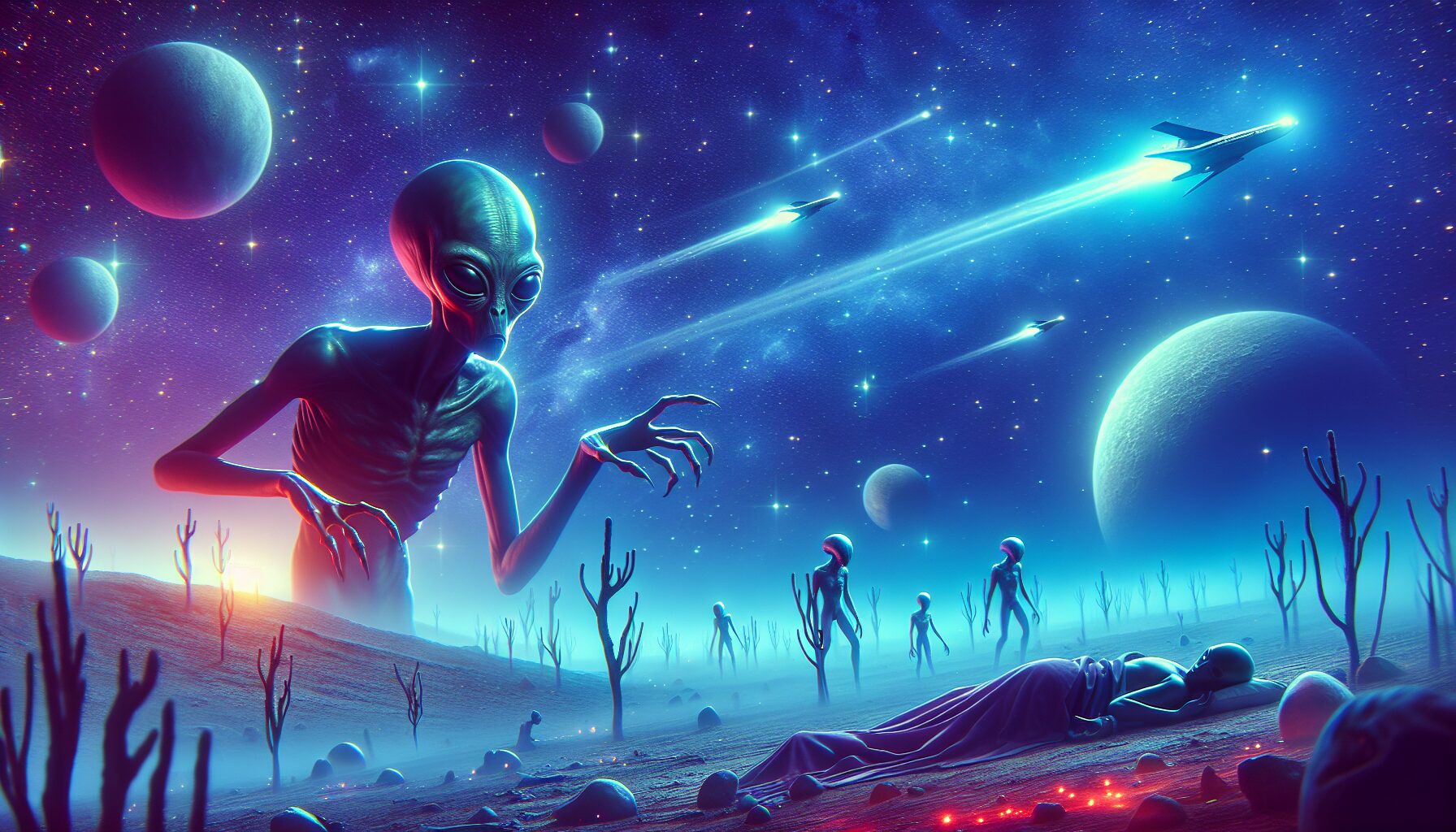
    The thought of extraterrestrial beings has captivated the human imagination for centuries. From ancient mythologies to modern science fiction, aliens are often depicted as mysterious entities with vast powers and unfathomable motives. A particularly intriguing theme is the portrayal of aliens as “Angels of Death,” enigmatic visitors who may serve as harbingers of doom or catalysts for transformation.

    Historical Perspectives on Extraterrestrial Visitations

    Humans have long wondered about the existence of life beyond our world. Ancient scriptures and texts occasionally mention celestial beings descending from the skies. In some interpretations, these beings were seen as angels or messengers who delivered divine decrees or catastrophic warnings.

    • The Book of Ezekiel in the Bible describes visions of heavenly crafts and interactions with divine beings.
    • In Hindu mythology, gods traversed the skies in flying chariots known as Vimanas. These vehicles sometimes served as tools of war and vengeance.

    While these interpretations are heavily saturated with the belief systems of their times, the parallels to modern-day UFO sightings and alleged alien abductions are hard to ignore.

    The Modern Mythology of UFOs and Aliens

    Since the late 20th century, the phenomenon of UFO sightings has become a focal point of both scientific inquiry and popular culture. Rigorous investigations by agencies such as the US Air Force’s Project Blue Book have attempted to categorize these occurrences, often with inconclusive results.

    The depiction of aliens in contemporary media ranges from benevolent saviors to annihilating forces—entities capable of both creation and destruction. This duality is highlighted in films and literature where extraterrestrial visitors serve as a mirror for humanity’s hopes and fears.

    Aliens as Harbingers of Destruction

    The idea of aliens acting as agents of annihilation is not just a construct of Hollywood. In The War of the Worlds by H.G. Wells, Martians invade Earth with superior technology, wreaking havoc on civilization. This narrative suggests a profound vulnerability in human endeavors, an existential risk posed by encounters with technologically advanced beings.

    Movies like Independence Day and The Day the Earth Stood Still further echo these themes, portraying alien invasions as warnings to humanity, urging a focus on global unity and peace. In both speculative and philosophical discussions, aliens are often posited as sentinels, whose encounters offer stark reflections on our self-destructive tendencies.

    “The most terrifying fact about the universe is not that it is hostile but that it is indifferent. But if we can come to terms with this indifference and accept the challenges of life within the boundaries of death—however mutable he may be—our existence as a species can have genuine meaning and fulfillment. However vast the darkness, we must supply our own light.”

    —Stanley Kubrick

    Angels of Death: Transformative or Terminal?

    It’s possible to envision aliens as heralds of transformation, serving as cosmic agents of evolutionary pressure. This perspective often shifts the narrative from one of destruction to one of change.

    • The transformative power of alien contact is explored in films like Contact, where communications with extraterrestrials challenge humanity’s place in the universe.
    • In the realm of speculative fiction, Arthur C. Clarke’s Childhood’s End depicts aliens as catalysts for human transformation, blending the apocalyptic with the transcendental.

    From this viewpoint, aliens as “Angels of Death” force humanity to confront its flaws and catalyze growth beyond its limitations. The threat of death is a powerful motivator for innovation and unity, driving the species to transcend its primal fears.

    Scientific Perspectives: Are We Alone?

    From a scientific standpoint, the question remains: are there truly extraterrestrial entities out there, and are they aware of us? The search for extraterrestrial intelligence (SETI) has long been a spearhead in this quest, analyzing signals from the cosmos for signs of alien life.

    The SETI Institute continues to monitor radio waves and investigate potential communication from other lifeforms. While no definitive signals have been confirmed, the vastness of the universe suggests numerous possibilities.

    The philosophical debate around aliens as either visitors or conquerors reflects broader existential questions about universal morality. If more advanced civilizations exist, would they share the same ethical principles, or would they impose their own?

    Conclusion: Navigating the Uncertainty

    As humanity ventures further into space, the possibility of encountering otherworldly beings becomes increasingly probable. Whether these aliens act as “Angels of Death” or benevolent allies may ultimately depend on how we perceive and prepare for their arrival.

    In contemplating aliens as either visitors or harbingers, humanity is reminded of its own vast capacity for creation and destruction. Whether these encounters will mark an end or a new beginning is a narrative yet to be written, an odyssey awaiting its heroes.

    As the philosopher Carl Sagan wisely noted, “For small creatures such as we, the vastness is bearable only through love.” The message is clear: whether the threat comes from within or without, the ultimate struggle is to preserve the light of civilization as we journey through the cosmic night.

  • Dark Forest Theory – Survival Through Universal Death

    Dark Forest Theory – Survival Through Universal Death

    The search for extraterrestrial life has captivated human imagination for centuries. Among the plethora of theories attempting to answer why we have not encountered any signs of alien civilizations, the Dark Forest Theory offers a particularly sobering perspective. It postulates that intelligent life in the universe avoids contact with others out of a fear of existential threat, leading to a universe that resembles a dark forest where survival depends on remaining undetected.

    Understanding the Dark Forest Theory

    The Dark Forest Theory gains its foundation from the science fiction novel The Dark Forest by Chinese author Liu Cixin. It is the second book in his renowned trilogy, The Three-Body Problem, which has gained international acclaim for its intricate exploration of the Fermi Paradox.

    The theory suggests that the universe is akin to a dark forest where predators (advanced civilizations) lurk. Each civilization is like a silent hunter, wary of making noise for fear of revealing their position to other potentially hostile creatures. The theory emerges from the following premises:

    • Existential Risk: Intelligent civilizations inherently face existential threats from other civilizations.
    • Lack of Trust: Given the vast distances and differing evolutionary paths, there exists a profound lack of trust among civilizations.
    • Survival Strategy: As a defensive strategy, civilizations opt to remain hidden to ensure their survival.

    The Cosmic Perspective

    Astrophysicists and theorists have long debated the Fermi Paradox, which questions why, given the vast number of stars and potentially habitable planets, we have not detected any signs of extraterrestrial life. The Dark Forest Theory offers a potential solution: perhaps other civilizations choose to remain silent to avoid detection.

    As the prominent astrophysicist Neil DeGrasse Tyson mentioned in an interview with Space.com, “The realization that we might be huddled in a dark forest where survival depends on not making any noise gives new gravity to the Drake Equation and our search for life.”

    Survival Through Anonymity

    In a dark forest, the safest path is often one of anonymity. A civilization aware of other potential threats would likely avoid transmitting their presence through radio signals or other detectable forms of communication. This leads to a deafening silence across the cosmos as every civilization becomes preoccupied with its survival.

    This notion is supported by various experts, including astrophysicist David Kipping. In a Scientific American article, Kipping highlights, “If survival depends on remaining undetected, then shouting our existence into the void becomes an act both reckless and foolhardy.”

    The Civilizational Game Theory

    Game theory provides insights into the kinds of decisions civilizations might make. In a scenario where two players are unaware of each other’s intentions, mutual suspicion can lead to both opting for silence. This mirrors the prisoner’s dilemma but applied on a cosmic scale.

    If a civilization assumes others are hostile until proven otherwise, caution dictates they maintain radio silence. The cost of revealing themselves could mean annihilation should they encounter an especially aggressive civilization.

    Counterarguments and Criticisms

    While the Dark Forest Theory is compelling, it is not without detractors. Critics argue that such a perspective underestimates the potential for peaceful co-existence built upon communication and diplomacy.

    “To presume that all life will inherently seek to annihilate external threats fails to account for the possibility of cooperation and mutual benefit among civilizations,” notes noted cosmologist Lisa Kaltenegger in a recent Nature article.

    Additionally, some posit that the theory’s pessimistic outlook is a product of human projection, reflecting our own historical conflicts rather than an objective extrapolation of potential extraterrestrial motives.

    The Future of Cosmic Communication

    Given the implications of the Dark Forest Theory, humanity’s approach to searching for extraterrestrial intelligence (SETI) is fraught with ethical and existential dilemmas.

    • Active SETI: Some scientists advocate for active SETI, where we don’t just listen for signs of life but also broadcast signals to make contact. Yet, knowing the risks outlined by the Dark Forest Theory, should we expose our existence?
    • Steering Galactic Policy: As we venture deeper into space exploration, discussions on establishing a unified policy on extraterrestrial communication gain urgency. These discussions must balance curiosity with caution.
    • Technological Advancements: As communication technologies evolve, so too will our abilities to hide or reveal our presence to the cosmos.

    Ultimately, the Dark Forest Theory urges us to ponder our cosmic solitude in new, unsettling ways. It challenges our perception of the universe not as a celestial community, but rather as a vast expanse filled with potential dangers.

    Conclusion

    In conclusion, the Dark Forest Theory provides a poignant narrative about the possible behaviors of alien civilizations, warning us about the perils of carelessness in cosmic communication. Whether it accurately reflects the universe remains to be seen, but it undeniably enriches our understanding of the complex dynamics at play.

    As humanity stands at the threshold of deeper space exploration, we are compelled to reflect on our role within this silent, shadowy expanse. The key question remains: Will we choose to break the silence of the forest, or will we maintain our anonymity, ever aware of the potential dangers looming in the dark?

  • Extraterrestrial Immortality – Myths of Eternal Beings

    Extraterrestrial Immortality – Myths of Eternal Beings

    Extraterrestrial Immortality: Myths of Eternal Beings

    The concept of extraterrestrial life has forever fueled our imagination, with countless stories exploring beings from other worlds. Among the most captivating of these tales is the idea of extraterrestrial immortality. The notion that otherworldly creatures might possess the secret to eternal life raises both curiosity and existential questions about our place in the universe.

    An Ancient Fascination

    From the annals of mythology to modern science fiction, immortality has been a recurring theme. Ancient cultures, such as the Egyptians and Greeks, often depicted gods and celestial beings possessing eternal life. These stories served as both moral lessons and reflections of human desires and fears surrounding death and the unknown realms beyond our earthly existence.

    In works like The Epic of Gilgamesh, one of the oldest surviving pieces of literature, the quest for immortality is central. Gilgamesh’s journey reflects an age-old human pursuit for eternal life—echoing modern-day aspirations and perpetuating myths that extraterrestrial beings might have already achieved this transcendence.

    Modern Mythology and Science Fiction

    Contemporary media continues to explore the idea of extraterrestrial immortality. In the realm of science fiction, countless narratives depict extraterrestrials as timeless entities. Films and television series, such as Doctor Who and Star Trek, explore the coexistence of mortal humans with near-immortal aliens, probing the ethical and psychological effects of such interactions.

    Ray Bradbury, in The Martian Chronicles, discusses the transformation and ultimate transcendence in extraterrestrial contexts. “We earth men have a talent for ruining big, beautiful things,” Bradbury writes, highlighting our transient nature in contrast with the suspected perpetual wisdom of alien life forms (Wikipedia).

    Scientific Interpretations

    The scientific community has taken keen interest in the study of longevity and potential immortality. Though the possibility of extraterrestrial life forms achieving timelessness remains speculative, research into biology and technology continues to pave the way for understanding potential mechanisms for extending life.

    Prominent physicist and futurist Michio Kaku suggests that advanced extraterrestrials might manipulate biological and technological elements to achieve long lifespans, potentially akin to immortality. “Extraterrestials a million years ahead might be immortal,” posits Kaku, urging us to consider the possibilities of what advanced sciences could entail (Michio Kaku’s Website).

    Philosophical and Ethical Considerations

    The potential existence of immortal extraterrestrial beings invites profound philosophical and ethical questions. Would immortality change the essence of what it means to be sentient? How might the existence of immortal beings affect human identity and our understanding of life and death?

    “If aliens exist, they may not just be smarter—some might be immortal. But would that be living?” – Maria Popova, Brain Pickings

    The intersection of immortality and extraterrestrial life sparks debates on the values we place on mortality, creativity, and the human spirit. Questions about control, power, and the morality of eternal life further complicate the discussion as we attempt to imagine living in a universe with beings that defy the temporal limitations that define Earthly experiences.

    Conclusion

    While the reality of immortal extraterrestrial life remains firmly in the realm of speculation, its implications continue to inspire both awe and trepidation. Exploring these narratives enriches our understanding of the universe and challenges us to ponder fundamental questions about existence, impermanence, and the human condition.

    As we continue to gaze at the stars and dream of possibilities beyond our planet, the mythology of extraterrestrial immortality serves not only as a source of wonder but as a mirror reflecting our own hopes, fears, and aspirations.

  • Alien Afterimages – Collective Dreams of the Unknown

    Alien Afterimages – Collective Dreams of the Unknown

    For centuries, humans have gazed at the stars, mesmerized by the vastness of the universe and the possibility of life beyond our blue planet. These musings have evolved into a tapestry of folklore, scientific inquiry, and cultural narratives that weave together the tantalizing idea of extraterrestrial contact and its impact on our collective dreams.

    Historical Context of Extraterrestrial Fascination

    Human fascination with extraterrestrial life is not a modern phenomenon. Ancient texts, including the Mahabharata and the Book of Ezekiel, contain allegories that some interpret as encounters with beings from other worlds. Fast forward to the 20th century, and we see a boom in such narratives, propelled by both advancements in technology and pivotal cultural events.

    • 1938 – Orson Welles’ radio adaptation of H.G. Wells’ The War of the Worlds allegedly caused public hysteria, demonstrating the powerful allure of alien narratives.
    • 1947 – The Roswell incident sparked widespread interest and speculation about UFOs and secret government cover-ups. As noted by History.com, Roswell is often credited with propelling UFO sightings into the public consciousness.
    • 1961 – The official start of the Search for Extraterrestrial Intelligence (SETI), a scientific effort to identify signs of alien life, underscored a legitimized interest in potential interstellar neighbors.

    Science Fiction’s Role in Shaping Perception

    Science fiction has played a crucial role in hyping and shaping public perception of alien life. Through films, literature, and TV series, alien afterimages persist as both fantastical and possible, influencing dreams and fears alike.

    “Science fiction helps us formulate questions for which there may not be easy answers. It provides a space to explore the unknown—out there and within ourselves.” — The Guardian

    Iconic films such as Close Encounters of the Third Kind and E.T. the Extra-Terrestrial explore themes of communication and connection, while Alien and Independence Day delve into human fears of aggression and invasion. These divergent narratives suggest a push-pull relationship with the unknown: an inspiring, yet terrifying landscape that fuels collective dreams.

    The Psychology of Extraterrestrial Dreams

    Our dreams often reflect our deepest fears and aspirations. Dream theorists suggest that alien dreams are complex manifestations of our subconscious wrestling with uncertainty, existential questions, and the concept of “the other.”

    • Archetypal Encounters: Carl Jung postulated that UFOs might be modern symbols akin to religious visions of old, serving as projections of humanity’s inner psychological states.
    • Symbolic Visitors: Aliens in dreams might symbolize the unfamiliar parts of ourselves or represent existential threats or opportunities.

    The mysterious nature of alien afterimages in our psyche may reside in their dual ability to act as both mirror and window—reflecting our innermost fears and desires, while simultaneously offering a glimpse into potential futures or past memories.

    Extraterrestrial Dreams in the Modern Age

    In the age of technology, alien dreams are not confined to the dim echoes of night. They have permeated into our waking lives through digital landscapes, from AI-generated art to video games like Mass Effect and StarCraft, merging reality with imagination.

    Social media platforms amplify reports of UFO sightings and alien encounters, turning once isolated reports into viral sensations. Amateur videos, often debunked but not before capturing the public’s imagination, contribute to a looping cycle of intrigue and skepticism.

    The Impact of Alien Imagery on Culture

    The influence of alien symbols resonates across various cultural and artistic forms. Music, art, and fashion have all borrowed from alien motifs to reflect societal views on futurology and identity exploration.

    • Art and Fashion: Artists like Yayoi Kusama have incorporated cosmic themes into their work. Fashion icons such as David Bowie and contemporary designers often use “extraterrestrial” aesthetics to challenge traditional norms.
    • Music: Bands such as Muse and Radiohead incorporate alien and cosmic undertones to comment on broader existential and personal themes.

    By integrating these elements into mainstream culture, alien afterimages challenge our understanding of self-identity, belonging, and innovation.

    Conclusion: The Enduring Allure of the Alien

    The allure of alien afterimages lies in their versatility and mirror-like nature. They serve as conduits for human emotions, technological aspirations, and existential queries. Whether seen as benevolent teachers, unknown threats, or distant cousins, extraterrestrials remain vibrant presences in our collective consciousness.

    As we continue to explore the universe and our planet’s place within it, alien narratives will undoubtedly evolve. These stories ignite human creativity and curiosity, urging us to delve deeper into the unknown landscapes of existence, one collective dream at a time.

  • The Death of the UFO Era – From Myth to Silence

    The Death of the UFO Era – From Myth to Silence

    The 20th century was abuzz with tales of unidentified flying objects (UFOs), capturing the imagination of millions worldwide. From alleged sightings and government cover-ups to mysterious abductions, UFOs were a cultural phenomenon that straddled the line between reality and myth. However, in recent years, the clamor surrounding these celestial enigmas has dwindled into an almost eerie silence.

    The Zenith of UFO Mania

    Post-World War II America witnessed an explosion in UFO sightings. The infamous Roswell incident in 1947 kickstarted a frenzy, as rumors of crashed alien spacecraft inundated the media. This period marked the golden age of UFOs, where films, books, and TV shows perpetuated the mystery and intrigue of extraterrestrial life.

    “The fascination with UFOs in the 1950s and 60s encapsulated the fears and hopes of a generation teetering on the brink of atomic age horizon discovery.”

    — National Geographic

    The Shift in Perception

    With the advent of advanced technology, what was once inexplicable started becoming all too explicable. Drones, satellites, and advanced military jets filled our skies, demystifying many phenomena that were previously attributed to UFOs. The age of information brought rational explanations to purported extraterrestrial events.

    In addition, organizations such as NASA and SETI (Search for Extraterrestrial Intelligence) delve into the cosmos with scientific rigor, searching for life with telescopes and data analysis rather than tales and conjecture.

    Government Disclosure and Growing Apathy

    In a surprising twist, once-classified information began to surface with the U.S. government’s release of the Pentagon UFO videos in 2020. However, instead of reigniting the fervor of past decades, it was met with a collective shrug.

    “The lack of excitement or fear over official confirmations of ‘unidentified aerial phenomena’ points to a growing public desensitization to the unknown.”

    — Forbes

    From Myth to Silence

    The death of the UFO era appears not with a bang but with a whimper. The myth of UFOs has slowly dissolved into silence, overshadowed by the realities of technological advancement and scientific discourse. In contemporary society, the fascination with UFOs has waned, leaving room for new mysteries to capture our collective curiosity.

    As we advance, perhaps our species will find its myths and fantastical desires once again, but for now, the era of UFOs is quietly closing.

  • The Fragility of Alien Life – Why They Might Be Extinct Already

    The Fragility of Alien Life – Why They Might Be Extinct Already

    The search for alien life has long been a topic of fascination and intrigue. Despite vast efforts, the evidence of extraterrestrial life remains elusive. The enduring question is not only whether life exists elsewhere in the universe but also why it might already be extinct.

    The Odds of Survival

    Stephen Hawking once pondered the existence of alien life, suggesting that intelligent life, if it exists, might not last long enough to reach out to us. He remarked,

    “It might be that primitive life is very common and intelligent life is fairly rare. Some would say it has yet to occur on Earth.”

    The universe is a vast, incredibly harsh environment where the conditions for life are temporary and precarious. Craig Hogan, director of the Fermilab Center for Particle Astrophysics, notes,

    “While life on Earth might seem robust, it has only existed for about 0.03% of the history of the universe.”

    In this context, the fragility of alien life becomes evident.

    The Drake Equation and the Great Filter

    The Drake Equation seeks to estimate the number of active, communicative extraterrestrial civilizations in the Milky Way galaxy. Yet, a concept that partners with this equation is the “Great Filter” theory. This theory posits that at some point from pre-life to a type III civilization on the Kardashev scale, there’s a step that is unlikely or impossible for life to get past. If this filter is behind us, humanity is unique and rare. If it is ahead, alien civilizations might have succumbed to it.

    The Great Filter suggests that many alien races could have reached technological singularity or self-destruction before becoming spacefaring. As the physicist-environmentalist James Lovelock posited,

    “Gaia is an evolutionary story driven not by natural selection alone but by the whole planet, the biota and the Earth, and we are one of those species.”

    This interconnectedness is both a strength and a potential vulnerability.

    Nurturing or Neglecting Advanced Life

    Beyond environmental factors, technological failures, wars, or cosmic events could have led to the extinction of intelligent extraterrestrial life. An advancing civilization might become more capable of self-destruction before mastering cosmic survival. As Carl Sagan wisely noted, “The universe is a pretty big place. If it’s just us, it seems like an awful waste of space.” Despite this space, advanced civilizations might not endure.

    In conclusion, the potential for alien life is significant, yet its longevity might be inherently threatened. Whether through environmental challenges, self-destruction, or cosmic misfortune, the survival of intelligent, alien organisms faces many hurdles, leading to the possibility that many such civilizations might have already vanished before we even had the chance to learn of their existence.

  • Contact and Death – Why First Encounters Could Be Fatal

    Contact and Death – Why First Encounters Could Be Fatal

    Contact and Death: Why First Encounters Could Be Fatal

    The idea of making first contact with extraterrestrial life has long been a subject of fascination and speculation within the realms of science fiction and scientific inquiry. Yet, as we edge closer to potentially discovering or being discovered by intelligent life forms beyond Earth, scientists and ethicists are raising concerns about the potential dangers involved. These risks are not just about communication barriers or diplomatic challenges but could be as grave as involuntary annihilation. This article explores why first encounters with alien civilizations could indeed be fatal.

    The Biological Menace

    One of the most concerning aspects of first contact lies in the field of microbiology. The simplest life forms on Earth have proven over millennia to be remarkably adaptable and often deadly. Humans have faced catastrophic consequences simply by traveling across different continents, let alone planets.

    “The history of exploration is replete with examples of populations being decimated by novel pathogens, from smallpox in the Americas to the bubonic plague in Europe,” notes The Journal of Infectious Diseases. The introduction of an entirely new set of microorganisms from a distant world—or vice versa—could lead to pandemics exponentially more catastrophic than anything Earth has ever witnessed.

    The prospect of alien viruses or bacteria to which humans have no immunity could lead to rapid and uncontrollable outbreaks. Conversely, Earth-born pathogens could prove equally lethal to alien life forms with no defenses against them.

    Technological Disparity and Misunderstanding

    The technological gap between humanity and a potential extraterrestrial civilization could spell disaster. If we assume that these beings have the capability to travel across galaxies, they may possess technology far beyond our comprehension and defense capabilities. Historian David Christian, in his TED Talk “The history of our world in 18 minutes,” suggests, “In history, encounters between cultures at different levels of technology have often resulted in exploitation and domination.”

    Consider the example of European colonizers and indigenous populations. Technological advantages, along with misunderstandings and cultural insensitivity, led to the subjugation and often destruction of entire civilizations. The same principles could apply on an interstellar scale, where humanity could inadvertently provoke hostility from a technologically advanced species.

    The Kardashev Scale and Unknown Motives

    The Kardashev Scale, developed by Russian astrophysicist Nikolai Kardashev, categorizes civilizations based on their energy use and technological advancement. A Type I civilization uses energy on a planetary scale, a Type II harnesses stellar power, and a Type III civilization utilizes energy on the scale of its entire galaxy.

    Humanity has not yet achieved full Type I status, so the appearance of a Type II or III civilization could render us insignificant or obsolete from their perspective. Moreover, understanding the motives of such beings could be beyond our current cognitive and philosophical frameworks. Are they curious? Resource-hungry? Surveillance-minded? These unknowns pose significant existential risks.

    Lessons from Fiction and Science

    Fictional depictions often provide cautionary tales about first contact. Works like The War of the Worlds by H.G. Wells and movies such as Arrival explore themes of invasion, miscommunication, and the potentially destructive nature of such encounters.

    In The War of the Worlds, humans’ initial awe and curiosity quickly turn to terror as alien technology wreaks havoc across the Earth. Similarly, Arrival focuses on the complexities and potential pitfalls in communication with extraterrestrial beings. These narratives underscore the notion that scenarios involving first contact are fraught with peril.

    The Necessity of Preparedness

    Given the myriad risks associated with first contact, it is crucial for our species to prepare adequately. Organizations like SETI Institute focus not only on the search for extraterrestrial intelligence but also on preparing for possible contact scenarios. Dr. Jill Tarter of the SETI Institute emphasizes the need for international protocols: “We need a coordinated response strategy, akin to the protocols established for pandemic outbreaks or natural disasters, ensuring that any first contact event does not lead to chaos or unintended harm.”

    In Conclusion

    While the prospect of first contact with extraterrestrial life is exhilarating, it is laden with formidable risks. The dual threats of biological contamination and technological exploitation could potentially lead to existential threats. As humanity continues to progress technologically, reaching further into the cosmos, we must tread cautiously. Preparing for a multitude of scenarios and acknowledging the potential for disaster will be vital steps in ensuring that our first encounter with alien life does not also become our last.

    Building understanding, crafting robust response strategies, and fostering international cooperation may ultimately determine the differences between a mutually beneficial exchange or a tragic footnote in the saga of human exploration.

  • Extraterrestrial Ruins – Cosmic Archaeology of Lost Civilizations

    Extraterrestrial Ruins – Cosmic Archaeology of Lost Civilizations

    Extraterrestrial Ruins – Cosmic Archaeology of Lost Civilizations

    Extraterrestrial Ruins: Cosmic Archaeology of Lost Civilizations

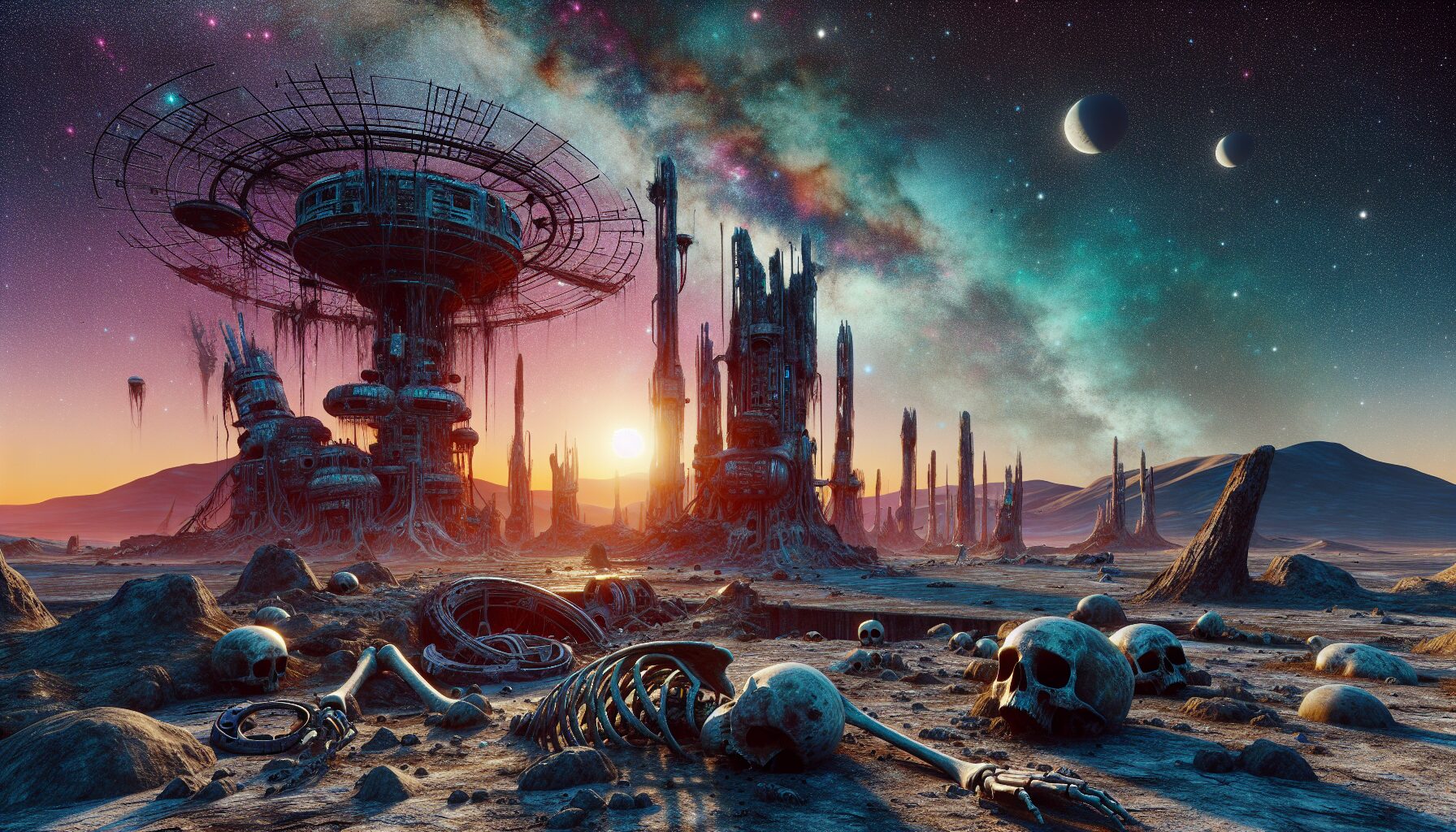
    The universe is a vast and mysterious expanse, dotted with celestial bodies that have intrigued scientists and enthusiasts alike for centuries. Among the most captivating possibilities that the cosmos holds is the existence of extraterrestrial civilizations. As we gather more information about the universe, a burgeoning area of study emerges: cosmic archaeology.

    Understanding Cosmic Archaeology

    Cosmic archaeology is a term coined to describe the study of potential ruins or artifacts left behind by advanced civilizations beyond Earth. While traditional archaeology seeks to understand past human societies through their physical remains, cosmic archaeology looks to the stars for similar clues.

    “The discovery of extraterrestrial artifacts would be one of the most profound moments in humanity’s history, reshaping our understanding of life, intelligence, and our place in the cosmos.” – Space.com

    The Search for Alien Ruins

    The search for alien ruins encompasses several methodologies. While direct physical exploration remains achievable only within our solar system, astronomers employ an array of tools to search in distant settings:

    • Space Telescopes: Instruments like the Hubble Space Telescope and the upcoming James Webb Space Telescope allow us to observe distant planets and moons, searching for unusual formations that could indicate past civilizations.
    • Radio Telescopes: By detecting signals from deep space, scientists attempt to find patterns or recurring emissions that suggest technological activity.
    • Planetary Exploration: Missions to bodies like Mars and the moons of Jupiter and Saturn look for signs of past habitability or unexplained structures.

    Intriguing Discoveries

    While no definitive evidence of extraterrestrial ruins has been found, there have been intriguing discoveries that fuel speculation and excitement:

    • The Face on Mars: First photographed by the Viking 1 Orbiter in 1976, the formation called the “Face on Mars” garnered attention for its striking resemblance to a humanoid face. Subsequent higher-resolution images, however, reveal it to be a natural landform.
    • Tabby’s Star: Known for its unusual light-dimming patterns, scientists speculated about the possibility of alien megastructures, although natural explanations like dust clouds have also been proposed.

    “These oddities may seem trivial or easily dismissed at first, but they are the breadcrumbs that could one day lead to profound discoveries.” – National Geographic

    Theoretical Frameworks

    The search for cosmic ruins is guided by several theoretical frameworks:

    • Kardashev Scale: Developed by astrophysicist Nikolai Kardashev in 1964, this scale categorizes civilizations based on energy consumption levels, helping scientists assess where we might find advanced societies in the universe.
    • Fermi Paradox: This paradox questions why, with the high probability of extraterrestrial civilizations, there is no clear evidence or contact, prompting various hypotheses about their nature and visibility.

    Challenges and Philosophical Implications

    The quest for extraterrestrial archaeological evidence faces numerous challenges:

    • Technological Limitations: The current technology limits our ability to explore distant worlds directly and detect potential artifacts.
    • Interpretation Biases: Human beings interpret potential evidence through an anthropocentric lens, which might obscure or misinterpret alien constructs.

    Despite these hurdles, the philosophical implications of discovering extraterrestrial ruins are profound. Such a find would challenge our perspectives on life and intelligence, potentially uniting humanity with a shared intrigue and purpose.

    Conclusion

    While the physical evidence for extraterrestrial civilizations remains elusive, the pursuit of cosmic archaeology stands as a testament to humanity’s enduring curiosity and its relentless quest for knowledge. The hope for discovering celestial ruins pushes the boundaries of science and imagination, inviting us to ponder the limitless possibilities inherent within the stars.

    Next time you gaze at the night sky, consider the silent echoes of forgotten civilizations that may lie out there, waiting to be uncovered.