Tag: human

  • The Obscure Mind – Dark Philosophy for Modern Thinkers

    The Obscure Mind – Dark Philosophy for Modern Thinkers

    In the midst of 21st century’s light-speed technological advancements and glittering positivity, there exists a shadowy corner of thought known as dark philosophy. It is an arena where thinkers grapple with the limitations of human existence, the meaninglessness of life, and the inevitability of death. For those brave enough to venture into the depths of the obscure mind, dark philosophy offers a unique perspective often overlooked by mainstream philosophical ideals.

    Understanding Dark Philosophy

    Dark philosophy, at its core, challenges the very essence of what it means to live a fulfilling life. It grapples with themes such as nihilism, existentialism, and pessimism. While these concepts might seem bleak or even daunting, they provide a much-needed counterbalance to the relentless pursuit of happiness and optimism that pervades modern society. Here are some fundamental aspects:

    • Nihilism: Originating from Latin nihil meaning “nothing”, nihilism posits the belief that life is without objective meaning, purpose, or intrinsic value. Prominent philosopher Friedrich Nietzsche, known for declaring “God is dead,” believed that life should be lived for the moment as there is no universal moral system.
    • Existentialism: Thinkers like Jean-Paul Sartre and Albert Camus explored how individuals must find meaning within themselves, rejecting predetermined definitions imposed by society. Sartre famously stated, “Man is condemned to be free,” emphasizing personal responsibility in creating one’s own purpose.
    • Pessimism: As a philosophical attitude, it generally suggests that the perceived world is fundamentally flawed and fraught with suffering. German philosopher Arthur Schopenhauer argued that human desires are inherently unattainable, leading to frustration and disillusionment.

    The Modern Resonance of Dark Philosophy

    In today’s fast-paced world, dark philosophy resonates with many who feel disillusioned by conventional measures of success and happiness. Here are reasons why this school of thought appeals to modern thinkers:

    “We love life, not because we are used to living but because we are used to loving.” – Friedrich Nietzsche

    • Rejection of Superficiality: As society becomes increasingly materialistic, dark philosophy offers an escape by emphasizing deeper, often uncomfortable truths over fleeting pleasures and superficial achievements.
    • Understanding Suffering: By confronting suffering rather than avoiding it, individuals can attain resilience and profound insight. For instance, Camus’ notion of the ‘absurd’ illustrates the inherent contradictions in human existence which, when embraced, empowers individuals to live authentically.
    • A Sense of Liberation: The acceptance of life’s inherent meaninglessness grants a freeing sense that allows one to explore possibilities unfettered by societal expectations. As philosopher Lars Svendsen notes, “Meaning has become a matter of choice,” giving individuals the power to define their existence.

    Challenges and Misconceptions

    Despite its avant-garde appeal, dark philosophy faces numerous challenges and misconceptions:

    • Misperceived as Cynical: Many dismiss dark philosophy as cynical or nihilistic, overlooking its potential to evoke positive thinking through acceptance and personal empowerment.
    • Emotional Strain: Confronting one’s darkest thoughts can be emotionally taxing, leading some to retreat into denial or despair rather than acknowledging and working through existential anxieties.
    • Intellectual Elitism: The often complex and challenging nature of dark philosophical texts may be perceived as exclusive or inaccessible, alienating those unfamiliar with its intricacies.

    Dark Philosophy in Action

    For those intrigued by dark philosophy’s allure, practical application is key. Here’s how one might integrate its principles into daily life:

    • Embrace Solitude: Set aside time for introspection and solitude to explore your thoughts and feelings without external influence.
    • Meditative Practices: Employ mindfulness and meditation techniques to foster acceptance of life’s unpredictability and transience.
    • Creative Outlets: Use art, writing, or music as means to express and process complex emotions stirred by dark philosophical themes.

    Ultimately, dark philosophy challenges us to face the shadows within ourselves and the world around us, offering an unflinching examination of human nature and existence. For the modern thinker, it is a call to authenticity, resilience, and profound reflection—a path less traveled, yet rich with transformative potential.

    “The world breaks everyone, and afterward, some are strong at the broken places.” – Ernest Hemingway

    While embracing the ideas of dark philosophy may not lead to conventional happiness, it opens up a realm of possibility that allows for deep personal growth and a raw, unvarnished appreciation of life.

  • Twilight of Thought – Dark Reflections on Existence

    Twilight of Thought – Dark Reflections on Existence

    In an age where technology’s luminescence casts long shadows over our collective consciousness, philosophical musings on existence have taken on a new urgency. As these reflections deepen, they often explore the intersection of science, technology, and the age-old quest to understand our place in the universe.

    In their groundbreaking piece, “Engineering Eternity”, The New Yorker delves into the human obsession with immortality and the moral quandaries it presents:

    “In our pursuit to conquer mortality, we are tearing at the very fabric of what it means to be human.”

    This existential tension is echoed in digital spaces, where our digital footprints might one day echo louder than the memories we leave with the living.

    The Digital Echo

    Our online lives, curated and stored through intricate networks, present their own kind of twilight. As philosopher Luciano Floridi notes, “In an information society, nobody thinks. We expect to banish paper, but we actually banish thought.” This new paradigm invites a darker introspection: Is consciousness simply a digital residue?

    The Evolution of Consciousness

    • Transhumanism: Advocating for the transformation of the human condition through advanced technology, transhumanism promises a future where cognitive and physical limitations might be transcended.
    • The Singularity: A concept popularized by futurist Ray Kurzweil, posits a moment when artificial intelligence surpasses human intelligence, potentially rendering human thought obsolete.

    Critics argue that in this race towards a technologically enhanced future, we risk neglecting the existential questions that have long grounded human experience. Will a future where AI dominates dilute the essence of what it means to ponder, quest, and reflect?

    Existential Substitutes

    As we stand on this precipice, there is a renewed call to engage with existentialism. Thinkers like Martin Heidegger have long argued that Being is not a state but a process, one defying the constraints of digital permanence. In his seminal work, Heidegger proposes that genuine understanding of existence requires embracing its inherent transience.

    In conclusion, as we navigate this twilight of thought, we must balance the enticing promises of digital immortality against the soul-stirring queries of our ephemeral existence. It’s a careful navigation between the tangible and the intangible, the immortal and the fleeting—a path walked only by those daring enough to gaze into the abyss and forge meaning amidst its profound mysteries.

  • The Gothic Codex – Literature and Aesthetics of Shadow

    The Gothic Codex – Literature and Aesthetics of Shadow

    You need to be logged in to view this content. Please . Not a Member? Join Us
  • Ash and Light – Dualities of Mortality and Transcendence

    Ash and Light – Dualities of Mortality and Transcendence

    You need to be logged in to view this content. Please . Not a Member? Join Us
  • The Obscure Muse – Inspiration from Darkness

    The Obscure Muse – Inspiration from Darkness

    The Obscure Muse – Inspiration from Darkness

    Throughout history, artists, writers, and musicians have often turned to the shadows of the human experience to find inspiration. Darkness, both literal and metaphorical, serves as a unique catalyst for creativity, offering depth and complexity that light cannot always provide. This article delves into the concept of the ‘obscure muse’ and explores how the darker elements of life fuel some of the most profound and enduring works of art.

    The Allure of Darkness

    Darkness has a magnetic allure that artists have been drawn to for centuries. Edgar Allan Poe, a master of the macabre, once wrote, “Deep into that darkness peering, long I stood there, wondering, fearing, doubting, dreaming dreams no mortal ever dared to dream before.” This quote encapsulates the irresistible pull of the unknown and the mysterious, which can be both terrifying and deeply inspiring.

    • Emotional Depth: Dark themes allow artists to explore intense emotions such as fear, despair, and melancholy, leading to works that resonate on a more profound level.
    • Contrast and Balance: By exploring the dark, artists can create contrast with lighter themes, offering a balanced perspective on the human experience.
    • Catharsis: Engaging with dark themes can provide a cathartic release for both the creator and the audience, transforming pain into art.

    Artistic Expressions from the Shadows

    Various art forms have uniquely interpreted the themes of darkness. From literature to visual arts and music, the following examples highlight how artists have embraced the obscure muse.

    I have been half in love with easeful Death,

    Call’d him soft names in many a mused rhyme,

    To take into the air my quiet breath;

    Now more than ever seems it rich to die,

    —John Keats, Ode to a Nightingale

    Literature

    From ancient tragedies to modern horror novels, literature has long drawn upon themes of darkness. Authors like Mary Shelley, with her groundbreaking novel Frankenstein, have used the gothic to explore human nature and its limits.

    Visual Arts

    In the visual arts, chiaroscuro—a technique that uses strong contrasts between light and dark—has been employed by masters like Caravaggio to enhance the emotional impact of their work. Such techniques engage viewers, urging them to delve deeper into the narrative behind the image.

    Music

    Music also thrives on darker themes, from the somber melodies of a Beethoven symphony to the angst-ridden lyrics of rock and metal bands. These genres capture raw emotions, turning them into powerful auditory experiences.

    The Therapeutic Power of Darkness

    Creating or consuming art with darker themes can be a therapeutic process. Understanding and expressing the complexity of human emotions helps individuals process their own experiences. The use of darkness in art often reflects a journey toward self-discovery and healing.

    • Psychological Benefits: Art therapy often incorporates dark themes to help individuals confront and work through personal issues.
    • Universal Understanding: Dark-themed art can foster empathy and understanding by illustrating universal struggles.
    • Personal Growth: Engaging with difficult subjects in art can promote resilience and personal growth.

    Famous Works Born from Darkness

    The following iconic works stand as testament to the enduring power of the obscure muse:

    • Nightmare by Johann Heinrich Füssli: This eerie painting captures the tension between dream and reality, compelling viewers to confront their subconscious fears.
    • The Bell Jar by Sylvia Plath: Plath’s semi-autobiographical novel dives into depression and the quest for identity, shedding light on mental illness.
    • Requiem by Wolfgang Amadeus Mozart: Mozart’s final composition, this unfinished masterpiece, is imbued with a profound sense of finality and mortality.

    Conclusion

    The obscure muse—an inspiration drawn from darkness—remains a vital force in the arts. By exploring the shadowy aspects of life, artists can convey rich emotional landscapes and reflect the multifaceted nature of human experience. As society continues to evolve, the allure of darkness in art underscores an enduring truth: in shadows, we often find our most profound insights.

  • Angels and Ash – Symbolism of Death and Renewal

    Angels and Ash – Symbolism of Death and Renewal

    You need to be logged in to view this content. Please . Not a Member? Join Us
  • Necropolis of Thought – Exploring the Architecture of Consciousness

    Necropolis of Thought – Exploring the Architecture of Consciousness

    Necropolis of Thought – Exploring the Architecture of Consciousness

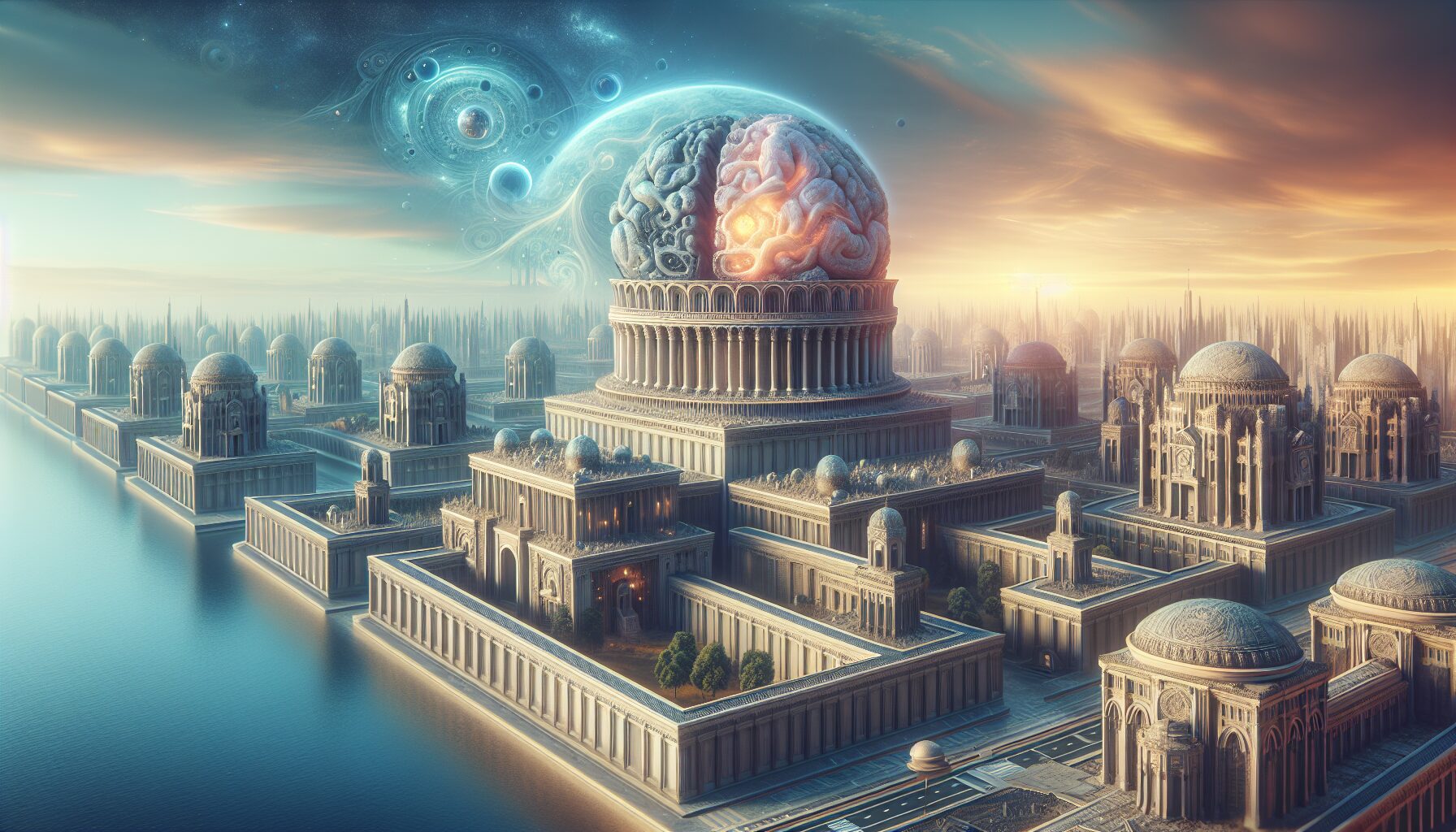
    Consciousness has long been one of the most elusive and profound aspects of human existence. Often described as a paradox or a mystery, it both defines and defies our understanding of the very essence of being. This article embarks upon an exploration of what might be termed the “necropolis of thought,” delving into how architecture serves as a metaphor for consciousness, structuring the intangible and breathing life into the abstract.

    The Phenomenon of Consciousness

    Philosophers, neuroscientists, and psychologists alike have expressed differing views on consciousness. The debate encompasses discussions about its origins, its necessity, and its implications. Consciousness as we know it arises as the intricate culmination of brain processes; yet, it transcends physical mechanics in ways that invite both wonder and inquiry.

    John Searle, a notable philosopher of consciousness, famously stated, “Consciousness is a biological phenomenon like photosynthesis, digestion, or mitosis. Consciousness consists of inner, qualitative, subjective states and processes of sentience or awareness.” (Wired) This definition grounds consciousness not as something supernatural but instead as an integral part of existence through biological processes. Nevertheless, the vast and variable landscapes it presents continue to intrigue scholars and laypeople alike.

    Architectural Metaphors in Understanding Consciousness

    Consider consciousness as a grand architectural structure, a “necropolis” of thought, populated by phantom ideas and echoes of profound cognitions. This metaphor provides a way to visualize and approach the abstract nature of human consciousness:

    • Foundation: Just as a building relies on a foundation, consciousness is grounded in the neural architecture of the brain. The cerebral cortex supports higher-order functions such as reasoning, decision-making, and perception, echoing the support beams holding aloft a mighty structure.
    • Design and Structure: Complex and multifaceted, the design of consciousness—akin to cathedral naves or labyrinthine corridors—hosts various cognitive functions. Each thought, memory, and emotion constitutes a different chamber within this elegant cranial edifice.
    • Echoes and Shadows: Architectural spaces play with the interplay of light and shadow. Similarly, consciousness is filled with the obscurities of the subconscious, the so-called “corners” where latent thoughts and forgotten memories lurk.
    • Public Spaces: The communal areas of a building symbolize shared consciousness or collective unconscious—concepts elaborated by Carl Jung, who proposed that beneath the personal unconscious lies a deeper collective strata shared among humans.

    Interdisciplinary Bridges: Neural Networks and Thought Constructs

    The analogy between architecture and consciousness is further underpinned by the interdisciplinary nexus bridging neuroscience and artificial intelligence. The human brain, neuroscience postulates, is an intricate network somewhat mirrored by artificial neural networks designed by engineers and computer scientists. As Carver Mead, a pioneer in neural networks, states, “We know way more about how to design computers than we do about how to design organisms. But mimicking some of the brain’s strategies provides us with a glimpse of the design principles underlying organized complexity.”

    Dreamscapes and the Subconscious

    Dreaming stands as a significant example of the subconscious architecture of thought, where sleeping brains assemble narratives that range from the surreal to the hyperreal. According to Psychology Today, “Dreams function as a simulated world in which the mind tries to solve the informational overload it faces on a daily basis.” This nocturnal kingdom belongs to a deeper level of consciousness, a hidden vault in our necropolis of thought.

    The Limits of Language and the Expression of Consciousness

    As we explore this existential structure, we encounter the limitations of language in encapsulating consciousness described by Ludwig Wittgenstein: “The limits of my language mean the limits of my world.” The difficulty of articulating thoughts lies within the architecture of syntax itself, where the expression of complex intentionality is often confined by linguistic tools.

    Philosophical Perspectives

    Philosophical inquiries into consciousness have laid the groundwork for discussions about free will, self-awareness, and the nature of reality. The allegory of the necropolis bears thematic resemblance to philosopher René Descartes, who famously posited “Cogito, ergo sum” (“I think, therefore I am”). Descartes’s meditations parallel the journey through an intellectual catacomb where the mind seeks proof of its own existence amid an empire of thoughts, perceptions, and beliefs.

    The catacombs of Paris may capture imaginations with their physical manifestations of historic lives, but within our own biological labyrinths lies no less a gallery of spectral ideas and enshrined memories that define our being.

    Potential Futures: The Conscious Machine

    With advancements in AI and machine learning, questions arise about the potential for artificial consciousness. Would a conscious machine serve as an architectural replica, an electronic necropolis of thought replicating human cognitive processes? The implications of endowing machines with a form of consciousness challenge ethical perspectives, and educators, policymakers, and technologists must ponder the societal ramifications.

    Conclusion

    The architecture of consciousness, much like the planning of a sprawling necropolis, remains both vast and intimate — a testament to the complexity of life itself. While technological and scientific advancements offer us glimpses into the corridors of the mind, a comprehensive blueprint of consciousness may forever elude us, a perennial puzzle at the heart of human curiosity.

    In contemplating our own necropolis of thought, we are led to a mosaic of realizations. It is this intellectual architecture that underpins identity, fosters creativity, and conjures the enigma we call experience. As explorers of the mind’s grand edifice, we continue our search, conscious that each question answered may unveil even more chambers of curiosity waiting to be discovered.

  • Shadows of the Soul – Exploring the Darkness Within

    Shadows of the Soul – Exploring the Darkness Within

    Shadows of the Soul: Exploring the Darkness Within

    The human psyche is a complex interplay of light and dark, a tapestry woven with threads of both benevolent and malevolent tendencies. The concept of the ‘shadow’—a term popularized by Swiss psychiatrist Carl Jung—represents the unconscious and repressed aspects of the personality. Delving into our shadows can be an unsettling yet enlightening journey. This exploration prompts self-awareness and the potential for profound personal growth.

    The Origins of the Shadow

    Carl Jung introduced the term ‘shadow’ to define the unconscious parts of the psyche that an individual disowns or is unaware of. According to Jung, “the shadow personifies everything that the subject refuses to acknowledge about himself.” (Good Therapy).

    The shadow consists of all qualities—both negative and positive—that are not recognized as part of one’s conscious identity. This might include socially undesirable traits such as greed, envy, or anger, as well as repressed talents and instincts. As Jung states in Psychology and Religion: West and East, “Everyone carries a shadow, and the less it is embodied in the individual’s conscious life, the blacker and denser it is.”

    Confronting the Shadow

    Engaging with the shadow is a crucial aspect of personal growth and self-discovery. This process, often referred to as shadow work, involves recognizing and integrating these hidden aspects. By confronting the shadow, individuals have the opportunity to reclaim those parts of themselves that have been cast into darkness.

    • Self-Reflection: The first step in shadow work involves honest self-reflection. This might involve journaling, meditation, or therapy, avenues through which one can identify repressed emotions and traits.
    • Acknowledgment: Recognizing the presence of the shadow without judgment is critical. Acceptance creates the space for transformation and healing.
    • Integration: The ultimate goal of shadow work is to integrate these aspects into the conscious self, leading to wholeness and authenticity.

    American psychologist Robert A. Johnson in his book Owning Your Own Shadow: Understanding the Dark Side of the Psyche articulates this idea beautifully: “To honor and accept one’s own shadow is a profound religious discipline. It is whole making—and that is the meaning of holiness.”

    The Benefits of Embracing the Shadow

    While delving into one’s darker aspects can be daunting, the rewards are manifold. Here are several benefits of this transformative process:

    • Enhanced Self-Awareness: By acknowledging the parts of ourselves we’ve ignored or denied, we develop a deeper understanding of our behaviors and motivations.
    • Emotional Healing: Shadow work allows suppressed emotions to surface, enabling the healing of old wounds and traumas.
    • Improved Relationships: As we accept our flaws, we cultivate compassion and empathy, not only for ourselves but for others as well, fostering healthier relationships.
    • Personal Growth: By integrating the shadow, we unlock greater creativity, intuition, and personal power, paving the way for a more fulfilled and purposeful life.

    Shadows in Cultural and Historical Context

    The idea of confronting one’s inner darkness is not confined to modern psychology. Throughout history, various cultures have acknowledged the shadow through myth, art, and literature.

    Consider the tale of Dr. Jekyll and Mr. Hyde by Robert Louis Stevenson, which explores the duality of human nature and the struggle between societal norms and primal instincts. Similarly, many religious texts feature stories of conflict between light and darkness, good and evil, illustrating the universal recognition of the shadow.

    “We must be careful; the darkness always passes over the light!” —Elie Wiesel, speaking on the importance of acknowledging both sides of human nature.

    In art, the chiaroscuro technique—contrasting light and dark—symbolizes the interplay of these forces, offering insight into the artist’s psychological landscapes. More contemporary examples can be found in various film and television narratives that explore the complexity of moral ambiguity, through characters that subvert hero and villain archetypes.

    Shadows as a Creative Force

    Many artists, writers, and creators have drawn from their shadows to fuel their work. The shadow can act as a muse, offering a rich well of inspiration that shapes creative expression.

    Novelist and philosopher Albert Camus wrote of his struggle with the absurdity and darkness of life, yet used these themes to fuel his existential narratives. In music, artists like Nina Simone and Kurt Cobain channeled their inner turmoil to create works that resonate deeply with audiences. Their art offers catharsis not only for themselves but also for their listeners.

    The Ethical Implications of Ignoring the Shadow

    Ignoring our shadows can lead to the projection of these denied parts onto others, forming biased perceptions and judgments. This phenomenon can affect societies at large, contributing to systemic issues such as discrimination, conflict, and misunderstanding.

    Acknowledging shadow elements within cultural and societal frameworks can lead to greater empathy and collective healing. As Jung wisely noted, “Knowing your own darkness is the best method for dealing with the darkness of other people.” This understanding emphasizes the importance of personal shadow work as a stepping stone to broader societal harmony.

    Conclusion: Embracing the Journey

    The journey into the shadows of the soul requires courage and resilience. It asks for a sincere commitment to explore the less desirable facets of our nature, promising transformation and reconciliation. As individuals begin to integrate these shadow elements, they cultivate a more authentic self and pave the way for a more harmonious existence with the world around them.

    Ultimately, the shadow is not an enemy to be vanquished but a rich layer of the self to be embraced. By welcoming the darkness within, we allow the light to shine even brighter, encouraging a fuller and more nuanced understanding of the human condition.

  • The Archive of Forgotten Dreams

    The Archive of Forgotten Dreams

    Imagine a place where the ephemeral nature of dreams is preserved, where the whispers of forgotten thoughts linger, waiting to be uncovered. This realm is not a mere figment of the imagination but is conceptually known as the “Archive of Forgotten Dreams.” In this article, we will delve into the fascinating world of dreams, exploring their significance, the mysterious archive that keeps them alive, and what they reveal about our subconscious mind.

    The Significance of Dreams

    Dreams have long captivated the human mind. Across cultures and centuries, dreams have been regarded as messages from the divine, portals to other worlds, or simply the brain’s way of processing information. Sigmund Freud, often dubbed the father of psychoanalysis, famously suggested, “Dreams are the royal road to the unconscious.” (source)

    Modern science seeks to unlock the mysteries of dreams, understanding them as a manifestation of our deepest fears, desires, and memories. Studies have shown that dreams play a critical role in emotional regulation, memory consolidation, and problem-solving.

    Introducing the Archive of Forgotten Dreams

    In a world where technology constantly evolves, the idea of capturing and archiving dreams seems less fantastical and more like an impending reality. Imagine a digital archive where dreams are recorded, analyzed, and stored—a library not of books, but of human fantasies, nightmares, and desires. The Archive of Forgotten Dreams concept embraces this notion, aiming to compile the dreams that individuals often forget upon waking.

    Theoretical Framework

    • Dream Recording Technology: Emerging technologies like fMRI and EEG provide glimpses into brain activity during sleep. These advancements fuel speculation about future devices that could record and play back dreams.
    • Psychological Insights: By archiving forgotten dreams, researchers could potentially gather data to explore recurring themes, symbols, and emotional patterns within the human psyche.
    • Artistic Inspiration: The dream archive could serve as a fountain of inspiration for artists, writers, and creators, offering a repository of vivid images and narratives beyond conscious imagination.

    The Mechanics of Dream Forgetting

    Despite their vivid nature, the majority of dreams are forgotten within moments of waking. This phenomenon can be attributed to several factors:

    • Lack of Attention: Dream recall requires attention and focus, which is often lacking as one transitions from sleep to wakefulness.
    • Brain Functionality: The hippocampus, responsible for memory formation, is less active during REM sleep—when dreaming most vividly occurs.
    • Biological Prioritization: The brain prioritizes creating new memories after waking, and often dreams take a back seat.

    Exploring the Dream Archive: Case Studies and Insights

    To illustrate the potential findings from the Archive of Forgotten Dreams, imagine hypothetical scenarios wherein individuals’ forgotten dreams unveil subconscious intricacies:

    Case Study: Recurring Symbols

    One subject experiences recurring dreams of doors—some open, some locked. Dream analysis reveals that doors symbolize opportunity and the subject’s challenges in decision-making.

    Such consistent imagery not only aids personal introspection but also enhances understanding of human symbolism universally.

    Insight: Collective Dream Patterns

    By examining dreams across demographics, cultural trends may surface. For example, during a global pandemic, archived dreams might reveal an increase in themes related to isolation or anxiety, reflecting widespread societal emotions.

    Cultural Perspectives on Dream Archives

    In many indigenous cultures, dreams hold sacred meanings and are passed down through oral traditions. The Archive of Forgotten Dreams can bridge these ancient practices with modern technology:

    • Preservation of Traditions: Archiving dreams allows for the preservation and cross-referencing of cultural symbols and stories.
    • Exchange of Knowledge: Sharing dream archives with diverse cultures can foster an exchange of knowledge that highlights both unique and shared human experiences.

    Challenges and Ethical Considerations

    While the concept of an Archive of Forgotten Dreams tantalizes with possibilities, it also raises significant ethical questions:

    • Privacy Concerns: Dreams are intensely personal; archiving them raises issues regarding consent and privacy.
    • Interpretation Risks: Misinterpretation of dreams can lead to inaccurate conclusions and psychological distress.
    • Data Security: Maintaining the confidentiality and security of archived dream data is crucial.

    The Future of Dream Archives

    As technology advances, the dream of creating a tangible Archive of Forgotten Dreams edges closer to reality. While still theoretical, such an archive promises to deepen our understanding of human consciousness, creativity, and cultural diversity.

    In conclusion, the Archive of Forgotten Dreams stands as a symbol of our unending quest to understand the mind. It beckons us to consider the unfathomable potential that lies within the realm of dreams, reminding us that what we forget is often just as vital as what we remember.

    Further Reading:

  • Nightmare Anthology: Fiction and Poetry

    Nightmare Anthology: Fiction and Poetry

    Throughout the annals of literature, nightmares have been a compelling source of inspiration for both fiction and poetry. These haunting dreams tap into the deepest recesses of the human psyche, revealing truths and fears that might otherwise remain hidden. The anthology of nightmares, explored through creative expression, is a treasure trove for both writers and readers alike.

    The Allure of Nightmares

    What is it about nightmares that captivate writers? In essence, nightmares allow a direct exploration of our most profound fears and anxieties. As poet Sylvia Plath once noted:

    “I am terrified by this dark thing that sleeps in me; all day I feel its soft, feathery turnings, its malignity.”

    Nightmares provide a fertile ground for Plath’s lyrical expression of internal conflicts, serving as a mirror reflecting the darker aspects of the human condition. For many poets and authors, the act of writing about nightmares offers a cathartic release, a way to confront and understand the incomprehensible.

    Fiction Rooted in Darkness

    Nightmares have long provided fodder for some of the most haunting fiction. Consider the works of renowned authors like Stephen King and Edgar Allan Poe, who have woven suspenseful tales that draw deeply from the realm of nightmares. King’s It and Poe’s The Tell-Tale Heart both illustrate how fear can become an entity within itself, making the imaginary feel all too real.

    • Stephen King: Masterfully crafts narratives where nightmares blur into the waking world, challenging the boundary between fiction and reality.
    • Edgar Allan Poe: Penetrates the soul with tales of madness and dread, drawing his readers into the depths of his characters’ tortured minds.

    The Poetic Nightmare

    Painters of language, poets often use nightmares to delve into themes of existential dread, death, and the inexplicable. Consider this excerpt from T.S. Eliot’s The Hollow Men:

    “This is the way the world ends, not with a bang but a whimper.”

    Eliot taps into the nightmare of existential despair, illustrating how our deepest fears often lie in quietude rather than chaos. These poetic explorations serve to illuminate, challenge, and ultimately enrich the human experience.

    Conclusion

    The anthology of nightmares in fiction and poetry is ever-growing, allowing readers to explore the depths of fear and imagination. As we continue to grapple with the unknown, the nightmarish visions conjured by writers will remain a powerful tool in the literary world, offering insights into our most primal emotions.

    For more exploration into the world of nightmares in literature, delve into the works of Sylvia Plath, T.S. Eliot, and Stephen King.