Tag: light

  • The Winter Halo Trick – A Lighthearted Guide to Spotting Angel Pranks

    The Winter Halo Trick – A Lighthearted Guide to Spotting Angel Pranks

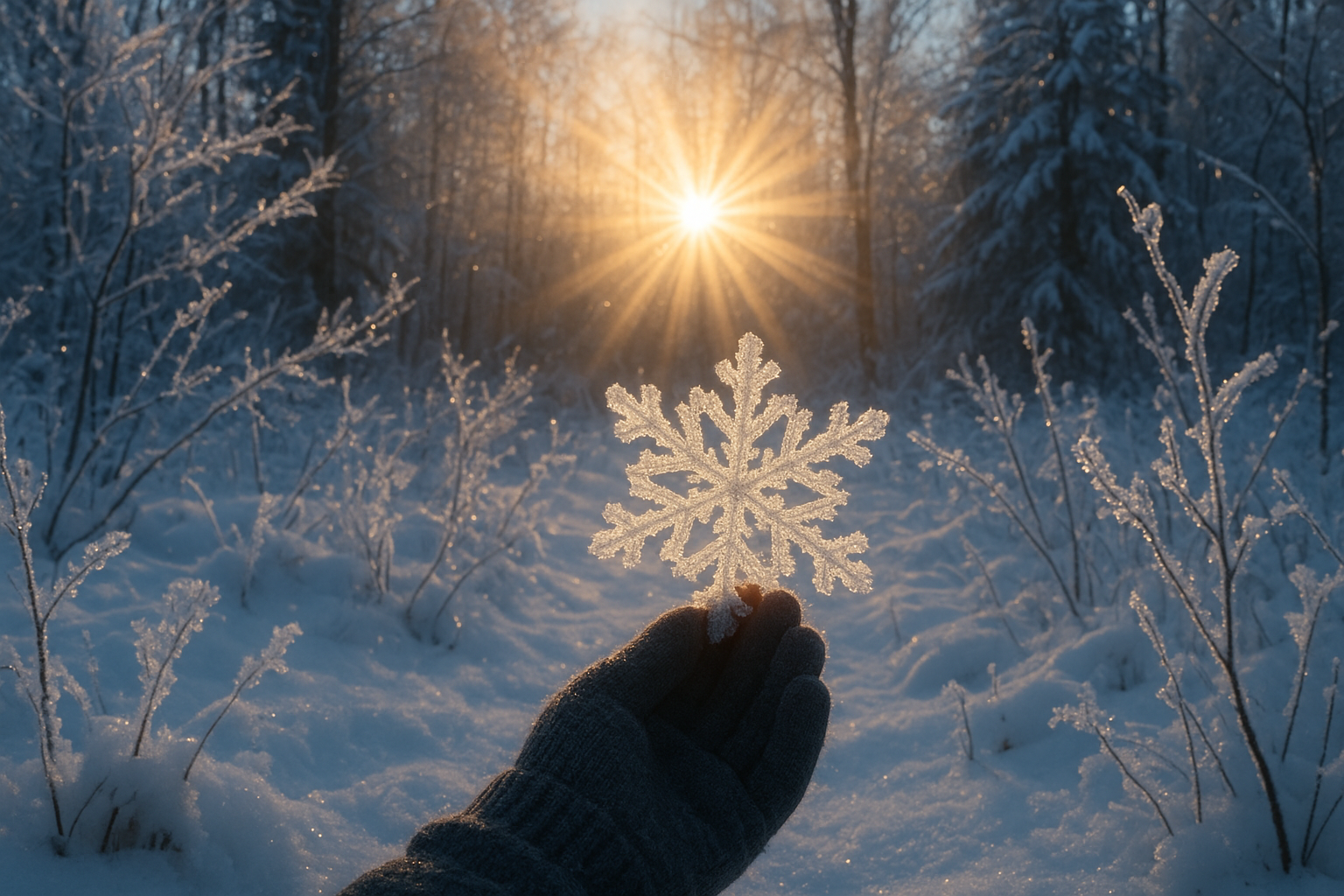
    Winter is a magical time of year, blanketing the world in a white frost that sparkles like the heavens themselves. But among the swirling snowflakes and icy gusts, some say that mystical beings are at work, playing light-hearted tricks on unsuspecting humans. Below, we’ll explore the whimsical phenomenon known as the “Winter Halo Trick” and how you can become a savvy spotter of what some purport to be angelic pranks.

    What is a Winter Halo?

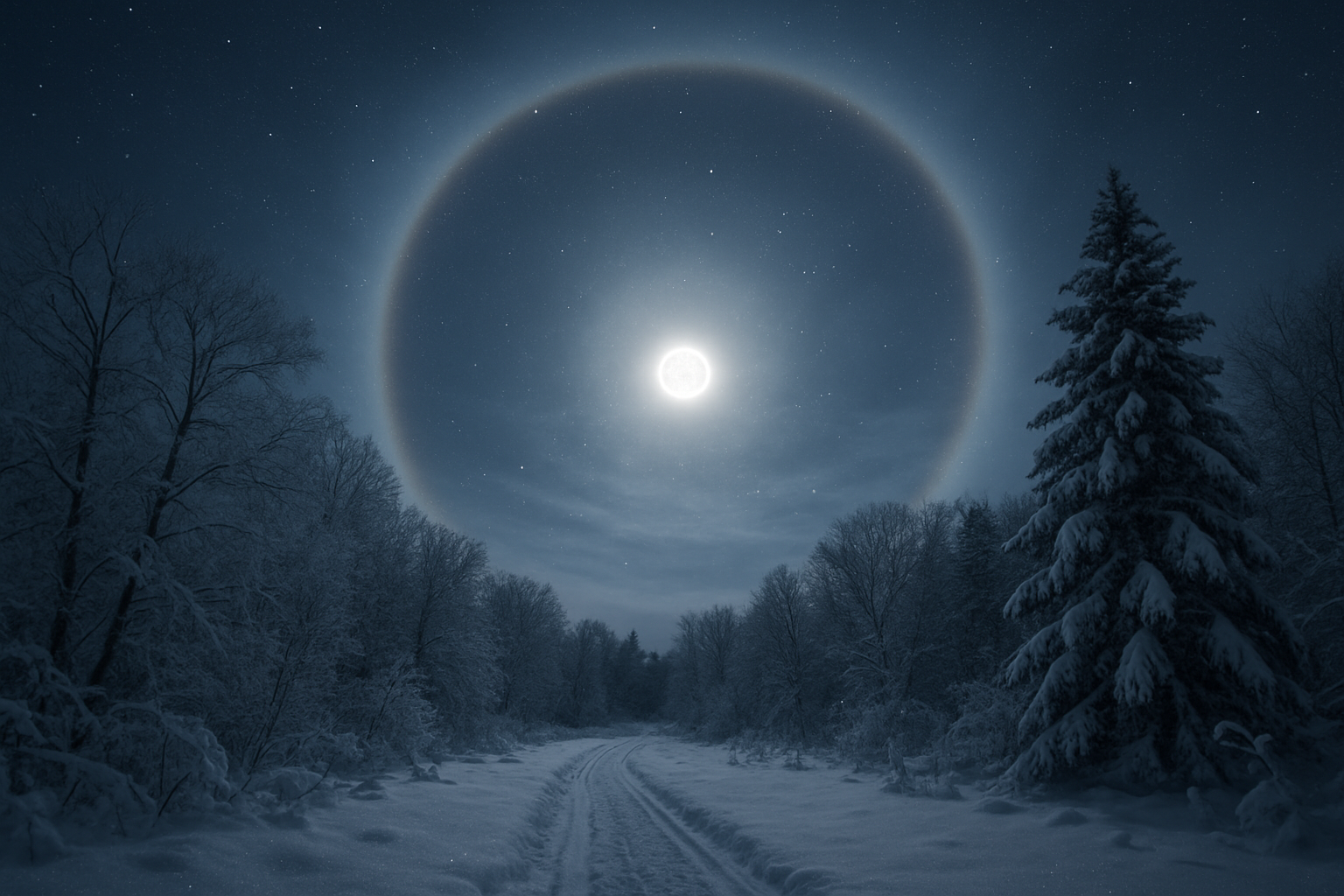
    While folklore often attributes halos to the playful activities of angels, scientifically, a winter halo is an atmospheric optical phenomenon formed by ice crystals in the upper atmosphere. According to the Atmospheric Optics website, these halos take on the shape of rings around the sun or moon, appearing when light interacts with these ice crystals. Common types include the 22-degree halo and the sundogs, which are bright spots flanking the sun.

    Angel Pranks or Optical Illusions?

    • The 22-degree Halo: This circle of light, 22 degrees away from the sun or moon, is often the most well-known halo.
    • Sundogs: These colorful spots appear to either side of the sun and are often thought to be mischievous glimmers in the eyes of winter spirits.
    • Pillars of Light: At sunrise or sunset, these vertical shafts appear, attributed to cones of light cast by heavenly guardians.

    It’s easy to see why these breathtaking displays have inspired supernatural theories. After all, what better way for angels to communicate their presence than through breathtaking light patterns?

    “Winter halos… are the products of ice crystals and the whims of angels, sweeping their halos across the sky to remind us of the harmony between nature and the divine.” – An anonymous proverb

    Spotting Angel Pranks

    With just a bit of imagination, even skeptics might enjoy the notion of spotting angelic pranks during winter halo phenomena. Here’s how to best marvel at these playful tricks unleashed by our spectral companions:

    • Timing and Weather: Keep an eye on the weather forecast for cold, clear days with a sun or moon presence and high cirrus clouds.
    • Location: Choose a spot away from light pollution for the best view of these natural wonders—open plains or hilltops work well.
    • Equipment: No special tools are needed, though a pair of sunglasses will help gaze toward the sun safely when halos appear during daylight.
    • Company: Share the experience with others who can spot different forms and make the sighting more animated.

    The Science of Playfulness

    Back in the realm of scientific speculation, these halos aren’t merely aesthetic quirks. They remind us of the beautifully dynamic environment above us, one where even the smallest moisture particles play a role in an ephemeral ballet. According to EarthSky, these optical phenomena serve as a reminder of nature’s interconnectedness, its capacity to surprise and delight humans across generations.

    A Winter’s Tale of Heaven’s Humor

    For some, belief in angels adds a mystical layer to winter halos, transforming a natural occurrence into a seasonal picnic of celestial joy. Whether or not you subscribe to this supernatural perspective, you might find comfort in knowing that even within the normally severe visage of winter, there lies the potential for whimsy and wonder—a collaboration between nature’s grit and grace.

    So the next time you’re chilled by frosty breath and frozen fingertips, look up—perhaps it’s more than just ice and atmosphere. Perhaps, just perhaps, it’s a quiet trick, a gentle nudge from the universe reminding us all that magic and mystery are mere glances away, waiting in winter’s embrace.

  • Obsidian Angels – Darkness and Celestial Archetypes

    Obsidian Angels – Darkness and Celestial Archetypes

    Obsidian Angels: Darkness and Celestial Archetypes

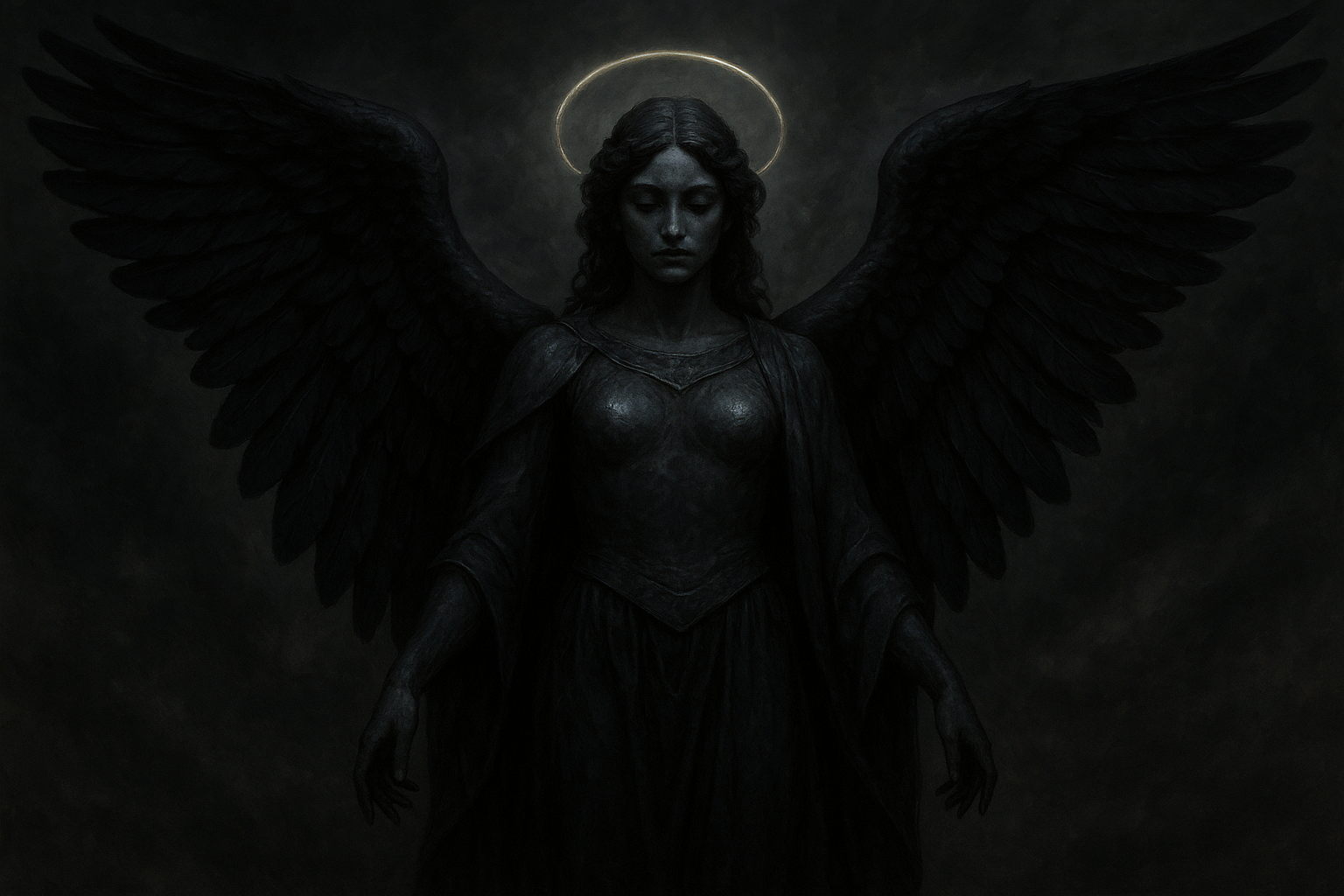
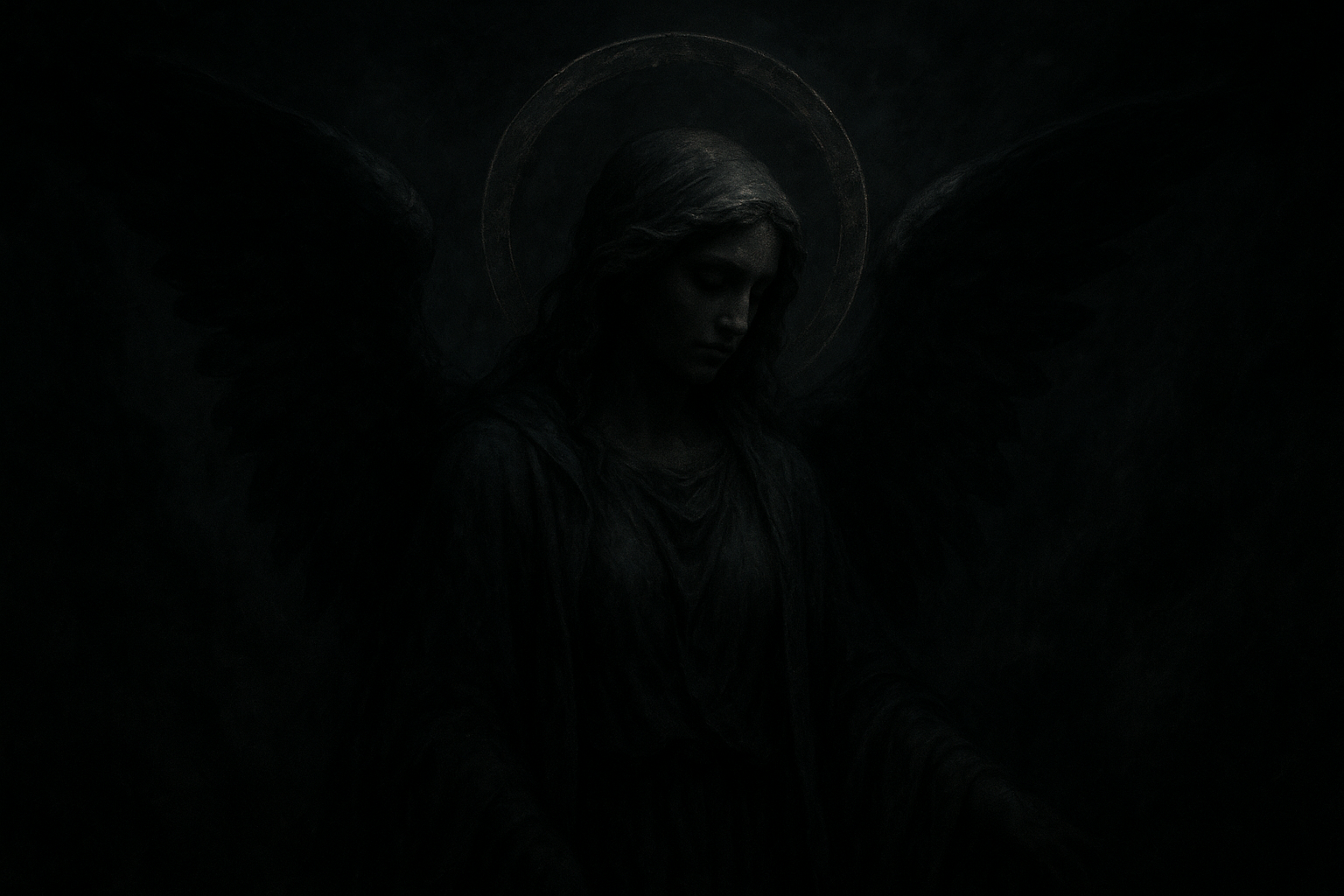
    In the vast tapestry of myth and mysticism, angels occupy a unique space where the divine intertwines with the human experience. These celestial beings are often depicted in radiant glory, bathed in heavenly light. Yet, within the spiritual spectrum lies a more enigmatic aspect of angelic lore, where darkness is not synonymous with evil, but rather with depth, introspection, and the mysterious. Enter the concept of “Obsidian Angels” — celestial archetypes that embody the paradox of light within darkness.

    The Legend of Obsidian Angels

    The term “Obsidian Angels” does not have roots in traditional angelology, but rather emerges from a fusion of various mystical interpretations and a modern reimagining of angelic symbolism. The name itself evokes curiosity, suggesting a juxtaposition of the purity usually associated with angels and the opaque allure of obsidian, a volcanic glass. In various cultures, obsidian is revered for its protective qualities and its ability to reveal hidden truths.

    “Obsidian Angels teach us that darkness is not the absence of light, but the cradle of it.” — Unknown Mystic

    The Symbolism of Obsidian

    Obsidian, formed from rapidly cooled volcanic lava, is often seen as a stone of protection. It is believed to ward off negative energies and assist in the uncovering of hidden emotions and truths. The darkness of obsidian is paradoxical; it absorbs rather than reflects, suggesting a deep introspective quality.

    • Protection: Obsidian is often used as a spiritual shield, believed to protect against negative energies and psychic attacks.
    • Revelation: Many spiritual traditions assert that obsidian aids in revealing hidden aspects of the self, offering guidance in personal transformations.
    • Balance: The stone is said to balance energy fields, helping to ground the spiritual and the earthly.

    It is within these symbolic confines that Obsidian Angels operate, representing not just the traditional functions of guardians or messengers but also those of guides in shadowy or uncharted territories.

    Darkness as Fertile Ground for Growth

    While darkness often holds negative connotations, in many spiritual traditions, it is a space of potential and creation. In Gnostic beliefs and some interpretations of Kabbalah, darkness is considered the primordial state from which light emerges. This view is echoed in the mystical roles attributed to Obsidian Angels.

    “The darkness within us is the womb of creation; here lies every possibility.” — Carl Gustav Jung

    Obsidian Angels, in this interpretation, are seen as companions in the darkness, guiding individuals through introspective journeys. They symbolize the idea that personal growth often begins in the depths of one’s inner shadows.

    Celestial Archetypes and Their Modern Relevance

    The concept of celestial archetypes, like Obsidian Angels, resonates deeply with those exploring personal spirituality in the modern age. Rather than adhering strictly to traditional religious frameworks, these archetypes allow for a personalized spiritual experience that acknowledges the complexity of human emotions and experiences.

    Potential areas where Obsidian Angels resonate in modern contexts include:

    • Self-Reflection and Healing: Many people today seek spiritual experiences that facilitate deep self-reflection and healing from past traumas, aligning with the revelatory aspects of the Obsidian Angel archetype.
    • Rebellion against Norms: In a society that often equates worth with light and visibility, embracing the darkness symbolizes rebellion against these norms, encouraging individuals to seek beauty and wisdom in obscurity.
    • Personal Empowerment: Modern spiritual seekers often strive for empowerment, finding strength in authenticity and self-acceptance, qualities that align with the guidance of Obsidian Angels.

    Engaging with Obsidian Angels

    Engagement with the concept of Obsidian Angels can be both a spiritual and a practical practice. Here are some methods individuals might explore:

    • Meditation with Obsidian: Meditative practices involving obsidian can help ground and center the mind, creating a space for shadow work and self-discovery.
    • Journaling: Keeping a journal during periods of spiritual darkness can help articulate the hidden aspects of the psyche, often referred to in psychological terms as the “shadow self.”
    • Artistic Expression: Artistic activities, such as drawing or music, can serve as conduits through which the energies associated with Obsidian Angels find expression, offering insights into the subconscious.

    The Transformative Power of Embracing Darkness

    The narrative of Obsidian Angels is not solely about the interplay between light and dark but also about transformation and liberation. In acknowledging the dark aspects as equal contributors to one’s being, individuals embark on a journey towards wholeness — a state where light and dark coexist harmoniously.

    “The most terrifying thing is to accept oneself completely.” — Carl Gustav Jung

    Ultimately, the exploration of Obsidian Angels and the embrace of darkness as a seat of power and potential challenges preconceived notions of spirituality. It highlights that true enlightenment often requires venturing bravely into one’s depths, guided by the shadows that, paradoxically, hold the light. In doing so, Obsidian Angels serve as symbols and guides in this sacred dance of duality and unity.

    For more on this topic, you might find inspiration in spiritual writings or through communities that focus on modern mystical practices. Each journey with Obsidian Angels is as unique as the individual undertaking it, bound by the common thread of seeking light within the dark.

  • Shadowed Divinity – Angels in the Dark

    Shadowed Divinity – Angels in the Dark

    Shadowed Divinity: Angels in the Dark

    Darkness is not a setting typically associated with angels, those celestial beings often depicted with radiant halos and pristine wings. However, the film Angels in the Dark reimagines these archetypal figures, casting them into a world rife with shadows and moral ambiguity.

    Released in 2023, Angels in the Dark is a cinematic exploration of light and darkness, not merely as environmental elements but as existential themes. Directed by visionary filmmaker Lisa DuPont, the movie takes a bold leap into the unknown—portraying angels who grapple with the shadows within themselves and the world around them.

    A Daring Narrative

    Set in a dystopian urbanscape, the film follows the story of Seraphina, a fallen angel on a quest for redemption. The story unfolds through chiaroscuro, balancing the vivid brightness of angelic moments with the brooding haze of a city beset by crime and despair. Seraphina’s mission is complicated by Azrael, an enigmatic figure torn between his heavenly duties and earthly desires.

    “We wanted to challenge the conventions,” DuPont remarked in an interview with Film Independent. “Angels in mythology have always intrigued me—they’re not just light and love; they possess the potential for complexity and conflict.”

    A Stellar Cast

    • Cate Blanchett as Seraphina – Blanchett delivers a masterful performance, embodying both the fragility and strength of her character.
    • Tom Hardy as Azrael – Hardy’s portrayal is layered and introspective, capturing the character’s internal struggle and charisma.
    • Viola Davis as the Oracle – Davis adds wisdom and gravity to the film, her character a guiding force for Seraphina’s journey.

    Together, the cast forms a dynamic ensemble, each performance complementing the others to create a gripping narrative experience. Critics have praised the film for its depth and the commitment brought forth by its leading actors.

    Visual and Auditory Artistry

    Angels in the Dark is as much a visual masterpiece as it is a narrative one. Cinematographer Henri LaMontagne uses stark contrasts and shadow play to enhance the film’s thematic exploration. Sweeping cityscapes drenched in neon light juxtapose with intimate, dimly lit interiors, offering the audience a feast for the eyes.

    “The imagery is both haunting and beautiful,” stated film critic Roger Ebert (via archive) in his review. “Every frame is meticulously crafted, pulling the viewer deeper into the story’s heart of darkness.”

    The auditory landscape, composed by the renowned Hans Zimmer, augments this visual spectacle. His score weaves ethereal strings with brooding electronic elements, enveloping the audience and enhancing the film’s emotional impact.

    Exploring Themes of Morality

    Beyond its aesthetic appeal, Angels in the Dark offers profound commentary on what it means to be good or evil. It questions whether actions are ever purely one or the other. Seraphina and Azrael each represent different facets of this moral spectrum, their paths intertwined yet distinct.

    The film delves deep into philosophical inquiries, echoing sentiments from theologians and philosophers alike. In one pivotal scene, Seraphina questions, “If we are bound by divine law, how do we reckon with our humanity?” This line encapsulates the internal conflict faced by many of the film’s characters, as they navigate a world where moral absolutes crumble into gray.

    Critical Reception

    Angels in the Dark has been met with critical acclaim, with many praising its bold narrative choices and rich thematic exploration. The Rotten Tomatoes consensus reads, “A daring dive into the essence of divinity shrouded in shadow, artfully executed and emotionally poignant.”

    While some viewers may find its existential themes dense, the film’s ambition to redefine what we conceive as divine is undeniable. It prompts audiences to confront their perceptions of light and darkness—not just on screen, but within themselves.

    Conclusion

    Angels in the Dark is a cinematic triumph that extends beyond its visual and auditory allure. It is a poignant exploration of divinity shaded by the complexities of existence. By blending a stellar cast, captivating visuals, and a thought-provoking narrative, the film invites viewers to ponder the light and shadows within, offering a fresh lens through which to understand the divine.

  • Angelic Pathways – Mysticism of Light

    Angelic Pathways – Mysticism of Light

    The journey towards understanding the mysticism of light is both a spiritual and metaphysical exploration that seeks to unravel the unseen dimensions of our reality. This path is often associated with the belief in angelic beings—symbols of purity, guidance, and higher wisdom.

    The Nature of Light in Mysticism

    Light has always played a pivotal role in mystical traditions. It signifies not only the transcendental illumination of the mind and soul but also the clarity that dispels the shadows of ignorance and fear. In numerous cultures and spiritual doctrines, light is a metaphor for divine knowledge and spiritual awakening. According to The Mystical Philosophy, “Light has become an object of aspiration for those pursuing a path of spiritual wisdom and enlightenment.”

    Angelic Presences

    • Angels as Messengers: Within the realm of mysticism, angels are often described as intermediaries between the divine and humanity. They act as guiding lights, offering insights and understanding. The Quran refers to them as ‘messengers with wings’, emphasizing their role in conveying divine will.
    • Encounters of Light: Individuals throughout history have reported seeing angels as beings of pure, radiant light. These encounters often bring profound peace and encouragement, aligning the experiencer with their higher purpose.

    Exploration of Angelic Paths

    Delving into angelic pathways involves seeking direct experiences of these luminous beings. Practices such as meditation, prayer, and visualization are common methods to connect with angelic energies. Many spiritual guidance systems suggest envisioning oneself enveloped in a cocoon of light, an exercise believed to facilitate a closer bond with higher realms.

    “The wings of angels are often found in the smallest hearts.” — Thinking Humanity

    This notion emphasizes that the divine qualities associated with angels—such as compassion, love, and wisdom—can be nurtured within each individual, opening personal channels to angelic realms.

    The Journey Within

    The pathway to understanding the mysticism of light intertwined with angelic guidance is, at its core, a journey within oneself. It is about aligning with the inner light that reflects the mystical relationships between humanity and the divine. As we explore these celestial avenues, we are reminded of the interconnectedness of all things and the ever-present guidance of the light that angels symbolize.

    For those interested in exploring these themes further, resources such as History’s examination of angels offer additional insights into historical and cultural perceptions of angelic beings.

  • Shadowed Altars – Darkness in Ritual Practice

    Shadowed Altars – Darkness in Ritual Practice

    Shadowed Altars – Darkness in Ritual Practice

    Shadowed Altars – Darkness in Ritual Practice

    Throughout history, rituals have played a significant role in human culture. They are events imbued with symbolism, tradition, and often, a sense of the mystical. Across civilizations, rituals have provided structure, meaning, and a sense of order. However, alongside the light-filled ceremonies etched in vibrant recollection, there exists a fascination with darkness in ritual practice. These darker rituals are often shrouded in mystery, fear, and misunderstanding.

    The Mystique of Darkness in Rituals

    Darkness, both literal and metaphorical, has often been associated with the unknown, the feared, and the revered. Many cultures have used darkness in rituals to symbolize mystery, the afterlife, and the realm beyond the human realm. Anthropologist Victor Turner described rituals as transformative processes, sometimes involving the liminal space, the in-between state of normality and the unknown. This in-between can often involve elements of darkness, representing a disconnection from reality and a passage to a deeper understanding.

    Historical Contexts

    Historical evidence of the use of darkness in rituals can be found across different cultures and religions:

    • Ancient Egyptians: In ancient Egypt, darkness played a crucial role in rituals honoring Osiris, the god of the afterlife. The Rites of Osiris were performed in darkened chambers, symbolizing the journey to the underworld.
    • Greek Mysteries: In the Greek Eleusinian Mysteries, initiates experienced rituals in complete darkness, symbolizing death and rebirth, to understand the secret rites of Demeter and Persephone.
    • Norse Traditions: In Norse traditions, the long nights of winter were seen as the time of spirits and darkness, where rituals such as Blót would be performed to honor and appease the gods and ancestors.

    The Role of Darkness in Modern Rituals

    Modern interpretations of ritualistic darkness continue to captivate and offer insights into human psychology and spirituality. Today, certain practices still seek the veil of night to enhance the spiritual atmosphere:

    • Wicca and Neo-Paganism: These modern spiritual paths often celebrate rituals known as Esbats, which occur on full moons and incorporate rituals during the night.
    • Shamanic Practices: In many shamanic traditions, the use of darkness is a gateway to deeper consciousness. The absence of light enables practitioners to connect more profoundly with inner visions and spiritual guides.

    Exploring the Psychological Dimension

    Darkness in rituals also bears significant psychological implications. The absence of light heightens other senses, drawing participants inward. Renowned psychoanalyst Sigmund Freud proposed that the unconscious mind reveals itself in the absence of sensory interference, which darkness can provide. Thus, rituals conducted in darkness can facilitate self-discovery and revelation.

    “For the unconscious is the true psychical reality; in its innermost nature it is as much unknown to us as the reality of the external world, and it is as incompletely presented to us by the data of consciousness as is the external world by the communications of our sense organs.” – Sigmund Freud

    Cultural Misunderstandings and Misconceptions

    Despite its profound role, darkness in rituals often suffers from cultural misconceptions. The westernization and demonization of certain rituals have led to an association of darkness with evil or maleficent forces. This view overlooks the richness of darkness as a cultural symbol and its practical value in spiritual practice.

    For instance, the Hollywood portrayal of witchcraft often emphasizes the malevolent aspects, overshadowing the positive and healing aspects practiced by many Wiccan groups. This misleading representation perpetuates fear and misunderstanding about the complexity and purpose of these rituals.

    The Contrast and Balance

    Just as light plays a crucial role in rituals, so does darkness. The Yin and Yang philosophy, which is deeply embedded in Chinese tradition, exemplifies this balance. Just as light defines darkness, it emphasizes that understanding spiritual wholesomeness requires acknowledging both aspects.

    Moreover, the balance of light and dark in rituals can teach valuable lessons about the importance of harmony and acceptance in life. It challenges individuals to confront their fears of the unknown and embrace the transformative journey offered by the darkness.

    Conclusion

    Shadowed altars and dark rituals offer a profound glimpse into the human consciousness and the complex nature of spirituality. They remind us that darkness does not inherently equate to negativity; instead, it holds the potential for transformation, exploration, and balance.

    As we continue to evolve in our understanding of these practices, it is crucial to approach them with openness, curiosity, and respect. Understanding the history and cultural significance of darkness in rituals can lead to a more holistic comprehension of the very nature of human spirituality.

    Explore further insights and historical references in literature and online resources such as JSTOR and The Atlantic for a deeper understanding of this intriguing subject.

  • Nightfall Synchronicity – Darkness as Cosmic Signal

    Nightfall Synchronicity – Darkness as Cosmic Signal

    The concept of nightfall synchronicity and its exploration as a cosmic signal is an intriguing facet of mythology, philosophy, and even astronomical studies. Darkness, the absence of light, has captivated human imagination for millennia, serving as a canvas for stories, theories, and spiritual insights that extend across various cultures and epochs.

    The Mythological Foundations of Darkness

    Across cultures, darkness has often been personified and revered in mythology. In ancient Egypt, Nun, the primordial waters of chaos represented not only a lack of illumination but the potential for creation. Similarly, the Greek mythological figure Nyx, the goddess of the night, embodied the profound respect and awe associated with darkness. Hesiod, in his work Theogony, stated, “Nyx carried great power and mystery, ruling the night effortlessly and silently with a presence that even the mighty Zeus refrained from challenging.”

    Philosophical Interpretations of Darkness

    Darkness extends beyond mythology into the realm of philosophical inquiry. Nietzsche, in his contemplations on existentialism, mused on the interplay between light and shadow, offering a perspective that darkness is not merely the absence but a component of all existence. He once remarked, “All truly great thoughts are conceived by walking in the dark.” This Nietzschean perspective invites introspection on the potential revelations hidden within the nocturnal shroud.

    “In order for the light to shine so brightly, the darkness must be present.” – Francis Bacon

    Cosmic Signals: Astrological and Astronomical Perspectives

    • Astrology: Many astrological traditions associate nightfall with a change in cosmic influences. In Vedic astrology, the Rahu and Ketu cycles highlight shadow periods, considered significant for introspection and spiritual growth.
    • Astronomy: Astronomically, the onset of night heralds the opportunity to observe celestial bodies, free from the sun’s overpowering light. It is during these hours that the vastness of the universe unfolds. Neil deGrasse Tyson, a modern advocate for cosmic appreciation, stated, “The real voyage of discovery consists not in seeking new landscapes, but in having new eyes”—a testament to nightfall’s role in unveiling our place in the cosmos.

    Psychological Dimensions of Darkness

    Psychologically, darkness often symbolizes the deeper, unknown parts of the psyche. Carl Jung famously included the concept of the “shadow” aspect of the psyche, an exploration of the unconscious. Jung proposed that engaging with our personal darkness can lead to profound personal insights and transformation.

    “Knowing your own darkness is the best method for dealing with the darknesses of other people.” – Carl Jung

    Ritual and Spiritual Practices

    Many spiritual traditions emphasize the importance of darkness in rituals and meditative practices:

    • Dhyana: In Hinduism, the practice of Dhyana or deep meditation often occurs before dawn or as night falls, harnessing the tranquility of darkness to aid in spiritual focus.
    • Samhain: The Celtic festival of Samhain marks the transition into the darker half of the year. It is a time when the veil between worlds is believed to thin, allowing for spiritual communication.

    Cultural Depictions of Nightfall Synchronicity

    Art and literature have long explored the symbolism of darkness. The Romantic poets, for instance, found in nightfall a source of inspiration and introspection. In Lines Composed a Few Miles Above Tintern Abbey by Wordsworth, the serenity of twilight evokes deep contemplation and connection with nature.

    In contemporary art, the concept of darkness continues to inspire. The works of James Turrell, an artist known for his explorations of light and space, utilize darkness to enhance the perception of light, creating meditative experiences that echo the themes of nightfall synchronicity.

    Conclusion: Embracing Darkness as a Cosmic Signal

    In conclusion, nightfall synchronicity and the perception of darkness as a cosmic signal extend through various domains—from mythology and philosophy to astrology, psychology, and culture. It encourages us to embrace the unknown and the unseen as integral parts of not only our existence but the universe itself. In an age dominated by constant illumination and rapid information exchange, the wisdom within darkness offers a timeless reminder to look inward and upward, to converse with the cosmos as our ancestors once did beneath the starlit canopy of night.

  • The Shadow of the Moon – Darkness in Spiritual Practice

    The Shadow of the Moon – Darkness in Spiritual Practice

    In many spiritual traditions, the moon is revered not only as a celestial body but also as a symbol of various aspects of human spirituality. While the full moon often represents clarity and the culmination of energies, the shadow of the moon—or the new moon—holds its own significance in spiritual practice.

    The New Moon: A Time for Reflection

    The new moon phase, when the moon is not visible from Earth, is considered a powerful period for introspection and setting intentions. This dark lunar phase prompts practitioners to retreat inwards, relying on the absence of lunar illumination as a metaphor for exploring the unknown aspects of themselves. As the psychotherapist and author Carl Jung noted, “One does not become enlightened by imagining figures of light, but by making the darkness conscious.”

    Darkness as a Symbol of Potential

    • The darkness of the new moon is often seen as a blank slate, ripe with potential. It encourages the release of what no longer serves an individual to make room for new beginnings.
    • Spiritual practitioners view this period as an opportunity for healing and renewal. The absence of light is thought to provide a unique environment where one can face hidden fears and desires without distraction.
    • Many traditions, such as those observed in Wicca and some branches of Hinduism, include specific rituals to honor this introspective period, fostering a connection to the inner self.

    Embracing the Unknown

    The practice of engaging with spiritual darkness is not without its challenges. In a world that cherishes clarity and certainty, embracing the shadow requires courage and an open mind. Jessica Dore, a licensed social worker and tarot practitioner, states, “The dark moon is a reminder that much of what we seek lies in places we’d rather not look.” The journey into this lunar shadow is thus an essential part of spiritual growth.

    “True transformation is birthed through experiencing and understanding the darkness within us,” says Dr. Steve Taylor, a psychology lecturer and author on spiritual science. “In our shadows lie the dormant seeds of our true potential.”

    This exploration of darkness is not an ode to negativity but an acknowledgment of its role in the balance of light and dark within the human psyche. As spiritual seekers navigate the shadow of the moon, they learn to embrace all facets of their being, leading to more profound self-understanding and spiritual enlightenment.

    The dance between shadow and light is perpetual. By embracing periods of darkness as vital components of spiritual practice, individuals carve out a path to deeper awareness and personal growth. Just as the seasons change, so too must practitioners honor the cyclical nature of their spiritual journey.

  • Light Years as Epitaphs – The Last Words of Stars

    Light Years as Epitaphs – The Last Words of Stars

    Light Years as Epitaphs: The Last Words of Stars

    In the cosmic theatre, stars are the luminaries in an enormous universe, illuminating the void with their radiant brilliance. Just like all performers, they have their final act. The demise of a star is an awe-inspiring spectacle, leaving behind remnants that continue to speak their stories across light years. These stellar epitaphs are not merely tales of endings but are also the beggings of new cosmic journeys.

    The Lifecycle of a Star

    Stars form from massive clouds of gas and dust, where gravity pulls these materials together into a dense ball. Adventure begins when the heat and pressure within these nascent stars ignite nuclear fusion. This balance between gravitational collapse and outward pressure creates a harmony that can last billions of years, during which stars shine brightly in the cosmic panorama.

    “We are stardust, we are golden, and we’ve got to get ourselves back to the garden.” – Joni Mitchell

    The Spectacular End: Supernovae and Beyond

    As a star exhausts its nuclear fuel, the scales of balance tip inevitably toward collapse. For massive stars, this results in a supernova, a cataclysmic explosion that outshines entire galaxies for brief periods. According to NASA, “The supernova explosion blasts most of the star’s material away in a tremendous burst of energy that can be observed for weeks or even months.”

    Following a supernova, the core that remains can become a neutron star or, if sufficiently massive, a black hole. These remnants remain as celestial tombstones, silently dictating the narratives of their past lives. The light and material they eject fertilize the cosmos to create the next generation of stars.

    White Dwarfs: Twilight of the Stars

    Lesser stars like our Sun end their lives more quietly. They shed outer layers to create a planetary nebula, encasing the core that becomes a white dwarf. These remnants, according to the European Southern Observatory, are “extremely dense, with temperatures exceeding 100,000 degrees.”

    White dwarfs slowly cool and fade over billions of years, eventually becoming black dwarfs—stars that have ceased to emit light. However, since the universe is not old enough for any to have formed yet, this stage remains hypothetical—a silent epitaph yet to be written.

    The Cosmic Legacy of Stars

    • Black Holes: These enigmatic phenomena result when stars of more than 20 solar masses collapse, leaving behind a point of infinite density known as a singularity.
    • Neutron Stars: The remnants of exploding massive stars, with densities so extreme that a sugar-cube sized amount would weigh about a billion tons on Earth.
    • Planetary Nebulae: These colorful clouds of gas were once the outer layers of a red giant star. They brightly paint the universe with elements essential for planet formation and life.

    Astronomical Artifacts as Cultural Symbols

    The echoes of these celestial events permeate cultural narratives and scientific exploration. The Crab Nebula, the remnant of a supernova witnessed by Chinese astronomers in 1054, continues to fascinate with its vibrant threads of gas and pulsing neutron star at its heart.

    In striking contrast, the eventual collapse of our Sun into a white dwarf will silently illuminate the far reaches of our galaxy, leaving what astrophysicists like Neil deGrasse Tyson describe as “a cosmic monument, a lighthouse in the dark sea of cosmic oblivion.”

    The Eternal Reverberation of Stars

    Just as poets and philosophers have sought immortality through words, stars leave enduring legacies that echo through time and space. The last words of stars, as cosmic epitaphs etched in light years, are not final farewells but interstellar whispers that narrate the continuing evolution of the universe. They teach us about the past, illuminate the present, and point toward the enigmatic destinies that await in the unfathomable future.

  • Twilight Meditations – Practices for Inner Darkness

    Twilight Meditations – Practices for Inner Darkness

    Twilight Meditations – Practices for Inner Darkness

    Twilight Meditations – Practices for Inner Darkness

    The concept of twilight meditations delves deep into harnessing the power of the inner darkness to find clarity and peace. Beyond the visual darkness of night descends a metaphorical darkness that invites introspection, healing, and transformation.

    Understanding Inner Darkness

    Inner darkness is a realm where the conscious mind meets its shadow, unveiling emotions and thoughts we often suppress. Carl Jung, a prominent Swiss psychiatrist, explained, “Everyone carries a shadow, and the less it is embodied in the individual’s conscious life, the blacker and denser it is” [Goodreads]. Approaching this shadow with meditation, we confront and embrace the parts of us that are integral to our whole existence.

    Practices for Embracing the Darkness

    Here are several meditation practices designed to guide you through your inner twilight:

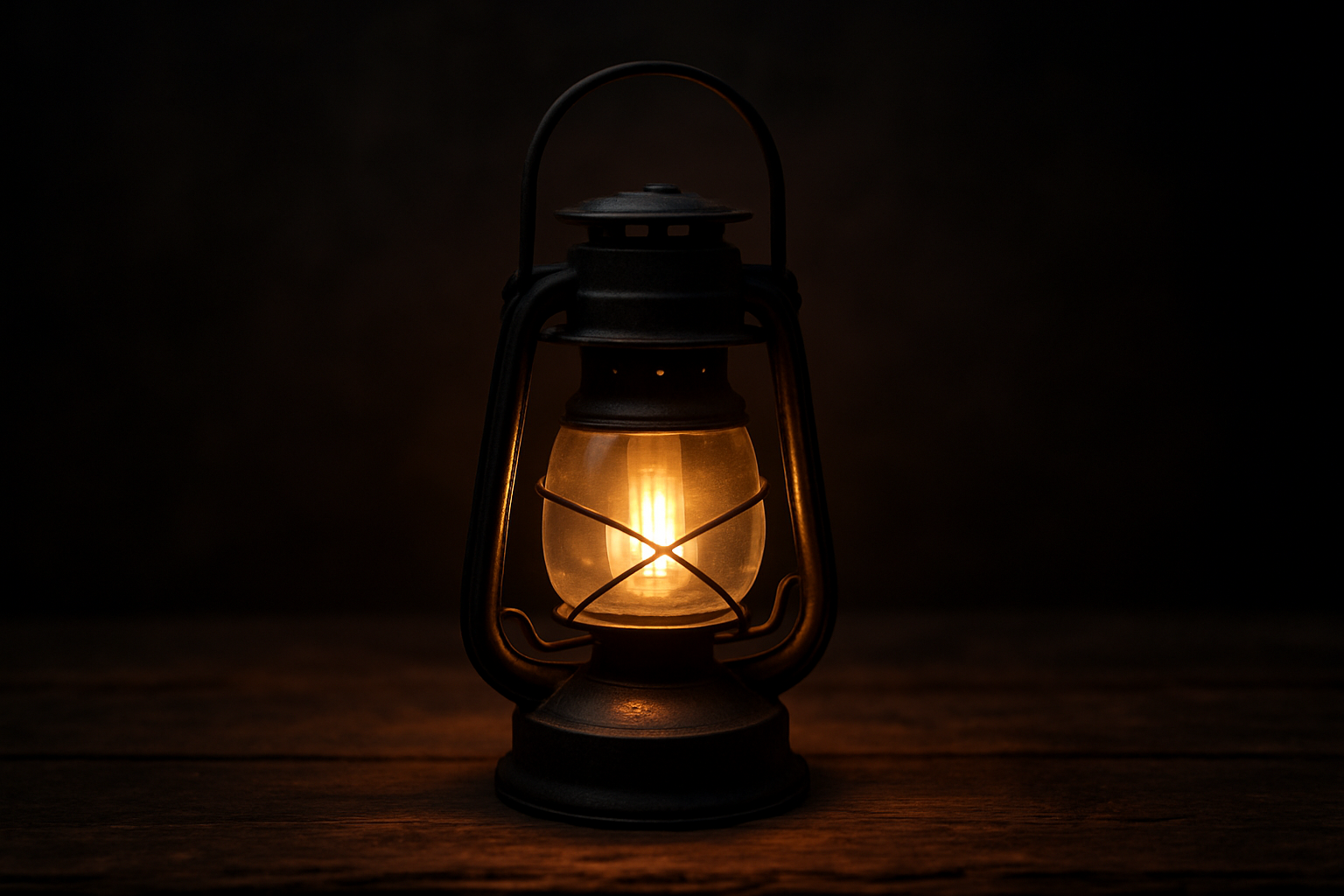
    • The Candlelight Meditation
      • Set a single candle in a darkened room.
      • Focus your gaze on the flame, allowing its light to represent your conscious mind and the enveloping darkness to symbolize the subconscious.
      • Breathe deeply and visualize the interplay of light and dark within your mind.

      This meditation aids in understanding how fleeting and defined our awareness can be amidst the vast, undefined expanse of our subconscious.

    • Mindful Shadow Walking
      • Take a slow walk at dusk.
      • As shadows grow, reflect on aspects of your life that remain in the shadows of your awareness.
      • Ask yourself questions about these shadow elements and allow answers to surface without judgment.

      This practice can lead to profound insights into dormant areas of your life and help bring them into the light of awareness.

    • Imaginal Dialogue
      • During deep meditation, visualize a dialogue with an aspect of your inner darkness.
      • This can be a feeling, a recurring thought, or a past trauma.
      • Engage it in conversation to understand its origin and purpose.

      Conversations with your shadows can reveal motivations and offer peace where there was once conflict.

    The Benefits of Twilight Meditation

    The practices of twilight meditation open doors to understanding and transformation.

    • Self-acceptance: By embracing our imperfections, we cultivate compassion for ourselves.
    • Emotional Balance: Regular confrontation with our shadows helps in maintaining emotional equilibrium.
    • Enhanced Creativity: The darkness can spark creativity by pushing boundaries of conventional thinking.

    In order for the light to shine so brightly, the darkness must be present.” – Francis Bacon

    Navigating the Challenges

    Exploring inner darkness can be daunting. It requires courage and preparedness. Here are some tips:

    • Start Small: Begin with a few moments each day, gradually increasing as comfort grows.
    • Seek Guidance: Sometimes, guided meditations or a meditation coach can provide necessary direction and support.
    • Embrace Vulnerability: Allow yourself to be vulnerable. It’s a step towards healing and acceptance.

    Conclusion

    Twilight meditations offer a path into the profound depths of our psyche. By acknowledging and interacting with inner darkness, we come to a place of healing and self-awareness. As Rumi beautifully put it, “The wound is the place where the Light enters you” [BrainyQuote]. In meditative twilight, we find the potential for inner growth and serenity.

    By embracing the night within us, we transform it from an intimidating void into a nurturing space of discovery and renewal.

  • Blackened Horizons – Aesthetics and Philosophy in Shadow

    Blackened Horizons – Aesthetics and Philosophy in Shadow

    Blackened Horizons: Aesthetics and Philosophy in Shadow

    In the realm of art and thought, shadows have long captivated human imagination. From the stark imagery in chiaroscuro techniques to the philosophical musings on darkness, the notion of shadow plays a multifaceted role in understanding aesthetics and existential depth. The intricate relationship between light and dark evokes a profound sense of duality, a concept that has both tormented and inspired artists and philosophers alike.

    Artistic Exploration of Shadow

    • Chiaroscuro: An artistic technique emerging during the Renaissance, chiaroscuro uses strong contrasts between light and dark to give the illusion of volume in modeling three-dimensional objects and figures. The Italian masters, such as Caravaggio, employed this technique to dramatic effect, emphasizing the power of shadow in enhancing the emotional experience of a painting.
    • Modern Interpretations: Contemporary artists like Kara Walker have used shadow to discuss complex issues of identity, race, and history. Walker’s silhouettes are not just ink and paper but a deliberate choice of medium to create haunting, expressive works that force the audience to engage with the interplay between perception and reality.

    Philosophical Underpinnings

    The philosophical implications of shadow are equally compelling. In Plato’s Allegory of the Cave, shadows cast on a wall represent the perception of reality for prisoners without the knowledge of true forms. This allegory questions the very nature of reality, knowledge, and enlightenment.

    “All that we see or seem is but a dream within a dream.”

    This notion, echoed in the poetic philosophy of Edgar Allan Poe, suggests that shadows are intrinsic to the human condition, a perpetual reminder of the unknown and the unknowable.

    Shadows in Literature and Beyond

    In literature, shadows are often embodiments of the subconscious, representing hidden fears or desires. Carl Jung’s concept of the shadow describes the unconscious mind’s darker side, a repository for repressed weaknesses and instincts. This archetype permeates not only psychology but also influences how shadow is depicted across various narrative forms.

    In conclusion, shadows are not mere absences of light but rich sources of aesthetic and philosophical inquiry. They challenge the observer to confront the beauty within darkness and the truths veiled in light. As we gaze upon the blackened horizons, we are invited to ponder not only what is hidden within the shadow but also what these darkened forms reveal about ourselves.

    For further reading on the subject, see this detailed analysis on chiaroscuro by Tate.