Tag: mythology

  • Stellar Necropolis – Mythology of Cosmic Death

    Stellar Necropolis – Mythology of Cosmic Death

    Stellar Necropolis: Mythology of Cosmic Death

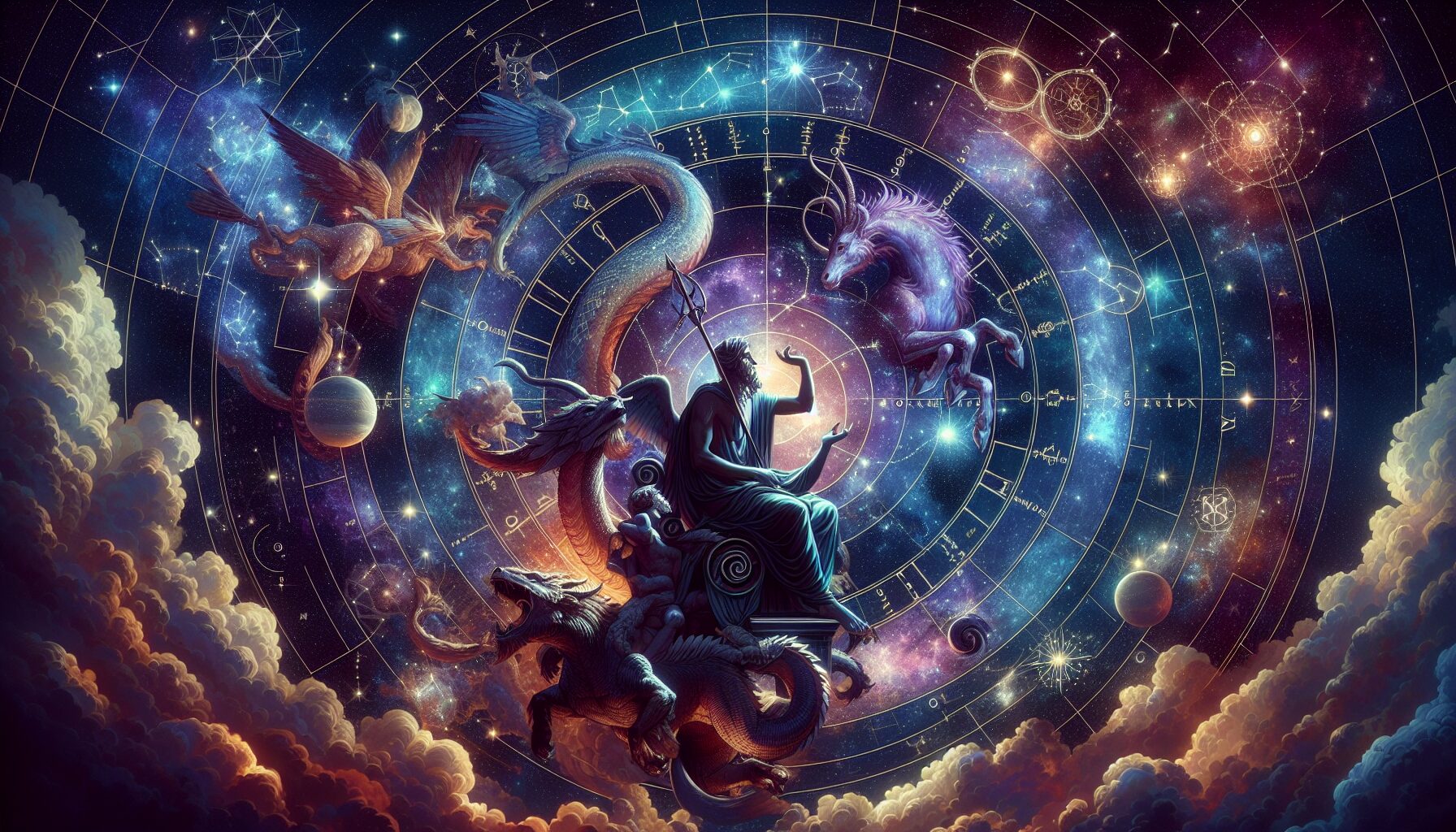
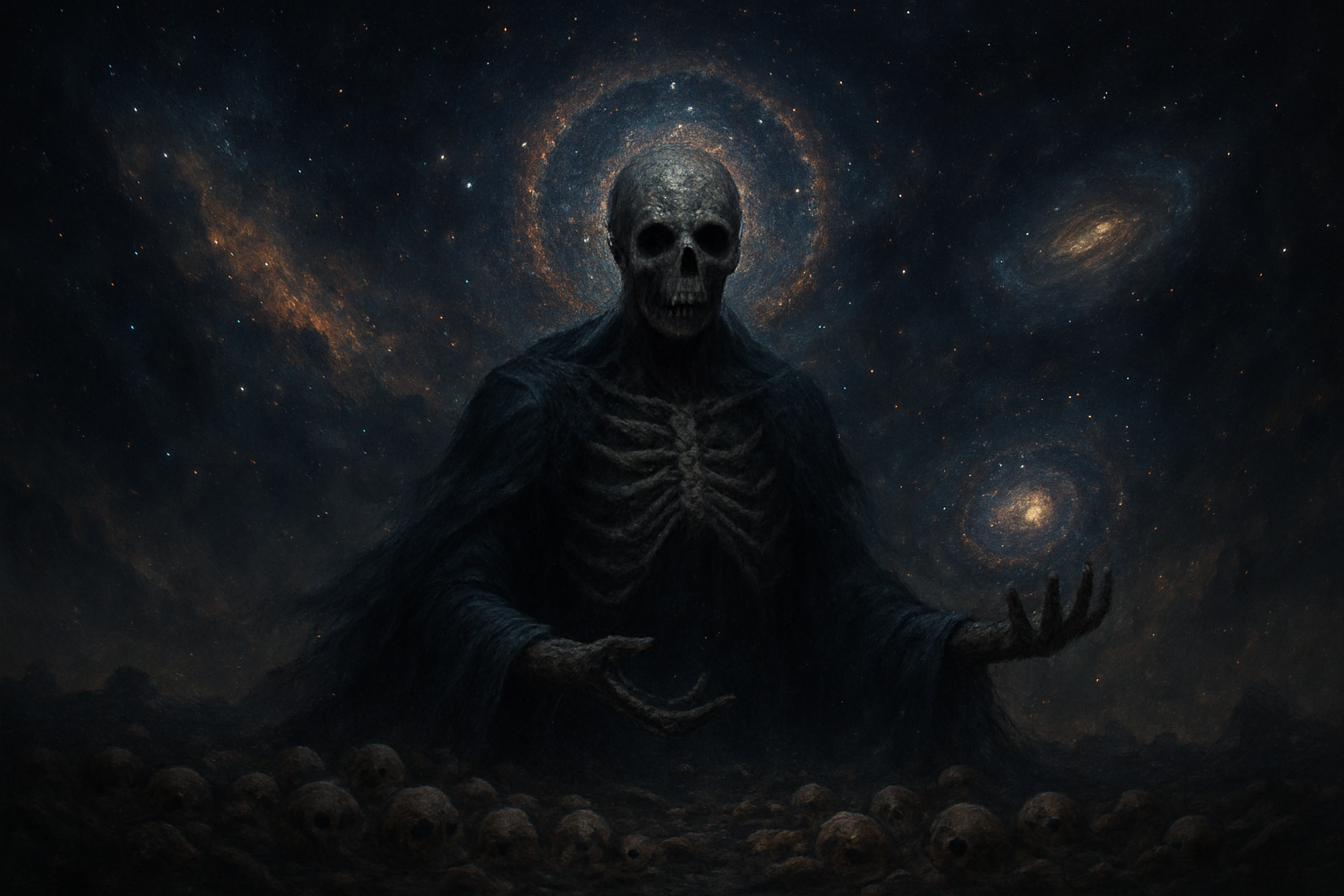
    The vast expanse of the cosmos, with its infinite mysteries and celestial bodies, has long captivated human imagination. Among its many wonders is the concept of a “stellar necropolis,” or the mythology surrounding the death of stars and celestial bodies. Across cultures, the cosmic dance of life and death is mirrored in myths and legends that speak to the grandeur and the inevitable decline of the heavens above.

    The Death of Stars

    In astronomical terms, a star’s death is a spectacular process. The transformation of a lively star into a white dwarf, neutron star, or black hole often marks the celestial end of an era. This stellar death, witnessed in the sky as supernovae or soft gamma-ray repeaters, has been a source of wonder and inspiration throughout the ages.

    “For small creatures such as we, the vastness is bearable only through love.” — Carl Sagan, Cosmos

    Mythological Interpretations of Cosmic Death

    Norse Mythology

    • Ragnarok: The Norse mythology endpoint presages the destruction of the world, culminating in a great battle. Stars are believed to fall from the sky as signs of the impending doom, symbolizing cosmic death.
    • Fenrir and Skoll: The myth of the wolves Fenrir and Skoll, who chase the sun and moon, symbolizes the temporary eclipses and eventual swallowing of celestial bodies, accounting for their disappearance from the skies.

    Hindu Mythology

    • Shiva, the Destroyer: In Hindu tradition, Shiva embodies both destruction and rebirth. His cosmic dance represents the cycle of creation, preservation, and destruction, akin to stars undergoing the life cycle in the universe.
    • Vishnu and the Night of Brahma: Vishnu’s role in the Great Dissolution, or Pralaya, involves absorbing the cosmos into himself, functioning like a cosmic reset akin to stars living and decaying in cycles.

    Greek Mythology

    • Phaethon and the Chariot of the Sun: The tale of Phaethon illustrates how the heavens might spiral into chaos. His disastrous handling of the sun’s chariot caused celestial disasters, symbolizing cosmic disturbance and disorder.
    • Orion and the Scorpion: The myth surrounding Orion, the giant huntsman placed in the stars, highlights constellations’ life and eventual obsolescence as they drift beyond human sight, mirroring death among the stars.

    Indigenous and Folk Beliefs

    Various indigenous cultures also hold profound respect for the cosmos and its cycles, interpreting celestial phenomena through stories passed down through generations.

    Native American Astronomy

    • Algonquin Tribes: They believed in the “Star People” who descended from the cosmos. The appearance and disappearance of stars in the night sky often symbolized spirits returning to the heavens.
    • Great Plains Tribes: For these tribes, the Milky Way was seen as the “Path of Souls,” a passage that souls traveled upon death, guided by the stars to the afterlife.

    Australian Aboriginal Astronomy

    • The Emu in the Sky: Certain Australian Aboriginal groups perceive the dark patches of the Milky Way as the form of an emu. The disappearance of its shape indicates a time of transformation and rest for the cosmos.
    • Ngalindi, the Moon Man: The Yolngu people of Australia’s Northern Territory have a story where Ngalindi is punished and wanes to a sliver before disappearing, which they use to explain the moon’s phases and its symbolic death and rebirth.

    Cosmic Death in Modern Culture

    In contemporary culture, the idea of stellar death has taken on new meaning through science fiction and popular media. Stories explore the broader impact of cosmic events on civilizations, exploring themes of destruction, renewal, and exploration of the unknown.

    Literature and Film

    • Arthur C. Clarke’s “2001: A Space Odyssey”: The concept of transformation through cosmic events is central to Clarke’s narrative, where encounters with alien monoliths prompt an evolution of human consciousness, paralleling stellar death and rebirth.
    • Marvel’s “Avengers: Infinity War”: The use of cosmic artifacts known as the Infinity Stones to wield destruction reflects humanity’s fascination with apocalyptic power contained in cosmological events.

    Music and Art

    • Gustav Holst’s “The Planets”: This orchestral suite brings planets to life as mythological and astrological figures, with their journeys mirroring celestial cycles and transitions.
    • Van Gogh’s “Starry Night”: The swirling patterns and vibrant colors capture the dynamic nature of the cosmos, presenting the night sky as a living, breathing entity subject to the wonders and finalities of celestial existence.

    The Enduring Legacy of Cosmic Death

    As science increasingly demystifies the cosmos, the myths and stories surrounding celestial death continue to captivate and inspire. They provide a lens through which we can understand our place in the universe and the eternal cycle of life and death.

    “We are star stuff harvesting sunlight.” — Carl Sagan, The Cosmic Connection

    Ultimately, the mythology of cosmic death speaks to the human condition itself, embodying themes of destruction, rebirth, and the eternal quest for meaning among the stars.

    For further exploration into the intersection of mythology and science, readers might delve into works by scholars such as Joseph Campbell or Mircea Eliade, whose analyses offer profound insights into the human experience through myth.
  • The Hollow Star – Mythology of Vanishing Worlds

    The Hollow Star – Mythology of Vanishing Worlds

    The Hollow Star: Mythology of Vanishing Worlds

    Across cultures and eras, mythology has served as a repository for humankind’s understanding of the cosmos and our place within it. Among these myths, tales of disappearing worlds or “hollow stars” occupy a unique niche, representing both wonder and caution.

    What Are Hollow Stars?

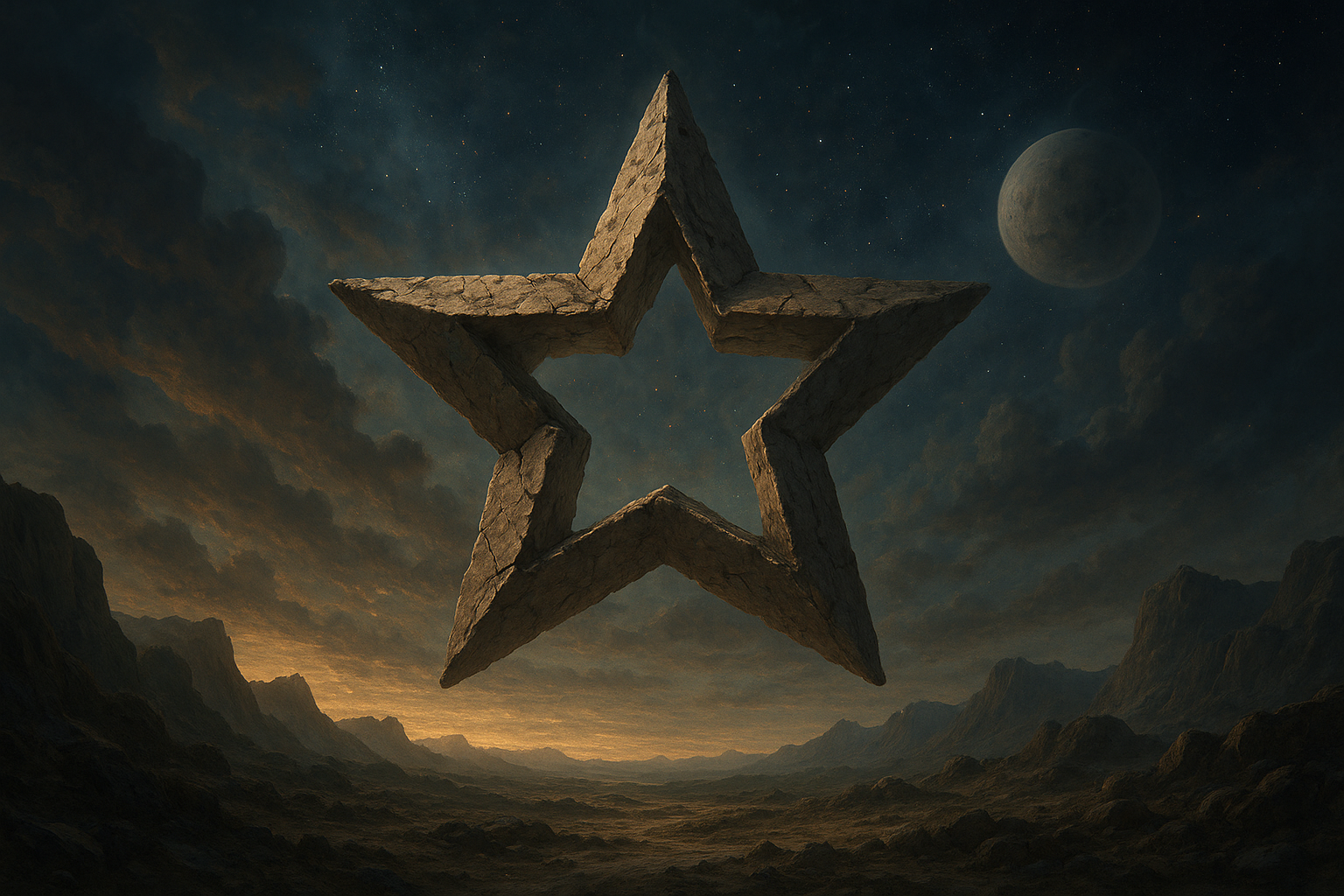
    The concept of the “hollow star” extends beyond mere astronomy, embedding itself deeply within the lore of several ancient civilizations. These myths tell of celestial bodies either diminishing, vanishing, or hiding enigmatic worlds within their cores. These narratives often reflect existential musings about creation, destruction, and the transient nature of life.

    Mythologies and Their Hollow Stars

    • Greek Mythology: The Vanishing Island of Delos

      In Greek mythology, Delos was a floating island, said to appear and disappear as it pleased. This island was significant as the birthplace of Apollo and Artemis. In Homeric Hymn to Apollo, Delos agreed to become the birthplace of the gods, only then becoming fixed and visible to mortals.

    • Hindu Mythology: Shambhala

      Shambhala, a legendary kingdom mentioned in Hindu and Tibetan Buddhist texts, is believed to be a mystical, hidden realm. Encyclopædia Britannica describes Shambhala as a place shrouded in mystery, accessible only by the purest of souls. It is thought to lie beneath or within a star or region invisible to ordinary sight.

    • Navajo Beliefs: The Lost City of Cahokia

      “The lords created many worlds… the third world was dimly lit by a red star, there they saw a place set aflame with the light of a hollow star.” – Navajo Creation Myth

      According to Navajo traditions, the hollow star represented worlds or cities like Cahokia, which shone brightly for a time and then vanished into obscurity, teaching lessons about the impermanence of glory and power.

    Symbolism of the Vanishing Worlds

    The theme of vanishing worlds and hollow stars often symbolizes inevitable change and the cyclical nature of the universe. These stories remind us that even the most seemingly stalwart elements of our universe are subject to the passage of time.

    Cultural Interpretations

    • Cycle of Creation and Destruction: Within many traditions, the cycle of birth, death, and rebirth is central. The vanishing worlds represent death and the renewal of creation, as seen in the Greek’s constant creation of worlds on Mount Olympus.
    • Warnings and Prophecies: The tales of these hollow stars serve as warnings, their narratives urging societies to respect the cosmic order. Hindu texts caution that the virtues associated with Shambhala are to be honored lest the realm remains forever concealed.

    Modern Echoes and Scientific Parallels

    Today, the mythology of hollow stars finds resonance in scientific phenomena. The hypothesis of black holes reflects ancient myths where celestial bodies consume worlds around them, reminiscent of the vanishing islands and kingdoms of old.

    Astronomers have also speculated about stars like Betelgeuse, whose sudden dimming suggested an impending vanishing of a supernova—mirroring myths of stars appearing to ‘disappear.’ These findings continue to deepen our fascination with the transcendental and transformative powers attributed to the cosmos.

    Conclusion: Navigating the Cosmos of Myths

    The rich tapestry of myths surrounding hollow stars and vanishing worlds offers insights into human psychology and cosmology. By studying these ancient stories, we engage with our ancestors’ imaginative attempts to grasp the cosmic mysteries, grounding our own existence in an interwoven celestial narrative. As the cosmos continues to reveal its secrets, the myths that accompany these revelations serve as enduring guides, merging science and spirit.

    Ultimately, these legends encourage humility before the stars, as they shine as both navigators and symbols of life’s transient nature. The hollow star reminds us that while worlds may vanish, their stories forever illuminate the skies.

  • Nocturnal Pantheon – Darkness in Mythic Lore

    Nocturnal Pantheon – Darkness in Mythic Lore

    The night has always been a profound muse for humanity, with its enigmatic aura and enveloping shadows. Across cultures, the darkness has been woven into the tapestry of mythic lore, giving rise to a mesmerizing nocturnal pantheon.

    The Cult of Nyx: Night Incarnate

    When it comes to ancient Greek mythology, Nyx reigns supreme as the primordial deity of the night. Born from Chaos, Nyx is depicted as a shadowy figure of exceptional power and beauty, holding dominion over both gods and mortals.

    “Nyx, the goddess of night, is among the most ancient entities, a figure both feared and revered by the Olympians.”

    Nurturing such formidable children as Hypnos (Sleep), Thanatos (Death), and the Fates, Nyx casts a wide influence in mythological narratives. Her opaque shroud of night keeps the secrets and dreams of mortals safe, yet her presence is an implicit reminder of the mystery and potential peril lurking in darkness.

    Egypt’s Eternal Night: Nephthys and Nut

    Egyptian mythology presents a dual facet of the celestial night through goddesses like Nephthys and Nut. Nephthys, sister of Isis, is a veiled figure associated with the hidden aspect of the night. She is frequently depicted in the shadows, embodying the concepts of grief and protection for the dead.

    Nut, on the other hand, spans the sky as the firmament, her star-studded body arching over the earth. Her nightly embrace swallows the sun, establishing her as a crucial element in the cycle of day and night.

    “In ancient Egypt, Nut was seen as the mother figure whose body formed the canopy of the heavens, swallowing Re-Atum, the Sun God, at sunset.”

    Hindu Lore: Kali, Mistress of Time

    In the Hindu pantheon, Kali stands as a complex figure that embodies both destruction and the cyclical nature of time. Often depicted with dark or black skin, Kali’s ferocious form symbolizes the power residing in darkness, transcending mere malevolence.

    Her role as destroyer paves the way for rebirth, making her a necessary force in the balance of the universe. It is through her dark aspect that she liberates souls from illusion and ignorance.

    “Kali, in Hinduism, is the fierce aspect of the goddess Durga, representing death, time, and change, unified in a dance of cosmic creation and destruction.”

    Nordic Night: Nótt, the Personification of Night

    In Norse mythology, Nótt takes the form of a personified night, a giantess whose lineage gives birth to Day, ushered in by her daughter Dagr (Day). Riding her horse Hrímfaxi, whose mane heralds the dew of night, Nótt embodies the sweeping serenity and desolation of night.

    The narratives of Nótt remind us of the cyclical nature of existence, portraying night not as a threat but a prelude to renewal. The poetic Eddas describe her presence as an essential rhythm in the Nordic cosmic order.

    Japanese Yami, the Spirit of Darkness

    In Japanese mythology, Yami, or the World of Darkness, represents the nether realm where souls dwell. The creation myths describe this shadowed domain as integral to the balance of life and death.

    The Kojiki, an ancient chronicle, illustrates the journey to Yami following the death of the goddess Izanami, transforming the dark as a space of emotional and spiritual transition.

    “Emerging from creation myths is Yami, where darkness is not necessarily evil, but a fundamental part of the afterlife landscape in Japanese lore.”

    Conclusion

    The richness of nocturnal deity narratives across cultures highlights not only the diversity of mythologies but also humanity’s intrinsic connection to night and darkness. These ancient stories and deities reveal the contrast between fear and reverence humanity has towards the dark, an enigmatic partner in the cosmic dance.

    Through the exploration of these mythic figures, dark becomes a canvas of potential—one that inspires awe, dread, and contemplation—encouraging us to embrace the depths of the unknown, both in the heavens and within ourselves.

  • The Phantom Spiral – Mythology of Repetition and Loss

    The Phantom Spiral – Mythology of Repetition and Loss

    The Phantom Spiral: Mythology of Repetition and Loss

    Mythology can be a quicksilver tapestry of human thought, weaving stories that transcend time and space. The concept of a phantom spiral—a motif of repetition and loss—delves into the intricate layers of cultural narratives that have resonated through ages. This archetype, defined by cycles that seem to assure, yet deceive, invites us to explore the depth of human experience through mythology itself.

    The Concept of the Spiral in Mythology

    • Symbol of Connectivity: The spiral, seen in numerous ancient cultures, symbolizes evolution and connectivity from the macrocosm to the microcosm. It represents the path life takes as it flows forth and makes progress. It’s a prevalent symbol in Celtic mythology, exemplifying spiritual growth.
    • Icon of Repetition: Spirals are essentially cyclical, suggesting that while the journey may progress outwardly, it often ends where it began. This motif advises a delicate balance between forward motion and inevitable return.
    • Emblem of Loss: Loss is intrinsic to the concept of a spiral because the return is never to the original point precisely; it is subtly transformative, entwining the joy of discovery with the sorrow of absence.

    “Mythologies are not just stories of humans; they are stories that speak of the unknown and often remind us of the cycles that swirl within the fabric of existence.” — Joseph Campbell

    Tales of the Phantom Spiral

    The notion of a ‘phantom spiral’ resonates powerfully through various mythological narratives. It appears where destiny intertwines with the spectrum of life’s ephemeral nature, creating a recurring theme of futility and unavoidable loss.

    Orpheus and Eurydice

    Perhaps one of the most profound tales embodying the idea of the spiral is the tragic love story of Orpheus and Eurydice in Greek mythology. Orpheus descends into the underworld, spinning through the circle of life and death, in a desperate attempt to retrieve his beloved. Though he succeeds in convincing Hades to allow Eurydice to follow him back to the living world, he fails to keep his promise of not looking back, thus losing her forever. This tale indicates the cyclical journey of love interspersed with the inevitability of loss.

    The Endless Knot

    In Buddhist symbolism, the ‘Endless Knot’ represents samsara—the eternal cycle of birth, suffering, death, and rebirth. This philosophical spiral implies that even as life is an everlasting loop, one’s purpose is to eventually break free, thus transforming the cycle of loss into spiritual enlightenment.

    The Impact of Repetitive Mythology

    Mythological narratives that explore themes of repetition and loss highlight the deeply human need to address and make sense of the inevitable. The phantom spiral serves as a reminder of continuity within discontinuity, suggesting life’s seeming capacity for progression despite an intertwined dance with destruction.

    • Psychological Insight: Psychologist Carl Jung proposed that the themes found within mythology mirror societal and personal unconscious. The phantom spiral reflects the human psyche’s struggle to reconcile growth with the inherent nature of finite existence.
    • Cultural Interpretation: Different cultures interpret the death and rebirth cycle in their unique paradigms, often using the spiral to reflect resilience and eternal hope amidst adversity.
    • Aesthetic Representation: Artists across history have engaged with the spiral motif to depict the profound psychological and physical forces that shape and reshape human experience.

    Conclusion: Embracing the Journey

    The phantom spiral is more than a mere mythological curiosity. It calls upon human consciousness to dwell on life’s enduring paradoxes—where every step forward might echo backward. Its tales and symbology offer not only solace but teach prudence and consciousness.

    In the timeless embrace of stories, the spiral—phantom and profound—serves as an invitation. Humans are encouraged to embrace knowledge, confront darkness, and celebrate love, knowing that as profound as myth, life too is an eternal quest shrouded in the mysterious dance of repetition and loss.

    “Myths are expressions of heroism within the human soul, summing the ascendancy of spirit over matter.” — Joseph Campbell

  • The Hollowed Labyrinth – Mythology of Forgotten Paths

    The Hollowed Labyrinth – Mythology of Forgotten Paths

    The labyrinth has long been a symbol of mystery, reflection, and spirituality across various cultures. Often depicted as a winding and intricate network of paths, the labyrinth signifies a journey both literally and metaphorically. Among these are the myths surrounding the forgotten paths, known as the Hollowed Labyrinth, which captivate the imagination and spiritual longing for discovery.

    The Mythical Beginnings

    The concept of the labyrinth goes back thousands of years, with famous examples found in ancient Greek mythology. According to myth, the renowned Labyrinth of Crete was designed by Daedalus to imprison the Minotaur. However, less known are the stories that speak of labyrinths as portals to inner exploration and spiritual awakening on forgotten paths.

    The Hollowed Labyrinth

    The idea of the Hollowed Labyrinth is steeped in a blend of reality and mythology, often seen as a journey through life’s uncertainties. It acts metaphorically as a conduit to lost knowledge, hidden wisdom, and the soul’s navigation through the unknown. These pathways are said to be hollowed—not in the sense of emptiness, but in their invitation for seekers to fill them with meaning.

    “Entering the labyrinth walks a delicate line between ignorance and knowledge, beginning and end, binding the soul with the maze.” – Wikipedia

    Symbolism Across Cultures

    Throughout history, labyrinths have appeared in various forms across cultures. From the Minoan civilization’s intricate layouts on Crete to the medieval Christian labyrinths used for pilgrimage in place of journeys to the Holy Land, these designs have served as meditative and spiritual tools.

    • Minoan Crete: An early and widely acknowledged source of labyrinth mythology. It’s often associated with mystery and spiritual encounters.
    • Medieval Christianity: The labyrinth became a path for prayer and meditation, representing the path to God.
    • Native American: Depicts the never-ending cycle of life, as seen in the Threefold Path.

    Walking the Forgotten Paths

    The symbolic journey through a labyrinth is a reflection of life’s deeper quests, asking one to release preconceived notions, embrace the present, and trust the mysterious turns. Walker, myth tells us, shall “return a changed individual, charting paths beyond the ordinary into realms unknown.” It is said that as one walks these forgotten paths, the labyrinth becomes a mirror of the soul, revealing truths and hidden desires.

    Explore your own Hollowed Labyrinth and become one with the legends. Doesn’t each path call to inquire what lies beyond its curves?

  • The Obscure Spiral – Mystery in Mythology

    The Obscure Spiral – Mystery in Mythology

    The spiral is a timeless and universal symbol found throughout our world, from the swirl of galaxies and hurricane clouds to the structure of DNA. Its presence in ancient art, architecture, and mythology across different cultures suggests deep symbolic meanings and connections to life, death, and the cyclical nature of existence.

    The Spiral in Ancient Cultures

    • Celtic Spirals: The Celts, who inhabited much of Western Europe during the Iron Age, prominently featured spiral motifs in their art. These spirals were often associated with the sun, and the natural cycle of life, death, and rebirth. The triple spiral, or triskelion, is particularly notable, representing the interconnectedness of earth, water, and sky.
    • Egyptian Spirals: In ancient Egyptian culture, spirals were connected to the cycles of birth and rebirth. The symbol of the spiral can be found in hieroglyphics and artworks, often related to the flow of time and the process of transformation. The spiral also symbolized the rise of the soul to the heavens, indicating its profound spiritual significance.
    • Greek Spirals: In Greece, the spiral represents the concepts of infinity and continuity. It was a core element in much of their architectural ornamentation, such as with the Ionic column capitals. The spiral design emphasizes the perpetual flow and progression of life and learning.

    A Universal Symbol of Dynamics

    The spiral not only permeates human creative expressions but also finds striking parallels in nature, resonating with the natural geometries that shape our world. As a universal symbol, the spiral is a metaphor for dynamic balance and change.

    “The logarithmic spiral is interesting because it appears in the growth patterns of many shells and biological organisms. Its mathematical properties are such that the spiral grows and ages in a manner similar to other forms found in nature.” – Wolfram MathWorld

    The Spiral in Mythology and Spirituality

    The notion of the spiral as a spiritual or mystical symbol traverses numerous mythological narratives and spiritual practices, where it is often tied to personal and cosmic evolution.

    • Hindu and Buddhist Traditions: In Hinduism and Buddhism, spirals are symbolic of the journey inward, reaching towards enlightenment. The mandala, a prominent symbol in these traditions, often employs spiralic designs, illustrating the path from the outer reality to the inner core of spiritual truth.
    • Native American Symbolism: Among Native American tribes, the spiral symbol appears frequently. For instance, the Hopi see the spiral as a representation of their migration journeys and life paths. Spirals are considered sacred symbols of union and interconnection within the universe.

    An Enduring Enigma

    Despite the ubiquity and age-old prominence of spirals in human culture, they remain enigmatic. One plausible explanation for their widespread appeal may be rooted in their visual and mathematical harmony. Spirals possess both simplicity and complexity, making them adaptable symbols for a myriad of cultural, philosophical, and scientific interpretations.

    As we delve into the mysteries of spirals, we are reminded of the words of American astronomer Carl Sagan who once reflected on the interconnectedness of cosmos and life on Earth:

    “The cosmos is within us. We are made of star-stuff. We are a way for the universe to know itself.” – Carl Sagan

    This poetic connection resonates profoundly with the significance of the spiral as a representation of the intricate dance of life. It is a symbol that invites reverence and reflection, beckoning us to contemplate the unseen patterns that weave through the tapestry of existence.

    Conclusion

    The spiral is more than just an artistic motif; it’s an integral archetype that spans across mythologies, spiritual traditions, and scientific understanding. Rooted in our ancestors’ attempt to make sense of their world, the spiral continues to fascinate and challenge us to ponder the deeper connections embedded in our universe.

    Embracing the mystery of the spiral can help us appreciate the intricate patterns that underlie our existence and inspire a deeper connection with the rhythms of life and the cosmos.

  • Abstract Magic – Arcane Structures Beyond FormThe Hollow Pantheon – Mythology of Lost Souls

    Abstract Magic – Arcane Structures Beyond FormThe Hollow Pantheon – Mythology of Lost Souls

    Abstract Magic – Arcane Structures Beyond Form

    Abstract Magic – Arcane Structures Beyond Form

    The concept of magic transcends the boundaries of what is tangible and logical. Throughout history, magic has been described as a mysterious force that lies beyond the grasp of conventional wisdom, shaping civilizations and inspiring awe. As humanity delves deeper into the mysteries of its existence, a new breed of magic, termed here as Abstract Magic, has arisen—one that defies traditional forms to embrace the ethereal and the arcane.

    The New Age of Magic: Boundless and Formless

    In the ages of yore, magic was often associated with arcane rituals, enchanted objects, and powerful incantations. Today’s Abstract Magic, however, eclipses these earlier forms, presenting itself as an entity beyond substance and structure. It suggests that magic is not confined to the physical realm; instead, it resides within the psychic landscapes of collective consciousness.

    “Magic may just be humanity’s attempt to reach beyond the constraints of reality, to touch the divine chaos of creation.” — Dr. Elise Manning, Mythologist and Ancient History Scholar

    This abstract understanding of magic is both revolutionary and reminiscent of older mystical philosophies. It aligns with the theories of quantum mechanics, where certainty and predictability evaporate at the subatomic level, leaving only the strange dance of possibilities.

    The Hollow Pantheon: Mythology of Lost Souls

    Every civilization has spun tales of gods, heroes, and spirits, embodying virtues and vices that reflect the human condition. Among these myths lies a lesser-known assembly known as The Hollow Pantheon. Unlike the classical deities, the gods and goddesses of The Hollow Pantheon are spectral forms, embodiments of concepts rather than anthropomorphic figures.

    • Eratos: The God of Aether, a formless deity representing unlimited potential and the chaotic energy of creation.
    • Nebula: The Goddess of the Veil, reigning over mysteries and unseen truths, her influence felt in the enigmatic whispers of the wind.
    • Morpheon: The Liminal Guide, who navigates the boundary between dreams and reality, offering visions that reshape destiny.

    The Hollow Pantheon draws its mythology from the lost souls of time—those untethered spirits who wander the annals of history. Each story within the Pantheon speaks to themes of transcendence, transformation, and the stark beauty of an unknowable force.

    Resonance with Modern Thought

    The contemporary embrace of The Hollow Pantheon aligns with the evolving understanding of identity and purpose among modern societies. As technological advances blur the lines between digital and physical realms, the ethereal nature of The Pantheon finds its place in the tapestry of today’s worldview. The digital nomad, the interconnected soul seeking meaning in a virtual world, may find comfort in the narratives of The Hollow Pantheon.

    “Perhaps these myths are not lost but merely waiting to be rediscovered, speaking to the parts of ourselves that yearn for something more than the material.” — Roselyn Fields, Modern Mythologist

    The Future of Magic and Myth

    As humanity stands on the brink of a new epoch, the lines between science, magic, and mythology continue to blur, merging into an indivisible trinity. The Abstract Magic that once seemed as elusive as a whisper in the wind now finds expression in digital art, virtual realities, and the expanding horizon of quantum science. Similarly, The Hollow Pantheon serves as a reminder of where humanity has been and where it is heading—toward a synergy of the seen and unseen, the real and fantastical.

    In this age of digital enlightenment, magic is not just something one witnesses in the performance of a conjuror but something one carries within—a spark, a potential, an arcane structure beyond form.

  • The Forgotten Cosmos – Mythology Beyond Earth

    The Forgotten Cosmos – Mythology Beyond Earth

    When we glance up at the night sky, we often consider it a vast, empty space. However, cultures across the world have long filled the cosmos with stories, deities, and myths that explain the celestial bodies. Beyond the familiar tales of constellations like Orion and Ursa Major, there lies a rich tapestry of forgotten myths that delve into a mystical universe beyond our earthly understanding.

    Mythologies Across Cultures

    Every culture has projected its imagination onto the stars, crafting narratives that often mirror earthly struggles, hopes, and dreams. Here are a few lesser-known myths that expand our cosmic horizon:

    • The Maori’s Sky Father: In Maori mythology, Ranginui, or ‘Sky Father,’ is locked in an eternal embrace with his wife, Papatūānuku—’Earth Mother.’ Their children grew tired of the darkness and lifted the sky to create light and space, populating the heavens with stars as a reminder of their struggle. This powerful narrative underscores the intrinsic connection between earth and sky, a reminder of the inseparability of all existence.
    • Mayans and the Starry Jaguar: The ancient Maya revered the night sky, seeing complex cosmologies in the stars. One compelling symbol is the celestial jaguar—often represented in the night sky—which embodied power, strength, and the duality of night and day. The jaguar was believed to walk the night skies, a spiritual guardian of the cosmos. As Ancient History Encyclopedia notes, these stories were deeply intertwined with Mayan religion and calendar systems, reflecting their extensive astronomical knowledge.
    • The Hindu Churning of the Ocean: In Hindu mythology, the gods and demons worked together to churn the ocean of milk to obtain the elixir of immortality, Amrita. As they churned, the cosmos itself was affected, producing various celestial beings and constellations. This grand mythological event symbolizes the continual cycle of creation and destruction—a dance of cosmic forces that extends beyond the physical realm.

    The Legacy of Cosmic Myths

    “We are children equally of the earth and the sky, tied together whether we know it or not.”

    These stories and others offer a profound understanding of how ancient civilizations perceived their place in the universe. They highlight humanity’s quest to find meaning beyond the tangible world, bridging the gap between science and spirituality through the timeless art of storytelling.

    In an era dominated by technology and scientific inquiry, rekindling our connection with these cosmic tales enriches our perception of the universe. They invite us to ponder the mysteries of the cosmos with childlike wonder and open our hearts to the narratives that shaped our ancestor’s lives, proving that the mythology beyond earth remains an integral part of our collective consciousness.

  • The Serpent Constellation – Myth in the Stars

    The Serpent Constellation – Myth in the Stars

    In the vast canvas of the night sky, where stars twinkle like scattered diamonds, there lies a constellation that has captured human imagination for centuries—the Serpent, or Serpens. Divided into two parts, Serpens Caput and Serpens Cauda, this constellation weaves a tale rich with mythology, history, and astronomical significance.

    Astronomical Details of Serpens

    Serpens is unique among the 88 modern constellations. It is the only constellation divided into two separate parts:

    • Serpens Caput (the Serpent’s Head) lies to the west.
    • Serpens Cauda (the Serpent’s Tail) lies to the east.

    They are separated by the constellation Ophiuchus, the Serpent-Bearer. Together, these celestial patterns create a vivid representation of a serpent held by a figure, which has been captivating humanity since antiquity. According to the International Astronomical Union, Serpens sprawls across an area of 637 square degrees, making it the 23rd largest constellation in the night sky (IAU).

    Mythological Significance

    The legends surrounding the Serpens constellation have deep roots in various cultures and mythologies. The most renowned tale originates from Greek mythology. The constellation is often associated with the healer Asclepius, who discovered the secret to immortality from a serpent.

    “Asclepius was such a skilled healer that he could even bring the dead back to life. This knowledge disturbed Hades, the god of the underworld, and concerned Zeus, who feared it would disrupt the natural order. Consequently, Zeus struck Asclepius with a thunderbolt, but in recognition of his healing powers, placed him in the stars as the constellation Ophiuchus, holding a serpent.”
    – Edith Hamilton, Mythology: Timeless Tales of Gods and Heroes

    The serpent in these myths is symbolic of rejuvenation and wisdom, reflecting its shedding of skin and revealing a new form beneath. In Roman mythology, the tale is similar, with an added dimension of the serpent being a wisdom-bringer.

    Serpens in Cultural Contexts

    The image of a serpent bridging perceptions between malevolence and wisdom is not limited to Greek mythology. Across cultures, serpents have been seen as both protectors and adversaries:

    • Hindu Mythology: Serpents, or Nāgas, are considered demigods with significant spiritual connotations, often appearing in the Vedic texts as protectors of earthly treasures.
    • Egyptian Mythology: The serpent Apep (or Apophis) was seen as an enemy of the sun god Ra, embodying chaos that Ra defeats daily in his solar journey.
    • Norse Mythology: Jörmungandr, the Midgard Serpent, signifies both protection encircling the world and an apocalyptic threat leading to Ragnarök.

    These varied interpretations of serpents highlight their complex nature within human psyche, as both guardians of hidden knowledge and harbingers of change.

    Observation and Significance in Astronomy

    In practical astronomy, the Serpens constellation offers more than mythological intrigue. It is home to some fascinating celestial objects:

    • Messier 5: An ancient globular cluster located in Serpens Caput, believed to be about 13 billion years old.
    • IC 4756: An open cluster located in Serpens Cauda, known for its richness and extensive star field.
    • The Eagle Nebula (M16): Situated within Serpens Cauda, this nebula houses the famous Pillars of Creation, columns of gas and dust where new stars are born, captured in iconic images by the Hubble Space Telescope.

    These objects make Serpens a treasure trove for astronomers and stargazers alike, offering vistas of both ancient and newborn stars.

    Modern Interpretation and Influence

    Today’s fascination with the serpent and its starry manifestations continues to resonate in popular culture, science, and art. The serpent’s symbolism is often embraced in literature as a metaphor for transformation and mystery. Moreover, its mythologies inspire movies, video games, and art, reflecting perennial human themes of life, death, and rebirth.

    In science, the study of serpents, particularly the Eagle Nebula in Serpens Cauda, furthers our understanding of stellar evolution and cosmic phenomena. As technology progresses, our glimpses into these celestial sites continually evolve, often with breathtaking results.

    Conclusion

    Whether through its celestial wonders or its rich mythical tapestry, the Serpens constellation mirrors humanity’s eternal quest for knowledge and transformation. Like the serpent shedding its skin, it invites us to renew our perspectives, weaving together threads of ancient lore and contemporary science. Above us, Serpens offers both a reminder and an invitation—to look up, to dream, and to ponder the infinite tapestry of the cosmos.

  • The Celestial Codex – Mythology Encoded in Stars

    The Celestial Codex – Mythology Encoded in Stars

    The night sky has always been a source of wonder and mystery. As ancient civilizations gazed upwards, they saw more than celestial bodies; they saw sacred stories, legends, and myths etched into the vast cosmic canvas. The “Celestial Codex” reveals a fascinating intersection of mythology and astronomy, a dialogue between human imagination and the infinite universe.

    The Dawning of Celestial Mapping

    From the Greeks to the Egyptians, every civilization perceived the night sky as a grand tableau where mighty Gods, epic heroes, and legendary creatures roamed among the stars. According to Encyclopedia Britannica, the ancient Greeks were particularly instrumental in charting the sky, recognizing 48 constellations that vividly brought their mythology to life. Today, 88 official constellations are recognized by the International Astronomical Union.

    Greek Mythology: Legends Among the Stars

    Many constellations are directly tied to ancient Greek mythology:

    • Orion: The mighty hunter Orion’s tragic tale is immortalized in a constellation that boasts Betelgeuse and Rigel, some of the brightest stars in our sky. Orion’s story of hubris and punishment unfolds beautifully across the heavens.
    • Pleiades: Known as the seven sisters, the Pleiades are a cluster of stars also mentioned in Homer’s “The Odyssey”. They were said to be transformed into stars to escape the unwanted pursuit of Orion.
    • Perseus: Representing the hero who slayed Medusa, Perseus is a prominent constellation that intertwines with other myths like that of Andromeda and Cassiopeia, weaving a stellar tapestry of adventures and aspirations.

    Other Cultures, Other Stars

    While Greek myths are prevalent, they are not exclusive. Cultures around the globe have mapped the stars with their own narratives:

    • Chinese Astronomy: In China, star lore is intricately tied to their history and achievements. The Beidou (Big Dipper) was crucial for navigation and played a key role in ancient Chinese religion and mythology, representing the handle of the Celestial Emperor’s chariot.
    • Indigenous Australian Astronomy: The Aboriginal peoples of Australia have one of the longest continuous scopes of sky-watching in human history. Constellations like the Emu in the Sky do not focus on stars, but rather the dark patches between them. It represents creation stories and is an integral part of cultural practices.
    • Egyptian Sky Lore: The ancient Egyptians illustrated their cosmology through the movement of stars. The constellation Sopdet, associated with the star Sirius, was crucial for their calendar and linked to the prosperity brought by the annual flooding of the Nile.

    The Modern Era: Science and Story

    Advancements in technology and science have redefined our relationship with the stars. However, the myths remain as a cultural legacy, a reminder of humanity’s enduring curiosity about the cosmos. Carl Sagan famously said in “Cosmos”, “The cosmos is within us. We are made of star-stuff. We are a way for the universe to know itself.” This perspective harmonizes a scientific understanding of the universe with the mythological significance we have historically ascribed to it.

    Enduring Influence

    “We are all in the gutter, but some of us are looking at the stars.” — Oscar Wilde

    The celestial myths endure not just in storytelling but in art, literature, and cultural expressions worldwide. They remind us of our shared heritage, one that transcends geographical boundaries and is rooted in the universal experience of looking skyward.

    Conclusion: The Mythological Legacy

    The night sky, a constant canvas of human imagination, continues to captivate us. As we advance in our scientific pursuits, the celestial codex remains a timeless bridge connecting us to our ancestors. These myths encapsulated in our stars remind us of the stories that define us and the universe we seek to understand. As humanity continues to explore outer space, the mythological legacy woven into the stars serves as both a reminder of our past and an inspiration for our future.

    “`