Tag: often
-
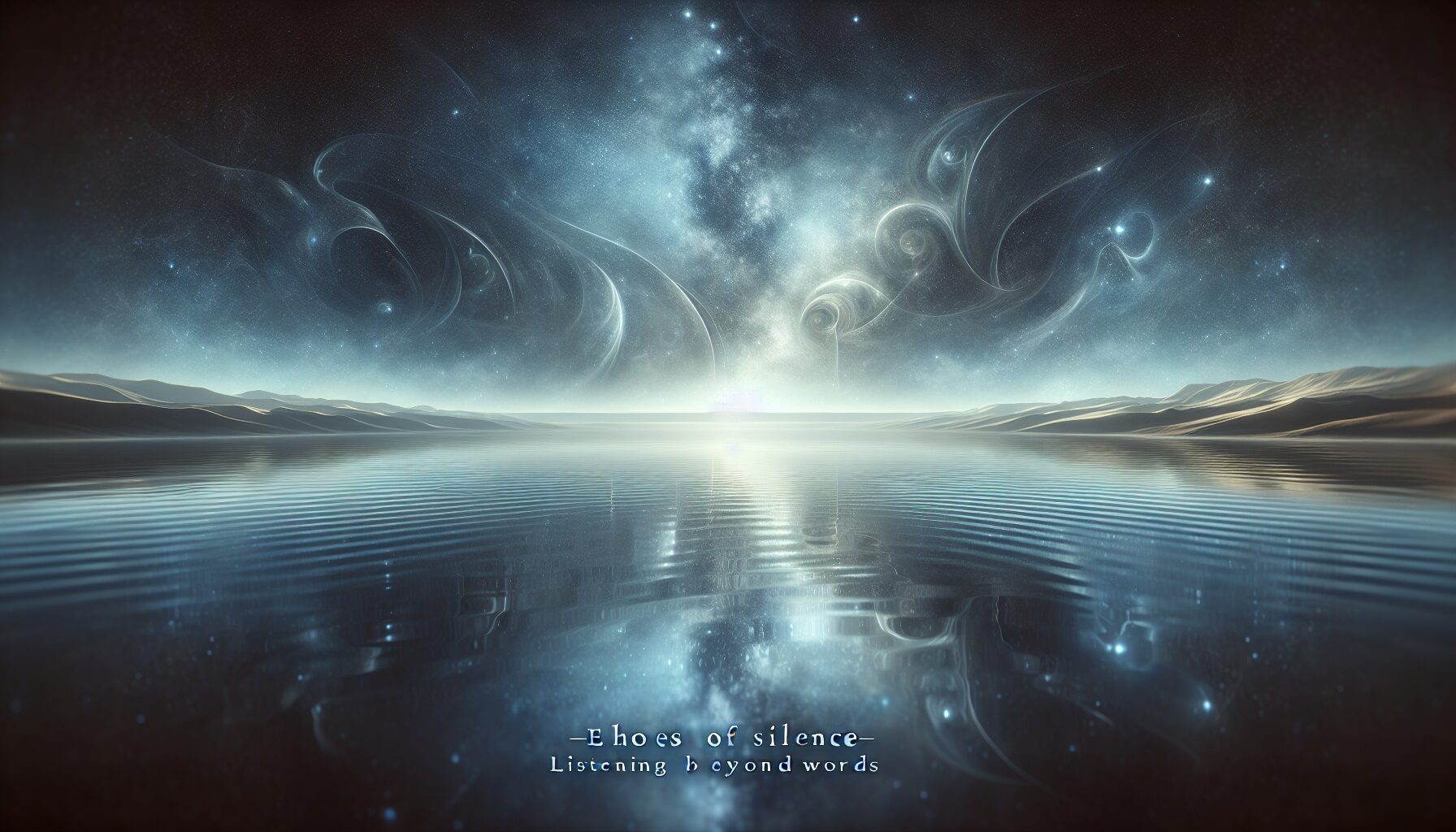
Echoes of Silence – Listening Beyond Words
In a world dominated by ceaseless chatter and the constant ping of digital notifications, silence often feels like a luxury. Yet, it is in silence that we find a profound depth of communication and understanding. To truly listen beyond words requires an awareness of the subtleties and an appreciation for the unsaid.
The Power of Silence in Communication
Silence in conversation can be as powerful as words themselves. It can convey a myriad of emotions—respect, contemplation, discomfort, or even disapproval. According to a study published in the Journal of Experimental Social Psychology, “silence can emphasize the importance of what was just said, indicating that words are not sufficient to fully capture the speaker’s intent.”
“In the attitude of silence the soul finds the path in a clearer light, and what is elusive and deceptive resolves itself into a crystal clearness,” said Mahatma Gandhi.
From casual interactions to professional negotiations, the strategic use of silence allows both speaker and listener to reflect on the conversation, making the exchange more meaningful and deliberate.
Silence in Different Cultures
Cultural differences play a significant role in how silence is interpreted. In some Asian cultures, for example, silence is considered a sign of respect and thoughtfulness. In Japan, the phrase “chinmoku” describes an agreeable silence shared by individuals, a concept seen as a social lubricant rather than a conversational void.
Contrast this with Western cultures, where silence might be more likely to be interpreted as awkwardness or disinterest. The perception of silence as an uncomfortable gap highlights a predominantly verbal-oriented mode of communication.
Listening to Nature’s Silence
Beyond human interaction, nature provides an entire spectrum of silence that speaks volumes. John Muir, famed naturalist and advocate for the conservation of the wilderness in the United States, encapsulated this beautifully: “The clearest way into the Universe is through a forest wilderness.” In these environments, silence is not the absence of sound but the presence of listening opportunities.
- Forest Silence: The gentle rustling of leaves, the distant call of a bird, the sound of a stream flowing—these are the whispers of the wild which require a keen listener to comprehend.
- Ocean Quietude: Standing at the edge of the ocean, the rhythmic crashing of waves provides a natural composition enabling deep reflection and mental clarity.
- Desert Stillness: The vast, open stretches of a desert, where silence envelops everything, is a powerful reminder of the grandeur of natural landscapes.
The Psychological Benefits of Silence
Silence has a tremendous impact on our mental health and well-being. A study in the Journal of Clinical Psychology suggests that quietness can improve mental clarity and focus. Regularly embracing silence can reduce stress and enhance one’s ability to process emotions effectively.
Furthermore, silence provides a necessary pause in our thought processes, fostering deeper insights and creativity. French philosopher Blaise Pascal once remarked, “All of humanity’s problems stem from man’s inability to sit quietly in a room alone.” Pascal’s observation highlights the inherent challenges and potential benefits of embracing silence.
Cultivating a Practice of Silence
Integrating silence into daily life can be transformative. To harness its power, one can begin with small, mindful practices:
- Meditation: Spend just a few minutes each day in meditation, focusing on the breath and observing thoughts passing without judgment.
- Nature Walks: Engage with the outdoors and notice the soft symphony of natural sounds, allowing them to guide your focus away from daily distractions.
- Digital Detox: Dedicate specific times to unplug from devices and enjoy the quiet of your surroundings.
Each of these practices can serve as a gentle reminder that silence, often seen as a passive absence, is in actuality a vibrant presence that demands to be heard.
In conclusion, embracing the echoes of silence enhances our ability to listen beyond words. It is a journey of understanding where the unspoken often holds more weight than the expressed. As we learn to navigate this absence of sound, we uncover its potential to strengthen connections, foster peace, and deepen our understanding of the world and ourselves.
To explore more about the profound impact of silence, consider visiting resources such as Psychology Today or engaging in a local meditation community.
-

The Sacred Abyss – Spirituality in Darkness
Throughout human history, darkness has often been associated with the unknown, fear, and even evil. However, many spiritual traditions have also found profound wisdom and enlightenment hidden within the shadows. What is it about darkness that draws seekers of enlightenment, and how does one find spirituality in the abyss?
The Dual Nature of Darkness
Darkness, much like light, is dualistic in nature. From a spiritual perspective, it is not merely the absence of light but a powerful context within which light is defined and understood. Carl Jung famously said, “One does not become enlightened by imagining figures of light, but by making the darkness conscious.” (Source)
This speaks to the idea that the deepest parts of our consciousness, often shrouded in mystery and fear, can provide unrivaled insights if we have the courage to explore them. The darkness, in this sense, is not our enemy but rather a partner on the path to enlightenment.
Symbols and Myths: Darkness as a Gateway
Mythologies and spiritual practices worldwide have long viewed darkness as a necessary phase in the journey of the soul. The Hero’s Journey, a concept popularized by Joseph Campbell, includes a phase known as “the night sea journey” or “the belly of the whale,” where the hero enters the deep, dark unknown to emerge transformed and enlightened. (Source)
- Hinduism: Goddess Kali, a fierce representation of darkness and time, is both feared and revered as a mother who protects her children by encouraging them to face their innermost fears.
- Christianity: The crucifixion and resurrection of Christ symbolize death and rebirth, with the three days of darkness serving as a transformative passage.
- Buddhism: The journey into the dark forest, where Siddhartha Gautama attained enlightenment under the Bodhi tree, indicating that the path to true understanding often leads through the shadowy unknown.
Modern Spiritual Practices in Darkness
Contemporary spiritual seekers continue to explore the depths of darkness, both metaphorically and literally. Several practices have emerged encouraging practitioners to embrace and explore the sacred abyss.
- Dark retreats: These are periods spent in complete darkness, often lasting several days, intended to aid intense personal reflection and spiritual insight. The practice has its roots in various ancient traditions, including Tibetan Buddhism.
- Shadow Work: Popularized by Jungian psychology, shadow work involves confronting the hidden parts of the psyche—the parts we reject or fail to recognize. By embracing these shadows, practitioners strive to achieve a more integrated self.
- Meditative Darkness: Meditation-focused spiritual retreats often utilize dark, quiet environments to help meditators disconnect from outside distractions and focus inward.
The Transformative Impact of Embracing Darkness
“In order for the light to shine so brightly, the darkness must be present.” — Francis Bacon
By embracing darkness, individuals often find a renewed sense of self-awareness and understanding. As they confront inner fears and hidden aspects of the psyche, a transformation occurs. This transformative impact is cited by many who have embarked on journeys through the sacred abyss.
The process of embracing darkness often leads to:
- A heightened sense of empathy and compassion, as individuals better understand their own flaws and, by extension, those of others.
- Greater psychological resilience, having faced the unknown and emerged stronger.
- Spiritual enlightenment, with a deeper connection to the universe and an understanding that light and darkness are interdependent.
Conclusion
As the world continues to evolve, the shift toward recognizing the value within the darkness becomes increasingly pronounced. Whether through ancient myths, modern spiritual practices, or introspective journeys, the sacred abyss offers invaluable lessons for those who venture into its depths. By embracing both light and darkness, humanity can find balance, understanding, and peace.
-
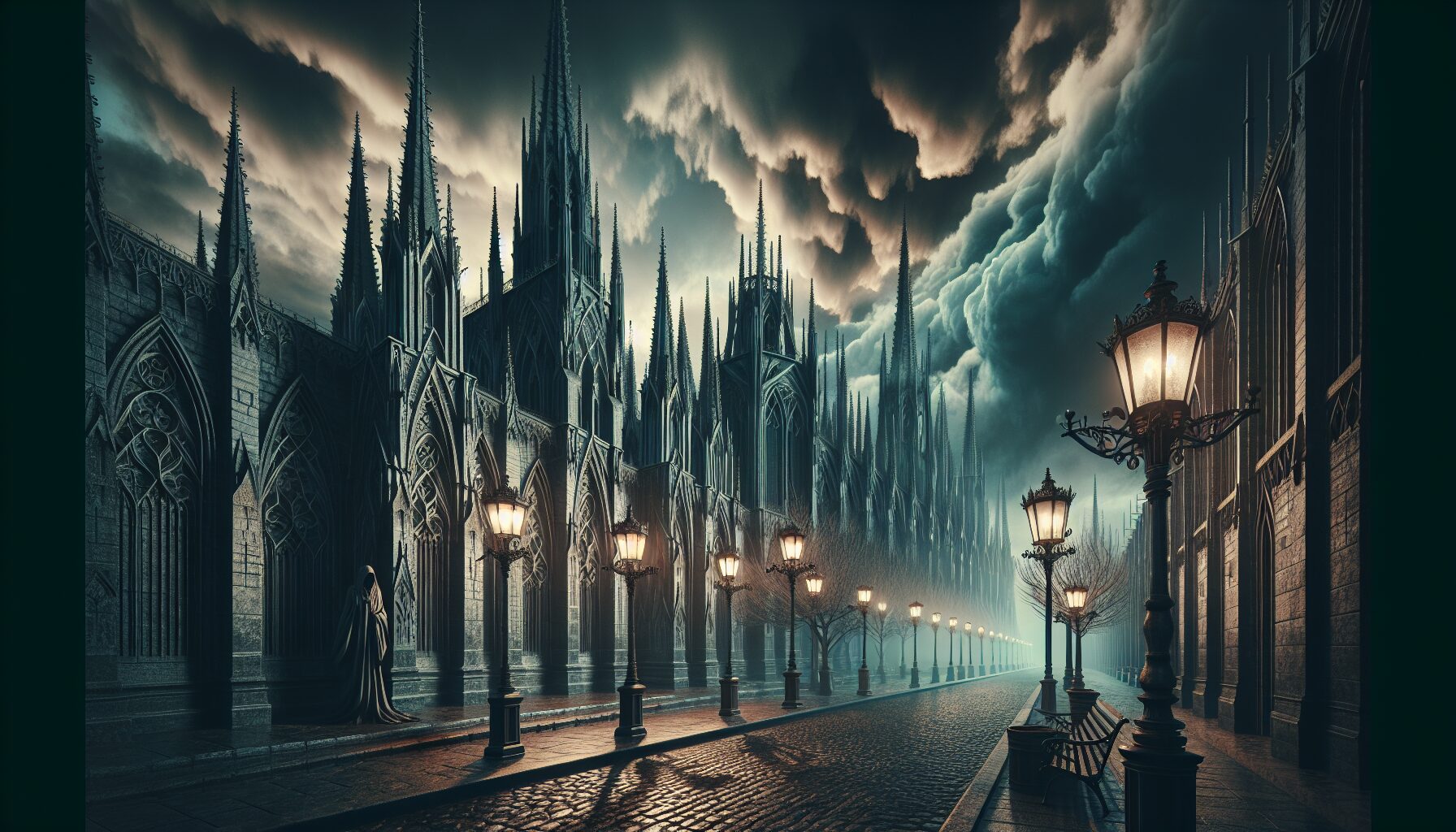
Gothic Horizons – Dark Aesthetics in Contemporary Culture
Gothic Horizons: Dark Aesthetics in Contemporary Culture
From the eerie allure of Edgar Allan Poe to the shadowy elegance of modern fashion runways, the Gothic aesthetic has permeated contemporary culture far beyond its literary origins. This darkly romantic and often morose style offers a unique perspective on the beauty found in the unconventional, providing a rich tapestry of creativity in art, fashion, music, and beyond.
The Historical Roots of Gothic Aesthetics
The Gothic aesthetic originally emerged in the 18th and 19th centuries. It was a reaction to the Enlightenment’s rationalism, an artistic movement that embraced the mysterious and the supernatural. Gothic literature, characterized by its dark settings and themes of decay and terror, served as a precursor to today’s dark aesthetics.
“Female Gothic…is a fiction that reveals a woman’s collision with a male society, particularly one where women are looked upon as second-class citizens.” – Ellen Moers
The Gothic has evolved over centuries, manifesting in various forms such as architecture, literature, fashion, and film. The architectural grandeur of pointed arches and vaulted ceilings is mirrored in the romantic yet macabre worlds imagined by authors and filmmakers, creating an enduring affection for the dark and mysterious.
Gothic Influences in Modern Fashion
In contemporary fashion, the Gothic aesthetic is characterized by a preference for dark colors, intricate patterns, and a blend of modern and historical styles. Designers such as Alexander McQueen and Rick Owens have popularized Gothic elements in their collections, combining ethereal beauty with a somber, often theatrical flair.
- Alexander McQueen: Known for his hauntingly beautiful collections that often incorporate Victorian influences, McQueen uses Gothic motifs to challenge conventional beauty standards.
- Rick Owens: Renowned for his minimalist Gothic approach, Owens mixes sleek lines with dark, muted tones to create a contemporary yet timeless appeal.
These designers have helped cement Gothic fashion as a symbol of individuality and nonconformity, appealing to those who find beauty in darkness.
Gothic Music and its Cultural Resonance
Music has also played a crucial role in the evolution of the Gothic aesthetic. From the moody post-punk sounds of bands like The Cure to the ethereal gloom of Bauhaus and Siouxsie and the Banshees, the music encapsulates the introspective and often melancholic spirit of the Gothic sensibility.
“Goth is an evocative, ever-evolving cultural movement that has kept a powerful allure for four decades.” – The Guardian
This musical genre, often associated with themes of alienation and existential reflection, resonates with audiences seeking emotional depth and authenticity in a world that often seems superficial and disconnected.
Gothic Cinema: Visual Storytelling in Shadow and Light
The influence of the Gothic extends into cinema, where filmmakers have utilized its thematic richness and visual drama to craft haunting stories.
- Tim Burton: Known for his unique visual style, Burton draws on Gothic elements to create whimsical yet somber narratives. Films like “Edward Scissorhands” and “Sleepy Hollow” illustrate his distinctive approach to Gothic storytelling.
- Guillermo del Toro: With masterpieces like “Crimson Peak” and “Pan’s Labyrinth”, del Toro blends Gothic horror with fairy tale elements to explore themes of love, loss, and the supernatural.
These directors showcase how Gothic cinema captivates audiences by weaving intricate stories that balance beauty, fear, and longing.
The Enduring Power of Gothic Aesthetics
The Gothic aesthetic continues to influence contemporary culture, inviting exploration and reinterpretation. Its appeal lies in its ability to offer a sense of comfort in the macabre and to evoke beauty in spaces where others might see only darkness.
As society evolves, so too does the Gothic. Its presence in fashion, music, and film ensures that it remains a dynamic and meaningful element of artistic expression. Through its embrace of the shadows, the Gothic offers a unique lens through which to view the nuances of the human experience.
The Gothic horizon is one of mystery, elegance, and endless possibility, continually transforming and shaping contemporary culture in its indelible, dark beauty.
-
Echoes in the Fog: Listening for Spirits
As the night envelops the world in its silent embrace, there is a timeless allure to the idea that we are not alone. Throughout history, tales of whispering winds and shadowy figures have fueled the belief in spirits communicating with the living. But how does one go about listening for these ethereal echoes? The key may lie in understanding both the scientific and mystical components of paranormal activities.
The History of Spiritual Communication
The concept of communicating with spirits is hardly new. Ancient cultures often held rituals to commune with their ancestors. The famed Oracle of Delphi in Ancient Greece, for example, is believed to have spoken prophecies directly from the gods. More recently, the 19th-century Spiritualism movement popularized séances as a means to contact the deceased. As History.com notes, “the belief that the dead reside in a spectral realm where they can be contacted by the living did not originate in America, but came from Europe.”
Scientific Perspectives on Spirit Voice Phenomena
Contemporary interest in spiritual experiences often intersects with science, leading to the study of Electronic Voice Phenomena (EVP). EVP refers to sounds found on electronic recordings which are interpreted as spirit voices. Researchers, such as Konstantin Raudive, have dedicated their work to capturing these elusive sounds. His experiments in the 1960s paved the way for modern ghost hunters, utilizing technology to detect what the human ear might miss.
What is EVP?
- Recording Devices: EVP is typically captured using audio recording devices. Many use specially-built digital recorders or employ high-sensitivity microphones.
- White Noise: The theory is that spirits manipulate the background sound, such as static or white noise, to form words or phrases.
- Analysis: Once recordings are made, sound editing software helps filter and enhance these noises, sometimes revealing coherent speech.
However, skeptics like psychologist Chris French argue that EVPs often arise from pareidolia, a “psychological tendency to find patterns in random stimuli.” According to an article by Smithsonian Magazine, our brains are adept at pattern recognition—sometimes too adept—and may lead us to interpret random sounds as familiar words.
The Mystical Approach: Techniques and Tools
For those more attuned to the mystical side of spiritual communication, the process often involves intuition and ritualistic practices. Here are some common methods and tools used by practitioners:
- Séances: Conducted to create a direct connection, usually guided by a medium.
- Spirit Boxes: Devices that scan radio frequencies to allow spirits to manipulate cuts of audio to form messages.
- Crystal Pendulums: Used by some to receive ‘yes’ or ‘no’ answers from spirits.
- Tibetan Singing Bowls: Create vibrations and tones thought to attract or placate spirits.
As renowned psychic Sylvia Browne once said, “To communicate with the spirit world, one must approach it with openness and respect.” This mindset, alongside tools and technology, forms the foundation of modern ghost hunting and spiritual listening.
Famous Cases of Spiritual Voices
The field of paranormal investigation is rife with intriguing cases that spark both curiosity and skepticism. A notable example is the infamous Enfield Poltergeist of 1977 in London, where witnesses reported hearing disembodied voices and unexplained phenomena. This case was extensively documented by investigators Maurice Grosse and Guy Lyon Playfair, who claimed to have recorded several hours of such activities.
“There are more things in Heaven and Earth, Horatio, than are dreamt of in your philosophy.” – William Shakespeare, Hamlet
Conclusion: The Thin Veil Between Worlds
History, science, and mysticism converge on the topic of spiritual communication. Whether one approaches with skepticism or belief, the desire to understand what lies beyond the veil is an enduring human quest. As technology continues to evolve, so too might our understanding of these echoes in the fog, pushing the boundaries of what we perceive to be possible.
Thus, whether through the analytical lens of EVP or the intuitive practices of the mystical arts, listening for spirits remains a fascinating intersection of the known and unknown—a conversation as old as humankind itself.
-

Ashes in the Attic: Micro-Essays on Memory
Ashes in the Attic: Micro-Essays on Memory Ashes in the Attic: Micro-Essays on Memory
The human memory is as fragile as it is powerful, often acting as both a treasure trove and a receptacle for forgotten relics. In “Ashes in the Attic: Micro-Essays on Memory,” we explore the intricate dance between remembrance and oblivion through a series of micro-essays that delve into personal anecdotes, scientific insights, and philosophical musings.
The Shadow of Recollection
“Memory is the treasury and guardian of all things.” – Cicero
Memories often lie hidden like shadows beneath our consciousness, waiting for a beam of light to bring them to life. The attic of our minds is filled with dusty boxes labeled with half-forgotten tales and deeply etched experiences. Yet, it’s the shadows themselves that often tell the most vivid stories, revealing truths we hadn’t considered when they first appeared.
Psychological Perspectives
According to psychologists, memory is not a single, static entity, but a complex process involving several different systems and mechanisms. The American Psychological Association suggests this complexity means our memories are not always as reliable as we might think.
- Short-Term Memory: The ability to hold information in our minds for a brief period.
- Long-Term Memory: The storage system where information is kept for extended periods.
- Episodic Memory: Personal experiences and specific events, including contextual details.
- Semantic Memory: General world knowledge that we have accumulated throughout our lives.
The Art of Forgetting
“The act of forgetting is one that can heal, but it can also hinder.” – Anonymous
Forgetting is often portrayed as a thief in the night, but it can also be a quiet healer. While we may mourn the loss of certain memories, the act of letting go can provide relief and space for new experiences. As research published in Nature suggests, forgetting plays an essential role in our ability to maintain a healthy mind.
Memory as a Narrative
Our memories craft the narratives of our lives, shaping our identities and providing continuity to our stories. As philosopher John Locke proposed, our sense of self is intrinsically linked to the memories we carry. The stories we tell ourselves about who we are often hinge on the selective reconstruction of past experiences, illustrating how memory is not just recording but storytelling as well.
Technology’s Impact on Memory
In an age where digital devices augment our natural capacity for memory, the question arises: Do we still rely on the dusty attics of our minds, or are we outsourcing our memories to technology? The Atlantic discusses how our dependence on devices to capture moments might alter the way we recollect them, potentially shifting the landscape of recalling from intrinsic to extrinsic storage.
The Fragile Beauty of Memory
Despite our best efforts to preserve it, memory is inherently fragile. The exquisite nature of reminiscence reminds us of the beauty in transience. When approached with a mix of reverence and acceptance, these “ashes in the attic” turn from clutter to cherished mementos of the life paths we have chosen and the lessons we have learned along the way.
Conclusion
Ultimately, “Ashes in the Attic: Micro-Essays on Memory” encourages us to embrace the inconsistent, sometimes fallible nature of memory. As we sift through the mental artifacts stored away in our attics, we learn to appreciate the significance and impermanence of each recollection, understanding that memory shapes us as much as we shape it.
-

Fragments of a Ghost: Short Fiction
Short fiction, with its capacity to capture fleeting moments and ephemeral thoughts, often mimics the nature of human memory—fragments and echoes of a larger unseen whole. In this sense, a well-crafted short story resembles a ghost: both are haunting, ephemeral, and carry a weight that belies their brevity.
“Short fiction captures the essence of a moment, a feeling, or a fleeting thought, much like a photograph does for a visual artist.” — Benjamin Percy
The Art of Short Fiction
Maurice Sendak, in a conversation on storytelling, once said that in short fiction, every word must count, as each serves as a building block for the entire narrative. The precision and economy of language in short stories create a concentrated effect, where the “ghost” of the protagonist’s experience lingers long after the story ends.
- Characterization: Within these brief narratives, characters often appear fully formed, yet remain slightly out of reach, embodying traits that resonate universally.
- Plot & Structure: Despite their brevity, short stories often employ intricate plots and structures that reveal the complexity beneath their simple surface.
- Imagery and Symbolism: Imagery in short fiction is vivid and potent, using symbolism to hint at deeper meanings, much like the spectral whisperings of a ghost.
The Ghostly Nature of Short Fiction
Short stories often leave readers with an impression of something more, something lurking just outside the pages. This “ghost” quality infuses them with life and mystery. Renowned writer Alice Munro’s stories are a testament to this, as they explore complex emotional landscapes with sparse, yet impactful, prose.
In her story “The Bear Came Over the Mountain”, Munro weaves a narrative that echoes with themes of memory, identity, and loss. Here, the ghostly fragments of past relationships haunt the characters, influencing their present actions and emotions. The spectral quality of these remnants creates a tension that is palpable, illustrating the guardian.co.uk those indelible moments that linger in our consciousness, much like a ghost lingers in a forgotten room.
Conclusion
The beauty of short fiction lies in its ability to evoke entire worlds through glimpses and whispers. These stories act as specters, capturing the fragments of a narrative that captivate and remain with us. As Raymond Carver once noted, “It’s possible, in a poem or short story, to write about commonplace things and objects using commonplace but precise language, and endow those things with immense, even startling power.” This is the ghostly magic of short fiction—its ability to resonate beyond the page, haunting us with its distilled potency.
-
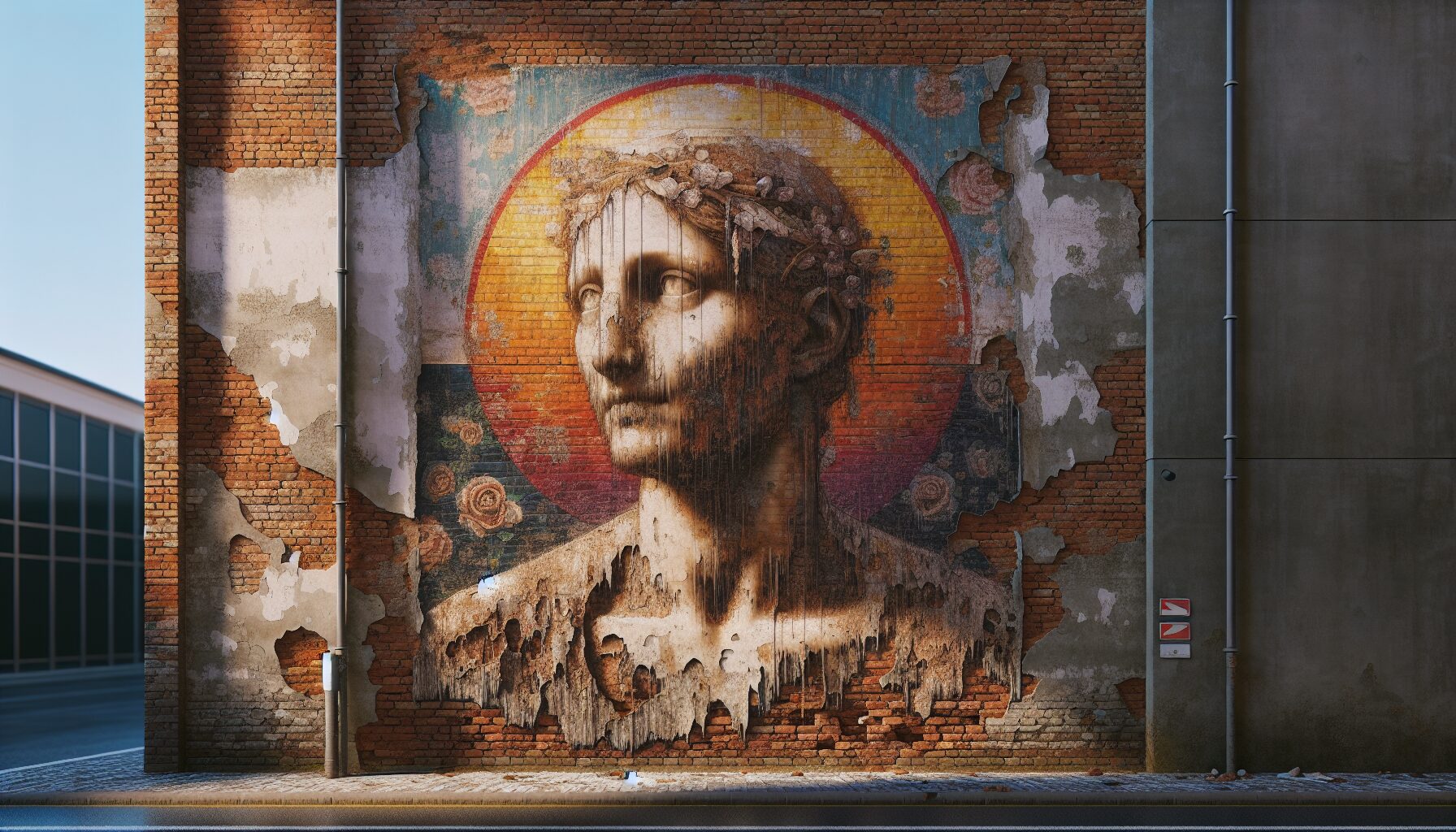
Fading Murals: Street Art as Memory
In an ever-evolving urban landscape, street art stands as a vibrant testament to history, identity, and cultural expression. From colorful bursts of creativity on weathered building facades to evocative murals adorning abandoned lots, street art captures the zeitgeist of its community. Yet, as these murals inevitably fade, they serve not only as artworks but also as poignant recollections of a community’s shared memory.
The Ephemeral Nature of Street Art
The transitory nature of street art is one of its defining characteristics. Unlike works displayed in the hermetic chambers of art galleries, street murals are at the mercy of the elements. Rain, wind, sun, and time all contribute to their gradual decay.
“That’s part of its beauty. The fact that it’s not meant to stay forever is what makes it special,” says Banksy, the elusive street artist whose works often appear overnight and carry messages that are as fleeting as their physical manifestations.
Street Art as Historical Chronicle
These murals often do more than decorate—they commemorate significant events, offer political commentary, or celebrate cultural narratives. Each piece becomes a historical marker, capturing snapshots of the socio-political climate at the time of its creation. As neighborhoods gentrify and cities expand, these murals offer glimpses into the past.
- Bethlehem’s Wall: The separation barrier in Bethlehem is adorned with artwork depicting the struggles and aspirations of a divided people.
- The Berlin Wall: Before its fall, it served as a canvas for artists to express the quest for freedom and unity against an oppressive regime.
- The Painted Murals of Los Angeles: These depict the rich cultural tapestry of the city, celebrating its diverse communities and their histories.
Community and Identity
Street art often emerges from the heart of communities, reflecting the identities and stories of the people who live there. They transform mundane spaces into cultural landmarks that draw local and international attention.
In neighborhoods such as Miami’s Wynwood Walls, the curated assembly of street art showcases pieces from artists worldwide, creating a global dialogue. This open-air gallery revitalizes the area while revealing its artistic heartbeat to the world.
The Role of Memory in Art
Memory plays a crucial role in the efficacy of street art. It not only imprints images on the viewer but ignites imagination and recall. With time, even as details fade, the emotional and cultural resonance persists.
According to Jeff Wattenhofer of the Los Angeles Times, “Street art doesn’t just represent a static picture or story. It’s a dynamic recollection and, sometimes, a potent reminder of our world’s social justice struggles, hopes, and dreams.”
Preservation Versus Impermanence
As some advocate for the conservation of significant murals, debates arise around preserving the very essence of street art. While techniques are being developed to shield murals from the elements, others argue that their impermanence is integral.
Some communities have taken steps to document street art before it vanishes. Digital archives and photography projects aim to preserve these memories and keep the spirit of the artwork alive for future generations. Initiatives such as the Philadelphia Mural Arts Program serve as examples of how street art can be curated and sustained.
New Waves of Street Art
The landscape of street art continues to evolve with emerging technologies and shifts in urban demographics. The introduction of augmented reality offers new dimensions to murals, allowing them to tell stories beyond the static image and engage audiences through interactive experiences, making the impermanent permanent in a digital form.
As cities grow and memories evolve, street art will remain an indelible part of the urban fabric. With every new mural, there’s a new story etched into the collective consciousness of the community, proclaiming a moment in time even as it inevitably fades.
In the end, fleeting and fragile as they may be, these vibrant canvases remind us of the power of art to act as a living, breathing memory for a society in constant motion.
-

The Archive of Forgotten Dreams
Imagine a place where the ephemeral nature of dreams is preserved, where the whispers of forgotten thoughts linger, waiting to be uncovered. This realm is not a mere figment of the imagination but is conceptually known as the “Archive of Forgotten Dreams.” In this article, we will delve into the fascinating world of dreams, exploring their significance, the mysterious archive that keeps them alive, and what they reveal about our subconscious mind.
The Significance of Dreams
Dreams have long captivated the human mind. Across cultures and centuries, dreams have been regarded as messages from the divine, portals to other worlds, or simply the brain’s way of processing information. Sigmund Freud, often dubbed the father of psychoanalysis, famously suggested, “Dreams are the royal road to the unconscious.” (source)
Modern science seeks to unlock the mysteries of dreams, understanding them as a manifestation of our deepest fears, desires, and memories. Studies have shown that dreams play a critical role in emotional regulation, memory consolidation, and problem-solving.
Introducing the Archive of Forgotten Dreams
In a world where technology constantly evolves, the idea of capturing and archiving dreams seems less fantastical and more like an impending reality. Imagine a digital archive where dreams are recorded, analyzed, and stored—a library not of books, but of human fantasies, nightmares, and desires. The Archive of Forgotten Dreams concept embraces this notion, aiming to compile the dreams that individuals often forget upon waking.
Theoretical Framework
- Dream Recording Technology: Emerging technologies like fMRI and EEG provide glimpses into brain activity during sleep. These advancements fuel speculation about future devices that could record and play back dreams.
- Psychological Insights: By archiving forgotten dreams, researchers could potentially gather data to explore recurring themes, symbols, and emotional patterns within the human psyche.
- Artistic Inspiration: The dream archive could serve as a fountain of inspiration for artists, writers, and creators, offering a repository of vivid images and narratives beyond conscious imagination.
The Mechanics of Dream Forgetting
Despite their vivid nature, the majority of dreams are forgotten within moments of waking. This phenomenon can be attributed to several factors:
- Lack of Attention: Dream recall requires attention and focus, which is often lacking as one transitions from sleep to wakefulness.
- Brain Functionality: The hippocampus, responsible for memory formation, is less active during REM sleep—when dreaming most vividly occurs.
- Biological Prioritization: The brain prioritizes creating new memories after waking, and often dreams take a back seat.
Exploring the Dream Archive: Case Studies and Insights
To illustrate the potential findings from the Archive of Forgotten Dreams, imagine hypothetical scenarios wherein individuals’ forgotten dreams unveil subconscious intricacies:
Case Study: Recurring Symbols
One subject experiences recurring dreams of doors—some open, some locked. Dream analysis reveals that doors symbolize opportunity and the subject’s challenges in decision-making.
Such consistent imagery not only aids personal introspection but also enhances understanding of human symbolism universally.
Insight: Collective Dream Patterns
By examining dreams across demographics, cultural trends may surface. For example, during a global pandemic, archived dreams might reveal an increase in themes related to isolation or anxiety, reflecting widespread societal emotions.
Cultural Perspectives on Dream Archives
In many indigenous cultures, dreams hold sacred meanings and are passed down through oral traditions. The Archive of Forgotten Dreams can bridge these ancient practices with modern technology:
- Preservation of Traditions: Archiving dreams allows for the preservation and cross-referencing of cultural symbols and stories.
- Exchange of Knowledge: Sharing dream archives with diverse cultures can foster an exchange of knowledge that highlights both unique and shared human experiences.
Challenges and Ethical Considerations
While the concept of an Archive of Forgotten Dreams tantalizes with possibilities, it also raises significant ethical questions:
- Privacy Concerns: Dreams are intensely personal; archiving them raises issues regarding consent and privacy.
- Interpretation Risks: Misinterpretation of dreams can lead to inaccurate conclusions and psychological distress.
- Data Security: Maintaining the confidentiality and security of archived dream data is crucial.
The Future of Dream Archives
As technology advances, the dream of creating a tangible Archive of Forgotten Dreams edges closer to reality. While still theoretical, such an archive promises to deepen our understanding of human consciousness, creativity, and cultural diversity.
In conclusion, the Archive of Forgotten Dreams stands as a symbol of our unending quest to understand the mind. It beckons us to consider the unfathomable potential that lies within the realm of dreams, reminding us that what we forget is often just as vital as what we remember.
Further Reading:
-
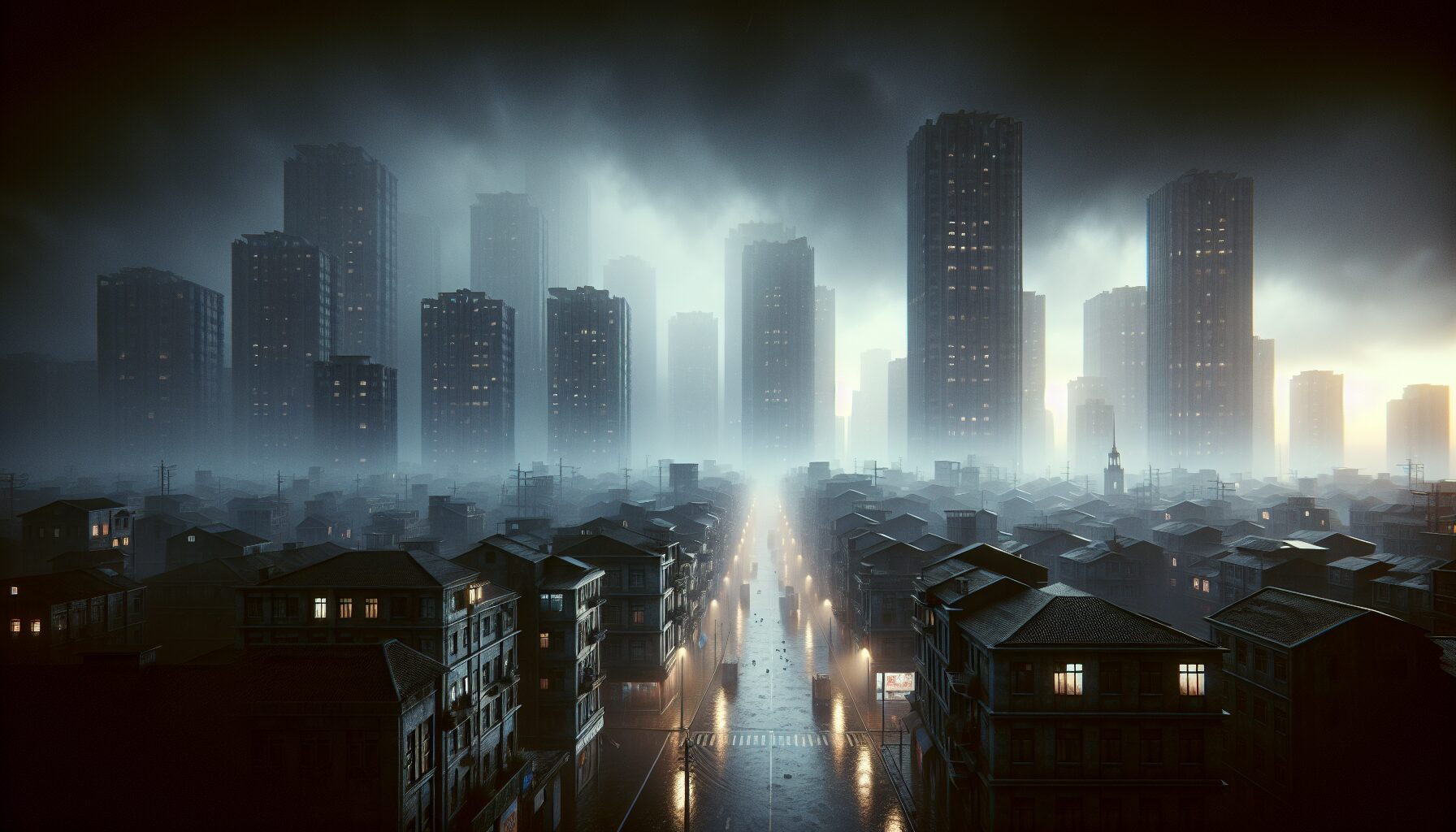
The Lamenting City: Urban Melancholy Essays
The Lamenting City: Urban Melancholy Essays The Lamenting City: Urban Melancholy Essays
The urban landscapes of the world, with their sprawling concrete labyrinths and luminous skylines, have long been
the subject of fascination and introspection. These cities, bustling with energy and pulsating with life, are
paradoxically imbued with an underlying current of melancholy. This melancholy is not necessarily borne from
sadness but from the profound reflections of life amidst the chaos. A fitting depiction of this urban condition
comes from French philosopher Paul Virilio, who once said, “The city is a translation of war into three
dimensions.”The Anatomy of Urban Melancholy
An exploration into the anatomy of urban melancholy reveals a complex interplay of solitude, anonymity, and the
relentless passage of time. These elements create a distinct emotional palette unique to the urban experience.-
Solitude Amidst Crowds
The irony of urban living is the pervasive sense of solitude encountered amidst the throngs of people. As
American sociologist David Riesman articulated in his seminal work The Lonely Crowd, modern
urbanites are often “surrounded by people but feeling disconnected.” In bustling cityscapes, one
can find themselves enveloped by a sea of faces yet remain enveloped in their personal solitude. -
Anonymity and Identity
Cities provide a canvas for individuals to blend, disappear, or reinvent themselves. The anonymity that
metropolitan areas afford can be both liberating and isolating. As Charles Baudelaire noted, the city
enables people to “become one with the crowd,” often leading to a dissonance between external
identities and internal realities. -
The Relentlessness of Time
Cities operate under the tyranny of time, with every second counted towards progress and productivity.
This relentless pace can lead to an existential reflection on one’s role in the machinery of urban life
as discussed by author Alain de Botton in The Architecture of Happiness: “Time in the city
marches unyielding, reminding its denizens of their impermanence.”
Expressions of Urban Melancholy in Art and Literature
Artistic expressions of urban melancholy provide a mirror to the invisible yet palpable emotions that cities
carve into their inhabitants’ souls.-
Paintings and Photography
The paintings of Edward Hopper encapsulate feelings of urban isolation. His iconic piece “Nighthawks”,
with its depiction of individuals seated within a desolate diner, highlights the solitude prevalent in urban settings.
Photographers like Brassaï have captured the nocturnal beauty and desolation of urban landscapes, revealing a melancholic serenity. -
Literary Works
Literature offers profound insights into the urban experience. T.S. Eliot’s “The Waste Land” powerfully
portrays the fragmented, alienated existence in the modern metropolis. Likewise, Franz Kafka’s works often depict
cities as places of bureaucratic absurdity and existential dread.
Urban Design and the Human Psyche
The design of urban spaces has a significant impact on the human psyche. Modern cities often prioritize functionality
over aesthetic and human needs, contributing further to urban melancholy.-
Concrete Jungles
The prominence of concrete, glass, and steel in cities often leads to environments that can feel cold and
uninviting. Architect Peter Zumthor stresses the importance of material warmth in urban design, suggesting
that cities need to embrace textures and materials that resonate with human experience. -
The Need for Green Spaces
Green spaces within urban landscapes serve as sanctuaries. Richard Louv, in his book Last Child in the Woods,
discusses “Nature Deficit Disorder,” emphasizing the necessity for natural elements to break the concrete monotony and rejuvenate the spirit.
Combating Urban Melancholy
Addressing urban melancholy requires intentional efforts to cultivate community, foster engagement with art and
culture, and prioritize individual well-being.-
Building Community Connections
Initiatives to build community connections can counter feelings of isolation. Public events, communal spaces,
and interactive urban projects can foster a sense of belonging and reduce urban alienation. -
Incorporating Culture
Integrating cultural experiences into daily urban life fosters a deeper connection to the environment and
enhances emotional well-being. Art installations, music festivals, and urban farms are examples of how cities
can infuse culture into their infrastructure. -
Promoting Psychological Resilience
Urban planners and policymakers must consider mental health services as a crucial element of urban
development. Accessible mental health resources can provide support for individuals struggling with
the pressures and expectations of city life.
“Cities have the capability of providing something for everybody, only because, and only when, they are created
by everybody.” – Jane JacobsUrban melancholy, while deeply ingrained in the city poems of lived experiences, can be channeled into a force for
positive change. Through intentional design, community building, and cultural integration, cities can transform
into spaces that nurture rather than deplete the human spirit. As we continue to navigate the complexities of
urban life, reimagining our cities with empathy and creativity remains paramount. -
Solitude Amidst Crowds