Tag: skull

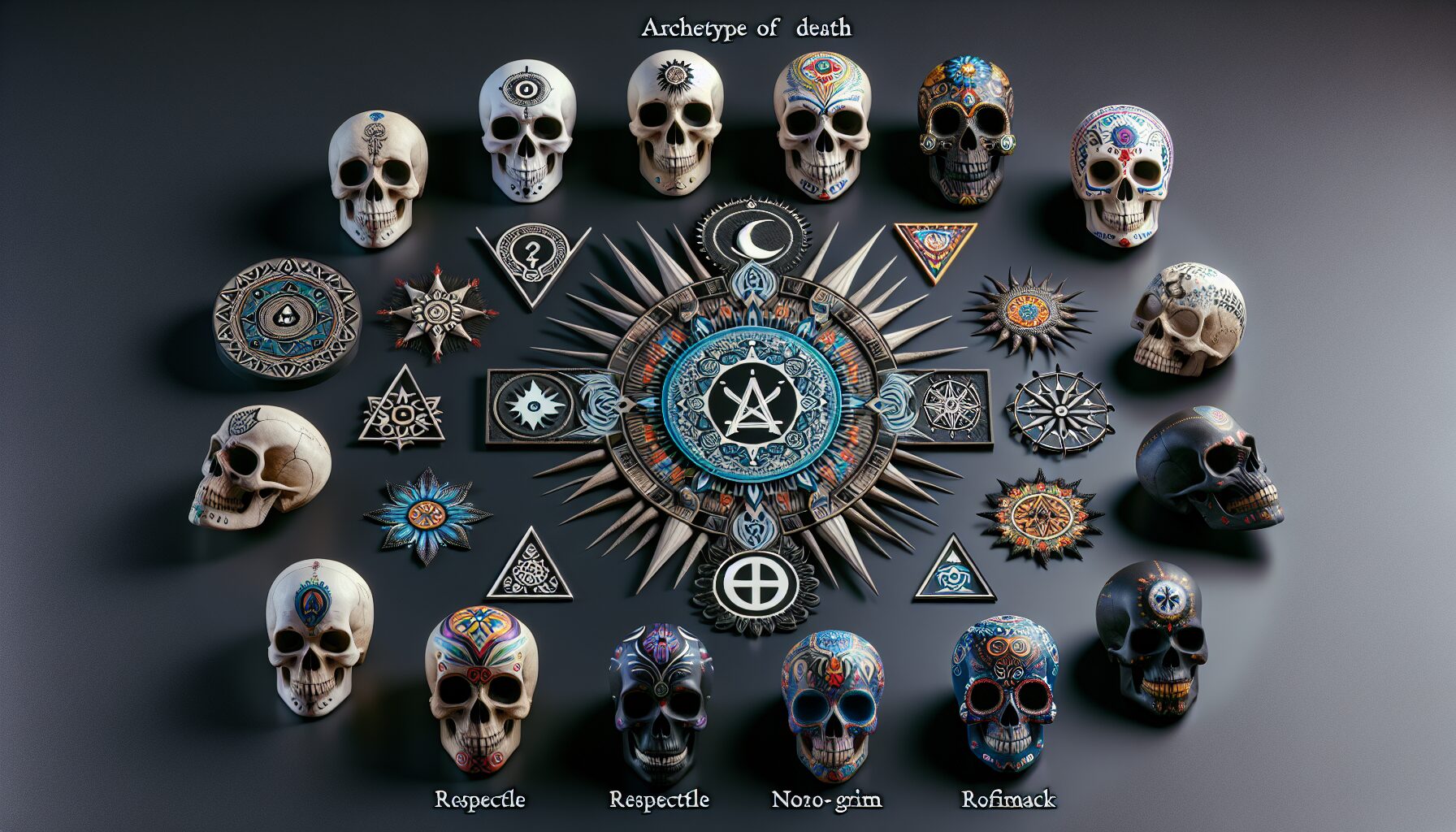
  • Symbols of the Skull – Archetype of Death in All Cultures

    Symbols of the Skull – Archetype of Death in All Cultures

    The human skull, one of the most powerful and universally recognized symbols, has exuded an unsettling fascination across different cultures for centuries. Representing death, mortality, and the ephemeral nature of life, the skull has a profound impact on art, religion, and popular culture worldwide. It is a symbol often intertwined with the concept of memento mori, a Latin phrase meaning “remember that you must die,” serving as a stark reminder of humanity’s inevitable fate.

    The Skull in Western Culture

    In Western cultures, the skull is often associated with the grim visage of death and danger. It’s a staple in pirate lore, expressed poignantly through the Jolly Roger—a flag adorned with a skull and crossbones, signaling danger to any seafarer. The symbolism is further entrenched in art and literature during the Renaissance, where skulls appear in vanitas paintings to convey the transience of earthly pleasures and the certainty of death.

    Eastern Interpretations

    When moving eastward, the interpretations of the skull become more nuanced. In Hinduism and Buddhism, the skulls often represent the cyclic nature of life, death, and rebirth. Deities like Kali, the fearsome Hindu goddess, are depicted adorned with necklaces of skulls, symbolizing the destruction of ego and the liberation of the soul.

    “The skull is not only a symbol of death but also a reminder of life, a call to make the most out of our fleeting existence.” – Unknown

    Indigenous and Tribal Beliefs

    Many indigenous and tribal cultures have a more integrated approach to the skull’s symbolism. In ancient Mesoamerican civilizations, such as the Aztec and Maya, skulls played a crucial role in rituals and beliefs surrounding the afterlife. During the Day of the Dead in Mexico, calaveras (skulls) are decorated and celebrated, reflecting an acceptance and reverence for the deceased as part of the life cycle.

    Modern Culture and the Skull

    In contemporary times, the skull has transcended its classical connections with death to become an emblem of rebellion and nonconformity, often used in fashion and music. It signifies a rejection of societal norms and serves as a counterculture icon, appearing in everything from runway shows to rock band logos.

    Ultimately, the skull’s pervasive presence across cultures underscores a universal human confrontation with mortality, inviting each culture to interpret its meaning through the lens of their unique experiences and philosophies. Whether revered, feared, or celebrated, the skull remains a potent symbol that challenges us to reflect on the brevity of life and the reality of death.
  • The Alien Skull – Archetype of the Other’s Death

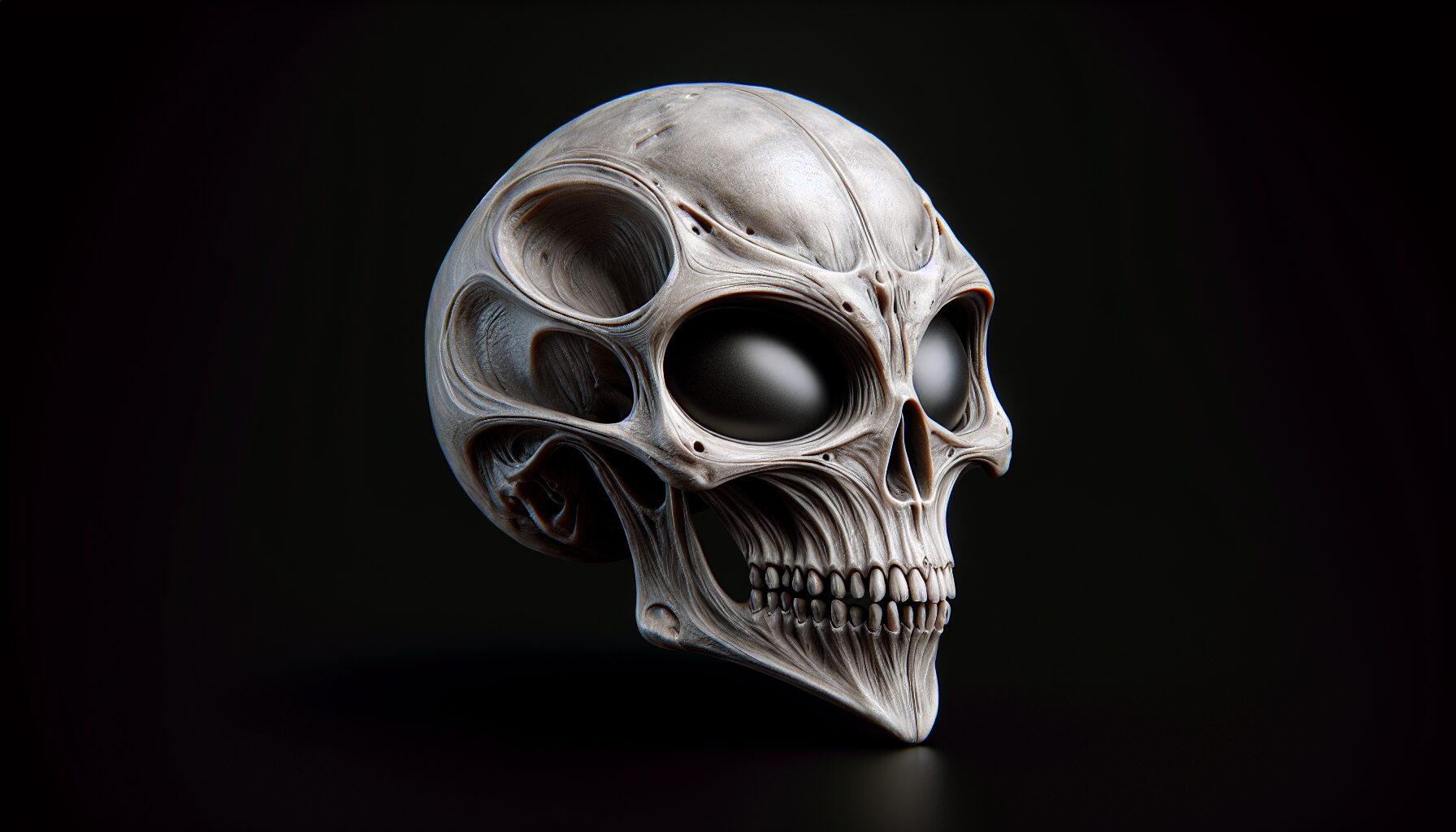
    The Alien Skull – Archetype of the Other’s Death

    The concept of the alien skull has intrigued and disturbed humanity for centuries. As an enduring archetype, it serves as a profound symbol of the “Other”—the unknown, the unfamiliar, and ultimately, the realm of death and what lies beyond.

    The Alien Skull as a Symbol

    The skull, in general, epitomizes death. When depicted in the context of an alien entity, it becomes a fusion of fear, curiosity, and the mystery of the unknown universe. From ancient times, cultures have been fascinated with the notion of extraterrestrial life, often depicting such beings with exaggerated cranial structures, which has perpetuated the alien skull as an enduring symbol.

    Joseph Campbell, an eminent scholar of mythology, noted that, “the alien represents the death of the normal way of understanding the world, it is the ultimate Other.” (The Joseph Campbell Foundation) This quote highlights the alien’s role in challenging human perception, forcing an encounter with the unfamiliar which often results in a metaphoric ‘death’ of old ideas and beliefs.

    Encountering the Unknown

    Alien skulls have become iconographic in art, literature, and media, standing as emblems of the confrontation with the unexplored. They serve as the quintessential image evoking the uneasy balance between fascination and dread. As humans gaze into the eye sockets of these hypothetical skulls, they peer into the void, confronting existential questions about life, mortality, and identity.

    “The alien skull is much more than a relic from space, it is the ultimate memento mori, a reminder of our own mortality and the fragility of life as we know it.”
    Dr. Elisa Fernandez, Anthropologist

    Modern Interpretations and Depictions

    In contemporary science fiction, alien skulls are often depicted in various forms—from the sleek, elongated craniums of the classic ‘greys’ to the rugged, bony structures of more monstrous creations. These depictions, whether in films like ‘Alien‘ or games such as ‘Halo,’ continue to capture the public imagination, serving as a canvas upon which human fears and fascination with the cosmos can be projected.

    Through these narratives, we are continually reminded that the alien skull is not merely a symbol of something foreign but also a reflection of our eternal quest to understand the very nature of existence.

    In analyzing the alien skull, we recognize it as both a literal and figurative archetype of death—the end of certainty, the unsettling presence of the unknown, and the death of the familiar.