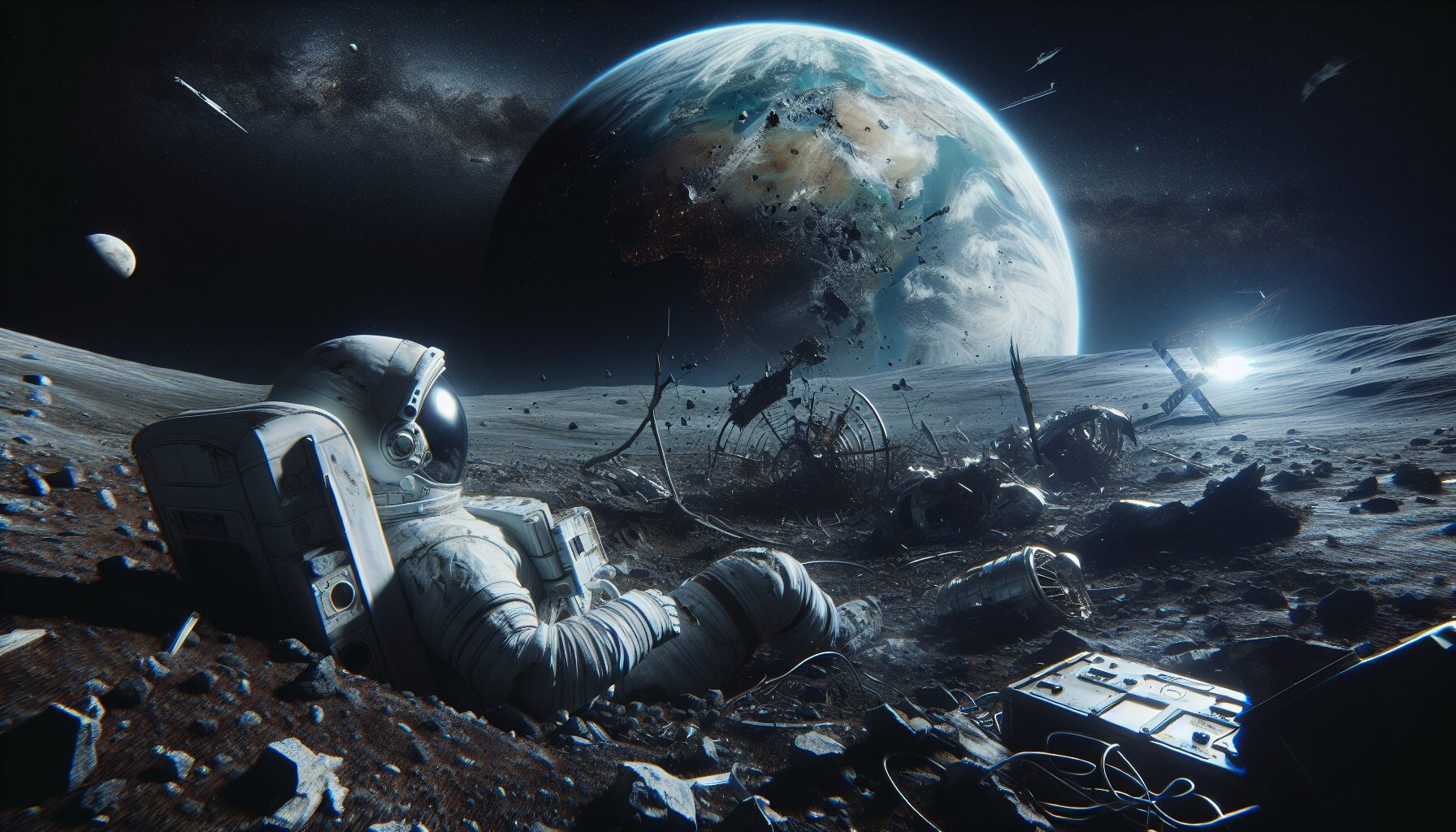
The vastness of outer space is as beautiful as it is formidable. For centuries, humanity has gazed at the stars, dreaming of exploration and understanding our place in the universe. However, the majesty of space comes with a stark reminder of the fragility of life—a concept best encapsulated in the experiences of astronauts venturing into Earth’s orbit. In the vacuum of space, life hangs by a thread, orbiting death with each odyssey beyond our atmosphere.
The Vacuum of Space: An Unforgiving Environment
Space is a vacuum, meaning it lacks air and atmospheric pressure. Temperatures can plummet to hundreds of degrees below zero or skyrocket dramatically in direct sunlight. The absence of oxygen and the extremes in temperature create an inhospitable environment for life as we know it. As NASA researchers often point out, “Space is one of the most hostile environments that life has ever encountered.”
“The Earth is the cradle of humanity, but mankind cannot stay in the cradle forever.” — Konstantin Tsiolkovsky
This famous quote by Russian rocket scientist Konstantin Tsiolkovsky captures the dual nature of space exploration: humanity’s drive to reach beyond our planetary cradle and the immense challenges that lie in the emptiness beyond.
The Thin Shield between Life and Death
Astronauts aboard the International Space Station (ISS) provide firsthand accounts of living on the edge between life and death. The ISS itself is a testament to human ingenuity, engineered to withstand radiation, micro-meteorites, and the vast nothingness outside.
- Air Supply: The station has a complex life-support system that scrubs carbon dioxide, regulates humidity, and provides breathable air. Any failure in this system could be catastrophic.
- Temperature Regulation: Specialized thermal control systems manage the temperature inside the station, maintaining a stable environment for the crew.
- Radiation Protection: Earth’s magnetosphere provides a shield from cosmic radiation, but outside its protective bubble, astronauts rely on the ISS’s structure to mitigate exposure to powerful and harmful rays.
An Ever-Present Risk
Space is inherently risky. SpaceX engineer Gwynne Shotwell has noted that “the relentless environment in space doesn’t care what we want. It exists independent of human need.” The diligent training astronauts undergo prepares them for situations where they must rely on their wits and the teamwork of ground control.
“Failure is not an option.” — Gene Kranz, NASA Flight Director
These legendary words were uttered during the Apollo 13 mission, a testament to the resilience and resourcefulness required to survive the challenges of space travel. When the vacuum of space looks to claim its toll, success depends on decisions made with precision and cool deliberation.
Reflections on Mortality in Orbit
For those who have ventured beyond Earth’s atmosphere, the experience often provokes profound reflection on mortality and existence. Astronaut Chris Hadfield discusses these thoughts in his book, An Astronaut’s Guide to Life on Earth. He shares how “gazing at the black, endless abyss” underscored the delicacy of human existence and the insignificant speck that life is amid the cosmos.
The famed Overview Effect describes the shift in consciousness experienced by astronauts after viewing Earth from space. Many report an overwhelming sense of interconnectedness and a new appreciation for the planet’s fragile beauty. It’s a humbling reminder that while we orbit such inevitable nothingness, the essence of life shines boldly against the backdrop of the infinite.
Conclusion: The Dual Beauty of Space
Even as our technology advances, enabling new achievements in space exploration, the fundamental truth remains: life in the vacuum is an ephemeral flicker, a soft glow of humanity carrying forwards into the starry abyss. As we cultivate new dreams of lunar settlements and Mars outposts, the awareness of space’s unforgiving nature will continue to guide us with respect and caution.
The paradox of space is this: it reveals to us both our profound vulnerability and our unyielding spirit to transcend it. In orbiting death, we manage to affirm life itself, striking a delicate balance that invites both wonder and awe.