Tag: spiritual

  • Arcane Codes – Secrets Hidden in Abstract Symbols

    Arcane Codes – Secrets Hidden in Abstract Symbols

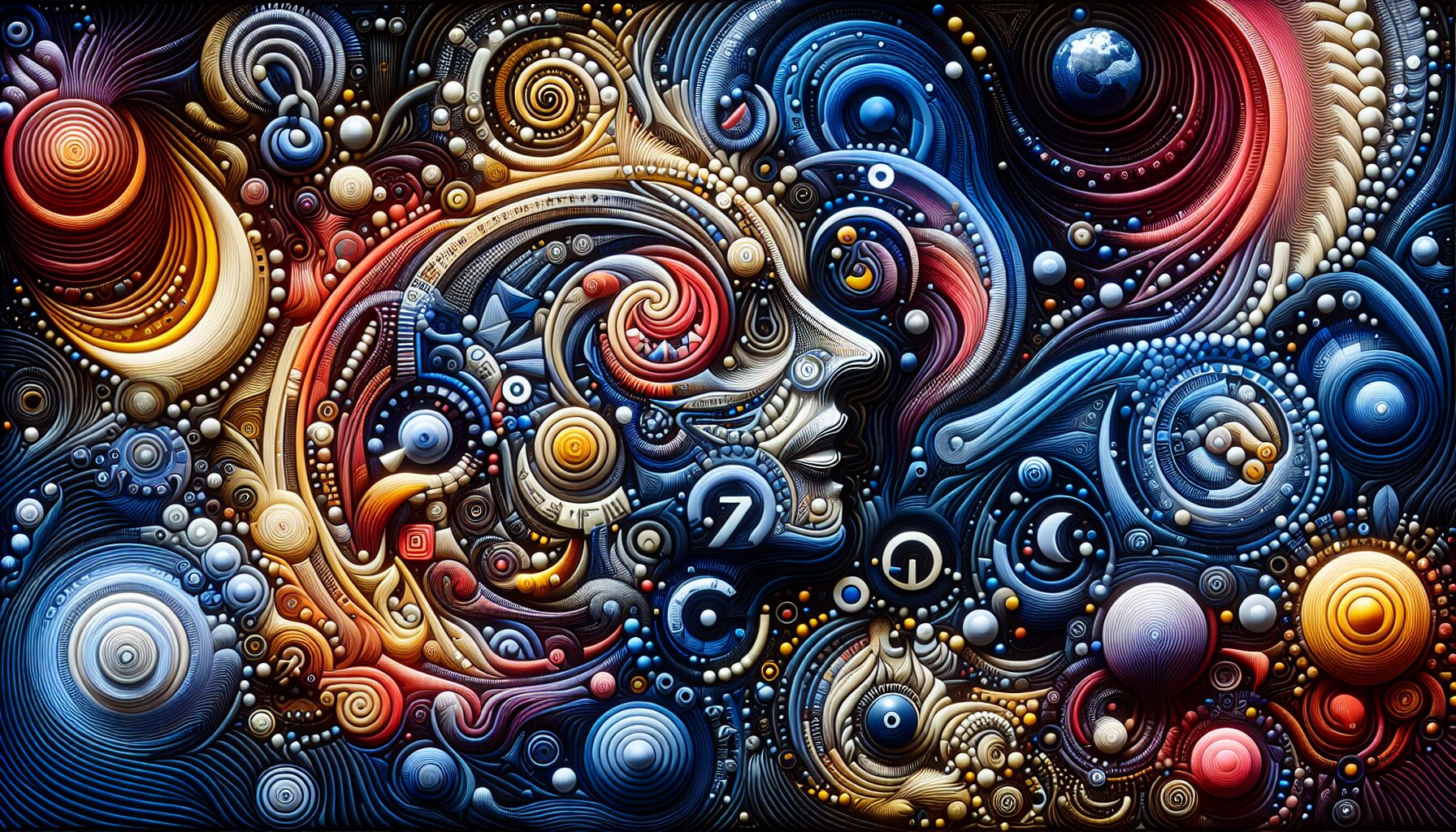
    Throughout history, humans have used symbols to communicate complex ideas, preserve secrets, and convey spiritual insights. These arcane codes often go unnoticed in our modern world, yet they hold the power to unlock profound mysteries. This article explores the history, significance, and application of abstract symbols in various cultures and traditions.

    The Language of Symbols

    Symbols serve as a bridge between the known and unknown realms, providing insight into the consciousness of different eras. According to Carl Jung, “The psychological mechanism that transforms energy is the symbol. The symbol is the psychological machine that transforms meaning into another, higher meaning” (Goodreads).

    • Mandala: In Hinduism and Buddhism, mandalas are intricate patterns representing the universe. They serve as spiritual guides and are used during meditation to focus the mind and invoke a state of peace.
    • Tree of Life: Found in various cultures, including the Kabbalistic tradition, the Tree of Life symbolizes interconnectedness and the path to spiritual enlightenment. Its roots and branches depict the continuum of life linking heaven and earth.
    • The Ouroboros: This ancient symbol of a serpent eating its own tail represents the cyclical nature of life, death, and rebirth. It illustrates the concept of eternal return, an idea recurring in many philosophical and spiritual texts.

    Historical Significance of Abstract Symbols

    Symbols have long been used to convey hidden meanings and foster communities bonded by shared knowledge. During the Medieval and Renaissance periods, allegorical art flourished, rich with symbolism reflecting religious and philosophical ideals. The secretive use of symbols was often necessary to avoid persecution.

    “Symbols are powerful because they are the visible signs of invisible realities” — Saint Augustine

    One noteworthy instance is the use of fish symbols by early Christians. Known as the Ichthys, this symbol not only represented Christ but also served as a covert means for believers to identify one another during times of persecution.

    Modern Applications of Arcane Codes

    Today, the use of symbols continues to pervade society in subtle forms. From corporate logos to national flags, these symbols encapsulate shared identities and values. For instance, the use of symbolism in branding harnesses the power of visual language to communicate a company’s ethos succinctly and memorably.

    • Logos: Companies strategically develop logos that resonate on an emotional level, creating a connection with their audience. Consider Apple’s logo, a simple bitten apple, which symbolizes knowledge and innovation.
    • Flags: National flags are steeped in symbolism; they embody a country’s history, ideals, and future aspirations. The American flag, for instance, uses stars and stripes to symbolize the original colonies and the union.

    Esoteric Knowledge and Secret Societies

    Throughout the ages, secret societies have utilized arcane symbols to encode knowledge and preserve ancient wisdom. The Freemasons, for example, deploy intricate symbols such as the square and compass to illustrate concepts of morality and personal development.

    “The most beautiful experience we can have is the mysterious. It is the fundamental emotion that stands at the cradle of true art and true science” — Albert Einstein

    Organizations like the Hermetic Order of the Golden Dawn, founded in the late 19th century, relied heavily on symbols derived from hermeticism, alchemy, and the Kabbalah. These symbols were employed in rituals designed to unlock higher states of consciousness and spiritual awakening.

    Interpreting the Unseen

    Unlocking the secret messages hidden within symbols requires a deep reflection and an open mind. While some symbols carry universal meanings, others are context-dependent and require understanding the culture or tradition from which they originate.

    The study and interpretation of symbols—symbology—can be a rewarding endeavor for those who seek to deepen their understanding of the world. As Thomas Merton aptly noted, “Art enables us to find ourselves and lose ourselves at the same time.” In this way, symbols provide both a guide and a challenge, drawing us into the exploration of the seen and unseen.

    Conclusion

    The arcane codes embedded in abstract symbols continue to shape our world, serving as a testament to the enduring power of symbolic language. Whether through ancient art or modern design, these symbols invite us to carry forward the wisdom of our ancestors and explore the depths of our own spiritual journeys.

    In a world where words often fail, symbols bridge gaps through their rich expression and profound simplicity. As we continue to navigate the complexities of life, may these ancient codes offer guidance, insight, and inspiration.

  • The Shadow of the Moon – Darkness in Spiritual Practice

    The Shadow of the Moon – Darkness in Spiritual Practice

    In many spiritual traditions, the moon is revered not only as a celestial body but also as a symbol of various aspects of human spirituality. While the full moon often represents clarity and the culmination of energies, the shadow of the moon—or the new moon—holds its own significance in spiritual practice.

    The New Moon: A Time for Reflection

    The new moon phase, when the moon is not visible from Earth, is considered a powerful period for introspection and setting intentions. This dark lunar phase prompts practitioners to retreat inwards, relying on the absence of lunar illumination as a metaphor for exploring the unknown aspects of themselves. As the psychotherapist and author Carl Jung noted, “One does not become enlightened by imagining figures of light, but by making the darkness conscious.”

    Darkness as a Symbol of Potential

    • The darkness of the new moon is often seen as a blank slate, ripe with potential. It encourages the release of what no longer serves an individual to make room for new beginnings.
    • Spiritual practitioners view this period as an opportunity for healing and renewal. The absence of light is thought to provide a unique environment where one can face hidden fears and desires without distraction.
    • Many traditions, such as those observed in Wicca and some branches of Hinduism, include specific rituals to honor this introspective period, fostering a connection to the inner self.

    Embracing the Unknown

    The practice of engaging with spiritual darkness is not without its challenges. In a world that cherishes clarity and certainty, embracing the shadow requires courage and an open mind. Jessica Dore, a licensed social worker and tarot practitioner, states, “The dark moon is a reminder that much of what we seek lies in places we’d rather not look.” The journey into this lunar shadow is thus an essential part of spiritual growth.

    “True transformation is birthed through experiencing and understanding the darkness within us,” says Dr. Steve Taylor, a psychology lecturer and author on spiritual science. “In our shadows lie the dormant seeds of our true potential.”

    This exploration of darkness is not an ode to negativity but an acknowledgment of its role in the balance of light and dark within the human psyche. As spiritual seekers navigate the shadow of the moon, they learn to embrace all facets of their being, leading to more profound self-understanding and spiritual enlightenment.

    The dance between shadow and light is perpetual. By embracing periods of darkness as vital components of spiritual practice, individuals carve out a path to deeper awareness and personal growth. Just as the seasons change, so too must practitioners honor the cyclical nature of their spiritual journey.

  • Charnel Grounds – Temples of Rot and Transformation

    Charnel Grounds – Temples of Rot and Transformation

    Charnel Grounds: Temples of Rot and Transformation

    For centuries, charnel grounds have been places of profound spiritual significance and reflection. These sites, often associated with death and decay, invite contemplation on the nature of life and the inevitability of death. In various spiritual traditions, charnel grounds are spaces where transformation occurs amid decay, acting as powerful metaphors for the cycles of life.

    The Historical Significance of Charnel Grounds

    Historically, charnel grounds served as open-air cemeteries or burial places where corpses were left to decompose naturally. These grounds were functional in hot climates, where rapid decay and scavenging by wildlife expedited the decomposition process. They were, and in some places still are, essential parts of societal practices surrounding death.

    Charnel Grounds in Tibetan Buddhism

    Charnel grounds hold particular importance within Tibetan Buddhism. Practitioners engage in meditative practices at these sites to confront the impermanence of life directly. According to Lion’s Roar: Buddhist Wisdom for Our Time, “Buddhist monks would meditate upon corpses in various stages of decay, reflecting on the transient nature of the physical body.”

    “Meditating on death in such vivid terms leads to the realization that the attachments of life are fleeting, and in that realization, a deeper understanding of detachment and spiritual awakening unfolds.”

    — Dilgo Khyentse Rinpoche

    Symbolism and Metaphor

    Within the context of spiritual practice, charnel grounds symbolize more than just death. They represent the continuous cycle of decay and renewal. Here, the physical dissolution of the body foreshadows spiritual rebirth or transformation.

    • Impermanence: The sight of a decomposing body serves as a powerful reminder of the impermanent nature of reality.
    • Detachment: Observing decay fosters a sense of detachment from the physical self and its desires.
    • Transformation: Like nature reclaiming the body, spiritual growth often follows the metaphorical death of the ego.

    Charnel Grounds in Hindu Traditions

    In Hinduism, charnel grounds are similarly revered for their transformational power. The deity Shiva, known as the destroyer within the Hindu trinity, is often depicted meditating in such places. This imagery underscores the transformative aspects of death, Shiva embodying both destruction and creation.

    “Destruction is simply the reordering of elements for rebirth, a necessary process of the cosmic dance.”

    — Sadhguru, founder of Isha Foundation

    Contemporary Reflections

    In modern times, while the practice of meditating in charnel grounds may not be as common, the philosophical and spiritual teachings derived from such places continue to resonate. Contemporary mindfulness practices often draw from the same principles of impermanence and release.

    For those unable to experience the physicality of a charnel ground, meditative practices focused on breath and awareness can simulate the confrontation with impermanence and release. As Tricycle: The Buddhist Review explains, “Mindfulness enables even busy city dwellers to engage in their own kind of meditation on impermanence, planting the seeds for transformation without the physical ground of bones.”

    The Global Perspective

    Charnel grounds exemplify a universal acknowledgment of death as part of the human experience. Across various cultures and traditions, these sites remind us of our shared destiny and the potential for spiritual awakening within life’s unavoidable cycles.

    Although charnel grounds may appear macabre, the true essence lies in their function as catalysts for profound personal transformation. They teach lessons that transcend cultural boundaries—about letting go, embracing change, and the eternal balance of life and death.

  • The Skeleton Dance – Ritualized Death in Tibetan Tantra

    The Skeleton Dance – Ritualized Death in Tibetan Tantra

    In the high-altitude enclaves of the Tibetan Himalayas, spiritual practices blend the formidable power of nature with an intricate tapestry of cultural traditions. One of the most captivating manifestations of this synthesis is the Skeleton Dance, a ritual deeply embedded in the Tibetan tantric tradition. This dance serves as a symbolic representation of death, rebirth, and the transitory nature of life.

    Origins and Meaning

    The Skeleton Dance, or “Durdak Garcham”, is traditionally performed by monks during the annual Tibetan Buddhist ceremony known as Cham. This ritual is performed with vibrant masks and costumes, aiming to vanquish evil spirits. At its core, the dance represents the impermanence of life and the constant cycle of life and death.

    According to Buddhist teachings, accepting the inevitability of death is essential in transcending fear and facilitating spiritual enlightenment. The Royal Library of Britannica states, “Unlike Western perspectives that often fear death, Tibetan Buddhism encourages an embrace of mortality, viewing death not as an end but as a transitional state.”

    The Dance of the Skeletons

    The performers, usually monks, don impressively intricate costumes that transform them into eerie apparitions of skeletons. Each movement is deliberate and filled with symbolic meaning, intended to invoke contemplation among the spectators. The dancers move rhythmically to the beat of drums and the resonant chimes of cymbals, communicating the transient nature of life.

    A vivid portrayal of life’s fragility, the Skeleton Dance underscores the idea that death is a mere transition rather than a cessation. By confronting the audience with the inevitability of death, the dance aims to awaken them to the beauty and importance of ethical living.

    Symbolism in the Dance

    • Costumes: The skeleton costumes symbolize both literal and metaphorical death. The stark white bones against a dark background are a reminder of mortality lurking behind the facade of life.
    • Movements: The ethereal movements of the skeletons symbolize the fleeting nature of existence, reflecting the constant change inherent in life.
    • Music: The rhythm created by the instruments mimics the heartbeat of life, with intermittent silences representing deathly pauses, an acknowledgment of the cycle of life and rebirth.

    Ritual Function and Cultural Impact

    The Skeleton Dance fulfills a crucial role in the spiritual festivals of Tibetan Buddhism, particularly those marking the Lunar New Year. Its primary function is purgative—cleansing the spiritual ether of malevolent forces through the dance’s powerful symbolism and ritual purification.

    “In Tibetan Buddhism, the ritual dance is not just a performance but a means of achieving spiritual insight. It functions as a meditative exercise which holds the power to transform both performer and audience,” says renowned Tibetan scholar Dr. Lobsang Sangye.

    Throughout the years, the Skeleton Dance has garnered significant interest from anthropologists, spiritual seekers, and tourists alike. Its captivating symbolism continues to educate the global community on Tibetan culture and spiritual beliefs, offering a glimpse into a world where life and death coexist seamlessly.

    Modern Interpretations and Influences

    While primarily practiced in the secluded monasteries of Tibet, the Skeleton Dance has begun to transcend its traditional boundaries, influencing various art forms around the world. Modern interpretations by performance art troupes and filmmakers attest to its enduring legacy.

    Moreover, as discussions around death become increasingly open in Western cultures, there is a growing appreciation for the Skeleton Dance’s ability to demystify and depersonalize mortality. This has sparked dialogue on how such traditions might contribute to modern-day understandings of life and death.

    In Conclusion

    The Skeleton Dance stands as a powerful testament to the rich cultural and spiritual traditions of Tibetan Buddhism. It invites viewers to engage with difficult questions of mortality through the captive spectacle of dance, allowing for a deeper understanding and acceptance of life’s impermanence.

    By bridging the realms of life and death through ritual and art, the Skeleton Dance elevates the human condition, reminding us all of the fleeting nature of life. It’s more than just a dance; it is a profound meditation on existence itself—a timeless ritual that continues to inspire and transform.

  • Corpse Meditation – Facing Decay as Spiritual Practice

    Corpse Meditation – Facing Decay as Spiritual Practice

    Corpse Meditation: Facing Decay as a Spiritual Practice

    Meditation has long been revered as a pathway to inner peace and enlightenment, yet one of its more unusual and lesser-known forms involves contemplating death and decay. Known as Corpse Meditation, or Marana Sati, this practice originated in ancient Buddhist traditions and invites practitioners to engage deeply with the ephemeral nature of life.

    Understanding Corpse Meditation

    At its core, Corpse Meditation is a way to contemplate mortality by visualizing or even observing the decomposition of a body. Although the practice may seem morbid at first glance, its profound insights often lead to a greater sense of peace and acceptance of the natural cycles of life.

    “By contemplating a corpse, one learns the impermanence of life, reducing attachment and turning the mind towards spiritual growth,” notes Thanissaro Bhikkhu, a contemporary Buddhist monk and author. (Source)

    Historical Roots

    Corpse Meditation traces back to early Buddhist teachings where monks would meditate in charnel grounds. This practice is detailed in the Satipatthana Sutta, an essential discourse in the Pali Canon, where Buddha describes it as a way to develop mindfulness and the understanding of anicca (impermanence).

    • Practitioners would meditate on different stages of bodily decomposition.
    • The stages included the body bloating, decaying, and eventually turning to bones.
    • This meditation aimed at overcoming fear of death and eliminating attachment to the physical body.

    The Process of Corpse Meditation

    The practice of Corpse Meditation can be done in both physical settings—such as a certified retreat—and through guided imagery in personal spaces. The meditation involves several stages:

    • Visualization: Practitioners visualize a lifeless body going through various stages of decay.
    • Reflection: Each stage is reflected upon with understanding and acceptance of the inevitability of death.
    • Mindfulness: The meditator remains present with sensations and emotions, observing their transient nature.

    In some traditional settings, practitioners might actually meditate in morgues or places where bodies naturally decompose, an experience that provides a direct confrontation with death.

    The Psychological and Spiritual Benefits

    While confronting death might sound alarming, many find profound benefits in the practice:

    • Reduced Fear of Death: By repeatedly exposing oneself to the concept of decay, practitioners often report a diminished fear of their own mortality.
    • Decreased Attachment: Understanding the transient nature of the body helps reduce attachment to material possessions as well.
    • Heightened Mindfulness: The intense focus on present moment reality strengthens overall mindfulness and mental clarity.

    Robert Thurman, a scholar of Buddhism, mentions, “Coming face to face with death can bring a unique and profound awakening that life is fleeting. This realization can instill a renewed urgency to live authentically and lovingly.” (Source)

    Challenges and Considerations

    Despite its deep benefits, Corpse Meditation can be challenging and isn’t suitable for everyone. Those interested should proceed with caution and guidance:

    • Emotional Reactions: Some might find the practice triggering or overwhelming, particularly if they have unresolved grief or fear associated with death.
    • Guidance Required: Beginners are encouraged to seek guidance from experienced meditation teachers.
    • Personal Readiness: It’s critical to assess one’s comfort level with the practice’s themes before engaging deeply.

    Peter Harvey, an expert in Buddhist studies, warns of the intensity of the practice, stating, “This meditation requires mental fortitude and should be approached with sensitivity and respect for one’s emotional boundaries.” (Source)

    Modern Adaptations and Alternatives

    In today’s context, Corpse Meditation has been adapted for various cultures and spiritual practices, integrating modern therapeutic techniques to address its challenging aspects:

    • Yoga and Mindfulness: Practices such as Savasana in yoga can incorporate elements of Corpse Meditation by allowing relaxation and reflection on the body’s stillness.
    • Guided Imagery: Audio guides and virtual retreats offering gentle introductions to the practice are becoming popular.
    • Therapeutic Approaches: Psychotherapists may use death-related meditative techniques to help clients work through existential anxiety.

    Conclusion: Embracing Life Through Death

    Though unconventional, Corpse Meditation provides a transformative lens through which to view life and death. By facing decay, meditators not only diminish the fear of their own mortality but also cultivate a deeper appreciation and acceptance of life’s impermanence. Through mindful reflection, one can unlock profound spiritual insights, leading to a more authentic and fulfilled existence.

    In a society often in denial about death, embracing the practice of Corpse Meditation invites a foundational shift in perspective—one that acknowledges the beauty and necessity of both life’s beginning and its inevitable end.

  • Sky Burial – Feeding Death to the Vultures of Heaven

    Sky Burial – Feeding Death to the Vultures of Heaven

    High up in the Tibetan plateau, where the sky stretches endlessly and the air is thin with the whispers of ancient rituals, lies a practice both profound and deeply spiritual: the sky burial. Known locally as “jhator,” this sacred rite reflects a unique understanding of life, death, and the cyclical nature inherent to both.

    “The Tibetans have learned to see death as a bridge to a better life, and the sky burial is a heartfelt acknowledgment of that journey,”

    Sky burial is a funerary tradition primarily observed by the Tibetan Buddhists, a people who perceive the earthly body as an empty vessel once life has departed. This ritual serves not only as a means to dispose of the body but also as an act of charity, offering sustenance to the creatures who are integral to their highland ecosystem: the vultures.

    • Symbolic Rebirth: The practice underscores the belief in samsara, the cycle of death and rebirth. The body’s consumption by vultures is seen as an act of returning to nature, an important step in the deceased’s spiritual journey.
    • Practicality and History: In the rocky terrains of Tibet, traditional burial or cremation is often impractical. The historical context adds a layer of practicality to this ethereal tradition.
    • Ecosystem Connection: The ritual is deeply connected to the surrounding ecology. Vultures, regarded as heavenly emissaries, help maintain the environmental balance by consuming carrion that could otherwise spread disease.

    The process is carefully orchestrated. Monks or designated attendants commence by ritually preparing the body, which is often draped in white cloth, symbolizing purity. Chanting sacred mantras, the monks invite the vultures, who descend upon the scene with the quiet dignity that seems almost reverent.

    Despite its apparent starkness, the sky burial is viewed not with horror but with reverence. It is a gentle reminder of impermanence, nudging the living towards mindfulness and compassion. In a world often marked by the fear of death, this practice boldly embraces it, fostering a serene acceptance of life’s ultimate passage.

    For those unacquainted with Tibetan rituals, sky burial might initially provoke unease. Yet, in understanding its spiritual essence, one finds profound beauty in the cycle of life and death. As NPR noted, “In vulture’s flight from mountain to sky, the soul is said to take its journey to the heavens.” In this cycle, the sky burial stands as a poignant tribute to the timelessness of life itself, a ceremony that feeds both the earth and the heavens.

  • Bardo States – The Space Between Death and Rebirth

    Bardo States – The Space Between Death and Rebirth

    The concept of Bardo is an integral part of Tibetan Buddhism and offers a unique perspective on death and the transition to rebirth. The word “Bardo” translates to “intermediate state” and refers to the transitional phases experienced between death and the next life. Within Tibetan Buddhist teachings, these states are pivotal in determining the fate of the soul and offer opportunities for spiritual awakening and growth.

    The Origins of Bardo

    The concept of Bardo is primarily derived from the Tibetan Book of the Dead, or Bardo Thodol, which is a revered text in Tibetan Buddhism. According to Robert A.F. Thurman, a professor of Buddhist Studies at Columbia University, the Tibetan Book of the Dead is “a manual of the transcendence through the different stages that the spirit goes through after death” (Encyclopedia Britannica).

    The text is believed to have been composed in the 8th century by Padmasambhava, an influential figure in bringing Buddhism to Tibet. It has since served as a spiritual guide for those navigating the journey from death to rebirth, offering insights into how individuals can achieve liberation from the cycle of birth and death, known as Samsara.

    The Six Bardo States

    • Chikhai Bardo: This state occurs at the moment of death. It is characterized by the dissolution of the body’s elements and the release of consciousness from its physical vessel. During this phase, individuals experience the “clear light of reality,” which provides an initial opportunity for liberation if recognized and embraced.
    • Chonyid Bardo: Following the moment of death, this state encompasses the experiences of visions and hallucinatory phenomena. It is characterized by encounters with various peaceful and wrathful deities. Recognizing these visions as projections of one’s own mind can lead to enlightenment.
    • Sidpa Bardo: This state involves the process leading to rebirth. During Sidpa Bardo, individuals confront their karmic imprints, which influence their next incarnation. Recognizing the nature of these imprints offers opportunities to influence a positive rebirth.
    • Meditative Bardo: This state occurs during deep meditation in the current life. It offers a glimpse into the nature of Bardo experiences, emphasizing the importance of meditation in preparing for the death and rebirth cycles.
    • Dream Bardo: The state experienced during dreams, where practitioners develop the ability to recognize and use dreams as opportunities for spiritual practice.
    • Living Bardo (or Kyeney Bardo): The present moment of life, viewed as a transitional state conducive to spiritual growth and preparation for death.

    The Role of Bardo in Spiritual Practice

    For practitioners of Tibetan Buddhism, understanding and practicing the teachings related to the Bardo states are essential for spiritual development. By meditating on the Bardo states, practitioners cultivate mindfulness and a deeper awareness of life’s transient nature.

    “The bardo teachings offer a clear view of the ultimate nature of mind, which is the basis of both samsara and nirvana. Through the teachings, one can gain freedom from delusion and attain wisdom” — Sogyal Rinpoche, author of The Tibetan Book of Living and Dying.

    This awareness, combined with proper guidance and practice, can lead individuals to recognize the true nature of consciousness and attain liberation.

    Contemporary Perspectives on Bardo

    While Bardo teachings are deeply rooted in Tibetan Buddhism, their concepts have also attracted the interest of Western thinkers and psychologists. The parallels drawn between Bardo experiences and psychological models of transformation and transition have led to a broader understanding and appreciation of these ancient teachings.

    Notably, Swiss psychologist Carl Jung referenced Bardo teachings, noting the parallels between Tibetan Buddhist concepts and Western psychological thought. Jung writes that the Bardo Thodol presents a “way of liberation” that involves confronting “the archetypal figures which personify the spirits of the dead” (International Journal of Jungian Studies).

    Furthermore, researchers in the fields of thanatology and consciousness studies explore Bardo states as valuable models for understanding death, dying, and the transformative potential inherent in these experiences.

    The Relevance of Bardo in Today’s World

    In the contemporary world, Bardo teachings address universal themes of mortality and transformation. By offering a structured framework for understanding the processes of death and rebirth, these teachings encourage individuals to live with greater intentionality and compassion. The philosophical underpinnings of Bardo challenge practitioners to cultivate a deeper sense of presence and adaptability—a message particularly relevant in times of social upheaval and change.

    Through meditative practices and contemplation on the Bardo states, both Buddhists and those from different spiritual backgrounds can gain insights into the essence of consciousness and the interconnectedness of all life. Recognizing the transient nature of our current existence fosters qualities of mindfulness, empathy, and a commitment to live life ethically, honoring the interconnected web of all beings.

    Conclusion

    The teachings on Bardo states offer profound wisdom about the nature of existence, emphasizing transformation through awareness and spiritual practice. By exploring these intermediate states, practitioners are encouraged to live authentically, embrace impermanence, and ultimately seek liberation from the cycle of samsara. In doing so, they not only prepare for their journeys beyond this life but also enrich their current life’s purpose and meaning.

    Whether one approaches Bardo from a traditional Buddhist perspective or as a universal symbol of growth and transformation, its teachings continue to illuminate the path toward awareness and liberation, guiding individuals through the mysterious terrain that bridges life, death, and rebirth.

  • Decay as Liberation – Dissolution of Form Into Spirit

    Decay as Liberation – Dissolution of Form Into Spirit

    Decay as Liberation: Dissolution of Form Into Spirit

    In a world inherently subjected to change and deterioration, decay often carries negative connotations, a symbol of destruction and loss. However, when viewed through the lens of philosophical inquiry, decay can emerge as a potent metaphor for liberation. It signifies the dissolution of rigid forms, allowing for the emergence of the spirit, the essence, or truth that lies beneath the surface.

    The Philosophical Context of Decay

    Philosophy has long been occupied with the nature of change and transformation. Heraclitus, the pre-Socratic philosopher, famously stated, “No man ever steps in the same river twice.” His assertion captures the essence of constant flux, a recurrent theme in philosophy. Decay, in this context, is not merely a physical process but a necessary precondition for the transformation that fuels creativity and growth.

    Nietzsche embraced decay as a pathway to authenticity and self-overcoming. In his view, traditional structures and values, once rigid and unquestioned, decay over time, making way for new modes of being. Nietzsche’s concept of the “Übermensch” or Overman, is born from the ashes of decayed morality, symbolizing liberation from societal constraints and personal rebirth.

    Decay in Nature and Spiritual Awakening

    In the natural world, decay plays an indispensable role. Decomposition transforms dead matter into fertile soil, nurturing new life. This cycle of decay and renewal is essential for ecological balance and diversity, and offers a profound metaphor for spiritual liberation.

    The Taoist philosophy embraces this perspective, recognizing the harmony and interconnectedness of nature’s processes. Lao Tzu, in the Tao Te Ching, writes of the importance of humility and acceptance of life’s transient nature. By recognizing and accepting decay, we align ourselves with the Tao, the natural flow of the universe, thus achieving spiritual liberation.

    “To the mind that is still, the whole universe surrenders.” – Lao Tzu

    Decay as Liberation in Modern Thought

    Contemporary philosophy and psychology continue to explore the concept of decay as a form of liberation. Existentialists, for example, argue that the awareness of one’s mortality confronts us with the necessity of authentic existence. Jean-Paul Sartre suggests that understanding and accepting the inevitability of decay and death can liberate individuals from superficial attachments, unveiling the true essence of being.

    Similarly, in the modern spiritual framework, the process of self-examination often involves “decomposing” entrenched beliefs and identities. Spiritual teachers like Eckhart Tolle advocate for the dissolution of the ego to achieve enlightenment. Tolle posits that liberation arises when we let go of egoic identities and perceive the deeper, timeless essence of who we are.

    “Realize deeply that the present moment is all you ever have. Make the Now the primary focus of your life.” – Eckhart Tolle

    Art and Literature: Echoes of Weakening Structures

    Art and literature, through various movements, have also captured the aesthetic of decay as a transformative force. Romantic poets, such as Percy Bysshe Shelley, celebrated the ruins as symbols of the sublime—a beauty found in the delicate balance between creation and destruction. Shelley’s poem “Ozymandias” reminds us of the inevitable decay of human power, suggesting a liberation from the hubris that often accompanies it.

    In modern art, movements such as Surrealism and Dadaism have embraced decay as a reaction against established norms. These movements dissolved conventional forms and boundaries, paving the way for liberation and innovation in art and thought. As André Breton, the founder of Surrealism, asserted:

    “The imaginary is what tends to become real.” – André Breton

    Conclusion: Embracing the Liberation of Decay

    Decay, far from being merely a negative process of loss, serves as a powerful emblem of liberation. It navigates us through the dissolution of forms to reveal underlying truths, spiritual awakening, and authentic existence. Both in nature and the realms of human thought, decay dismantles the old, clearing the path for renewal and transformation.

    By reconciling with decay, we may embrace the freedom that lies beyond the dissolution—the freedom to rebuild, to redefine, and to rediscover the spirit within. As philosophers, artists, and spiritual seekers remind us, the liberation wrought by decay invites an inner revolution, propelling us toward deeper understanding and higher planes of existence.

  • The Tibetan Book of the Dead – Guide Through the Bardo

    The Tibetan Book of the Dead – Guide Through the Bardo

    The Tibetan Book of the Dead, also known as Bardo Thodol, serves as a sacred text of Tibetan Buddhism, offering spiritual insight and guidance for the living and the dead as they navigate the transitional states of existence. This revered scripture is a profound compilation of esoteric teachings meant to aid the soul’s journey through the intermediate state known as the Bardo, bridging life, death, and rebirth.

    Understanding the Bardo

    The term “Bardo” translates to “intermediate state” or “in-between state,” descriptive of any transition between two states of being. While the most well-known application of this term pertains to the transition between death and rebirth, it can also refer to various transitions in life including moments of deep meditation or even the waking and sleeping states.

    The Bardo Thodol identifies three main Bardos, or states, directly related to dying and rebirth:

    • Chikhai Bardo: The Bardo of the moment of death.
    • Chonyid Bardo: The Bardo of the experiencing of reality, often associated with the after-death state.
    • Sipai Bardo: The Bardo of becoming, leading to rebirth.

    The Origin of the Text

    The origins of the Tibetan Book of the Dead are traced back to the teachings of Padmasambhava, a sage credited with the spread of Buddhism in Tibet during the eighth century. The text is reputed to have been discovered by Karma Lingpa in the 14th century and functioned as both an instructor for guiding the deceased through the Bardos and a scriptural source for the living to understand life’s ephemeral nature.

    Teaching and Practice

    “Now, when the Bardo of dying dawns upon me, I will abandon clinging to this life, enter the nature of the great perfection, and attain the supreme body of light.” – The Tibetan Book of the Dead

    The core message of the Tibetan Book of the Dead emphasizes non-attachment and the recognition of the nature of the mind. Upon death, the text instructs the soul to recognize the true nature of reality and let go of fear, thus achieving liberation. This vital teaching becomes a guide not only for the deceased but also serves as a meditative framework for practitioners throughout their lives.

    For practitioners, understanding these teachings involves rigorous study and practice under the guidance of qualified teachers. It encourages preparation for the moment of death through meditation and mindfulness, thereby facilitating a more conscious transition and enhancing one’s spiritual awareness.

    The Cultural Impact

    The Tibetan Book of the Dead has had significant cultural and spiritual impacts beyond the confines of Tibetan Buddhism. Its teachings have permeated into Western spirituality and psychology as well, with pioneering figures such as Carl Jung acknowledging the value of its insights in understanding the human mind and the process of individuation.

    In contemporary times, the text’s influence extends to modern literature and media, with interpretations and adaptations cited by authors across the globe. Notably, the American writer, Timothy Leary, along with Richard Alpert (later known as Ram Dass), explored these themes in their work The Psychedelic Experience, connecting the mystical experiences detailed in the Tibetan Book of the Dead with modern psychedelic consciousness.

    Legacy and Reflection

    As a spiritual masterpiece, the Tibetan Book of the Dead continues to be a significant resource for those seeking to understand and prepare for death. Its quintessential lessons about the impermanence of life and the importance of living with awareness resonate deeply with human existential quests across cultures.

    This enduring guide through the mysteries of life and death remains a beacon of wisdom, inviting readers to explore not only the afterlife but the essence of living well. Its teachings remind us of the pivotal role of compassion, mindfulness, and spiritual awakening as tools to transcend our earthly fears and attachments.

    In the words of Carl Jung, “The world in which we live is full of mysteries, and none more enigmatic than that of our own existence.” It is this enigma that the Tibetan Book of the Dead embraces—guiding individuals toward understanding and liberation.

  • Event Horizon as Threshold – Crossing into Astral Nothingness

    Event Horizon as Threshold – Crossing into Astral Nothingness

    The concept of the event horizon, often described as the boundary beyond which nothing can escape a black hole, offers a fascinating metaphor for spiritual and metaphysical exploration. This threshold represents a crossing from the known universe into the mysterious realm of astral nothingness, a journey that has captured the imagination of mystics, philosophers, and scientists alike.

    Understanding the Event Horizon

    An event horizon is a point of no return. In astrophysics, it marks the boundary surrounding a black hole beyond which nothing, not even light, can escape due to the immense gravitational pull. To physicist Stephen Hawking, the event horizon was a key to understanding the fundamental laws of the universe. As he stated, “I think the universe was spontaneously created out of nothing, according to the laws of science.”

    This phenomenon challenges our perception of space and time, forcing us to reconsider what we know and inviting us to journey into the unknown.

    The Event Horizon as a Spiritual Symbol

    The metaphorical event horizon can symbolize the spiritual and existential boundaries that individuals encounter. In spiritual practices, these boundaries can be likened to thresholds between consciousness and the greater mysteries of existence. Crossing this boundary requires letting go of the ego and preconceived notions of the self, akin to releasing into astral nothingness.

    “The closer you come to the truth, the more silent you become inside.” — Naval Ravikant

    Hermetic teachings and other esoteric traditions view this crossing as a purification and transformation process. The journey involves immense personal change, often guiding individuals into an intimate understanding of interconnectedness and universal truth.

    Navigating Astral Nothingness

    Astral nothingness, also known as the void, is a state often described in mystical traditions. It is not a void of emptiness but rather a fertile space of potentiality. Crossing into this realm involves entering a profound sense of peace and pure awareness, where dualities dissolve and only unity remains.

    • Meditation: Practicing deep meditation can facilitate crossing the personal event horizon, opening doors to altered states of consciousness.
    • Mindful Surrender: Letting go of attachments and fears can enable individuals to move beyond ego boundaries.
    • Intuitive Insight: Often, insights gained in astral nothingness can inform personal and spiritual growth, leading to transformative life changes.

    The journey into astral nothingness echoes ancient wisdom, such as the Taoist idea of wu wei, or effortless action — being at one with the flow of the universe.

    Personal Transformation and the Event Horizon

    On a personal level, crossing an event horizon into astral nothingness symbolizes great transformation. It’s about letting go of limitations and embracing a new, expansive identity. Such transformation might involve:

    • Spiritual Awakening: Experiences that awaken individuals to their higher selves and a greater sense of purpose.
    • Life Transitions: Major life changes, such as career shifts or changes in relationships, often require one to cross internal event horizons.
    • Expansion of Consciousness: Opening to new ways of thinking and understanding the nature of reality.

    These transformations often lead to greater resilience, empathy, and a deeper connection with the world.

    The Broader Cosmic Perspective

    The event horizon symbolizes the ultimate exploration of the unknown. It is an invitation to transcend the limitations of our current understanding and enter a new realm of possibilities. As echoed by Carl Sagan, “The cosmos is within us. We are made of star-stuff. We are a way for the universe to know itself.”

    In considering the event horizon as a threshold, both physically and spiritually, we find an archetype of journey and transformation. This limitless adventure encourages us to discover the depths of both the cosmos and ourselves.

    Conclusion

    The event horizon captivates the imagination and draws parallels to spiritual thresholds and astral journeys. It stands as both a literal and symbolic frontier that challenges individuals to transcend the confines of their existing paradigms. Crossing into astral nothingness is not an ending but rather a boundless beginning, an entrance into worlds unknown where potential and mystery reign. Through this crossing, we seek not only to understand the universe but also to uncover the truth of our existence within it.

    In the journey across the event horizon, we find a profound opportunity to embrace transformation and the infinite. Here, at the threshold of the known and unknown, each step is an echo of our eternal quest: the search for truth, wisdom, and interconnectedness within the cosmic dance.