Tag: story

  • The Halo Driftwood Story – A Myth of Light Lost and Found

    The Halo Driftwood Story – A Myth of Light Lost and Found

    The world is replete with myths—a kaleidoscope of stories that attempt to explain the outlandish, the mysterious, and the ineffable. Among them is the entrancing yet obscure tale of the Halo Driftwood, a narrative that dances between light and darkness, truth and imagination.

    The Origins of the Tale

    The Halo Driftwood story hails from the remote villages that sit on the fog-clad edges of the North Atlantic coast. Whispers of the tale seem to emerge like spectral apparitions, told around crackling fires by elders whose eyes glimmer with ancient knowledge. The myth is believed to have originated among the seafarers who defied the capricious seas—a community forever intertwined with the ocean’s caprice and bounty.

    The Story Unfolds

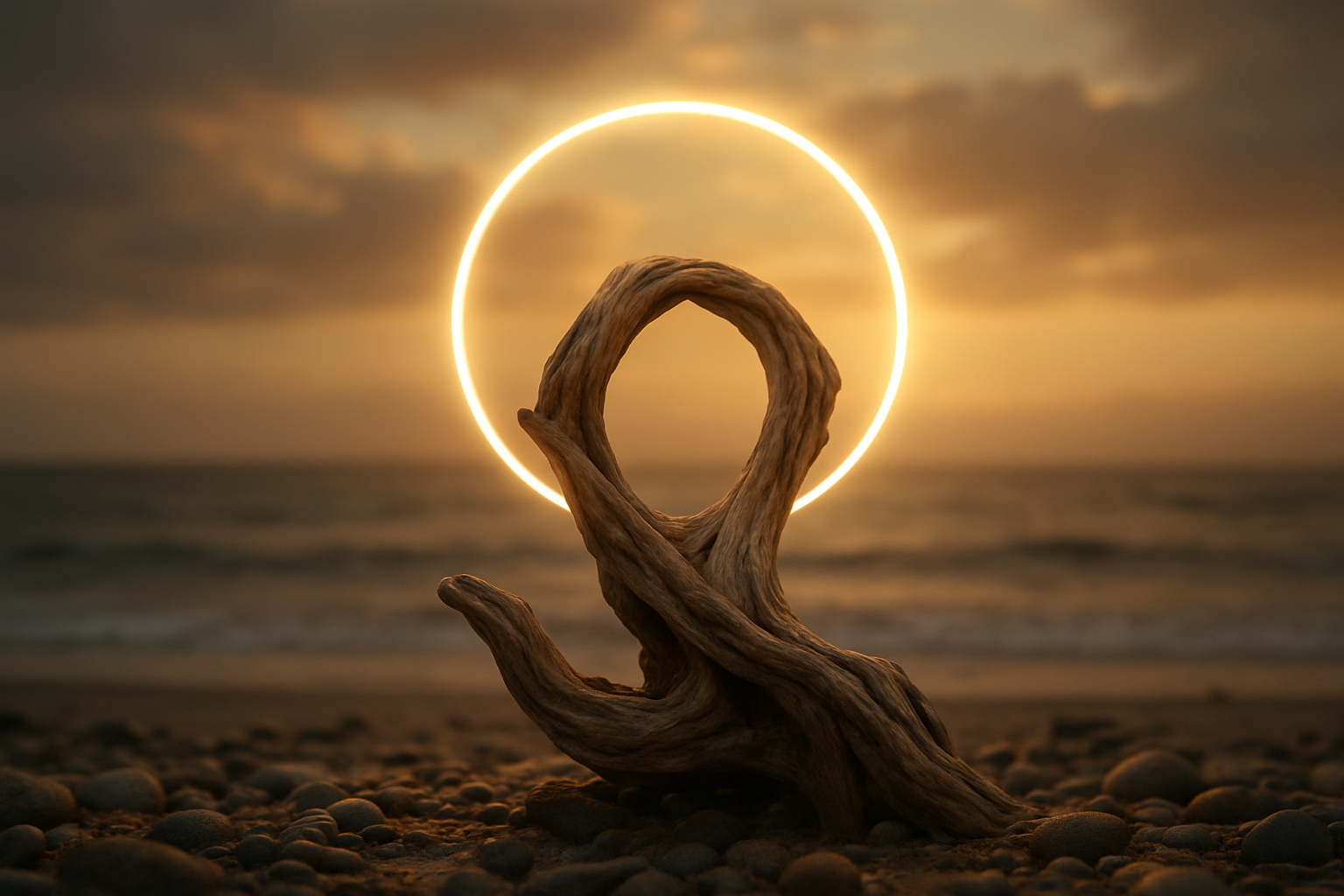
    At its heart, the Halo Driftwood myth embodies a metaphorical journey of light lost and rediscovered. The narrative unfolds with a mysterious piece of driftwood found by a young sailor named Finn. Cast upon the shores during a turbulent storm, this wood bore no semblance to the mundane debris that the sea regularly forsakes. It glowed with a soft, otherworldly luminescence—a halo against the backdrop of the dark sands.

    “The darkness that surrounds us cannot hurt us. It is the darkness in your own heart you should fear.” — Silas House

    Finn, entranced by the halo’s glow, took the driftwood back to his modest village. There, under the critical eyes of his kin, it became an artifact of fascination and trepidation. The light it emitted was said to be both a blessing and a curse. It provided light during the darkest storms and eerily illuminated paths through thick, impenetrable fogs. Yet, there was an undercurrent of unease. The light was never steady—it flickered unpredictably, as if reflecting the storm within the hearts of those it illuminated.

    The Loss and Redemption

    As with all myths, the story of Halo Driftwood takes a dramatic turn. One day, captivated by curiosity, a group of villagers ventured into the heart of the forest, carrying the enigmatic wood with them. There, under the thick canopy, a shadow too dark for the glow to penetrate stole the driftwood away. With its disappearance, the villagers found themselves plunged into a darkness more profound than they had known—a pervading gloom that thickened the air and choked the hope from their spirits.

    This desolation, however, propelled Finn on a quest to retrieve the light. He sought out the elders, who revealed that the light could only be reclaimed if one could illuminate the shadows of their own heart. Finn’s journey became one of introspection and revelation, a search not just for the lost artifact but for the light within that could defy the surrounding darkness.

    A Myth for the Modern Age

    The Halo Driftwood story resonates even today, serving as an allegory for the existential dance we all perform. It is a tale of loss and rediscovery, echoing the human proclivity for finding light amidst turmoil. It tells us that light, although lost, can be found again, but its discovery requires a courage born of vulnerability.

    Drawing parallels with the words of American philosopher William James, “The great use of life is to spend it for something that will outlast it,” the story highlights the triumphant emergence from darkness as a testament to human perseverance and spirituality.

    Conclusion: The Afterglow

    Many contemporary thinkers draw from this story to illuminate discussions on resilience and enlightenment. The Halo Driftwood, in its tangible and spiritual glow, reminds us of the pathways lit by the heart’s clarity. Much like the driftwood washed ashore by the ocean’s undying tides, our journeys cyclically test, define, and rebirth us.

    In personal reflection and scholarly discourse, this myth finds its presence in tomes ranging from psychological explorations to artistic expressions—a testament to its symbolic depth and relevance. The story leaves an afterglow, urging us each to look within, reclaim shadowed aspects of our natures, and shine with a light that’s enduring and all our own.

    For more insights into mythological narratives and their modern interpretations, explore additional resources and analyses available at The Stanford Encyclopedia of Philosophy.

  • The Solstice Feather – A Story of Light Returning

    The Solstice Feather – A Story of Light Returning

    Across many cultures, the winter solstice marks a pivotal point in the astronomical calendar. It heralds the return of light and warmth, as the days start to grow longer. In one remote village, there is a mystical story that celebrates this celestial event—a tale known as The Solstice Feather.

    The story begins in a time when night extended long into the hearts of winter, holding the world in an icy grip. The villagers, huddled under thick quilts, told tales of a magic feather, shimmering gold and full of light. Legend held that this feather belonged to the mighty Phoenix, a bird whose rebirth signified the return of hope and the sun’s power.

    “The Phoenix, with feathers of flame, soars through the skies to ignite the dawn of a new era.” — Ancient Origins

    Each year, as the winter solstice approached, the village elders would guide a sacred ritual. They believed that by honoring the Phoenix, they could help usher in the return of the sun. It was said that if a villager were pure of heart, the Phoenix would gift them a feather—a sign that light would return.

    • The chosen villager was tasked with climbing the highest peak, carrying only a simple lantern.
    • At the summit, the lantern’s flame would be used to light a beacon, calling the Phoenix.
    • If successful, the sky would blaze with dawn’s colors long before the sun officially rose.

    Legend recounts the tale of a young girl named Elara, who, amidst the longest and coldest night, was visited in her dreams by the Phoenix. Guided by an unseen force, she climbed the mountain. As she reached the top, a golden feather drifted from the heavens, resting gently in her palm.

    The villagers watched in awe as dawn broke, painting the world in warm hues. Elara’s feather had ignited a chain reaction of light, sealing the promise of brighter days. Her act of courage became a beacon, teaching future generations that even in the darkest of times, hope and enlightenment emerge.

    The tale of The Solstice Feather continues to inspire today, illustrating the human spirit’s resilience in facing the unknown. Every solstice, people gather in their own way, to celebrate life and welcome the returning light.

    “In the depth of winter, I finally learned that there was an invincible summer in me.” — Albert Camus

    The story of The Solstice Feather is not just about the triumph of day over night; it is a profound reminder of renewal, rebirth, and the cyclical nature of existence. As we turn our eyes to the sky each solstice, we can almost feel the warmth of Elara’s feather guiding us back to the light.

  • Fragments of a Ghost: Short Fiction

    Fragments of a Ghost: Short Fiction

    Short fiction, with its capacity to capture fleeting moments and ephemeral thoughts, often mimics the nature of human memory—fragments and echoes of a larger unseen whole. In this sense, a well-crafted short story resembles a ghost: both are haunting, ephemeral, and carry a weight that belies their brevity.

    “Short fiction captures the essence of a moment, a feeling, or a fleeting thought, much like a photograph does for a visual artist.” — Benjamin Percy

    The Art of Short Fiction

    Maurice Sendak, in a conversation on storytelling, once said that in short fiction, every word must count, as each serves as a building block for the entire narrative. The precision and economy of language in short stories create a concentrated effect, where the “ghost” of the protagonist’s experience lingers long after the story ends.

    • Characterization: Within these brief narratives, characters often appear fully formed, yet remain slightly out of reach, embodying traits that resonate universally.
    • Plot & Structure: Despite their brevity, short stories often employ intricate plots and structures that reveal the complexity beneath their simple surface.
    • Imagery and Symbolism: Imagery in short fiction is vivid and potent, using symbolism to hint at deeper meanings, much like the spectral whisperings of a ghost.

    The Ghostly Nature of Short Fiction

    Short stories often leave readers with an impression of something more, something lurking just outside the pages. This “ghost” quality infuses them with life and mystery. Renowned writer Alice Munro’s stories are a testament to this, as they explore complex emotional landscapes with sparse, yet impactful, prose.

    In her story “The Bear Came Over the Mountain”, Munro weaves a narrative that echoes with themes of memory, identity, and loss. Here, the ghostly fragments of past relationships haunt the characters, influencing their present actions and emotions. The spectral quality of these remnants creates a tension that is palpable, illustrating the guardian.co.uk those indelible moments that linger in our consciousness, much like a ghost lingers in a forgotten room.

    Conclusion

    The beauty of short fiction lies in its ability to evoke entire worlds through glimpses and whispers. These stories act as specters, capturing the fragments of a narrative that captivate and remain with us. As Raymond Carver once noted, “It’s possible, in a poem or short story, to write about commonplace things and objects using commonplace but precise language, and endow those things with immense, even startling power.” This is the ghostly magic of short fiction—its ability to resonate beyond the page, haunting us with its distilled potency.

  • Nightmare Anthology: Submissions from Readers

    Nightmare Anthology: Submissions from Readers

    You need to be logged in to view this content. Please . Not a Member? Join Us