Author: editor

  • Whispers in Icicles – Hearing Arcane Wisdom Through Frozen Drips

    Whispers in Icicles – Hearing Arcane Wisdom Through Frozen Drips

    In the stillness of winter, when nature breathes softly beneath a delicate blanket of snow, icicles hang like nature’s chandeliers, glinting with an ethereal light. These frozen drips, forming so silently yet so profoundly, hold more than just the elegance of nature’s abstract art. They seem to murmur secrets carried from ancient times, whisperings from a distant past sealed within their crystalline forms.

    But can we truly hear the arcane wisdom through these tendrils of ice? Or is this just an act of human imagination trying to find meaning in the humdrum of life’s mundane patterns?

    The Nature of Icicles

    To first understand the significance of icicles, we must appreciate how they are formed. When water drips down from surfaces in freezing temperatures, each droplet freezes upon contact with the cold, growing slowly from the edge of roofs, railings, or tree branches. What emerges is an icy stalactite that captivates the eye and, arguably, the soul.

    Robert Macfarlane, a noted scholar on the motifs of nature, writes, “There is something both transient and eternal about icicles; they are as fleeting as the drips that form them, yet their forms echo the grandeur of ancient ice.” His observations emphasize the paradoxical nature of icicles, which possess a fleeting beauty yet connect us to the permanence and perpetuity underlying natural processes.

    Icicles and Mythology

    The mythology of ice is rich and varied across cultures, with icicles playing a subtle yet significant role in the narratives of winter and the supernatural. In Norse mythology, Ymir, the primordial giant, was formed from the icy rime of Niflheim. The dripping veins of frost, resembling icicles, sustained his immense life force, signifying a direct connection between ice and life.

    “Amidst the eternal frost, life finds its root,” reads a passage from the Prose Edda, suggesting not only survival but the flourish of life even in the harshest of environments.

    Similarly, in Japanese mythology, icicles are regarded as the tears of Yuki-onna, the Snow Woman, symbolizing both beauty and danger. These stories shape our perception of icicles as conduits of memory and emotion, offering a timeless arcane wisdom waiting to be heard.

    The Symbolism of Sound

    They say the sound of an icicle melting can be both tranquil and arresting. Listen closely as it drips into eternity, and you might hear more than just water. Could these sounds be whispers of the universe, shared throughout the quietude of winter?

    • A study by the National Snow and Ice Data Center suggests that the formation of ice, while physically silent, represents a symphony of time and natural orchestra, resonating with frequencies that some believe reflect Earth’s ancient history.
    • Musical compositions like the works of Vivaldi’s Winter from ‘The Four Seasons’, draw inspiration from these natural phenomenons. The Chicago Baroque Ensemble describes how the rising and falling intensity of the music mimics the formation and gradual dissolution of icicles.

    A Scientific Wonder

    From a scientific perspective, icicles represent unique microenvironments, preserving air bubbles, temperature records, and atmospheric conditions of the past. Scientists study icicles and other ice forms to understand climate patterns, a branch of study critical under the impact of global warming. These frozen relics hold data encrypted in their structure, much like a forgotten scroll waiting to divulge its story.

    Researchers at the University of Toronto have developed methods to analyze the isotopic compositions within icicles, deriving data that sheds light on historical weather cycles and helping predict future climate phenomena.

    Icicles in Literature and Art

    Literature and art have long been enamored with icicles. Whether through descriptive language or visual interpretation, creators have sought to capture their transient beauty and mysterious allure.

    • Emily Dickinson often used the imagery of icicles to evoke the passage of time and the interplay of warmth and cold in her poetry:
    • “The treacherous rare gasps, / Of Winter, the Icicle keels, / Glossy and so glistens, / It charms even the Sun away.”

    • In visual arts, the works of Claude Monet explore the subtle play of light on icicles, capturing ephemeral beauty with his impressionist brushstroke. His lesser-known work, Ice Floes, is a testament to his fascination with water in its solid state.

    The Personal Connection

    Perhaps the deepest connection we find to icicles is a personal one, where every whisper and drip resonate with our own experiences. Standing beneath an icicle-laden roof, one cannot help but reflect upon nature’s cyclical rigor, the constancy of change, and the stories embedded in every frozen drop. It compels one to muse on questions of existence and continuity, forging an inner dialogue with the ancient wisdom they seem to embody.

    Conclusion

    The whispers in icicles are subtle, but for those willing to listen, they offer profound reflections on time, nature, and the universe. Whether seen through the eyes of a scientist analyzing ice formations or an artist harnessing their beauty, icicles bear silent witness to the world’s mysteries.

    As you find yourself amid the winter wilderness, pause by the edge of a slowly shrinking icicle. Listen. Within its drip may lie the voice of the past, speaking of the grandeur of nature and our place within its eternal cycle.

  • The Angel Who Lost a Mitten – A Playful Tale of Celestial Winter Mishaps

    The Angel Who Lost a Mitten – A Playful Tale of Celestial Winter Mishaps

    Winter has always held a magical allure with its snow-blanketed landscapes and crisp, frosty air, but it’s not just us mortals who revel in the wintry delights. In a delightful tale that dances between clouds and earth, we find a celestial being who discovers that even angels aren’t immune to the occasional mishap. Discover the charming story of The Angel Who Lost a Mitten, a whimsical narrative about innocence, warmth, and the unexpected adventures of an angelic being.

    An Angelic Stroll Amongst the Snowflakes

    High above the wintry wonderland, where the skies blend with dreams and starlight, angels flutter gracefully, enjoying the sparkling vistas of snow-kissed mountains and shimmering ice. One such angel, a playful spirit known as Ariel, loved descending with snowflakes to dance lightly across frozen lakes and frosty treetops.

    Ariel often visited the earthly realm, especially during the twilight hours when the whole world seemed to glisten. On one particular snowy evening, excitement filled the air as fresh snowflakes started their gentle descent, adding layers of serenity to the quiet landscape below.

    “The earth was wrapped in a blanket of white, and every surface sparkled with the purity only fresh snow can bring,” wrote Jack London.

    The Misplaced Mitten

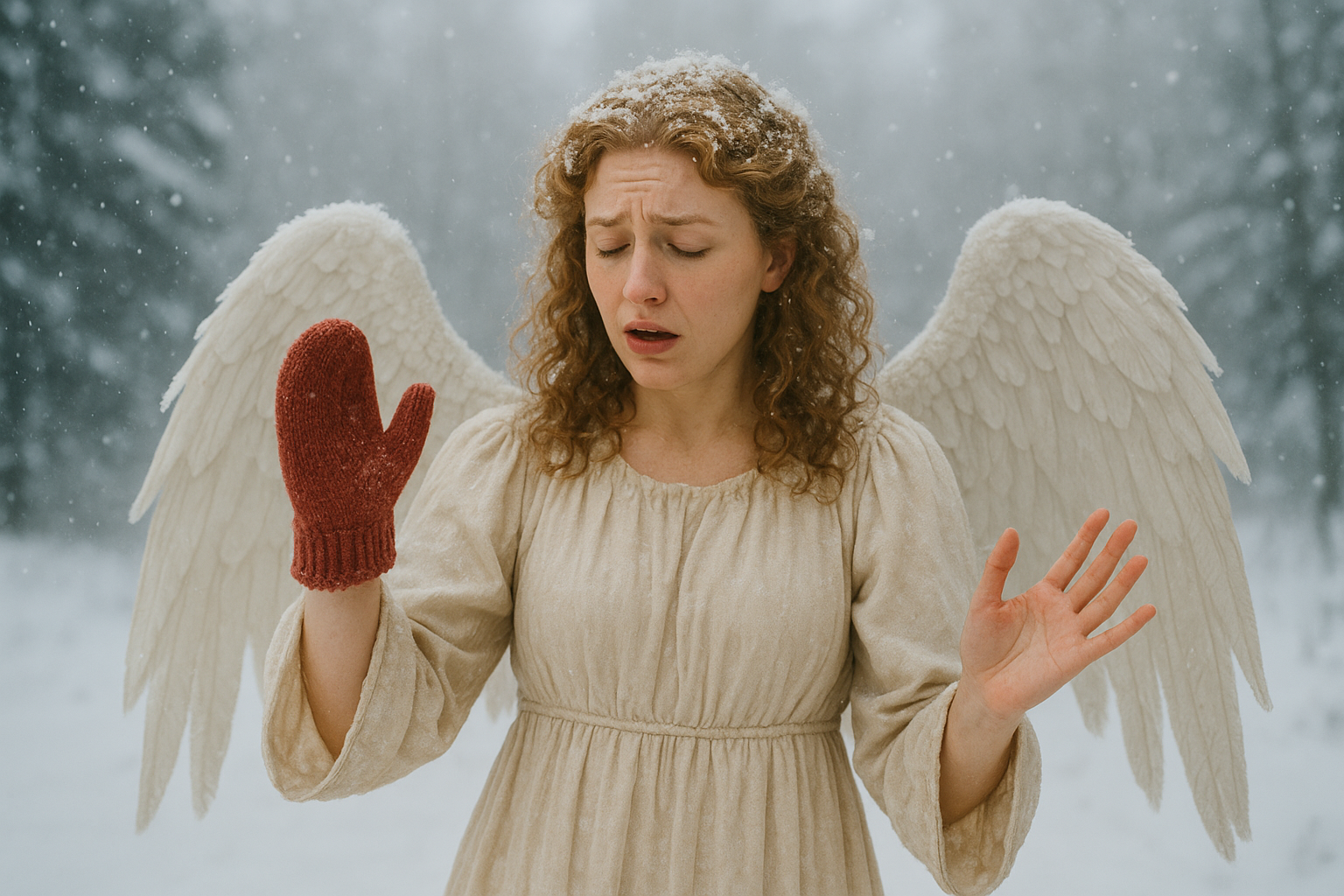
    As Ariel danced amid the whirling flakes, she wore a pair of hand-crafted mittens, celestial creations warm enough to comfort even the iciest of angel fingers—a delightful contrast against her glimmering wings. The custom was simple: never lose sight of one’s warmth. However, amidst twirls and pirouettes, Ariel’s mitten slipped silently from her right hand, disappearing into the snow below.

    Unaware of her loss, Ariel continued her frolic, until a sudden chill tickled her fingers. She paused, glancing down in surprise as her gloveless hand met the crisp air.

    An Earthly Search

    Realizing the need to retrieve her lost mitten, Ariel decided to search the snowy blanket below. With a soft landing near a slumbering village, she began her search. Snowflakes danced around her as if aiding her quest, each flitting in patterns over the white sea.

    One by one, curious woodland creatures emerged from the hiding, drawn toward the angel’s glowing aura. A curious rabbit, a wise squirrel, and even a majestic deer joined in her search.

    • Rabbit: Expert digger and snow explorer, the rabbit led the charge, nosing through the snowdrifts where the mitten might hide.
    • Squirrel: With his knack for buried treasures, the squirrel scampered up trees, scanning the horizon for any sign of Ariel’s lost warmth.
    • Deer: A graceful addition to their team, guided them with her gentle understanding of the forest’s whispers and secrets.

    A Heartfelt Discovery

    As the night wore on, Ariel’s hope flickered like a lantern through a dense fog. The snowy veil appeared endless. Just as the angel began to despair, a sudden cry erupted from the rabbit, who bounced joyfully near a drift by an ancient oak. There, partially buried and glistening with icy crystals, was the missing mitten!

    With laughter like chimes in a gentle breeze, Ariel thanked her newfound friends for their warmth and companionship. Her gratitude was infinite, as was her resolve never to neglect such heavenly (yet earthy) belongings again.

    The Celestial Lesson

    Ariel’s journey infused both the stars above and the beings below with a sense of joy and togetherness. She returned to the heavens, her hands warmly nestled, with an experience etched forever in her heart.

    “Winter is not a season, it’s a celebration,” as the saying goes, capturing the spirit of Ariel’s wintry escapade, filled with joy and lessons learned.

    Though often unseen, angels might just be sharing in our earthly delights and mishaps, bringing warmth to cold nights and light to our most human of adventures. The Angel Who Lost a Mitten reminds us that even in moments of loss, there is discovery, shared compassion, and warmth as timeless as the stars themselves.

  • Feathers in the Frost – Finding Gentle Guidance in Cold Seasons

    Feathers in the Frost – Finding Gentle Guidance in Cold Seasons

    As the days grow shorter and the chilly embrace of winter envelops the world, nature presents us with serene moments of reflection and gentle guidance. Among these moments, feathers against the backdrop of frost offer a poignant symbol of resilience and adaptation. Here, we explore the subtle lessons these natural phenomena impart during the coldest months.

    The Significance of Feathers in Winter

    Feathers represent a duality of strength and fragility. In winter, when they are found atop a blanket of frost, they evoke a sense of peace amidst adversity. Feathers insulate birds from the biting cold, much like the layers of support we seek during challenging times.

    “Birds’ feathers lose their utility after heavy use, just like a garment threadbare from wear,” explains the Audubon Society. “Yet, through molting and regrowth, feathers are renewed, signifying hope and transformation.”

    Lessons in Resilience

    • Adaptability: Just as birds adapt to harsh climates by optimizing their energy expenditure and seeking food in scarce conditions, we too must learn to adjust our strategies during difficult moments.
    • Renewal: The process of feathers shedding and regrowing teaches us about the cyclical nature of growth. Embracing change and allowing ourselves to evolve can lead to unexpected strength.
    • Community and Support: During winter, many bird species band together for warmth and protection. Similarly, nurturing connections can provide essential support during our own ‘winter’ seasons.

    Finding Guidance in Nature

    Taking inspiration from these natural symbols encourages us to step back, reflect, and gain perspective. A quiet walk in a frost-covered park, noticing the gentle fall of a feather, can become a meditative practice. Such moments allow us to tap into our inner resilience and find peace amid challenges.

    Moreover, by observing the seasonal cycles in nature, we become more attuned to our internal cycles, acknowledging that just as nature regroups and renews, so can we.

    A Call to Action

    As we embrace the cold seasons, let us remember that resilience, renewal, and support are feathers within our reach. Take time to walk, observe, and let the gentle guidance of nature inspire you to embrace change and find warmth within.

  • Angel Lights on the Horizon – Tiny Messages Hidden in Winter Sunsets

    Angel Lights on the Horizon – Tiny Messages Hidden in Winter Sunsets

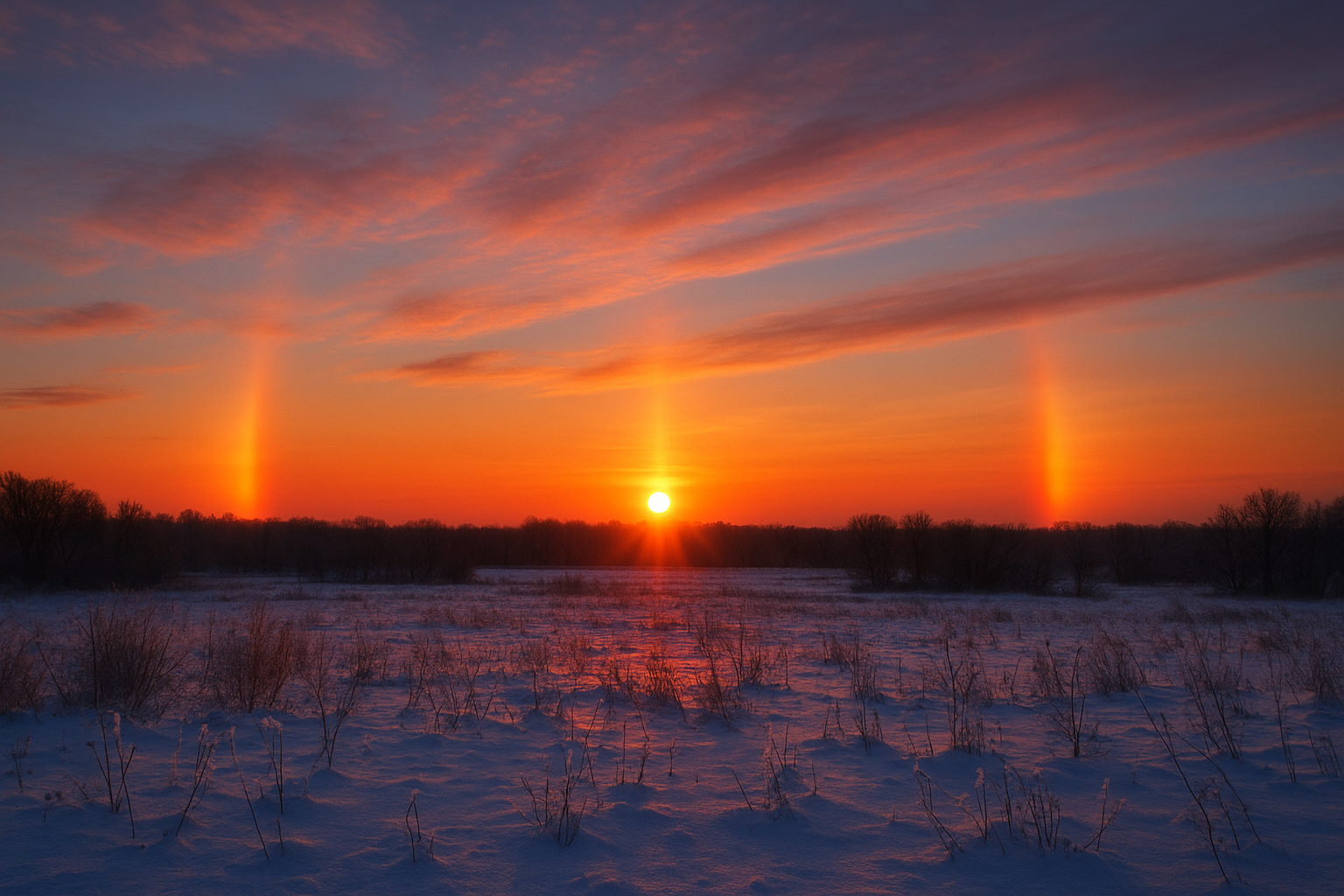
    As winter descends, cloaking the world in its cold embrace, there’s an ethereal beauty that emerges during this time of year—sunsets. Known for their breathtaking tapestries of color, winter sunsets offer more than mere visual splendor; they whisper secrets and bring tidings of peace and introspection. These “angel lights” on the horizon are nature’s way of communicating with our souls, casting tiny, hidden messages that resonate within.

    “Winter is the time for comfort, for good food and warmth, for the touch of a friendly hand and for a talk beside the fire: it is the time for home.” – Edith Sitwell

    As Sitwell rightly notes, winter is a season of reflection and refuge, where the world slows down to allow for inward thought. It is during these serene twilight moments that you can see the sun as it dips below the horizon, igniting the sky in hues of orange, purple, and pink, reflecting whispers of angelic wonder.

    The Science Behind the Splendor

    The unique palette of winter sunsets can be attributed to the Earth’s position relative to the sun, and the atmospheric conditions specific to this season:

    • Low Angle Sunlight: During winter, the sun is lower in the sky, extending the time sunlight travels through our atmosphere, enhancing the scattering effect that gives sunsets their brilliant colors.
    • Less Moisture: With reduced humidity, the air is clearer, allowing colors to appear sharper and more vivid compared to summer sunsets.
    • Air Particles: Dust and other particles are less prevalent, providing a pristine canvas for the artful display of illuminated clouds.

    But beyond the scientific explanations lies a more profound experience—a spiritual connection that many associate with the phenomena observed at this time of year.

    Spiritual Interpretations and Cultural Connections

    Across different cultures and traditions, winter sunsets have been revered as moments of spiritual insight:

    • Native American Beliefs: Many tribes honor the sunset as a sacred time to communicate with ancestors and receive guidance and wisdom.
    • Eastern Philosophies: In Buddhism and Taoism, sunsets are celebrated as reminders of nature’s impermanence and the cycles of life, encouraging mindfulness and presence.
    • Christian Traditions: Sometimes referred to as “angel lights,” believers interpret the radiant displays as glimpses of heavenly beauty and signs of divine presence.

    In all these interpretations, there’s a common thread—a chance to pause and appreciate the moment, to feel connected to something greater than ourselves.

    Finding Meaning in the Glow

    Many have found solace and inspiration in these fleeting winter illuminations. Famous poet John Keats wrote fondly of nature’s serene beauty and its impact on the human spirit. He expressed, “A thing of beauty is a joy forever: Its loveliness increases; it will never pass into nothingness” [Source]. Through Keats’s poetic lens, we are reminded of the eternal quality of beauty found in nature.

    “These angelic hues inspire artists and dreamers alike, casting a spell of peace and possibilities.” – Anonymous Observer

    For modern observers, the spectacle of winter sunsets offers a break from the rush and noise of daily life. It invites contemplation, a chance to lose oneself in the majesty of the moment, and perhaps catch a whispered message meant only for the heart to hear.

    Conclusion: Embrace the Horizon

    As the days grow shorter and colder, don’t shy away from these golden opportunities to experience the wonders of a winter sunset. Step outside, breathe in the crisp air, and let the brilliant colors and untold stories gently unravel before your eyes.

    Allow each sunset to be a moment of reflection and gratitude, a reminder of life’s intricate beauty. Whether you wish to find temporary escape, inspiration, or solace, these angel lights on the horizon offer a small but profound gift—a chance to reconnect, to see the world anew with each descending sun.

    Let the sunset be your guiding signal, as the ethereal glow marks not just the end of a day, but the promise of thoughts, dreams, and endless horizons.

  • The Snowfall Choir – How Angels Sing When Winter First Arrives

    The Snowfall Choir – How Angels Sing When Winter First Arrives

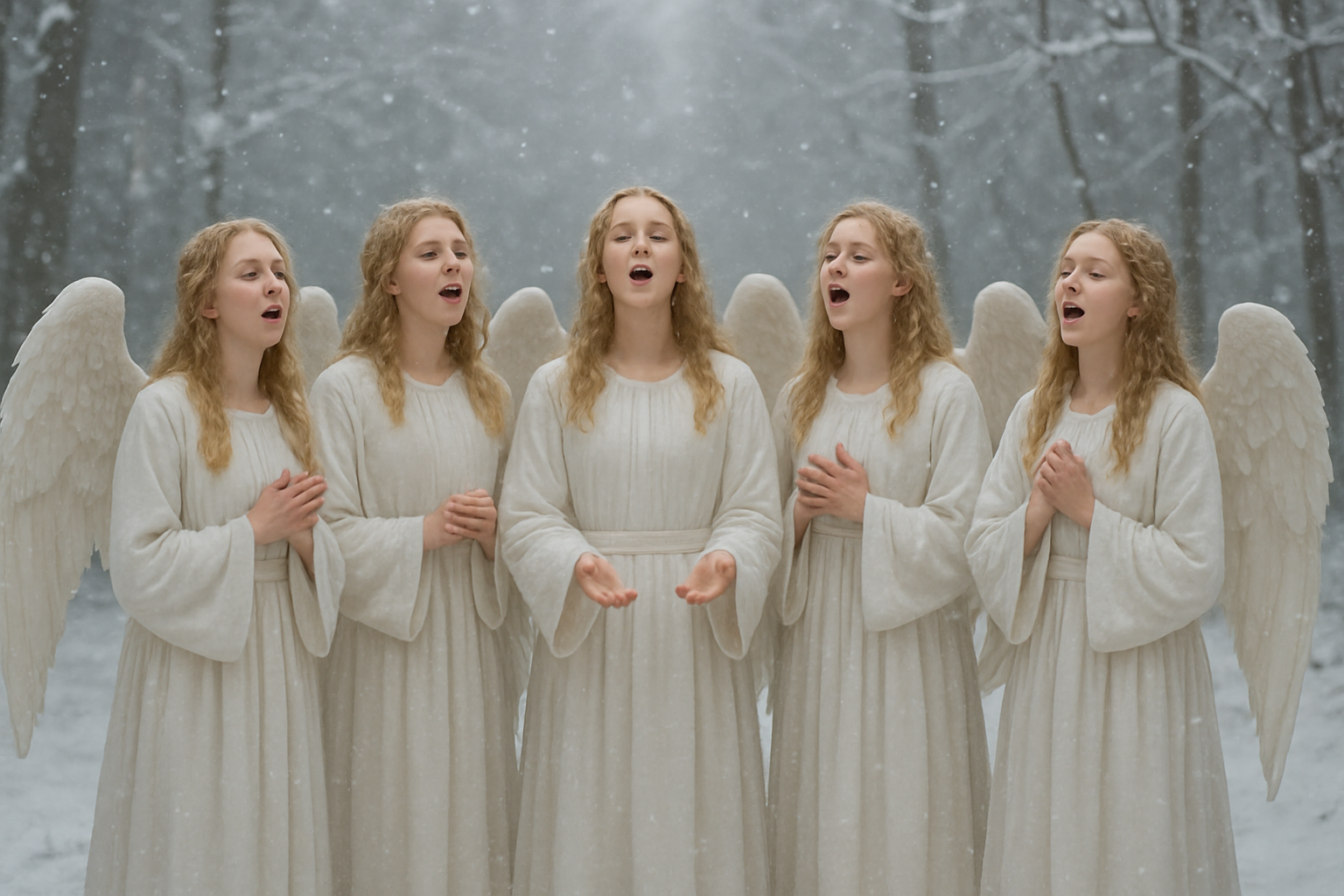
    As the days grow shorter and the air turns crisp, the world readies itself for winter’s arrival, a season that brings with it a unique symphony often described as the “Snowfall Choir.” This ethereal concert begins when the first snowflakes descend, and some like to believe that angels sing to usher in the winter. How does this concept blend the natural beauty of wintry weather with the divine?

    “To appreciate the beauty of a snowflake, it is necessary to stand out in the cold.” — Aristotle

    The notion of angels singing during snowfall is not steeped in scientific fact but rather embraced in folklore and the poetic soul of humanity. Although no sound accompanies the actual snowfall, many find a peaceful, almost musical tranquility in the event. According to Psychology Today, the silence that blankets the world during snowfall is due to the soft, porous quality of snow, which absorbs sound: source.

    The Allegorical Song

    The idea of angels singing as snow falls is metaphorical at its core. Concepts of angels are symbolic and found across various cultures, depicted as messengers of peace and the divine. Winter often serves as a time for reflection and stillness, akin to a meditative state where one might feel closer to the spiritual or the divine.

    • Calm and Quiet: Snowfall brings a distinct hush to the world, immediately evoking serenity, similar to listening to a sacred choir.
    • Visual Symphony: The intricate patterns of ice crystals form a stunning visual composition, often called “nature’s orchestra.”
    • Reflection of Light: Sunlight dancing on fresh snow resembles heavenly luminance, intensifying the imagery of angelic presence.

    A Spiritual Reawakening

    Each year, the first snowfall marks not just the beginning of a change in weather but an opportunity for inner transformation. The celestial imagery of angels singing is a reminder to embrace the profound and joyful moments that winter can bring. As Swiss author Hermann Hesse puts it:

    “I watch the snow falling — white caresses from the skies, like blessings, never clashing, singing with a quiet love.” — Hermann Hesse

    Whether inspired by nature or imagination, the “Snowfall Choir” invites all to pause and listen to the perfection of silence, encouraging an appreciation of life’s seasonal rhythms and the quiet wonders of the universe.

  • Resonance Beyond Silence

    Resonance Beyond Silence

    The concept of resonance often evokes imagery of sound waves and musical harmony. However, resonance extends beyond mere acoustics and penetrates the philosophical realms of existence, identity, and consciousness. The idea that there is a resonance beyond silence brings forth intriguing questions: what lies in the absence of sound, and how does it permeate our understanding of reality?

    Understanding Resonance

    Before delving into the metaphysics of silence, it’s essential to grasp the fundamental nature of resonance. In physics, resonance occurs when an object vibrates at maximum amplitude due to external energy. This phenomenon manifests not just in objects but in ideas, emotions, and experiences. As the philosopher Friedrich Nietzsche stated, “Without music, life would be a mistake.” This quote suggests a deeper connection between the perceived vibrations of music and their unseen impact on life.

    The Paradox of Silence

    Silence, often perceived as the absence of sound, is rich with philosophical implications. John Cage, a 20th-century composer, challenged the conventional notion of silence with his composition 4’33”, where musicians sit in silence for four minutes and thirty-three seconds. Cage’s work underscores that silence is not an emptiness but a space filled with ambient sounds that often go unnoticed.

    “What they thought was silence, because they didn’t know how to listen, was full of accidental sounds.” — John Cage

    Cage’s radical approach to music prompts us to contemplate the resonance found in silence, suggesting that even in quietude, there exists an abundance of vibrational energy waiting to be discerned.

    Resonance in Philosophy

    Philosophers have long explored the dynamic interplay between silence and sound, each serving as metaphors for knowledge, truth, and understanding. In Eastern philosophies, silence often symbolizes a deeper, non-verbal wisdom. In Zen Buddhism, for example, zazen or seated meditation is a practice that embraces silence to reach an enlightened state.

    Similarly, in Western philosophy, resonance plays a critical role. Heidegger, for example, examined the idea of silence in his existential ontologies, interpreting it as a metaphor for hiddenness and the unsaid in human existence. For Heidegger, silence is not a mere void but a foundational aspect of Dasein, or “being-there.”

    “… The true essence of language as saying that points the way is, in its very nature, aimed at silence.” — Martin Heidegger

    From this perspective, silence becomes a profound element of our existence, resonating with unspoken truths and transformative potential.

    Resonance in Identity and Culture

    Identity is another realm where resonance extends beyond silence. In our interconnected world, cultures, traditions, and individual identities resonate with and echo through one another, often in ways that are not immediately audible. This cultural symphony can be seen in the way values and beliefs are shared, challenged, and transformed across societies.

    Resonance plays a critical role in revealing the complexities of identity. The stories and histories we carry within us resonate even when not spoken aloud. As sociologist Stuart Hall articulates, identity is not a fixed essence but “a ‘production,’ which is never complete, always in process, and always constituted within, not outside, representation.” Silence becomes not the absence but the space in which these identities evolve and find articulation.

    Technological Resonance

    In the 21st century, technology has introduced a new layer to our understanding of resonance and silence. The digital age presents us with a paradox of noise and silence. We are constantly bombarded with information, yet beneath this din lies the quiet power of data, algorithms, and connectivity.

    • Social Media: Platforms amplify voices, creating an endless echo chamber. However, amidst the noise, there are silent influencers shaping our perceptions, choices, and behaviours.
    • Artificial Intelligence: These systems process vast amounts of silent data, leading to insights and actions that resonate through societal structures in ways both seen and unseen.
    • Virtual Reality: Creating immersive environments where the silence of the real world is replaced by fabricated resonance, challenging our perceptions of presence and absence.

    Technology, in this sense, is not just a tool but a space where silence and resonance constantly intersect, creating new modes of interaction and understanding.

    Concluding Thoughts: Embracing the Unheard

    Resonance beyond silence invites a reimagining of our engagement with the world. It’s about listening to the unspoken, perceiving the unseen, and understanding the intangible. The absence of sound is not a lack but a gateway to deeper awareness and connection. As we continue to navigate our complex realities, embracing this resonance may lead to profound insights about ourselves and the world around us, transforming silence from a void into a plenitude of potential.

    The philosophical exploration of resonance and silence thus challenges us to reconsider our interactions with the world, urging us to find meaning and harmony in both the audible and the imperceptible. In doing so, we open ourselves to a fuller, more resonant experience of life.

  • The Arcane Void – Mystery Encoded in Emptiness

    The Arcane Void – Mystery Encoded in Emptiness

    The Arcane Void: Mystery Encoded in Emptiness

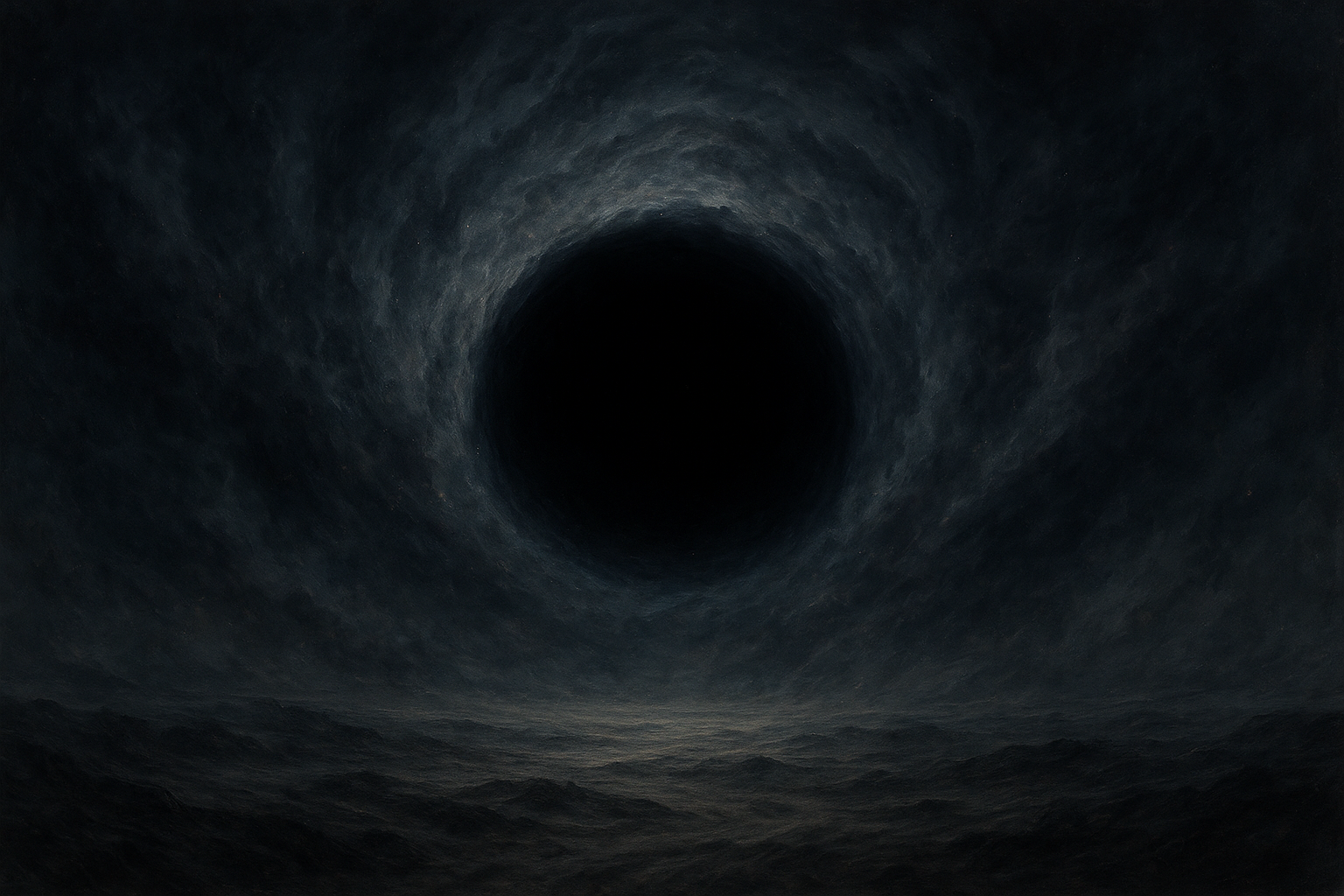
    The concept of the void, an enigmatic emptiness that resonates across various disciplines, stretches beyond mere absence. It embodies profound philosophies, stirring emotions and inciting a relentless quest for understanding. What makes the void so captivating is its ubiquity and its haunting presence that continues to challenge our perceptions of reality. In delving into the arcane void, we explore a space where science, art, psychology, and philosophy intersect, creating a tapestry rich with mysteries encoded in emptiness.

    The Philosophical Perspective

    The void as a philosophical concept dates back to ancient Greek thought, particularly with the pre-Socratic philosopher Parmenides, who posited that emptiness, or “nothingness,” was an impossibility. In direct contrast, the atomists, including Democritus, perceived the void as essential for motion and existence. This dichotomy set the stage for ongoing debates.

    “Nothingness—or the void—engages philosophers’ minds since it raises questions about existence itself, challenging assumptions about space, time, and the nature of reality.”

    The existentialists, such as Jean-Paul Sartre, later explored the void in human emotions and psychology, suggesting that humans often face an inherent void at the core of their existence. This void can evoke anxiety, compelling individuals to seek meaning or face an unsettling freedom. Sartre is famously quoted as stating, “Existence precedes essence,” interpreting the void as a backdrop against which humans define themselves.

    The Scientific Enigma

    In the realm of science, the void takes on a tangible form in terms of cosmic spaces and quantum physics. The universe’s vastness, marked by dark voids between celestial bodies, is both a literal and figurative expanse of emptiness. In cosmology, these voids challenge our understanding of the universe’s structure.

    Astronomically speaking, voids are large expanses between galaxy filaments, with few or no galaxies. Dr. J. Richard Gott, a professor of astrophysical sciences, remarked in a Space.com article, “Our current understanding of the universe’s architecture emerges largely from studying these cosmic voids—they are as informative as the galaxies themselves.”

    Quantum Mechanics and the Void

    In quantum theory, the emptiness of the void is deceptive. According to the principles of quantum mechanics, what appears as empty space is teeming with transient quantum particles that continuously flicker in and out of existence. The vacuum, therefore, is a seething medium of potentials—a background that challenges the very definition of emptiness.

    “These virtual particles lend the vacuum a curious kind of presence, capable of affecting the real world in observable, albeit extremely subtle, ways.”

    The Artistic Interpretation

    The void has served as a potent source of inspiration for artists throughout history, often used to reflect existential themes and the human condition. Artists employ the concept to evoke emotion, leaving spaces deliberately unfilled to generate tension and evoke contemplation.

    Yves Klein, the French artist known for his monochrome paintings, famously explored the void through his work. In his “Leap into the Void” photograph, he symbolized a transcendence into nothingness—engaging viewers in a conversation about the nature of existence and the role of the unknown in art.

    “The void not only frames the known but becomes part of the narrative, provoking the viewer to engage with the absence and its implications.”

    Psychological Dimensions

    On the psychological front, the void often symbolizes an emotional state of emptiness or alienation. It is akin to feelings of hollow despair or the lack of meaning that individuals may experience. Viktor Frankl, a psychologist and Holocaust survivor, identifies this sense of a void or “existential vacuum” in his work “Man’s Search for Meaning.”

    Frankl observed:

    “This emptiness manifests in boredom and apathy, which he refers to as the ‘existential vacuum,’ a reflection of the loss of meaning in modern life.”

    In modern psychology, the void is often explored within existential therapies, which focus on helping individuals find meaning amidst the emptiness. This approach aligns with humanistic theories that emphasize personal growth and self-actualization.

    Concluding Thoughts

    The arcane void persists as a canvas upon which humanity projects its fears, inquiries, and creative impulses. From ancient philosophy to contemporary science, art, and psychology, the void remains a space that is both forbidding and inviting, drawing us into its depths. In attempting to decode the mysteries held within the void, we embark on an endless journey of exploration, discovery, and, perhaps, occasional comprehension.

    The void, it seems, might always remain partly elusive, inviting us to engage with its enigma, prompting us to define our own existence against its shadowy backdrop. As we continue to explore, both physically and intellectually, we may seek not to fill the void, but to understand and embrace the profound truths it harbors.

  • Petit Mort Labyrinth – Death in Mystical Journeys

    Petit Mort Labyrinth – Death in Mystical Journeys

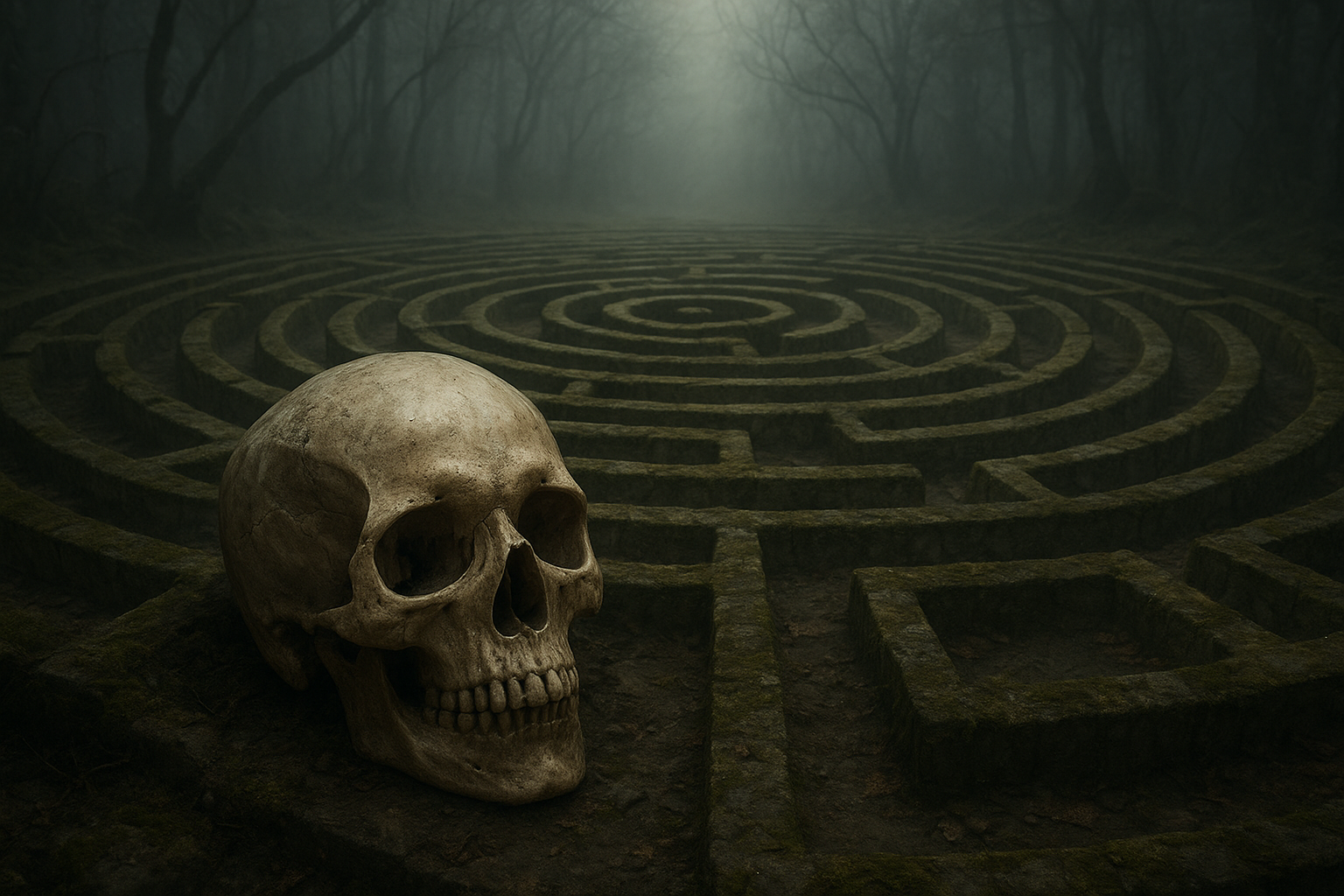
    Across the vast landscape of fantasy fiction lies an enigmatic element that captivates both characters and readers alike: the concept of the Petit Mort Labyrinth. This metaphorical space, where death intertwines with mystical journeys, offers a profound exploration of mortality, transformation, and ultimately, rebirth.

    The phrase “petit mort”, originally French for “little death”, is often used to describe the brief loss or weakening of consciousness. In the context of fantasy and mystical tales, it signifies those pivotal moments when characters venture through a symbolic labyrinth of trials, facing the shadow of death to emerge renewed.

    “The way to immortality is to first live a life worth remembering,” noted Bruce Lee, capturing the essence of why characters in fantasy often face such perilous challenges.

    The Labyrinth as a Metaphor

    Throughout literature, labyrinths have become symbols of the complex journey of life, enacted within a structured, yet deceptively convoluted path. In myth and myth-inspired fantasy, as seen in tales from Greek mythology to Tolkien’s works, labyrinths embody the perilous path one must traverse to gain enlightenment or fulfillment.

    • Initiation and Trials: Characters often enter the labyrinth as a rite of passage, confronting both psychological and physical obstacles that test their resolve and virtues.
    • Confrontation with Death: Encounters within the labyrinth frequently illustrate the thin veil between life and death, where each choice may symbolize a descent into mortality or the triumph over it.
    • Transformation and Rebirth: Emerging from the labyrinth, characters are often profoundly changed, symbolizing death to their old selves and rebirth with new insights or strengths.

    Mystical Journeys in Modern Fantasy

    In modern fantasy literature, authors like J.R.R. Tolkien and J.K. Rowling have adeptly used the thematic concept of the labyrinth to represent the intricate dance with death. In The Lord of the Rings, characters face mortal danger within the Mines of Moria, confronting depths both literal and existential. Similarly, in Harry Potter and the Goblet of Fire, the Triwizard Tournament’s maze challenges Harry to confront the looming specter of death.

    Ultimately, the Petit Mort Labyrinth within these narratives reminds us of the profoundly transformative power of embracing the unknown. As characters navigate this mystical space, they reflect our own quests for meaning amidst the shadows of mortality. In both fantasy and reality, such journeys illuminate the resilience of the human spirit.

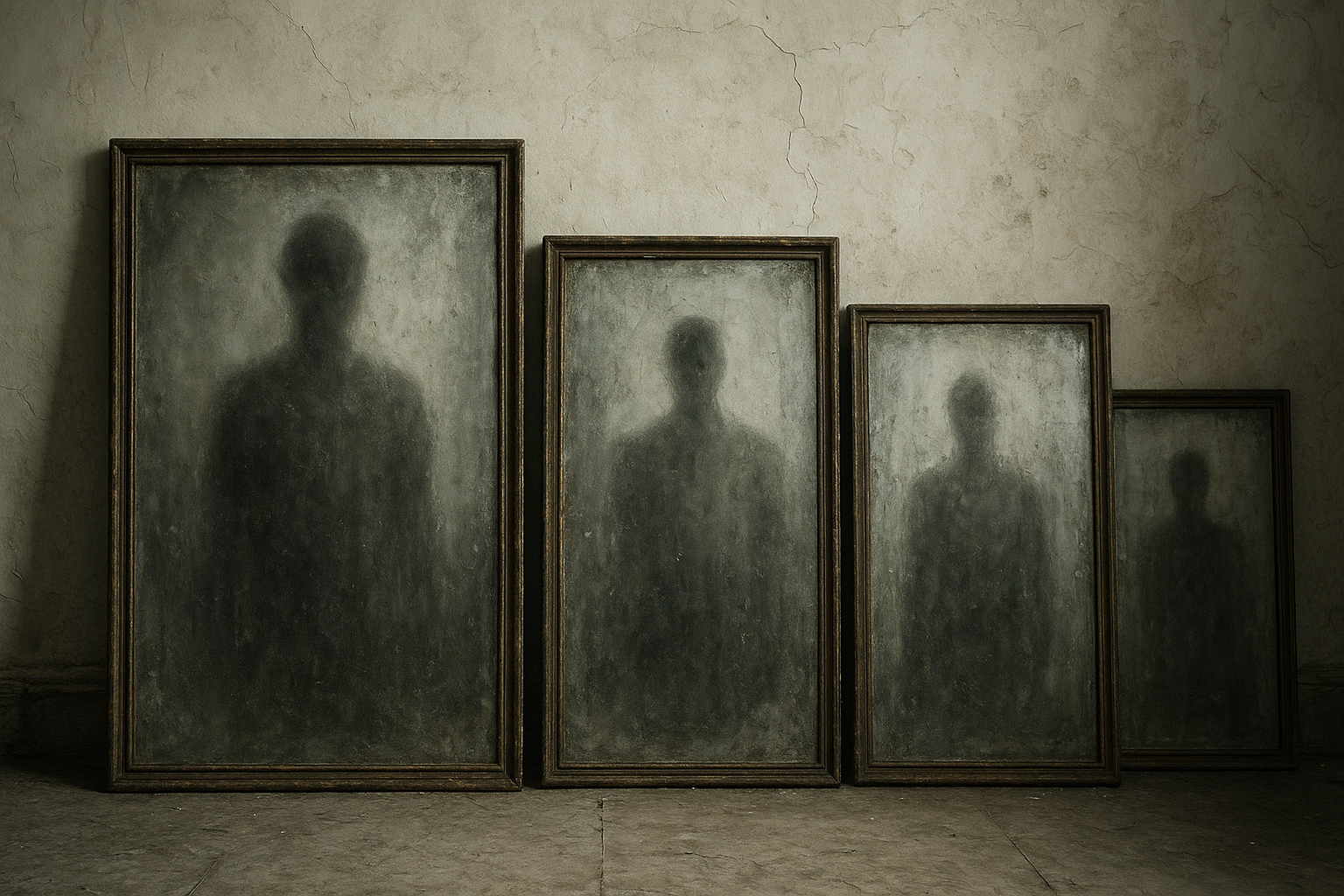
  • Depersonalized Mirrors – Archetypes in Dissolution

    Depersonalized Mirrors – Archetypes in Dissolution

    Depersonalized Mirrors: Archetypes in Dissolution

    Mirrors have long been symbols of reflection—both literally and metaphorically. They serve as conduits to self-awareness, holders of truth, and sometimes agents of deception. As we delve into the notion of depersonalized mirrors, the dissolution of archetypes emerges as a central theme. This article explores how mirror symbolism intersects with shifting paradigms in identity and archetypal theory.

    The Symbolic Nature of Mirrors

    For centuries, mirrors have been endowed with symbolic meaning across different cultures and philosophies. They are often seen as portals to self-exploration and metaphysical understanding. In literature, mirrors act as reflective tools, revealing the innermost essence of characters. As Lewis Carroll famously wrote in Alice’s Adventures in Wonderland, mirrors allow us to see “who in the world am I?” (Project Gutenberg).

    Archetypes: A Brief Overview

    Archetypes are innate, universal symbols and themes that reappear across various narratives and cultural expressions. Carl Jung, the Swiss psychiatrist and psychoanalyst, introduced the concept of archetypes as part of his theory of the collective unconscious. These symbols, such as The Hero, The Shadow, and The Anima, are thought to reside within each individual, shaping behaviors and beliefs.

    “The mirror would reflect something more than just a face; it would reflect all the accumulated, supportive symbolisms rooted in archetypes.” – Carl Jung

    From Archetypal Symbols to Dissolution

    In our contemporary world, the traditional archetypes are undergoing a process of dissolution, much like the depersonalized mirrors that reflect vague and shifting identities. The postmodern critique challenges these age-old symbols, questioning their universal applicability and often highlighting their limitations in accounting for diverse human experiences.

    • The Depersonalized Mirror: As a metaphor, it represents the fragmented self, a reflection of modern existential crises where identity is continuously redefined.
    • The Dissolution of The Hero: No longer does the monomyth of the hero’s journey resonate with all individuals, as varied narratives arise challenging the traditional heroic virtues.
    • The Evolving Shadow: Jung’s Shadow, once a stable repository of the unconscious, now shifts and transforms with societal changes, absorbing deviations and contradictions.

    These changes prompt us to ask whether archetypes still hold relevance in personal development and cultural narratives.

    Identity in the Age of Individualism

    Today’s focus on individualism poses further challenges to classical archetypal frameworks. People are more inclined to carve personal identities, unique narratives diverging from collective myths. The digital age further complicates this with social media acting as a metaphorical mirror, offering reflections that are often distorted or idealized.

    As Sherry Turkle, a professor at MIT, argues in her book Alone Together:

    “The social networks themselves become a mirror, reflecting idealized self-images rather than authentic ones.” – Sherry Turkle

    Recalibrating the Mirror: Towards New Archetypes

    The evolution of identity demands new symbols and archetypes that are more inclusive and adaptable. Emerging archetypes take into account complexities beyond traditional binaries, acknowledging fluidity in gender, culture, and belief systems. This recalibration reflects a growing need for symbols that resonate with the contemporary human experience.

    Some scholars propose that rather than abandoning archetypes altogether, we should transform them to accommodate diverse narratives. By doing so, literature and media can offer mirrors that reflect a more nuanced reality, echoing both personal and collective transformations.

    Conclusion

    The depersonalized mirror and the dissolution of archetypes represent a dual narrative of change. While our understanding of identity evolves, mirrors continue to symbolize the quest for self-awareness, albeit now through multifaceted and fluid reflections. As mirrors of the modern psyche, they challenge us to rethink our narratives and embrace new crystalline patterns of meaning.

    In a world where the symbolic is in constant flux, the task lies in finding, or perhaps co-creating, archetypes that speak to the kaleidoscope of human experiences, serving as both guides and reflections for the future.

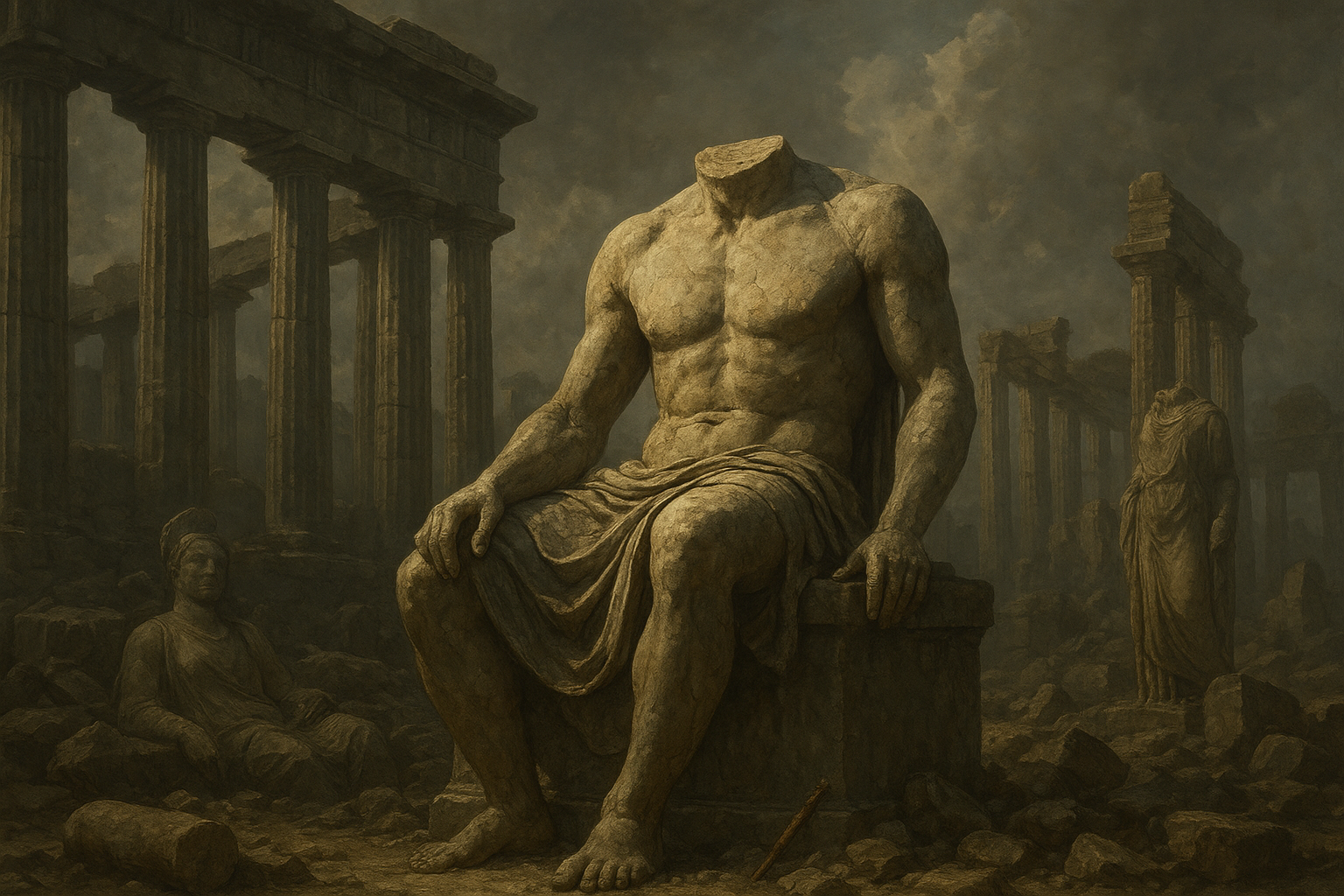
  • The Hollow Pantheon Returns – Myth and Vanishing Gods

    The Hollow Pantheon Returns – Myth and Vanishing Gods

    Mythology has long held a mirror to human societies, reflecting cultural values and existential questions while explaining the mysteries of nature and the universe. Yet, as time progresses, the once held esteemed gods of ancient pantheons have faded from the collective consciousness. In an era increasingly dominated by science and empirical evidence, the allure of ancient myths begs the question: what becomes of these myths and their gods?

    The Rise and Influence of Mythological Pantheons

    Throughout history, civilizations have crafted elaborate mythologies to comprehend the enigmas of existence. From the complex deities of the ancient Greeks to the divine dynasties of Egypt and the Norse gods standing proud in Scandinavia, myth served as a bridge between humanity and the unknown.

    • Greek Pantheon: The Olympian gods – led by Zeus and including figures like Athena, Apollo, and Hera – were central to Greek culture and religion. Their narratives, chronicled by poets such as Homer and Hesiod, offered explanations for natural phenomena and social order.
    • Egyptian Deities: In Egypt, gods like Ra, the sun god, and Osiris, god of the afterlife, were integral to daily life and afterlife beliefs, with elaborate rituals supporting their worship.
    • Norse Gods: With Odin, Thor, and Freya, the Norse pantheon explored themes of war, exploration, and fate, encapsulating the harsh and dynamic life of Northern Europe.

    These gods were more than characters in ancient tales; they inspired art, governance, and moral codes, deeply interwoven into the fabric of their societies.

    The Vanishing of the Gods in a Modern Age

    With the spread of monotheism and scientific rationalism, polytheistic religions waned. The expansion of Christianity throughout Europe played a significant role in diminishing the old gods. Scholar Thomas P. Finn notes that many Norse traditions were absorbed into Christian practices, leading to a gradual eclipse of these deities.

    “The gods of yesterday pass into oblivion, and their stories become articles for historians and literary enthusiasts rather than living, breathing parts of daily life.” — Thomas P. Finn

    Moreover, the Enlightenment further propelled society away from mythological explanations. A focus on observation and empirical evidence slowly rendered mythical explanations obsolete. The gods retreated into the artworks, myths, and archaeological remnants they once animated.

    The Revival and Adaptation of Ancient Myths

    Interestingly, while these gods no longer preside over human lives, they are far from forgotten. Their myths have witnessed a resurgence, being repurposed and recontextualized for a contemporary audience. This revival largely owes itself to their adaptability and the universal themes they address.

    • Literature: Writers like Neil Gaiman have reincarnated these ancient tales in works such as “American Gods”, examining the role and evolution of myth in a secular world.
    • Film and Television: Movies such as the “Thor” series from Marvel Studios have reintroduced Norse mythology to a global audience, wrapping age-old narratives in modern storytelling.
    • Video Games: Titles like “God of War” adapt these myths into visceral experiences, attracting players to explore mythological themes interactively.

    These adaptations keep mythology alive, asserting its relevance by exploring timeless human concerns such as identity, power, and mortality.

    Myth as a Source of Cultural Identity and Moral Reflection

    Mythology serves as a repository of collective human experience and wisdom. The tales often encapsulate moral and ethical dilemmas, offering reflections pertinent even today. According to Joseph Campbell in “The Hero with a Thousand Faces”, myths are “clues to the spiritual potentialities of the human life” (Joseph Campbell, 1949).

    By examining mythological stories, modern societies can glean insights into past mentalities and values, allowing for introspection on contemporary moral frameworks. They act as a cultural compass, helping societies navigate the complexities of modern life by drawing upon age-old narratives understood and revered by ancestors.

    Conclusion: The Pantheon’s Timeless Resonance

    Though science and rationalism have usurped myth’s explanatory power, the allure of myths persists. They serve as vessels for cultural identity, artistic inspiration, and philosophical pondering. In the modern consciousness, gods may no longer hold dominion or evoke literal worship, but their symbolic potency remains undiminished. They fill a niche that logically defies extinction, resonating through time as a testament to humanity’s unending quest for understanding and meaning.

    Ultimately, the return of a hollow pantheon speaks not of resurrection but evolution. It highlights humanity’s ability to creatively reinterpret and contemporize the past, ensuring that despite their physical absence, the gods never truly vanish. They are simply reborn, reimagined by each generation, thus maintaining their significance through the ages.