Author: editor

  • Echoes of Forgotten Gods – Archetypes Reawakened

    Echoes of Forgotten Gods – Archetypes Reawakened

    For centuries, the concept of universal archetypes has captivated the minds of psychologists, mythologists, and philosophers alike. These archetypes, deeply embedded in the collective unconscious, resurface time and again, revealing the profound resonance they hold within human culture and psyche. As we navigate modernity, could the echoes of forgotten gods be a manifestation of these timeless patterns?

    The Nature of Archetypes

    Archetypes were first prominently introduced by Carl Jung, the Swiss psychiatrist and psychoanalyst who worked closely with Sigmund Freud. Jung defined archetypes as “universal, archaic symbols and images that derive from the collective unconscious”—structures shared by people all over the world (The Carl Jung Website).

    • The Hero: This archetype embarks on an adventurous quest, exemplifying courage and resilience.
    • The Mother: A nurturing, life-giving figure often associated with creation and growth.
    • The Trickster: Known for their cleverness and deceit, often serving as a catalyst for change.

    These archetypes play a foundational role in shaping narratives, whether they’re ancient myths or contemporary stories. They forge a connection between the human experience and the spiritual, transcendent aspects of life.

    Modern Reawakenings

    In today’s world, the echoes of these archetypes can be perceived in numerous ways. With the rise of superhero movies and fantastical storytelling, the Hero archetype is undeniably thriving. Characters such as Marvel’s Thor, who draws directly from Norse mythology, embody the qualities of both ancient gods and modern heroes.

    “Superheroes are modern mythology,” says Dr. Will Brooker, a professor of film and cultural studies at Kingston University, highlighting the enduring appeal and adaptability of these archetypal figures. (The Guardian)

    Psychological and Cultural Impact

    The resurgence of these archetypes in modern culture points to a psychological yearning for connection to deeper truths and shared human experiences. As Joseph Campbell, an American professor of literature known for his work in comparative mythology and religion, once remarked, “The great thing about myths is that they point beyond themselves to deeper truths.”

    By engaging with these timeless stories and characters, individuals find meaning and identity in an increasingly complex world. They serve as reminders of our intrinsic similarities, uniting us across cultures and ages.

    Thus, the echoes of forgotten gods, represented through potent archetypes, continue to wield their power, reshaping narratives and illuminating the labyrinthine pathways of the human psyche, urging us to remember and reawaken to the timeless truths they carry.
  • The Star Serpents – Mythology Beyond the Sky

    The Star Serpents – Mythology Beyond the Sky

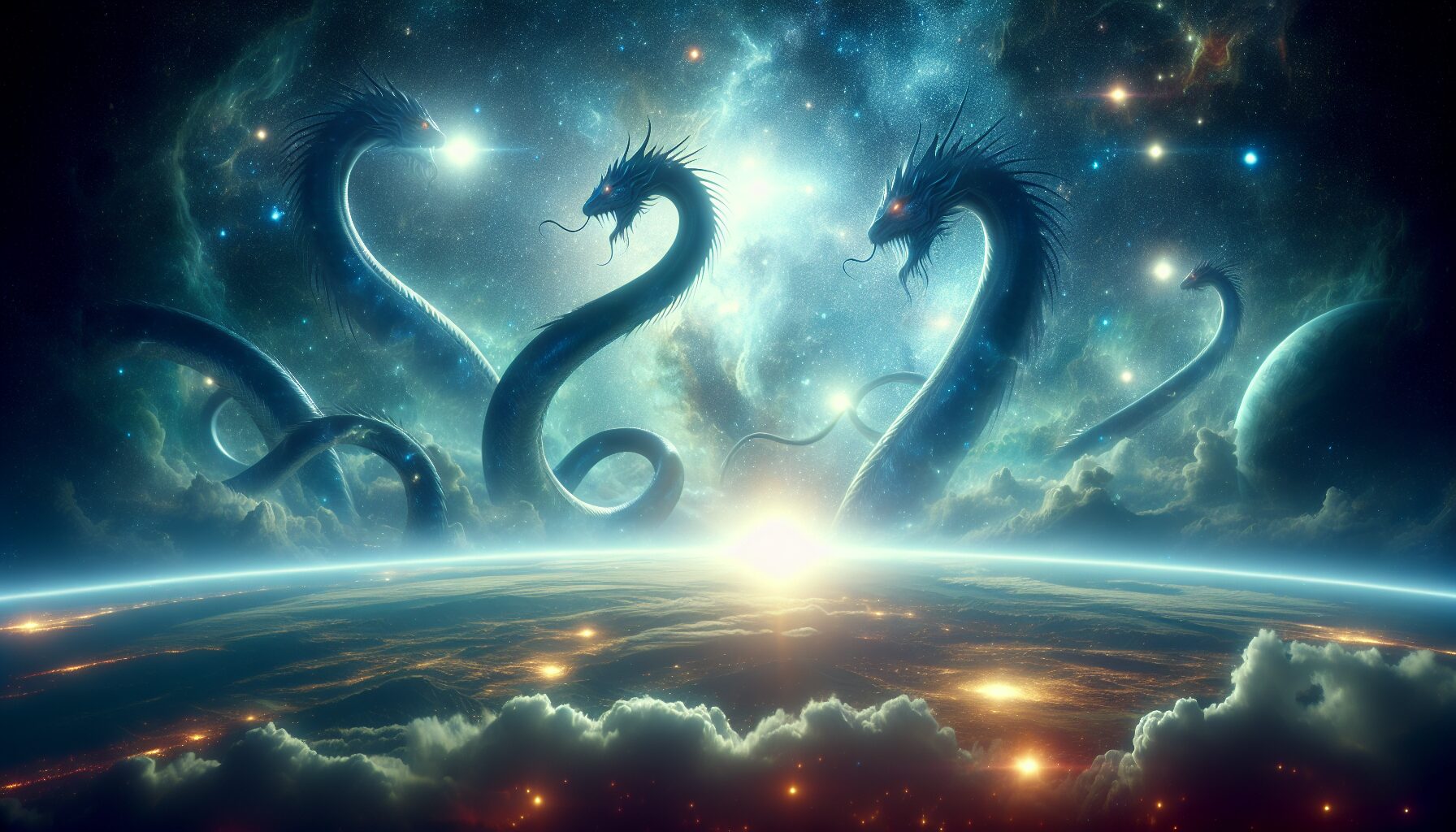
    The sky has always been a canvas for the stories and myths that humans create, and among these tales, the Star Serpents are particularly intriguing. These celestial creatures, woven into the mythologies of various cultures, stand as testimonies of humanity’s quest to understand the universe. From the swirling Milky Way to specific constellations that slither across the night sky, serpents have transcended their terrestrial origins to become cosmic icons.

    Origins of Star Serpents in Mythology

    Serpents hold a profound place in mythologies worldwide, representing both creation and destruction, wisdom and chaos. In the context of the skies, they often embody powerful stories:

    • Norse Mythology: Jörmungandr, the Midgard Serpent, is among the most famous celestial serpents, feared for encircling the entirety of Earth, as described in The Prose Edda. This serpent’s cosmic role is detailed in sources such as The Prose Edda, where it is foretold that Jörmungandr will play a crucial role in Ragnarok, the end of the world.
    • Chinese Mythology: In Chinese culture, the Dragon, which is often depicted as a serpent, is not just a symbol of wisdom but also of the celestial order. The Azure Dragon, known as Qinglong, is one of the Four Symbols of Chinese mythology, representing the East and springtime.
    • Mesoamerican Mythology: The Feathered Serpent, known as Quetzalcoatl among the Aztecs and Kukulkan with the Maya, is a deity associated with the morning star, rebirth, and renewal. This serpent god is a vivid representation of the connection between the heavens and Earth, influencing both art and religious practices.

    Constellations and Celestial Patterns

    In the night sky, serpent-related imagery is abundant. Various cultures have identified celestial serpents among the stars:

    “The constellation Ophiuchus represents a man holding a snake, symbolized by the neighboring constellation Serpens. This cosmic combat is believed to be symbolic of healing and eternal struggle.” — StarDate

    • Draco: One of the most well-known serpent constellations, Draco represents the dragon killed by Hercules. This winding constellation which coils around the northern celestial pole is a source of intrigue and legend.
    • Hydra: Known as the largest constellation, Hydra represents the water serpent. In ancient Greek mythology, when Heracles killed Hydra, it became a permanent fixture in the skies, immortalized among the stars.
    • Serpens: This unique constellation is divided into two parts: Serpens Caput (Serpent’s Head) and Serpens Cauda (Serpent’s Tail), emphasizing its mystical and divided nature.

    Astronomical Significance and Cultural Impact

    While they offer a mythological perspective, celestial serpents also draw connections to astronomy and the understanding of our cosmos. The myths surrounding serpents often intertwine with real astronomical phenomena:

    • The Milky Way: Often described as a celestial river, the sprawling band of stars has been seen as a serpent or dragon in various cultures, guiding wanderers with its luminescent trail.
    • Comets and Meteors: These were sometimes interpreted as celestial serpents dashing across the sky, foretelling natural changes or omens to ancient civilizations.

    Symbolism in Art and Literature

    Artistic representations of serpents in the sky are widespread, from ancient petroglyphs to Renaissance paintings. These depictions are not mere works of art; they are interpretations of humanity’s imagination:

    • Petroglyphs and Cave Paintings: Ancient civilizations often depicted serpentine figures in relation to the stars, as evidenced by sites across Europe and the Americas.
    • Renaissance and Baroque Art: Artists of these eras utilized celestial serpents to depict stories from mythology, infused with religious and symbolic meaning, demonstrating the continued influence of these mythic creatures.
    • Modern Literature and Media: Today, the serpent remains a potent symbol in sci-fi and fantasy literature, representing the unknown and the majesty of space, as explored in works like Frank Herbert’s Dune.

    “The thing about science fiction is that it often places humanity against the backdrop of stars and celestial phenomena. Star serpents serve as metaphors for the challenges and mysteries we face.” — Frank Herbert

    Persisting Mysteries and Future Discoveries

    As we extend our gaze to newly discovered galaxies and nebulas, celestial serpents invite us to ponder their place in both ancient lore and modern understanding. Could these timeless creatures hold clues to forgotten wisdom or mysteries yet to unravel?

    The myths of star serpents remind us that stories serve as bridges between our world and the cosmos, inspiring us to explore and decipher the universe’s secrets. These mythologies may provide metaphoric insights into our challenges, reminding us of the balance between creation and chaos that serpents signify.

    Conclusion

    Whether as mythical dragons looming over a medieval sky or as serpentine studies in the slick pages of a modern science fiction novel, the imagery of star serpents beckons us to look up and beyond. They embody the eternal human pursuit of the eternal — a journey through myth, culture, and cosmos that intertwines with the stars themselves.

    Ultimately, the mythology of star serpents goes beyond mere narrative; it resonates with the profound and eternal curiosity of humans looking beyond the sky, linking stars with stories and ensuring that through every era, the serpents’ dance among the stars continues.

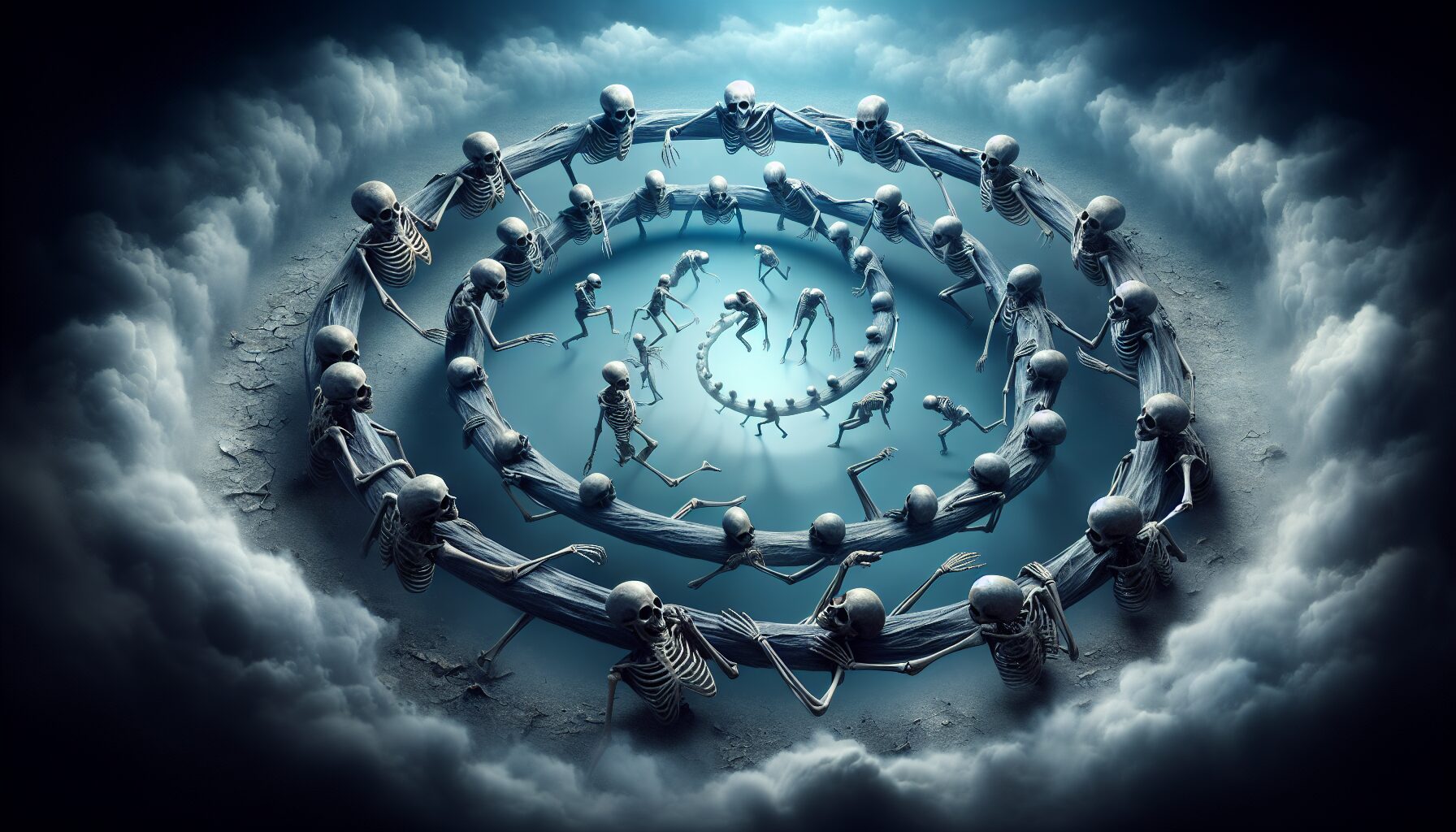
  • The Eternal Return – Death as Endless Cycle

    The Eternal Return – Death as Endless Cycle

    In the vast tapestry of philosophical and spiritual beliefs that mankind has woven over millennia, few concepts are as enigmatic and thought-provoking as the idea of The Eternal Return. This notion posits that the universe and all existence within it are perpetually recurring, cycling through endless regenerations of birth, life, death, and rebirth. Found in diverse traditions and philosophies, from ancient Hindu texts to Nietzsche’s existential musings, the concept of The Eternal Return continues to provoke thought and spark debate.

    The Roots of an Endless Cycle

    The origins of the Eternal Return can be traced back to early civilizations, reflecting humanity’s quest to understand life and the cosmos. In Hindu cosmology, time is cyclical, comprising vast ages known as Yugas. Each cycle concludes with a dissolution (or Pralaya), only to begin anew.

    • The Rigveda, an ancient Indian sacred collection of Vedic Sanskrit hymns, contemplates the universe as a great ‘cosmic egg’ that bursts open, creating the world anew repeatedly.
    • Similarly, in Buddhism, the cycle of death and rebirth, known as Samsara, is governed by Karma, or the law of cause and effect.

    According to Indian philosophy scholar Wendy Doniger, there is a strong emphasis on the eternal nature of this cycle, where one’s actions dictate the course of future rebirths until enlightenment is achieved, thereby breaking the cycle. In her book “The Implied Spider”, Doniger states:

    “This cosmic rebirth is not merely a repetitious grind, but a process rife with the potential for transformative change.”

    Western Interpretations and Nietzsche’s Vision

    In Western philosophy, the Eternal Return gained prominence in the works of German philosopher Friedrich Nietzsche. Nietzsche’s eternal recurrence is more than a metaphysical or cosmological theory; it’s a profound existential proposition. In “The Gay Science”, Nietzsche wrote:

    “What if some day or night a demon were to steal after you into your loneliest loneliness and say… this life as you now live it and have lived it, you will have to live once more and innumerable times more; and there will be nothing new in it.”

    This idea challenges us to live as if each moment recurs eternally, encouraging a form of existential authenticity. For Nietzsche, embracing this return rather than resisting it moves one toward an existence full of meaning and purpose.

    Scientific Echoes: Entropy and the Eternal Return

    The concept of The Eternal Return isn’t only a philosophical and cultural construct; it draws interesting parallels from the realm of modern science. The law of entropy in thermodynamics denotes that systems tend to move toward a state of disorder. However, theoretical physics also contemplates the possibility of cyclical universes.

    • Eternal recurrence hypotheses suggest that given an infinite amount of time, the universe’s finite particles might eventually repeat every possible configuration.
    • Sir Roger Penrose, a noted mathematician, has postulated theories of “conformal cyclic cosmology,” suggesting an infinite sequence of aeons or universe cycles.

    Though these scientific theories do not provide a consensus on cyclical cosmology, they illustrate our ongoing quest to understand the universe’s mysteries and, by extension, the nature of life and death within it.

    Rebirth in Culture and Literature

    The theme of an endless cycle of life and death has resonated deeply within literature and popular culture. Writers, artists, and filmmakers have all drawn upon this philosophical paradigm to explore themes of identity, fate, and redemption.

    • The film “Groundhog Day” employs the concept of cyclical time as a narrative device, transforming a comedic premise into a poignant exploration of personal growth and self-discovery.
    • In Gabriel Garcia Marquez’s “One Hundred Years of Solitude”, the cyclical patterns of the Buendía family’s history illustrate the inescapable repetition of both triumphs and tragedies, mirroring broader existential patterns.

    Sartre once marveled at the possibility, saying:

    “If… you had to repeat your life ad infinitum, would you grasp the value of choice? Each decision, magnified, contains the weight of a moral universe.”

    Modern Reflections and Tomorrow’s Thoughts

    The Eternal Return continues to provide a rich field for contemplation, challenging us to confront our own beliefs about time, existence, and the afterlife. For some, the cyclical view spurs a reevaluation of ethical living under the constant shadow of recurrence. For others, it offers solace, suggesting continuity beyond the veil of death.

    As science advances and our understanding of the universe evolves, this ancient idea persists, urging us to see life not as a linear journey with a fixed endpoint, but as an ever-turning spiral that offers endless horizons of growth and rebirth. Perhaps, as we traverse the cosmic dance of time, we, too, echo the philosopher’s musing: is it in the knowing of the cycle that we find liberation?

    Whether seen through the kaleidoscope of philosophy, the lens of science, or the storytelling of culture, The Eternal Return invites us to ponder deeply on existence’s mysteries, posing enduring questions that challenge and inspire the human soul.

    For those who find resonance in this concept, life becomes a series of opportunities to embrace, explore, and resonate profoundly with the eternal song of the universe.

  • Dust to Dust – Mysticism of Returning to Earth

    Dust to Dust – Mysticism of Returning to Earth

    Dust to Dust: Mysticism of Returning to Earth

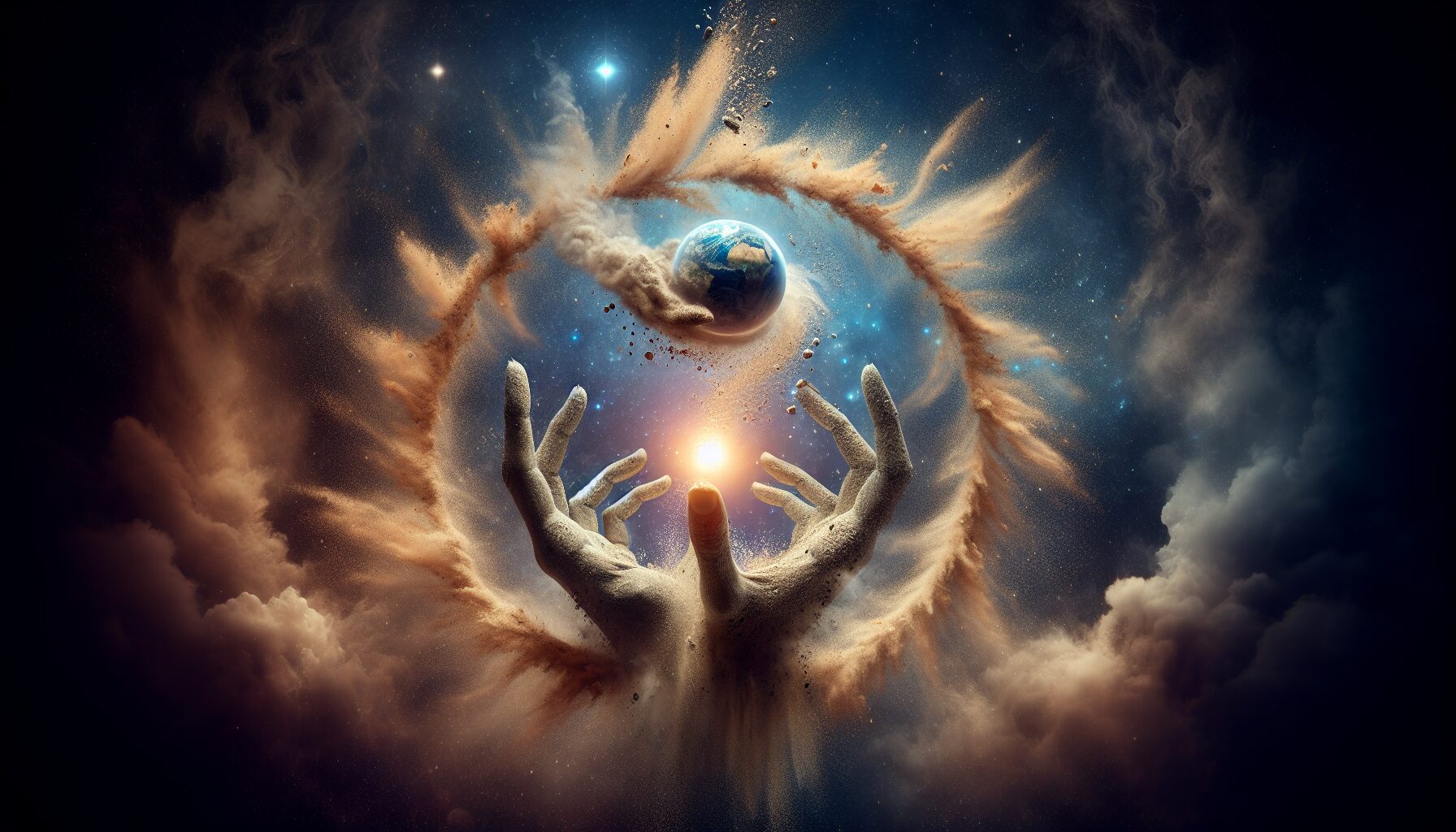
    The ancient cycle of life and death has fascinated humanity since the dawn of time. It is a story not just of endings but of beginnings too, as eloquently captured in the phrase, “for dust thou art, and unto dust shalt thou return.” This mysterious transformation is the heart of many spiritual and cultural traditions, each imbuing the process with its own mysticism and significance.

    The Cycle of Life and Death

    The concept of returning to dust is more than a biological process; it is a spiritual journey echoed throughout world religions and philosophies. From the earliest times, humans have recognized their connection to the earth. As the poet Kahlil Gibran observed, “In one drop of water are found all the secrets of all the oceans; in one aspect of You are found all the aspects of existence.” This beautifully encapsulates the interconnectivity of life and reminds us of our inevitable return to the earth.

    Ancient Traditions and Beliefs

    • Egyptian Afterlife: The ancient Egyptians believed in a meticulous journey after death requiring intricate rituals. The idea was not only to preserve the body through mummification but also to prepare the soul for its eventual return to the earth through various reincarnations. The cycle was seen as an opportunity for transformation.
    • Hindu Cremation Rituals: Hinduism views the body as a temporary vessel for the soul. Upon death, the body is cremated, symbolizing the release of the soul. The ashes are then immersed in a holy river, which is believed to help free the soul from the cycle of reincarnation and assist its return to the earth.
    • Indigenous Earth Burials: Many indigenous cultures hold a deep reverence for the land. They view the earth as the Great Mother, and returning to her in death is seen as a natural and sacred transition. These beliefs are manifested in ceremonies that celebrate the land-to-earth connection.

    Modern Interpretations and Environmentalism

    In today’s world, returning to the earth is taking on new dimensions. The environmental movement has begun to influence how societies view death and the afterlife. Green burials are becoming increasingly popular, emphasizing simplicity and minimal impact on the earth.

    These environmentally friendly funerals avoid embalming chemicals and often utilize biodegradable coffins or natural burial sites to allow the body to decompose naturally. As leading environmentalist Bill McKibben notes, “The burial is a return to a circle of life rather than the end of an industrial process.”

    Philosophical Insights

    Philosophers and spiritual thinkers continue to explore the notion of returning to the earth with renewed vigor, emphasizing it as a transformative process. Existential philosopher Jean-Paul Sartre believed that death gives life its ultimate value by providing an endpoint that defines our actions and relationships. This notion echoes the cycles found in nature, suggesting a harmony between living and dying.

    In his seminal work, The Denial of Death, Ernest Becker discusses how mankind’s fear of death is a fundamental element driving behavior and culture. Yet, within this fear lies the opportunity for a deeper understanding of life’s interconnectedness with nature. He writes, “The human condition is that man lives paradoxically in time and yet also outside of it.”

    The Comfort of Returning to Earth

    There is a profound solace in the idea of returning to the earth. It symbolizes a return to one’s origins, a dissolution of individuality into the broader ecosystem. This is not just an end but a continuation and a renewal of one’s existence in a different form.

    For many, the idea that their life will continue to nourish the earth and that they will become part of the universe’s fabric offers a comforting existential resolution. This concept was poignantly described by Carl Sagan when he wrote, “The cosmos is also within us, we’re made of star-stuff. We are a way for the cosmos to know itself.”

    A Final Embrace

    The mysticism of returning to earth is more than a poetic notion or religious belief; it is a tangible reality that binds us all. As humanity grapples with its place in the cosmos and its impact on the Earth, understanding our final return as an intrinsic part of nature’s cycle has never been more important.

    Ultimately, embracing our transformation from dust to dust can provide a more harmonious existence with the planet and a touchstone for finding meaning in both life and death. In this way, our return to the earth becomes not just an end but a final embrace, a coming-home to our truest form.

  • The Silence of Catacombs – Underground Cities of the Dead

    The Silence of Catacombs – Underground Cities of the Dead

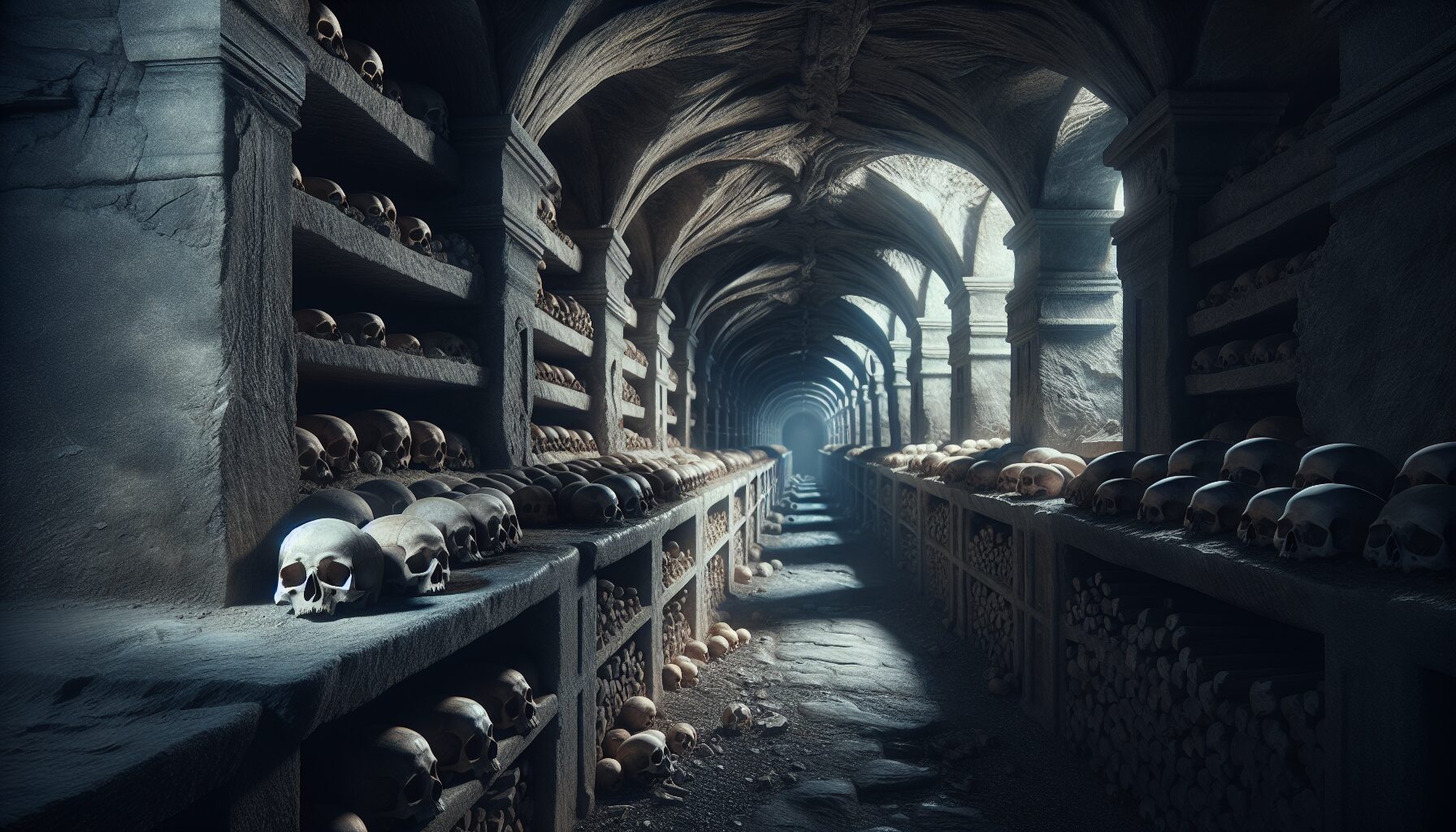
    In the heart of many cities around the world lie hidden passages, ossuaries, and labyrinthine tunnels that whisper stories from the past. Known as catacombs, these underground cities of the dead are steeped in history, mystery, and the awe-inspiring silence of eternity. They serve as haunting reminders of the juxtaposition between life and death, weaving together tales that span across centuries.

    The Origins of Catacombs

    Catacombs have existed for millennia, initially serving as subterranean burial sites for ancient peoples. The concept of burying the deceased below ground was driven by various factors, including religious beliefs, the scarcity of land, and epidemics that necessitated quick and efficient interment solutions. The word “catacomb” is thought to originate from the Latin ad catacumbas, a reference to a location in Rome where early Christian burials took place.

    One of the most famous examples is the Catacombs of Rome, which served as both a burial site and a place of refuge for Christians facing persecution in the early centuries A.D.

    Architectural Marvels

    The catacombs are architectural wonders in their own right, showcasing the ingenuity and craftsmanship of historical architects and laborers. Some feature elaborate stonework, meticulously carved tombs, and intricate murals that depict religious scenes, daily life, and even warnings for the living. One remarkable feature of these catacombs, as noted by Atlas Obscura, is the Paris Catacombs’ intricately arranged bones, turning death into an arresting form of art.

    Notable Catacombs Around the World

    • The Catacombs of Paris: Beneath the bustling streets of Paris lies a labyrinthine network of tunnels extending over 200 miles. Originally quarries, these tunnels became the final resting place for over six million people as cemeteries ran out of space during the 18th century.
    • Rome’s Catacombs: As the cradle of Christianity, Rome houses numerous catacombs where early Christians buried their dead, decorated with frescoes and symbols of their faith.
    • The Catacombs of San Francisco: Not to be confused with the Californian city, this catacomb in Lima, Peru, lies beneath the Monastery of San Francisco and is famous for its bone displays that form geometric patterns.
    • Odessa Catacombs: This extensive network in Ukraine is a mixture of natural caves and man-made tunnels, stretching approximately 1,500 miles and offering both historical intrigue and the perils of getting lost.

    Cultural and Religious Significance

    Catacombs have always held cultural and religious significance. For early Christians, they were not only burial sites but also places of worship and refuge. According to Smithsonian Magazine, “These sacred spaces were used to commemorate the deceased with prayer and respect, reinforcing a community’s common faith” (Smithsonian).

    In modern times, catacombs serve as portals to the past, providing historians, archaeologists, and the curious with a tangible connection to ancient customs and traditions. They allow us to understand how different cultures viewed death and the afterlife, showcasing humanity’s eternal quest for meaning in the face of mortality.

    The Silence and Solitude

    “Beneath the vibrant life above, the catacombs echo the quietude of the past; a tranquil reassurance that speaks of history, life, and the infinite silence that binds us all,” remarked historian and travel writer Emma Shaw.

    The silence of catacombs is profound. Walking through their dimly lit corridors, one is enveloped in an otherworldly calm, a stark contrast to the chaos of modern life just above the surface. This solemn stillness allows for reflection, encouraging visitors to ponder life’s transient nature and the persistence of memory.

    Conclusion

    The catacombs, these underground cities of the dead, offer more than just historical insight—they provide a unique perspective on life’s fleeting nature. Through their silent tunnels, they echo stories of resilience, faith, and humanity’s perpetual connection with those who came before. Whether for historical exploration, spiritual reflection, or the thrill of adventure, the quiet specter of the catacombs continues to draw visitors from around the globe, ensuring their vital place in the tapestry of human history.

  • Grave Goods – Objects Carried Beyond the Veil

    Grave Goods – Objects Carried Beyond the Veil

    Grave Goods: Objects Carried Beyond the Veil

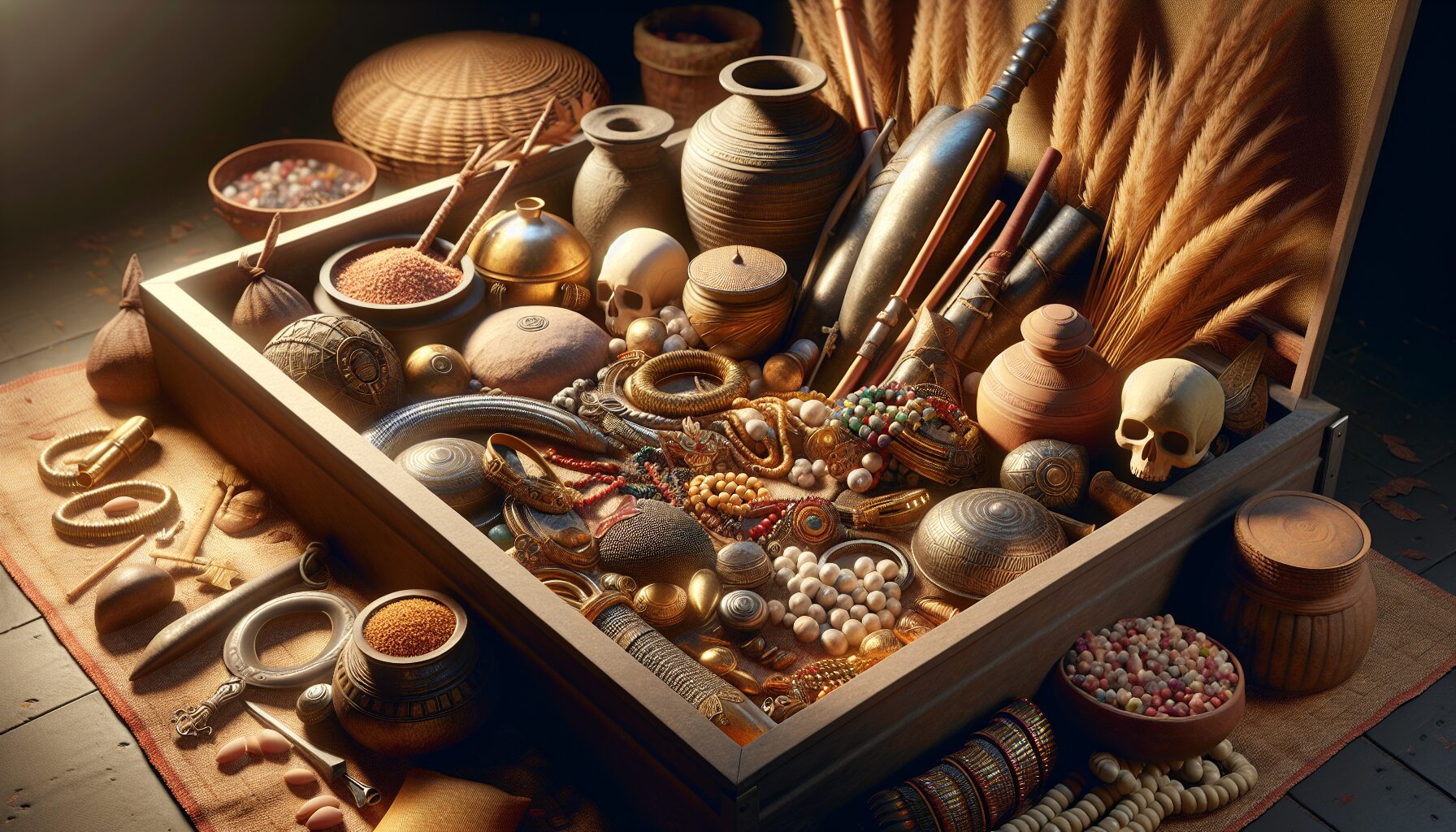
    Throughout human history, the dead have not journeyed into the afterlife alone. Grave goods have long been part of burial rituals across various cultures, reflecting our complex relationship with death, beliefs about the afterlife, and the social status of the deceased. These artifacts serve as both personal mementoes and indications of the broader cultural context in which individuals lived and died.

    The Historical Context of Grave Goods

    The tradition of burying the dead with objects dates back tens of thousands of years. The practice is thought to be rooted in the belief that these items would be useful in the afterlife or as symbols of the deceased’s life. From weapons and tools to everyday household items, grave goods tell a tale of continuity between the mortal world and whatever comes next.

    According to Britannica, “Grave goods are fundamentally tied to the cultural and religious beliefs of a society, providing insight into how people viewed the connection between life and afterlife.” In some traditions, these items were intended to protect, adorn, or provide comfort to the dead, while in others, they served to affirm social status or achievements.

    Iconic Examples from Around the World

    • Egyptian Pyramids: Perhaps the most renowned example of grave goods comes from ancient Egypt, where pharaohs were entombed with vast treasures intended to accompany them to the afterlife. The burial chamber of Tutankhamun, discovered by Howard Carter in 1922, contained a wealth of objects, including the famous golden mask, jewelry, and a chariot. These treasures were designed to ensure the young king’s safe journey to the afterlife and to demonstrate his status.
    • Chinese Terracotta Army: In China, the burial site of the first Emperor Qin Shi Huang is another dazzling example. Guarded by a terracotta army of over 8,000 soldiers, each uniquely hand-crafted, this army was believed to protect the emperor in the afterlife.
    • Viking Burials: In Norse society, warriors were often buried with weapons, armor, and ships. These goods were intended to provide the deceased with the necessary means to fight and journey in the afterlife. The Oseberg ship burial, found in Norway, is one of the most significant Viking ship burials discovered, providing rich insights into the lives of powerful Viking chieftains and their beliefs about the afterlife.

    Modern Interpretations and Continuations

    While the grandeur of historical grave goods might seem distant from contemporary practices, the core concept persists. Modern funerary customs often include placing personal items like photographs, letters, or favorite objects with the deceased during cremation or burial. These items, while often less extravagant, still carry significant emotional and symbolic value, reflecting our enduring need to honor and remember those who have passed.

    As The Guardian discusses, “Even in less death-fixated cultures, the notion of carrying mementoes or small talismans to accompany the deceased is prevalent. It speaks to a universal human need to create continuity between this world and the next.”

    Contemporary Cultural Reflections

    Grave goods also serve as cultural markers, enhancing our understanding of era-specific customs and social structures. In a sense, they are time capsules, preserving a moment or person for future generations to study. Such practices are continually unearthed and analyzed, adding layers to our understanding of past civilizations and the universality of human rituals surrounding death.

    “The items people choose to bury with their loved ones—or themselves—reflect their beliefs, social status, and personal relationships both in life and in the perception of the afterlife,” explains Dr. Sarah Tarlow, a leading expert in the archaeology of death and burial rituals.

    Conclusion

    The tradition of grave goods eloquently illustrates the continuity and change within human societies over millennia. While the scope and meaning of these items have evolved, their fundamental purpose remains the same: to serve as a testament to personal and cultural identities as we face one of life’s greatest mysteries—what lies beyond the veil of death.

    As cultural practices and beliefs about the afterlife continue to evolve, one constant remains—the human desire to bridge the gap between the living and the dead with objects steeped in love, memory, and meaning.

  • Necromancy and Memory – Raising the Shadows of the Dead

    Necromancy and Memory – Raising the Shadows of the Dead

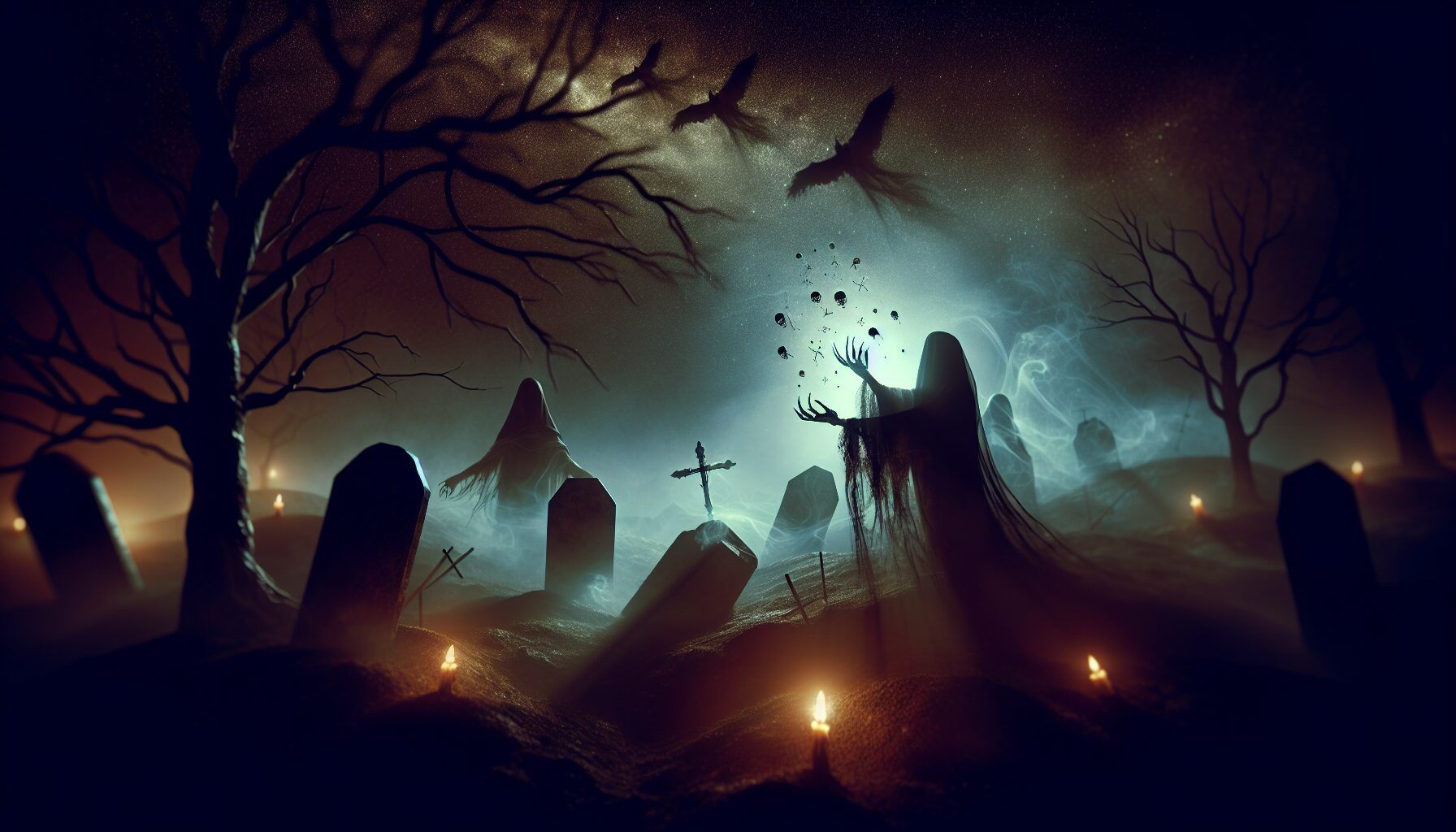
    The concept of necromancy has long fascinated and terrified the human imagination, entwining myth and memory in a dance as ancient as the shadows themselves. Once considered a dark art reserved only for the brave (or perhaps the foolhardy), necromancy evokes images of sorcerers and midnight rituals, where the veil between the living and the dead is perilously thin.

    A Historical Overview

    Necromancy, derived from the Greek words nekros (dead) and manteia (divination), refers to the practice of communicating with the dead. This practice was widely employed in ancient cultures to glean secrets from the spirits. The ancient Greeks, for instance, included necromancy as part of their religious rituals, with notable mentions in Homer’s The Odyssey, where Odysseus seeks guidance from the deceased prophet Tiresias.

    In medieval Europe, necromancy was often conflated with witchcraft, leading to prosecution and persecution. According to a History.com article, the Inquisition led to the loss of countless lives, often targeting those believed to engage with necromancy.

    The Intersection of Memory and Magic

    At its core, necromancy is as much about memory as it is about magic. This mystical practice taps into the human desire to connect with those who have passed away, a means to keep their memories alive. As the poet Robert Penn Warren aptly put it, “The past is always a rebuke to the present.”

    “To live in hearts we leave behind is not to die.”

    — Thomas Campbell

    This desire, to keep loved ones present through memory, fuels the practice’s persistence through the ages. In a way, necromancy serves as a spiritual archaeology, digging through layers of time to resurrect what once was.

    Modern Perceptions and Practices

    Today, necromancy has taken on a more symbolic form, often associated with séances and the paranormal. Modern practitioners might use necromancy as a tool for self-reflection or to achieve closure with departed loved ones. However, it remains shrouded in controversy due to ethical and religious concerns.

    According to Britannica, contemporary necromancers often use methods such as meditation and tarot alongside more traditional rituals, seeking guidance rather than power over the dead.

    Raising Shadows: Ethical Considerations

    The practice of necromancy raises significant ethical questions: Is it right to disturb the rest of the deceased? Could such practices unintentionally harm the living? Many religious doctrines argue that the dead should be left undisturbed, emphasizing their place in the afterlife.

    • Consent: The issue of consent looms large, as the dead cannot agree to participate in these rituals.
    • Intention: Much hinges on the intention behind the practice—whether it is pursued out of love, grief, or a desire for power.
    • Impact on the Living: Engagement with necromancy might lead individuals into the depths of their grief, delaying acceptance and healing.

    Thus, practitioners and skeptics alike must tread carefully in this mysterious realm, respecting both its power and its limits.

    The Cultural Influence of Necromancy

    Despite—or perhaps because of—its eerie nature, necromancy has inspired countless cultural works. From Shakespeare’s Hamlet to popular video games like the Diablo series, the notion of communicating with the dead remains a potent narrative tool.

    This fascination reflects humanity’s perennial struggle with mortality and the unknown, as well as the hope that, through memory, the departed never truly leave us.

    Conclusion: A Dance with Shadows

    In the grand tapestry of human belief, necromancy serves as both a reminder and a warning. It is a reminder of our deep-seated desire to connect with those we have lost, and a warning of the potential perils that such connections might bring. In our pursuit of these shadowy paths, may we honor the memories we cherish while respecting the mysteries that lay beyond our understanding.

    In the words of William Wordsworth, “Though nothing can bring back the hour of splendor in the grass, we will grieve not, but rather find strength in what remains behind.”

  • Liminal Spaces – Where Death Touches the Living

    Liminal Spaces – Where Death Touches the Living

    Liminal Spaces – Where Death Touches the Living

    Liminal Spaces – Where Death Touches the Living

    The concept of liminal spaces intrigues, mystifies, and sometimes terrifies. These are the thresholds, the in-between realms where the boundaries separating life from death blur. Often discussed in both metaphysical and psychological contexts, liminal spaces provide a unique lens through which we can examine the intersections of life and mortality.

    Understanding Liminal Spaces

    Derived from the Latin word limen meaning threshold, liminal spaces refer to places or phases that exist between the known and the unknown. According to anthropologist Arnold van Gennep, who introduced the term in his work on rites of passage, these spaces are transitional phases demanding a transformation or change.

    Physically, liminal spaces might include corridors, staircases, or empty parking lots—places that are designed for transition rather than permanent occupation. The eeriness of these spaces often stems from their association with movement towards a new phase, and possibly, towards death.

    Liminality in Life and Death

    In exploring how death touches the living within liminal spaces, we delve into how people experience these spaces both metaphorically and literally. Hospitals, for example, are physical liminal spaces where people frequently encounter birth, illness, and death. They serve as poignant reminders of the transient nature of existence.

    “From the moment of birth, we take our first step on a journey that ultimately leads to death. Liminal spaces are where that journey is most keenly felt.”

    — Anonymous

    On another level, certain cultural rituals transform physical spaces into rites of passage, altering their liminality. Funerals and wakes, for instance, convert typical venues into sacred spaces for communing with the departed, offering the living a space to process death.

    The Psychological Perspective

    Beyond the physical spaces, liminality can also be a state of mind. Psychologically, individuals might find themselves in a liminal state during times of intense change or crisis. These mental spaces often offer profound opportunities for growth and reflection as one navigates the boundary between former and future selves.

    According to a paper in the Journal of Analytical Psychology, entering a liminal state can facilitate deep self-awareness and transformation, much like the theories proposed by notable psychologist Carl Jung in his exploration of the shadow self.

    Cultural Depictions of Liminal Spaces

    Many cultures have long embraced liminal spaces within their myths and spiritual practices. For the ancient Greeks, the River Styx represented a liminal zone where souls crossed from the living world to the underworld. In Irish folklore, Samhain—the precursor to modern Halloween—is considered a liminal time when the veil between the living and the dead is thinnest, allowing spirits to pass through.

    Similarly, in Mexican culture, Día de los Muertos or Day of the Dead celebrates a liminal period when deceased souls are believed to revisit the earth. Here, death is less an endpoint and more a continuation of a cultural dialogue, celebrating life through honoring departed loved ones.

    Modern Interpretations

    In recent years, the concept of liminal spaces has sparked interest on digital platforms and in artistic circles, where creators explore themes of urban abandonment and nostalgia. These discussions highlight the haunting beauty and unsettling nature associated with unfinished or transient places.

    As we deepen our understanding of these spaces, it is crucial to appreciate both their physical and metaphysical implications. Liminal spaces—where death brushes past the living—urge us both to ponder the transient nature of life and also to cherish the boundaries crossed with each new experience, guiding us onward through the uncharted territories of our existence.

  • The Color Black – Pigment of Death and Infinity

    The Color Black – Pigment of Death and Infinity

    The color black, more than any other, is steeped in dense symbolism and meaning. It is the color of mystery, mourning, and elegance, simultaneously embodying the concepts of death and infinity. In cultures worldwide, black conjures contrasting imagery, from the void of the universe to the cacophony of negative emotions. This article delves into the multifaceted significance of black, exploring its rich history and enduring impact on art, fashion, and cultural rituals.

    Historical Symbolism of Black

    Black holds an intriguing place in the annals of history, deeply associated with power and authority. According to historian John Harvey, the color black “has a history that traces back to the use of charcoal as makeup in ancient societies and as a fundamental color in religious and spiritual symbolism.” (Encyclopedia Britannica)

    • Ancient Egypt: Black was revered in ancient Egyptian culture as symbolic of fertility and rebirth, essential traits in an agrarian society dependent on the Nile River’s annual inundation.
    • Middle Ages: During this era in Europe, black gained association with authority and social hierarchy, used notably by the clergy and judiciary as a symbol of anonymity and impartiality.
    • Renaissance: Black took on a new sophistication during the Renaissance, becoming the color of choice for royalty and the wealthy, as evidenced by the black velvet fabrics frequently used in European courts.

    Black in Art and Fashion

    Art and fashion have continually played with the boundaries and perceptions of black, finding inventive expressions for its starkness.

    • Art: The use of black in art demands an acute attention to detail and surface texture, as it cannot rely on color contrasts to convey depth or emotion. Artists like Kazimir Malevich, with his work Black Square, challenged perceptions, asserting that “It is from zero, in zero, that the true movement of being begins.” (Tate)
    • Fashion: Black is synonymous with timeless elegance, eternally chic and adaptable. According to Coco Chanel, “Women think of all colors except the absence of color. I have said that black has it all. White too. Their beauty is absolute. It is the perfect harmony.” The iconic little black dress cemented its status as a fashion staple.

    Black as a Cultural Marker

    The cultural implications of black are both profound and varied, often rooted in traditional practices and beliefs. While black represents mourning and loss in Western cultures, it symbolizes vitality and growth in others.

    • Western Traditions: In Western society, black is synonymous with grief and funerals. It became tradition in the Victorian era to wear black as a public display of mourning. The somber hue carries these associations into contemporary customs, signaling respect and sorrow.
    • Eastern Perspectives: In many Eastern cultures, white is the color of mourning, while black represents different aspects. For instance, in Chinese culture, black denotes water and the north, symbolizing dignity and honor.
    • African Cultures: Among some African cultures, black is connected with maturity and masculinity. The color is often used for ceremonial clothing, adornments, and in rituals that signify transition and transformation.

    The Psychological Impact of Black

    The psychology of colors exposes the powerful influence that black holds over human perceptions and emotions. As Psychology Today suggests, black is often associated with deep, complex emotions.

    • Death and Mourning: Universally linked with death, black evokes a range of emotional responses—from fear to awe. Its association with the unknown and unexplainable lends it a powerful narrative in discussions of mortality.
    • Power and Authority: Black is perceived as authoritative and commanding. Its dominance is often leveraged in professional settings, where it is used to convey strength and sophistication.
    • Seclusion and Depression: The color can also evoke feelings of seclusion or isolation. It is not merely passive; it absorbs energy, sometimes amplifying feelings of heaviness or sadness.

    “In black you can reach the deepest depths of folk music, or you can go to the most elevated conversation. Black is like the silence of the body after death, the close of life.” — Sadie Plant in her exploration of how black expresses in varying spectra of music and literature.

    Conclusion: The Infinite Allure of Black

    Black is more than a color; it is a statement, a way of life, a reflection of the most fundamental aspects of human experience. Its duality, offering both the end and the beginning of understanding, pushes us to consider our own beliefs and cultural paradigms. Black continues to inspire artists, fashion designers, and cultural theorists, leaving an indelible mark on our collective consciousness.

    Whether we perceive it through the lens of death or infinity, power or elegance, the color black remains an enigma—layered in meaning, rich in legacy, and timeless in its presence.

  • Symbols of the Skull – Archetype of Death in All Cultures

    Symbols of the Skull – Archetype of Death in All Cultures

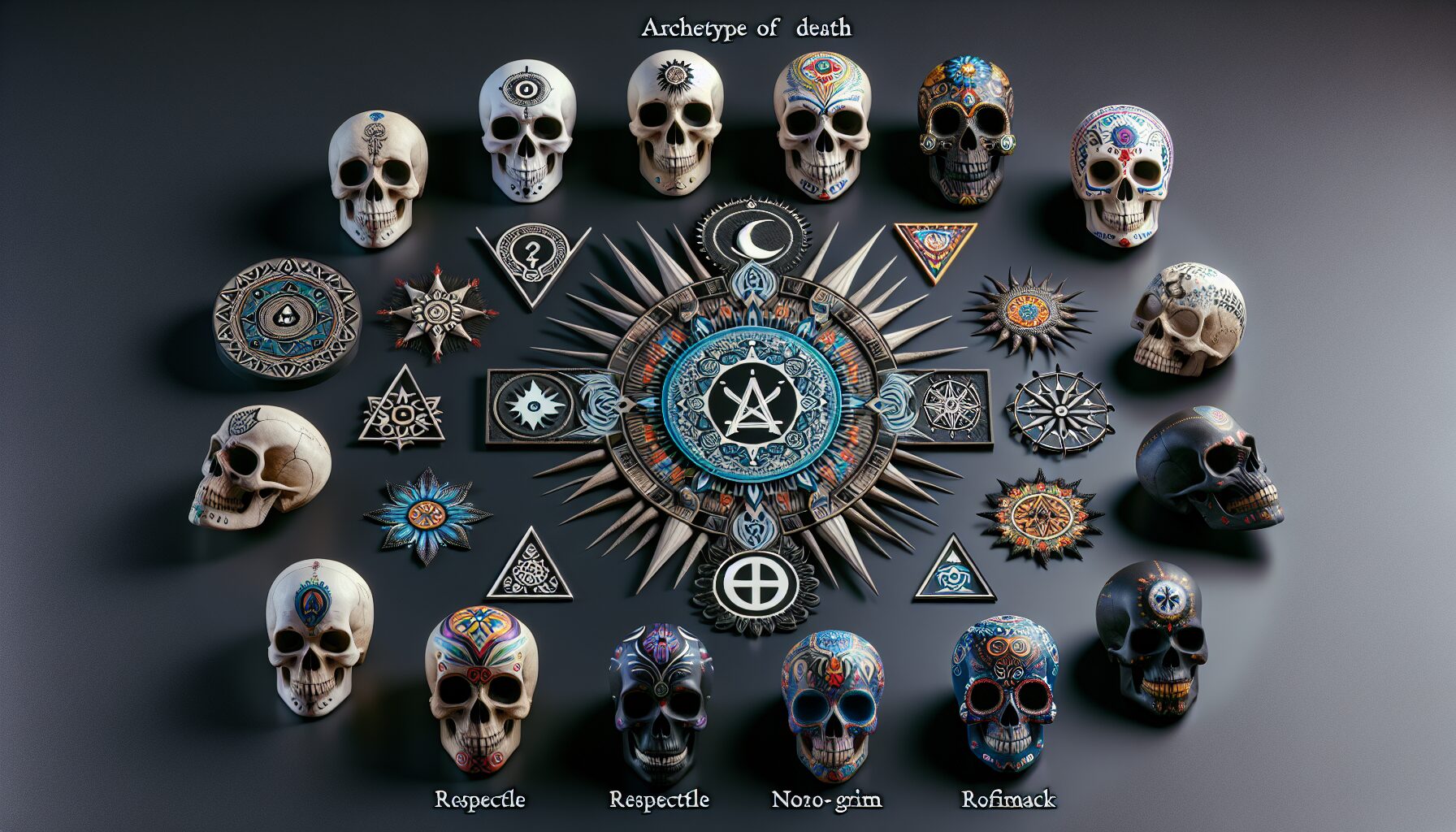
    The human skull, one of the most powerful and universally recognized symbols, has exuded an unsettling fascination across different cultures for centuries. Representing death, mortality, and the ephemeral nature of life, the skull has a profound impact on art, religion, and popular culture worldwide. It is a symbol often intertwined with the concept of memento mori, a Latin phrase meaning “remember that you must die,” serving as a stark reminder of humanity’s inevitable fate.

    The Skull in Western Culture

    In Western cultures, the skull is often associated with the grim visage of death and danger. It’s a staple in pirate lore, expressed poignantly through the Jolly Roger—a flag adorned with a skull and crossbones, signaling danger to any seafarer. The symbolism is further entrenched in art and literature during the Renaissance, where skulls appear in vanitas paintings to convey the transience of earthly pleasures and the certainty of death.

    Eastern Interpretations

    When moving eastward, the interpretations of the skull become more nuanced. In Hinduism and Buddhism, the skulls often represent the cyclic nature of life, death, and rebirth. Deities like Kali, the fearsome Hindu goddess, are depicted adorned with necklaces of skulls, symbolizing the destruction of ego and the liberation of the soul.

    “The skull is not only a symbol of death but also a reminder of life, a call to make the most out of our fleeting existence.” – Unknown

    Indigenous and Tribal Beliefs

    Many indigenous and tribal cultures have a more integrated approach to the skull’s symbolism. In ancient Mesoamerican civilizations, such as the Aztec and Maya, skulls played a crucial role in rituals and beliefs surrounding the afterlife. During the Day of the Dead in Mexico, calaveras (skulls) are decorated and celebrated, reflecting an acceptance and reverence for the deceased as part of the life cycle.

    Modern Culture and the Skull

    In contemporary times, the skull has transcended its classical connections with death to become an emblem of rebellion and nonconformity, often used in fashion and music. It signifies a rejection of societal norms and serves as a counterculture icon, appearing in everything from runway shows to rock band logos.

    Ultimately, the skull’s pervasive presence across cultures underscores a universal human confrontation with mortality, inviting each culture to interpret its meaning through the lens of their unique experiences and philosophies. Whether revered, feared, or celebrated, the skull remains a potent symbol that challenges us to reflect on the brevity of life and the reality of death.