Author: editor

  • Decay in Art – The Sublime of Rot and Crumbling

    Decay in Art – The Sublime of Rot and Crumbling

    The concept of decay in art has fascinated artists and philosophers alike, offering a compelling juxtaposition between the ephemeral and the eternal. Decay represents a transformation, a shift from one state to another, which can evoke a sense of the sublime—a concept that has intrigued thinkers from Edmund Burke to Immanuel Kant.

    The Aesthetic of Decay

    Decay in art captures the beauty found in imperfection and impermanence. The Japanese philosophy of wabi-sabi celebrates the beauty in the transient and the imperfect. This aesthetic appreciates the natural cycle of growth and decay. Embracing impermanence allows artists to highlight the passage of time and nature’s impact on human creations.

    “There is a crack in everything, that’s how the light gets in.” – Leonard Cohen, Goodreads

    Historical Perspectives

    Historically, memento mori artworks, which remind viewers of their mortality, have incorporated elements of decay to convey the message of life’s transience. Skulls, wilting flowers, and decomposing fruit have been used to symbolize the inevitability of death and decay.

    • Vanitas Paintings: These 17th-century Dutch paintings famously include symbols of mortality and decay to remind viewers of the fleeting nature of life.
    • Urban Exploration Photography: The modern movement known as urbex often focuses on decaying urban landscapes, capturing the dilapidated beauty of abandoned buildings, peeling paint, and rusting structures.

    The Philosophy of the Sublime

    The sublime in decay evokes awe and reverence in the face of nature’s power. According to Immanuel Kant, the sublime is not found in the object itself, but in the feeling it evokes within the observer. Ruins and decaying structures can stir profound emotions and reflections on human vulnerability and the passage of time.

    “The decay of beauty is, in its essence, the decay of victory. For every beauty, every victory is doomed to fade.” – Markus Zusak, Goodreads

    Conclusion

    Decay in art challenges our preconceived notions of beauty, prompting us to find the sublime in the cycle of life and death. It encourages a deeper appreciation for the moments we often overlook. As we observe the transformation of decay, we are reminded of the enduring power of nature and our own transient existence.

  • Time as Cemetery – Hours and Years as Silent Tombstones

    Time as Cemetery – Hours and Years as Silent Tombstones

    Time as Cemetery: Hours and Years as Silent Tombstones

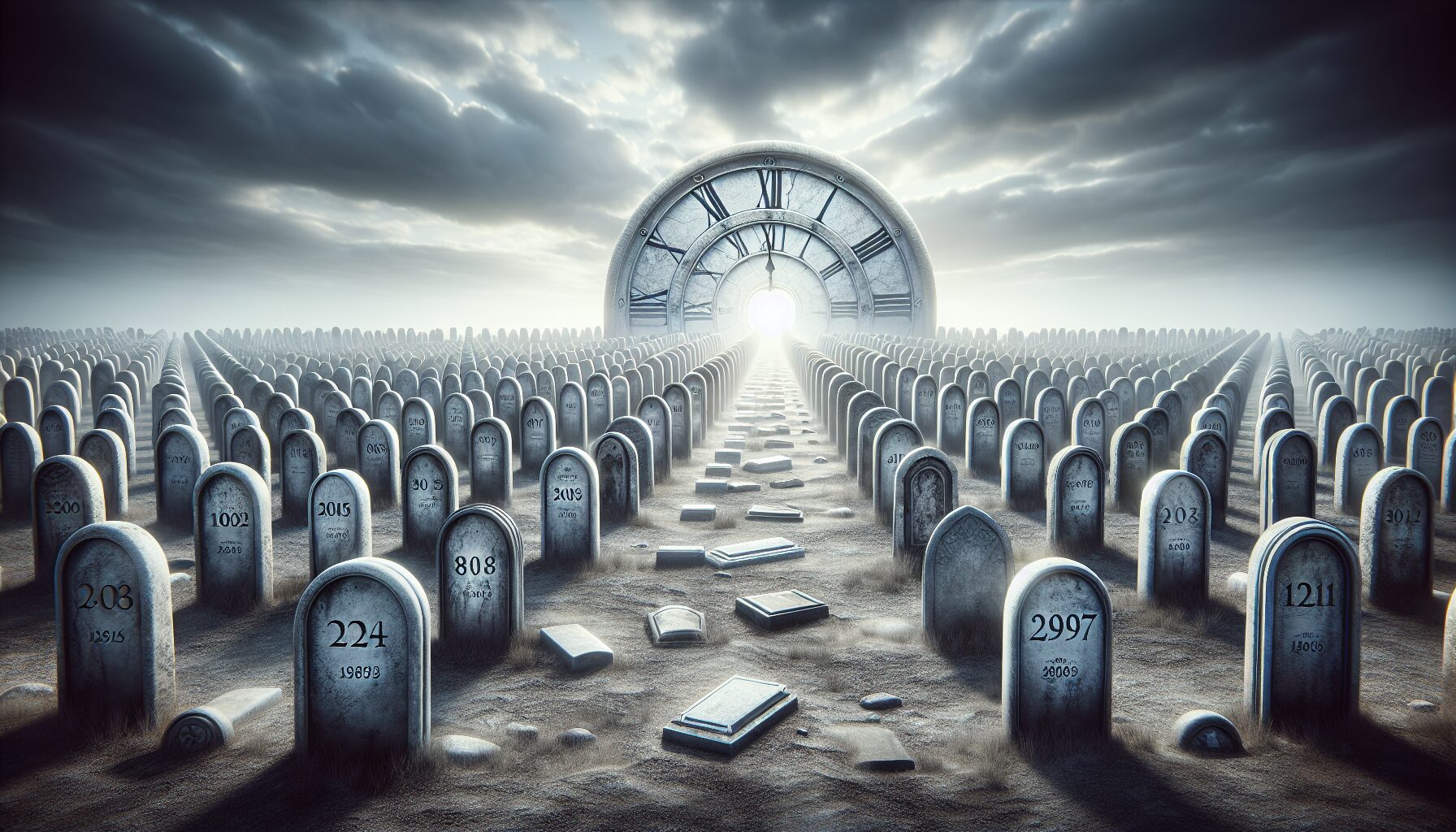
    The passage of time is an enigmatic force, an ever-present yet intangible entity that governs the rhythm of our lives. Often, it is likened to a cemetery, with hours and years serving as silent tombstones that mark the moments of existence we leave behind. This metaphor highlights the transitory nature of human experience, inviting us to contemplate the footprints we etch into the sands of time.

    From early philosophers to contemporary thinkers, the notion of time has been both revered and feared. In Hamlet, Shakespeare immortalizes this sentiment with the words, “Time is out of joint” [1], suggesting an intrinsic instability, an essence of being forever in motion yet anchored to a profound stillness.

    The Cemetery of Time

    “The life of the dead is placed in the memory of the living.” – Marcus Tullius Cicero

    Each moment, each hour that passes, acts as a gravestone marking the end of what was once a living, breathing segment of our lives. The years pile up like layers of an ancient burial site, where experiences, emotions, and dreams lie interred beneath the surface of our consciousness.

    • Hours as Milestones: Just as gravestones serve as testament to a life once lived, hours mark the milestones of human endeavor and mundane routine. They encapsulate moments of triumph and despair, of love and loss, surviving only through memory and record.
    • Years as Epigraphs: If hours are tombstones, then years are their inscriptions—brief summaries of a chapter in life. Whether marked by significant change or the quiet monotony of the everyday, each year leaves an indelible impression upon our existence.

    Reflections in the Tombstones of Time

    The metaphor of time as a cemetery encourages introspection about how we choose to fill these hours and years. Are the tombstones ephemeral testaments of wasted potential, or do they herald a legacy of meaning and purpose?

    Time’s silent cemetery compels us to reflect on what endures beyond the grave of the now. As Albert Einstein poetically observed, “Time is an illusion” [2], casting doubt on the permanence of its essence and encouraging us to seek value in the fleeting present.

    In contemplating the silent tombstones of hours and years, we are reminded to live fully in between them—to craft our epitaphs with the ink of intention, ultimately rendering time not as a graveyard of forgotten moments, but as a garden of eternal significance.


    References:

    1. Shakespeare, Hamlet, Act 1, Scene 5, Folger Digital Texts
    2. When Time Bends, Life is Forever Young, The New York Times
  • Funerary Chant – Sound as Passage Beyond Form

    Funerary Chant – Sound as Passage Beyond Form

    Funerary Chant – Sound as Passage Beyond Form

    Funerary Chant – Sound as Passage Beyond Form

    Sound has always been an intrinsic part of human ritual and celebration, nowhere more so than in the practices surrounding death and the honoring of those who have passed. Funerary chants are poetic articulations meant to transcend the physical world, guiding the spirit to the next realm with the aid of resonant vibrations. This article delves into the significance of funerary chants, exploring their form, function, and the cultural variances that color their expression worldwide.

    The Universality of Song in Ritual

    Among the many cultural practices, the funerary chant bridges the corporeal and the ethereal, allowing mourners a channel to express grief while celebrating the life of the departed. As Joseph Campbell once reflected, “Ritual is the enactment of a myth, and by participating in it, the individual paves the way to experience the transcendent.” Such rituals embody the collective emotions and spiritual beliefs of a community, offering comfort and a sense of continuity.

    The Mechanics of the Chant

    Funerary chants often rely on simple, repetitive melodies and rhythms that enable participants to enter a meditative or trance-like state. This repetition is not merely a characteristic of the chant but forms the essence of its power. It creates an altered state of consciousness where participants might feel the presence of those who have left the material world. The use of echoes, reverberations, and harmonics can enhance this effect, producing a soundscape that feels otherworldly.

    Variations Across Cultures

    • Tibetan Buddhist Chants: Tibetan Buddhists perform chants known as Thoday during funerals. These chants involve deep harmonic undertones and the use of Tibetan singing bowls to facilitate meditation and connection with the divine. The Culture Change Life describes the purpose of these chants as aiding the soul’s journey through the Bardo, the state between death and rebirth.
    • Gregorian Chants: Originating in the Western Christian tradition, Gregorian chants are marked by their monophonic and free-flowing style. They are used in liturgical settings to evoke a sense of peace and contemplation, employing Latin verses to elevate the sacredness of the ceremony. The melodic lines of these chants guide the spirit with reverence and serenity.
    • Native American Songs: Native American tribes each have their unique funerary practices. These often include chants that incorporate natural elements, such as wind and water sounds, aligning the passage of an individual with the sacred cycles of nature. The significance of these chants is honored in the belief that they help restore balance and harmony to the cosmos.

    Modern Interpretations and Evolutions

    In current times, funerary chants are evolving as cultures mingle and technology advances. Electronic music artists and modern composers have begun to draw inspiration from traditional chants, reimagining them with synthesized sounds and global influences. This fusion reflects the ever-changing landscape of human spirituality and our eternal quest to understand and express life’s transitions.

    “Music, in particular, possesses an extraordinary power to evoke deep and varied emotions. In the context of funerals, chants lull mourners into a state of shared remembrance and consolation.”

    As discussed in Psychology Today, our relationship with musical rituals is emblematic of an innate, shared comprehension underscoring human experience—offering solace and connection.

    Conclusion: The Soundtrack of Passage

    Funerary chants, in their diverse forms, serve as a bridge between worlds, a manifestation of our yearning to connect with what lies beyond the visible and tangible. Through sound, humans find a way to communicate the inexpressible, to house grief and hope in melodies that echo through time. Whether traditional or modern, the funerary chant remains a vital part of how humans celebrate, mourn, and transcend, embodying sound as the passage beyond form.

  • The Aesthetics of Ruins – Beauty in Death of Stone

    The Aesthetics of Ruins – Beauty in Death of Stone

    Ruins have fascinated humanity across the ages, acting as poignant reminders of past civilizations, lost grandeur, and the relentless passage of time. The remnants of ancient structures, from crumbling cathedrals to deserted castles, evoke a complex mixture of emotions and thoughts. These stones, once a testimony to human ambition and ingenuity, now whisper stories of decline, showcasing the beauty inherent in the silent dance of decay.

    The Allure of Ruins

    To understand why ruins captivate us, one must delve into their aesthetic appeal. As philosopher and author Christopher Woodward explores in his book “In Ruins”, ruins do not merely represent the past; they allow us to dream. He writes, “Perhaps it is for their dreams that ruins are beloved: the dream of survival; the dream of destruction.” Ruins invite us to reconstruct history with our imagination, filling the gaps with possibilities while contemplating impermanence.

    The Dance of Nature and Time

    Over time, nature reclaims man-made structures, intertwining vines with stone and weaving roots through ancient brickwork. This interplay between human endeavor and nature’s reclaiming forces adds another layer of beauty to ruins. The renowned landscape architect John Ruskin noted the harmony between these elements, stating that, “There is no death where the fragrance of blossoms is about, and forms as sculptured stone, grown green with moss, are witnesses of all that is most beautiful.” The juxtaposition of fragile vines with steadfast stones highlights the resilience of both natural and architectural worlds.

    Romanticism and the Picturesque

    “Ruins are often the picturesque survival of events that were once the foreground of history.” — Woodward

    The Romantic movement of the late 18th and early 19th centuries celebrated the picturesque qualities of ruins. Artists and poets found inspiration in the melancholy beauty of decay, romanticizing ruins as symbols of the sublime and eternal struggle between civilization and nature. Paintings of Gothic abbeys or descriptions in poems conveyed a sense of awe and nostalgia. Renowned British poet Lord Byron captured this sentiment in his work when he mused over the “desolation of a mighty land,” reflecting on how ruins epitomized both beauty and tragedy.

    Ruins in Modern Culture

    In contemporary culture, ruins continue to invoke fascination and inspiration. As Paul Zucker explains in his book “Ruins: An Aesthetic Category”, the appeal lies in their ability to evoke feelings of timelessness and mystery. Cinematic portrayals often use ruins as backdrops to convey decay or loss, yet simultaneously serve as stages for renewal and rebirth.

    • Photography: Urban explorers frequently seek out abandoned sites, capturing the haunting beauty through their lenses. Instagram and social media bristle with images of dilapidated buildings, showcasing an art form that thrives in dereliction.
    • Literature: Writers explore themes of decay and resurgence within ruined landscapes, finding parallels in human experiences of growth and loss.
    • Video Games: The settings of various video games, from apocalyptic worlds to ancient fallen cities, draw players into narrative environments where the past is alive and interactive.

    The Philosophy and Reflection Ruins Offer

    Beyond mere physicality, ruins invite philosophical reflection. They challenge the notion of progress, prompting us to consider the impermanence of human endeavors. Georg Simmel, a German sociologist, observed in his essay “The Ruin”, that ruins symbolize a fusion of the forces of destruction and the gratitude of survival. They temper pride by reminding us of inevitable decline, yet they also assure continuity, their incomplete gestures left open to new meanings.

    The Future of Ruins: Preservation vs. Rebirth

    Contemporary discourse around ruins often centers on preservation versus abandonment. Some argue for the preservation of ruins as cultural heritage, their stories crucial to understanding humanity’s shared past. Others suggest allowing nature to take its course, viewing new growth as a form of rebirth. The debate raises ethical and philosophical questions about how we relate to the past and envision the future.

    Architect Juhani Pallasmaa suggests in his writings that when old walls crumble, they yield “an expanding sense of freedom and imagination.” His perspective advocates for a balance, where certain ruins serve as educational and aesthetic markers, while others are allowed to erode, contributing to the ecological tapestry.

    Conclusion

    Ruins possess an undeniable allure, offering a profound sense of beauty that transcends their material decay. They are timeless witnesses, standing between the past and the future, silent yet eloquent. As we ponder their tales, we confront our fragility and resilience, finding ourselves among the stones’ stories. Thus, the beauty of ruins does not merely lie in their death but in their testament to enduring ideas and enduring dreams.

  • Mummies and Preservation – Fighting Against Decay

    Mummies and Preservation – Fighting Against Decay

    From the arid deserts of Egypt to the frozen tundras of Siberia, mummies provide a fascinating glimpse into the past. Mummification, whether accidental or intentional, has allowed bodies to resist decay for thousands of years. This process, deeply tied to religious and cultural practices, offers insights not just about the deceased but about the living societies that revered and preserved them. In this article, we will explore the methods, science, and mysteries surrounding mummification and the ongoing fight against decay.

    The Science of Mummification

    Mummification is a highly involved process aimed at preserving the body after death, primarily by dehydrating the tissue to prevent decomposition. There are various methods of mummification influenced by environmental conditions and cultural practices:

    • Natural Mummification: This occurs in environments that naturally inhibit decomposition. The dry air and sand of deserts, such as those in Egypt, facilitate this process.
    • Artificial Mummification: Cultures that practiced artificial mummification did so with a variety of techniques. The ancient Egyptians are perhaps the most famous for their complex method involving evisceration, drying, and the application of preservative chemicals.

    “Mummification was a way to ensure survival in the afterlife. Each organ had its place in Egyptian religion and had to be preserved for the dead to enjoy eternity.” – Encyclopedia Britannica

    Egyptian Mummification: A Deep Dive

    Among the myriad of cultures that have practiced mummification, ancient Egypt stands out for the complexity and depth of its techniques. The process usually took about 70 days and involved several intricate steps:

    • Removal of Internal Organs: The brain was removed through the nose using special hooks, while other organs were extracted through an incision in the abdomen.
    • Drying: The body was covered with natron, a natural salt, which dehydrated the tissue and prevented bacterial growth.
    • Wrapping: Bandages made from linen were wrapped around the body, with each layer often accompanied by the application of resin to enhance preservation.

    In National Geographic, it’s explained that the Egyptians believed that the quality of preservation was directly linked to the deceased’s comfort in the afterlife. This was not only a religious necessity but also a demonstration of social status.

    Cultural Variations in Mummification

    Beyond Egypt, many cultures developed their own methods of mummification:

    • Incan Mummies: The Incas used naturally freezing conditions to preserve their dead. Mummies would often be placed at high altitudes in the Andes.
    • Chinchorro Mummies: These are the oldest artificially mummified bodies, dating back to about 5000 BCE. The Chinchorro people of present-day Chile and Peru developed intricate embalming techniques long before the Egyptians.
    • Siberian Mummies: The permafrost of Siberia has preserved bodies dating back to the 5th century BCE, offering a glimpse into the life of ancient nomadic tribes.

    The Mysteries and Modern Scientific Study

    Mummies pose numerous mysteries to scientists and archaeologists. One of the critical questions is understanding variations in the mummification process across different periods and regions.

    Recent advances in technology have allowed scientists to probe deeper into the mysteries surrounding mummified remains. Techniques such as CT scanning and DNA analysis have uncovered new details about the health, diet, and diseases of ancient peoples.

    “Modern technology provides a unique opportunity to look inside these ancient packages of preserved tissues. From this, we learn not only about their construction but also about the people themselves.” – Smithsonian Magazine

    The Challenge of Modern Preservation

    Mummies are under constant threat from decay agents like humidity, mold, and human handling. Museums and conservationists face the ongoing challenge of preserving mummified remains in environments far different from their original resting places. Techniques involve:

    • Controlling Temperature and Humidity: Creating a stable environment is crucial to prevent decay.
    • Reducing Light Exposure: Light can cause rapid degradation of organic materials.
    • Minimal Handling: Direct contact is limited to prevent physical damage and contaminant transfer.

    The importance of these preservation efforts is underscored by the potential risks. Many famous mummies have suffered irreparable damage due to poor conservation techniques in the past. The preservation field has become a multidisciplinary effort, combining archaeology, chemistry, biology, and ethics to ensure these remains last for future generations to study and appreciate.

    Conclusion

    Mummification is one of humanity’s most fascinating practices, rich in cultural and scientific significance. From the painstaking efforts of ancient embalmers to the cutting-edge technology used by modern scientists, the fight against decay is a testament to our desire to connect with the past. As we continue to learn from these ancient remains, we not only uncover the secrets of long-lost civilizations but also gain a deeper appreciation of our shared human heritage.

  • Death Masks – Faces Preserved Beyond Life

    Death Masks – Faces Preserved Beyond Life

    Throughout history, humanity has sought ways to remember and commemorate the dead. One of the most intriguing methods is the creation of death masks. These somber yet fascinating artifacts not only preserve a moment frozen in time but also serve as a bridge between the living and the dead, capturing the very essence of individuals long after their passing.

    The Origins of Death Masks

    Death masks have a storied history that dates back thousands of years. Traditionally, they were made shortly after death, capturing the features of the deceased with remarkable accuracy. This practice was prevalent in several ancient cultures, including the Egyptians, who used similar techniques to create masks for mummified pharaohs. The Ancient Romans and Greeks also made death masks, often as part of funerary rites that celebrated the lives of revered leaders and citizens.

    “Death masks served as a model for portraits, or as a means of remembering the famous dead.” – Encyclopaedia Britannica

    Techniques and Materials Used

    Historically, death masks were created using a variety of materials and techniques, reflective of the technological advancements of their time. The most common method involved applying wax or plaster to the face of the deceased, capturing a detailed mold that was later cast in more durable materials, such as bronze or marble. In some instances, future technologies have enabled the creation of digital replicas of these masks, further preserving the likenesses of historical figures.

    • Wax and Plaster: These materials were used by artists to capture the intricate details of a subject’s face, serving as the primary medium for creating the original mold.
    • Metal Casting: Once a detailed mold was made, it could be cast in metals such as bronze, creating lasting memorials that could withstand the ravages of time.

    The Cultural Significance of Death Masks

    Beyond their function as a means of physical remembrance, death masks have held profound cultural significance. In many cases, they were used in the creation of effigies for funerals, enabling mourners to feel a continued connection with their loved ones. They were also employed as tools in ancestor worship and other cultural practices, often serving as time capsules that provided insight into the customs and values of long-lost societies.

    Notable Death Masks Throughout History

    Several famous death masks have captured public imagination over the years. Some of the most notable include:

    • Tutankhamun: The young Egyptian pharaoh’s mask, crafted from gold and precious stones, is perhaps one of the most iconic symbols of Ancient Egypt’s grandeur.
    • Napoleon Bonaparte: A plaster cast made shortly after his death in exile, this mask remains a vital piece of Napoleonic memorabilia, studied and revered by historians and collectors alike.
    • Ludwig van Beethoven: Beethoven’s death mask allows admirers to gaze upon the visage of one of classical music’s greatest legends, providing a tangible connection to the composer’s tumultuous life.

    Preservation and Modern-Day Relevance

    In contemporary times, death masks are not as common, but they retain a relevant cultural and historical significance. Museums and educational institutions continue to display these artifacts, engaging audiences and offering unique insights into the lives of individuals from various periods.

    In the digital age, efforts have been made to preserve these masks through 3D scanning and printing technologies. Projects like the Europeana Death Mask Collection provide public access to high-quality reproductions, extending the reach and influence of these historical treasures.

    Conclusion

    Death masks remain an enduring testament to the human desire for remembrance. They bridge the divide between history and memory, art and science, offering a way to preserve stories and legacies for future generations. As both a cultural relic and an artistic endeavor, death masks celebrate the human experience, immortalizing faces beyond life and reminding us of the transient nature of existence.

  • Charnel Grounds – Temples of Rot and Transformation

    Charnel Grounds – Temples of Rot and Transformation

    Charnel Grounds: Temples of Rot and Transformation

    For centuries, charnel grounds have been places of profound spiritual significance and reflection. These sites, often associated with death and decay, invite contemplation on the nature of life and the inevitability of death. In various spiritual traditions, charnel grounds are spaces where transformation occurs amid decay, acting as powerful metaphors for the cycles of life.

    The Historical Significance of Charnel Grounds

    Historically, charnel grounds served as open-air cemeteries or burial places where corpses were left to decompose naturally. These grounds were functional in hot climates, where rapid decay and scavenging by wildlife expedited the decomposition process. They were, and in some places still are, essential parts of societal practices surrounding death.

    Charnel Grounds in Tibetan Buddhism

    Charnel grounds hold particular importance within Tibetan Buddhism. Practitioners engage in meditative practices at these sites to confront the impermanence of life directly. According to Lion’s Roar: Buddhist Wisdom for Our Time, “Buddhist monks would meditate upon corpses in various stages of decay, reflecting on the transient nature of the physical body.”

    “Meditating on death in such vivid terms leads to the realization that the attachments of life are fleeting, and in that realization, a deeper understanding of detachment and spiritual awakening unfolds.”

    — Dilgo Khyentse Rinpoche

    Symbolism and Metaphor

    Within the context of spiritual practice, charnel grounds symbolize more than just death. They represent the continuous cycle of decay and renewal. Here, the physical dissolution of the body foreshadows spiritual rebirth or transformation.

    • Impermanence: The sight of a decomposing body serves as a powerful reminder of the impermanent nature of reality.
    • Detachment: Observing decay fosters a sense of detachment from the physical self and its desires.
    • Transformation: Like nature reclaiming the body, spiritual growth often follows the metaphorical death of the ego.

    Charnel Grounds in Hindu Traditions

    In Hinduism, charnel grounds are similarly revered for their transformational power. The deity Shiva, known as the destroyer within the Hindu trinity, is often depicted meditating in such places. This imagery underscores the transformative aspects of death, Shiva embodying both destruction and creation.

    “Destruction is simply the reordering of elements for rebirth, a necessary process of the cosmic dance.”

    — Sadhguru, founder of Isha Foundation

    Contemporary Reflections

    In modern times, while the practice of meditating in charnel grounds may not be as common, the philosophical and spiritual teachings derived from such places continue to resonate. Contemporary mindfulness practices often draw from the same principles of impermanence and release.

    For those unable to experience the physicality of a charnel ground, meditative practices focused on breath and awareness can simulate the confrontation with impermanence and release. As Tricycle: The Buddhist Review explains, “Mindfulness enables even busy city dwellers to engage in their own kind of meditation on impermanence, planting the seeds for transformation without the physical ground of bones.”

    The Global Perspective

    Charnel grounds exemplify a universal acknowledgment of death as part of the human experience. Across various cultures and traditions, these sites remind us of our shared destiny and the potential for spiritual awakening within life’s unavoidable cycles.

    Although charnel grounds may appear macabre, the true essence lies in their function as catalysts for profound personal transformation. They teach lessons that transcend cultural boundaries—about letting go, embracing change, and the eternal balance of life and death.

  • The Skeleton Dance – Ritualized Death in Tibetan Tantra

    The Skeleton Dance – Ritualized Death in Tibetan Tantra

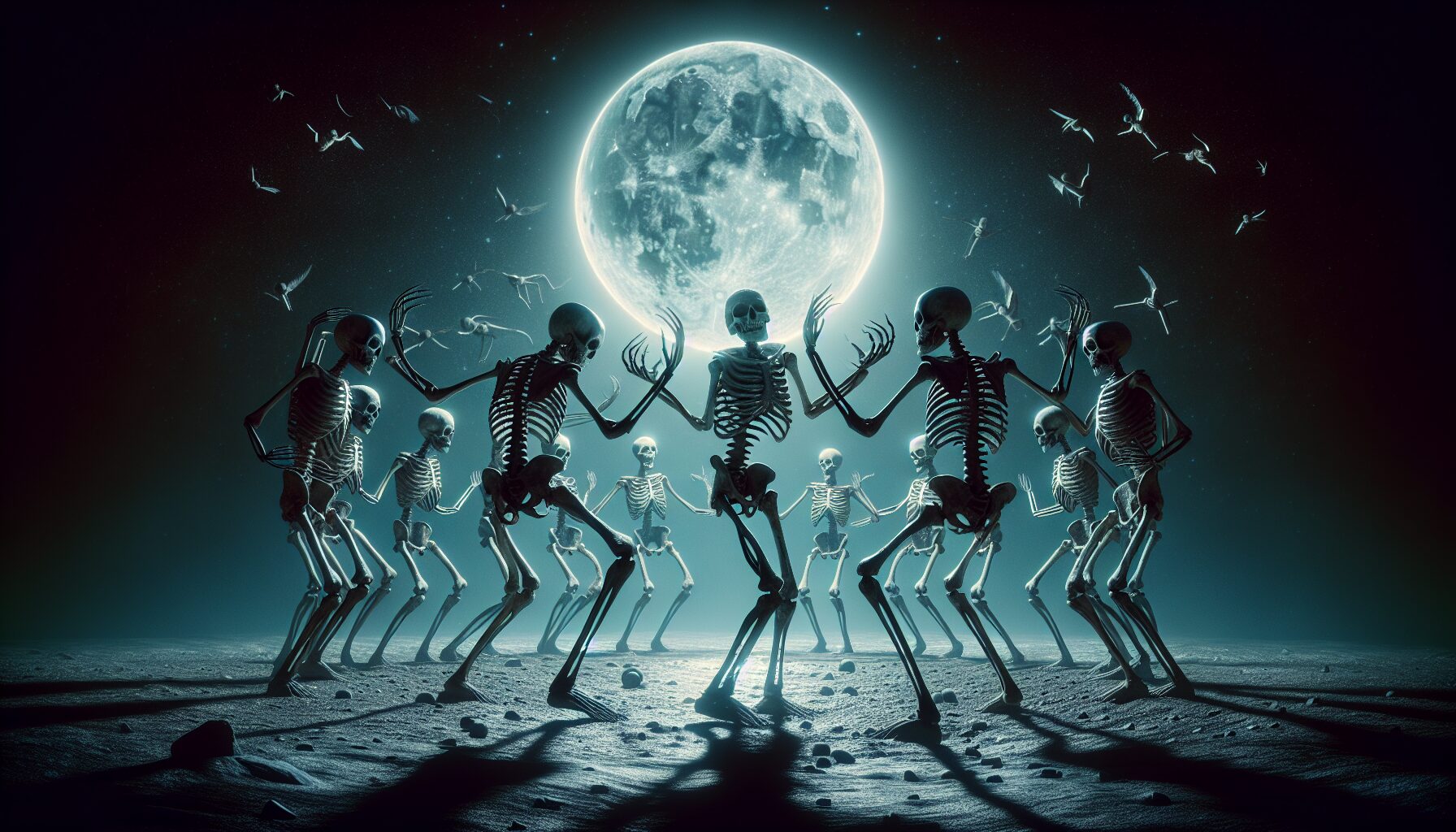
    In the high-altitude enclaves of the Tibetan Himalayas, spiritual practices blend the formidable power of nature with an intricate tapestry of cultural traditions. One of the most captivating manifestations of this synthesis is the Skeleton Dance, a ritual deeply embedded in the Tibetan tantric tradition. This dance serves as a symbolic representation of death, rebirth, and the transitory nature of life.

    Origins and Meaning

    The Skeleton Dance, or “Durdak Garcham”, is traditionally performed by monks during the annual Tibetan Buddhist ceremony known as Cham. This ritual is performed with vibrant masks and costumes, aiming to vanquish evil spirits. At its core, the dance represents the impermanence of life and the constant cycle of life and death.

    According to Buddhist teachings, accepting the inevitability of death is essential in transcending fear and facilitating spiritual enlightenment. The Royal Library of Britannica states, “Unlike Western perspectives that often fear death, Tibetan Buddhism encourages an embrace of mortality, viewing death not as an end but as a transitional state.”

    The Dance of the Skeletons

    The performers, usually monks, don impressively intricate costumes that transform them into eerie apparitions of skeletons. Each movement is deliberate and filled with symbolic meaning, intended to invoke contemplation among the spectators. The dancers move rhythmically to the beat of drums and the resonant chimes of cymbals, communicating the transient nature of life.

    A vivid portrayal of life’s fragility, the Skeleton Dance underscores the idea that death is a mere transition rather than a cessation. By confronting the audience with the inevitability of death, the dance aims to awaken them to the beauty and importance of ethical living.

    Symbolism in the Dance

    • Costumes: The skeleton costumes symbolize both literal and metaphorical death. The stark white bones against a dark background are a reminder of mortality lurking behind the facade of life.
    • Movements: The ethereal movements of the skeletons symbolize the fleeting nature of existence, reflecting the constant change inherent in life.
    • Music: The rhythm created by the instruments mimics the heartbeat of life, with intermittent silences representing deathly pauses, an acknowledgment of the cycle of life and rebirth.

    Ritual Function and Cultural Impact

    The Skeleton Dance fulfills a crucial role in the spiritual festivals of Tibetan Buddhism, particularly those marking the Lunar New Year. Its primary function is purgative—cleansing the spiritual ether of malevolent forces through the dance’s powerful symbolism and ritual purification.

    “In Tibetan Buddhism, the ritual dance is not just a performance but a means of achieving spiritual insight. It functions as a meditative exercise which holds the power to transform both performer and audience,” says renowned Tibetan scholar Dr. Lobsang Sangye.

    Throughout the years, the Skeleton Dance has garnered significant interest from anthropologists, spiritual seekers, and tourists alike. Its captivating symbolism continues to educate the global community on Tibetan culture and spiritual beliefs, offering a glimpse into a world where life and death coexist seamlessly.

    Modern Interpretations and Influences

    While primarily practiced in the secluded monasteries of Tibet, the Skeleton Dance has begun to transcend its traditional boundaries, influencing various art forms around the world. Modern interpretations by performance art troupes and filmmakers attest to its enduring legacy.

    Moreover, as discussions around death become increasingly open in Western cultures, there is a growing appreciation for the Skeleton Dance’s ability to demystify and depersonalize mortality. This has sparked dialogue on how such traditions might contribute to modern-day understandings of life and death.

    In Conclusion

    The Skeleton Dance stands as a powerful testament to the rich cultural and spiritual traditions of Tibetan Buddhism. It invites viewers to engage with difficult questions of mortality through the captive spectacle of dance, allowing for a deeper understanding and acceptance of life’s impermanence.

    By bridging the realms of life and death through ritual and art, the Skeleton Dance elevates the human condition, reminding us all of the fleeting nature of life. It’s more than just a dance; it is a profound meditation on existence itself—a timeless ritual that continues to inspire and transform.

  • Angels as Psychopomps – Guides Through the End

    Angels as Psychopomps – Guides Through the End

    Angels as Psychopomps: Guides Through the End

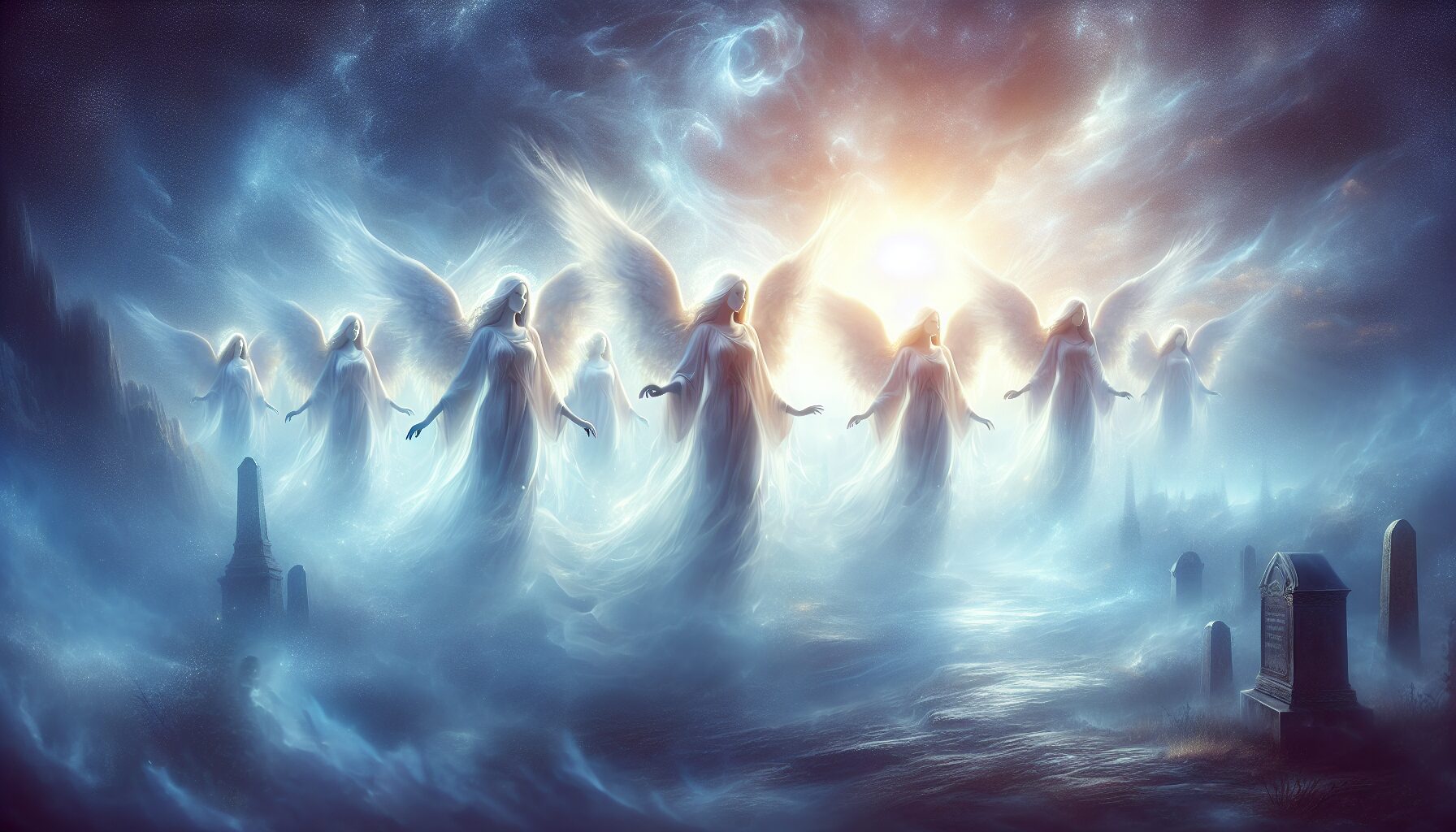
    The concept of angels serving as psychopomps—guides for souls transitioning from the world of the living to the afterlife—has captivated human imagination for centuries. These celestial beings, often associated with divine protection and guidance, play a crucial role in various religious and cultural narratives. This article explores the role of angels as psychopomps, delving into their historical representations, cultural significance, and spiritual implications.

    Understanding the Term “Psychopomp”

    The term psychopomp is derived from the Greek words psyche (meaning “soul”) and pompos (meaning “guide” or “conductor”). Psychopomps are traditionally regarded as spiritual guides who lead the souls of the deceased to the afterlife. While these roles are often mythological or religious in nature, they offer profound insight into human conceptions of death and the afterlife. In many cultures, angels are considered quintessential psychopomps, facilitating a peaceful transition from life to death.

    Angels in Religious Texts

    Prominent religious texts across different cultures highlight the role of angels as intermediaries and guides for human souls. In Christianity, the Bible mentions angels as companions who carry the souls of the righteous to the afterlife. The Gospel of Luke (16:22) recounts:

    “The time came when the beggar died and the angels carried him to Abraham’s side.”

    This depiction emphasizes the angelic duty to escort souls to their eternal rest, underscoring their divine role in God’s celestial hierarchy.

    In Islam, the archangel Azrael is often depicted as Malak al-Mawt, the Angel of Death, who separates the soul from the body at the moment of death. Islamic tradition asserts that Azrael is compassionate yet firm, ensuring a just transition from one realm to the next.

    Angels as Psychopomps in Mythology

    Beyond formal religious contexts, the motif of angels or angel-like beings as soul guides features prominently in various mythologies. In Greek mythology, the figure of Charon serves a similar role, ferrying the souls of the dead across the river Styx. Although not an angel, Charon’s function as a transporter of souls reflects the essential duties of a psychopomp.

    Similarly, in Hindu mythology, Yama, the god of death, is accompanied by messengers known as the Yamadutas. These messengers perform the psychopomp function by guiding departed souls to Yama’s realm, paralleling angelic roles in other religions.

    Angels: Bridging the Gap Between Worlds

    Angels as psychopomps are not only significant for religious adherents but also for individuals seeking comfort in times of loss. Their portrayal as intermediaries who bridge the earthly and celestial realms offers hope and solace. Many people find comfort in the belief that angels watch over their loved ones, ensuring a smooth transition to the afterlife.

    For instance, in the Jewish faith, the presence of angels during a person’s passing is symbolically represented during the Kaddish, a prayer for the deceased. This prayer reflects the community’s hope for divine assistance in the deceased’s afterlife journey, underscoring the protective and guiding role angels assume.

    Cultural Interpretations and Artistic Representations

    The image of angels as psychopomps has inspired countless works of art, literature, and music. Paintings such as William-Adolphe Bouguereau’s “Song of the Angels” depict serene celestial beings providing comfort and guidance. Such visual representations convey a sense of peace and divine intervention during the end-of-life process.

    In Western literature, angels appear as compassionate guides in works ranging from Dante’s Divine Comedy to more contemporary novels like Mitch Albom’s The Five People You Meet in Heaven. These depictions reinforce the narrative of angels as protectors and spiritual guides through the unknown realms of the afterlife.

    Angels as Symbols of Hope and Continuity

    The concept of angels as psychopomps transcends religious boundaries, symbolizing hope, continuity, and the belief in an afterlife. For those who believe, angels assure a dignified and serene passage through death, offering a comforting sense of order and care. The presence of angels in death rituals and mourning practices highlights the universal quest for understanding and consolation in the face of mortality.

    Conclusion

    Angels as psychopomps encapsulate the human desire for reassurance and guidance at life’s end. Whether through scriptural references, artistic depictions, or cultural rituals, these divine guides offer a narrative of peace during the soul’s ultimate journey. Embracing angels as psychopomps allows individuals from diverse religious and cultural backgrounds to navigate the profound and mysterious transition from mortality to the afterlife.

  • The River Crossing – Myths of Death’s Thresholds

    The River Crossing – Myths of Death’s Thresholds

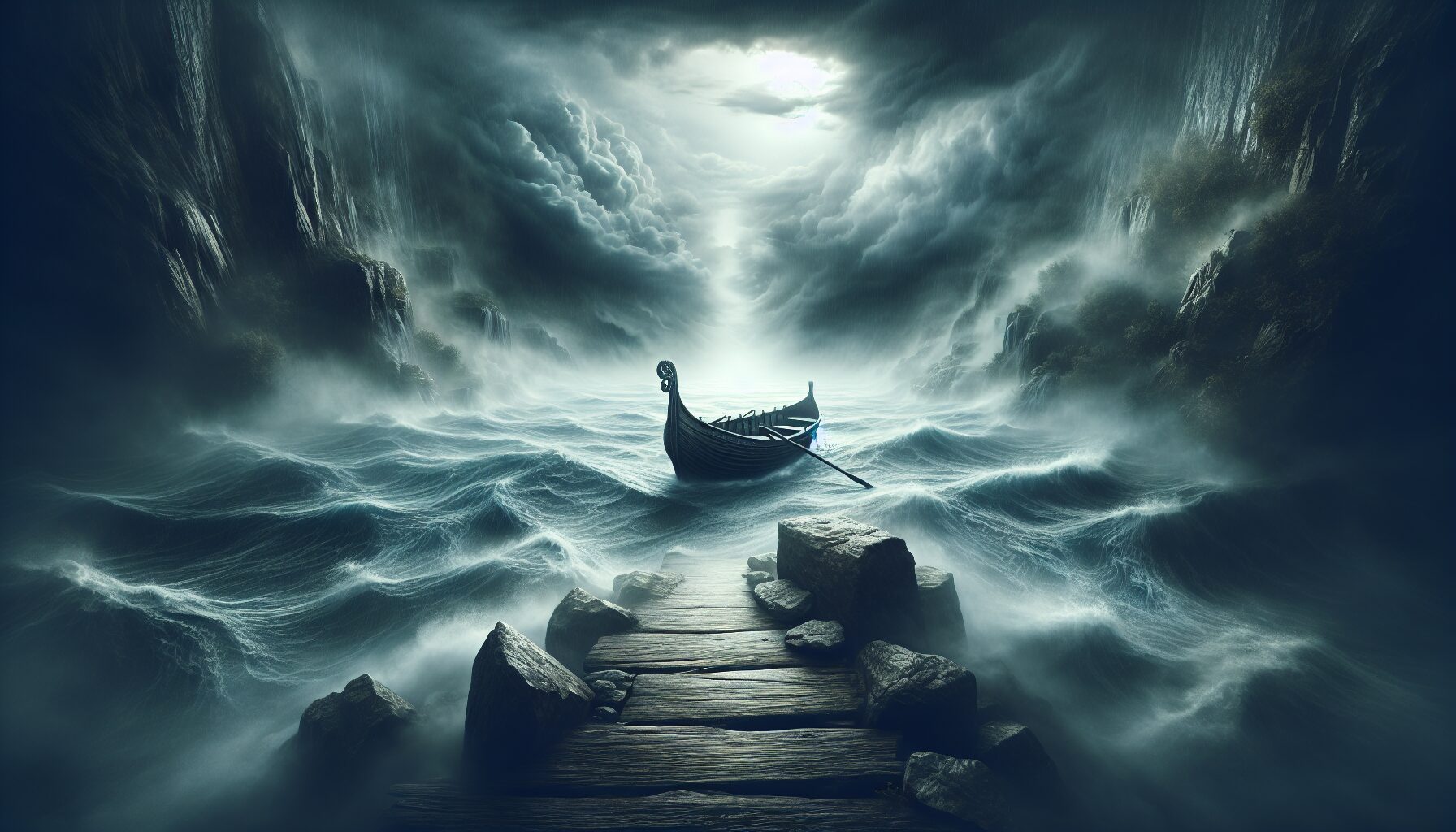
    The concept of crossing a river as a passage into the afterlife is a fascinating and recurring theme in various mythologies around the world. From the ancient Greeks to Native American tribes, rivers have symbolized the boundary between life and death, a threshold that souls must traverse in their journey to the other world.

    The Styx and the Acheron: Greek Mythology

    In Greek mythology, the underworld was a complex realm where the souls of the dead resided. The River Styx is perhaps the most famous of the mythological rivers associated with the afterlife. According to legends, souls were required to cross the Styx to enter Hades, the realm of the dead. Encyclopædia Britannica describes the Styx as a conduit to the underworld, where Charon, the ferryman, transported souls across for the cost of a single coin.

    Another river in Greek myth, the Acheron, is often referred to as the “river of woe.” The crossing of the Acheron is sometimes viewed as critical a step as traversing the Styx, symbolizing the finality of death. In The Odyssey, Homer speaks of these rivers, weaving the dread and mystery of death’s passage into the tapestry of life’s inevitable end.

    The Vé River in Norse Mythology

    Norse mythology also holds its version of the river crossing through Vé Freki, a river where the dead embarked on their path to the underworld. This river flowed into Helheim, ruled by the goddess Hel. Unlike the Greek tradition, where spirits could occasionally return to the land of the living, Norse souls remained eternally across this threshold, reinforcing the impenetrability of death. The bleakness of this river crossing resonated deeply in the Norse worldview, echoing themes of inevitability and darkness.

    The River of Forgetfulness in Hindu Beliefs

    Hindu mythology presents the River Vaitarna, a harrowing obstacle souls must cross to reach Yamaloka, the abode of the god of death. Mention of this river can be found in various scriptures such as the Mahabharata. The Vaitarna symbolizes the shedding of earthly attachments, a cleansing of sorts before the soul ascends or reincarnates. The crossing signifies the transition from the material world into ethereal realms, a necessary step in the cycle of life and death.

    Native American Spirits and the Spirit River

    For many Native American tribes, such as the Mandan and Ojibwe, rivers represented the pathway to the spirit world. These cultures revered the physical bodies of water within their environment as transformative pathways, where ancestral spirits journeyed beside living waters. The river crossing, often conducted by spiritual figures or animal guides, signified not an end but a continuation of the soul’s purpose and existence within a different plane.

    “Rivers…not only grant life and abundance to tribes but also represent life’s passage and the continuation of being beyond its physical constraints.” – Native American sayings

    Symbolism and Universal Themes

    The idea of crossing a river to reach the afterlife spans continents and cultures, indicating a universal symbolism in how humans perceive death. Rivers, with their changing currents, mysterious depths, and ceaseless flow, mirror the enigmatic and uncertain nature of death. The geographic barrier translates into a psychological passage, theorized over centuries by scholars worldwide.

    Water, as an element, embodies transformation, healing, and rebirth. The river’s symbolism in mythology reflects similar properties—a cleansing of the soul, renewal through departure, and transformation through transcendence. The theory and allure of rivers as metaphors for this journey are further enriched by their presence in literal landscapes, anchoring spiritual beliefs into observable nature.

    Conclusion

    While each culture may vary in its narrative details, the central theme of the river crossing encapsulates a shared human enigma: the transition from life to death. Whether as a calming guide or a foreboding challenge, these mythic rivers offer pathways through deep-seated fears toward the hope of existence beyond mortal confines.

    These myths serve as reminders that death, while often shrouded in fear, can also signify new beginnings. As eternal as the flow of rivers, so too is the continuity of the human spirit within the stories we’ve told through generations, tales echoing with the timeless courage of those who dared to cross.