Author: editor

  • Tombs as Portals – Architecture for the Dead

    Tombs as Portals – Architecture for the Dead

    Tombs as Portals: Architecture for the Dead

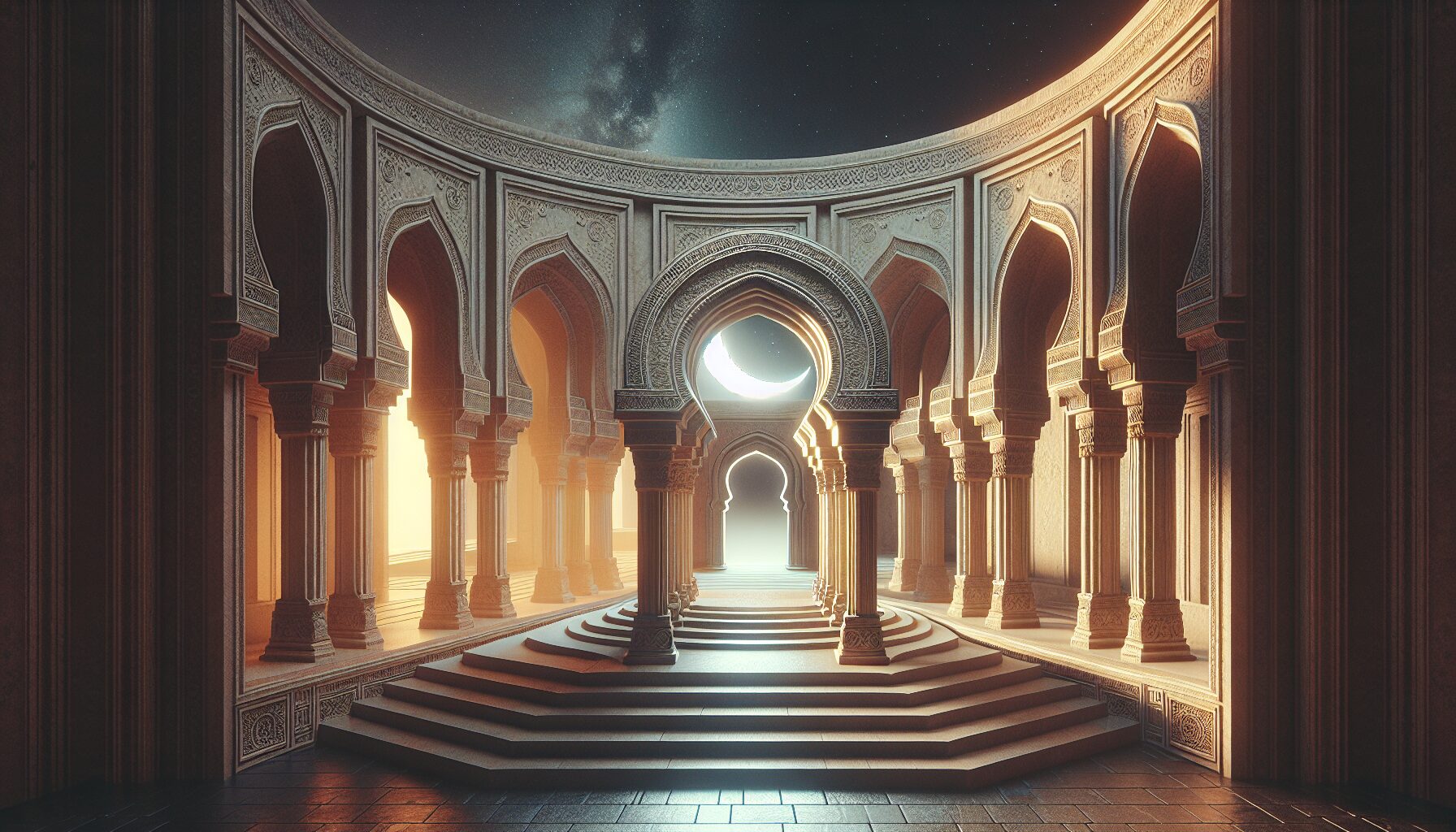
    The concept of the tomb as more than just a resting place for the dead has been a subject of fascination across cultures and eras. Viewed as portals to other realms, tombs encompass architectural and artistic genius, reflecting beliefs about life, death, and the possibility of an afterlife. This article explores how tombs serve not merely as monuments but as metaphysical gateways connecting the earthly and the divine.

    The Genesis of Tombs as Portals

    From the earliest civilizations, tombs were conceived as gateways to the afterlife. In ancient Egypt, the construction of tombs was a complex procedure, laden with religious symbolism and ritual. Pharaohs viewed their tombs, particularly the pyramids, as vehicles that would carry their spirits to the heavens. As noted by Egyptologist Zahi Hawass, “The pyramid was a resurrection machine, a way to reach the afterlife by ascending the sun’s beams.” (National Geographic)

    Similarly, the Chinese emperors of the Han Dynasty considered their tombs as replicas of their earthly palaces. The famous Terracotta Army, guarding the tomb of the first Emperor of China, Qin Shi Huang, is a testament to the belief that the next life mirrored earthly life. These structures were not merely graves but were meant to ensure protection and continuity in the beyond.

    Architectural Designs and Their Symbolism

    • Pyramids and Ziggurats: The step design of ziggurats and the geometrical perfection of pyramids were intended to bridge earth and sky, facilitating the ascension of the soul.
    • Mausoleums: These grand structures often include elaborate entrances meant to signify portals. The Taj Mahal, apart from its undeniable beauty, is aligned with cosmic and astronomical principles, conceptualizing both an earthly and a celestial connection.
    • Rock-cut tombs: In India, the Ajanta and Ellora caves combine spiritual narrative and architecture, offering a passage through mural depictions of spiritual journeys.

    Tombs in Myth and Legend

    Throughout history, the stories surrounding monumental tombs have added layers to their role as portals. In Mesoamerican culture, the tomb of King Pakal in Palenque is often associated with the imagery of rebirth, his sarcophagus lid depicting the king’s journey to the underworld.

    In European lore, the discovery of tutankhamun’s tomb inspired legends of a “curse” meant to protect the pharaoh’s portal to the hereafter. The Gothic tradition in the West added a macabre romanticism to crypts and catacombs, reinforcing the idea of tombs as junctions between worlds.

    Innovations in Modern Tomb Design

    Contemporary architects continue to reimagine tombs as modern-day portals, fusing technology with ancient ideologies. Noteworthy are projects envisioned by architects who integrate ecology and spirituality in their designs.

    • The Memorial Necrópole Ecumênica: Located in Brazil, this vertical cemetery challenges the traditional notion, using space efficiently while maintaining a sacred ambiance.
    • The “Sky Burial” concept: Drawing inspiration from Tibetan practices, this environmentally conscious design proposes transforming bodily remains into plant-nourishing elements, symbolizing life-uber-death.

    Impact on Art and Culture

    The representation of tombs in art and literature frequently alludes to their transformative nature. Shakespeare’s references to tombs in plays like Hamlet often underscore the cryptic and mystic journey associated with death. In contemporary cinema, films such as Indiana Jones and The Mummy perpetuate the archetype of the tomb as a mystical gateway.

    Additionally, visual artists over the centuries have embraced this portal theme, capturing the voyage from life to eternity in their work. For example, Salvador Dalí’s paintings often explore themes of mortality and eternity, invoking the symbolic architecture of tombs.

    Conclusion

    Tombs as portals provide an enduring narrative that bridges the tangible and the spiritual, embodying humanity’s quest for understanding life and the afterlife. They stand as remarkable testaments to cultural beliefs, artistic expression, and architectural innovation. Celebrating this intersection of art, culture, and spirituality not only enhances our understanding of history but also our aspirations for the future.

    “Death is a mystery, and burial is a secret.” – Stephen King

    As we advance, the profound respect and awe for tombs continue to evoke conversations about existence and legacy, urging us to ponder our place in the continuum of life and beyond.
  • The Smell of Decay – Sense as Reminder of Mortality

    The Smell of Decay – Sense as Reminder of Mortality

    The Smell of Decay: Sense as a Reminder of Mortality

    The sense of smell, often underestimated yet profoundly powerful, possesses the ability to evoke memories and emotions that are deeply intertwined with our human experience. Among the myriad scents that waft through our lives, the smell of decay serves as a visceral reminder of mortality. This scent, unmistakable in its pungency, wields the power to awaken an awareness of the fleeting nature of life.

    Understanding the Odor of Decay

    The smell of decay is often characterized by its strong, unpleasant aroma, which results from the breakdown of organic matter. The decomposition process releases various compounds, including sulfur dioxide, cadaverine, and putrescine, which contribute to its distinctive odor. As studies on olfactory perception suggest, our sense of smell is closely tied to survival mechanisms, enabling us to detect not only food but also potential dangers such as infection or spoiled materials.

    The Psychological Impact

    Encountering the smell of decay often triggers a primal response, rooted in an evolutionary need to avoid rotten food or hazardous environments. However, the impact extends beyond physical reactions; it calls forth an existential reflection on life’s impermanence. A review by Psychology Today highlights how exposure to decay can heighten awareness of our own mortality, prompting introspection about the inevitability of death.

    “The first condition of understanding a foreign country is to smell it.” – Rudyard Kipling

    This quote by Rudyard Kipling speaks volumes about the connection between scent and awareness. Similarly, the smell of decay acts as a pungent prompt for understanding the transient nature of existence, transcending cultural and geographical boundaries.

    Cultural Perspectives on Decay and Mortality

    • Western Cultures: In many Western societies, the odor of decay is often associated with fear and taboo. This is reflected in practices surrounding funerals and the preservation of bodies. The idea of decay as something to be masked or hidden underscores a broader cultural discomfort with death.
    • Eastern Philosophies: In contrast, some Eastern philosophies view mortality as a natural part of life’s cycle. For instance, the Japanese practice of Mono no aware (the pathos of things) embraces the beauty of transience, recognizing decay as an essential element of the universe’s impermanence.

    Decay in Art and Literature

    The scent of decay has often inspired artists and writers, serving as a metaphor for the human condition. In literature, decay frequently symbolizes moral and societal decline. Shakespeare’s Hamlet, for instance, employs decay as a metaphor for the corruption pervading the state of Denmark: “Something is rotten in the state of Denmark.” This line captures the smell of decay as a harbinger of moral collapse.

    In visual arts, decay is used to evoke beauty within transience. Works by artists like Francis Bacon explore the disintegration of the human form, compelling viewers to confront the vulnerability of the human condition.

    The Philosophical Perspective

    Philosophically, the scent of decay aligns with existential themes exploring the nature of death and the value of life. French philosopher Simone de Beauvoir contemplated the inevitability of decay in “All Men are Mortal,” positing that the acceptance of mortality is essential to living a full life:

    “Death must be present in life for certain short-lived things to mean anything at all.”

    Acceptance and Embracing Life’s Fleeting Nature

    To accept the smell of decay as part of the human experience is to acknowledge the ephemeral quality of life. In doing so, we may find a deeper appreciation for the moments we have. As we confront the uncomfortable reality of our mortality, we are reminded of the importance of embracing life’s impermanent beauty, cherishing each moment as it comes.

    The smell of decay, then, becomes more than an unpleasant odor; it is a testament to the cyclical nature of existence, a call to mindfulness and a reminder that, like all things, we too shall pass. Embracing this inevitability can empower us to live more fully, with greater clarity and purpose.

  • The Alchemy of Death – Turning Flesh Into Wisdom

    The Alchemy of Death – Turning Flesh Into Wisdom

    The Alchemy of Death – Turning Flesh Into Wisdom

    The Alchemy of Death – Turning Flesh Into Wisdom

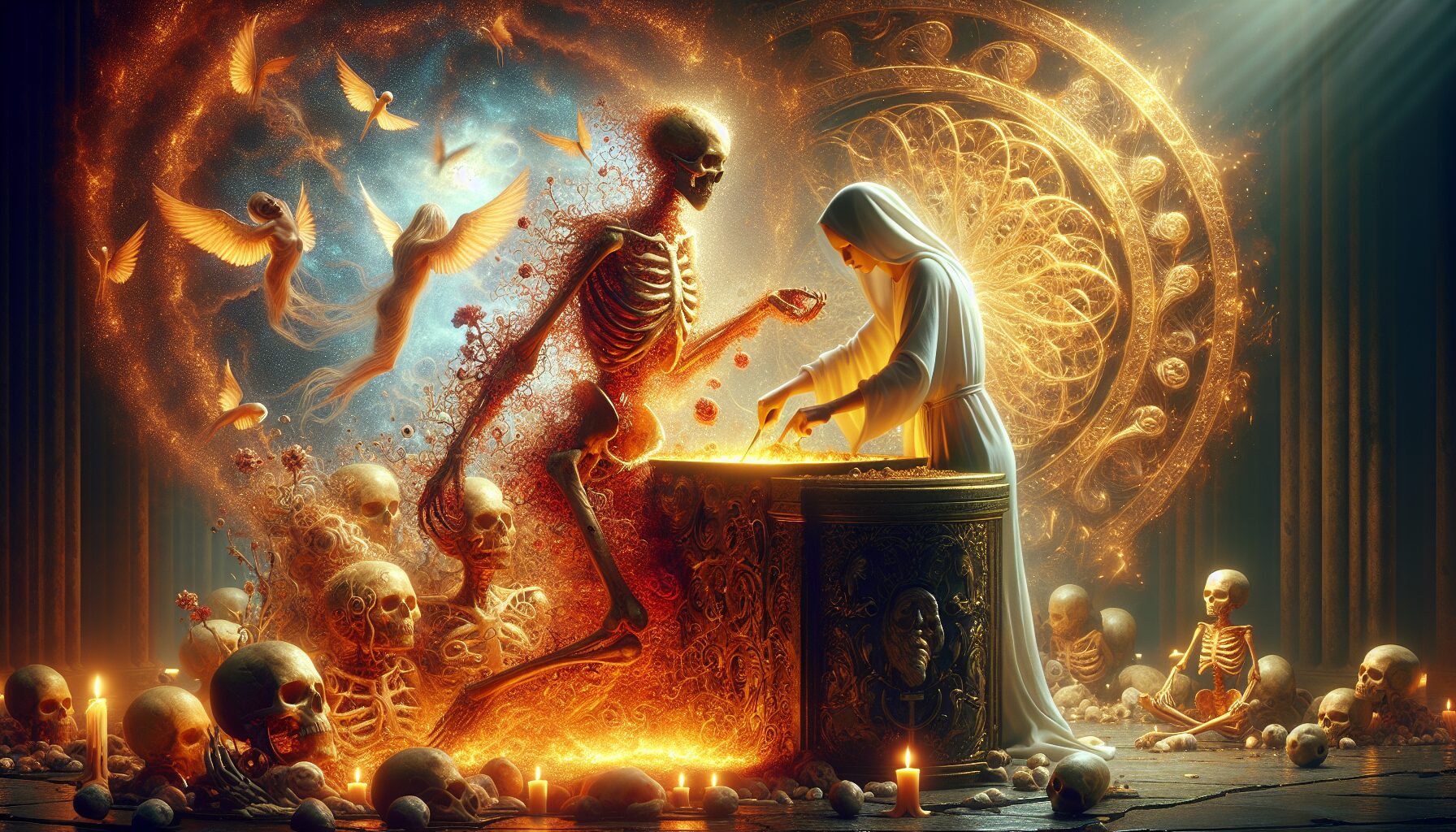
    The concept of death is often cloaked in mystery and fear, yet across cultures and histories, it has been perceived as much more than just an end. Rather, it has served as a transformative process—the ultimate alchemical conversion where flesh gives way to wisdom. This transcendental view sees death not as an obliteration of existence, but as a synthesis of corporeal experience into a higher form of understanding.

    The Alchemical Philosophy

    Alchemy, historically, was not just about the literal transformation of base metals into gold. Its practitioners sought spiritual elevation and enlightenment, using physical symbols and processes as metaphors for deeper truths. As Carl Jung described, alchemy is also about “the transmutation of the personality” (Simply Psychology).

    “Alchemy is the art of far and near, and I think poetry must be the same. How shall its mysteries be deciphered?” — Hart Crane

    Death, in this context, is viewed as a necessary metamorphosis. Just as alchemy turns base metals into pure gold, death is believed to convert the mundane experiences of a person into a purified essence—knowledge and wisdom that transcend the individual self.

    Death in Ancient Cultures

    Many ancient cultures revered death as a sacred transition rather than an unfortunate cessation. The Egyptians believed in the rebirth after death, where the soul would journey through the afterlife to gain eternal wisdom. Their intricate burial practices were designed to prepare the soul for this arduous but enlightening journey.

    Similarly, in the Tibetan Book of the Dead, death is seen as a critical time for gaining insight. The text offers guidance for the soul as it navigates through the bardo—a transitional state where it has the opportunity to achieve enlightenment before rebirth.

    • The Egyptian “Book of the Dead” contains spells and incantations to aid the deceased on their post-mortem journey.
    • The Mayan view of the afterlife included Xibalba, a place to overcome trials to attain serenity and wisdom.
    • In Hinduism, the cycle of death and rebirth (samsara) is aimed at self-realization and moksha, liberation and ultimate wisdom.

    Modern Interpretations

    In modern times, thinkers and spiritual leaders have continued to explore the idea of death as a transformative process. Philosopher and psychoanalyst Jacques Lacan suggested that accepting the inevitability of death is a key part of the human symbolism and self-realization process. Facing our mortality, we begin to alter our understanding not only of ourselves but also of the knowledge we carry.

    “Death is nature’s way of telling you to slow down.” — Dick Sharp

    Personal Transformation through Mortality

    Often, the confrontation with death, whether through personal loss or near-death experiences, catalyzes a profound change in perspective. People report significant shifts in their priorities, values, and the understanding of their place in the universe.

    • The near-death experience (NDE) often heightens spiritual awareness and leads to a reevaluation of life’s purpose.
    • Grief can open the path to self-discovery and greater emotional intelligence.

    A study by Dr. Raymond Moody, known for his works on the concept of life after death, highlights recurring themes of light, peace, and universal love experienced during NDEs. These elements contribute to a deeper understanding and wisdom in those who return.

    The Philosophical Implications

    From a philosophical standpoint, accepting death as a transformative stage rather than an end challenges the traditional linear view of life and death. It aligns more closely with cyclic philosophies seen in some Eastern traditions, which suggest that enlightenment—a pure form of wisdom—lies beyond the cessation of physical life.

    Furthermore, as Alan Watts puts it, “Trying to define yourself is like trying to bite your own teeth.” In essence, the wisdom that comes post-mortem might finally allow one to see beyond individual identity towards a universal connectivity that is elusive in life.

    Conclusion

    Ultimately, death as a process of alchemical transformation offers a narrative where the cessation of life is but a doorway to wisdom. This paradigm invites us to look beyond the fear and understand death as an integral part of life’s journey—one that promises a conversion from mere flesh to profound wisdom.

    Recognizing death as a continuing process of growth and understanding can bring peace and courage in life, encouraging us to live fully with the acceptance that the culmination of our experiences might transform into the ultimate alchemy: wisdom eternal.

  • Corpse Meditation – Facing Decay as Spiritual Practice

    Corpse Meditation – Facing Decay as Spiritual Practice

    Corpse Meditation: Facing Decay as a Spiritual Practice

    Meditation has long been revered as a pathway to inner peace and enlightenment, yet one of its more unusual and lesser-known forms involves contemplating death and decay. Known as Corpse Meditation, or Marana Sati, this practice originated in ancient Buddhist traditions and invites practitioners to engage deeply with the ephemeral nature of life.

    Understanding Corpse Meditation

    At its core, Corpse Meditation is a way to contemplate mortality by visualizing or even observing the decomposition of a body. Although the practice may seem morbid at first glance, its profound insights often lead to a greater sense of peace and acceptance of the natural cycles of life.

    “By contemplating a corpse, one learns the impermanence of life, reducing attachment and turning the mind towards spiritual growth,” notes Thanissaro Bhikkhu, a contemporary Buddhist monk and author. (Source)

    Historical Roots

    Corpse Meditation traces back to early Buddhist teachings where monks would meditate in charnel grounds. This practice is detailed in the Satipatthana Sutta, an essential discourse in the Pali Canon, where Buddha describes it as a way to develop mindfulness and the understanding of anicca (impermanence).

    • Practitioners would meditate on different stages of bodily decomposition.
    • The stages included the body bloating, decaying, and eventually turning to bones.
    • This meditation aimed at overcoming fear of death and eliminating attachment to the physical body.

    The Process of Corpse Meditation

    The practice of Corpse Meditation can be done in both physical settings—such as a certified retreat—and through guided imagery in personal spaces. The meditation involves several stages:

    • Visualization: Practitioners visualize a lifeless body going through various stages of decay.
    • Reflection: Each stage is reflected upon with understanding and acceptance of the inevitability of death.
    • Mindfulness: The meditator remains present with sensations and emotions, observing their transient nature.

    In some traditional settings, practitioners might actually meditate in morgues or places where bodies naturally decompose, an experience that provides a direct confrontation with death.

    The Psychological and Spiritual Benefits

    While confronting death might sound alarming, many find profound benefits in the practice:

    • Reduced Fear of Death: By repeatedly exposing oneself to the concept of decay, practitioners often report a diminished fear of their own mortality.
    • Decreased Attachment: Understanding the transient nature of the body helps reduce attachment to material possessions as well.
    • Heightened Mindfulness: The intense focus on present moment reality strengthens overall mindfulness and mental clarity.

    Robert Thurman, a scholar of Buddhism, mentions, “Coming face to face with death can bring a unique and profound awakening that life is fleeting. This realization can instill a renewed urgency to live authentically and lovingly.” (Source)

    Challenges and Considerations

    Despite its deep benefits, Corpse Meditation can be challenging and isn’t suitable for everyone. Those interested should proceed with caution and guidance:

    • Emotional Reactions: Some might find the practice triggering or overwhelming, particularly if they have unresolved grief or fear associated with death.
    • Guidance Required: Beginners are encouraged to seek guidance from experienced meditation teachers.
    • Personal Readiness: It’s critical to assess one’s comfort level with the practice’s themes before engaging deeply.

    Peter Harvey, an expert in Buddhist studies, warns of the intensity of the practice, stating, “This meditation requires mental fortitude and should be approached with sensitivity and respect for one’s emotional boundaries.” (Source)

    Modern Adaptations and Alternatives

    In today’s context, Corpse Meditation has been adapted for various cultures and spiritual practices, integrating modern therapeutic techniques to address its challenging aspects:

    • Yoga and Mindfulness: Practices such as Savasana in yoga can incorporate elements of Corpse Meditation by allowing relaxation and reflection on the body’s stillness.
    • Guided Imagery: Audio guides and virtual retreats offering gentle introductions to the practice are becoming popular.
    • Therapeutic Approaches: Psychotherapists may use death-related meditative techniques to help clients work through existential anxiety.

    Conclusion: Embracing Life Through Death

    Though unconventional, Corpse Meditation provides a transformative lens through which to view life and death. By facing decay, meditators not only diminish the fear of their own mortality but also cultivate a deeper appreciation and acceptance of life’s impermanence. Through mindful reflection, one can unlock profound spiritual insights, leading to a more authentic and fulfilled existence.

    In a society often in denial about death, embracing the practice of Corpse Meditation invites a foundational shift in perspective—one that acknowledges the beauty and necessity of both life’s beginning and its inevitable end.

  • The Soul’s Journey – Tibetan Cosmology of Afterlife

    The Soul’s Journey – Tibetan Cosmology of Afterlife

    Tibetan cosmology presents a richly detailed map of the afterlife, offering insights into what many believe awaits beyond death. Rooted in a fusion of Buddhist teachings and ancient Bon traditions, this view is closely tied to the essential aspects of Tibetan spiritual philosophy.

    The Bardo States

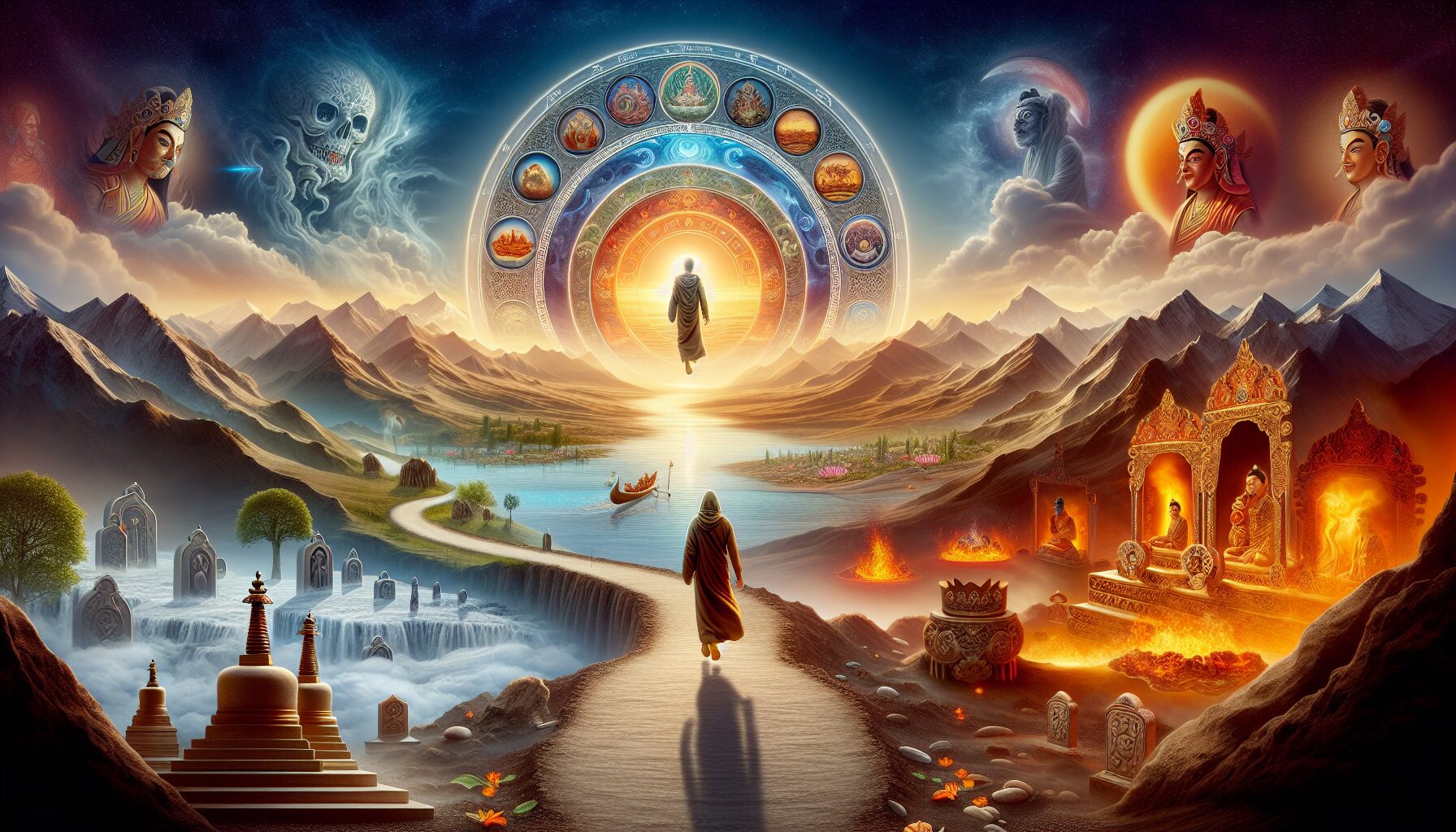
    Central to Tibetan beliefs about the afterlife is the concept of the bardo. The term “bardo” translates to “in-between state” and refers to the transitional phases a soul undergoes from the moment of death until rebirth. There are traditionally three major bardo states described in the Bardo Thodol, or “The Tibetan Book of the Dead”:

    • Chikhai Bardo: The moment of death, where the individual experiences the “Clear Light of Reality.” This is a moment of profound opportunity, where the soul can recognize the true nature of the mind.
    • Chonyid Bardo: Following the initial moment of death, the soul encounters various manifestations stemming from its own mind. These visions can range from peaceful to wrathful and are believed to provide insight into one’s karma.
    • Sipa Bardo: The phase leading to rebirth. Here, based on accumulated karma and clarity of awareness, the soul is guided towards its next incarnation.

    Karma and Rebirth

    The Tibetan understanding of the afterlife is deeply interwoven with the concept of karma. As the Dalai Lama explains, “From the Buddhist perspective, the ideas of karma and rebirth form a natural extension of the evolutionary process” (Dalai Lama’s Messages).

    Each action performed in life—whether thought, word, or deed—imprints a karmic residue that influences the soul’s journey within the bardo states. Hence, one’s conduct can critically impact the conditions of rebirth, potentially leading a soul toward a higher or lower existence in its next life.

    Practical Applications

    The Tibetan approaches to death and dying are not merely theoretical. They offer practical paths for preparation and assistance for those facing death. Meditative practices, such as phowa (transference of consciousness), are employed to secure a more favorable rebirth by directing the mind’s attention at crucial moments.

    Conclusion

    The Tibetan cosmology of the afterlife provides a profound and structured vision of post-mortem existence that emphasizes personal responsibility and the potential for spiritual evolution. By understanding these processes, individuals can engage more mindfully with life, cultivating the positive conditions necessary for an auspicious continuation beyond this existence.

    “Understanding the bardo states can help us become less fearful of death and more mindful of how we live.” — Tricycle Magazine

  • Meditating on Death – Ancient Practices of Impermanence

    Meditating on Death – Ancient Practices of Impermanence

    Across cultures and epochs, the contemplation of death has been a profound practice to gain wisdom and serenity. Such meditations on impermanence encourage a deeper appreciation for life, urging individuals to live with intention. This article explores some ancient practices that have continued to offer solace and insight into the fleeting nature of existence.

    Tibetan Buddhism and the Bardo Thödol

    Among Tibetan Buddhists, the Bardo Thödol, commonly known in the West as the Tibetan Book of the Dead, offers profound teachings on the transitional states between death and rebirth. According to Encyclopaedia Britannica, the text serves as a guide for the deceased during the state of transition, called bardo. This practice not only prepares the living to confront mortality but offers a vision of life’s transitory beauty.

    Stoic Reflections on Mortality

    The Stoics, ancient philosophers of Greece and Rome, often reflected on death to cultivate wisdom. Marcus Aurelius, in his Meditations, advises, “You could leave life right now. Let that determine what you do and say and think.” Through daily reminders of death, known as Memento Mori, stoics embraced the impermanence of life to instill courage and clarity in their actions. Such teachings continue to captivate modern seekers of wisdom.

    The Egyptian Practice of Ritual Mourning

    For ancient Egyptians, death was a journey, not an end. They held elaborate rituals to prepare for the afterlife, but also practiced personal mourning as a meditation on loss and transformation. According to the History Channel, the preservation of bodies through mummification further highlighted their belief in the ongoing process of death and rebirth. Engaging in these practices allowed them to maintain a deep connection with both the deceased and the sacred journey of life.

    Japanese Zen Buddhism and Impermanence

    In Japanese Zen Buddhism, the concept of Mono no Aware—the pathos of things—emphasizes the beauty of transience. This aesthetic, drawn from Japanese poetry and art, encourages mindfulness of life’s ephemeral nature. As author William R. Lafleur notes in his work on Zen practices, “The beauty of life lies in its impermanent stages.” Such insights foster a nurturing appreciation for every fleeting moment of existence.

    “You could leave life right now. Let that determine what you do and say and think.” – Marcus Aurelius

    By embracing these ancient practices, individuals can embark on a journey toward understanding life’s impermanence. Such reflections not only bring solace to those contemplating the end but also illuminate the preciousness of every moment we have.

  • Sky Burial – Feeding Death to the Vultures of Heaven

    Sky Burial – Feeding Death to the Vultures of Heaven

    High up in the Tibetan plateau, where the sky stretches endlessly and the air is thin with the whispers of ancient rituals, lies a practice both profound and deeply spiritual: the sky burial. Known locally as “jhator,” this sacred rite reflects a unique understanding of life, death, and the cyclical nature inherent to both.

    “The Tibetans have learned to see death as a bridge to a better life, and the sky burial is a heartfelt acknowledgment of that journey,”

    Sky burial is a funerary tradition primarily observed by the Tibetan Buddhists, a people who perceive the earthly body as an empty vessel once life has departed. This ritual serves not only as a means to dispose of the body but also as an act of charity, offering sustenance to the creatures who are integral to their highland ecosystem: the vultures.

    • Symbolic Rebirth: The practice underscores the belief in samsara, the cycle of death and rebirth. The body’s consumption by vultures is seen as an act of returning to nature, an important step in the deceased’s spiritual journey.
    • Practicality and History: In the rocky terrains of Tibet, traditional burial or cremation is often impractical. The historical context adds a layer of practicality to this ethereal tradition.
    • Ecosystem Connection: The ritual is deeply connected to the surrounding ecology. Vultures, regarded as heavenly emissaries, help maintain the environmental balance by consuming carrion that could otherwise spread disease.

    The process is carefully orchestrated. Monks or designated attendants commence by ritually preparing the body, which is often draped in white cloth, symbolizing purity. Chanting sacred mantras, the monks invite the vultures, who descend upon the scene with the quiet dignity that seems almost reverent.

    Despite its apparent starkness, the sky burial is viewed not with horror but with reverence. It is a gentle reminder of impermanence, nudging the living towards mindfulness and compassion. In a world often marked by the fear of death, this practice boldly embraces it, fostering a serene acceptance of life’s ultimate passage.

    For those unacquainted with Tibetan rituals, sky burial might initially provoke unease. Yet, in understanding its spiritual essence, one finds profound beauty in the cycle of life and death. As NPR noted, “In vulture’s flight from mountain to sky, the soul is said to take its journey to the heavens.” In this cycle, the sky burial stands as a poignant tribute to the timelessness of life itself, a ceremony that feeds both the earth and the heavens.

  • Ritual Cremation – Fire as Passage Beyond Life

    Ritual Cremation – Fire as Passage Beyond Life

    Ritual Cremation – Fire as Passage Beyond Life

    Introduction

    Throughout history, fire has been perceived as both a formidable and sacred element. Its role transcends mere utility; it symbolizes transformation, purification, and the eternal cycle of life and death. Among its significant cultural implications is the practice of ritual cremation, a rite that has profound spiritual and historical significance across various cultures.

    Historical Background

    The tradition of cremation dates back many thousands of years. Archaeological discoveries suggest cremation practices were conducted as early as the Stone Age, approximately 20,000 years ago. Evidence of such practices has been found in archaeological sites around the world, from the early Aryan tribes of Europe to ancient civilizations in Asia.

    According to the Archaeological Institute of America, one of the oldest evidence of cremation has been discovered at the site of Lake Mungo in Australia where human remains were cremated around 40,000 years ago. In Europe, cremation became widespread by the time of the Bronze Age.

    Cultural Significance

    The spiritual implications of ritual cremation are deeply embedded in many religions and cultures. Each culture attributes unique meanings and practices associated with the act.

    Hinduism

    • The Cycle of Samsara: In Hinduism, cremation is intertwined with the concept of Samsara, or the cycle of life, death, and rebirth. The fire acts as a purifying force, liberating the soul from the physical body. The sacred fire is often seen as a bridge for the soul to reach the afterlife or gain reincarnation.
    • Ritual Process: The cremation process itself is filled with ritualistic acts. The eldest son traditionally lights the pyre, and prayers are recited to ensure the proper passage of the soul.

    Buddhism

    • Impermanence: Reflective of the Buddhist belief in impermanence, cremation symbolizes the transient nature of life. The decomposing body through fire reinforces the understanding that life is temporary and ever-changing.
    • The Middle Path: In some Buddhist traditions, cremation is seen as following the ‘middle path’ between earth burial and sky burial, reinforcing balance and harmony.

    Western Traditions

    • Roman and Greek Practices: In ancient Rome and Greece, cremation was associated with honoring the esteemed dead, especially warriors and philosophers. It was considered a noble and proper way to deal with the dead.
    • Modern Adoption: Today, cremation in the West is often chosen for pragmatic reasons, yet it retains the symbolism of returning dust to dust, restoring the body to the natural cycle of life.

    The Science of Cremation

    While the cultural aspects of cremation are profound, the scientific process is both fascinating and intricate. Modern techniques involve the use of specialized furnaces called cremators, which operate at temperatures ranging from 1400 to 1800 degrees Fahrenheit (760 to 982 degrees Celsius), sufficient to ensure the complete disintegration of the body’s organic components.

    According to The Cremation Society of America, this process typically lasts between one and three hours, depending on the size and weight of the body, after which only bone fragments remain. These fragments are then processed into a fine ash.

    Environmental and Ethical Considerations

    In the face of climate change and environmental awareness, ritual cremation has been scrutinized for its carbon footprint. The burning of a single body can release significant amounts of carbon dioxide, contributing to greenhouse gases.

    “Cremation has been known to release approximately 540 pounds of CO2 into the air per body,” says environmental expert, Dr. Lucy Anderson in Journal of Environmental Studies.

    In response, eco-friendly options are being developed. Water cremation, also known as alkaline hydrolysis, involves decomposing the body in a pressurized liquid, reducing environmental impact significantly.

    Conclusion

    Ritual cremation stands as a testimony to humanity’s quest to reconcile with death, offering a vessel for the soul’s passage beyond mortal life. It is a profound tradition that embodies peace, transformation, and spiritual liberation, with each culture imbuing its unique significance. As societies continue to evolve, so too do these age-old practices, adapting to new values and environmental realities while maintaining their timeless essence.

  • Bardo States – The Space Between Death and Rebirth

    Bardo States – The Space Between Death and Rebirth

    The concept of Bardo is an integral part of Tibetan Buddhism and offers a unique perspective on death and the transition to rebirth. The word “Bardo” translates to “intermediate state” and refers to the transitional phases experienced between death and the next life. Within Tibetan Buddhist teachings, these states are pivotal in determining the fate of the soul and offer opportunities for spiritual awakening and growth.

    The Origins of Bardo

    The concept of Bardo is primarily derived from the Tibetan Book of the Dead, or Bardo Thodol, which is a revered text in Tibetan Buddhism. According to Robert A.F. Thurman, a professor of Buddhist Studies at Columbia University, the Tibetan Book of the Dead is “a manual of the transcendence through the different stages that the spirit goes through after death” (Encyclopedia Britannica).

    The text is believed to have been composed in the 8th century by Padmasambhava, an influential figure in bringing Buddhism to Tibet. It has since served as a spiritual guide for those navigating the journey from death to rebirth, offering insights into how individuals can achieve liberation from the cycle of birth and death, known as Samsara.

    The Six Bardo States

    • Chikhai Bardo: This state occurs at the moment of death. It is characterized by the dissolution of the body’s elements and the release of consciousness from its physical vessel. During this phase, individuals experience the “clear light of reality,” which provides an initial opportunity for liberation if recognized and embraced.
    • Chonyid Bardo: Following the moment of death, this state encompasses the experiences of visions and hallucinatory phenomena. It is characterized by encounters with various peaceful and wrathful deities. Recognizing these visions as projections of one’s own mind can lead to enlightenment.
    • Sidpa Bardo: This state involves the process leading to rebirth. During Sidpa Bardo, individuals confront their karmic imprints, which influence their next incarnation. Recognizing the nature of these imprints offers opportunities to influence a positive rebirth.
    • Meditative Bardo: This state occurs during deep meditation in the current life. It offers a glimpse into the nature of Bardo experiences, emphasizing the importance of meditation in preparing for the death and rebirth cycles.
    • Dream Bardo: The state experienced during dreams, where practitioners develop the ability to recognize and use dreams as opportunities for spiritual practice.
    • Living Bardo (or Kyeney Bardo): The present moment of life, viewed as a transitional state conducive to spiritual growth and preparation for death.

    The Role of Bardo in Spiritual Practice

    For practitioners of Tibetan Buddhism, understanding and practicing the teachings related to the Bardo states are essential for spiritual development. By meditating on the Bardo states, practitioners cultivate mindfulness and a deeper awareness of life’s transient nature.

    “The bardo teachings offer a clear view of the ultimate nature of mind, which is the basis of both samsara and nirvana. Through the teachings, one can gain freedom from delusion and attain wisdom” — Sogyal Rinpoche, author of The Tibetan Book of Living and Dying.

    This awareness, combined with proper guidance and practice, can lead individuals to recognize the true nature of consciousness and attain liberation.

    Contemporary Perspectives on Bardo

    While Bardo teachings are deeply rooted in Tibetan Buddhism, their concepts have also attracted the interest of Western thinkers and psychologists. The parallels drawn between Bardo experiences and psychological models of transformation and transition have led to a broader understanding and appreciation of these ancient teachings.

    Notably, Swiss psychologist Carl Jung referenced Bardo teachings, noting the parallels between Tibetan Buddhist concepts and Western psychological thought. Jung writes that the Bardo Thodol presents a “way of liberation” that involves confronting “the archetypal figures which personify the spirits of the dead” (International Journal of Jungian Studies).

    Furthermore, researchers in the fields of thanatology and consciousness studies explore Bardo states as valuable models for understanding death, dying, and the transformative potential inherent in these experiences.

    The Relevance of Bardo in Today’s World

    In the contemporary world, Bardo teachings address universal themes of mortality and transformation. By offering a structured framework for understanding the processes of death and rebirth, these teachings encourage individuals to live with greater intentionality and compassion. The philosophical underpinnings of Bardo challenge practitioners to cultivate a deeper sense of presence and adaptability—a message particularly relevant in times of social upheaval and change.

    Through meditative practices and contemplation on the Bardo states, both Buddhists and those from different spiritual backgrounds can gain insights into the essence of consciousness and the interconnectedness of all life. Recognizing the transient nature of our current existence fosters qualities of mindfulness, empathy, and a commitment to live life ethically, honoring the interconnected web of all beings.

    Conclusion

    The teachings on Bardo states offer profound wisdom about the nature of existence, emphasizing transformation through awareness and spiritual practice. By exploring these intermediate states, practitioners are encouraged to live authentically, embrace impermanence, and ultimately seek liberation from the cycle of samsara. In doing so, they not only prepare for their journeys beyond this life but also enrich their current life’s purpose and meaning.

    Whether one approaches Bardo from a traditional Buddhist perspective or as a universal symbol of growth and transformation, its teachings continue to illuminate the path toward awareness and liberation, guiding individuals through the mysterious terrain that bridges life, death, and rebirth.

  • Decay as Liberation – Dissolution of Form Into Spirit

    Decay as Liberation – Dissolution of Form Into Spirit

    Decay as Liberation: Dissolution of Form Into Spirit

    In a world inherently subjected to change and deterioration, decay often carries negative connotations, a symbol of destruction and loss. However, when viewed through the lens of philosophical inquiry, decay can emerge as a potent metaphor for liberation. It signifies the dissolution of rigid forms, allowing for the emergence of the spirit, the essence, or truth that lies beneath the surface.

    The Philosophical Context of Decay

    Philosophy has long been occupied with the nature of change and transformation. Heraclitus, the pre-Socratic philosopher, famously stated, “No man ever steps in the same river twice.” His assertion captures the essence of constant flux, a recurrent theme in philosophy. Decay, in this context, is not merely a physical process but a necessary precondition for the transformation that fuels creativity and growth.

    Nietzsche embraced decay as a pathway to authenticity and self-overcoming. In his view, traditional structures and values, once rigid and unquestioned, decay over time, making way for new modes of being. Nietzsche’s concept of the “Übermensch” or Overman, is born from the ashes of decayed morality, symbolizing liberation from societal constraints and personal rebirth.

    Decay in Nature and Spiritual Awakening

    In the natural world, decay plays an indispensable role. Decomposition transforms dead matter into fertile soil, nurturing new life. This cycle of decay and renewal is essential for ecological balance and diversity, and offers a profound metaphor for spiritual liberation.

    The Taoist philosophy embraces this perspective, recognizing the harmony and interconnectedness of nature’s processes. Lao Tzu, in the Tao Te Ching, writes of the importance of humility and acceptance of life’s transient nature. By recognizing and accepting decay, we align ourselves with the Tao, the natural flow of the universe, thus achieving spiritual liberation.

    “To the mind that is still, the whole universe surrenders.” – Lao Tzu

    Decay as Liberation in Modern Thought

    Contemporary philosophy and psychology continue to explore the concept of decay as a form of liberation. Existentialists, for example, argue that the awareness of one’s mortality confronts us with the necessity of authentic existence. Jean-Paul Sartre suggests that understanding and accepting the inevitability of decay and death can liberate individuals from superficial attachments, unveiling the true essence of being.

    Similarly, in the modern spiritual framework, the process of self-examination often involves “decomposing” entrenched beliefs and identities. Spiritual teachers like Eckhart Tolle advocate for the dissolution of the ego to achieve enlightenment. Tolle posits that liberation arises when we let go of egoic identities and perceive the deeper, timeless essence of who we are.

    “Realize deeply that the present moment is all you ever have. Make the Now the primary focus of your life.” – Eckhart Tolle

    Art and Literature: Echoes of Weakening Structures

    Art and literature, through various movements, have also captured the aesthetic of decay as a transformative force. Romantic poets, such as Percy Bysshe Shelley, celebrated the ruins as symbols of the sublime—a beauty found in the delicate balance between creation and destruction. Shelley’s poem “Ozymandias” reminds us of the inevitable decay of human power, suggesting a liberation from the hubris that often accompanies it.

    In modern art, movements such as Surrealism and Dadaism have embraced decay as a reaction against established norms. These movements dissolved conventional forms and boundaries, paving the way for liberation and innovation in art and thought. As André Breton, the founder of Surrealism, asserted:

    “The imaginary is what tends to become real.” – André Breton

    Conclusion: Embracing the Liberation of Decay

    Decay, far from being merely a negative process of loss, serves as a powerful emblem of liberation. It navigates us through the dissolution of forms to reveal underlying truths, spiritual awakening, and authentic existence. Both in nature and the realms of human thought, decay dismantles the old, clearing the path for renewal and transformation.

    By reconciling with decay, we may embrace the freedom that lies beyond the dissolution—the freedom to rebuild, to redefine, and to rediscover the spirit within. As philosophers, artists, and spiritual seekers remind us, the liberation wrought by decay invites an inner revolution, propelling us toward deeper understanding and higher planes of existence.