Author: editor

  • Walking Among Ruins: Urban Mysticism

    Walking Among Ruins: Urban Mysticism

    The modern cityscape is often characterized by sleek skyscrapers, vibrant nightlife, and bustling streets. Yet, hidden in the shadows of this urban landscape lies an enduring fascination with the remnants of the past. Exploring the ruins of a city’s history can unlock a unique form of mysticism that resonates deeply with urban explorers and history enthusiasts alike.

    The Allure of Urban Ruins

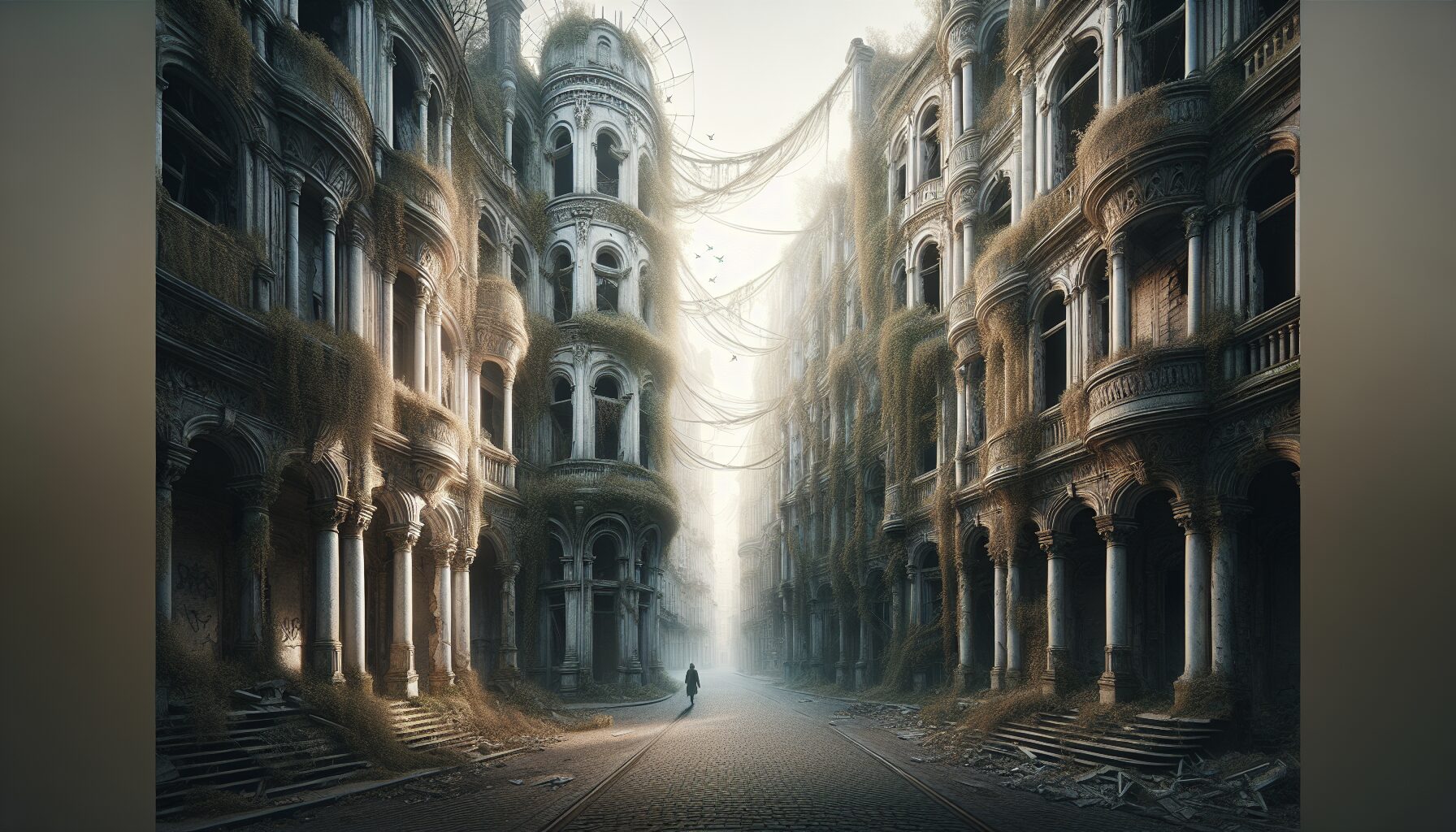
    Urban ruins, often neglected and overgrown, hold an undeniable allure. These spaces are relics from another time, frozen in a state of decay. This paradox of both presence and absence captures the imagination and invites reflection. The popularity of movements such as urban exploration or “urbex” has grown significantly in recent years, with adventurers drawn to sites that range from industrial factories to abandoned theaters.

    Renowned photographer Romain Veillon, who has captured countless hauntingly beautiful images of these spaces, notes, “Ruins are like a portal to the past; they give us a glimpse into the lives and dreams of those who came before us.” Such encounters provide a stark reminder of the impermanence of human endeavors, juxtaposed against nature’s relentless reclaiming of space.

    Mysticism and Reflection

    The mysticism associated with urban ruins extends beyond mere visual appeal. Walking through these spaces fosters a form of deep, almost spiritual reflection. The silence, often punctuated only by the sounds of nature or the occasional graffitied wall, encourages a contemplative state of mind. These sites become places of sanctuary, where one can escape the relentless pace of urban life and engage with the metaphysical.

    “In every walk with nature, one receives far more than he seeks,” wrote the influential naturalist John Muir. While he referred to wild landscapes, the sentiment also applies to these urban jungles. Ruins invite visitors to ponder existential questions, consider the passage of time, and reflect on personal histories intertwined with the built environment.

    Famous Urban Ruins

    • Chernobyl Exclusion Zone: Perhaps the most infamous of urban ruins, Chernobyl’s deserted towns and villages offer a haunting glimpse into a world interrupted by disaster. Guided tours allow visitors to witness how nature has begun to reclaim these spaces.
    • The Detroit Packard Plant: Once the largest and most advanced automobile factory in the world, this mammoth facility now stands as a symbol of Detroit’s industrial rise and fall. Its vast spaces, now inhabited by street artists and wildlife alike, exemplify urban decay.
    • Hashima Island, Japan: Known as “Battleship Island,” Hashima was once a bustling center of coal mining. Today, its abandoned concrete structures provide a dramatic testament to the boom and bust of industrial modernity.
    • Pompeii, Italy: Though not a modern ruin, Pompeii’s excavation allows visitors to walk streets frozen in time by volcanic ash, a powerful reminder of nature’s strength.

    Reclaiming Lost Spaces

    While many ruins remain untouched, others have been integrated into the living urban fabric, offering opportunities for communities to reclaim these spaces in creative and sustainable ways. Adaptive reuse is a practice that transforms derelict structures into new venues for art, culture, and community engagement.

    The transformation of the High Line in New York City from an old railway to a thriving city park exemplifies this process. It has become a cherished green space that celebrates both the past and present, offering insight into how the scars of a city’s history can be healed and repurposed.

    Conclusion

    Walking among urban ruins is an experience that opens the door to a unique kind of mysticism that is as relevant today as it was when these structures were first built. They serve as reminders of the impermanence of human achievements and the enduring power of nature, inviting us to question our place within this world.

    “We are all visiting this time, this place. We are just passing through. Our purpose here is to observe, to learn, to grow, to love… and then we return home,”

    This quote serves as a poignant reminder of the transcendent nature of our existence. In the ruins of our cities, we find echoes of those who wandered before us and perhaps, a clearer understanding of our own journey.


  • Fragments of Faith: Short Essays

    Fragments of Faith: Short Essays

    You need to be logged in to view this content. Please . Not a Member? Join Us
  • Ghost Notes: Musical Experiments

    Ghost Notes: Musical Experiments

    You need to be logged in to view this content. Please . Not a Member? Join Us
  • Midnight Sermons: Audio Essays

    Midnight Sermons: Audio Essays

    You need to be logged in to view this content. Please . Not a Member? Join Us
  • The Archive of Shadows: Curating the Ephemeral

    The Archive of Shadows: Curating the Ephemeral

    In a world where digital interactions dominate and physical presence often feels like a footnote, the art of curating the ephemeral has emerged as a compelling endeavor. The Archive of Shadows, an innovative initiative, seeks to capture the fleeting moments that define our existence, moments that pass through time unnoticed but not unfelt.

    Understanding the Ephemeral

    The ephemeral is transient, often slipping away in the blink of an eye. Yet, it is these transient moments that shape our reality and define our experiences. According to cultural theorist Roland Barthes, “What the Photograph reproduces to infinity has occurred only once: the Photograph mechanically repeats what could never be repeated existentially.” This thought aligns with the Archive’s pursuit—capturing what once lived only for a moment.

    The Vision Behind the Archive

    The Archive of Shadows is not just a project; it is a movement. It was conceived by Dr. Elaine Prieto, a cultural historian who saw the need to document the intangible essence of human interaction in the digital age. “We live in an era where information is more accessible than ever, yet our experiences are often reduced to mere data points,” she notes. “The Archive seeks to preserve the essence beyond the pixels and bytes.”

    How It Works

    • Digital Scavenging: The Archive employs cutting-edge technology to scan social media platforms, compiling a digital treasure trove of ephemeral content—stories, images, videos—before they vanish from the virtual sphere.
    • Artistic Curation: Once gathered, these artifacts are meticulously curated by a team of artists and historians who weave them into a tapestry that tells the stories of the now ancient present.
    • Public Exhibitions: Regular exhibitions allow the public to engage with the curated collections, offering a moment of reflection on the beauty and brevity of life’s digital traces.

    The Impact

    “Preserving ephemeral moments isn’t just about nostalgia; it’s about understanding who we are and how we connect in an ever-evolving world,” Dr. Prieto insists. The Archive highlights the importance of acknowledging both the seen and unseen aspects of our lives.

    The Archive of Shadows invites us to reimagine our relationship with the transient. It serves as a witness to the ordinary, breathing life into the shadows cast by the relentless march of time. As we explore this innovative curation of the ephemeral, we are reminded that every moment, though fleeting, carries the potential to resonate deeply within us.

    To learn more about their upcoming projects, visit the Archive’s official website.

  • Dust and Light: Photography of Decay

    Dust and Light: Photography of Decay

    You need to be logged in to view this content. Please . Not a Member? Join Us
  • The Invisible Pilgrim: Travel Essays

    The Invisible Pilgrim: Travel Essays

    You need to be logged in to view this content. Please . Not a Member? Join Us
  • The Shadow Market: Trading Forgotten Objects

    The Shadow Market: Trading Forgotten Objects

    You need to be logged in to view this content. Please . Not a Member? Join Us
  • Lanterns and Ash: Night Photography Series

    Lanterns and Ash: Night Photography Series

    In the hushed stillness of the night, a new realm of photography unveils itself, where shadows dance and light becomes the protagonist. “Lanterns and Ash,” a stunning nighttime photography series, captures this enigmatic domain with unparalleled elegance and poise.

    The Art of Night Photography

    Night photography is an art form where creativity meets the technical mastery of capturing light in low exposure settings. For centuries, photographers have been enchanted by the allure of the night. As the sun sets and the world grows darker, the landscapes transform, unveiling patterns and shapes hidden from the daylight’s gaze.

    Lewis Hine once articulated the profound allure of capturing the unseen:

    “If I could tell the story in words, I wouldn’t need to lug around a camera.”

    “Lanterns and Ash”: The Series

    In “Lanterns and Ash,” the photographer Emily Hart infuses her images with depth and emotion through an ethereal interplay of light and shadow. The series takes the observer on a visual journey through deserted city streets, serene countryside landscapes, and luminous, star-lit skies. Her pieces display a mastery over the elusive art of manipulating exposure and angles.

    “Photography is the story I fail to put into words.” – Destin Sparks

    • Deserted City Streets: Through creative use of streetlights and car headlights, Hart transforms urban stillness into a vibrant narrative of light and architecture.
    • Country Landscapes: The placid glow of lanterns placed amidst grassy fields evokes a sense of calm and tranquility.
    • Star-lit Skies: By embracing long exposure techniques, the series captures the splendor of the celestial realm, displaying stars as brushstrokes across a canvas of night.

    Technical Mastery

    Successful night photography demands not only an artistic eye but also profound technical understanding. Hart employs various tools and techniques—tripods for stability, wide-aperture lenses for capturing maximum light, and sometimes post-processing to enhance the images without losing their inherent authenticity. Photography Talk emphasizes that, “Nighttime photography is all about light—and the lack thereof.”

    “Lanterns and Ash” is not merely a photo series; it is a visual poem that captures the nocturnal world’s beauty, mystery, and emotion. This series reminds us that the night, while cloaked in darkness, is alive with stories waiting to be told through the lens of a camera.

  • The Forgotten Choir: Documenting Choirs That Vanished

    The Forgotten Choir: Documenting Choirs That Vanished

    You need to be logged in to view this content. Please . Not a Member? Join Us