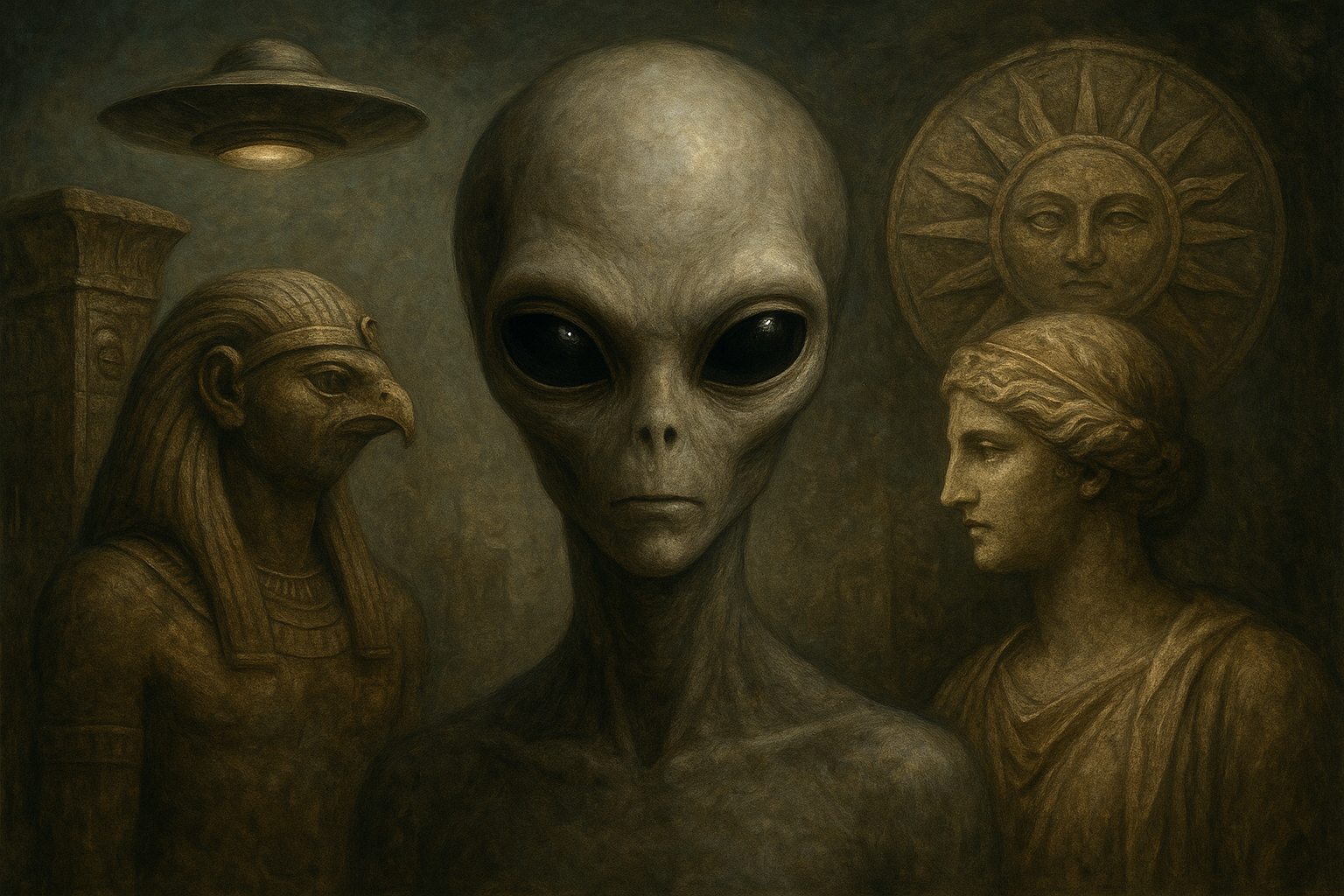
Tag: ancient

  • Extraterrestrial Myths – Aliens in Cultural Memory

    Extraterrestrial Myths – Aliens in Cultural Memory

    The concept of extraterrestrial life, or aliens, has captured human imagination for centuries, woven intricately into the fabric of various cultures. These myths and legends reflect humanity’s eternal curiosity about the cosmos and our place within it. The portrayal of aliens has evolved over time, fueled by advances in scientific understanding and spurred by the creativity inherent in storytelling. This article delves into the rich tapestry of extraterrestrial myths across cultures and their impact on cultural memory.

    The Earliest Imaginations: Ancient Myths and Celestial Beings

    Long before the advent of modern science, ancient civilizations gazed at the night sky with wonder, interpreting celestial phenomena through the lens of mythology. Many of these myths include references to non-human entities often equated with extraterrestrial beings today.

    • Mesopotamian Legends: The Sumerians, who thrived in the Third Millennium BCE, left behind a pantheon of gods including Enki and Anu, associated with heavenly bodies. Some interpretations suggest that these gods were depicted as descending from the heavens, perhaps suggesting an early form of extraterrestrial genesis.
    • Hindu Epics: Texts like the Mahabharata mention flying machines called Vimanas, which some theorists controversially link to ancient encounters with advanced extraterrestrial technology.
    • South American Cultures: The Nazca Lines of Peru, created by the Nazca civilization, are massive geoglyphs that some believe to be messages or signals to skyward visitors. These interpretations, while not accepted by mainstream archaeology, demonstrate the speculation surrounding alien influence.

    Medieval and Early Modern Tales

    The Middle Ages and the Renaissance period saw a transformative shift in how humanity viewed the heavens, transitioning from mythological interpretations to nascent scientific inquiry. This era, however, was still rich with tales of celestial visitors.

    • European Folklore: Some folktales describe encounters with magical beings from “other worlds,” akin to later descriptions of extraterrestrial beings.
    • Celtic Myths: The Tuatha Dé Danann, a supernatural race in Irish mythology, are said to have arrived in ships and possessed immense knowledge and powers that some have compared to alien intelligence.
    • The Cheshire Manuscript: In this English document, dated to the 13th century, there are anecdotes of mysterious airships, hinting at a cultural memory touched by celestial curiosity.

    Modern Interpretation: Aliens in Literature and Media

    The narrative of extraterrestrial life gained significant momentum in the 19th and 20th centuries, primarily through fiction and later through the burgeoning medium of television and cinema.

    • War of the Worlds by H.G. Wells: Published in 1897, this novel was pivotal in popularizing the idea of hostile alien visitors. It sparked imaginations and fears about the potential reality of alien contact.
    • The Day the Earth Stood Still: This 1951 film introduced audiences to the benevolent alien, Klaatu, who came to Earth with a warning, helping to establish the trope of the enlightened extraterrestrial visitor.
    • Modern Streaming and Cinema: Contemporary series like The X-Files and blockbuster films like Independence Day continue to explore these themes, feeding into the enduring fascination with alien life.

    Extraterrestrial Influence in Modern Beliefs and Conspiracies

    As technology advanced, so too did beliefs in extraterrestrial visitation, often veering into the realm of conspiracy theories and pseudoarchaeology.

    • Area 51 and Roswell: Perhaps no location is more synonymous with alien conspiracies than Area 51. The 1947 Roswell incident, often cited as evidence of government concealment of alien technology, plays a critical role in alien lore in the cultural memory.
    • Ancient Aliens Theory: Popularized by authors like Erich von Däniken in his book Chariots of the Gods?, this theory suggests that extraterrestrial beings have been visiting Earth for millennia, influencing ancient civilizations.
    • Cultural Phenomena: Movements such as the Raëlian religion incorporate beliefs about extraterrestrial origins, highlighting how these concepts permeate even spiritual ideologies.

    “We choose to examine alien myths not merely as products of human fantasy, but as tokens of our profound quest to find meaning in the universe.” — Dr. Carl Sagan

    The Cultural Significance of Extraterrestrial Myths

    Extraterrestrial myths serve several purposes in human culture. They act as metaphors for the unknown, helping societies to confront existential questions about existence and the cosmos. Moreover, they reflect societal concerns at various historical junctures, whether fears of invasion or desires for utopian benefactors.

    The prevalence of alien myths also demonstrates humanity’s timeless drive to explore and the deep-seated need for understanding that propels scientific inquiry. These narratives enable cross-cultural dialogues, offering shared frameworks for contemplating life beyond Earth.

    Conclusion: From Ancient Stars to Modern Skies

    The rich heritage of extraterrestrial myths is testament to humanity’s enduring speculation about what lies beyond our world. Whether interpreted as gods, fictional invaders, or speculative science, these myths continue to influence cultural memory and inspire new generations of dreamers and thinkers.

    As we stand on the precipice of interstellar exploration, the stories, myths, and legends of extraterrestrial beings remind us of both our humble beginnings under star-filled skies and the exhilarating possibilities of the universe yet to be explored.

    For further reading, visit the Encyclopedia Britannica’s section on alien myths in world cultures.

  • The Celestial Codex – Mythology Encoded in Stars

    The Celestial Codex – Mythology Encoded in Stars

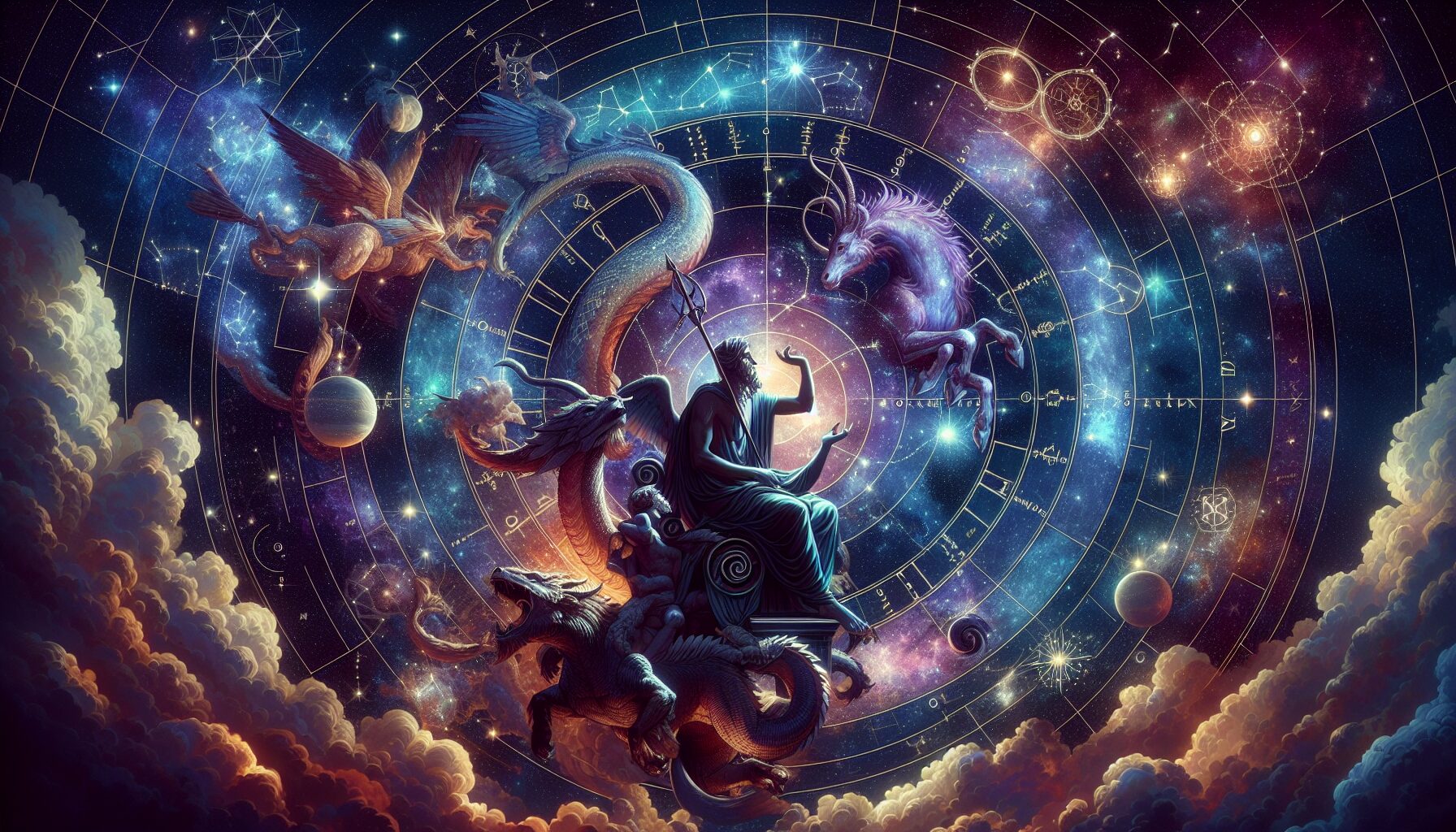
    The night sky has always been a source of wonder and mystery. As ancient civilizations gazed upwards, they saw more than celestial bodies; they saw sacred stories, legends, and myths etched into the vast cosmic canvas. The “Celestial Codex” reveals a fascinating intersection of mythology and astronomy, a dialogue between human imagination and the infinite universe.

    The Dawning of Celestial Mapping

    From the Greeks to the Egyptians, every civilization perceived the night sky as a grand tableau where mighty Gods, epic heroes, and legendary creatures roamed among the stars. According to Encyclopedia Britannica, the ancient Greeks were particularly instrumental in charting the sky, recognizing 48 constellations that vividly brought their mythology to life. Today, 88 official constellations are recognized by the International Astronomical Union.

    Greek Mythology: Legends Among the Stars

    Many constellations are directly tied to ancient Greek mythology:

    • Orion: The mighty hunter Orion’s tragic tale is immortalized in a constellation that boasts Betelgeuse and Rigel, some of the brightest stars in our sky. Orion’s story of hubris and punishment unfolds beautifully across the heavens.
    • Pleiades: Known as the seven sisters, the Pleiades are a cluster of stars also mentioned in Homer’s “The Odyssey”. They were said to be transformed into stars to escape the unwanted pursuit of Orion.
    • Perseus: Representing the hero who slayed Medusa, Perseus is a prominent constellation that intertwines with other myths like that of Andromeda and Cassiopeia, weaving a stellar tapestry of adventures and aspirations.

    Other Cultures, Other Stars

    While Greek myths are prevalent, they are not exclusive. Cultures around the globe have mapped the stars with their own narratives:

    • Chinese Astronomy: In China, star lore is intricately tied to their history and achievements. The Beidou (Big Dipper) was crucial for navigation and played a key role in ancient Chinese religion and mythology, representing the handle of the Celestial Emperor’s chariot.
    • Indigenous Australian Astronomy: The Aboriginal peoples of Australia have one of the longest continuous scopes of sky-watching in human history. Constellations like the Emu in the Sky do not focus on stars, but rather the dark patches between them. It represents creation stories and is an integral part of cultural practices.
    • Egyptian Sky Lore: The ancient Egyptians illustrated their cosmology through the movement of stars. The constellation Sopdet, associated with the star Sirius, was crucial for their calendar and linked to the prosperity brought by the annual flooding of the Nile.

    The Modern Era: Science and Story

    Advancements in technology and science have redefined our relationship with the stars. However, the myths remain as a cultural legacy, a reminder of humanity’s enduring curiosity about the cosmos. Carl Sagan famously said in “Cosmos”, “The cosmos is within us. We are made of star-stuff. We are a way for the universe to know itself.” This perspective harmonizes a scientific understanding of the universe with the mythological significance we have historically ascribed to it.

    Enduring Influence

    “We are all in the gutter, but some of us are looking at the stars.” — Oscar Wilde

    The celestial myths endure not just in storytelling but in art, literature, and cultural expressions worldwide. They remind us of our shared heritage, one that transcends geographical boundaries and is rooted in the universal experience of looking skyward.

    Conclusion: The Mythological Legacy

    The night sky, a constant canvas of human imagination, continues to captivate us. As we advance in our scientific pursuits, the celestial codex remains a timeless bridge connecting us to our ancestors. These myths encapsulated in our stars remind us of the stories that define us and the universe we seek to understand. As humanity continues to explore outer space, the mythological legacy woven into the stars serves as both a reminder of our past and an inspiration for our future.

    “`

  • UFO Archaeology – Tracing Visitors Across Time

    UFO Archaeology – Tracing Visitors Across Time

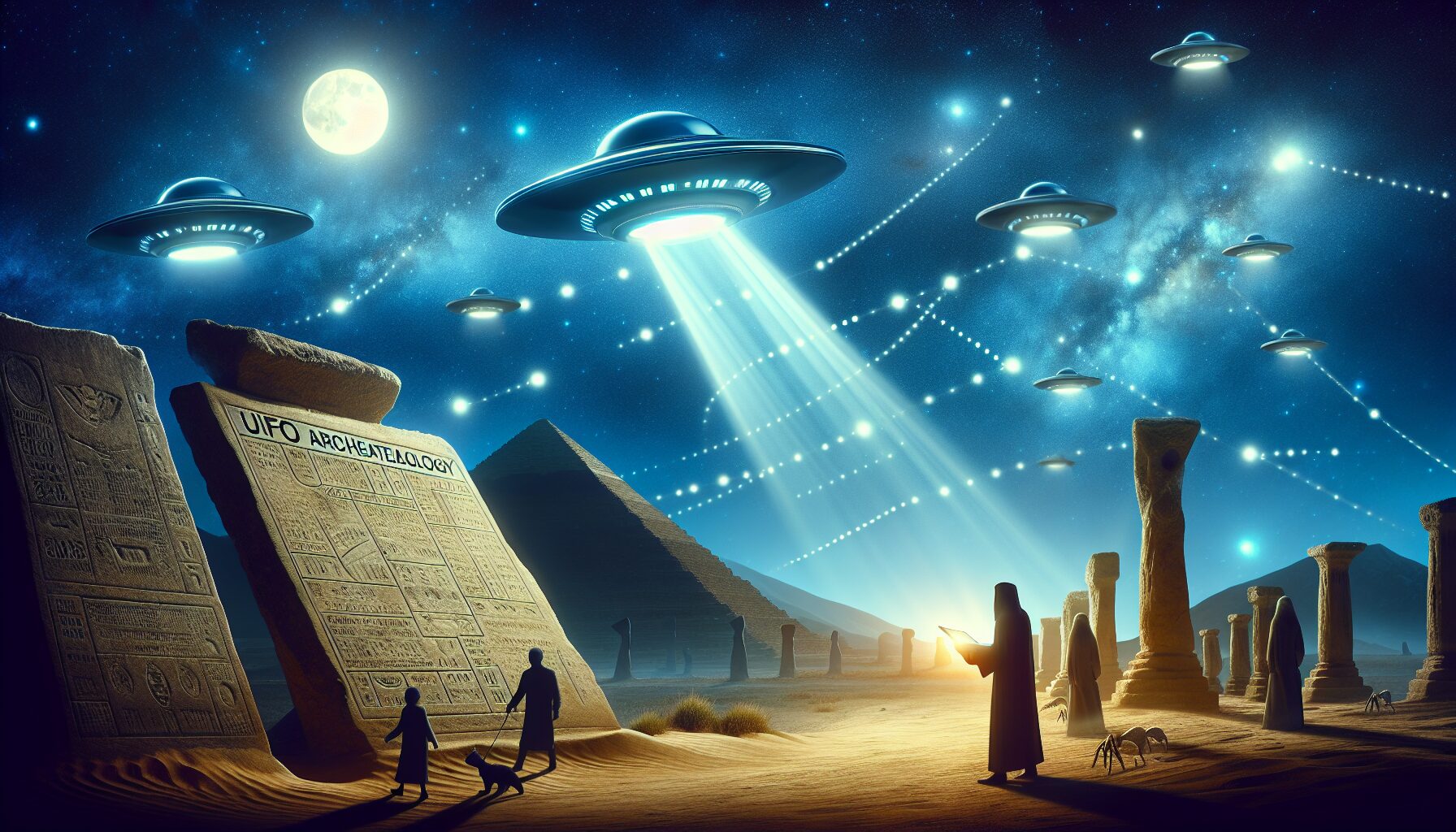
    For decades, stories of unidentified flying objects (UFOs) have captivated the imagination of people worldwide. But what if these visitors have been with us for longer than we thought, perhaps weaving through the tapestry of humanity’s ancient past? Welcome to the burgeoning field of UFO archaeology, where researchers combine the rigorous study of archaeology with the mysterious allure of ufology.

    The Foundations of UFO Archaeology

    UFO archaeology posits that there might be physical evidence of past extraterrestrial visits on Earth, artifacts left by beings from other worlds. This idea, still in its infancy, seeks validation through the reinterpretation of ancient texts, monuments, and structures under a new light—that of potential alien interaction.

    • Ancient Astronaut Hypothesis: Originally popularized by Erich von Däniken’s book, Chariots of the Gods, this hypothesis suggests that advanced alien civilizations visited Earth in antiquity and influenced the development of human cultures.
    • Historical Artifacts and Relics: Proponents of UFO archaeology often cite peculiar artifacts as evidence—such as the Dropa stones of China or the unexplained glories of the Nazca Lines in Peru.

    Reinterpreting Ancient Records

    Several ancient texts and artwork can be interpreted to suggest extraterrestrial encounters.

    “We have found depictions that seem to show flying vehicles or figures wearing something akin to space suits,” says Dr. Sarah Hansen, a leading researcher in the field. “These are found in disparate cultures, yet they share some similarities that are striking.”

    • Sumerian Texts: Ancient Sumerians left behind some of the earliest known records, including detailed descriptions of gods descending from the heavens. Some interpretations suggest these might be visitors from another world.
    • Indian Epics: Texts like the Mahabharata and Ramayana describe flying machines called Vimanas, leading some to speculate they were depictions of extraterrestrial craft.

    Mysterious Monuments and Their Implications

    Some of the most famous monuments around the world bear unexplained features, leading to theories that they might have originated through extraterrestrial influence. Here are a few examples:

    • The Great Pyramids of Giza: The precision and sophistication with which these structures were built have led some to theorize that ancient Egyptians might have utilized alien technology.
    • Stonehenge: This prehistoric monument raises questions about its exact purpose and the capabilities required for its construction, with some suggesting extraterrestrial intervention as a possibility.
    • Puma Punku: Located in Bolivia, the archaeological site of Puma Punku is renowned for its complex stone structures. As Live Science reports, the precision with which the stones were cut challenges our understanding of pre-Columbian engineering.

    The Skeptic’s Perspective

    However, UFO archaeology isn’t without its critics. Many in the scientific community caution against drawing unfounded conclusions based on speculative interpretations. Archaeologist Kenneth Feder, author of Frauds, Myths, and Mysteries: Science and Pseudoscience in Archaeology, emphasizes that

    “Extraordinary claims require extraordinary evidence. We must approach these hypotheses with caution and rigor, ensuring our methods are sound and our conclusions justified.”

    While fascinating, these ancient interpretations require profound evidence and corroboration. Skeptics argue that many of the so-called anomalies can be explained by more conventional means, such as cultural diffusion or misunderstood technological capabilities of ancient societies.

    Modern Tools in Ancient Mysteries

    Advances in technology have offered new possibilities for investigation. Ground-penetrating radar, remote sensing tools, and sophisticated dating techniques allow researchers to explore sites non-invasively, leading to new insights and discoveries.

    • 3D Scanning and Reconstruction: Digital reconstructions of ancient sites can reveal details obscured by the ravages of time, potentially shedding light on their true origins.
    • DNA Analysis: In some cases, DNA recovered from ancient remains can offer clues about interactions between early humans and potential otherworldly beings.

    The Cultural Impact of UFO Archaeology

    Beyond the quest for knowledge, UFO archaeology influences popular culture and public perception. It challenges the entrenched narrative of human history and encourages open-mindedness about possibilities that extend beyond Earth.

    With each purported discovery, a new generation of enthusiasts is inspired to probe the edges of mainstream archaeology, seeking answers to questions about humanity’s origins and place in the universe. Whether or not evidence of ancient astronauts is ever conclusively found, the field broadens our understanding and appreciation of ancient cultures and their accomplishments.

    Conclusion

    UFO archaeology, while a field veiled in mystery and skepticism, continues to evolve as a serious area of inquiry. As technology advances and new discoveries are made, perhaps the debate will shift and reveal insights into humanity’s ancient travelers, no longer just from distant lands, but perhaps from distant stars themselves. As we stand on the precipice of understanding, one thing remains clear: the mysteries of our past have an uncanny ability to shape our future.

  • Time-Scribed Scrolls – Archetypes Written in the Stars

    Time-Scribed Scrolls – Archetypes Written in the Stars

    Time-Scribed Scrolls: Archetypes Written in the Stars

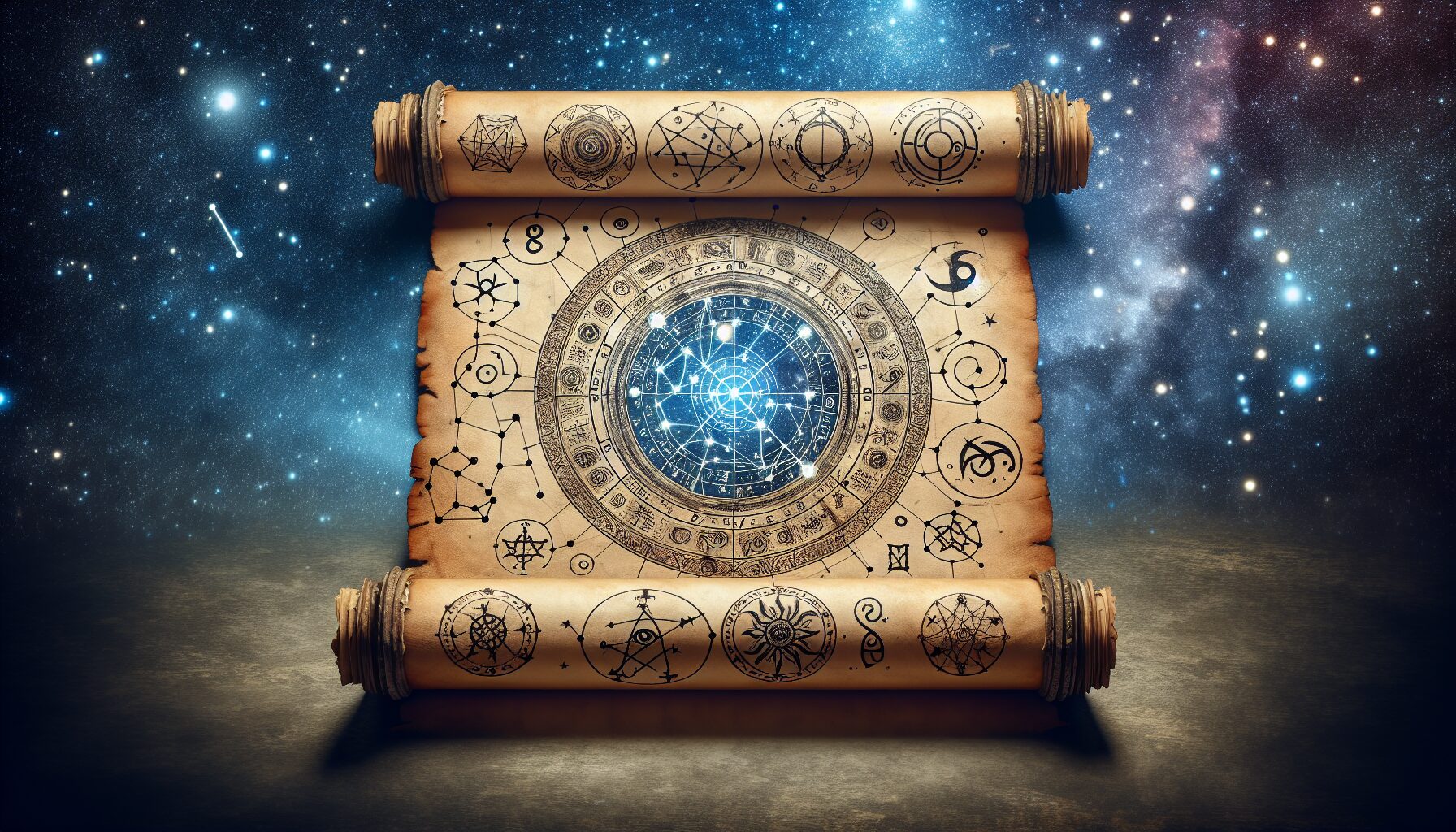
    For millennia, humans have looked to the stars for guidance, inspiration, and understanding of the world and themselves. The night sky, with its twinkling tapestry of celestial bodies, has served as an eternal canvas where humanity has projected myths, hopes, and cosmic archetypes. These heavenly symbols become time-scribed scrolls, filled with timeless wisdom that speaks to both personal and collective unconsciousness.

    The Origins of Celestial Archetypes

    Celestial archetypes originate from a blend of astrology, mythology, and astronomy. Ancient civilizations, from the Babylonians and Egyptians to the Greeks and Chinese, each saw the cosmos as a series of narratives that explained human traits and events. These cosmic symbols were not just stories but served as guiding principles or archetypes.

    • Babylonian Zodiac: The Babylonians were among the first to map the stars into what we know as the zodiac. This ancient system relies on twelve divisions of the sky, each associated with specific qualities and myths.
    • Greek Influence: The Greeks further enshrined these celestial symbols, linking gods and legendary heroes to the stars. Their tales of Hercules, Aries, and others still resonate, illustrating human virtues and flaws.
    • Chinese Astronomy: In the East, the Chinese developed their own celestial system, where the animals of the zodiac embody qualities such as wisdom, courage, and perseverance.

    “Astronomy compels the soul to look upwards and leads us from this world to another.” – Plato

    Psychological Insights: Jung and Universal Archetypes

    Carl Jung, a seminal figure in psychology, introduced the concept of the collective unconscious—a part of the unconscious mind shared by all human beings, containing memories and images of common experiences. Jung described these shared motifs as archetypes: symbols deeply embedded in our collective psyche.

    Jung’s work bridges the understanding of celestial archetypes as more than just ancient stories—they are integral to understanding human behavior and consciousness. He believed that these archetypes are manifested in dreams, myths, and legends, pointing out that these symbols are expressions of our inner realities and the broader human experience.

    The Zodiac and Personality

    The twelve signs of the zodiac are perhaps the most recognized celestial archetypes today. Each sign corresponds to specific personality traits that, like mythological characters, embody different facets of the human experience:

    • Aries: The warrior spirit, symbolizing courage and initiative.
    • Taurus: Represents stability, reliability, and a love for beauty.
    • Gemini: The twins, denoting duality, communication, and adaptability.
    • Cancer: The nurturer, embodying emotion, intuition, and protection.
    • Leo: The leader, with qualities of creativity, warmth, and valor.
    • Virgo: Associated with diligence, detail, and service.
    • Libra: The scales, signifying balance, harmony, and justice.
    • Scorpio: The transformative force, with depth, passion, and mystery.
    • Sagittarius: The seeker, adventurous, optimistic, and philosophical.
    • Capricorn: The strategist, symbolizing ambition, discipline, and perseverance.
    • Aquarius: The innovator, representing idealism, originality, and reform.
    • Pisces: The dreamer, embodying empathy, healing, and imagination.

    Myth and Meaning in the Stars

    Human cultures have always bred stories to explain the celestial movements, ascribing deities and legends to the movements of heavenly bodies. Consider the mythos of Orion, the mighty hunter from Greek mythology, whose constellation tells a story of strength, pride, and eventual humility. His tale serves as a reminder of human limitations and the beauty of the journey, regardless of the outcome.

    Constellations such as the Pleiades have been revered across cultures, from the ancient Greeks to the Indigenous Australians, each interpreting these stellar patterns in ways that reflect their worldview.

    The Modern Resonance of Celestial Archetypes

    In contemporary society, these ancient symbols continue to provide comfort and reflection, even for those who no longer see them as divinities but rather as metaphoric guides. Astrology remains a popular discipline, not solely for predicting the future but as a tool for introspection and understanding.

    The movement of celestial bodies is said to align with human experiences, offering a celestial backdrop to personal growth and change. In astrology, the concept of transits describes how current planetary movements interact with an individual’s birth chart, illuminating patterns, challenges, and opportunities.

    “It is not in the stars to hold our destiny but in ourselves.” – William Shakespeare

    Embracing the Cosmic Journey

    The sky continues to act as a mirror reflecting our hopes, dreams, and fears. As we embrace this deep connection with the cosmos, we can see these constellations and celestial bodies as reminders of our interconnectivity with the universe and with each other. Whether used for entertainment, introspection, or spiritual guidance, the stories written in the stars offer an opportunity to explore the depths of our psyche.

    The celestial archetypes are more than ancient symbols—they are signposts on our journey of understanding, offering wisdom and insight written in the stars. They remind us of our shared humanity and the timeless stories that bridge the gaps between past and present, earth and sky.

  • Aliens in Ancient Texts – Extraterrestrials and Legends

    Aliens in Ancient Texts – Extraterrestrials and Legends

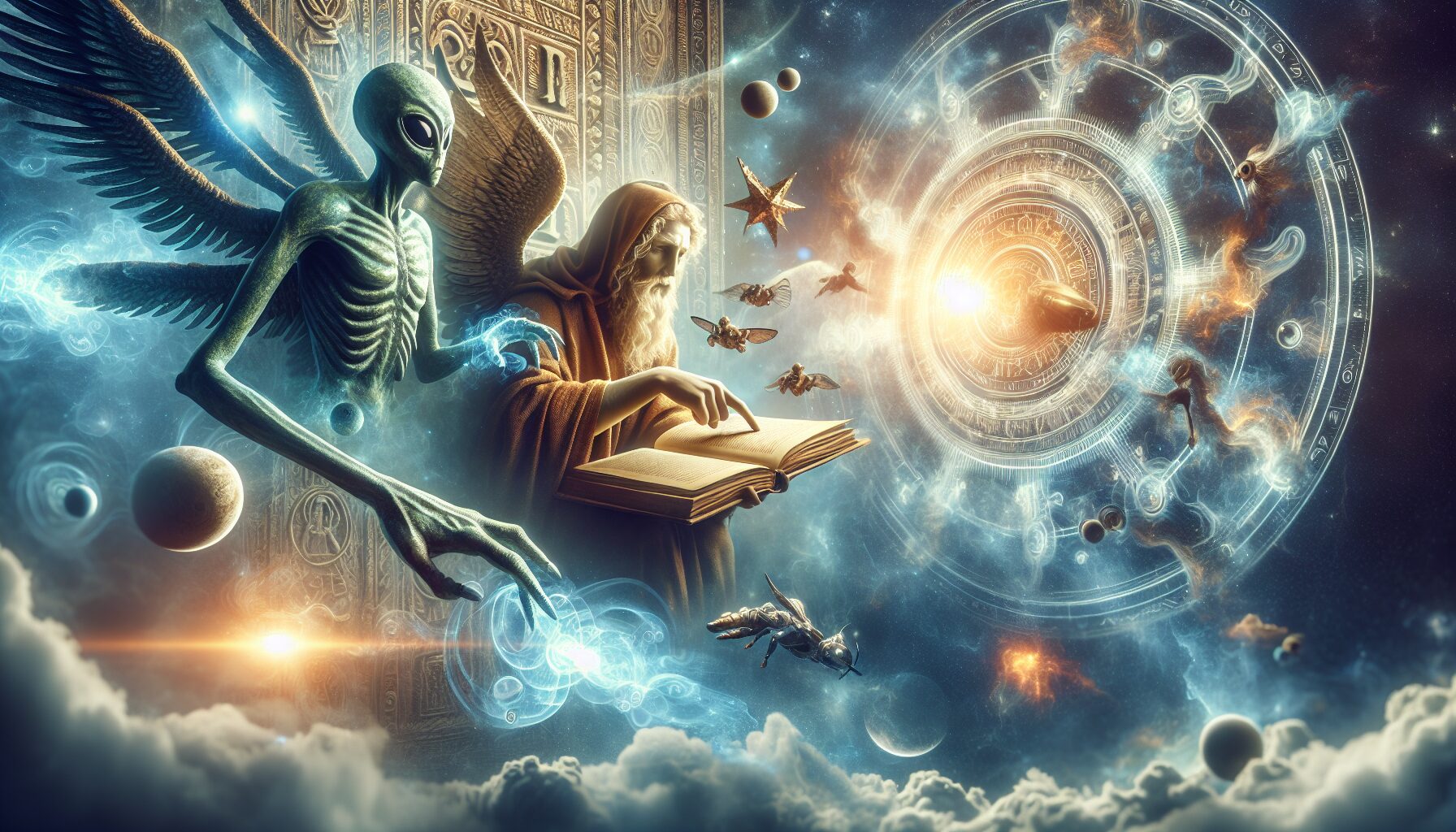
    Throughout history, humans have looked to the stars with wonder and reverence. Many cultures have myths and stories that hint at encounters with beings from beyond our world. These stories, found in ancient texts, raise intriguing questions about the possibility of early encounters with extraterrestrial life. Could our ancestors have been visited by intelligent alien beings?

    Ancient Sumerians and the Annunaki

    The earliest known civilization, the Sumerians of Mesopotamia, offer tantalizing stories that some interpret as evidence of alien contact. Their legends speak of the Annunaki, deities that came from the sky. According to the Sumerian creation myth, the Annunaki descended from heaven to create mankind. Some modern theorists suggest these “gods” were actually visitors from another planet.

    “The Anunnaki were believed to be the offspring of Anu and Ki, the god of the heavens and the earth, respectively.”

    These beings, as described in texts, allegedly bestowed knowledge and civilization to humankind, leading some to hypothesize that the Annunaki were extraterrestrials who shared advanced technologies with our ancestors.

    Indus Valley and the Vedic Texts

    In the ancient Vedic texts of India, descriptions of flying machines, or Vimanas, are prevalent. The Sanskrit epics, like the Mahabharata and Ramayana, contain descriptions of aerial battles and advanced technologies that resemble modern machinery.

    Dr. Roberto Pinotti, a prominent researcher, writes, “The Vedic traditions of India offer translations of aerial vehicles which match descriptions and functions similar to modern-day aircraft and spacecraft” (NASA).

    Aboriginal Astronomical Legends

    Even the oral traditions of Australia’s Aboriginal people include references to cosmic entities. These stories often describe the Wandjina, spirits depicted with large heads and huge black eyes—strikingly similar to what modern culture might consider “alien” features.

    The tales of the Wandjina spirits are believed to have inspired ancient rock art, leading some researchers to ponder if these stories might be rooted in actual historical events, potentially involving alien visitors.

    Interpretations and Implications

    While these interpretations remain speculative, they nevertheless ignite curiosity and debate. Are these accounts merely imaginative myths, or did our ancestors witness phenomena that inspired tales of celestial visitors? As we continue to explore the cosmos, these ancient texts remind us to keep an open mind and consider that perhaps the universe has always been more wondrous and mysterious than we can comprehend.

    For further reading on ancient astronaut theories, visit Ancient Origins or History Extra.

  • Mummies and Preservation – Fighting Against Decay

    Mummies and Preservation – Fighting Against Decay

    From the arid deserts of Egypt to the frozen tundras of Siberia, mummies provide a fascinating glimpse into the past. Mummification, whether accidental or intentional, has allowed bodies to resist decay for thousands of years. This process, deeply tied to religious and cultural practices, offers insights not just about the deceased but about the living societies that revered and preserved them. In this article, we will explore the methods, science, and mysteries surrounding mummification and the ongoing fight against decay.

    The Science of Mummification

    Mummification is a highly involved process aimed at preserving the body after death, primarily by dehydrating the tissue to prevent decomposition. There are various methods of mummification influenced by environmental conditions and cultural practices:

    • Natural Mummification: This occurs in environments that naturally inhibit decomposition. The dry air and sand of deserts, such as those in Egypt, facilitate this process.
    • Artificial Mummification: Cultures that practiced artificial mummification did so with a variety of techniques. The ancient Egyptians are perhaps the most famous for their complex method involving evisceration, drying, and the application of preservative chemicals.

    “Mummification was a way to ensure survival in the afterlife. Each organ had its place in Egyptian religion and had to be preserved for the dead to enjoy eternity.” – Encyclopedia Britannica

    Egyptian Mummification: A Deep Dive

    Among the myriad of cultures that have practiced mummification, ancient Egypt stands out for the complexity and depth of its techniques. The process usually took about 70 days and involved several intricate steps:

    • Removal of Internal Organs: The brain was removed through the nose using special hooks, while other organs were extracted through an incision in the abdomen.
    • Drying: The body was covered with natron, a natural salt, which dehydrated the tissue and prevented bacterial growth.
    • Wrapping: Bandages made from linen were wrapped around the body, with each layer often accompanied by the application of resin to enhance preservation.

    In National Geographic, it’s explained that the Egyptians believed that the quality of preservation was directly linked to the deceased’s comfort in the afterlife. This was not only a religious necessity but also a demonstration of social status.

    Cultural Variations in Mummification

    Beyond Egypt, many cultures developed their own methods of mummification:

    • Incan Mummies: The Incas used naturally freezing conditions to preserve their dead. Mummies would often be placed at high altitudes in the Andes.
    • Chinchorro Mummies: These are the oldest artificially mummified bodies, dating back to about 5000 BCE. The Chinchorro people of present-day Chile and Peru developed intricate embalming techniques long before the Egyptians.
    • Siberian Mummies: The permafrost of Siberia has preserved bodies dating back to the 5th century BCE, offering a glimpse into the life of ancient nomadic tribes.

    The Mysteries and Modern Scientific Study

    Mummies pose numerous mysteries to scientists and archaeologists. One of the critical questions is understanding variations in the mummification process across different periods and regions.

    Recent advances in technology have allowed scientists to probe deeper into the mysteries surrounding mummified remains. Techniques such as CT scanning and DNA analysis have uncovered new details about the health, diet, and diseases of ancient peoples.

    “Modern technology provides a unique opportunity to look inside these ancient packages of preserved tissues. From this, we learn not only about their construction but also about the people themselves.” – Smithsonian Magazine

    The Challenge of Modern Preservation

    Mummies are under constant threat from decay agents like humidity, mold, and human handling. Museums and conservationists face the ongoing challenge of preserving mummified remains in environments far different from their original resting places. Techniques involve:

    • Controlling Temperature and Humidity: Creating a stable environment is crucial to prevent decay.
    • Reducing Light Exposure: Light can cause rapid degradation of organic materials.
    • Minimal Handling: Direct contact is limited to prevent physical damage and contaminant transfer.

    The importance of these preservation efforts is underscored by the potential risks. Many famous mummies have suffered irreparable damage due to poor conservation techniques in the past. The preservation field has become a multidisciplinary effort, combining archaeology, chemistry, biology, and ethics to ensure these remains last for future generations to study and appreciate.

    Conclusion

    Mummification is one of humanity’s most fascinating practices, rich in cultural and scientific significance. From the painstaking efforts of ancient embalmers to the cutting-edge technology used by modern scientists, the fight against decay is a testament to our desire to connect with the past. As we continue to learn from these ancient remains, we not only uncover the secrets of long-lost civilizations but also gain a deeper appreciation of our shared human heritage.

  • Meditating on Death – Ancient Practices of Impermanence

    Meditating on Death – Ancient Practices of Impermanence

    Across cultures and epochs, the contemplation of death has been a profound practice to gain wisdom and serenity. Such meditations on impermanence encourage a deeper appreciation for life, urging individuals to live with intention. This article explores some ancient practices that have continued to offer solace and insight into the fleeting nature of existence.

    Tibetan Buddhism and the Bardo Thödol

    Among Tibetan Buddhists, the Bardo Thödol, commonly known in the West as the Tibetan Book of the Dead, offers profound teachings on the transitional states between death and rebirth. According to Encyclopaedia Britannica, the text serves as a guide for the deceased during the state of transition, called bardo. This practice not only prepares the living to confront mortality but offers a vision of life’s transitory beauty.

    Stoic Reflections on Mortality

    The Stoics, ancient philosophers of Greece and Rome, often reflected on death to cultivate wisdom. Marcus Aurelius, in his Meditations, advises, “You could leave life right now. Let that determine what you do and say and think.” Through daily reminders of death, known as Memento Mori, stoics embraced the impermanence of life to instill courage and clarity in their actions. Such teachings continue to captivate modern seekers of wisdom.

    The Egyptian Practice of Ritual Mourning

    For ancient Egyptians, death was a journey, not an end. They held elaborate rituals to prepare for the afterlife, but also practiced personal mourning as a meditation on loss and transformation. According to the History Channel, the preservation of bodies through mummification further highlighted their belief in the ongoing process of death and rebirth. Engaging in these practices allowed them to maintain a deep connection with both the deceased and the sacred journey of life.

    Japanese Zen Buddhism and Impermanence

    In Japanese Zen Buddhism, the concept of Mono no Aware—the pathos of things—emphasizes the beauty of transience. This aesthetic, drawn from Japanese poetry and art, encourages mindfulness of life’s ephemeral nature. As author William R. Lafleur notes in his work on Zen practices, “The beauty of life lies in its impermanent stages.” Such insights foster a nurturing appreciation for every fleeting moment of existence.

    “You could leave life right now. Let that determine what you do and say and think.” – Marcus Aurelius

    By embracing these ancient practices, individuals can embark on a journey toward understanding life’s impermanence. Such reflections not only bring solace to those contemplating the end but also illuminate the preciousness of every moment we have.

  • Comets as Messengers – Symbols of Omen and Passing

    Comets as Messengers – Symbols of Omen and Passing

    Throughout history, humanity has gazed up at the night sky with a mix of wonder and trepidation. Among the many celestial phenomena observed, comets have often captured the collective imagination and fear of people across cultures. These cosmic travelers, with their glowing heads and trailing tails, have been considered both harbingers of doom and bringers of change. This article explores the symbolism of comets as messengers, reflecting both omens of impending events and symbols of transformation.

    Comets in Ancient Cultures

    The interpretations of comets vary widely among different ancient civilizations, each attributing unique meanings and stories to these celestial bodies.

    • Babylonian and Assyrian Views: In ancient Mesopotamia, comets were seen as manifestations of the gods. The movements of stars and other celestial bodies were meticulously recorded by Babylonian astronomers who associated them with the divine will. The Enûma Anu Enlil, a collection of cuneiform tablets from this region, offers insights into how celestial events, including comets, were seen as omens predicting military victories, the rise and fall of leaders, or natural disasters.
    • Chinese Tradition: Ancient Chinese astrologers documented comets extensively, seeing them as beacons of change. Known as “guest stars,” comets were predictors of dynastic shifts or calamity.

      As the Han dynasty historian Sima Qian wrote, “Whenever a comet appeared, the emperor and high priests would convene to discuss its implications for the state.”

    • Mayan Perspective: For the Maya, comets were perceived as part of cosmic cycles, symbols bound to the calendar’s intricate workings. These celestial events were often timed with divine acts described in the Popol Vuh, their sacred book.

    Comets and Omens in Western History

    The appearance of comets in the skies over Europe has often coincided with great historical events, contributing to their reputation as omens. In the Western context, comets have been linked to the deaths of kings, the sacking of cities, and natural calamities.

    • The Bayeux Tapestry: One of the most famous depictions of a comet’s ominous presence is seen in the Bayeux Tapestry, where Halley’s Comet marked the year 1066. This appearance was seen as a bad omen for King Harold II of England, presaging the Norman Conquest and his consequent downfall at the Battle of Hastings.
    • Comet of 1811: Known as the Great Comet of 1811, it was perceived as a portent of the Napoleonic Wars. Although there was no direct connection, the bright presence of the comet at a time of European strife left a lasting impression on the public psyche.

    Scientific Understanding and Cultural Transformation

    With advancements in astronomy, the scientific understanding of comets has transformed from mystical phenomena into objects of study. This shift in perception also catalyzed changes in cultural interpretations.

    • The Enlightenment: The shift from mystical to scientific perspectives gained momentum during the Enlightenment. Rational understanding began to demystify comets, shifting from symbolic to empirical interpretations. The Enlightenment marked a paradigm shift in many scientific realms, including astronomy.
    • Halley’s Comet Returns: When Halley’s Comet reappeared in 1758, its accurate prediction by astronomer Edmond Halley marked the success of Newtonian physics. The comet’s periodic return, rather than triggering widespread fear as in 1066, helped validate scientific inquiry and predictive power.

    Contemporary Views on Comets

    Today, comets remain fascinating celestial bodies, captivating both scientists and the public. With modern technology, they are studied as ancient relics from the solar system’s formation, or as potential bearers of organic compounds that may have seeded life on Earth.

    • Scientific Exploration: Missions such as the European Space Agency’s Rosetta have provided invaluable data about comets. By orbiting the comet 67P/Churyumov-Gerasimenko, Rosetta offered insights into the composition and behavior of these intriguing objects.
    • Cultural Resonance: Despite our scientific understanding, the sight of a comet still evokes wonder and contemplation. Literature and film often use comets to symbolize change or the fragility of life, showcasing their lasting impact on human consciousness.

    The Duality of Comets

    Comets embody a dual nature within our cultural and scientific narratives. They are both ominous and inspiring, historical and contemporary. As Carl Sagan noted, “A comet is an icy dirtball leftover from the formation of the Solar System. They come from a region called the Oort Cloud, and they periodically swing by Earth for a visit.”

    • Mystical and Material: As celestial bodies, comets straddle the realms of myth and fact, bridging humanity’s ancient imaginings with our current empirical observations.
    • Symbols of Change: Whether as bringers of destruction or change, their rare appearances invite reflection on the impermanent and ever-evolving nature of existence.

    Conclusion: Comets as Timeless Messengers

    Comets have traversed the celestial sphere as silent witnesses to history and continue to inspire curiosity and awe. They remain potent symbols of transition and revelation, reminding us of both humanity’s ancient myths and modern pursuits of knowledge. Whether viewed as omens or wonders, comets compel us to consider not only our place in the universe but the ever-changing narratives we weave within it.

    For more information on comets and their impact on culture, you can explore resources from reputable institutions such as NASA’s Solar System Exploration.

  • Rituals of the Forgotten Revisited – Rediscovering Lost Practices

    Rituals of the Forgotten Revisited – Rediscovering Lost Practices

    In the annals of history, there lies a trove of timeless rituals that have been buried beneath the sands of time. While many of these practices have been overshadowed by modern customs, their significance and allure continue to captivate those who seek to rediscover the magic and mystery they once held.

    The Enigma of Ancient Rituals

    Ancient rituals are windows to understanding our ancestors’ interactions with the supernatural, their celebrations, and their sense of community. These supernatural practices encompassed everything from rites of passage and seasonal festivities to healing ceremonies. In the revival of forgotten rituals, society can find a deeper connection to its roots and enrich its cultural tapestry.

    “Understanding rituals gives us an insight not only into the mysteries of past civilizations but also into the shared humanity of generations across time,” said Professor Miriam Albright, a noted historian specializing in ancient traditions.

    Remarkable Rediscoveries

    In recent times, several researchers and enthusiasts have dedicated their lives to unearthing the rituals of the forgotten. This journey is not just academic but profoundly personal, often revealing surprisingly resonant practices.

    • The Dance of the Seasons: Previously lost to history, the Dance of the Seasons was a practice performed by the Celts to celebrate the changing seasons. Fervent dances and songs were seen as an appeal to the gods for prosperity in the upcoming months. Today, a resurgence of this practice can be seen in certain cultural festivals that blend similar themes.
    • Norwegian Seiðr: The Viking era’s mystical Seiðr was a shamanic ritual, where practitioners, often women called Völvas, summoned spirits for guidance and prophecy. Modern movements in Scandinavia are bringing Seiðr back, though adapted for contemporary spiritual practices.
    • Japanese Kagura: In Japan, Kagura, a divine dance and Shinto ritual, was performed to appease the gods. Now, it’s experiencing a renaissance, finding a place in local theaters and festivals, blending the ancient with modern performance art.

    Reviving Lost Connections

    Rituals played a crucial role in fostering community bonds and individual identity. Rekindling these practices allows marginalized communities an opportunity to reconnect with their heritage and reaffirm their cultural identities. For instance, many indigenous groups in North America have begun reclaiming their traditional ceremonies as a means of empowerment and cultural reaffirmation.

    Challenges and Ethical Considerations

    Rediscovering and reviving ancient rituals isn’t without its ethical challenges. The fine line between cultural appreciation and appropriation must be navigated carefully. There are questions about authenticity and whether these rituals should be reincorporated into contemporary society at all.

    “We must approach these rediscoveries with respect and sensitivity, ensuring that rituals are not commodified or misappropriated,” warned cultural anthropologist Dr. Liang Cho.

    Balancing respect with revival demands a careful, nuanced approach. Engaging with practitioners, scholars, and cultural custodians is pivotal to understanding the true essence of these rituals.

    The Future of Lost Rituals

    As globalization continues to meld various cultures, there is a growing interest in preserving distinct cultural identities, leading to a renewed curiosity about ancient practices. Technology, particularly virtual reality, plays a significant role in this preservation by offering immersive experiences of these rituals to the modern spectator.

    The world thus embarks on a journey to not only remember these forgotten practices but also to reintegrate them into the fabric of a rich, diverse global culture. By doing so, we acknowledge their intrinsic value and reaffirm that while time marches on, echoes of the past still resonate with vigor and purpose.

    Ultimately, as we unravel these layers of past traditions, we discover not just what has been forgotten, but what has always been an underlying part of the human experience. In revisiting the rituals of the forgotten, we turn not to the past as a relic, but rather as a source of enduring wisdom for the future.

  • Rituals of the Abyss Revisited – Embracing the Unknown

    Rituals of the Abyss Revisited – Embracing the Unknown

    The dark, unfathomable expanse of the abyss has long held a magnetic allure for adventurers, mystics, and scholars alike. Throughout history, countless rituals, imbued with both fear and veneration, have been crafted to placate, understand, and even manipulate the unknown forces that dwell beneath the surface. In this exploration, we revisit these rituals, uncovering their roots and examining their relevance in our modern world.

    The Timeless Allure of the Abyss

    Humanity’s fascination with the abyss is unmatched by any other element of nature. It is, as Joseph Conrad might suggest, an embodiment of the ultimate darkness that confronts our deepest fears and desires. The abyss, both literal and metaphorical, is a canvas of infinite possibilities. As Conrad wrote in Heart of Darkness, “We live, as we dream—alone”. The abyss invites us to contemplate our solitary existence, challenging our understanding of reality and ourselves.

    Ancient Rituals: Bridging Worlds

    For ancient civilizations, the abyss was a realm of gods and spirits, a borderland where human and divine interactions occurred. From the Greeks to the Mayans, rituals were designed not just as acts of worship but as a means to gain power and protection from the existential threats lurking beyond the known world.

    • Greek Nekyia: A rite of necromancy, the nekyia was described by Homer in the Odyssey as a journey to summon the spirits of the dead to foresee the future. The Greeks believed that the dead held the wisdom of the ages and could guide the living through perilous times.
    • Egyptian Books of the Dead: Viewed as a guide for the deceased through the afterlife, these texts included illustrations of rituals and spells intended to aid the departed in navigating the chaotic abyssal realms.
    • Mayan Underworld Ceremonies: The Xibalba, a feared underworld, played a significant role in Mayan spirituality. Rituals, sacrifices, and games depicted in their myths were believed to appease the gods of the abyss and ensure the cyclical renewal of life.

    Modern Interpretations and Significance

    In contemporary society, while the literal interpretation of the abyss has faded, the metaphorical understanding persists robustly. The rituals surrounding modern urban myths, psychological theories, and spiritual practices echo ancient inklings about the abyss. Ritualists and practitioners adapt traditional ceremonies for a new era, using technology and contemporary thought to delve into the unknown secrets that bind humanity to the cosmos.

    The Psychological Abyss

    For many modern thinkers, the abyss represents the subconscious. Influential figures like Carl Jung have equated the exploration of one’s subconscious with a journey into the abyss.

    “Whoever fights monsters should see to it that in the process he does not become a monster. And if you gaze long enough into an abyss, the abyss will gaze back into you,”

    Jung warned, emphasizing the delicate boundary between understanding and obsession.

    Rituals of Rebirth and Renewal

    Today’s rituals often focus on personal growth, mindfulness, and transformation, reflecting a deep-seated need to connect with the self and the universe. Ceremonies such as meditation retreats, vision quests, and even immersive art experiences are modern adaptations of ancient rites.

    • Mindfulness Meditation: Popular in today’s wellness culture, mindfulness practices echo the ancient search for equilibrium amid chaos, serving as a ritualistic descent into one’s own mental abyss.
    • Virtual Reality Journeys: Using cutting-edge technology to simulate otherworldly experiences, these journeys allow participants to explore simulated environments that mirror abyss-like landscapes, granting insight into both the virtual and the divine.
    • Artistic Expression: Artists today continually tap into the metaphors of the abyss, using installations or performances to evoke subliminal fears and desires, engaging audiences in shared encounters with the unknown.

    The Future of Abyssal Exploration

    With the rapid advancements of artificial intelligence and space exploration, humanity stands on the brink of potentially literal and figurative descents into new abysses. What these new ventures hold is yet another layer of mystery.

    • Space Exploration: The cosmic abyss beckons humanity with the promise of discovery. How will new extraterrestrial knowledge reshape our rituals and beliefs?
    • Artificial Intelligence: This technological frontier represents an abyss filled with transformative potential and existential risk, echoing historical iterations of humanity’s obsession with creation myths.

    Rituals of the Abyss have evolved yet remain a testament to humanity’s unwavering drive to confront, understand, and transcend the limitations of our world. Whether through ancient rites or tomorrow’s virtual experiences, the abyss will remain a critical touchstone, ever reminding us of the mysteries that lie both beyond and within.

    Embarking on this journey into the depths, ritualists and scholars must constantly balance bold exploration with respect for the enigmas they seek to uncover, embracing the unknown while preserving the timeless wisdom of our ancestors.