Tag: between

  • The Angel Who Never Landed: Short Fiction

    The Angel Who Never Landed: Short Fiction

    The Angel Who Never Landed: A Tale of Celestial Wanderlust

    In the austere glow of the celestial sphere, where stars dance in their eternal ballet, there was once an angel named Lucielle. She never quite landed nor did she belong to the realm of the ordinary. Her wings, expansive and luminescent, carried her across constellations, guided by the whispers of the universe. Yet, a restlessness brewed within her luminescent being—a yearning to experience the vibrancy of earthly life.

    The Creation of Lucielle

    Lucielle was crafted from the dreams of ancient souls. Her essence was woven from the aether and light, giving her an incorporeal form that still cast a comforting shadow. Her bright eyes, more like galaxies merging, held the wisdom of eons yet twinkled with a childlike curiosity.

    “Angels are not bound by the same constraints as humans and instead revel in the boundless realm of possibility.” — Unknown Celestial Scholar

    From the moment of her creation, Lucielle had an insatiable curiosity for the ever-turning world below. She imagined the feel of the sun upon her skin and the cool touch of moonlit rivers. Each ripple in the human condition fascinated her, each heartbeat echoed in her curious mind.

    Between Two Worlds

    Hovering between celestial and mortal realms, Lucielle was blessed (or cursed) with the gift of observance. From her vantage, she beheld the beauty of humanity—their joys, sorrows, triumphs, and tribulations. Here, she was both spectator and student, a chronicler of the human condition.

    However, in watching, she yearned to live. To not just be the wind that brushes a young lover’s cheek but to feel the flutter in her own chest. Lucielle was a contradiction, a beacon of eternal light desiring the fleeting darkness of mortality.

    The Fall That Never Was

    On a day that mirrored eternity, Lucielle stood at the threshold between the heavens and earth. The decision to fall was upon her. She hesitated, knowing the implications of such a choice. To descend was to succumb to mortality, to trade her celestial nature for an earthly journey rife with an uncertain fate.

    “To descend is to learn the art of limitation, the beauty of impermanence.” — Aethelred the Wise

    Her fellow angels watched with bated breath, their luminescent forms shimmering like so many candles in the vast expanse. Lucielle stood still, her wings spread wide, heart aflutter with the possibilities below.

    The Gift of Experience

    Yet as she stood poised to leap, a realization dawned—a recognition that her role was not to partake in the human narrative but to preserve its stories. To catch the dreams that drift upwards and return the wisdom of ages down to those who needed it most.

    • To listen, as mortals sometimes cannot.
    • To see, where the veil of illusion blinds them.
    • To whisper truths in the quiet moments of despair.

    Lucielle understood that in ceasing her quest for mortality, she would embrace her nature—an eternal witness to the human odyssey. The angelic realm welcomed her back with a silent embrace, her choice transforming her restlessness into purpose.

    The Eternal Cycle

    For centuries, Lucielle continued to glide between realms, never landing, yet always present. In doing so, she became a symbol of hope and understanding, capturing the fragments of dreams and stitching them into cosmic tapestries.

    Her wings spread wide beneath the azure sky, she continues to gaze down at the earth, where each life flickers like a brilliant star. Lucielle, the angel who never landed, remains a silent guardian of stories, nourishing the whispers of the universe with every beat of her luminous wings.

    “In the dance between heaven and earth, the stories we tell are our greatest gift.” — Celestial Storyteller

    Thus, through Lucielle’s journey, we learn that every soul has a purpose, every existence a narrative worthy of telling. In the light and shadow of the realms, it is the connection of stories that illuminate the path for those who seek to understand the boundless mysteries of life.

    Conclusion

    As readers, Lucielle invites us to reflect on our own lives. Are we the travelers or the storytellers? In the ever-spinning wheel of time, may we find solace in our roles, whether as participants within the grand story or as keepers of the promises whispered on celestial winds.

  • The Archive of Broken Promises

    The Archive of Broken Promises

    You need to be logged in to view this content. Please . Not a Member? Join Us
  • Letters from Limbo: Reader Submissions

    Letters from Limbo: Reader Submissions

    You need to be logged in to view this content. Please . Not a Member? Join Us
  • Nightmare Anthology: Submissions from Readers

    Nightmare Anthology: Submissions from Readers

    You need to be logged in to view this content. Please . Not a Member? Join Us
  • Liminal Spaces: Architecture Between Life and Death

    Liminal Spaces: Architecture Between Life and Death

    You need to be logged in to view this content. Please . Not a Member? Join Us
  • Twilight Between Worlds: The Art of Mourning and Memory

    Twilight Between Worlds: The Art of Mourning and Memory

    Mourning is a universal language, an inevitable journey traversed by every human heart. It is an art form, a complex tapestry woven with strands of memory, emotion, and ritual. The experience of mourning often exists in a “twilight” between worlds—caught between the tangible reality of loss and the intangible presence of memory.

    The Universality of Mourning

    Every culture around the globe engages in mourning practices, each bringing its own unique traditions. These practices serve as a bridge, helping the living to connect with the dead and to reconcile with the void left behind. As psychologist William Worden suggested, mourning involves a series of tasks that must be worked through, such as accepting the reality of the loss and adjusting to a world without the deceased (source).

    Art as a Vessel for Memory

    Art has long been a crucial conduit for expressing the inexpressible facets of grief. Whether through painting, music, or literary expression, art captures the essence of our memories and immortalizes them. Author Joan Didion, in her poignant memoir The Year of Magical Thinking, portrays her exploration of personal grief following the loss of her husband. Didion writes, “Grief turns out to be a place none of us know until we reach it” (source).

    “The role of art is not to only show what is pleasing but to connect with the facets of existence that remain unspoken,” philosopher Alain de Botton once remarked (source).

    • Music: Compositions like Mozart’s Requiem evoke the depth of sorrow while offering solace through harmony and melodic beauty.
    • Visual Art: Painters like Frida Kahlo and Edvard Munch externalized their grief, creating enduring works that resonate through time.
    • Literature: From Emily Dickinson’s elegiac poetry to contemporary memoir, writing has been a sanctuary for the bereaved.

    Evolving Traditions

    In modern times, technology has invited new dimensions to the act of remembering. Virtual memorials and digital legacies have emerged, providing platforms for expressing grief and commemorating lives in ways previously unimaginable. This evolution reflects society’s continuous attempt to harness new mediums to maintain a connection with those who have departed.

    The journey of mourning is not about reaching a defined destination but about existing in that twilight—cherishing memories while navigating the new normal. It’s the precious blend of past and present, sorrow and solace, that allows us to truly appreciate the art of loss and remembrance.

  • The Liminal Library: Reading Between Worlds

    The Liminal Library: Reading Between Worlds

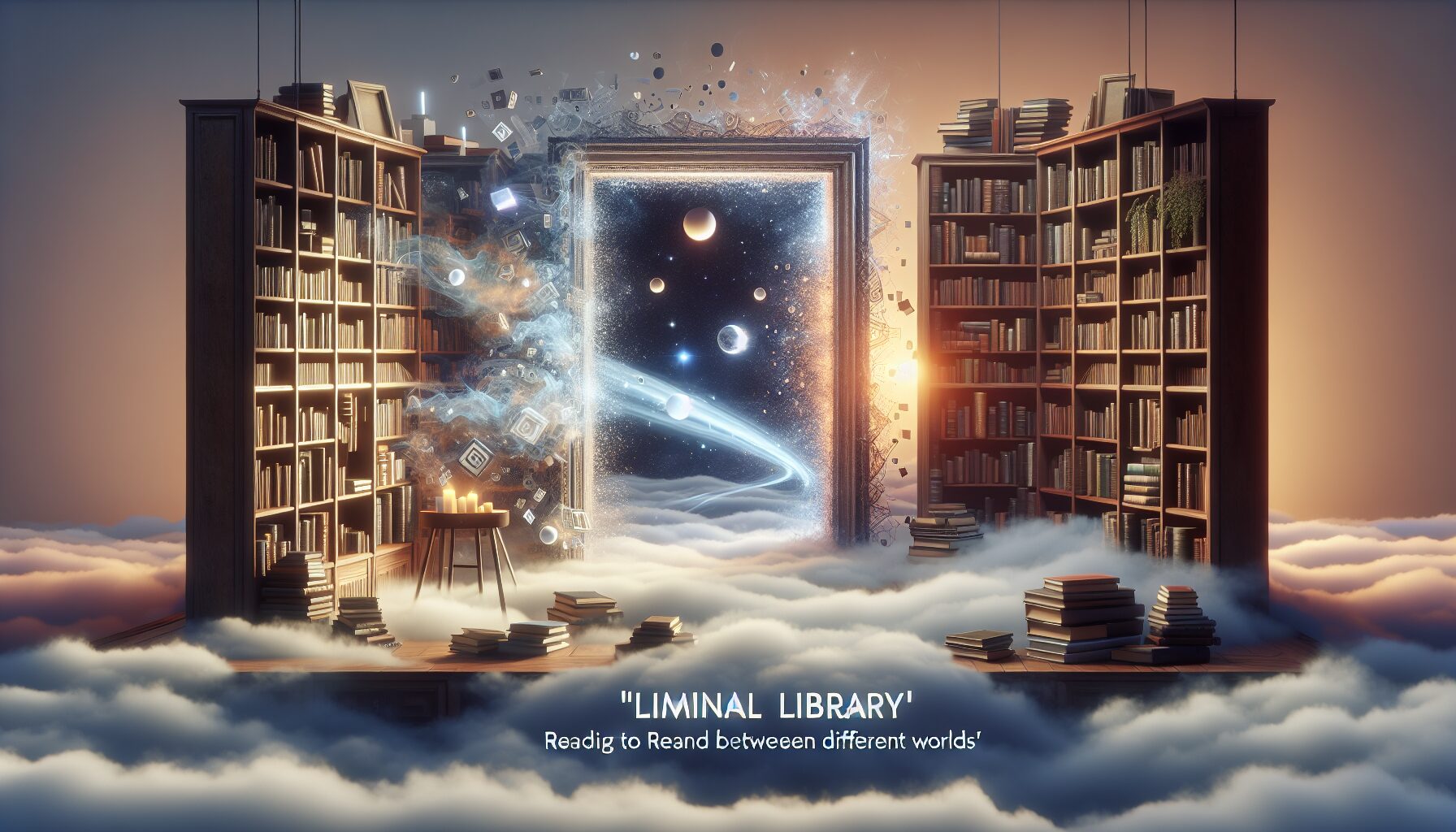
    Throughout history, libraries have served not only as repositories of knowledge but also as portals to other realms—places where the lines between reality and imagination blur. Often referred to as “liminal spaces,” libraries are unique locales where transitions exist between the known and the unknown. This liminal quality of libraries turns them into magical thresholds for readers, allowing passage between worlds through the pages of a book.

    Bridging Realities

    In many ways, a library functions as a bridge between diverse realities, offering insights into varied cultures, histories, and ideas. Neil Gaiman, a renowned author, once remarked, “A town isn’t a town without a bookstore, it may call itself a town, but unless it’s got a bookstore it knows it isn’t fooling a soul.” Even more, a library transcends a bookstore in its scope and depth, serving as a crossroads of human experience and knowledge.

    The Magic of the Stacks

    Each visit to a library can be considered an adventure into the unknown. The act of selecting a book from the stacks is akin to choosing a key to unlock a new dimension. Libraries invite introspection and exploration, linking us to stories and discoveries that shape our understanding of the world. As the late Carl Sagan famously said, “The library connects us with the insight and knowledge, painfully extracted from Nature, of the greatest minds that ever were, with the best teachers, drawn from the entire planet and from all our history, to instruct us without tiring, and to inspire us to make our own contributions to the collective knowledge of the human species.

    Liminality in Literature

    Libraries themselves often symbolize transitions in literature, embodying the journey between the mundane and the fantastical. J.K. Rowling’s Hogwarts Library in the Harry Potter series, for example, is filled with spellbinding tomes and magical secrets waiting to be uncovered. Libraries play a critical role within such narratives, acting as facilitators for characters embarking on quests that stretch beyond ordinary boundaries.

    Conclusion

    As places of both solitude and community, libraries possess a special kind of enchantment, making them ideal liminal spaces. They hold the power to transform readers, granting access to new perspectives and worlds. In doing so, libraries remain timeless sanctuaries of human curiosity and imagination. For those who venture into their depths, the rewards of discovery are boundless.

    “A town isn’t a town without a bookstore, it may call itself a town, but unless it’s got a bookstore it knows it isn’t fooling a soul.” – Neil Gaiman

    “The library connects us with the insight and knowledge, painfully extracted from Nature, of the greatest minds that ever were…” – Carl Sagan