Tag: human

  • Demonic Emptiness – Death and Shadow Archetypes

    Demonic Emptiness – Death and Shadow Archetypes

    Demonic Emptiness – Death and Shadow Archetypes

    Demonic Emptiness – Death and Shadow Archetypes

    The concepts of demonic emptiness, death, and shadow archetypes have fascinated human minds across cultures and ages. From the mysterious allure of gothic literature to the scholarly dissections of Carl Jung, the exploration of these archetypes offers insight into the human psyche and our relationship with the darker aspects of existence.

    The Concept of Demonic Emptiness

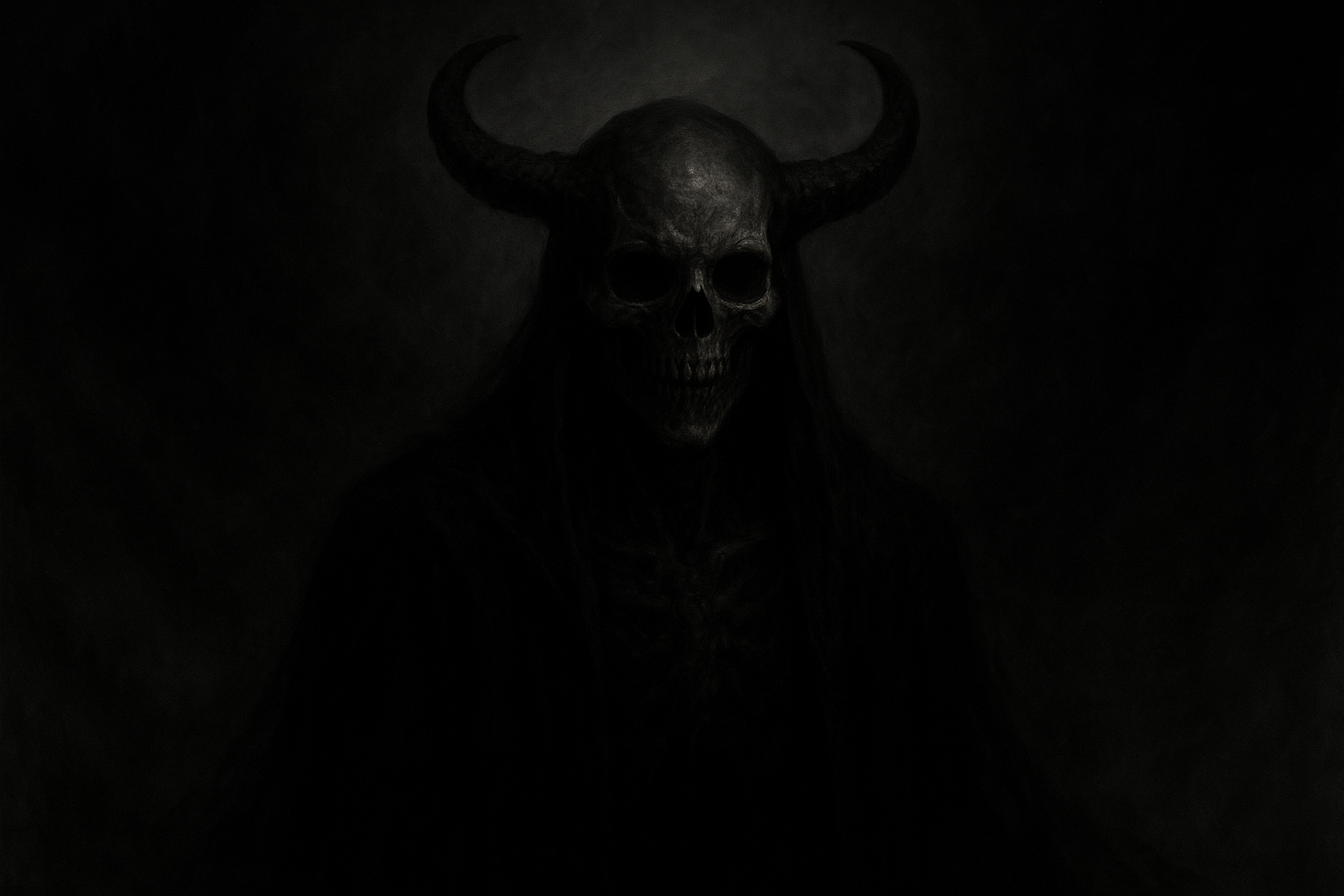
    Demonic emptiness, as a philosophical construct, refers to the existential void that symbolizes fear, destruction, and nothingness. It is the abstraction of the ultimate terror—the absence of being. Understanding this concept often involves delving into various mediums that capture its essence, from literature to art.

    “Long is the way, and hard, that out of Hell leads up to light.”
    — John Milton, Paradise Lost

    In literature, especially in works like Milton’s Paradise Lost, demonic emptiness represents the profound isolation and despair faced by characters grappling with the aftereffects of their hubris and downfall. Milton’s depiction of Hell itself is not just physical torment but an emotional vacuum devoid of hope and redemption.

    Death as an Archetype

    The archetype of death is perhaps one of the most universal, symbolizing the inevitable conclusion of life and often serving as a gateway to transformation and renewal. Death is frequently depicted as a catalyst for change, a necessary end that paves the way for new beginnings.

    • Mythology: Many cultures have personified death to make sense of its role in the cosmic order. The Grim Reaper, for instance, is a symbol of inevitability and impartiality.
    • Literature: In works such as William Shakespeare’s Hamlet, death is a central theme, providing a lens through which characters explore the morality and consequence of their actions.
    • Psychology: Carl Jung posited that death is not merely an end but a part of the psyche’s growth, asserting that embracing the concept of death can lead to a more profound self-understanding.

    “To sleep: perchance to dream: ay, there’s the rub; For in that sleep of death what dreams may come.”
    — William Shakespeare, Hamlet

    The Shadow Archetype

    Coined by Carl Jung, the shadow archetype embodies the unconscious part of the psyche that contains repressed weaknesses, desires, and instincts. Understanding and integrating the shadow into our conscious awareness is crucial for personal growth and authenticity.

    Jung explains in his writings that the shadow often manifests when individuals resist confronting parts of themselves they find undesirable or shameful. This confrontation is vital not only for self-awareness but for avoiding psychological projections onto others.

    • Confrontation: Accepting the shadow involves a process of embracing the full scope of one’s nature, which can lead to greater empathy and insight into human behavior.
    • Integration: This step involves harmonizing the shadow with the conscious ego, allowing for deeper personal integration and understanding.
    • Projection: Failing to recognize the shadow often results in projecting these unacknowledged aspects onto others, leading to conflict and misunderstanding.

    “One does not become enlightened by imagining figures of light, but by making the darkness conscious.”
    — Carl Jung

    Interplay of Demonic Emptiness, Death, and Shadow Archetypes

    The intersection of these archetypes reveals a complex web of human experience anchored in the tension between life and death, light and shadow. The journey into demonic emptiness, through the face of death, and the confrontation with one’s shadow forms a narrative deeply embedded in human storytelling.

    These archetypes are prevalent in both ancient texts and modern narratives, emblematic of the hero’s journey or the transformative quest. Whether in classical mythologies or contemporary novels, they guide the audience through an exploration of human morality, existential dread, and the quest for self-understanding.

    In essence, the exploration of these archetypes serves as a reminder of the intrinsic darkness and light within us all. They offer profound wisdom on navigating life’s complexities and embracing the realities of our existence. The resonance of these archetypes in cultural consciousness underscores their importance in shaping our understanding of life’s mysteries and human nature.

    Understanding demonic emptiness, death, and the shadow archetype allows for a richer, more nuanced appreciation of literature, art, and psychology. By exploring these concepts, individuals can gain greater insight into their own lives, building a bridge between fear and awareness, destruction and creation, emptiness and fulfillment.

  • Depersonalized Archetypes – Identity in Shadow

    Depersonalized Archetypes – Identity in Shadow

    In the realm of psychology and philosophy, archetypes are regarded as universal symbols or images that derive from the collective unconscious, a concept extensively explored by Carl Jung. These archetypes appear in various myths, stories, and symbols across different cultures. However, in modern society, these archetypes face depersonalization, creating a struggle for genuine identity in what can be described as the shadow of popular culture.

    The Nature of Archetypes

    Archetypes, as Carl Jung famously delineated, are “forms or images of a collective nature which occur practically all over the earth as constituents of myths and at the same time as autochthonous, individual products of unconscious origin”. These universal symbols provide a framework for understanding human experiences and the deep-seated psychological patterns that drive behavior.

    Some well-known archetypes include the Hero, the Mother, the Sage, and the Shadow. Each plays a significant role in shaping the stories we tell and the characters we create, illustrating the fundamental human conditions and life stages.

    The Impact of Modern Mass Media

    In contemporary society, the rise of mass media has contributed significantly to the depersonalization of these archetypes. As media channels powerfully repackage and project archetypal images, they often become diluted or oversimplified, detaching from their profound psychological roots.

    “Every archetype has an inherent fragment of energy that the media exploits. Often, this is done superficially, stripping the depth to appeal to broader audiences,” notes Dr. Marianne Kotov, a psychologist who specializes in media influence on identity.

    This commercialization leads to stereotypes more than a nuanced understanding of human existence, impacting personal identities, especially among younger generations.

    The Shadow Aspect of Identity

    The most intriguing of Jungian archetypes is undoubtedly the Shadow, representing the unconscious and often darker side of our personality. The Shadow contains repressed weaknesses, desires, and instincts, symbolizing all that society deems unacceptable.

    In Jung’s words, it is “the thing a person has no wish to be.” Nonetheless, facing the Shadow is critical for personal growth and self-awareness. In the chaotic whirlwind of modern identity, coming to terms with one’s Shadow fosters a genuine sense of self.

    Navigating Identity in the Age of Depersonalized Archetypes

    While depersonalization of archetypes through media streams presents challenges, it also calls for awareness and mindfulness in navigating one’s identity. Here are some approaches to maintaining authentic individuality:

    • Awareness of Stereotypes: Recognize and critically analyze the stereotypes portrayed in media. Understanding these frameworks helps in discerning personal values and beliefs.
    • Engage in Shadow Work: Explore your Shadow through reflection and psychoanalytic techniques. Embrace vulnerability to better understand hidden desires and fears.
    • Connect with Personal Myths: Delve into personal and cultural stories that resonate with your life’s journey, distinguishing your genuine path from superficial narratives.
    • Cultivate Critical Thinking: Approach media and cultural outputs with skepticism, seeking the deeper meanings behind prevalent archetypes.

    Reflecting Archetypes in Personal Growth

    Rediscovering and integrating authentic archetypes can deeply enhance personal growth and societal roles. When individuals connect with the intrinsic meanings of these patterns, they unlock potentials beyond mass-marketed personas.

    Joseph Campbell, in his discussions on the hero’s journey, posits that each person’s life unfolds like a myth. “We must be willing to get rid of the life we’ve planned, so as to have the life that is waiting for us.” Acknowledging and embracing archetypes allows this transformational process to unfold.

    Reflecting on archetypes, especially the depersonalized ones, requires a journey inward. By doing so, individuals can transcend mere survival in a world of stereotypes, discovering a deeper connection with the human experience.

    For further exploration on this topic, visit Simply Psychology for an in-depth exploration of Carl Jung’s theories and their impact on identity.

    Conclusion

    The delicate dance between archetypes and personal identity is ongoing in the shadow of modernity. By recognizing the influences that shape our personas and the fundamental archetypes that dwell below the surface, we can liberate ourselves from the superficial realms of identity. This journey may well illuminate who we truly are—not just in the shadows, but in the consciousness of personal awakening.

  • The Phantom Spiral – Mythology of Repetition and Loss

    The Phantom Spiral – Mythology of Repetition and Loss

    The Phantom Spiral: Mythology of Repetition and Loss

    Mythology can be a quicksilver tapestry of human thought, weaving stories that transcend time and space. The concept of a phantom spiral—a motif of repetition and loss—delves into the intricate layers of cultural narratives that have resonated through ages. This archetype, defined by cycles that seem to assure, yet deceive, invites us to explore the depth of human experience through mythology itself.

    The Concept of the Spiral in Mythology

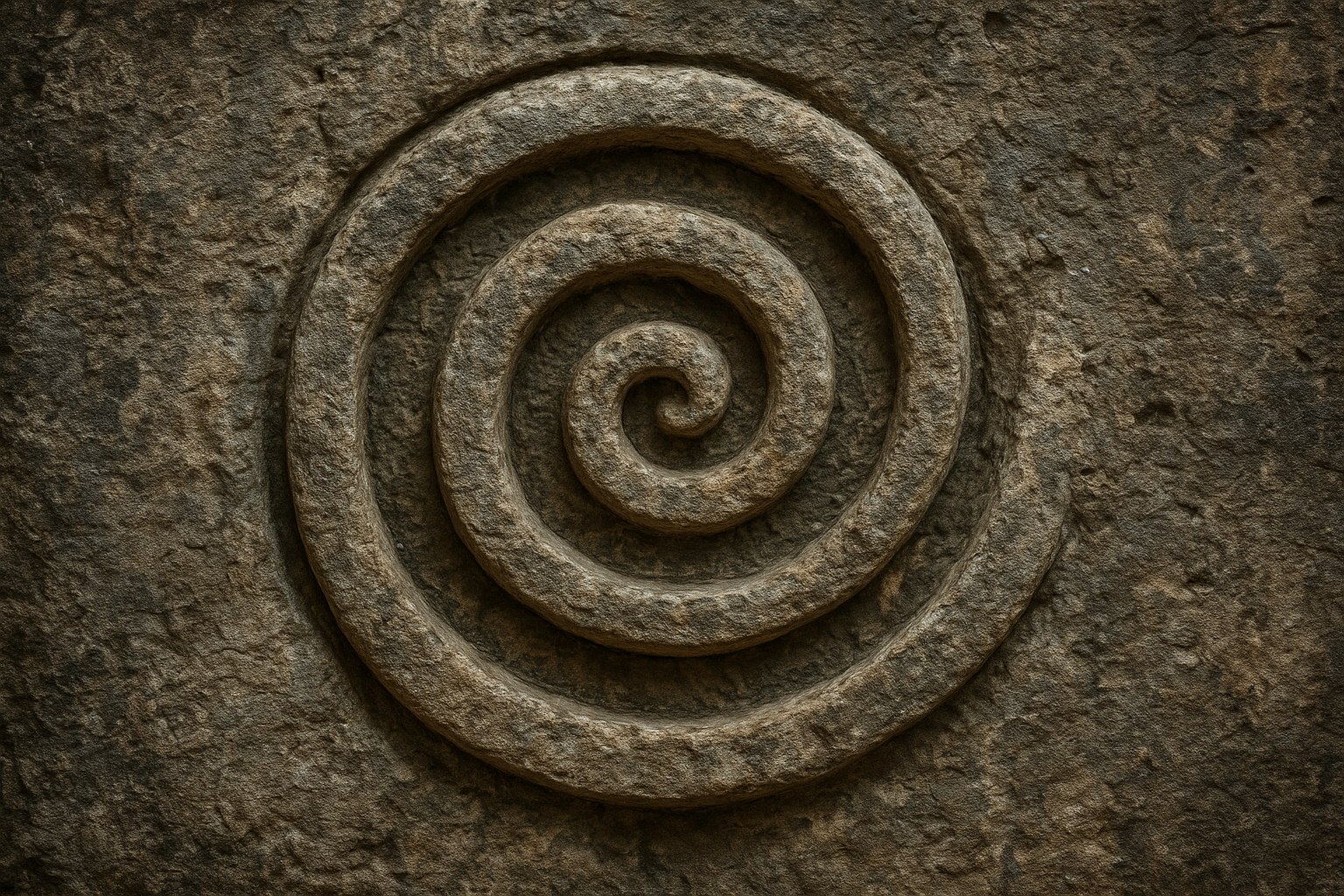
    • Symbol of Connectivity: The spiral, seen in numerous ancient cultures, symbolizes evolution and connectivity from the macrocosm to the microcosm. It represents the path life takes as it flows forth and makes progress. It’s a prevalent symbol in Celtic mythology, exemplifying spiritual growth.
    • Icon of Repetition: Spirals are essentially cyclical, suggesting that while the journey may progress outwardly, it often ends where it began. This motif advises a delicate balance between forward motion and inevitable return.
    • Emblem of Loss: Loss is intrinsic to the concept of a spiral because the return is never to the original point precisely; it is subtly transformative, entwining the joy of discovery with the sorrow of absence.

    “Mythologies are not just stories of humans; they are stories that speak of the unknown and often remind us of the cycles that swirl within the fabric of existence.” — Joseph Campbell

    Tales of the Phantom Spiral

    The notion of a ‘phantom spiral’ resonates powerfully through various mythological narratives. It appears where destiny intertwines with the spectrum of life’s ephemeral nature, creating a recurring theme of futility and unavoidable loss.

    Orpheus and Eurydice

    Perhaps one of the most profound tales embodying the idea of the spiral is the tragic love story of Orpheus and Eurydice in Greek mythology. Orpheus descends into the underworld, spinning through the circle of life and death, in a desperate attempt to retrieve his beloved. Though he succeeds in convincing Hades to allow Eurydice to follow him back to the living world, he fails to keep his promise of not looking back, thus losing her forever. This tale indicates the cyclical journey of love interspersed with the inevitability of loss.

    The Endless Knot

    In Buddhist symbolism, the ‘Endless Knot’ represents samsara—the eternal cycle of birth, suffering, death, and rebirth. This philosophical spiral implies that even as life is an everlasting loop, one’s purpose is to eventually break free, thus transforming the cycle of loss into spiritual enlightenment.

    The Impact of Repetitive Mythology

    Mythological narratives that explore themes of repetition and loss highlight the deeply human need to address and make sense of the inevitable. The phantom spiral serves as a reminder of continuity within discontinuity, suggesting life’s seeming capacity for progression despite an intertwined dance with destruction.

    • Psychological Insight: Psychologist Carl Jung proposed that the themes found within mythology mirror societal and personal unconscious. The phantom spiral reflects the human psyche’s struggle to reconcile growth with the inherent nature of finite existence.
    • Cultural Interpretation: Different cultures interpret the death and rebirth cycle in their unique paradigms, often using the spiral to reflect resilience and eternal hope amidst adversity.
    • Aesthetic Representation: Artists across history have engaged with the spiral motif to depict the profound psychological and physical forces that shape and reshape human experience.

    Conclusion: Embracing the Journey

    The phantom spiral is more than a mere mythological curiosity. It calls upon human consciousness to dwell on life’s enduring paradoxes—where every step forward might echo backward. Its tales and symbology offer not only solace but teach prudence and consciousness.

    In the timeless embrace of stories, the spiral—phantom and profound—serves as an invitation. Humans are encouraged to embrace knowledge, confront darkness, and celebrate love, knowing that as profound as myth, life too is an eternal quest shrouded in the mysterious dance of repetition and loss.

    “Myths are expressions of heroism within the human soul, summing the ascendancy of spirit over matter.” — Joseph Campbell

  • Arcane Enigmas – Mystery of the Unknowable

    Arcane Enigmas – Mystery of the Unknowable

    Arcane Enigmas: Mystery of the Unknowable

    Throughout history, humanity’s quest for knowledge has been punctuated by encounters with the inexplicable. These arcane enigmas captivate our imagination, challenging our understanding and inviting us to explore the boundaries of the mysterious and the unknown.

    The Nature of Mysteries

    At the heart of every mystery lies uncertainty—a void that tantalizes and terrifies in equal measure. Mystical phenomena, unsolved historical events, and cryptic codes lure us because they represent the interface of the known and the unknown. To delve into these enigmas is to embrace the uncertainty of human experience.

    “The most beautiful experience we can have is the mysterious. It is the fundamental emotion that stands at the cradle of true art and true science.” — Albert Einstein

    • Phenomena Beyond Comprehension: Mysteries like the Bermuda Triangle have baffled scientists for decades. Despite modern technology, no conclusive explanation has been offered for the numerous disappearances that occur in this area.
    • Historical Puzzles: The lost city of Atlantis remains one of the greatest unsolved mysteries. First mentioned by Plato, its existence is debated as either mythical or a historical place that was drowned by the sea.
    • Cryptic Languages: The Voynich Manuscript is an illustrated codex written in an unknown writing system, which has defied all attempts at interpretation and sparked numerous theories about its content and origins.

    Psychological Allure of the Enigmatic

    What is it about mysteries that captivates the human psyche? Our brains are wired to seek patterns and meaning, leading us on a relentless search for answers. Psychologists suggest that this drive is rooted in our evolutionary past, where solving mysteries was directly linked to survival.

    According to a study by Professor Daniel Kahneman, author of Thinking, Fast and Slow, humans exhibit a cognitive bias toward uncertainty. This makes mysteries particularly compelling, as they engage our innate curiosity and reward our brain’s pleasure centers when pursuits yield answers.

    “Curiosity is, in great and generous minds, the first passion and the last.” — Samuel Johnson

    Mysteries in Science

    Science has contributed to our understanding of many mysteries but has also hit formidable walls when confronted with certain phenomena. Quantum mechanics, for instance, defies the classic understanding of physics, leading to continua of new questions and theories.

    • Dark Matter and Dark Energy: Comprising about 95% of the universe’s mass-energy content, dark matter and dark energy remain among the greatest scientific mysteries. Despite extensive research, their true nature is still unknown.
    • The Origins of Consciousness: The mystery of consciousness—how brain processes result in subjective experiences—continues to perplex scientists and philosophers alike. Some argue it defies all existing scientific paradigms.

    Einstein’s pursuit of a unified theory, one that could mathematically describe the fundamental forces of nature, reflects the profound sense of wonder and the enduring allure of the unknowable in science.

    Interpreting the Unknowable

    Throughout cultures past and present, the unknowable has often been personified through myths, religious beliefs, and the arts. These interpretations serve as a collective narrative to give shape to the abstract and the daunting.

    • Mythological Figures: Gods and supernatural beings have been born from the mysteries humans couldn’t explain. Ancient stories of creation, destruction, love, and war reflect attempts to understand the cosmos and human nature.
    • Religious Concepts: Concepts such as karma, fate, and ultimate salvation reflect humanity’s quest to find meaning amidst uncertainty.
    • Art and Literature: From Dante’s Divine Comedy to the surrealism of Salvador Dalí, artists have long sought to explore existential mysteries, weaving layers of meaning through images and words.

    These interpretative tools are not mere escapism but signify deep human engagement with mystery as a means to explore and reflect upon our place in the universe.

    Navigating the Mystery

    To navigate the mystery of the unknowable, it is crucial to embrace both rational inquiry and creative imagination. While science and reason provide tools to probe and question, the arts invite an exploration that transcends empirical evidence. This dual approach allows for a fuller understanding of the mysteries that lie at the edges of human knowledge.

    “The possession of knowledge does not kill the sense of wonder and mystery. There is always more mystery.” — Anaïs Nin

    Ultimately, our appreciation of these arcane enigmas enhances our understandings of both self and world, encouraging a profound respect for the mysteries that persist. The unknowable may remain elusive, but it is this dance with mystery that defines much of the human odyssey.

    As we forge ahead into new realms of exploration, let us remember that, as Ralph Waldo Emerson eloquently stated, “All life is an experiment. The more experiments you make the better.” It is through embracing both success and uncertainty that we truly come to discover the wonders of our reality.

  • Celestial Dissociation – Angels as Witnesses to Depersonalization

    Celestial Dissociation – Angels as Witnesses to Depersonalization

    Celestial Dissociation: Angels as Witnesses to Depersonalization

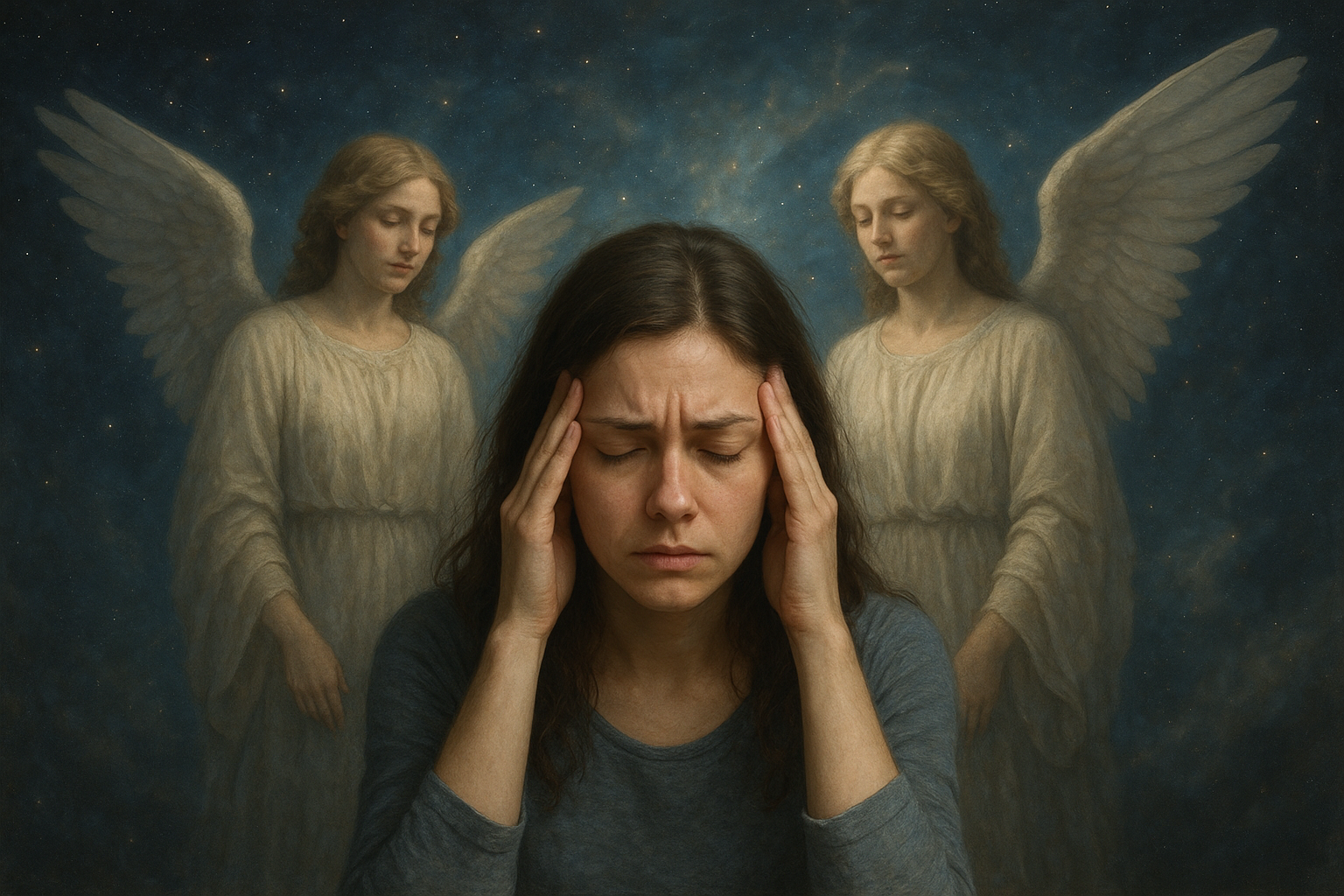
    The mind, in times of extreme stress or trauma, often resorts to mechanisms that allow it to step away from the immediacy of pain. One such mechanism is depersonalization, a state of feeling detached from one’s own body and experiences. Could there be celestial witnesses to such human experiences? This article explores the poetic and symbolic notion that angels observe and perhaps accompany humans during these episodes of dissociation, offering a metaphysical perspective on the condition.

    Understanding Depersonalization

    Depersonalization is characterized by a persistent feeling of being estranged from one’s self, as though living in a dream. Those who experience it often describe the sensation as observing their actions from outside their body, leading to feelings of unreality and emotional numbness. The Diagnostic and Statistical Manual of Mental Disorders (DSM-5) categorizes it as a dissociative disorder.

    “I felt as if I were a spectator at a play, watching my own life unfold without truly being part of it,” described a participant in a study on depersonalization.

    The Symbolism of Angels

    Across cultures, angels are symbolic of spiritual guardianship, protection, and guidance. In religious texts, they often serve as messengers between the divine and mortal realms. The image of an angel as an observer or witness to human suffering provides a comforting narrative for those enduring experiences like depersonalization, where earthly companionship might feel insufficient or absent.

    • Biblical References: In the Bible, angels frequently appear during pivotal moments, offering guidance or simply bearing witness. For instance, in the Book of Daniel, an angel appears to Daniel during his visions, providing insight and understanding.
    • Art and Literature: Angels have been depicted in art and literature as watching over humans during moments of great trial. From Dante’s Divine Comedy to Michelangelo’s paintings, the presence of angels symbolizes hope and connection to the divine.

    The Role of Angels in Depersonalization

    While there is no scientific evidence to suggest angels audibly or visibly intervene during episodes of depersonalization, the metaphorical presence of these celestial beings can be interpreted as a psychological coping mechanism. Here are a few ways this concept might manifest:

    • Emotional Support: Believing in an angelic presence can provide a sense of emotional solace, reducing feelings of isolation that often accompany depersonalization.
    • Symbolic Witness: The idea of angels as witnesses to human experiences can bring a sense of significance to the person’s suffering, validating their struggles as something worth being observed by higher beings.
    • Pathway to Healing: For some, envisioning angels or other divine entities as present might motivate them towards spiritual or therapeutic journeys that facilitate healing.

    Cultural Interpretations and Healing Practices

    Different cultures and spiritual practices offer varied interpretations of angels and their roles in human life. In the context of depersonalization, many draw upon these beliefs to foster a sense of healing and understanding.

    • Christianity and Prayer: For many Christians, prayer to guardian angels is a comforting practice during times of mental distress. The notion of an angel interceding on their behalf can bring peace and clarity.
    • Sufism and Meditation: In Sufi Islam, meditative practices often involve envisioning angels as companions on the spiritual journey, helping to transcend personal struggles.

    Integrating the Metaphysical in Therapy

    Interest in incorporating religious and spiritual beliefs into therapy is rising. Therapists who work with clients experiencing depersonalization might explore these beliefs, helping individuals find personal narratives that resonate with their experiences.

    An article in Psychotherapy Research explores how “integrating a client’s spiritual beliefs can enhance therapeutic outcomes, providing a deeper connection to their process of healing.”

    Conclusion

    While angels as celestial witnesses to depersonalization are a symbolic interpretation rather than a clinical one, this perspective can enrich our understanding of how individuals find meaning and solace in their experiences. As we delve deeper into the mysteries of the human mind, incorporating spiritual and mythical narratives continues to offer invaluable insights and comfort to those navigating the complex landscape of human consciousness.

  • The Vanishing Pantheon – Mythology of Dissolution

    The Vanishing Pantheon – Mythology of Dissolution

    The Vanishing Pantheon – Mythology of Dissolution

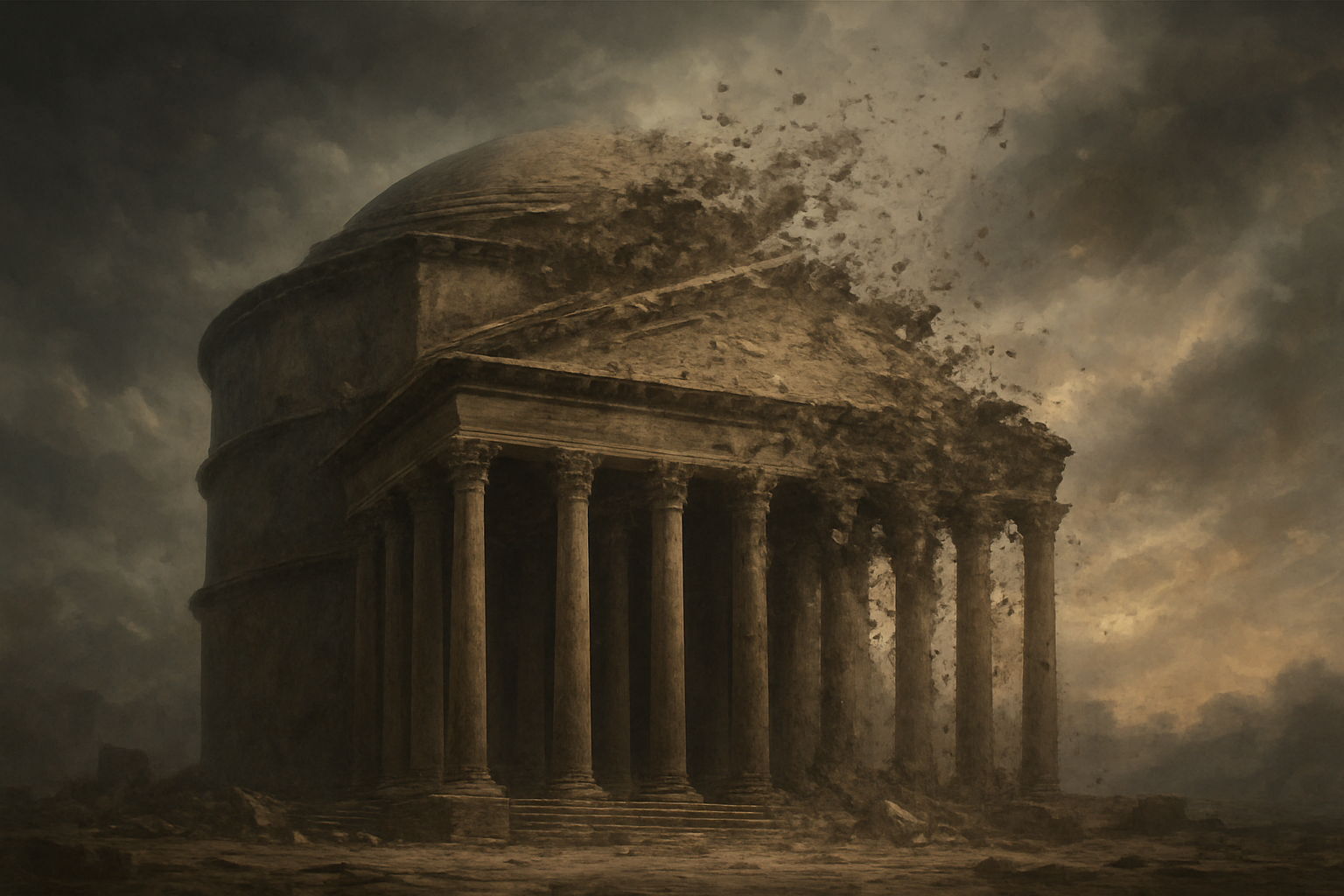
    Throughout human history, myths and legends have served as powerful lenses through which cultures interpret the mysteries of existence. As societies change, so too do their divine pantheons, sometimes expanding but often contracting, as gods and stories fade into obscurity. This phenomenon—a vanishing pantheon—is where mythologies dissolve and reshape, reflecting the evolving beliefs and priorities of civilizations.

    The Mythical Landscape

    In antiquity, civilizations like the Greeks and Romans possessed complex pantheons with gods who personified natural elements, human emotions, and societal values. These deities were integral to everyday life, with rituals and stories reinforcing their presence. As time passed, however, factors such as cultural shifts, the rise of monotheistic religions, and colonial conquests led to the disintegration or transformation of these mythologies.

    Factors Leading to the Dissolution of Pantheons

    • Religious Evolution: The rise of monotheistic faiths often resulted in the collapse or assimilation of polytheistic beliefs. For instance, the spread of Christianity throughout the Roman Empire significantly reduced the prominence of Roman gods.
    • Cultural Syncretism: As cultures interacted through trade and conquest, pantheons merged. The Egyptian and Greek integrations resulted in hybrids like the god Sarapis, reflecting both traditions.
    • Societal Change: Shifts in societal structures and priorities can render certain deities obsolete. In times of societal upheaval, such as the fall of empires, the old gods often fade away with the civilizations that worshipped them.

    A Modern Reflection

    In contemporary times, the allure of ancient mythologies persists, yet their roles have transformed. Today, these stories often serve more as cultural touchstones or inspirations for literature and film rather than as active religious beliefs. Neil Gaiman, in his novel American Gods, explores this theme, depicting old gods struggling to survive in a modern world dominated by new “gods” of technology and commerce. Gaiman’s work is a testament to the ongoing relevance and reinterpretation of myth in understanding human culture.

    “A myth is a lie that conveys a truth.”

    — Neil Gaiman

    The vanishing pantheon is not merely about loss but transformation. As the gods of old disappear into the folds of history, their stories continue to resonate, echoing the eternal human quest to find meaning in the world.

  • Celestial Dissociation – Depersonalization in Angelic Realms

    Celestial Dissociation – Depersonalization in Angelic Realms

    Celestial Dissociation: Depersonalization in Angelic Realms

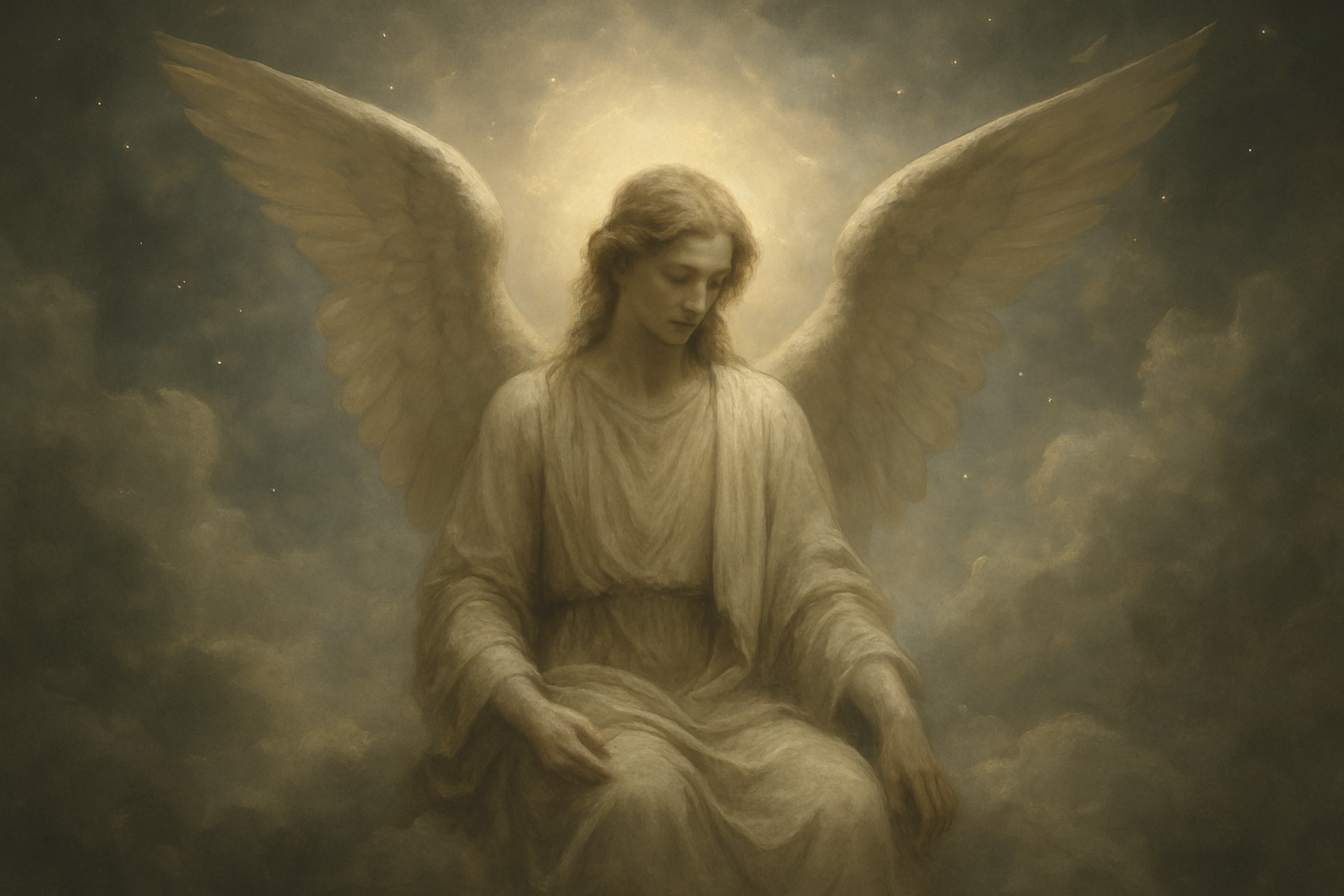
    In the intricate tapestry of the cosmos, the notion of celestial beings such as angels has captured human imagination for centuries. These angelic entities, often seen as messengers of divine will and protectors of humanity, exist in realms beyond our conventional understanding. However, the humanization of such beings in art, literature, and theology begs the question: can entities of such cosmic magnitude experience psychological phenomena akin to those in humans, such as depersonalization?

    Understanding Depersonalization

    Depersonalization is defined by the American Psychiatric Association as an experience where an individual feels detached from their thoughts, feelings, and body experiences. It is often characterized by emotional numbing and a sense of observing oneself from an external perspective, as though one were living in a dream.

    According to Dr. John F. Kihlstrom, a cognitive psychologist, “Depersonalization is a fascinating dissociative disorder that reminds us, though we take it for granted, that the seamless integration of mind, body, and self can sometimes break down.”

    Angelic Realms and Perception

    The angelic realms, as described in numerous spiritual texts and traditions, are not bound by the physical laws that govern the human experience. These celestial domains are said to exist in dimensions where time and space may operate differently, if at all. In Christian theology, angels are created beings, with numerous ranks and functions, from archangels to cherubim, all holding specific roles that contribute to the divine cosmic order.

    However, the portrayal of angels in many theological doctrines suggests an inherent emotional and moral consciousness. Biblical narratives, such as those found in The Book of Revelation, depict angels participating in both worship and judgment, implying an ability to process events and make decisions. Yet, as spiritual beings, they may also encounter experiences that parallel human psychological states, including those resembling depersonalization. The notion raises intriguing questions about the emotional and perceptual dimensions of such celestial beings.

    Celestial Entities and Transcendental Experiences

    If angels are capable of experiencing states akin to depersonalization, such experiences would likely diverge significantly from the human form of the condition. Theologians and mystics suggest that angels, in their celestial agency, are privy to perspectives of time and existence far removed from human understanding, potentially allowing them to observe the world with both intimacy and detachment.

    Some scholars propose that such detached observation may not be dissociative in the pathological sense but rather a mode of transcending the limitations of singular identity. Angelologist and philosopher Emmanuel Swedenborg posited that celestial beings partake in divine contemplation, allowing their individuality to momentarily dissolve into the vastness of the divine plan.

    “Angels never cease, not even for a moment, to be in the presence of the Lord, thus, in a state of love,” wrote Swedenborg in his landmark work, Heaven and Hell. “By this means, all that they think is wise and all that they act upon is true.”

    Parallels in Human Experience

    Comparisons can be drawn between this celestial form of observation and the human pursuit of transcendence through practices such as meditation and prayer. Both seek to achieve a spiritual state of being that transcends the typical confines of the conscious ego, albeit only temporarily. In these states, individuals often report feeling a dissociation from their immediate self and a connection to a larger, collective consciousness.

    Thomas Metzinger, in his book Being No One, explores the idea of selfhood and suggests a model where personal identity can decouple from self-perception, affording individuals a separate vantage point of the self without the constraints of the ego. In this realm of thought, angelic depersonalization could indeed reflect an enlightened state, rather than a disorder.

    Concluding Thoughts

    Ultimately, the concept of depersonalization in angelic realms invites us to reimagine the spiritual dimensions and the psychological parallels between human and celestial entities. The potential for these beings to experience such phenomena expands our understanding of consciousness and identity beyond the human-centric models. It challenges longstanding perceptions by proposing that all consciousness, whether celestial or corporeal, is subject to states and modes of experience that highlight the interconnectedness of all existence.

    As we contemplate these possibilities, we continue to bridge the gap between the worlds we inhabit and the ethereal domains we strive to understand. The dialogue between science, spirituality, and imagination remains ever rich and expansive, promising new insights into the ultimate nature of consciousness itself.

  • Abstract Vanishing – Emptiness in Form and Mind

    Abstract Vanishing – Emptiness in Form and Mind

    The realm of art and psychology are often interconnected, illustrating how abstract concepts can profoundly affect the human psyche. One such notion is the idea of emptiness, both in form and mind. This concept is a recurring theme in abstract art, deeply resonating with our cognitive processes and emotional experiences.

    The Essence of Emptiness in Art

    Abstract art has long grappled with the paradox of emptiness. Artists like Mark Rothko and Kazimir Malevich have famously exploited color and form—or the lack thereof—to invoke intense emotional responses. In Rothko’s words,

    “A painting is not a picture of an experience; it is an experience.”

    Indeed, emptiness in art is not merely the absence of structure or content but a deliberate choice that invites viewers to engage more actively with the artwork.

    According to Dr. Ellen Winner, a professor of psychology at Boston College specializing in art perception, “The less an artwork tells us directly, the more we fill in with our own mental stories.”

    Psychological Interpretations of Emptiness

    In the field of psychology, emptiness may refer to a state of a lack of subjective meaning or engagement in one’s activities, often leading to feelings of ennui and insignificance. Psychologists explore how this state of mind can influence human behavior and relationships, suggesting ways to cultivate fulfillment and purpose.

    The Appeal of Minimalism

    Minimalist environments and practices, much like abstract art, emphasize simplicity and clarity. They invite introspection by reducing external clutter, thus highlighting the internal landscape. Minimalism speaks to the desire for psychological clarity amid the chaos of modern life. By eliminating distractions, individuals often find amplified focus and emotional relief.

    The Philosophical Underpinnings

    Philosophically, the concept of emptiness can be traced back to Buddhist teachings, which advocate for the notion of ‘sunyata’—emptiness as a fundamental nature of all phenomena. This perspective encourages a liberation from attachment and a deeper understanding of the transient nature of existence.

    Emptiness, in this light, is not a void to be feared but a realization to be embraced. It underscores the impermanent and interdependent nature of reality. As the Buddha addressed,

    “Form is emptiness, emptiness is form.”

    Understanding this can lead to profound insights into the mind’s workings and our interactions with the world.

    Mindfulness and Embracing Emptiness

    Practices like mindfulness and meditation have become popular pathways to exploring the constructive aspects of emptiness. By focusing on the present moment and releasing judgments about the past and future, individuals can attain a greater understanding of themselves and lessen the burden of mental clutter.

    • Acceptance: Embracing things as they are without wishing for change.
    • Presence: Being fully engaged in the present moment.
    • Detachment: Developing a sense of self that is not dependent on external successes or failures.

    These practices aim to refine our mental states by clearing the mind of preoccupations, thereby opening up space for creativity, tranquility, and contentment.

    Conclusion

    The intersection of emptiness in abstract art and psychology offers a compelling view into human perception and cognition. It challenges us to reconsider our relationship with void and uncertainty, viewing them not as drawbacks but as opportunities for deeper engagement and personal growth.

    By acknowledging and embracing emptiness, both in form and mind, we open ourselves to new interpretations, both in art and life. Such a perspective transforms emptiness from a daunting absence into a canvas of potential, inviting introspection, connection, and ultimately, understanding.

  • Angelic Laments – Mourning in Celestial Hierarchies

    Angelic Laments – Mourning in Celestial Hierarchies

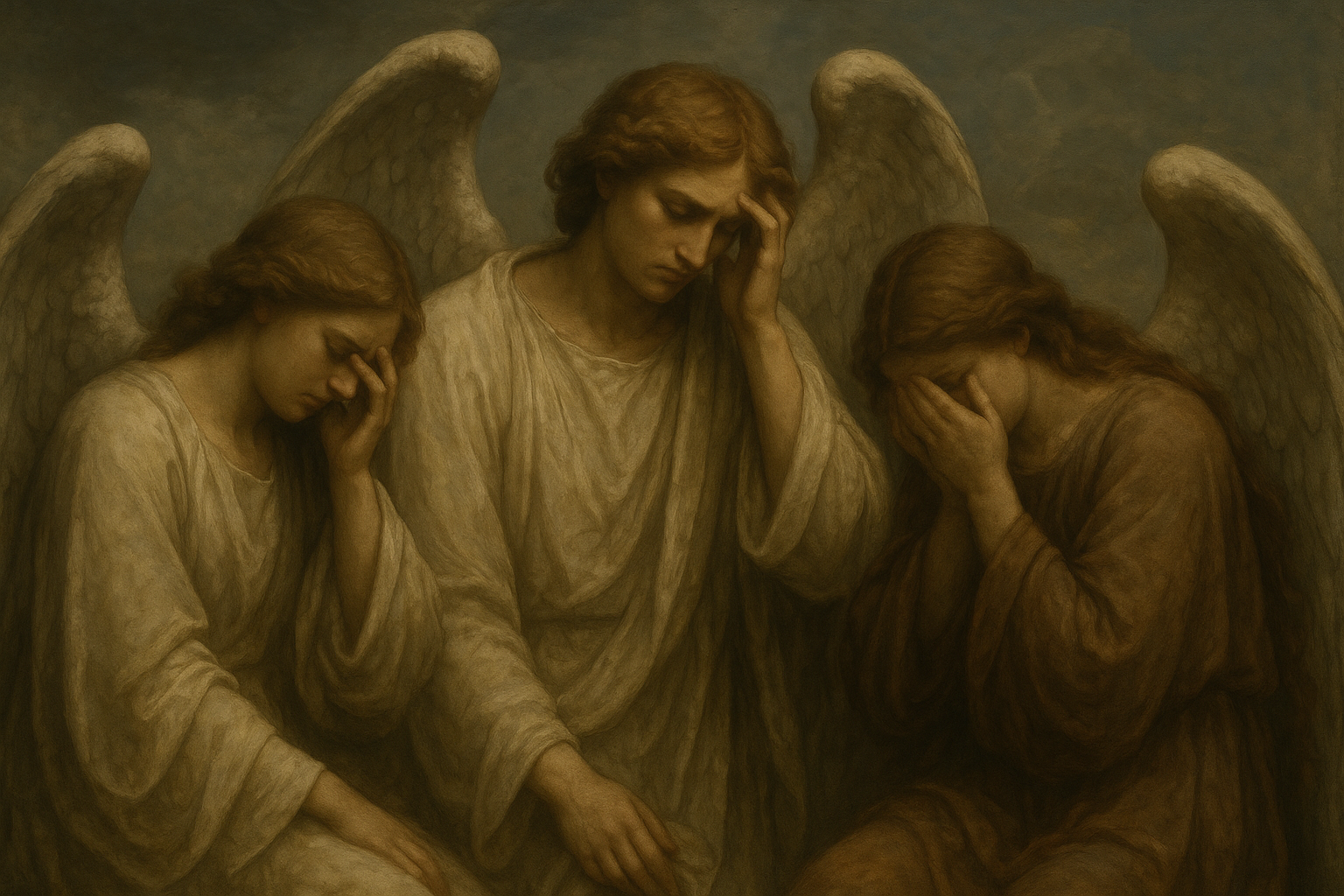
    In many religious and mythological contexts, angels are depicted as divine celestial beings closely associated with themes of light, purity, and protection. Yet, within these heavenly domains, there exists an often overlooked aspect of their existence: the concept of mourning and how grief is expressed among the celestial hierarchies.

    The Nature of Angels

    Angels are generally perceived as intermediaries between God and humanity, delivering messages and offering guidance. They are revered across various cultures and religions, with distinct roles and attributes assigned to them.

    • In Christianity, angels are considered messengers of God, capable of both protecting humans and executing divine judgment.
    • In Judaism, various types of angels serve different functions, such as guarding the gates of heaven or recording the deeds of individuals.
    • In Islam, angels are believed to be made of light and are without free will, existing to serve Allah in obedience and piety.

    Exploring the Concept of Mourning

    Given their seemingly perfected existence, the concept of mourning within the angelic realm can appear contradictory. However, several texts and interpretations suggest that even angels experience a form of grief, especially when confronting the disobedience of humanity or witnessing the fall from grace of their fellow beings.

    “The angels, not half so happy in Heaven, / Went envying her and me— / Yes! that was the reason (as all men know, / In this kingdom by the sea) / That the wind came out of the cloud by night, / Chilling and killing my Annabel Lee.” —Edgar Allan Poe, Annabel Lee

    This poetic expression by Poe, while metaphorical, touches on the idea that angels are touched by emotions deeply rooted in the human condition, such as envy and loss. This suggests that they might indeed possess the capability, or at least an awareness, of mourning.

    The Fall and Mourning of Angels

    One of the most significant narratives involving angelic mourning is that of the fallen angels, most prominently depicted in John Milton’s Paradise Lost. Milton presents Lucifer, the most radiant of angels, as he falls from grace, pulling legions of fellow angels into his rebellion against God. The sorrow stemming from this betrayal resonates throughout their celestial peers.

    “Hail horrors, hail / Infernal world, and thou profoundest Hell / Receive thy new possessor: One who brings / A mind not to be changed by place or time. / The mind is its own place, and in itself / Can make a Heaven of Hell, a Hell of Heaven.” —John Milton, Paradise Lost

    Although Milton mainly focuses on the defiance and pride of the fallen, hints of regret and loss weave through their experience, suggesting a deeply resonant grief that accompanies their fall.

    Catholic Perspectives on Angelic Grief

    In Catholic teachings, while angels are considered incapable of error post-supernatural discipline (the state angels achieve after their trial and self-choice for God), the notion of them grieving for humanity’s sins is present. Their laments are more of a reflection of their commitment to divine justice and order, manifesting as a deep, albeit abstract, sorrow for human transgressions.

    The Catholic education resource EWTN suggests that angels experience sadness in a way that aligns with their nature: “Their sadness is purely intellectual and relates to the deviation from God’s plan, with whom they are perfectly aligned.”

    Angelic Lament in Art and Culture

    The portrayal of mourning angels in art and literature provides a visual and narrative exploration of celestial grief. In sculptures and paintings, angels are often depicted with tears or in postures of lament, suggesting deep emotional resonance with loss and sorrow.

    • Rodin’s Angels: The famous “Gates of Hell” by Auguste Rodin explores the harrowing emotions associated with the fall, including the depiction of anguished celestial beings among the damned.
    • Literary Mourning: In Dante Alighieri’s Divine Comedy, angels appear in varied forms, at times expressing sorrow for the souls they encounter in the Inferno’s realms.

    Philosophical Interpretations of Angelic Mourning

    Philosophers have long pondered the implications of angelic grief and what it reveals about the broader themes of justice, morality, and divine empathy. The intertwining of justice and emotion among celestial beings reflects an intricate balance between cosmic order and emotional intelligence.

    Thomas Aquinas, in Summa Theologica, discusses the nature of angelic intellect and will, suggesting that while angels operate on a different plane of emotions, their intellectual apprehension allows them a form of “grief.” They may not mourn as humans do, but their comprehensive understanding of divine injustice creates an intellectually-derived lament.

    The Human Connection

    The concept of angelic mourning resonates deeply with human experiences of grief and loss. It serves as a poignant reminder that even the divine contemplates the complexities of existence and the evocative power of justice and empathy.

    The notion that angels, who epitomize purity and divine alignment, could mourn over the missteps of humanity or their peer’s fall from grace suggests an unprecedented level of understanding and compassion transcending earthly boundaries. It positions mournful angels as intermediaries not merely of God’s will but also of celestial empathy, providing humanity with strength and solace in times of tribulation.

    Ultimately, the study and depiction of angelic laments help bridge the gap between divine perfection and flawed human nature, offering a unique lens through which to explore the interconnectedness of emotion, morality, and spirituality.

    Conclusion

    Angelic laments encapsulate the complex tapestry of sorrow and understanding that exists within celestial hierarchies. They reinforce the idea that even within realms of divine order, the echoes of grief and compassion persist, offering insights into the eternal dance between righteousness and empathy. Through the layered interpretations in religion, literature, and art, these divine figures continue to embody both the unyielding justice of the heavens and the profound, albeit otherworldly, compassion for the fallen.

  • Nocturnal Cathedrals – Petit Mort as Spiritual Passage

    Nocturnal Cathedrals – Petit Mort as Spiritual Passage

    Nocturnal Cathedrals: Petit Mort as Spiritual Passage

    The intertwining of human experience with metaphysical understanding has long intrigued philosophers, artists, and theologians alike. Among the many aspects of life that provoke such contemplation, the concept of the petit mort, or “little death,” provides a captivating lens through which to explore the elusive boundaries between the corporeal and the spiritual. This article delves into the idea of the petit mort as a spiritual passage, one that echoes like the quiet resonance of a cathedral enveloped in the night.

    Origins and Meaning of Petit Mort

    The term petit mort is of French origin, most commonly used to describe the post-orgasmic state, a moment of emptiness that follows intense pleasure. The phrase suggests more than just physical culmination; it hints at a deeper moment of transcendence where consciousness flickers between life and the contemplative finality of death. As Ernest Hemingway observed in his writings, “All thinking men are atheists.” Yet, even in this existential absence, the petit mort surfaces as a quasi-spiritual passage—a metaphorical death that mirrors surrender and release.

    Exploration through Art and Literature

    Art and literature have long sought to capture the ethereal nature of the petit mort. In works such as Gustav Klimt’s paintings, the aesthetic expression of intertwining bodies and the use of gold leaf evoke both the tactile pleasure of human connection and an otherworldly transcendence. Similarly, in literature, writers like D.H. Lawrence have captured the petit mort in his novel Lady Chatterley’s Lover, addressing how physical intimacy transcends mere gratification to touch upon elements of spiritual awakening and personal transformation.

    Nocturnal Cathedrals: The Symbolism of Sacred Spaces

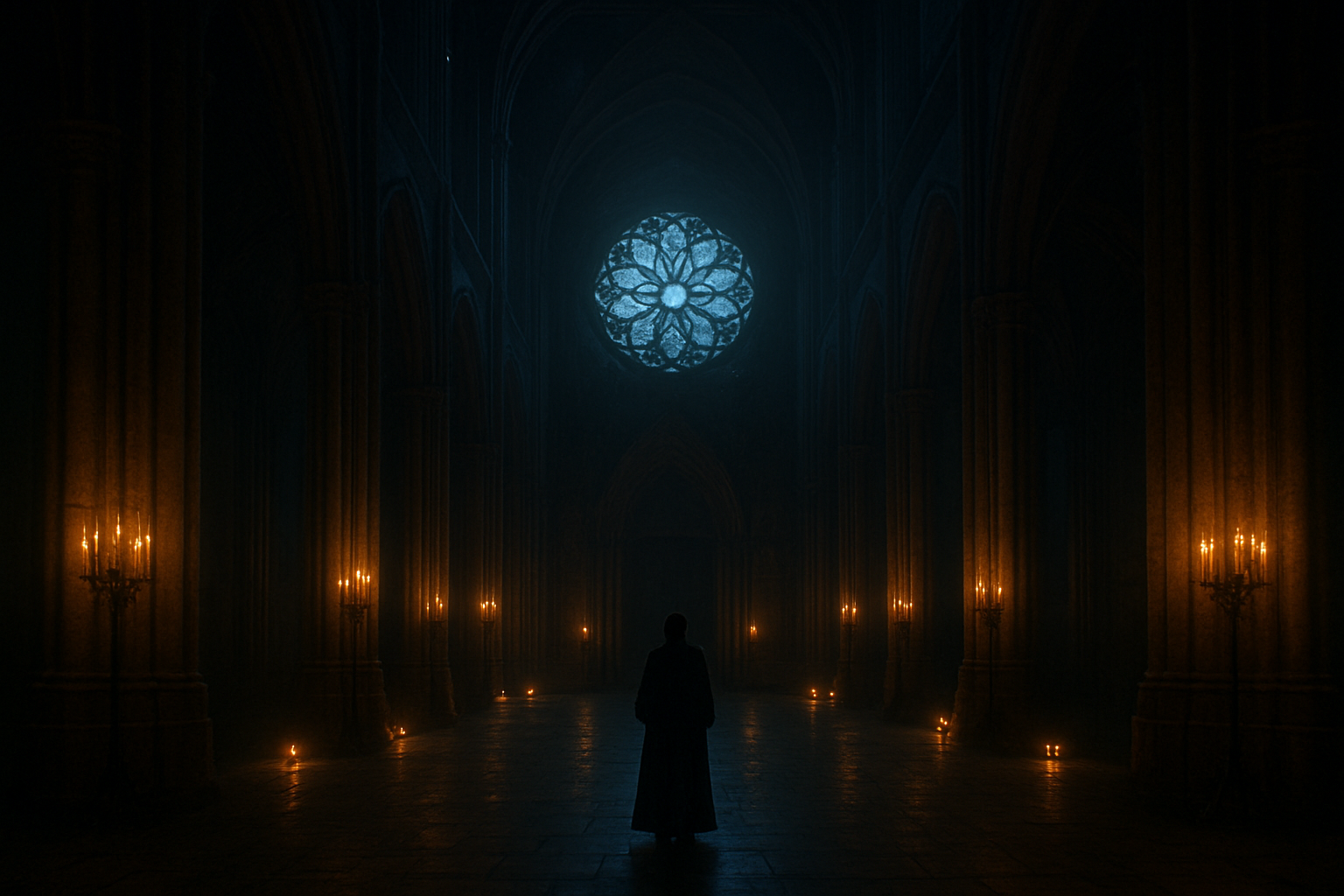
    The imagery of “nocturnal cathedrals” conjures visions of shadowy grandeur, silent halls, and soaring spires reaching toward the infinite. These structures symbolize the contemplation and sanctuary one finds within oneself during moments of internal or literal darkness. Like the mystical silence filling a cathedral at night, the petit mort allows a fleeting yet profound silent communion with the self—a temporal void where body and spirit align in shared mystery.

    Philosophical and Theological Reflections

    “The nearer the dawn, the darker the night.” —Henry Wadsworth Longfellow

    This poetic claim by Longfellow suggests the intrinsic link between darkness and enlightenment, an essential theme in understanding the petit mort within spiritual contexts. The act of surrendering culminates in a balance between opposing forces, echoing Taoist principles of Yin and Yang, where the culmination of life’s pleasures paradoxically teaches us of life’s cessation.

    The theologian Thomas Aquinas also contemplated on human sensation as a conduit to divine contemplation. He posited that experiencing profound pleasure connects with spiritual ecstasy, forging a path to the divine. Hence, in the context of petit mort, the brief suspension of self that accompanies total surrender becomes a conduit that mirrors the spiritual state of via negativa—the unapparent presence found in divine absence.

    Modern Interpretations and Implications

    In today’s fast-paced world, the pace at which one experiences life leaves little room for introspection. Yet, the significance of the petit mort as a spiritual revelation lends itself to contemporary mindfulness practices. These moments invite a pause, encouraging reflection on life and mortality. In yoga and meditation, for instance, achieving oneness with oneself aligns with the petit mort experience—where concentration meets release.

    This notion of practicing presence aligns with spiritual practices promoting holistic views of living, where acknowledging our transient pleasures bolsters awareness of a greater continuum. As transformative as the architecture of a cathedral, individual spiritual practices represent personal sacred spaces for inner reflection and transcendence.

    The Universality of Petit Mort in Human Experience

    The experience of the petit mort is universal yet deeply personal. It calls upon everyone to recognize briefly when the mind and soul free themselves from social identities and labored thoughts. This universal aspect presents a gentle reminder of mortality and life’s fleeting nature—just as John Donne articulated in his meditation, “No man is an island, entire of itself; every man is a piece of the continent.” Through such reflections, the petit mort becomes a key to understanding our place in the interconnected web of human experience and the divine mystery.

    As the world grows increasingly interconnected and fragmented, the visceral and spiritual resonance of the petit mort offers a communal ground of existence that transcends cultural and temporal barriers. In acknowledging the “little death” as both a climax and a passageway within this nocturnal cathedral we call life, we find glimpses of eternity within the confines of the ephemeral.