Tag: human

  • The Vanishing Mirror – Depersonalization in Mythic Reflection

    The Vanishing Mirror – Depersonalization in Mythic Reflection

    The Vanishing Mirror: Depersonalization in Mythic Reflection

    Throughout the tapestry of human culture, myths have acted as mirrors reflecting the complexities of our inner worlds. Among these reflections, the phenomenon of depersonalization—wherein an individual feels detached from their own identity—finds intriguing representation. This age-old feeling, resonating through various cultures, offers insight into the human psyche’s confrontation with the uncanny.

    Understanding Depersonalization

    Depersonalization is a dissociative disorder characterized by a pervasive sense of disconnection from oneself. Individuals describe it as observing oneself from outside the body, akin to living within a dream. Often, this is coupled with derealization, a sense of disconnection from the external world.

    The National Institute of Mental Health states, “It can be very distressing when a person feels like they have lost their sense of ‘self’ or personal identity.”

    This alienation from self and reality occurs across various contexts, from moments of intense stress to more chronic conditions. However, it also finds expression in myths and stories that transcend individual experience, suggesting a universality to these feelings over time and culture.

    Mythic Narratives of Self-Reflection

    • The Myth of Narcissus: One of the most well-known tales, the story of Narcissus involves a young man captivated by his reflection in the water, eventually losing himself in it. This echoes the experience of being drawn into one’s own fragmented sense of self, a captivating yet disturbing mirror image.
    • The Japanese Tale of Yurei: In Japanese mythology, yurei are spirits caught between the living and the dead, unable to recognize their own demise. They are a haunting representation of unmoored identity, embodying both presence and absence.
    • The Greek Myth of Io: Transformed into a cow, Io wanders the earth pursued by a gadfly, disconnected from her former human self. Her tale reflects the alienation and search for identity amidst transformative experiences.

    Each of these myths serves as narrative threads weaving through the larger story of human search for identity and confrontation with self-alienation.

    Psychological and Cultural Interpretations

    Scottish anthropologist Joseph Campbell observed that myths often represent metaphorical truths. He posited that the disconnection experienced by mythic figures reflects psychological states that resonate deeply with our subconscious mind.

    Campbell famously stated, “Myth is the secret opening through which the inexhaustible energies of the cosmos pour into human cultural manifestation.”

    Indeed, myths that involve depersonalization and identity struggles are not just relics of ancient storytelling but ongoing dialogues within the human condition. These stories allow for a symbolic exploration of themes that might be too abstract or complex to articulate directly.

    Modern Echoes and Interpretations

    In contemporary culture, depersonalization is frequently explored in literature, film, and art, echoing ancient myths but layered amidst modern contexts. Consider films like “Black Swan” or novels like Haruki Murakami’s “Kafka on the Shore”, where protagonists endure profound psychological fragmentation.

    • Film: In Darren Aronofsky’s “Black Swan”, the protagonist’s descent into madness is paralleled with a dissociation from her own identity, mirroring the mythic struggle against oneself.
    • Literature: Haruki Murakami often explores themes of duality and alienation, capturing the essence of mythic depersonalization within contemporary narratives.

    These modern tales continue the conversation on human identity and self-perception, suggesting that while technology and society evolve, foundational elements of our psyche remain constant.

    The Role of Myths in Today’s World

    As we move through an increasingly digital and interconnected age, the reflections seen in the mythic mirror remain relevant. Depersonalization, whether through personal experience or mythical narrative, offers a unique exploration of identity. It underscores the enduring mystery of self-perception and the unchanging nature of human struggles.

    Ultimately, the stories we pass down—whether from centuries past or penned yesterday—serve as anchors. They remind us that while individual experiences may differ, the fundamental quest for identity and connection is universal.
  • Primordial Patterns – Archetypes in the Universe

    Primordial Patterns – Archetypes in the Universe

    Primordial Patterns: Archetypes in the Universe

    The concept of archetypes has captivated thinkers for centuries, suggesting that beneath the chaotic surfaces of life lies a deep, pervasive order. From the ancient philosophies to modern psychology and cosmology, archetypes are seen as immutable constellations of meaning, framing human experiences and universal phenomena.

    Understanding Archetypes

    Archetypes are often conceived as primordial patterns or universal symbols that manifest in the mythology, art, religions, and dreams of people, transcending cultural and temporal boundaries. Carl Jung, a pivotal figure in the exploration of this concept, described archetypes as innate, universal prototypes for ideas, experienced as recurring motifs throughout human history.

    “He who looks outside, dreams; he who looks inside, awakes.” — Carl Jung

    In this sense, archetypes are abstract metaphors residing in the collective unconscious, representing fundamental human motifs of experience and action. They appear in our minds as latent possibilities rather than fully realized concepts, shaping the constitutive elements of our stories, dreams, and perceptions.

    Archetypes in Mythology and Culture

    The role of archetypes in mythology serves as an essential tool for understanding the collective psyche. Joseph Campbell famously worked with Jungian archetypes in his seminal work, The Hero with a Thousand Faces, where he outlines the Hero’s Journey, a common narrative template found across diverse mythologies.

    • The Hero: Embarks on an adventure, faces trials, and transforms at the journey’s end.
    • The Mentor: Provides guidance, insight, or aid to the Hero.
    • The Shadow: Represents the adversary, a crucial element that advocates overcoming adversity.

    These archetypal figures and narratives echo through contemporary literature, film, and even real-world events, offering frameworks to comprehend personal and shared experiences.

    Archetypes and the Universe

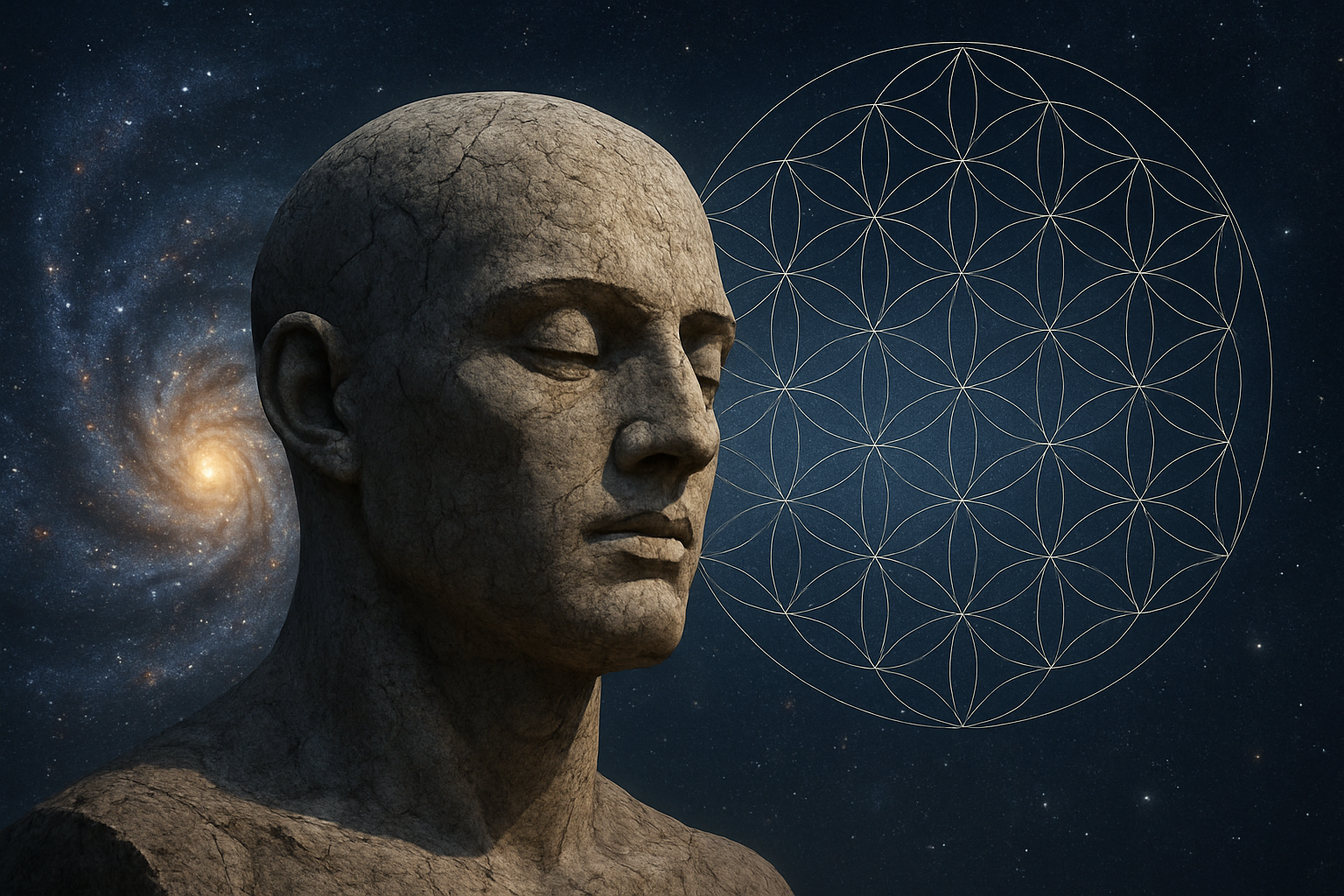
    Archetypes transcend psychological and cultural dimensions, extending into the physical universe. In cosmology, scientists search for simple patterns that explain complex phenomena, akin to the search for archetypes. The idea that the universe might be underpinned by a set of primordial patterns aligns with philosophical interpretations of reality as a structured entity, governed by metaphysical and mathematical truths.

    “The laws of nature are but the mathematical thoughts of God.” — Euclid

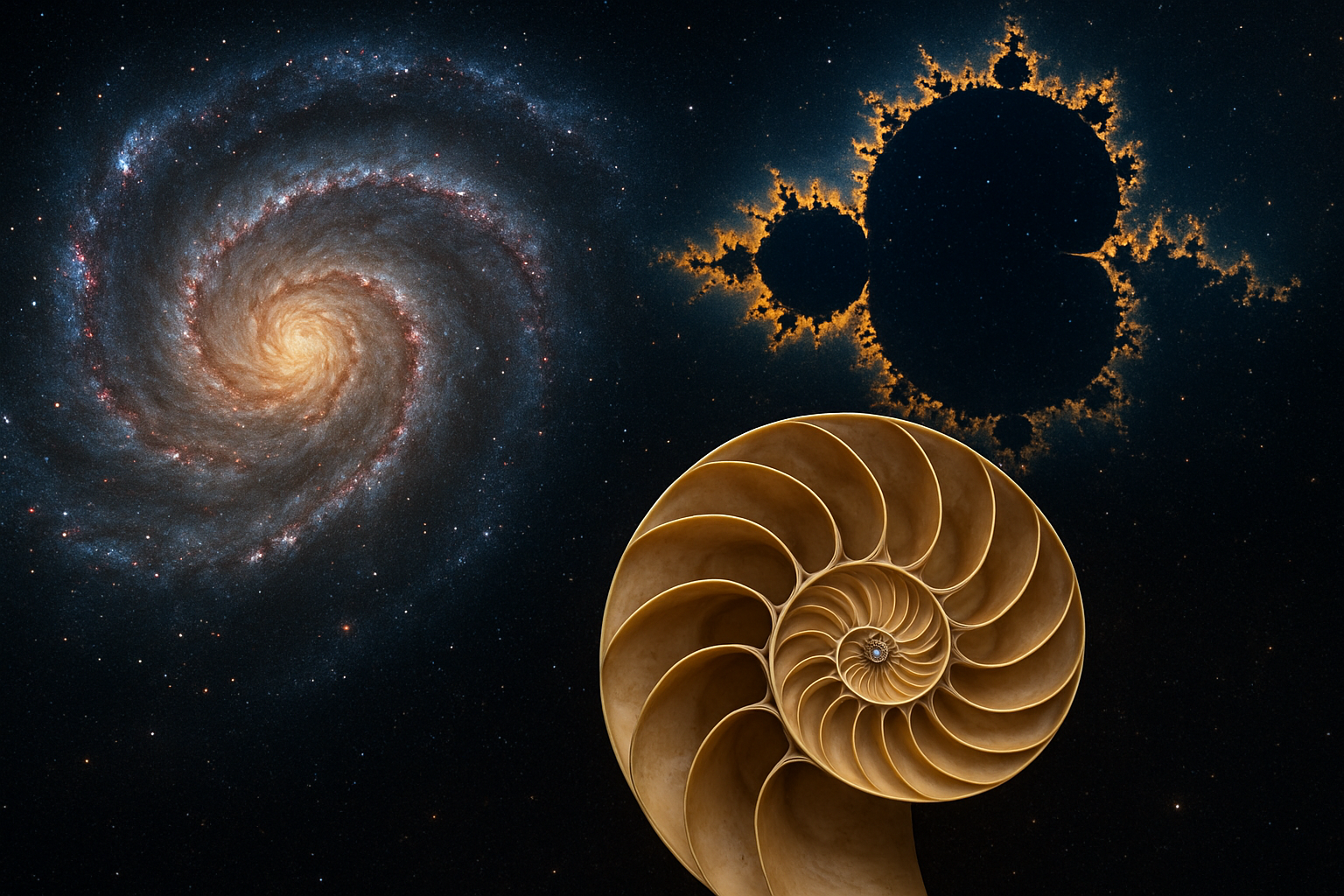
    The laws of physics can be seen as the archetypal forces shaping the cosmos. Concepts like symmetry, fractals, and chaos theory suggest the presence of recurring patterns and principles. Symmetry, for instance, underlies the laws of physics, manifesting in the symmetrical properties of particles and fields. Fractals, on the other hand, represent self-similarity across scales, offering a visual and conceptual parallel to Jung’s archetypes within a universal context.

    The Intersection of Archetypes in Science and Philosophy

    Philosophy provides a crucial lens through which to explore archetypes as both metaphysical entities and guiding principles in scientific inquiry. The notion of epistemic archetypes implies that our pursuit of knowledge is shaped by archetypal understandings, influencing scientific revolutions and the evolution of paradigms. Thomas Kuhn’s concept of paradigm shifts in The Structure of Scientific Revolutions aligns with this perspective, reflecting the dynamic interplay between old and new archetypes in scholarly progress.

    Additionally, Plato’s theory of Forms can be considered an antecedent to Jungian archetypes. Forms are perfect, immutable archetypes of objects and concepts in the world, of which the physical manifestations are merely imperfect copies.

    “The theory of forms… suggests that the visible world is an imperfect, perhaps shadowy imitation of the ‘world of forms’.” — Plato

    Integrating archetypal patterns into philosophical and scientific discourses allows for a holistic understanding of reality, one that acknowledges both the tangible and intangible dimensions of existence.

    The Relevance of Archetypes Today

    In an era where artificial intelligence and technological advancements reshape our world, archetypes remain deeply relevant. They serve as ethical and existential anchors as humanity navigates complexities of modern life. In machine learning, for example, pattern recognition mimics archetypal processes by identifying essential variables from vast datasets, drawing parallels to how humans intuitively recognize archetypes.

    Furthermore, cultural and psychological archetypes provide frameworks for exploring identity and meaning in a globalized society, fostering shared understanding across diverse backgrounds. They remind us of the intrinsic interconnectedness of human experiences and the universe.

    “We must let go of the life we have planned, so as to accept the one that is waiting for us.” — Joseph Campbell

    In summary, the exploration of primordial patterns and archetypes presents a timeless dialogue between humanity, the cosmos, and the unknown. It invokes a sense of wonder and curiosity, inviting us to delve deeper into the essence of reality and our place within it.

    For a more in-depth exploration of archetypes, the works of Joseph Campbell and Carl Jung provide valuable insights and foundational knowledge.

  • The Eternal Archetype – Patterns Beyond Humanity

    The Eternal Archetype – Patterns Beyond Humanity

    Throughout history, humanity has grappled with the concept of eternal archetypes, those transcendent, non-material patterns that shape our consciousness and the structure of reality. These patterns seem to transcend cultures and epochs, appearing time and again in the myriad manifestations of human thought. As we delve into this concept, we expose the intricate web of repeated themes that exist beyond our individual narratives and personal experiences.

    The Origin of Archetypes

    The term “archetype” was popularized by psychologist Carl Jung, who saw it as a universal symbol that ties together the collective unconscious of the human experience. According to Jung, archetypes are inherited potentials which are actualized when they enter consciousness as images or manifest in behavior on encountering an external stimulus.

    “Archetypes are like riverbeds which dry up when the water deserts them, but which it can find again at any time.” — Carl Jung

    Yet, these archetypes do not exist solely within the realm of the psychological. They permeate every facet of human life, from mythology and religion to literature and art, implying a deeper undercurrent within the cosmos that orchestrates these patterns.

    Archetypes in Mythology

    Throughout global mythologies, we encounter numerous recurring archetypes: the Hero, the Mother, the Trickster, and the Wise Old Man, among others. These myths are reflections of these inner patterns, portraying our psychological drives and functions on a cosmic scale.

    • The Hero’s Journey: Popularized by Joseph Campbell, the Hero’s Journey is an archetype representing personal transformation and adventure. The hero often faces trials, overcomes them, and returns home transformed, a metaphor for personal growth and self-discovery.
    • The Great Mother: Found in deities like Gaia or Isis, this archetype embodies creation, fertility, and nurturing but also destruction, emphasizing the duality of life.
    • The Trickster: Represented by figures like Loki or Anansi, the Trickster archetype reminds us of the complexity of duality and the thin veil between chaos and order.

    These recurring themes suggest a shared tapestry of human experience, weaving together our fears, hopes, and aspirations into the broader narrative of existence.

    Archetypes in Literature and Art

    Beyond mythology, archetypes extend their influence into literature and art. The persistence of certain motifs in storytelling over time provides evidence of these underlying patterns.

    “All literature is one story, there is the same revolt, attempted escape, lost terrain, and individually heroic combat.” — Northrop Frye

    The structure of many stories, particularly in Western literature, echoes the omnipresent Hero’s Journey archetype. Characters like Frodo from J.R.R. Tolkien’s The Lord of the Rings or Harry Potter in J.K. Rowling’s celebrated series embody this universal narrative of struggle and triumph.

    Archetypes Beyond Humanity: A Cosmic Pattern

    While archetypes significantly shape human culture, some patterns suggest a reality that transcends our human-centric view. The concept of fractals in mathematics and the structured chaos of biological forms are compelling evidence of such universal patterns.

    • Fractals in Nature: The repetition of geometric shapes that create clouds, coastlines, and even galaxies suggests a cosmic archetype of symmetry and repetition, speaking to a universal design not confined to biological life.
    • Mathematics and the Golden Ratio: This number, approximately 1.618, appears in art, architecture, and nature, indicating a universal aesthetic that extends beyond human interpretation.

    The intersection of science and spirituality may hint at a cosmic architecture, where archetypes are embedded into the very fabric of reality. This raises profound philosophical questions about the nature of existence itself.

    Beyond the Human Perspective

    Considering archetypes as a lens through which we can understand reality urges us to adopt broader perspectives, surrendering anthropocentric paradigms for more holistic, interconnected viewpoints. This challenges us to expand our consciousness and open dialogues about our place in the universe.

    Astrobiologist and author David Grinspoon offers insight into how imagining cosmic stories can widen our philosophical perspectives, encouraging broader contemplation of life’s interconnected motifs.

    “A truly planetary perspective is hard. But it can also be transformative, providing, to borrow Einstein’s phrase, ‘a widening circle of compassion.’” — David Grinspoon

    The Future of Archetypes

    As humanity advances technologically, the prospect of artificial intelligences grappling with these archetypes is inevitable. As these entities evolve, understanding whether they intrinsically develop similar archetypes could redefine our comprehension of consciousness itself.

    The exploration of such possibilities beckons not merely philosophical or artistic inquiry but multidisciplinary collaboration. This junction of technology, philosophy, and science heralds a thrilling frontier in understanding the metaphysical bonds that unite us at the core of existence.

    Conclusion

    The eternal archetypes compel us to look beyond our immediate realities, exploring the grand tapestry of life and its underlying patterns. They inspire us to question our origins, our narratives, and the cosmos itself in a pursuit of deeper meaning and connectivity.

    Embracing the universality of archetypes may be our passage to a more conscious, interconnected future—a renaissance where we honor the timeless patterns that hold the cosmos together.

  • The Astral Pantheon – Mythology Across Realms

    The Astral Pantheon – Mythology Across Realms

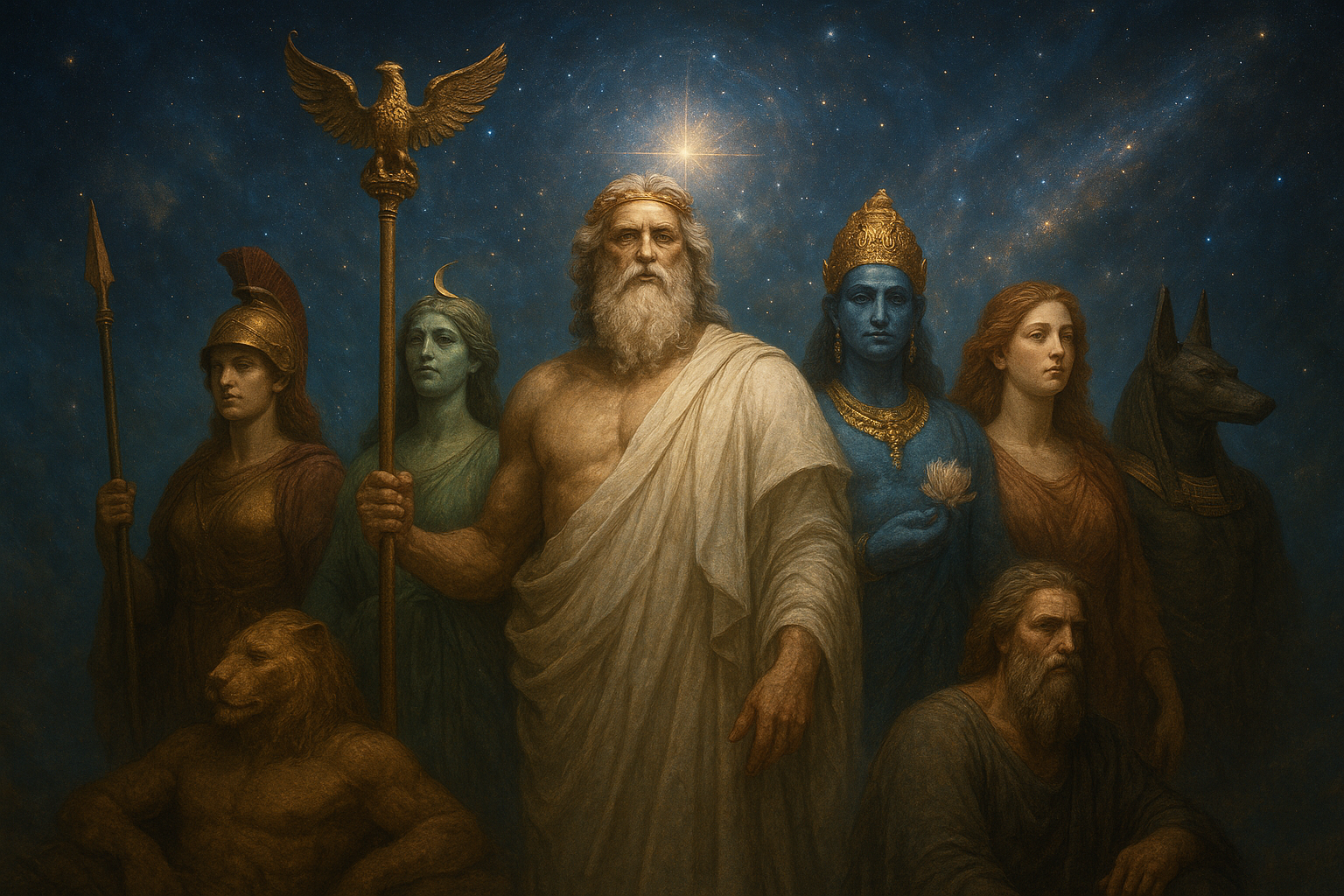
    Throughout history, humans have gazed upwards, mesmerized by the stars and the vast cosmos, often attributing divine qualities to the celestial bodies. This cosmic wonder has incubated a rich tapestry of astral deities and mythologies across diverse cultures. From the winged messengers of ancient Zoroastrianism to the heavenly chariots of Vedic texts, astral deities have played a significant role in shaping human civilization.

    Origins in Ancient Mythologies

    • Egyptian Skylore: In ancient Egypt, the sky was personified as the goddess Nut, who arched over the earth with her star-strewn body. Nut was seen as a protector of the dead and a symbol of resurrection, with pharaohs often depicted joining her in the afterlife to become stars themselves.
    • Mesopotamian Guardians: For the Babylonians, the stars were the domain of Sin, the god of the moon, who wielded great astrological influence. The god Anu was revered as the father of the gods, representing the epitome of the celestial cosmos.

    Influence of the Greek and Roman Pantheon

    The Greeks wove intricate tales that integrated their gods with the constellations seen in the night sky. Familiar figures such as Orion the Hunter and Andromeda were enshrined in the heavens as stars that linked human fate with celestial movements.

    “The heavens declare the glory of God; and the firmament sheweth his handiwork.” — Psalm 19:1 (KJV)

    This sentiment was mirrored in Roman culture, where constellations were named after heroic figures and mythological stories, echoing their origins in Greek astronomy.

    Eastern Concepts and Beyond

    • Chinese Celestial Bureaucracy: In ancient Chinese belief, the sky was a complex bureaucratic structure with the Jade Emperor presiding over it all. Each star and planet was seen as a celestial administrative unit with specific responsibilities influencing earthly affairs.
    • Hindu Astronomy: The Vedic concept of Navagraha, the nine celestial influencers, remains vital in Hindu astrology today. These astral deities, such as Surya (the sun) and Chandra (the moon), directly impact human lives according to Hindu belief.

    The Modern Cosmic Perspective

    Although technological advances have shifted our understanding of celestial bodies, the mythological allure remains potent. Astral deities continue to intrigue us, serving as powerful symbols in literature, film, and art — reminders of the timeless human quest to connect the earthly with the divine.

    The astral pantheon, with its countless interpretations across the annals of history, continues to enrich our collective imagination, reflecting a profound legacy of humanity’s connection with the universe.

  • Demonic Labyrinths – Archetypes of Inner Chaos

    Demonic Labyrinths – Archetypes of Inner Chaos

    The concept of demonic labyrinths has fascinated humanity for centuries, representing both the physical and psychological mazes we navigate in our lives. These labyrinths, often depicted in mythology and literature, symbolize the inner chaos and turmoil within the human psyche.

    Historical and Mythical Foundations

    From the Minotaur’s labyrinth in Greek mythology to Dante’s dark, infernal circles in the Divine Comedy, the archetype of the labyrinth has served as a powerful metaphor for the soul’s journey. These mythological mazes are often inhabited by creatures reflecting our deepest fears—monsters that must be confronted to find clarity and peace.

    “In the middle of the journey of our life, I found myself within a dark woods where the straight way was lost.” — Dante Alighieri

    Psychological Interpretations

    • The Inner Quest: Psychologists, such as Carl Jung, have interpreted labyrinths as symbols of the unconscious mind, representing the complex network of thoughts and emotions one must navigate to achieve self-awareness.
    • Shadow Work: Jung emphasized the importance of confronting the ‘Shadow,’ the darker, hidden aspects of our personality, akin to battling the demons in a labyrinth.

    “One does not become enlightened by imagining figures of light, but by making the darkness conscious.”Carl Jung

    Cultural Reflections

    The portrayal of labyrinths in modern culture often mirrors contemporary fears and societal pressures. For instance, films like “The Cell” (2000) use labyrinthine structures to depict the twisted pathways of the mind affected by trauma or evil, portraying how the human spirit can emerge from the darkness.

    Architectural Representations

    Labyrinths are not only abstract concepts but have been physically constructed throughout history. Ancient cathedrals, like the one in Chartres, France, feature labyrinths embedded in flooring, symbolizing a journey towards spiritual enlightenment. These architectural wonders invite introspection and a meditative experience.

    Conclusion

    The metaphor of the demonic labyrinth continues to resonate, providing a canvas onto which individuals project their fears and aspirations. Whether traversing mind or myth, the labyrinth remains a potent symbol of human struggle and triumph over inner chaos.

  • Shadowed Altars – Darkness in Ritual Practice

    Shadowed Altars – Darkness in Ritual Practice

    Shadowed Altars – Darkness in Ritual Practice

    Shadowed Altars – Darkness in Ritual Practice

    Throughout history, rituals have played a significant role in human culture. They are events imbued with symbolism, tradition, and often, a sense of the mystical. Across civilizations, rituals have provided structure, meaning, and a sense of order. However, alongside the light-filled ceremonies etched in vibrant recollection, there exists a fascination with darkness in ritual practice. These darker rituals are often shrouded in mystery, fear, and misunderstanding.

    The Mystique of Darkness in Rituals

    Darkness, both literal and metaphorical, has often been associated with the unknown, the feared, and the revered. Many cultures have used darkness in rituals to symbolize mystery, the afterlife, and the realm beyond the human realm. Anthropologist Victor Turner described rituals as transformative processes, sometimes involving the liminal space, the in-between state of normality and the unknown. This in-between can often involve elements of darkness, representing a disconnection from reality and a passage to a deeper understanding.

    Historical Contexts

    Historical evidence of the use of darkness in rituals can be found across different cultures and religions:

    • Ancient Egyptians: In ancient Egypt, darkness played a crucial role in rituals honoring Osiris, the god of the afterlife. The Rites of Osiris were performed in darkened chambers, symbolizing the journey to the underworld.
    • Greek Mysteries: In the Greek Eleusinian Mysteries, initiates experienced rituals in complete darkness, symbolizing death and rebirth, to understand the secret rites of Demeter and Persephone.
    • Norse Traditions: In Norse traditions, the long nights of winter were seen as the time of spirits and darkness, where rituals such as Blót would be performed to honor and appease the gods and ancestors.

    The Role of Darkness in Modern Rituals

    Modern interpretations of ritualistic darkness continue to captivate and offer insights into human psychology and spirituality. Today, certain practices still seek the veil of night to enhance the spiritual atmosphere:

    • Wicca and Neo-Paganism: These modern spiritual paths often celebrate rituals known as Esbats, which occur on full moons and incorporate rituals during the night.
    • Shamanic Practices: In many shamanic traditions, the use of darkness is a gateway to deeper consciousness. The absence of light enables practitioners to connect more profoundly with inner visions and spiritual guides.

    Exploring the Psychological Dimension

    Darkness in rituals also bears significant psychological implications. The absence of light heightens other senses, drawing participants inward. Renowned psychoanalyst Sigmund Freud proposed that the unconscious mind reveals itself in the absence of sensory interference, which darkness can provide. Thus, rituals conducted in darkness can facilitate self-discovery and revelation.

    “For the unconscious is the true psychical reality; in its innermost nature it is as much unknown to us as the reality of the external world, and it is as incompletely presented to us by the data of consciousness as is the external world by the communications of our sense organs.” – Sigmund Freud

    Cultural Misunderstandings and Misconceptions

    Despite its profound role, darkness in rituals often suffers from cultural misconceptions. The westernization and demonization of certain rituals have led to an association of darkness with evil or maleficent forces. This view overlooks the richness of darkness as a cultural symbol and its practical value in spiritual practice.

    For instance, the Hollywood portrayal of witchcraft often emphasizes the malevolent aspects, overshadowing the positive and healing aspects practiced by many Wiccan groups. This misleading representation perpetuates fear and misunderstanding about the complexity and purpose of these rituals.

    The Contrast and Balance

    Just as light plays a crucial role in rituals, so does darkness. The Yin and Yang philosophy, which is deeply embedded in Chinese tradition, exemplifies this balance. Just as light defines darkness, it emphasizes that understanding spiritual wholesomeness requires acknowledging both aspects.

    Moreover, the balance of light and dark in rituals can teach valuable lessons about the importance of harmony and acceptance in life. It challenges individuals to confront their fears of the unknown and embrace the transformative journey offered by the darkness.

    Conclusion

    Shadowed altars and dark rituals offer a profound glimpse into the human consciousness and the complex nature of spirituality. They remind us that darkness does not inherently equate to negativity; instead, it holds the potential for transformation, exploration, and balance.

    As we continue to evolve in our understanding of these practices, it is crucial to approach them with openness, curiosity, and respect. Understanding the history and cultural significance of darkness in rituals can lead to a more holistic comprehension of the very nature of human spirituality.

    Explore further insights and historical references in literature and online resources such as JSTOR and The Atlantic for a deeper understanding of this intriguing subject.

  • Mythic Mirrors – Archetypes in Human Reflection

    Mythic Mirrors: Archetypes in Human Reflection

    From the dawn of civilization, humans have been fascinated by stories. These narratives, often rich with characters and motifs, serve not only to entertain but also to mirror our innermost beliefs and fears. Among these motifs, archetypes play a crucial role. Carl Jung, the Swiss psychiatrist and psychoanalyst, introduced the concept of archetypes as recurring symbols or motifs in literature, art, and mythology that are derived from the collective unconscious.

    “Archetypes are, by definition, factors and motifs that arrange the psychic elements into certain images, characterized more precisely as archetypes.”
    – Carl Jung

    Through analysis, we recognize that these mythic mirrors reflect not only cultural values but universal truths about the human experience. This article explores some of these archetypes, delving into their roles in shaping narratives and their significance in human reflection.

    The Hero

    Arguably the most recognizable archetype, the Hero embodies courage, strength, and the ability to overcome great odds. From Hercules to modern-day icons like Superman, the Hero is a pervasive figure across cultures and ages. Joseph Campbell, in his seminal work “The Hero with a Thousand Faces”, describes the Hero’s journey as a monomyth shared globally, emphasizing the transformation of a humble individual into a savior through trials and tribulations.

    • Classical Examples: Odysseus, King Arthur
    • Modern Icons: Katniss Everdeen, Harry Potter

    These figures resonate with audiences because they symbolize the potential for greatness within all of us, encouraging us to face our own challenges with bravery and resilience.

    The Shadow

    Where there is light, there must also be dark. The Shadow archetype represents the hidden, repressed parts of the human psyche, encompassing undesirable traits and ideas crushed by societal norms. The Shadow appears in myriad forms: the monster under the bed, the villain in the narrative, and even within ourselves.

    • Notable Examples: Darth Vader, Mr. Hyde
    • Historical Parallels: Richard III, Macbeth

    Jung suggested that understanding and integrating the Shadow is vital for personal growth. By acknowledging our darker sides, we achieve a harmonious balance in our psyche, leading to a more authentic life.

    The Wise Old Man

    Regarded as the archetype providing knowledge and guidance, the Wise Old Man often appears as a mentor or spiritual guide assisting heroes on their journeys. This figure exudes wisdom gained from years of experience, often dispensing cryptic yet profound advice.

    • Classic Mentors: Merlin, Gandalf
    • Modern Mentors: Dumbledore, Yoda

    Such characters embody the ideal of wisdom and contemplation, illustrating a path toward enlightenment and understanding. They remind us of the value of knowledge and the importance of seeking counsel in times of uncertainty.

    The Anima and Animus

    Exploring the Anima and Animus archetypes, Jung emphasizes the importance of the inner feminine side of a man and the inner masculine side of a woman, respectively. These delineations embody the complementary nature of gendered aspects of the unconscious.

    Accepting and integrating these dualities enriches personal relationships and enhances self-awareness. The goal is to transcend gender binaries, encouraging emotional equilibrium and mutual understanding.

    • Culture References: Disney’s Mulan, Taming of the Shrew

    By examining and embracing these dualities, individuals learn to harmonize their own identities and connect with others on a deeper level, fostering empathy and unity.

    Conclusion

    Archetypes, these mythic mirrors, reflect the essential truths of our existence. They help us understand ourselves better by serving as guides in the complex narrative of life. In each retelling, they affirm the enduring human spirit and our shared journey. The study of archetypes offers a window into our collective psyche, emphasizing that beneath our diverse stories, we are part of a shared human tapestry.

    As we continue to explore the power of archetypes, we draw inspiration and guidance from these timeless figures, shaping our futures while honoring our pasts. The dance between individual experience and collective heritage remains an ode to human resilience and creativity, ensuring that these ancient mirrors will continue to resonate in the stories of tomorrow.

    For more on Carl Jung’s thoughts on archetypes and the collective unconscious, visit the C.G. Jung Center.

  • The Forgotten Pantheon – Mythology of the Cosmos

    Throughout human history, the night sky has served not only as a natural calendar and a navigation guide but also as a rich tapestry for storytelling. While many are familiar with the Greek, Roman, and Norse interpretations of the cosmos, there exists a forgotten pantheon—a compendium of celestial tales and deities that spin a narrative often overshadowed by mainstream mythologies.

    Starry Origins: Creation Myths of the Cosmos

    Many cultures have their unique perspectives on the creation of the universe, often attributing it to divine forces. For instance, the Maasai people of East Africa have a profound tale about the origins of the cosmos. They believe that in the beginning, there was only darkness, and then a god named Enkai created the universe. Stars were the offspring of the Moon, supporting a cosmic family half-forgotten by modern astronomers.

    Similarly, in Japanese folklore, there exists the story of Izanagi and Izanami, the divine couple who, through divine wands, stirred the waters below the heavens to create the Japanese islands. Their actions led to the formation of stars as droplets of divine substance, illuminating the sky.

    Cosmic Deities and Celestial Beings

    • The African Celestial Rhino: Among the Tswana people of Botswana, a celestial rhinoceros known as Kgosikgolo wanders the night sky. This mythological being is seen as an eternal watchman of the heavens, representing strength and resilience.
    • Ainu Star Maidens: In the Ainu culture of Japan, stars are seen as maidens, daughters of the great god “Kamuy.” They dance across the sky, and their movements dictate the cycles of life and nature.
    • Maya Astral Spirits: The ancient Maya revered the stars not just as distant balls of gas, but as manifestations of their gods. The Hero Twins, Hunahpu and Xbalanque, defeated the Lords of the Underworld and ascended into the heavens as the sun and moon, illuminating the world with their divine presence.

    The Celestial Dance: Astrology and Ancient Beliefs

    Astral bodies have always influenced human civilizations, with astrology being the bridge between celestial phenomena and human affairs. For the ancient Babylonians, astrology was a science interwoven with mythology. The movement of stars and planets was believed to be the writings of gods across the heavens, foretelling significant events on Earth.

    “The stars in the night sky have been maps, stories, and cosmic guides throughout the history of humanity.”

    In Chinese tradition, the Dragon and Phoenix become celestial indicators, symbolizing the emperor and empress. The positions of these constellations at different times of the year were used to dictate imperial decisions and predict the fates of dynasties.

    The Mystical Zodiac of Ancient Cultures

    The concept of a zodiac is prevalent across various civilizations, each with its unique interpretation:

    • The Egyptian Zodiac: Ancient Egyptians divided the sky into 36 decans, each associated with a god’s influence. They believed that certain decans, when seen at dusk or dawn, held divine messages from the gods.
    • Indigenous Australians: Known for their deep spiritual connection with the land and sky, Indigenous Australians have a zodiac rooted in the creation stories of the Dreamtime. The Emu in the Sky, formed by dark clouds between the stars, is a significant element in their astral lore.
    • Native American Star Maps: For tribes such as the Lakota, stars were not just points of light but symbols of their ancestors. The Lakota Sioux’s beliefs include the legend of the Seven Sisters, mirroring the Greek Pleiades but with its own cultural significance and teachings.

    The Tales Written in the Sky

    Across cultures, the mythologies of the cosmos serve as a canvas upon which societies project their dreams, fears, and explanations of the universe:

    In Mongolian myths, Orion’s Belt is known as the Three Beauties, representing three unforgettable queens known for their beauty and grace. This contrasts with the Asian interpretation of the same three stars as representing the Kuja Dosa, a warning of potential misfortune.

    Meanwhile, the Celtic people named the constellation we know as the Big Dipper the Plough or sometimes the 7 Oxen, describing the inexorable toil of farm life set against the backdrop of the universe’s eternal turning wheel.

    The Enduring Legacy of Celestial Mythology

    These tales, imbued with endless creativity and cultural significance, illustrate a universal human need to find order and meaning in celestial patterns. As modernity races forward, these myths risk being overshadowed by scientific advancement. Yet, they persist, whispering the eternal truth of humanity’s cosmic insignificance and boundless imagination.

    “The cosmos is within us. We are made of star-stuff. We are a way for the universe to know itself.” – Carl Sagan

    In conclusion, exploring the forgotten pantheon of cosmic mythology opens a window into how different cultures perceived the stars as divine actors in the universal play. It reveals a world where science and magic converge, where celestial narratives are as much a part of the human experience as the stars are part of the night sky.

    Therefore, as we gaze upwards, let us remember the vibrant mythologies, the sacred stories, and the forgotten pantheons that help us bridge the gap between earthly existence and cosmic wonder.

  • The Collective Archetype – Patterns Across Civilizations

    The Collective Archetype – Patterns Across Civilizations

    The concept of the collective archetype has fascinated historians, sociologists, and psychologists for decades. Archetypes are recurrent symbols or motifs that appear in the lore of cultures across the world, and they provide deep insights into universal human experiences. The study of these archetypes reveals that, despite geographical and temporal distances, human societies develop strikingly similar myths and symbols.

    Understanding Archetypes

    Archetypes, as first popularized by Swiss psychiatrist Carl Jung, are innate universal psychic dispositions that form the substrate from which the basic themes of human life emerge. Jung noted, “The collective unconscious is common to all; it is the foundation of what the ancients called ‘the sympathy of all things.’” (Carl Jung, 20th century).

    These archetypes manifest in myths, religions, dreams, and literature, embodying shared themes such as the Hero’s Journey, the Great Mother, and the Wise Old Man. Their symbolic nature speaks to fundamental human concerns such as birth, death, and personal development.

    Patterns in Mythology

    Perhaps the most clear example of archetypal patterns is seen in mythology. Many ancient tales, from Homer’s Odyssey in Greece to the Ramayana in India, depict a hero’s journey. This journey involves a departure, initiation, and eventual return, a theme analyzed comprehensively by Joseph Campbell in his seminal work The Hero with a Thousand Faces. Campbell elucidates that “A hero ventures forth from the world of common day into a region of supernatural wonder: fabulous forces are there encountered and a decisive victory is won” (Joseph Campbell, 1949).

    Additionally, many cultures embrace the duality of creation and destruction through archetypes such as the Phoenix – emblematic of rebirth from destruction, a motif echoed in myths from the Egyptians to the Chinese.

    Archetypes in Different Cultures

    Ancient Egypt

    • The concept of maat in Egyptian culture stands for truth and order, with the eponymous goddess personifying universal harmony. The story of Osiris and Isis recounts themes of betrayal, death, and resurrection.

    Classical Greece

    • Greek mythology introduces the archetype of the tragic hero in figures such as Oedipus and Hercules, each seeking redemption through trials and suffering.

    Indigenous Cultures

    • Native American tribes, like the Cherokee, speak of Sky Woman and Earth Diver myths, highlighting the sacredness of creation and humanity’s connection to the earth.

    The Role of Modern Media

    In modern times, archetypal patterns extend beyond traditional myths into contemporary media. Films, books, and video games often draw on ancient storytelling structures, consciously or unconsciously using the Hero’s Journey as groundwork. For example, the epic space opera Star Wars, which creator George Lucas has cited as based on Campbell’s work, illustrates the battle between good and evil through classic archetypal themes.

    Moreover, video games such as The Legend of Zelda series exploit the archetype of the hero striving against evil, offering players an immersive taste of these timeless patterns.

    “When we dream, our minds are carrying the story forward. It’s something that is central to who we are and that remember the past. That’s why myths never die.” – Neil Gaiman, acclaimed author and mythologist.

    The Importance of Studying Archetypes

    Identifying and understanding archetypal patterns enables us to connect with other cultures, recognize our shared humanity, and explore the deepest parts of the human psyche. This exploration fosters empathy and offers perspectives on universal life challenges we all face. As Carl Jung put it, “Knowing your own darkness is the best method for dealing with the darknesses of other people.”

    In conclusion, while specific details and characters may differ, the shared patterns found in myths and stories worldwide reveal an interconnectedness that transcends borders and centuries. Delving into these collective archetypes allows each generation to find meaning in the universal experiences of life, death, love, and heroism, echoing the timeless human quest for understanding.

  • Abstract Divinities – Symbols Beyond Form

    Abstract Divinities – Symbols Beyond Form

    In the vast tapestry of human history, art and spirituality have danced together in a timeless ballet, resulting in a profound repository of symbols that transcend the mere physicality of form. “Abstract divinities” signify more than just visual interpretations; they represent the essence of cultures, beliefs, and the progression of human thought.

    The Nature of Abstract Divinities

    Abstract divinities are not confined to the limits of anthropomorphic representations. Instead, they dwell in the realm of the intangible, the metaphysical, and the esoteric. These symbols may appear in a myriad of forms—including geometric shapes, patterns, or even color arrangements—that encapsulate deeper meanings recognized across cultures.

    • Universal Connectivity: Many abstract symbols signify universal concepts such as infinity, movement, or unity. The circle, for example, is found in countless cultures symbolizing eternity and completeness.
    • Transcendent Ideals: Not concerned with the literal portrayal of the divine, abstract symbols focus on transcending earthly ideals, allowing believers and viewers alike to reach for higher spiritual planes.
    • Expressive Potential: Abstract art permits a breadth of interpretation that accommodates personal experiences and beliefs, encouraging introspection and spiritual exploration.

    Historical Perspectives

    Throughout history, the abstract has been an intrinsic part of religiosity and art:

    Ancient Civilizations

    The ancient Egyptians, with their complex pantheon, employed abstract art forms alongside the more widely recognized imagery of gods like Ra and Anubis. The Ankh, with its looped top, is more than a depiction of life and eternity; it is an abstract representation of the balance between male and female energies, life’s dualities.

    Eastern Philosophies

    In Eastern religions such as Buddhism and Hinduism, abstract representation thrives. The Mandala, a circular symbol used in various meditative practices, represents the universe and is a powerful tool for sacred contemplation. According to Learn Religions, “its apparent simplicity transcends our understanding to unfold deeper psychological awareness and spiritual growth.”

    Modern Artistic Movements

    The 20th century witnessed an explosion of abstract art with figures like Kandinsky and Rothko. In Kandinsky’s words, “Color is a power which directly influences the soul.” Artists used this language to evoke spiritual and emotional responses, much like abstract symbols in religious contexts.

    Symbolism Across Cultures

    Abstract divinities often carry varying meanings across different cultural landscapes but share a commonality in their abstract representations. They convey spiritual truth that, while maybe culturally specific, resonates globally:

    • Yin and Yang: In Taoist philosophy, the yin yang symbol represents balance—a dance between opposing forces that is essential to the harmony of the universe.
    • The Eye of Horus: An ancient Egyptian symbol often associated with health, protection, and royal authority, embodying abstract qualities that transcend its origin.
    • The Om: Vibrating through the cosmology of Hinduism, Buddhism, and Jainism, the Om symbol is an abstract representation of the sacred sound, often described as “the vibration of the universe.”

    The Influence of Technology and Science

    As our world becomes increasingly intertwined with technology, abstract symbols continue to evolve. Code, with its enigmatic algorithms and binary systems, is an abstract language with its own set of divinities—shaping the digital universe in much the same way symbols shaped the spiritual one.

    Space exploration has given rise to new abstract symbols. The NASA insignia, known as the ‘meatball’, incorporates abstract elements that reflect grand ideas of discovery and innovation while paying homage to the astronomical landscapes beyond Earth.

    Modern Reflection and the Future of Abstract Divinities

    In modern times, there is a renaissance of interest in abstract divinities. With global connectivity, ancient symbols are rediscovered and reinterpreted. Individuals seek new forms of spirituality and expression outside traditional frameworks, often turning to abstract symbols to guide their inward journeys.

    “Symbols and archetypes present us with universal motifs that transcend time and place, leading us gently into layers of the unconscious. Here we connect with something profoundly innate and intimately human,” says Joshua Anderson, a noted Jungian therapist.

    Closing Thoughts

    Abstract divinities, those symbols beyond form, are more than archaic relics or esoteric curiosities; they are an ongoing human effort to articulate the inarticulable, to visualize the invisible. They remind us that beneath our differences exists a shared pursuit—finding meaning and connection within the grand, sometimes abstract, architectures of life and the universe.

    In an era where the visual is manufactured, consumed, and discarded at lightning speed, the enduring nature of abstract symbols holds invaluable lessons. Their timelessness and adaptability offer both a lens into our collective past and a beacon lighting the path for future spiritual exploration.