Tag: human

  • Infernal Archetypes – Demons in Myth and Psyche

    Infernal Archetypes – Demons in Myth and Psyche

    Throughout history, demons have held a potent place in the myths and stories of cultures worldwide. These infernal entities embody fear, temptation, and the unknown, acting both as figures of evil and as reflections of the human psyche. From the terrifying Asuras of Hindu mythology to the cunning tempters of Judeo-Christian lore, demons represent complex archetypes that bridge the supernatural and the psychological.

    Demons in Cultural Myths

    The presence of demons in mythology is pervasive and diverse. In Japanese folk traditions, Oni are malevolent spirits, often depicted as gigantic, ogre-like creatures wielding iron clubs. These figures are feared for their capacity to disrupt order and bring calamity.

    In contrast, Middle Eastern tales feature the notorious Djinn, which are considered spirits capable of good or evil. These beings, as noted in Islamic culture, can shape-shift, alter reality, and influence human fates, creating narratives that challenge our understanding of free will and destiny.

    Demons and the Human Psyche

    Psychologically, demons can be seen as manifestations of the darker elements of the human mind. Renowned psychoanalyst Carl Jung discussed the concept of the “shadow,” which represents the suppressed aspects of personality. Jungian theory suggests that encountering our inner demons is a necessary part of personal growth and self-discovery.

    “One does not become enlightened by imagining figures of light, but by making the darkness conscious.”

    This quote, attributed to Jung, highlights the importance of integrating these shadowy parts into conscious awareness, thereby reducing their potential to control and manipulate behavior unknowingly.

    Modern Interpretations and Significance

    In contemporary culture, demons continue to captivate and terrify, from horror films to literature. They often symbolize internal struggles such as guilt, addiction, and fear. By externalizing these internal demons, modern narratives provide a platform for audiences to confront and question their own fears and anxieties.

    Thus, demons remain a vital part of both collective myths and individual psychology. They are reminders of the innate balance between light and shadow, good and evil, in the vast tapestry of human experience. The study of these archetypes offers valuable insights into the consciousness, encouraging a journey into the depths of the mind where these infernal entities reside.

    In exploring demons as archetypes of myth and psyche, we can better understand the roles they play in our stories and in our lives—a dance of darkness and light, always compelling, always relevant.

  • Primordial Shadows – Archetypes Beneath Consciousness

    Primordial Shadows – Archetypes Beneath Consciousness

    In the realm of psychology and myth, the concept of archetypes — those universal, archaic symbols and images that derive from the collective unconscious — continues to captivate the modern imagination. These primordial shadows linger just beyond the fringes of our conscious awareness, influencing our thoughts, behaviors, and the stories we tell.

    The notion of archetypes was popularized by the Swiss psychiatrist Carl Gustav Jung. He proposed that these elements are manifestations of themes deeply ingrained in humanity, appearing in various forms across cultures and epochs. Jung stated, “The term archetype is often misunderstood as meaning certain definite mythological images or motifs, but these are nothing more than conscious representations; it would be more correct to call them archetypal images.” (source)

    Understanding Archetypes

    Archetypes reside in the unconscious realm, shaping human experience from the shadows. They are not inherited ideas but rather forms or patterns that mold the way we perceive and interpret the world.

    • The Shadow: Represents the repressed, often darker aspects of our psyche. It embodies the unknown and is frequently reflected in the villains and monsters of myths and stories.
    • The Anima/Animus: Symbolizes the gender opposite to the individual’s conscious identity, reflecting deeper, integral opposites within the self.
    • The Self: Often visualized as a circle or mandala, this archetype represents the unified consciousness and the culmination of integrating other archetypes.

    Impact on Modern Culture

    Archetypes permeate all forms of storytelling, from ancient myths to contemporary narratives. The hero’s journey, as depicted in countless films and novels, draws heavily on archetypal structures. As Joseph Campbell noted in his influential work The Hero with a Thousand Faces, “A hero ventures forth from the world of common day into a region of supernatural wonder…” (Campbell Foundation).

    In film, these archetypal figures are evident in characters like Luke Skywalker and Darth Vader, who embody the hero and the shadow respectively. These narratives resonate with audiences due to their connection to shared human experiences and subconscious motifs.

    “Archetypes are like riverbeds which dry up when the water deserts them, but which it can find again at any time,” Carl Jung wrote, metaphorically describing the timeless shifts of human consciousness (Goodreads).

    The exploration of archetypes invites us to delve into the depths of our psyche, unveiling the universality of human experience beneath the illusion of individual isolation. As we reflect on these primordial shadows, we connect with the shared journey of humanity, navigating the mysterious pathways of the mind.

  • Ethereal Darkness – Spiritual Lessons in Night

    Ethereal Darkness – Spiritual Lessons in Night

    Ethereal Darkness: Spiritual Lessons in Night

    Nighttime has always been a canvas upon which humanity has projected its deepest fears, dreams, and reflections. Where the daytime is filled with the bustle of activity and the relentless pursuit of goals, night embraces us in its quietude, offering valuable spiritual lessons for those willing to listen. Through the ages, philosophers, mystics, and poets have sought to unravel the mysteries of the night, finding in its shadows profound insights into the human experience.

    The Symbolism of Night

    Throughout history, the night has served as a powerful symbol in many cultures, representing both the unknown and the unseen. The dichotomy between day and night often mirrors the dual nature of human existence, balancing between light and shadow, knowledge and mystery.

    “We all have a dark side to our personalities. We all have a dark side and it’s essential because half the world is dark and half the world is light.” ― David Lynch

    For David Lynch, an iconic filmmaker known for exploring the bizarre facets of reality, this balance is crucial. The darkness within us parallels the literal darkness outside—a part of the cosmic order, a necessary component of the universe’s wholeness.

    Night as a Time for Reflection

    Unlike the chaotic distractions of the day, night provides a serene backdrop against which we can reflect on our lives. The quietude of night invites introspection, allowing us to delve into the deeper layers of our consciousness, where truths often lie hidden beneath the surface.

    • Silence and Insight: In the stillness of night, we find the opportunity to listen to our inner voice. Silence provides the mental space needed for contemplation and self-discovery, honing our ability to gauge our emotions and thoughts without the interference of external clatter.
    • Dreams as Guides: Night brings with it the realm of dreams—a fertile ground for spiritual and psychological exploration. As Carl Jung posited, “Who looks outside, dreams; who looks inside, awakes.” Dreams can serve as a bridge to the unconscious, revealing insights that are often ignored by our waking minds.

    The Spirit of the Wilderness

    Another profound aspect of nighttime is its invitation to connect with the natural world. Starlit skies and the nocturnal sounds of nature beckon us to step outside the boundaries of human constructs and embrace the vastness of the cosmos. This connection can foster a sense of humility and wonder, grounding us in the reality that we are but a small part of a larger universe.

    “We are not human beings having a spiritual experience; we are spiritual beings having a human experience.” ― Pierre Teilhard de Chardin

    Teilhard de Chardin’s words remind us that our identities are not confined to our physical selves. By attuning ourselves to the rhythms of nature, especially those unveiled by night, we gain insights into our spiritual essence—our connection to the universe and everything in it.

    Lessons of Letting Go

    The rhythm of day transitioning into night speaks to the natural cycles of endings and new beginnings. Night encourages us to let go of the day’s burdens, fostering a spirit of renewal and acceptance.

    • The Art of Surrender: In yielding to the darkness, we learn the art of surrender—acknowledging what we cannot control and embracing the present moment.
    • Embracing the Unknown: As night obscures our vision, it challenges us to trust beyond what we can see, teaching us resilience and faith.

    Conclusion

    In the embrace of night, we find more than just a counterpart to day; we discover an opportunity for profound spiritual growth. While darkness may often be feared or misunderstood, it holds within it the potential for transformation and enlightenment. By engaging with the ethereal qualities of nighttime, we embark on a journey towards greater self-awareness and cosmic connection.

    As you next find yourself enveloped by the mystique of night, consider the lessons it quietly imparts. Welcome the silence, look within, and embrace the freedom that comes with traversing the shadows. For it is here, in the midst of darkness, that some of the most luminous truths reside.

    For further reading on the spiritual significance of night, you might explore articles by and about Carl Jung and works discussing the philosophies of Pierre Teilhard de Chardin and others.

  • The Shadow Archetype – Darkness as Human Pattern

    The Shadow Archetype – Darkness as Human Pattern

    In the rich tapestry of human psychology, the shadow archetype holds a place of intrigue and complexity. Originally coined by Carl Jung, the shadow represents the unconscious part of the psyche where repressed desires, memories, and emotions reside. This archetype embodies the dark aspects of one’s personality, those parts we wish to conceal from the world and often, from ourselves.

    “Until you make the unconscious conscious, it will direct your life and you will call it fate.” – Carl Jung

    The shadow exists in everyone, a fundamental component influencing behavior and perception. Rather than viewing it as wholly negative, Jung believed facing our shadow is essential for achieving personal growth and self-awareness. This confrontation leads to what he termed individuation, the process of integrating different elements of the psyche to form a well-rounded personality.

    • Origins and Meaning: Derived from the depths of the unconscious mind, the shadow archetype can contain everything outside the light of consciousness. It is often perceived as chaotic or unruly, yet it holds the keys to creativity and insight, providing a deeper understanding of human emotions and motivations.
    • Recognition and Acceptance: Recognizing one’s shadow involves acknowledging parts of oneself that might be deemed unacceptable or uncomfortable. This includes negative traits like anger, envy, and greed, but also positive qualities that may seem too overwhelming or threatening, such as assertiveness or ambition.
    • Integration and Growth: Integration is the process of embracing these dark elements and using them constructively. By harmonizing the shadow with the conscious self, individuals can experience a more authentic and fulfilled life, as understanding the full spectrum of their inner world leads to a balanced existence.

    In literature and myth, the shadow often manifests as a character or force acting against the hero, symbolizing internal struggles reflected outwardly. From Frankenstein’s monster to Jekyll and Hyde, these narratives explore the consequences of ignoring or denying the shadow, illustrating how repression can lead to destruction or chaos.

    “The shadow is a moral problem that challenges the whole ego-personality, for no one can become conscious of the shadow without considerable moral effort.” – Carl Jung

    Recognizing and reconciling with the shadow requires courage and honesty. In doing so, we unlock deeper layers of self-awareness, nurturing connections between our light and dark sides. This integration not only cultivates personal harmony but also fosters empathy and understanding toward others, as we become more attuned to the hidden aspects of human nature.

    For more insights into Jung’s theories, you can visit the C. G. Jung Page.

  • The Infernal Mirror – Demons Reflecting the Self

    The Infernal Mirror – Demons Reflecting the Self

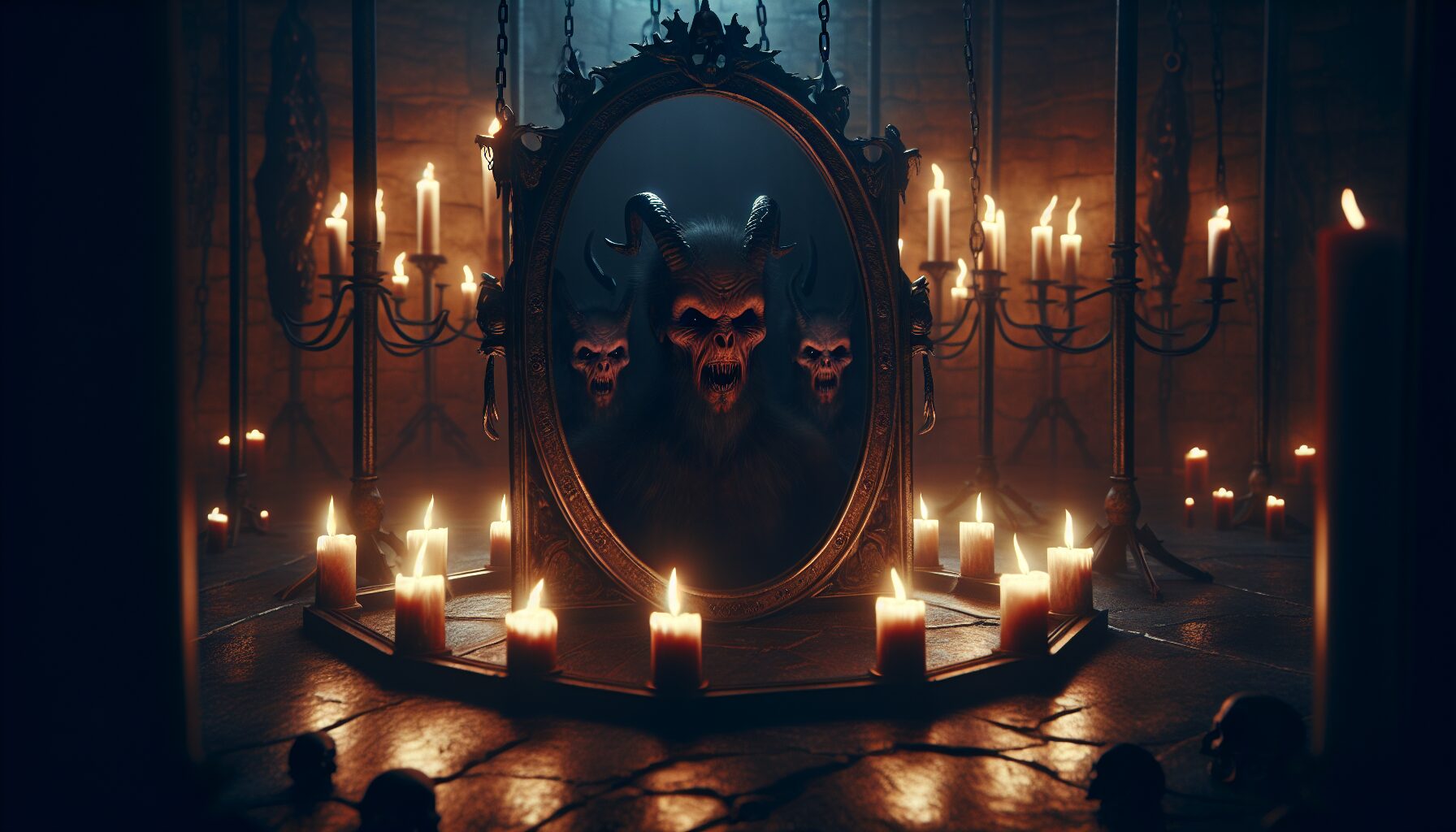
    The Infernal Mirror: Demons Reflecting the Self

    For centuries, demons have plagued the imagination, serving as both terrifying adversaries and potent symbols of humanity’s inner struggles. Whether through literature, art, or religion, these diabolical figures manifest an intricate web of meanings that reflect the multifaceted nature of human psychology and morality.

    The Historical Context of Demonic Imagery

    Demons have been a significant part of mythologies and religions throughout history. From the Assyrian Alû spirits to the malevolent forces described in the New Testament, these entities have personified the darker aspects of the human condition. As Jeffrey Burton Russell, a prominent historian of theology, states, “Demons reflect the social, psychological, and moral dilemmas of their times” (Harvard University Press).

    The role of demons evolved from mere external threats to intricate symbols that cast a spotlight on human imperfections and fears. In many early texts, they were seen as literal beings causing havoc, while later interpretations view them as metaphors for internal battles.

    Psychoanalytic Perspectives: Demons as Archetypes

    The psychoanalytic approach offers a compelling framework for understanding demons as projections of the self. Sigmund Freud’s theories on the subconscious mind suggest that our deepest fears and desires often manifest as external symbols. Carl Jung expanded on this by introducing the concept of archetypes.

    “Demons are symbolic of the shadow – the repressed aspects of our psyche that we refuse to acknowledge.” – Carl Jung

    In Jungian analysis, the shadow is a part of the unconscious mind composed of repressed weaknesses and instincts. When these elements remain unexamined, they can project outwardly in the form of ‘demons,’ representing the struggle between our conscious ideals and subconscious drives.

    Demons in Literature: A Mirror to Morality

    Literature has long been a medium through which the struggle between good and evil is explored. Demonic figures in stories often serve as mirrors of the protagonists’ internal conflicts and societal dilemmas. In John Milton’s “Paradise Lost,” Satan is depicted not just as the ultimate evil but as a complex character embodying rebellion, pride, and ambition.

    William Blake, a well-known critic of Milton, argues that Milton was “of the Devil’s party without knowing it,” suggesting that the poet subconsciously aligned more with Satan’s rebellious nature than with divine authority. This notion underscores how demons can symbolize the attractive yet destructive qualities within ourselves.

    Religious Interpretations: Redemption and Damnation

    In religious contexts, demons often embody the struggle between sin and virtue. The Catholic Church’s depiction of demonic possession symbolizes a soul at war, torn between divine grace and mortal sin. Exorcisms traditionally serve as rituals of purification, the ultimate battle between good and evil fought within the individual.

    Father Gabriel Amorth, a renowned exorcist, described in his writings that “demons are terrifying reminders of the consequences of human error and the potential for redemption through faith” (Catholic Education Resource Center).

    The Artistic Depiction: A Reflection of Culture

    In art, demons have been depicted in myriad forms, reflecting cultural attitudes toward sin, morality, and human nature. The Medieval period saw an intense focus on demonic forms as both literal creatures of Hell and allegories for earthly vices. Hieronymus Bosch’s nightmarish landscapes and figures represent not only religious warnings but also a mirror to the human imagination.

    Mary Douglas, a social anthropologist, observed that “artistic depictions of demons often reflect societal boundaries, embodying the chaos and disorder that lie just beyond the borders of accepted norms” (Oxford Reference).

    The Modern Demon: Technology and Isolation

    In contemporary society, demons have taken on new forms, often embodying the challenges presented by modern technology and urban isolation. Films and literature explore themes of technological corruption, where artificial intelligence and digital landscapes spawn new ‘demons’—manifestations of our fear of losing control to an increasingly automated world.

    For instance, the demon in Fyodor Dostoevsky’s The Possessed can be seen as a precursor to modern interpretations of societal upheaval and ideological madness, reflecting fears of personal and communal transformation.

    Conclusion: The Everlasting Presence of Demonic Reflection

    Demons, in their myriad forms, continue to serve as powerful symbols reflecting the deepest conflicts within the human soul. Their presence persists as a testament to our continued struggle with personal and societal challenges. As external manifestations of our inner fears and desires, demons compel us to confront aspects of the self that we would rather hide.

    From ancient texts to modern cinema, these infernal reflections question, challenge, and ultimately, illuminate the complexities of the human experience.

    As we continue to evolve, so too will our demons, adapting to new contexts and challenges, yet always holding up the mirror to our innermost beings, forcing us to question who we are and what we might become.
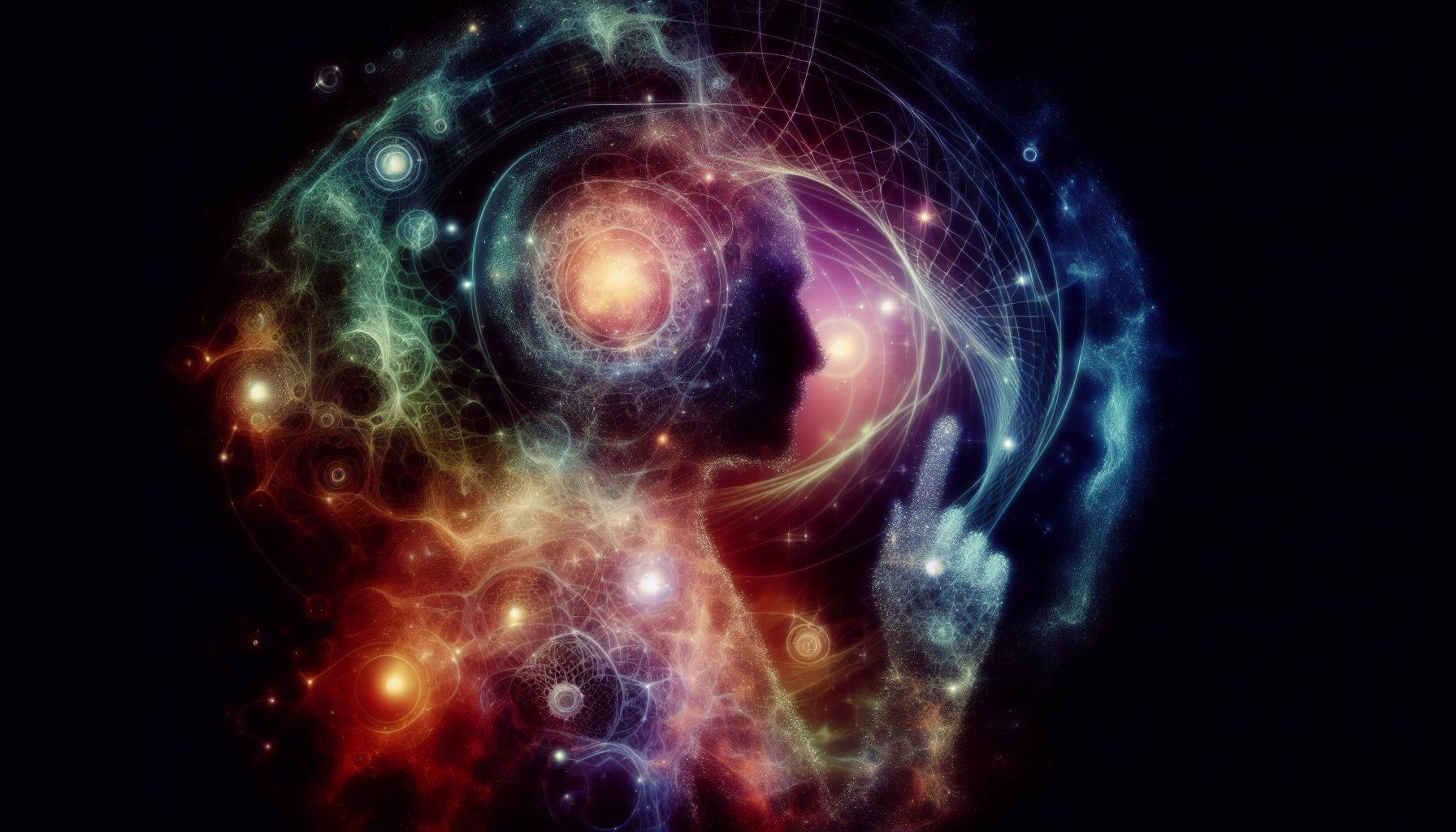
  • Psychic Archetypes – Human Patterns Through Time

    Psychic Archetypes – Human Patterns Through Time

    Throughout history, human civilization has been captivated by the idea of archetypes—universal patterns and symbols residing in the collective psyche. These archetypes are recurring motifs found across cultures, encapsulating the essence of human experience in a truly profound way.

    The Origins of Archetype Theory

    The concept of archetypes was first popularized by Swiss psychiatrist Carl Gustav Jung. Jung proposed that these archetypes are not learned but innate elements of the human psyche, manifesting as common themes in dreams, myths, art, and behaviors worldwide.

    “Archetypes… are residues of the most ancient and universal types of expressions of the human mind. They tell us stories of the struggles and triumphs of humanity.” — C.G. Jung

    Jung identified several key archetypes, including the Self, the Shadow, the Anima/Animus, and the Persona. Each of these represents different facets of the human experience, navigating the inner world and reflected in our outer reality.

    Key Archetypes Across Cultures

    Despite cultural differences, similar archetypes emerge around the globe, embodying fundamental aspects of life and identity.

    • The Hero: Seen in figures such as Hercules from Greek mythology and Knight Arthur from the Arthurian legends, the Hero embarks on a journey filled with trials and transformations.
    • The Mother: The nurturing force represented by deities like Gaia or Demeter, symbolizing fertility, protection, and nourishment.
    • The Trickster: A shape-shifting character with cunning and wit, found in Norse Loki and Native American Raven mythologies, often disrupting norms to challenge or enlighten.

    The Psychological Significance of Archetypes

    Archetypes carry significant psychological weight. They guide individuals through their personal growth and development.

    “An understanding of the interplay between different archetypes leads to greater self-awareness and personal integration.” — Analytical Psychology Studies

    The Hero’s Journey, for instance, illustrates the path of self-discovery and transformation, suggesting that each person’s life is a quest filled with opportunities for growth and learning.

    Archetypes in Modern Culture

    The influence of archetypes extends into modern literature, film, and art. From the epic quests of Frodo Baggins in The Lord of the Rings to the introspective journey of Neo in The Matrix, these narratives tap into archetypal patterns that resonate deeply with audiences.

    Consider Star Wars, where archetypal characters like Luke Skywalker (the Hero), Yoda (the Wise Old Man), and Darth Vader (the Shadow) epitomize the timeless struggle between light and darkness, good and evil.

    The Future Role of Archetypes

    In an ever-evolving society, will archetypes continue to hold relevance? As psychologists and anthropologists delve deeper into the workings of the mind, the archetype framework may expand or adapt, yet their core essence will likely remain intact.

    They offer a lens through which to view contemporary challenges and uncertainties, providing insight into human behavior and inspiring creativity and tradition across generations.

    Psychic archetypes weave the tapestry of human history—from the distant past to an unknowable future—showcasing our shared journey through time. As we embrace these patterns, we perhaps draw closer to understanding the complexities of our collective psyche, enabling us to connect with one another on deeper, more meaningful levels.

    Conclusion

    Psychic archetypes signify a universal language of the human soul. As we continue to study and interpret these archetypes, we unlock timeless wisdom and find parallels between ancient lives and modern experiences. By embracing these enduring patterns, humanity may gain not only a greater sense of cultural identity but also profound personal insight.

    For further reading, consider exploring Jung’s seminal works, such as Collected Works, to dive deeper into his theories and insights.

  • The Demon’s Labyrinth – Occult Journeys Through Shadow

    The Demon’s Labyrinth – Occult Journeys Through Shadow

    The world of the occult, veiled in mystery and intrigue, is often seen as a realm where shadows intertwine with the human psyche’s darkest recesses. It is a place where the lines between reality and fantasy blur, creating a labyrinth of fear and enlightenment for those who dare to enter.

    The Allure of the Occult

    For centuries, individuals have been drawn to the occult in search of power, knowledge, and sometimes, a deeper understanding of existence itself. The allure of the unknown is irresistible, enticing seekers into a labyrinthine journey fraught with peril and revelation.

    “Do not be deceived; I was not drawn to the occult by lurid spookeries or quests for power. I sought the occult for truths of the universe that I felt had been hidden too long.” – H.P. Lovecraft

    H.P. Lovecraft, a master of the mysterious, encapsulates this allure beautifully. The occult is not just about dark rituals and enigmatic symbols; it is an exploration of the hidden truths of the universe.

    Charting the Labyrinth: Common Themes and Symbols

    Within the demon’s labyrinth, seekers encounter a plethora of themes and symbols, each carrying a narrative as old as time:

    • The Pentagram: Often misrepresented, the pentagram serves as a powerful symbol in many occult traditions, representing the elements and the spirit interconnected.
    • The Ouroboros: An ancient symbol depicting a serpent eating its own tail, symbolizing the cyclical nature of life and the death-rebirth continuum.
    • The Shadow: Inspired by Carl Jung’s Shadow Archetype, representing the repressed parts of the human psyche, often explored and confronted within occult practices.

    These symbols are prevalent not just in occult manuscripts but also in literature, art, and even modern media, often sparking curiosity and sometimes fear.

    The Journey Through Shadow

    Walking through the demon’s labyrinth is as much an internal journey as it is an external one. It forces the seeker to confront the darker aspects of their personality and the fears they hold. Carl Jung once posited,

    “Knowing your own darkness is the best method for dealing with the darknesses of other people.” – Carl Jung

    This journey is transformative, as it often leads to a reconciliation with one’s own shadow, fostering self-awareness and inner strength.

    The Hazards of the Occult Path

    However, navigating the labyrinth is not without risk. The potential for losing oneself to the darkness can lead to fragmented identities and existential dread. Throughout history, there are numerous accounts of individuals who have delved too deeply, losing touch with reality or falling into hopeless despair.

    Therefore, responsible exploration of the occult requires a grounding in self-awareness and often guidance from mentors or structured groups, such as those found in traditions like Wicca or Hermeticism, which offer frameworks for understanding and growth.

    The Modern Perspective

    In the contemporary era, interest in the occult has resurged. With the rise of digital communities and resources, more people are exploring these ancient practices than ever before. Some seek empowerment, others a sense of community, and many simply wish to explore their spiritual beliefs outside mainstream religion.

    This renewed interest sometimes leads to what has been termed “new-age occultism”, characterized by a blend of ancient wisdom with modern beliefs. The digital age has democratized access, allowing a wealth of information and misinformation to coexist.

    Conclusion

    The demon’s labyrinth remains a potent metaphor for the occult journey: a venture through the unknown, testing our fears and beliefs, and offering the potential for profound self-discovery. Whether approached with reverence, skepticism, or curiosity, it continues to challenge and enthrall those who walk its shadowed paths.

    Ultimately, the journey is as personal as it is universal, a timeless exploration of the human spirit in search of meaning and transcendence in the labyrinth of shadows.

  • Alien Theology – Extraterrestrial Influence on Human Belief

    Alien Theology – Extraterrestrial Influence on Human Belief

    Alien Theology: Extraterrestrial Influence on Human Belief

    Throughout the history of humanity, there has been a profound curiosity about the cosmos and our place within it. Alien theology—the study of how encounters, or imagined encounters, with extraterrestrial life have shaped human beliefs—offers a fascinating perspective on this curiosity. From ancient myths to modern religions, evidence of alien influence abounds, challenging traditional narratives and offering new interpretations of spirituality.

    Historical Context: Ancient Myths and Alien Deities

    Before the dawn of contemporary religions, many ancient civilizations documented interactions with beings from the skies. These narratives often describe celestial visitors with god-like qualities.

    • The Sumerians: One of the earliest recorded civilizations, the Sumerians wrote of beings known as the Anunnaki, described in ancient texts such as the Enuma Elish. Many believe these deities came to Earth from the heavens and played crucial roles in shaping humanity.
    • India’s Vedic Texts: Ancient Indian scriptures mention “Vimanas,” flying chariots used by the gods. These descriptions bear striking similarities to modern accounts of UFOs, suggesting possible extraterrestrial interpretations.
    • Native American Legends: Numerous indigenous tribes have myths that describe star people or sky gods descending to Earth, sometimes imparting knowledge or guidance to humans.

    “The phenomenon of myth creation is a collaboration of cosmic imagination mingling with cultural inheritance. Sky-related narratives in many cultures suggest more than mere coincidence.” — History

    Modern Religions and UFOs: A Twentieth-Century Synthesis

    The modern age primarily reshaped the discourse around alien theology through sightings of UFOs and increased interest in extraterrestrial life. This era sparked new conversations about humanity’s spiritual connections with aliens.

    • The Raelian Movement: Founded in the 1970s by Claude Vorilhon, also known as Rael, this religion explicitly believes that life on Earth was created by an extraterrestrial species known as the Elohim. Raelians argue that the Elohim’s teachings are echoed in the world’s religious texts.
    • Scientology: Established by science fiction writer L. Ron Hubbard, Scientology includes belief in past extraterrestrial civilizations and events impacting present-day human spirituality. Although more a science-fiction-based religion, it reflects some alignment with alien theological concepts.
    • Heaven’s Gate: A more extreme case, this cult believed that an approaching spacecraft was linked to an apocalyptic event. Although it ended tragically, the belief structure of Heaven’s Gate underlined the merging of UFO phenomena with religious end-times prophecy.

    Professor Michael Swords, in his examination of UFOs and religion, noted, “The influence of extraterrestrial themes on religiosity reflects a broader pattern—people have always integrated contemporary phenomena into their existential explanations.” — UFO Evidence

    Extraterrestrial Encounters and Their Impact on Belief Systems

    Documented encounters with supposed extraterrestrial entities have sometimes led to substantial shifts in personal and communal belief systems. This shift underscores the power of direct or indirect alien influence on theology.

    Abduction Narratives

    Accounts of alien abductions often come with transformative spiritual revelations. Those who claim to have been abducted frequently report experiences that challenge existing paradigms, often leading to revised spiritual perspectives or the creation of new belief systems.

    Contactee Movements

    During the mid-20th century, the contactee movement gained traction. Ordinary individuals claimed to have made direct contact with benevolent aliens, often returning with messages of peace, environmental stewardship, and spiritual enlightenment. These contacts were believed by some to be new forms of divine intervention.

    Scientific Perspectives: Are We Alone?

    While theologians and philosophers ponder the spiritual implications, scientists continue to explore the question: “Are we alone in the universe?” The search for extraterrestrial intelligence (SETI) has been monitoring space for signals indicating conscious life. The potential discovery of extraterrestrial life would inevitably impact religious beliefs worldwide by challenging the anthropocentric view of life in the cosmos.

    A NASA study in 2014 gathered theologians to discuss the potential impact of finding alien life, reflecting the agency’s understanding of the substantial cultural and religious ramifications such a discovery would entail.

    Astrobiologist Dr. Stephen J. Dick once stated, “The impact of discovering intelligent extraterrestrial life would be profound, fundamentally altering our interpretations of humanity’s identity and cosmic role.” — Space

    Conclusion: Aliens, Belief, and the Future

    The relationship between extraterrestrial life and human belief systems remains a rich field for exploration. Through the lenses of history, religion, and science, we see a tapestry woven with speculation and wonder. As our understanding of the universe expands, so too does the potential for alien revelations to reshape spiritual and theological constructs.

    Alien theology, in its numerous manifestations, asks us to reconsider the narratives that define human spirituality. It invites believers, skeptics, and scholars alike to explore the boundaries of human understanding and the possibilities that lie beyond our earthly existence.

    “As we discover more about our universe, we may find not just answers to the question of alien life, but also discover new dimensions to spirituality once thought beyond our reach.” — National Geographic

    The journey towards understanding is as infinite as the universe itself, and alien theology provides a compelling framework to explore this frontier of thought.

  • Primordial Archetypes – Patterns of Collective Memory

    Primordial Archetypes – Patterns of Collective Memory

    Primordial Archetypes: Patterns of Collective Memory

    Throughout human history, certain themes, symbols, and characters recur across cultures, civilizations, and epochs, suggesting the presence of primordial archetypes—universal motifs and figures etched into the collective memory of humankind. These archetypes find expression in myths, legends, and artistic traditions, acting as a bridge between past and present, the individual and the collective.

    The Concept of Archetypes

    The term “archetype” was popularized by Carl Jung, a Swiss psychiatrist and psychoanalyst who founded analytical psychology. Jung perceived archetypes as innate, universal prototypes for ideas and may be used to interpret observations. According to Jung, these archetypes reside in the collective unconscious, a part of the unconscious mind shared among beings of the same species, and they serve as a repository of all human experiences and knowledge.

    “Archetypes, like instincts, are the unconscious images of the instincts themselves, in other words, they are the patterns of instinctual behavior.”

    — Carl Jung

    Common Archetypes and Their Significance

    Among the plethora of archetypes, some of the most enduring and significant ones include:

    • The Hero: Embodying strength, courage, and a quest for justice. Heroes often undertake great journeys or battles. Examples include figures like Hercules and King Arthur.
    • The Mother: Representing creation, nurturing, and unconditional love. This archetype is seen in figures like Demeter from Greek mythology or Gaia, the Earth Mother.
    • The Trickster: Characterized by mischief, cunning, and the desire to subvert norms. This archetype is found in deities such as Loki in Norse mythology and Hermes in Greek mythology.
    • The Shadow: Represents the darker aspects of the self and is often associated with the unknown or repressed parts of the psyche. Figures like the Jungian Shadow represent this archetype.

    Impact and Importance

    The significance of archetypes lies in their ability to resonate on a deep psychological level, elucidating the shared motifs and experiences that unite humanity. As we navigate the complexities of modern life, these timeless symbols offer insights and guidance that transcend cultural and temporal boundaries.

    More than just relics of past cultures, primordial archetypes continue to evolve, echoing through literature, art, and film, continually adapting to reflect contemporary societal concerns, yet always reminding us of our shared human journey.

    For further exploration on archetypes and their implications, Carl Jung’s work remains a cornerstone. Modern interpretations can also be found in various psychological and literary analyses, underscoring their enduring relevance in understanding human behavior and cultural phenomena.

    To delve deeper into the realm of archetypes and collective memory, consider exploring Simply Psychology’s overview of Carl Jung’s theories.

  • Infernal Contracts – Demons in Modern Consciousness

    Infernal Contracts – Demons in Modern Consciousness

    The concept of demons and their infamous contracts has pervaded human consciousness for centuries. As we delve into the metaphoric and literal truths behind these pacts, we uncover tales and beliefs etched in the framework of our collective psyche.

    The Evolution of Demonic Contracts

    The idea of making a deal with the devil is ingrained in many cultures. Traditionally, these contracts promise worldly success in exchange for something far more precious—the human soul. One of the earliest known stories is that of Faust, the legendary scholar who made a pact with Mephistopheles.

    According to Marlowe’s version in The Tragical History of Doctor Faustus, Faustus, restless in his intellectual ambition, exchanges his soul for infinite knowledge and worldly pleasures. This story has been retold numerous times, including Goethe’s classical retelling, each version reflecting the moral and philosophical dilemmas of its time. As Marlowe writes:

    “Hell hath no limits, nor is circumscrib’d
    In one self place; but where we are is hell,
    And where hell is, there must we ever be.”

    Demons as Cultural Archetypes

    In modern consciousness, demons have transformed into archetypal figures representing human desires and the moral struggles inherent in fulfilling them. They are less about literal evil and more symbolic of the complex duality within the human spirit.

    • Temptation and Power: Demons often embody the temptation to pursue personal gain without considering consequences. Characters in literature, such as Faust, or modern TV shows like Supernatural, reenact these eternal struggles.
    • Internal Conflicts: The demon becomes a metaphor for our internal battles. As psychiatrist Dr. Carl Jung suggests, “Knowing your own darkness is the best method for dealing with the darknesses of other people.”

    Modern Interpretations in Pop Culture

    Contemporary media often revives these themes, exploring more nuanced portrayals of demonic contracts. Shows like Lucifer humanize demons, often presenting their characteristics and actions as reflections of human conditions rather than absolute moral vileness.

    In Neil Gaiman’s The Sandman series, for instance, demons are interwoven into emotionally complex narratives, presenting their pacts as rich story elements rather than one-dimensional tropes. Gaiman once stated, “I think of myths as something that reflects our lives, and fairy tales as something that offers us tools to deal with them.” This viewpoint captures the transformative power of demonic stories when applied as metaphors for real-world challenges.

    Psychological Dimensions of Infernal Deals

    Psychoanalytically, these contracts can be seen as manifestations of the human psyche’s shadow side. This darkest aspect yearns for the forbidden fruit, the indulgence of power and pleasure unchecked by morality. Contemporary psychology often uses terms like “shadow work” to encourage individuals to confront and understand these buried inclinations.

    Famed psychologist Sigmund Freud observed that often our most denied desires manifest symbolically in dreams and narratives, such as the classic demonic bargains. Quoting Freud, “Unexpressed emotions will never die. They are buried alive and will come forth later in uglier ways.” This aligns well with how literature and films explore demonic contracts, symbolizing repression and subsequent realization.

    Legal and Social Contracts as Modern Analogies

    Interestingly, the concept of demonic contracts shares metaphoric parallels with some modern legal and social contracts. The intricate dance between gaining and losing, taking risks in ethical dilemmas, poses questions relevant in business and personal relationships today.

    • Corporate Agreements: In business, the idea of signing a binding agreement can feel Faustian. Is one risking integrity for profit? Thankfully, unlike soul-binding infernal deeds, legal contracts allow for negotiation and revision.
    • Personal Sacrifices: Consider personal contracts in social settings—the compromises and allegiances individuals make with societal norms can often feel like a metaphorical deal with the devil, sacrificing self-identity for acceptance.

    The Enduring Allure of Demonic Contracts

    The fascination with infernal pacts endures because they pose questions integral to self-reflection and caution. What are we willing to risk for our deepest desires? How do we reconcile ambition with morality?

    Writer Joseph Campbell succinctly proposed in The Power of Myth, “Myths are public dreams; dreams are private myths.” Within this framework, demonic contracts become the mythic expression of personal ambition and fear, dreams that test the boundaries of morality and consequence.

    As individuals and societies continue to evolve, so too will the interpretation and representation of these infernal bargains. Whether perceived as ancient folklore or modern parable, the story of the human soul’s commerce with demonic forces remains, drawing us into its depths with every retelling.

    In conclusion, demonic contracts serve as potent metaphors for many of the predicaments humans encounter—whether ethical, emotional, or societal. They remind us of the continual balance we seek between our noblest aspirations and base desires.

    To understand demons in modern consciousness is to understand a critical part of the human experience, forever complex, entirely personal, and yet universally resonant.