Tag: often

  • Angels of the Edge – Liminal Beings in Myth and Art

    Angels of the Edge – Liminal Beings in Myth and Art

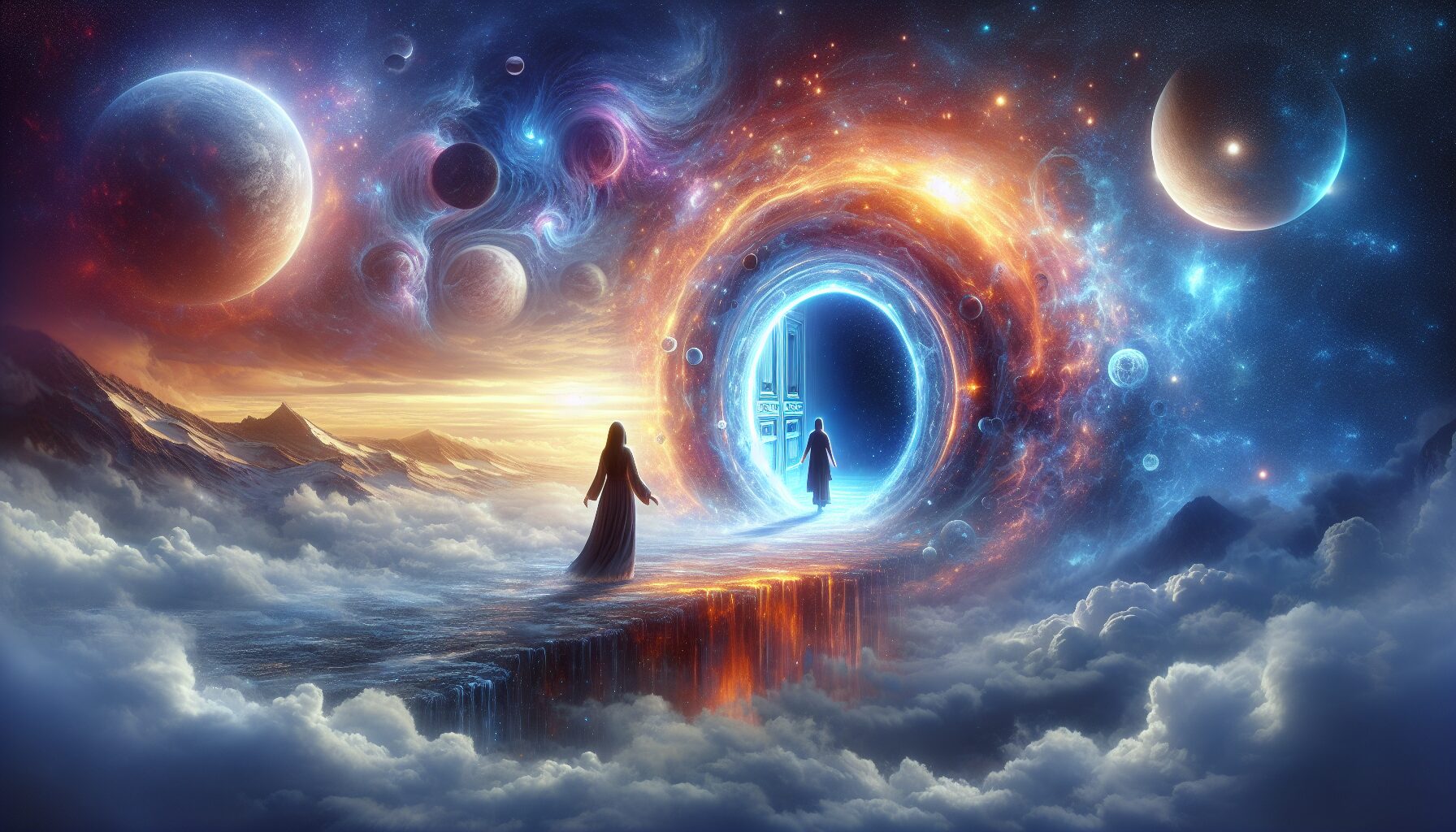
    Angels of the Edge: Liminal Beings in Myth and Art

    Throughout history, liminal beings have captured the human imagination, standing as enigmatic figures at the boundaries of reality and the unknown. Among these figures, angels hold a prominent place, transcending cultures and time with their mystique and multifaceted portrayals in myth and art.

    Understanding Liminality

    The term liminal refers to the threshold or edge between different states of being. Victor Turner, a cultural anthropologist, described liminality as the space between, the phase where transformation occurs. Liminal beings exist in this space, often challenging the dichotomies of existence, such as life and death, or good and evil.

    The Mythical Role of Angels

    In various religious contexts, angels serve as messengers of the divine, intermediaries between heaven and earth. In the Judeo-Christian tradition, angels like Gabriel and Michael are depicted as powerful entities that guide and protect humans, often appearing at pivotal moments. Similarly, in Islam, angels are considered servants and warriors of God, integral in guiding humanity.

    “We are like angels with just one wing and we can only fly by embracing each other.” – Luciano De Crescenzo

    Angels in Art

    Artists have long been fascinated by the concept of angels, and this is reflected in countless artworks that explore their ethereal beauty and otherworldly presence. During the Renaissance, painters like Sandro Botticelli and Leonardo da Vinci depicted angels with delicate features, bathed in divine light, symbolizing purity and grace.

    • Baroque Period: Artists such as Caravaggio infused angels with dramatic intensity and emotion, embodying the ferocity and majesty often associated with these beings.
    • Modern Interpretations: In contemporary times, artists and filmmakers reinterpret angels, sometimes blending them with themes of science fiction and fantasy, reflecting societal changes and evolving spiritual understandings.

    The Enduring Appeal of Angels

    The enduring fascination with angels lies in their ability to embody the dualities of existence, offering a window into our fears, hopes, and aspirations. As beings of the edge, they challenge us to ponder the mysteries of the universe and our place within it. Whether through religious texts or modern media, angels continue to resonate with people across the globe, a testament to their lasting power as liminal guides.

    For further exploration, see National Geographic for a deeper dive into the symbolic meanings of angels across cultures.

  • Blackened Philosophy – Thinking Beyond Mainstream Thought

    Blackened Philosophy – Thinking Beyond Mainstream Thought

    Blackened Philosophy – Thinking Beyond Mainstream Thought

    Blackened Philosophy – Thinking Beyond Mainstream Thought

    The realm of philosophy has always been a domain where thinkers strive to unravel the complexities of existence, morality, and knowledge. However, there exists a certain form of philosophical inquiry that leaps beyond the confines of traditional discourse—a space we refer to as “Blackened Philosophy.” This term encapsulates ideas that challenge norms, question everything, and often tread the line between reality and the unknown.

    Origins and Meaning

    Blackened Philosophy” does not reference any specific philosophical school or thought. Instead, it symbolizes an approach, an audacity to delve into the darker, less-traveled paths of philosophical thinking. Influenced by existentialism, nihilism, and skepticism, this philosophy dares to question the very fabric of what we perceive as truth and existence.

    “The unexamined life is not worth living.”

    Socrates

    Socrates’ famous declaration underscores the necessity of critique and exploration inherent in philosophy. Blackened Philosophy embodies this spirit by encouraging a relentless questioning of the foundations upon which mainstream thoughts are built.

    Core Principles of Blackened Philosophy

    Although varied, there are several principles that often underpin this philosophical approach:

    • Abolition of Dogma: Nothing is sacrosanct. Every belief, tradition, and assumption should be scrutinized critically.
    • Embrace of Paradox: Conventional belief and logical reasoning are not always adequate. Embrace contradictions and discover deeper truths within them.
    • Existential Inquiry: Go beyond asking if something is true; ask why it matters. Explore existence’s raw and unmediated forms.

    Navigating Beyond the Mainstream

    Mainstream philosophy often centers around certain irrefutable tenets or ideas. Conventional wisdom insists on equilibrium, on concepts that ensure stability within the realms of moral, metaphysical, and epistemological debates. However, Blackened Philosophy frequently rebels against such norms.

    Challenging Moral Absolutism

    Moral absolutism posits that ethical standards apply universally without exception. Blackened Philosophy rejects this notion, advocating for a more nuanced understanding of morality that is subjective and contextual. Friedrich Nietzsche famously argued, “There are no moral phenomena at all, but only a moral interpretation of phenomena.”

    This critique propels thinkers to explore the vast range of ethical experiences, unshackled by prescribed moral codes. As the world grows increasingly complex, adopting a versatile philosophical lens becomes indispensable.

    Redefining Knowledge

    Rene Descartes, often regarded as the father of modern philosophy, declared, “I think, therefore I am.” This statement emphasizes a foundational belief in the certainty of one’s existence. Blackened Philosophy, in contrast, pushes even the boundaries of cogito ergo sum, questioning the nature and certainty of self-awareness and knowledge.

    Skepticism, a crucial tool in this philosophy, becomes the means through which understanding is continuously reshaped. As philosopher David Hume remarked:

    “A wise man, therefore, proportions his belief to the evidence.”

    David Hume

    Blackened Philosophy amplifies this sentiment by pushing beyond the limits of evidence, seeking subjective truths that may defy empiricism.

    The Dark Aesthetic

    The aesthetic of Blackened Philosophy often invokes dark imagery and symbolism. This reflects the depth and often daunting nature of philosophical inquiry it promotes. Literature, music, and art that embody this aesthetic help manifest its abstract principles into tangible experiences.

    Consider the works of Edgar Allan Poe or the melancholic compositions of black metal music, where themes like existential dread and the sublime emerge. These cultural artifacts give voice and substance to the abstract themes that Blackened Philosophy seeks to explore.

    Existentialism and the Absurd

    This philosophy often aligns itself with existentialist thought. Albert Camus, in his essay “The Myth of Sisyphus,” introduces the concept of the absurd—where the human tendency to seek inherent meaning conflicts with the chaotic, indifferent universe. Camus writes:

    “The struggle itself towards the heights is enough to fill a man’s heart. One must imagine Sisyphus happy.”

    Blackened Philosophy resonates with such ideas, inviting individuals not just to ponder but to embrace the contradictions and uncertainties of existence.

    Conclusion

    Blackened Philosophy is not about obtaining definitive answers but about embracing the journey of relentless questioning and exploration. It rejects the comfortably known, stepping instead into the shadows where new perspectives lurk. In doing so, it offers a profound challenge not just to established theoretical paradigms, but to our own preconceptions and biases.

    As we continue to navigate an ever-evolving world, the insights offered by thinking beyond mainstream thought can provide not only deeper understanding but also profound personal transformation. Blackened Philosophy is an invitation to those daring enough to venture into the unknown, with conviction not in finding answers, but in discovering new questions.

    Further exploration into this topic may be found in works by The Stanford Encyclopedia of Philosophy, where you can dive deeper into branches like existentialism, nihilism, and skepticism that inform much of this unorthodox approach.
  • The Hidden Sanctum – Secret Practices for the Modern Mystic

    The Hidden Sanctum – Secret Practices for the Modern Mystic

    In an age where technology distracts and busyness prevails, the pursuit of spiritual depth often seems elusive. Yet, for the modern mystic, the search for inner peace and deeper understanding continues unabated. This journey involves secret practices that may seem ancient but remain relevant in fostering personal growth and connection with the divine.

    The Call of the Mystic

    Throughout history, mystics have been individuals committed to the exploration of inner worlds and the cultivation of spiritual wisdom. This path isn’t fixed by religious affiliation; rather, it is a personal journey that transcends dogma. The modern mystic is often characterized by a deep sense of intuition, a quest for authenticity, and a yearning for meaning in an increasingly complex world.

    “Mysticism, in its simplest and most general definition, is the search for intercourse with the divine, which leads to the communion, or even identification, of the soul with it.” – William Ralph Inge

    Secret Practices of Mystics

    Though the world has evolved in countless ways, mystical practices have persisted, adapting to suit the new environments of their practitioners. Here are some of the timeless practices that are gaining renewed interest among the modern mystics:

    1. Meditation and Contemplation

    Meditation is perhaps the most widely recognized mystical practice. Many spiritual traditions emphasize the importance of meditation in quieting the mind and opening the heart to divine presence.

    • Mindfulness Meditation: The practice of being present and fully engaged with the current moment without judgment.
    • Transcendental Meditation: A form of silent mantra meditation developed by Maharishi Mahesh Yogi.
    • Contemplative Prayer: Practiced particularly in Christian mysticism, it involves silent awareness and an intimate dialogue with the divine.

    Contemplation goes hand-in-hand with meditation. It involves deep reflection and immersion in spiritual texts or the natural world, allowing insight to emerge. As Thomas Merton, a prominent mystic, once said:

    “Contemplation is the highest expression of man’s intellectual and spiritual life. It is that life itself, fully awake, fully active, fully aware that it is alive.” – Thomas Merton

    2. Sacred Sound and Chanting

    The use of sound in mystical practice is rooted in the belief that sound vibrations can alter consciousness and connect the practitioner with the divine. From OM, the primal sound in Hinduism, to Gregorian chants in Christianity, sacred sounds hold a special place in the mystic traditions.

    • Kirtan: A form of call-and-response chanting, originating from the Indian saint tradition.
    • Gregorian Chant: A methodical and spiritual form of singing developed by Western Christians.
    • Sound Healing: Utilizing instruments like singing bowls and gongs to induce meditative states and healing.

    3. Rituals and Symbols

    Rituals serve as powerful conduits for mystical experiences, often utilizing symbols imbued with personal or collective significance. These could be as elaborate as ceremonial magic or as simple as lighting a candle.

    • Ceremonial Magic: Complex rituals that often employ the four elements—earth, air, fire, and water.
    • Simple Altar Creation: Establishing a sacred space with objects that hold personal spiritual significance.
    • Moon Phases: Conducting rituals in accordance with lunar phases is an ancient practice that continues to captivate the modern mystic.

    4. Nature Immersion

    Mystics often find the divine in the natural world, where the perceived separation between the divine and mundane is blurred. Many modern mystics make nature a significant part of their practice, following the footsteps of thinkers like Henry David Thoreau.

    “Heaven is under our feet as well as over our heads.” – Henry David Thoreau

    Practices include:

    • Forest Bathing: A Japanese practice known as Shinrin-yoku, immersing oneself in the forest atmosphere.
    • Solitary Retreats: Time spent alone in nature to foster deep contemplation and spiritual awakening.

    5. Dreamwork

    Dreams have long been seen as gateways to the subconscious and the divine. Many mystics engage in dreamwork to gain insights and guidance.

    • Lucid Dreaming: The practice of becoming aware of the dream state, allowing conscious interaction within the dream.
    • Dream Journaling: Recording dreams shortly after waking to capture the elusive messages conveyed.

    The Guided Path

    The journey of the modern mystic is both personal and universal, a path that fosters both individuality and a collective awakening. While secret practices offer tools for the journey, they are not ends in themselves. The ultimate goal remains transformative and profound—to strip away illusions and perceive the divine unity in all.

    In fostering this journey, mystics often gain not only personal peace but also contribute profoundly to a more conscious and connected society. As the world continues to change rapidly, the secret practices of mystics old and new will undoubtedly continue to guide us toward deeper understanding and enlightenment.

    For more insights and resources on mysticism, consider visiting platforms like The Mystic or Spirituality and Practice, where ancient wisdom meets modern seekers.

  • The Eternal Threshold – Liminal Spaces of Consciousness

    The Eternal Threshold – Liminal Spaces of Consciousness

    You need to be logged in to view this content. Please . Not a Member? Join Us
  • Nightly Pilgrimage – Journeys Through Dark Spiritual Landscapes

    Nightly Pilgrimage – Journeys Through Dark Spiritual Landscapes

    You need to be logged in to view this content. Please . Not a Member? Join Us
  • The Obscure Muse – Inspiration from Darkness

    The Obscure Muse – Inspiration from Darkness

    The Obscure Muse – Inspiration from Darkness

    Throughout history, artists, writers, and musicians have often turned to the shadows of the human experience to find inspiration. Darkness, both literal and metaphorical, serves as a unique catalyst for creativity, offering depth and complexity that light cannot always provide. This article delves into the concept of the ‘obscure muse’ and explores how the darker elements of life fuel some of the most profound and enduring works of art.

    The Allure of Darkness

    Darkness has a magnetic allure that artists have been drawn to for centuries. Edgar Allan Poe, a master of the macabre, once wrote, “Deep into that darkness peering, long I stood there, wondering, fearing, doubting, dreaming dreams no mortal ever dared to dream before.” This quote encapsulates the irresistible pull of the unknown and the mysterious, which can be both terrifying and deeply inspiring.

    • Emotional Depth: Dark themes allow artists to explore intense emotions such as fear, despair, and melancholy, leading to works that resonate on a more profound level.
    • Contrast and Balance: By exploring the dark, artists can create contrast with lighter themes, offering a balanced perspective on the human experience.
    • Catharsis: Engaging with dark themes can provide a cathartic release for both the creator and the audience, transforming pain into art.

    Artistic Expressions from the Shadows

    Various art forms have uniquely interpreted the themes of darkness. From literature to visual arts and music, the following examples highlight how artists have embraced the obscure muse.

    I have been half in love with easeful Death,

    Call’d him soft names in many a mused rhyme,

    To take into the air my quiet breath;

    Now more than ever seems it rich to die,

    —John Keats, Ode to a Nightingale

    Literature

    From ancient tragedies to modern horror novels, literature has long drawn upon themes of darkness. Authors like Mary Shelley, with her groundbreaking novel Frankenstein, have used the gothic to explore human nature and its limits.

    Visual Arts

    In the visual arts, chiaroscuro—a technique that uses strong contrasts between light and dark—has been employed by masters like Caravaggio to enhance the emotional impact of their work. Such techniques engage viewers, urging them to delve deeper into the narrative behind the image.

    Music

    Music also thrives on darker themes, from the somber melodies of a Beethoven symphony to the angst-ridden lyrics of rock and metal bands. These genres capture raw emotions, turning them into powerful auditory experiences.

    The Therapeutic Power of Darkness

    Creating or consuming art with darker themes can be a therapeutic process. Understanding and expressing the complexity of human emotions helps individuals process their own experiences. The use of darkness in art often reflects a journey toward self-discovery and healing.

    • Psychological Benefits: Art therapy often incorporates dark themes to help individuals confront and work through personal issues.
    • Universal Understanding: Dark-themed art can foster empathy and understanding by illustrating universal struggles.
    • Personal Growth: Engaging with difficult subjects in art can promote resilience and personal growth.

    Famous Works Born from Darkness

    The following iconic works stand as testament to the enduring power of the obscure muse:

    • Nightmare by Johann Heinrich Füssli: This eerie painting captures the tension between dream and reality, compelling viewers to confront their subconscious fears.
    • The Bell Jar by Sylvia Plath: Plath’s semi-autobiographical novel dives into depression and the quest for identity, shedding light on mental illness.
    • Requiem by Wolfgang Amadeus Mozart: Mozart’s final composition, this unfinished masterpiece, is imbued with a profound sense of finality and mortality.

    Conclusion

    The obscure muse—an inspiration drawn from darkness—remains a vital force in the arts. By exploring the shadowy aspects of life, artists can convey rich emotional landscapes and reflect the multifaceted nature of human experience. As society continues to evolve, the allure of darkness in art underscores an enduring truth: in shadows, we often find our most profound insights.

  • Decay and Beauty – Finding Aesthetics in the Ephemeral

    Decay and Beauty – Finding Aesthetics in the Ephemeral

    You need to be logged in to view this content. Please . Not a Member? Join Us
  • The Obscure Path – Philosophical Journeys in the Dark

    The Obscure Path – Philosophical Journeys in the Dark

    You need to be logged in to view this content. Please . Not a Member? Join Us
  • Necrotic Landscapes – Art Inspired by Decay and Death

    Necrotic Landscapes – Art Inspired by Decay and Death

    You need to be logged in to view this content. Please . Not a Member? Join Us
  • The Shadowed Mirror – Self-Reflection in Darkness

    The Shadowed Mirror – Self-Reflection in Darkness

    You need to be logged in to view this content. Please . Not a Member? Join Us