Tag: texts

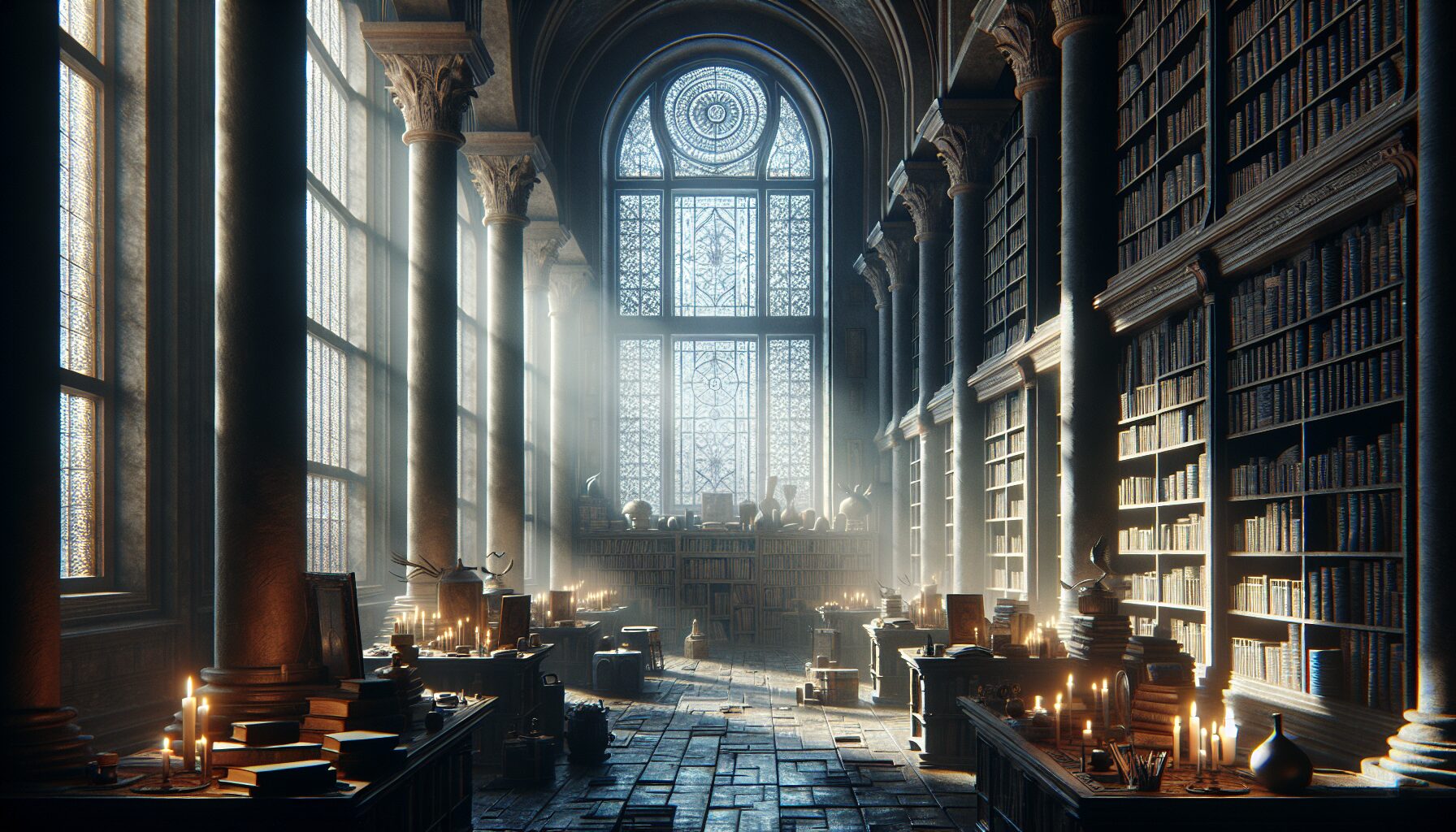
  • The Occult Archive – Unveiling Hidden Cultural Texts

    The Occult Archive – Unveiling Hidden Cultural Texts

    The world of the occult has fascinated generations, offering a labyrinth of intriguing beliefs, practices, and texts that often lie at the heart of mystical traditions. These cultural texts, veiled in secrecy and mystery, provide a window into the metaphysical and esoteric beliefs of ancient and modern societies.

    Understanding Occult Texts

    Occult texts are written works that delve into the hidden aspects of the universe. The word “occult” itself is derived from the Latin occultus, meaning “hidden” or “secret.” These texts cover a wide range of topics including alchemy, astrology, magic, divination, and other supernatural phenomena. They are considered to be key to understanding the mysteries of the universe and human experience beyond empirical science.

    One of the most famous collections is the Corpus Hermeticum, a series of writings attributed to Hermes Trismegistus, a mythical figure considered a sage and mystic. As noted by Stanford Encyclopedia of Philosophy, these texts influenced Renaissance magic and contributed to the development of science and philosophy.

    The Role of Occult Texts in Culture

    Occult texts have played a crucial role in cultural and religious movements around the world. They often serve as foundational documents for various secret societies and organizations, which hold arcane knowledge as their core tenet. Groups such as the Freemasons and the Rosicrucians have long been associated with the preservation and dissemination of occult knowledge.

    “The magical writings that inspired much of Renaissance thought were secretly passed down through initiatory orders that kept these texts hidden from mainstream view,” wrote Esoteric scholar Dr. William Cooper, underlining the deep cultural impact of these works.

    Notable Occult Texts

    • The Book of the Dead – An ancient Egyptian funerary text used to guide the deceased through the afterlife. This text contains magical spells designed to protect and aid the soul in its journey, providing invaluable insight into ancient Egyptian beliefs about life after death.
    • The Zohar – A foundational work in the literature of Jewish mysticism, the Zohar explores complex philosophical and mystical questions about the universe, God, and the nature of human beings. It plays a critical role in Kabbalistic tradition.
    • The Picatrix – An influential grimoire of astrological magic originally written in Arabic and later translated into Latin. The Picatrix offers comprehensive magical knowledge from various ancient traditions, including rituals and spells aimed at harnessing cosmic energies.
    • The Necronomicon – While largely fictional and popularized by H.P. Lovecraft’s stories, it symbolizes the fear and fascination surrounding occult knowledge. Lovecraft described it as a “blasphemous tome” that brought danger to those who dare to explore its secrets.

    The Reemergence of Occult Texts in Modern Times

    In the 21st century, interest in the occult is once again on the rise. This resurgence is fueled by a digital age where once-hidden texts are more accessible than ever, thanks to scans and translations available online. Websites and forums dedicated to esoteric knowledge foster discussions and exploration, inviting a new generation to delve into these mysterious subjects.

    Moreover, popular culture has embraced the aesthetic and narrative of the occult. Books, films, and television series often draw from such texts to create compelling stories that blend reality with the supernatural. As noted by cultural historian Sarah Laskow, “Today’s creators are capturing the public’s imagination by fusing historical mysticism with modern storytelling.”

    The Significance of Occult Texts

    While the occult may forever remain shrouded in mystery, its texts offer a unique lens through which to understand human curiosity and the quest for knowledge beyond the tangible world. These cultural artifacts remind us of our eternal desire to unlock and understand the mysteries of existence.

    As we continue to unearth and interpret these texts, the scope of their influence grows, illustrating our shared history of seeking wisdom in the shadows. Each page turned reveals not only the world’s hidden past but promises new futures bound by the same thirst for the unknown.

    Thus, the occult archive remains a timeless repository of cultural secrets waiting to be explored by both skeptics and believers alike.


  • The Hidden Texts – Unearthing Forgotten Philosophical Works

    The Hidden Texts – Unearthing Forgotten Philosophical Works

    The annals of philosophy are rich and varied, yet not all contributions have basked in the public’s consciousness. Many philosophical works have lingered in obscurity, overshadowed by more celebrated counterparts. However, the tides are changing, and scholars are now diligently unearthing these forgotten texts, shedding light on their profound contributions to human thought.

    Unveiling the Obscured

    One such work includes the writings of Hypatia of Alexandria, a renowned philosopher, astronomer, and mathematician who thrived during the decline of the Roman Empire. While much of her work was lost due to tumultuous times, recent scholarly efforts have pieced together fragments from references in the writings of her contemporaries, such as Socrates Scholasticus.

    “Reserve your right to think, for even to think wrongly is better than not to think at all.” – Hypatia

    Hypatia’s emphasis on scientific rigor and philosophical inquiry is finding newfound appreciation in modern academics, making her a venerated figure in the history of ideas.

    Rediscovering Eastern Philosophers

    The philosophical contributions of the East have long been underrepresented in mainstream discourse. However, a surge in interest has brought to light works such as those of Avicenna. His renowned text, The Book of Healing, offers a compendium of his thoughts on logic, ethics, and metaphysics. Avicenna’s ideas laid the groundwork for many Western thinkers, influencing figures such as Thomas Aquinas.

    “The knowledge of anything, since all things have causes, is not acquired or complete unless it is known by its causes.” – Avicenna

    Avicenna’s influence underscores the interconnectedness of philosophical thought across cultures and eras.

    The Power of Translation and Technology

    Recent technological advances and translation projects have played a crucial role in bringing forgotten texts back to life. Organizations like Stanford’s Encyclopedia of Philosophy and the Internet Encyclopedia of Philosophy continue to broaden the horizon by making these works more accessible to a broader audience.

    As we continue to unearth these hidden texts, we find that they often challenge the traditional narratives. This renewed interest is not merely academic curiosity; it is an invitation to re-evaluate and expand our understanding of the philosophical landscape, adding depth and diversity to conversations that shape contemporary thought.

    In doing so, we not only honor the legacies of these thinkers but also enrich our own ongoing philosophical journey.

  • Whispered Sermons: Lost Texts of Minor Saints

    Whispered Sermons: Lost Texts of Minor Saints

    The annals of religious history are replete with the echoes of powerful figures whose voices have carved the spiritual landscape of entire cultures. However, there is a quieter, often overlooked undercurrent—the minor saints, whose sermons, though uncelebrated, have whispered threads of divine insight throughout the ages.

    The Hidden Pearls of Hagiography

    Minor saints seldom find themselves celebrated with the grandeur reserved for their more renowned counterparts. Yet, the texts they have left behind—fragments of sermons, letters, and prayers—have an ineffable quality that continues to resonate among the faithful.

    “Not all saints were warriors of the faith; some were simply those who tended the soil of the soul.”

    Glimpses Into the Divine

    While major saints like St. Augustine or St. Francis of Assisi have extensive catalogues of writings, the texts of minor saints often survive only in part, found in the margins of illuminated manuscripts or in remote monasteries’ archives.

    • Saint Philomena: Revered in Roman Catholicism, her mystical visions are depicted in a handful of letters discovered in the late 19th century.
    • Saint Balthazar of Riga: Known for his quiet counsel, his only sermon on humility was recently uncovered in a 12th-century manuscript.
    • Saint Odo of Cambrai: His hymns, once whispered among the cloisters, spill over with metaphors of rustic life—a reflection of his simple, yet profound existence.

    These elusive texts offer a unique perspective, capturing the saints’ contemplative wisdom amidst the routine of everyday life. They tell stories of faith that embraces the mundane, portraying divinity in fields, workshops, and family gatherings.

    The Quest for Understanding

    Modern scholars endeavor to piece together these fragmented whispers into a coherent patchwork of spiritual insight. The discovery of these texts often raises more questions than answers, fueling further exploration of their cultural and religious significance. In their study, researchers seek to understand how these minor saints influenced societal norms, supported their communities, and quietly reshaped spiritual practices.

    For those interested in delving deeper, institutions such as the Saints Book Archive offer valuable resources that shed light on these humble heroes of faith.

    Even as their written works remain rare and fragmented, the sermons of minor saints echo through time, a soft continuum of faith that enriches our spiritual tapestries.