Author: editor

  • The Decay of Alien Technology – How Machines Die in Vacuum

    The Decay of Alien Technology – How Machines Die in Vacuum

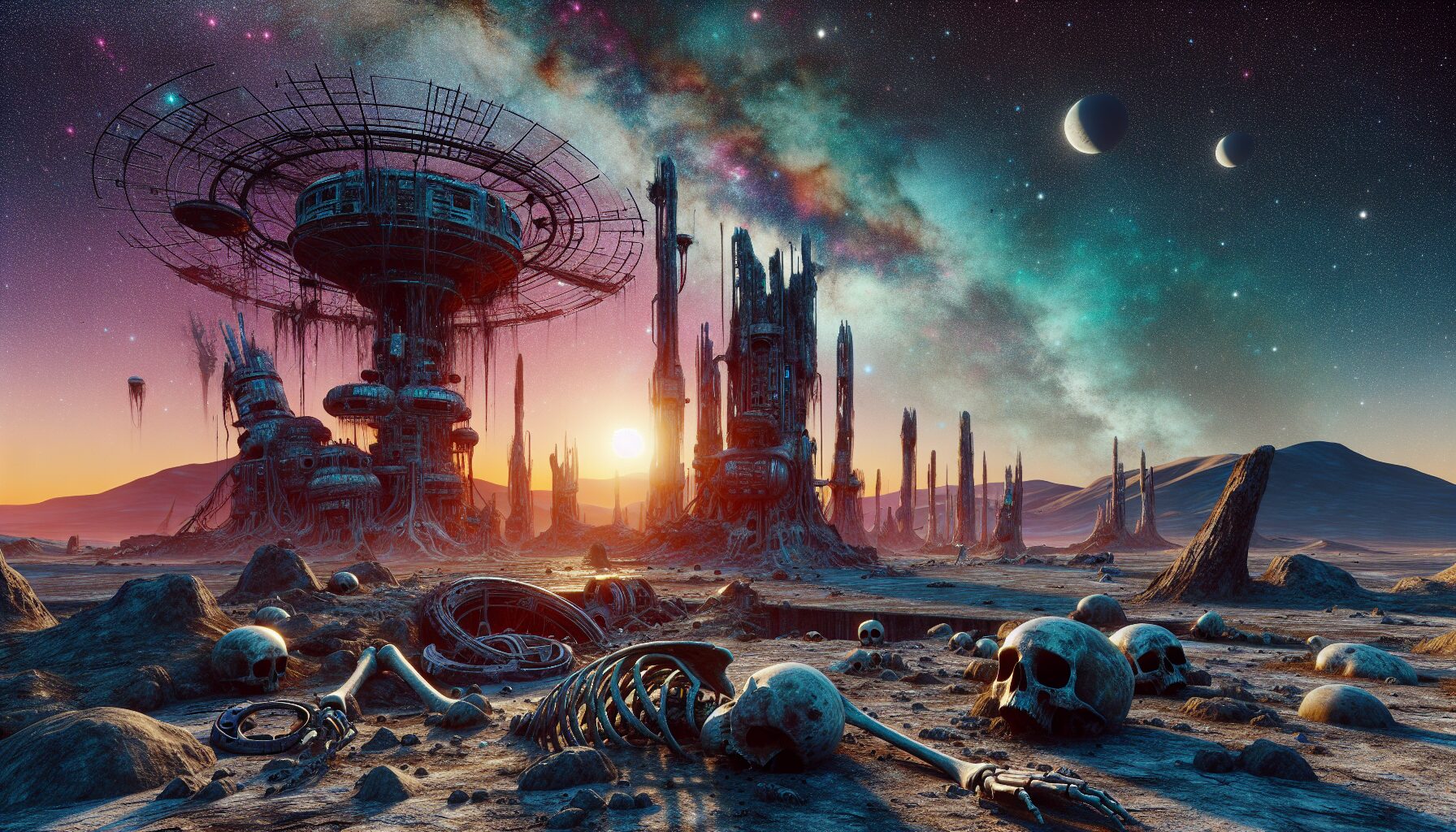
    Imagine a world where advanced alien civilizations once thrived, leaving behind a multitude of sophisticated machines scattered throughout the cosmos. As intriguing as their technology might be, even the most advanced machines are not immune to the inevitable decay that time brings, especially in the harsh environment of space.

    The Ruthless Environment of Space

    Space is an unforgiving environment, defined by its vacuum, radiation, and extreme temperatures. So, what happens to technology when left to the mercy of these elements? The decay of machinery in space is a captivating subject, pinpointing exactly how and why even the most extraordinary technology may wither away.

    • Radiation: Space is full of cosmic rays and solar radiation that continuously bombards any structure. Over time, this radiation can cause materials to become brittle, disrupt electronic circuits, and degrade solar panels, which are often critical for power supply.
    • Temperature Extremes: Temperatures in space can swing between freezing cold and scorching heat, depending on the exposure to the Sun. These fluctuations can lead to the expansion and contraction of materials, eventually causing structural failure.
    • Micro-Meteoroids: These tiny particles travel through space at high speeds and can pierce through metal structures, damaging vital components and leaving technology vulnerable to further deterioration.

    Intrinsic Longevity and Self-Repair Systems

    Advanced alien technology might have incorporated self-repair mechanisms, potentially inspired by biological processes. According to Scientific American, self-healing materials are an area of considerable research that even humans are beginning to explore. However, the question remains: can these systems withstand the continuous assault of the space environment?

    Alien machines could potentially utilize nanotechnology or adaptive materials that harness energy efficiently. But even these materials have limitations and decay because of molecular instability over millennia. As an Aerospace Engineer might argue, “Nothing is truly indestructible; materials simply degrade at different rates depending on environmental exposure.”

    The Philosophical Implications

    The decay of alien technology also invites philosophical contemplation about the nature of technology and time. Does the inevitable degradation of these machines suggest a sense of mortality? How might their creators have perceived this lifecycle?

    “We see in space the echoes of civilizations that might have been,” notes astrophysicist Natalie Starkey. “Their machines linger only until the universe itself reclaims them.”

    In essence, the decay of alien technology in the vacuum of space reminds us of the ephemerality of all things, provoking thoughts about both human and alien permanence in the vast universe.
  • Cosmic Ghost Ships – Abandoned Vessels Between Stars

    Cosmic Ghost Ships – Abandoned Vessels Between Stars

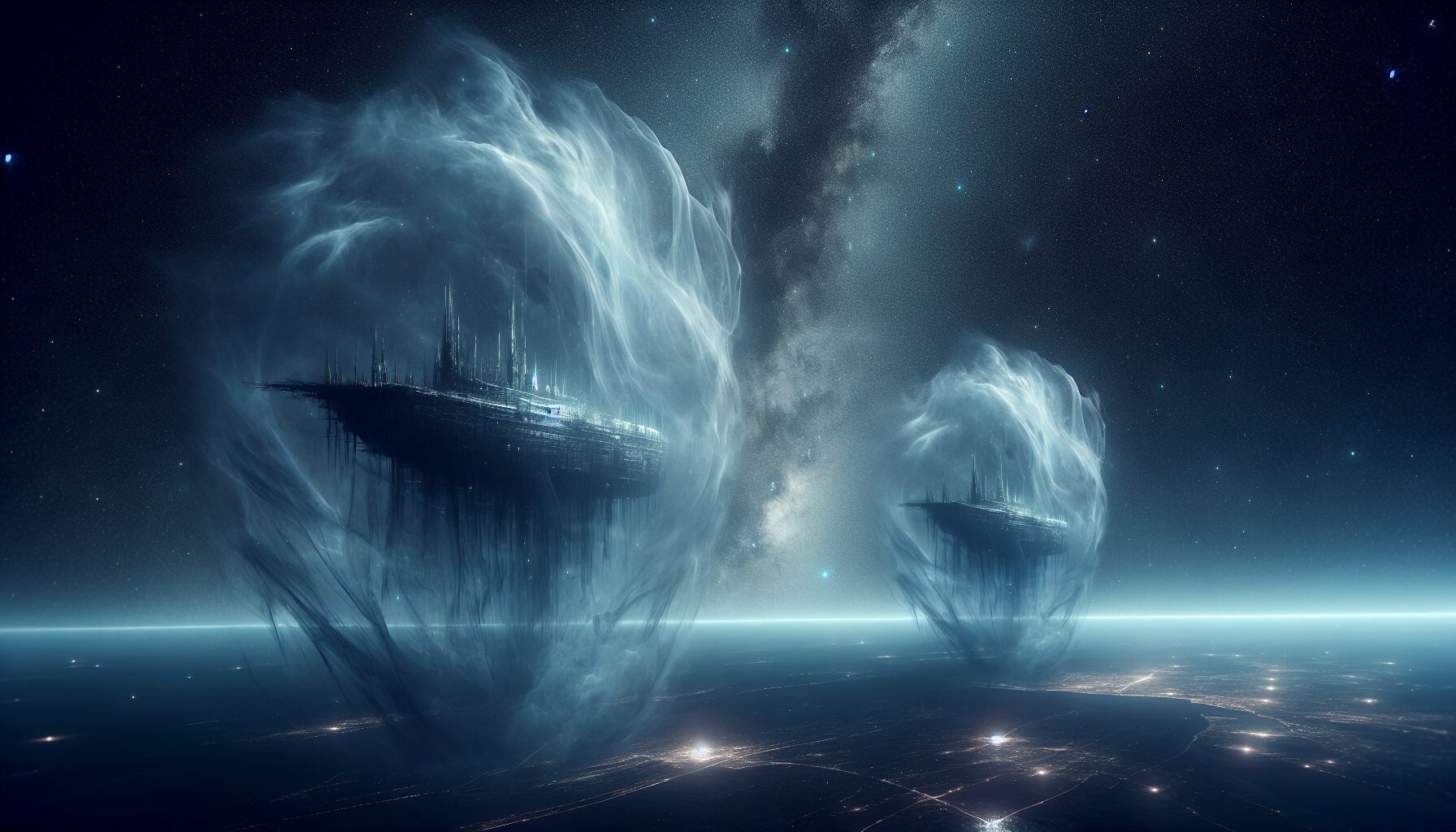
    In the vast expanse of the universe, where stars are born and die in dramatic bursts of energy, lies another fascinating, albeit eerie, phenomenon: cosmic ghost ships. These are derelict spacecraft, abandoned in the void between stars, silently drifting for eternity. These space-faring relics offer both a haunting reminder of past ambitions and a beacon for the mysteries that still await us in the cosmos.

    The Phantom Fleet of the Stars

    Throughout decades of space exploration, a multitude of probes, satellites, and ships have been launched into the cosmos. Many of these missions have served their purposes and now linger abandoned in the emptiness of space. Among them, some have intriguingly become known as ‘cosmic ghost ships’. These vessels are no longer operational but continue to traverse the solar pathways, a testament to human curiosity and the engineering prowess of their creators.

    • Pioneer 10: Launched in 1972, Pioneer 10 was one of the first spacecraft to travel through the asteroid belt and make a flyby of Jupiter. Contact was lost in 2003, leaving it to drift towards the constellation Taurus.
    • Voyager 1 and 2: While still technically active, these pioneers of human exploration have made their way into interstellar space. Eventually, they will become silent relics, carrying the famous Golden Record—a time capsule for any advanced civilization that may encounter them.
    • New Horizons: After its historic Pluto flyby, New Horizons continues its journey into the Kuiper Belt. Although still communicative, it will one day join the ghostly ranks floating silently in the Milky Way.

    The Lure of the Unknown

    “Space, the final frontier,” famously quoted by Captain Kirk in Star Trek, captures humanity’s enduring fascination with the cosmos.

    These ghost ships, while abandoned, hold vast potential. As technology progresses, the possibility of reactivating or repurposing these vessels could provide valuable data and insight into the effects of prolonged space travel on man-made objects. Moreover, their routes through uncharted territories raise intriguing questions about what lies beyond our solar system.

    The Echoes of Ambition

    The presence of cosmic ghost ships beckons to humanity’s next steps in our exploration of the stars. They remind us both of the limits we have yet to transcend and the brilliance of human innovation. As their journeys continue on silent wings, these vessels will forever mark our desire to reach out and explore the infinite.

    As we advance, the mystery and allure of these cosmic ghost ships illustrate not just where we have been, but hint at where we might one day go—beyond the realms of our current understanding and into the unexplored infinity that awaits.

  • The Fragility of Alien Life – Why They Might Be Extinct Already

    The Fragility of Alien Life – Why They Might Be Extinct Already

    The search for alien life has long been a topic of fascination and intrigue. Despite vast efforts, the evidence of extraterrestrial life remains elusive. The enduring question is not only whether life exists elsewhere in the universe but also why it might already be extinct.

    The Odds of Survival

    Stephen Hawking once pondered the existence of alien life, suggesting that intelligent life, if it exists, might not last long enough to reach out to us. He remarked,

    “It might be that primitive life is very common and intelligent life is fairly rare. Some would say it has yet to occur on Earth.”

    The universe is a vast, incredibly harsh environment where the conditions for life are temporary and precarious. Craig Hogan, director of the Fermilab Center for Particle Astrophysics, notes,

    “While life on Earth might seem robust, it has only existed for about 0.03% of the history of the universe.”

    In this context, the fragility of alien life becomes evident.

    The Drake Equation and the Great Filter

    The Drake Equation seeks to estimate the number of active, communicative extraterrestrial civilizations in the Milky Way galaxy. Yet, a concept that partners with this equation is the “Great Filter” theory. This theory posits that at some point from pre-life to a type III civilization on the Kardashev scale, there’s a step that is unlikely or impossible for life to get past. If this filter is behind us, humanity is unique and rare. If it is ahead, alien civilizations might have succumbed to it.

    The Great Filter suggests that many alien races could have reached technological singularity or self-destruction before becoming spacefaring. As the physicist-environmentalist James Lovelock posited,

    “Gaia is an evolutionary story driven not by natural selection alone but by the whole planet, the biota and the Earth, and we are one of those species.”

    This interconnectedness is both a strength and a potential vulnerability.

    Nurturing or Neglecting Advanced Life

    Beyond environmental factors, technological failures, wars, or cosmic events could have led to the extinction of intelligent extraterrestrial life. An advancing civilization might become more capable of self-destruction before mastering cosmic survival. As Carl Sagan wisely noted, “The universe is a pretty big place. If it’s just us, it seems like an awful waste of space.” Despite this space, advanced civilizations might not endure.

    In conclusion, the potential for alien life is significant, yet its longevity might be inherently threatened. Whether through environmental challenges, self-destruction, or cosmic misfortune, the survival of intelligent, alien organisms faces many hurdles, leading to the possibility that many such civilizations might have already vanished before we even had the chance to learn of their existence.

  • Alien Funerals – Speculations on Ritual Beyond Earth

    Alien Funerals – Speculations on Ritual Beyond Earth

    Alien Funerals: Speculations on Ritual Beyond Earth

    Humanity has long been fascinated by the possibility of alien life. From science fiction stories to serious scientific endeavors, the question of whether we’re alone in the universe has captivated our collective imagination. But beyond discovering alien life, another intriguing question emerges: How might extraterrestrial beings mourn their dead? In this article, we’ll delve into the speculative yet fascinating topic of alien funerals and explore how such rituals might differ from or resemble those of Earth.

    Cultural and Biological Influences

    Just as Earth’s funeral rites are shaped by culture and biology, so too might alien funerals be influenced by these factors. Diverse human societies have developed distinct customs around death based on various religious beliefs, environmental conditions, and social structures. When considering alien funerals, it is important to account for these dynamics:

    • Biological Factors: What form might alien life take? The biology of a species could determine their lifespan, method of reproduction, and corporeal composition—all of which would influence how they might treat their dead.
    • Cultural Complexity: The level of technological and cultural advancement might dictate the complexity of alien memorial practices. A more advanced civilization might administer elaborate ceremonial rites, whereas a simpler one might employ more basic rituals.
    • Environmental Context: The natural environment of an alien planet could shape funeral practices. For example, a planet covered in water might lead to water-based funerals, while a barren, rocky landscape could involve burial or cremation akin to Earth’s.

    Hypothetical Alien Funeral Practices

    With the above considerations in mind, let us explore some speculative funeral practices that alien civilizations might employ:

    Skyward Send-Offs

    In an advanced alien civilization, the dead might be sent off into space as part of a celestial burial tradition. This could serve both as a means of honoring the deceased and as a practical method of conserving planetary resources. The body might be launched into orbit, becoming a part of the cosmos they once observed. Intriguingly, this custom could mirror concepts explored in notable science fiction works like “Hyperion Cantos” by Dan Simmons, where space burials are part of the cultural landscape.

    Energy Reclamation and Transformation

    For species with the ability to harness and transform energy, funerals might focus on the reclamation and transformation of a being’s energy essence. Such practices would align with the principle of conservation, reincorporating life-force back into the community or environment. Arthur C. Clarke hinted at this idea in his novel “Childhood’s End,” where evolved beings transcend physical form, becoming beings of pure energy.

    Collective Remembrance Sculptures

    An artfully communal approach might be employed by socially oriented alien species, using the act of remembrance to foster unity. Deceased individuals might become part of large, evolving art installations, crafted to hold memories and interact indirectly with the living. A similar artistic fusion is found in human practices, such as the Dia de los Muertos in Mexican culture, where artistic expressions play a key role in memoriam.

    “For death is no more than a turning of us over from time to eternity.” – William Penn

    Potential Philosophical Implications

    Speculating on alien funerals not only prompts us to contemplate extraterrestrial life but also challenges our assumptions about life and death itself. Could alien funerals reveal universality among sentient beings regarding loss and remembrance, or highlight stark cultural divergences?

    • Universal Themes: The drive to memorialize and honor those who have passed may be a shared trait among intelligent species. It may embody an inherent desire to preserve the connections that shape societies.
    • Existential Questions: Alien funerals could bring into focus the relativity of existential beliefs, perhaps differing vastly from Earth’s theologies. Such an understanding might enrich our own perceptions of mortality.

    Encountering an Alien Burial Ceremony

    Imagining a scenario where humans observe an alien funeral could force us to reevaluate our conceptual frameworks for tradition, ritual, and spiritual practice. It might also spur discussions about the sanctity of life as understood among varying intelligences, an idea eloquently expressed by Carl Sagan in his work “The Cosmos.”

    If we find that our rituals share common threads with those of extraterrestrial beings, such similarities could lead to a newfound appreciation of our bio-social connections across planets. Alternatively, profound differences might provide insights into the diverse concepts of existence.

    Conclusion: The Infinite Possibilities

    Until the day comes when we make contact with alien civilizations—whether through technology or a stroke of serendipity—our visions of alien funerals will remain within the realm of speculation. However, exploring such possibilities stirs our imagination and fosters an open-minded curiosity about life beyond Earth.

    As humanity continues to search the stars, let us not only seek to uncover life but also embrace the infinite narratives that might accompany it, acknowledging that the story of life in the universe is a tale that remains unwritten.

  • The Martian Dead – Imagining Civilizations Buried in Red Dust

    The Martian Dead – Imagining Civilizations Buried in Red Dust

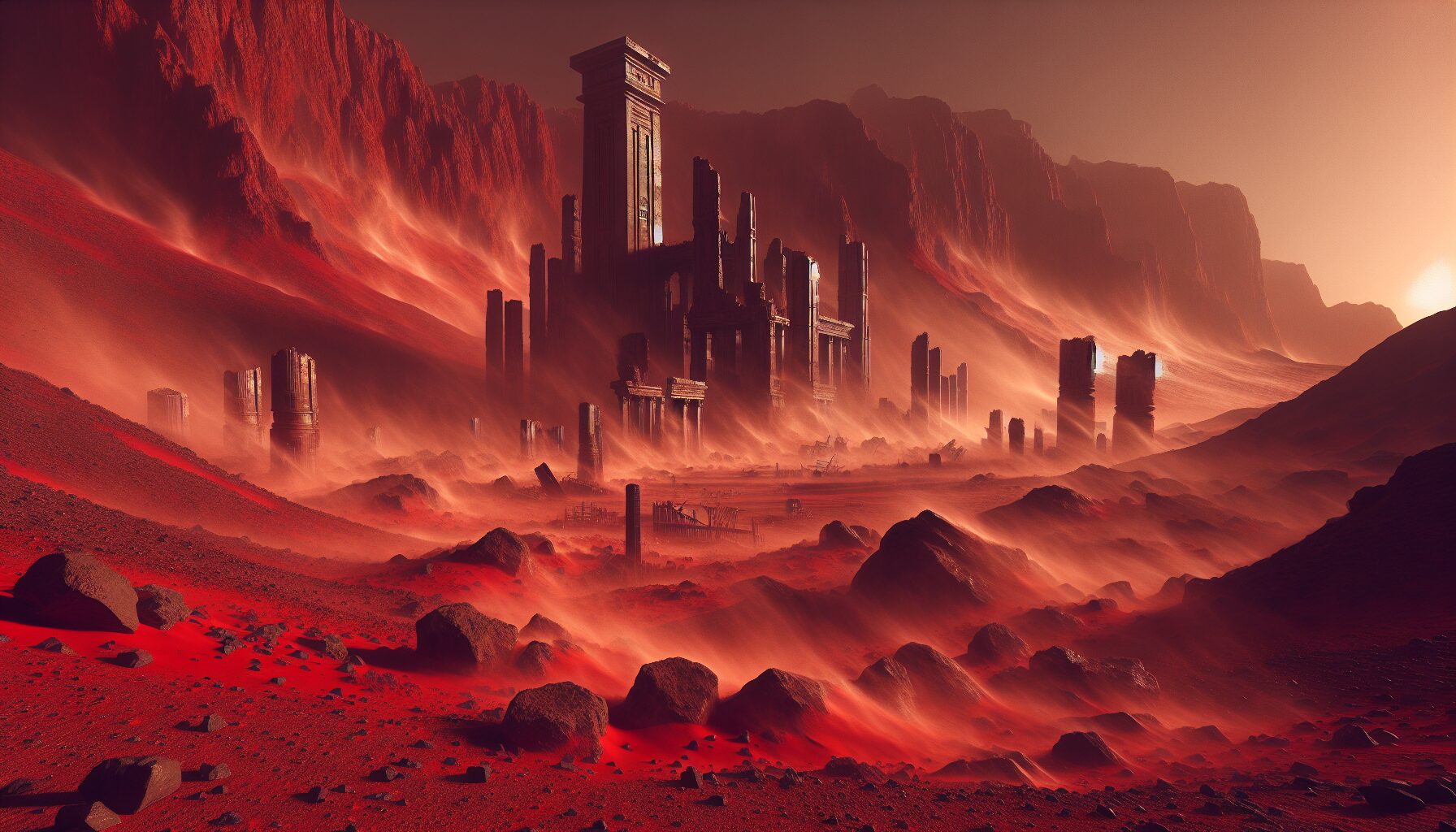
    For centuries, humanity has gazed at the red orb in the night sky with wonder and curiosity. Mars—a planet that once inspired myths and incited imagination—continues to be the center of speculation, especially when it comes to the possibility of ancient Martian civilizations buried beneath its iconic red dust.

    The Allure of Mars

    Mars has always held a special place in human culture and history. Known as the “Red Planet,” its distinct hue made it a subject of fascination for astronomers and dreamers alike. The idea that Mars might have once harbored life similar to Earth’s is a concept that has shaped science fiction for decades. From H.G. Wells’ “The War of the Worlds” to Ray Bradbury’s “The Martian Chronicles,” the planet has been consistently depicted as both mysterious and familiar.

    Scientific inquiry into Mars began in earnest during the late 19th and early 20th centuries when telescopic observations, like those of Percival Lowell, suggested the presence of “canals” on Mars. These observations spurred theories of intelligent life but were later explained as optical illusions. Nonetheless, they planted the seed that Mars could once have hosted complex life forms.

    Unveiling the Red Dust

    The surface of Mars is predominantly covered by iron oxide, giving it the reddish appearance that is so distinctive. But what mysteries might be hiding beneath this vast layer of dust and sand? Modern exploration has begun to shave away at the veil of mystery surrounding Mars, with missions like NASA’s Perseverance Rover systematically analyzing the Martian surface.

    In 2018, the European Space Agency’s Mars Express discovered what appeared to be a lake beneath the planet’s southern polar ice cap, renewing interest in the possibility of life. “This thrilling discovery is a highlight for us in our journey to find water on Mars,” said Dmitri Titov, ESA’s Mars Express project scientist, in an ESA statement. Such findings suggest that liquid water—an essential ingredient for life—might not just be a relic of the past.

    Imagining the Ancient Civilizations

    But what if Mars was once home to civilizations, long before its atmosphere thinned and its surface froze? Some researchers suggest that ancient Martian life might have evolved underground, surviving the harsh surface conditions, much like extremophiles on Earth.

    Consider a civilization that thrived millions of years ago, relying on subsurface lakes and geothermal energy. Could remnants of their culture still lie hidden, awaiting discovery by our robotic explorers? The technological advances in rover capabilities may soon allow us to explore these possibilities more thoroughly. What insights into resilience and adaptation might such findings bring to our understanding of life?

    “Mars is very Earth-like in a lot of ways, and it’s the closest planet to Earth with a similar atmosphere, length of day, tilt of its axis, and a history of water,” noted Dr. Jim Bell, Professor of Earth, The School of Earth and Space Exploration at Arizona State University.

    Looking Towards the Future

    As we continue to explore, the knowledge we gain from Mars not only satisfies scientific curiosity but potentially prepares us for human settlement. If signs of past life are discovered, they could provide clues on how to prepare Mars for future inhabitants.

    While the prospect of discovering ancient civilizations remains speculative, the real excitement lies in the possibility that even microbial life might have once flourished there. Discovering the Martian dead—or signs of them—would substantially alter our understanding of life in the universe.

    With the constant advancements in space technology, particularly with international missions planned by NASA, ESA, and private entities like SpaceX, the dream of uncovering long-buried Martian secrets might not be too distant. As Dr. Lori Glaze, Director of NASA’s Planetary Science Division, once commented, “Every time we send a rover to Mars, we learn more about the Red Planet, and it’s exciting to piece together its mysteries from afar.”

    Conclusion

    The fantasies of ancient Martian civilizations captured in the imaginations of authors and scientists alike have yet to be substantiated by concrete evidence. However, the drive to explore and explain Mars continues to push boundaries, encouraging humanity to look beyond Earth for answers to the origins and possibilities of life.

    Until we uncover definitive signs of intelligent design under the Martian sands, the dusty wilderness of Mars remains an open book, waiting for the hands of curiosity to turn its pages.

  • The Silence of Exoplanets – Listening to Empty Tombs

    The Silence of Exoplanets – Listening to Empty Tombs

    The Silence of Exoplanets: Listening to Empty Tombs

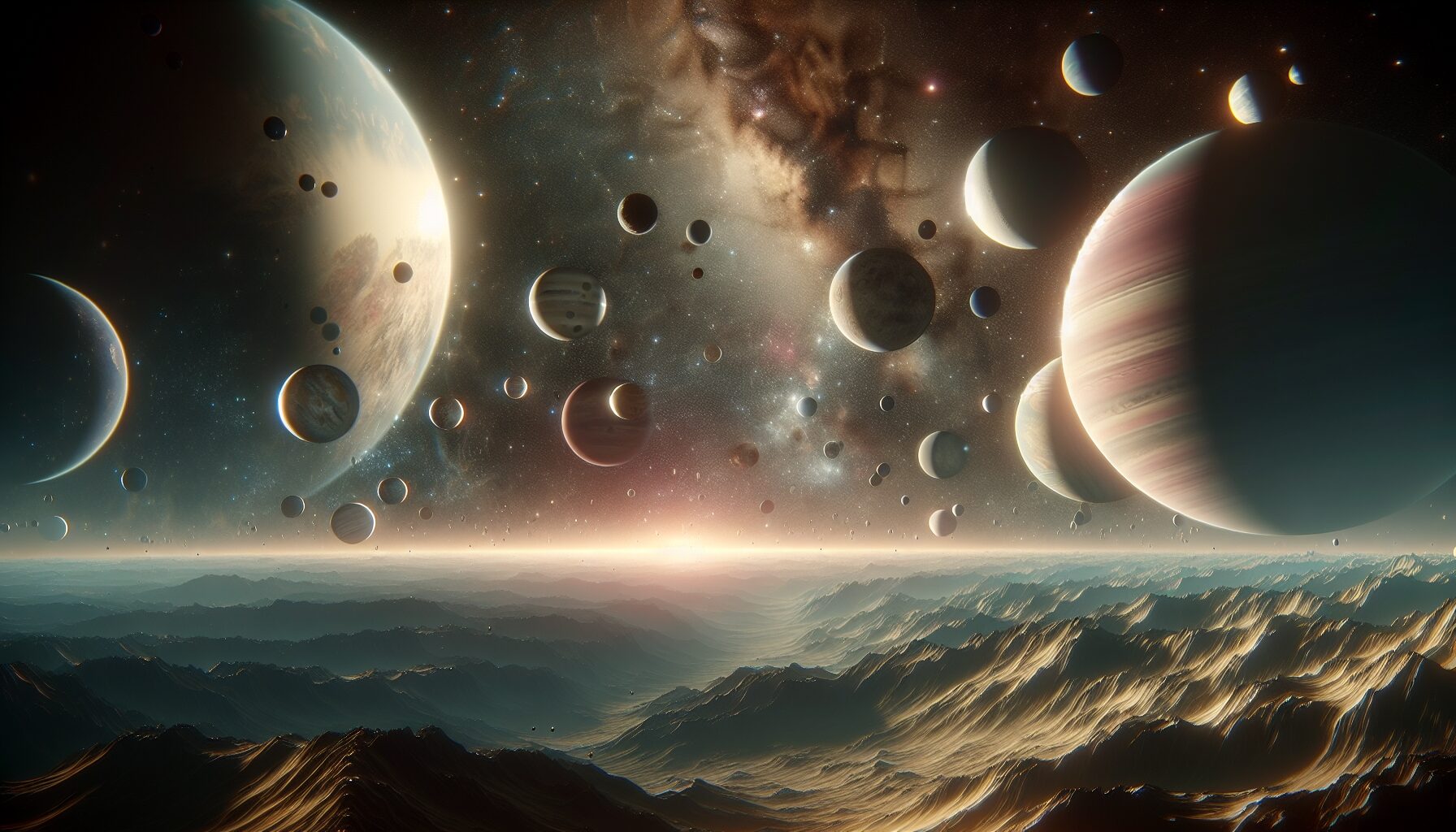
    As we gaze into the vastness of the universe, searching for celestial siblings among the stars, we uncover a profound silence that resonates from planets beyond our solar system. This silence, both literal and metaphorical, invites us to explore the mysteries and potential that these “empty tombs” of the cosmos represent.

    Unveiling the Cosmic Silence

    The search for exoplanets involves listening, though not in the sense of seeking sound. Through technologies such as the Kepler Space Telescope and the Transiting Exoplanet Survey Satellite (TESS), astronomers detect the presence of exoplanets by observing the subtle dimming of starlight as planets transit their host stars.

    While the presence of these exoplanets screams with potential, their silence is palpable. As science writer Elizabeth Gibney notes, “The silence surrounding exoplanetary atmospheres is deafening, as our instruments hunt for signs of habitability or life.” The sounds we might hope to hear—a bustling marketplace of civilizations or even subtle signs of life—remain elusive.

    The Empty Tombs of the Universe

    When comparing exoplanets to “empty tombs,” we explore the idea that these distant worlds were once vibrant landscapes or hold the potential to become so. The mystery of what they might contain or signify mirrors that of an unfilled tomb—a place promising discovery or revelation. In this great celestial silence, the potential for knowledge, history, and existence lies hidden.

    Dr. Sara Seager, a renowned planetary scientist, suggests that the silent vastness holds not voids but “great testament to the potential of the universe.” In her TED Talk, she describes exoplanets as “a part of this great cosmic puzzle that challenges us to remain hopeful and diligent in our search.”

    The Science of Listening to Silence

    • Technological Ears: Using instruments like the James Webb Space Telescope, scientists can “listen” to the chemical compositions of exoplanetary atmospheres. These instruments detect the unique spectral footprints left by elements and compounds.
    • Signals from the Abyss: Radio telescopes scan for technosignatures—signals from intelligent civilizations—that might break this cosmic silence.
    • Data Interpretation: Beyond listening, interpreting data from these technological tools resembles deciphering ancient languages, where every small anomaly could lead to grand discoveries.

    The interpretations are not just about finding familiar signs of water or oxygen but seeking out “biosignatures” or “technosignatures” that might indicate other forms of life or civilization, as outlined by Dr. Jill Tarter in her work at the SETI Institute.

    New Frontiers in Exoplanetary Research

    The drive to breach this silence continues as research opens up new frontiers in exoplanetary science:

    • Biomarkers: Identifying potential chemical markers of life in exoplanetary atmospheres could be reckoned as whispers of life amidst the cosmic absence.
    • Advancements in Optics: Improvements in telescope technologies allow scientists to capture more detailed information about distant planets, peeling back layers of mystery.
    • Interdisciplinary Approaches: Combining astronomy with geology, biology, and chemistry forms a synergistic approach, broadening our understanding and interpretation of possible life-supporting environments.

    The NASA Exoplanet Program continues to collaborate with scientists worldwide, pushing the thresholds of discovery. Their collective efforts aim to transition the silence into a new symphony of knowledge and understanding, transforming hypothetical tombs into fountains of cosmic revelation.

    The Philosophical Echoes of Silent Exoplanets

    Beyond the scientific silence, there exists a philosophical dimension to these mute planetary bodies. What do these still and soundless worlds mean for humanity? Are they a sobering reminder of our cosmic solitude or an invitation to explore and connect with the universe?

    “The greatest challenge in observing exoplanets is not the technological or analytical one, but rather grappling with the implications of what silence in the cosmos signifies,” posits Professor David Kipping of Columbia University.

    Such reflections echo throughout the astronomical community. The search compels us to ponder our place in the universe and cradle seats of untapped knowledge, waiting to inspire future explorations and discoveries.

    Conclusion: Awaiting the Sound of Discovery

    While the silence of exoplanets endures as a stark reminder of cosmic vastness, it also elevates our curiosity and determination. Each potential “empty tomb” invites us to consider what lies beyond our current understanding, urging continuous exploration and interpretation.

    In the stillness of the universe, we listen, we learn, and—above all—we hope.

  • The Alien Corpse Myth – Anatomy of the Unknown

    The Alien Corpse Myth – Anatomy of the Unknown

    The Alien Corpse Myth: Anatomy of the Unknown

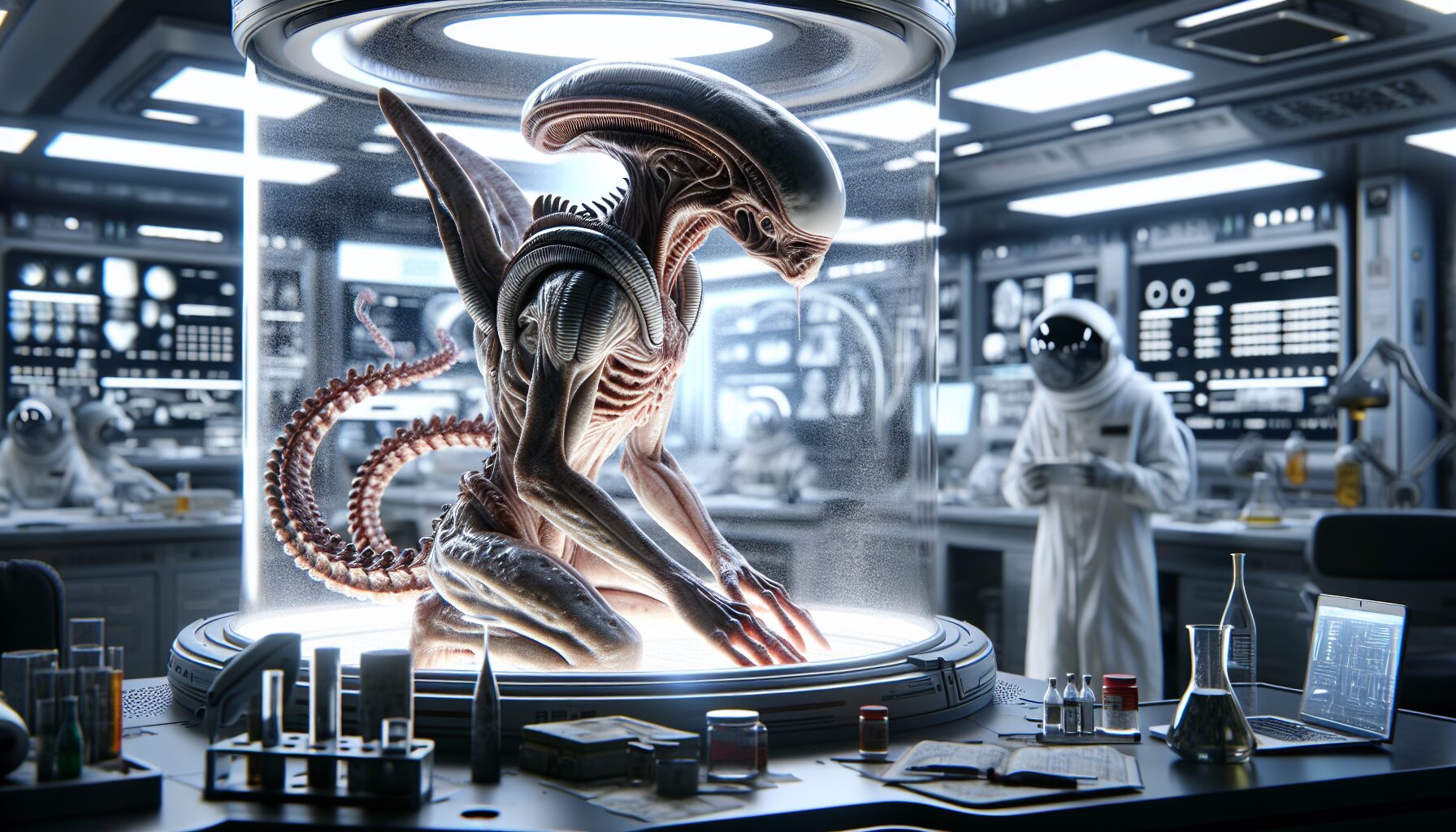
    The obsession with alien life forms has fascinated mankind for centuries. Stories of extraterrestrials visiting Earth have flooded pop culture, encapsulated in countless books, movies, and speculations. Among these tales, the myth of the alien corpse stands out as a particularly enthralling narrative, perpetuating a blend of intrigue and skepticism.

    At the heart of this myth is a question that has intrigued humanity: Are we alone in the universe? The possibility of discovering a non-human corpse that is extraterrestrial in origin would fundamentally alter our understanding of existence. However, despite numerous claims, credible evidence remains elusive.

    Sightings and Claims

    • Roswell Incident: In 1947, an alleged UFO crash in Roswell, New Mexico, led to persistent rumors of alien bodies being recovered. The event sparked global interest and controversy, becoming a staple reference for discussions around alien encounters.
    • Atacama “Alien”: A mummified skeleton found in Chile’s Atacama Desert initially baffled researchers, who speculated extraterrestrial origins due to its unusual features. Later, DNA analysis confirmed the remains were human, albeit with rare genetic mutations.

    Despite the sensational nature of these stories, experts often remind us of the need for scientific rigor. According to Professor Andrew Fraknoi, a renowned astronomer, “Most of these claims can either be debunked through scientific investigation or explained within the bounds of human anatomy and psychology.”
    (Source: SETI Institute)

    The Role of Cultural Influence

    Our cultural narratives exert a powerful influence on shaping alien myths. The frequent portrayal of bizarre alien beings in science fiction influences public perception and fuels the imagination. The interplay between documented hoaxes and genuine scientific inquiry results in a landscape where fact and fiction often blur.

    “We filter evidence through our cultural lens,” notes Carl Sagan, an iconic figure in astrophysics. “Only occasionally do these extraordinary claims withstand the rigor and scrutiny of scientific investigation.”
    (Source: Carl Sagan Official Site)

    Seeking the Truth

    The allure of alien corpse myths lies in their ability to challenge our understanding of what it means to be human. As we continue to explore the cosmos, the importance of a scientific approach grounded in evidence becomes increasingly critical. While these stories captivate, they also remind us of the necessity to differentiate between imaginative speculation and authentic discovery.

    Until proven otherwise, the myth of the alien corpse remains precisely that—an unverified tale that invites our curiosity and skepticism in equal measure.

  • Interstellar War – Death on a Cosmic Scale

    Interstellar War – Death on a Cosmic Scale

    The concept of interstellar war has long captivated human imagination, serving as a staple in science fiction and theoretical physics alike. While often romanticized in literature and film, the reality of such a conflict would be devastating, with both anticipated and unforeseen consequences resonating throughout the universe.

    Theoretical Framework of Interstellar Conflict

    While humanity has yet to reach a level of technological prowess that makes interstellar travel feasible, theorists and futurists ponder the implications should we ever interact with extraterrestrial civilizations. Carl Sagan, the renowned astrophysicist, once remarked, “The universe is a pretty big place. If it’s just us, it seems like an awful waste of space.” The implications of this observation suggest that there might be other civilizations capable of initiating conflict across the stars.

    Potential Triggers of Cosmic Warfare

    The possible triggers for such an expansive conflict are varied:

    • Resource Scarcity: Planets rich in scarce elements, vital for advanced technology, could become flashpoints for disputes.
    • Philosophical Differences: As in Earth’s own history, divergent worldviews or beliefs could lead to catastrophic confrontations.
    • Expansion Needs: Overpopulation and the subsequent search for habitable planets may push civilizations to claim territories by force.

    The Weapons of Tomorrow

    Unlike terrestrial warfare, which relies on conventional weaponry, interstellar war would require an entirely new arsenal:

    • Energy Weapons: Lasers and focused energy beams that can travel vast distances with minimal dissipation.
    • Kinetic Impactors: Objects propelled at relativistic speeds to cause catastrophic impacts, utilizing the sheer power of kinetic energy.
    • Molecular Disruptors: Hypothetical weapons designed to weaken or disrupt molecular bonds, effectively disintegrating targets.

    Impacts on Civilization

    Should such a conflict arise, the impacts on involved civilizations would be profound. A poignant reflection by Stephen Hawking cautions, “I think the survival of the human race will depend on its ability to find new homes elsewhere in the universe.” This highlights the precarious position civilizations might find themselves in, dependent on their capability to adapt and survive amidst cosmic adversity.

    Some of the key impacts include:

    • Technological Advancements: Necessitated by the demands of war, potentially resulting in innovations that alter life as we know it.
    • Cultural Shifts: As societies endure the pressures of war, cultural paradigms could shift dramatically, emphasizing survival and expansion.
    • Alien Alliances: Similar to historical alliances on Earth, interstellar partnerships could form, reconfiguring galactic power balances.

    The Ethics of Interstellar War

    While the logistics and outcomes of an interstellar war are largely speculative, the ethical considerations remain pivotal. A key question is whether civilizations have the moral right to wage war on such a grand scale. Would the potential benefits outweigh the loss of life and destruction? As humanity contemplates this, lessons from past Earth conflicts might offer guidance.

    “War does not determine who is right, only who is left.” – Bertrand Russell

    Concluding Thoughts

    The enormity of interstellar war, with its cosmic-scale implications, serves as both a warning and a challenge. As humanity steps closer to the stars, we must ask ourselves how prepared we are to face the vast unknowns, and whether we can find peace in the expansive frontier.

    For more insights into the science of future space exploration, visit NASA and SETI Institute.

    The future remains uncertain, but one constant prevails: the unyielding human spirit to explore, discover, and survive.

  • UFOs as Death Omens – Portents of the Sky

    UFOs as Death Omens – Portents of the Sky

    The sight of unexplained phenomena in the sky has long captivated human imagination and curiosity. These sightings, often described as unidentified flying objects (UFOs), not only fascinate but also instill fear and wonder. Throughout history, many cultures have regarded these mysterious skyward occurrences as omens, particularly foretelling death or disaster. But where does this belief originate, and how has it evolved over time?

    Historical Context and Folklore

    Historically, strange lights and aerial phenomena have been recorded in various parts of the world, often associated with significant events. Ancient texts, like those from the Roman and Chinese civilizations, document instances where unusual objects in the sky preceded critical occurrences. According to Roman historian Titus Livius, during the consulship of Gnaeus Octavius and Gaius Scribonius, “a phantom navy was seen shining in the sky” before the defeat of the Roman armies.

    “In the Withered Hill was the dwelling-place of the spirits. They said that the spirits would come down in their ships and set fire to the world.” – Arthur George, Mythology and Folklore of the Ermte Region

    Modern Encounters and Interpretations

    In more recent times, UFO sightings have continued to be linked with ominous predictions. The 20th century saw a surge in these sightings, coinciding with times of conflict and social upheaval. The infamous “[Phoenix Lights](https://www.history.com/news/the-phoenix-lights-20-years-later)” event in 1997, which involved a series of widely sighted UFOs over Arizona, has been interpreted by some as a prelude to significant geopolitical and environmental changes.

    Modern interpretations often blend ancient beliefs with contemporary fears, associating UFO activity with apocalyptic themes prevalent in popular media. UFOs have become fixed symbols in our cultural imagination, often viewed as harbingers of doom in films and literature.

    Psychological and Cultural Influences

    The human mind has always sought to find patterns in chaos. As such, when unidentified phenomena appear, it is often tempting to link them with significant life events, such as death. Carl Jung suggested that UFOs could be projections of our collective unconscious—a representation of the psyche grappling with uncertainty in the world.

    “The disks do not behave in accordance with physical laws, but as though they were weightless, or even had their own remote control.” – Carl Jung, Flying Saucers: A Modern Myth of Things Seen in the Skies

    Conclusion

    Whether seen as signs of impending doom or as mere curiosities, UFOs have occupied a unique place in our cultural narrative. While some see them as objectively mysterious, others interpret them through the lens of fear and reverence, grounded in ancient beliefs. As we continue to explore the skies and seek understanding, the narratives surrounding UFOs as death omens will likely persist, echoing humanity’s age-old intrigue with the unknown.

  • Alien Ghosts – Memories of Species Long Gone

    Alien Ghosts – Memories of Species Long Gone

    Alien Ghosts: Memories of Species Long Gone

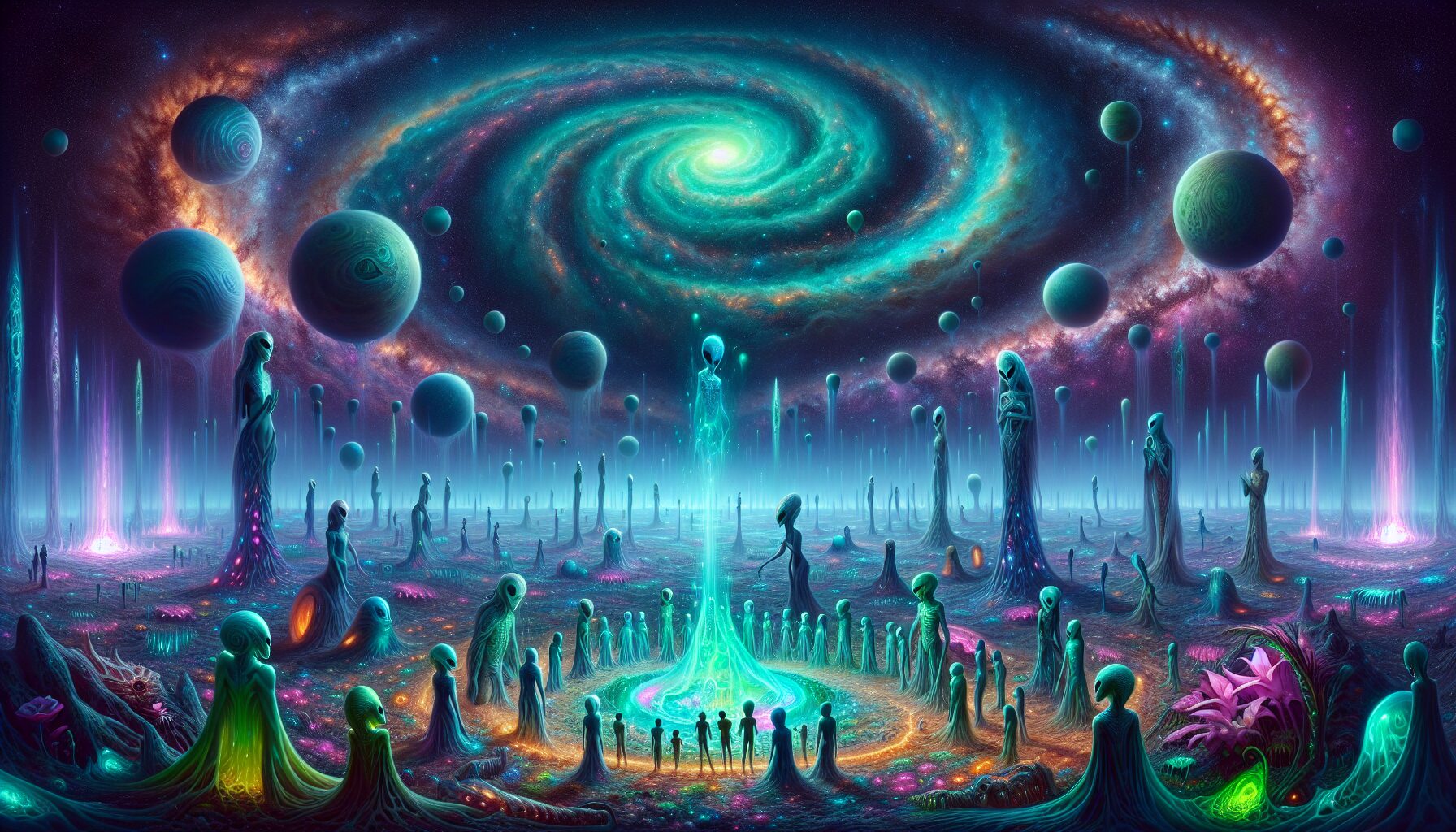
    In the vast expanse of the universe, countless star systems harbor their secrets, whispers of the past echo through time and space. While humanity has yet to discover conclusive evidence of extraterrestrial life, the concept of Alien Ghosts—the memories of species long gone—continues to captivate our imagination and scientific inquiry. This article delves into the hypothetical realm of alien ghosts, exploring how these spectral remnants might manifest, how they relate to Earth’s own extinctions, and what they can tell us about the fragility of life.

    The Ghosts of Our Past

    Understanding alien ghosts requires an examination of our own planet’s history. Earth has witnessed several mass extinctions, each reshaping the planet’s biological tapestry. From the Permian extinction’s devastation to the cataclysmic asteroid impact that ended the reign of the dinosaurs, these events serve as stark reminders of life’s vulnerability.

    Extinction-level events, whether caused by natural phenomena or potential anthropogenic effects, highlight a crucial fact: Life, regardless of its complexity, is ephemeral. As paleontologist Jack Horner suggests, “Extinction is the rule. Survival is the exception.” The idea that a civilization, no matter how advanced, could perish is not far-fetched.

    How Alien Ghosts Might Manifest

    But how might we detect these alien ghosts? The answer might lie in the concept of technosignatures—evidence of technology that survives the demise of its creators. Potential technosignatures could take many forms:

    • Ruins and Artifacts: Just as archaeologists unearth ancient relics on Earth, future space explorers may discover remnants of alien civilizations on distant planets or moons.
    • Radio Signals: Bouncing through the cosmos, radio waves can travel vast distances. If an advanced civilization communicated via radio signals, traces might still be detectable, ghosts of their presence.
    • Dyson Spheres: Proposed by physicist Freeman Dyson, these theoretical megastructures could encapsulate stars to harness their energy. A partially constructed Dyson Sphere might signify a civilization that once thrived.

    Lessons from Fermi’s Paradox

    Fermi’s Paradox, named after physicist Enrico Fermi, questions why we have not yet observed evidence of alien life, given the vast number of potentially habitable planets. This conundrum aligns with the idea of alien ghosts, as it poses the question: Could the aliens we seek already be extinct?

    Several hypotheses attempt to address Fermi’s Paradox, including the possibility that advanced civilizations self-destruct—a sobering thought that holds lessons for humanity. As noted by theoretical physicist Michio Kaku, “The real threat facing the future of humanity is not the universe, but ourselves.” If we hope to avoid the fate of becoming our own ghosts, understanding the paths and pitfalls of extinct civilizations could be vital.

    The Importance of Cosmic Archeology

    The study of alien ghosts ties into the emerging field of cosmic archeology. Just as terrestrial archaeologists decipher the history of human societies, cosmic archaeologists seek to uncover the stories of extraterrestrial civilizations. This discipline aims to explore several key questions:

    • What causes civilizations to fall? Understanding the factors that lead to the demise of advanced societies can offer insights into longevity and resilience.
    • How can we interpret alien cultural artifacts? Developing methodologies for understanding potential alien languages and symbols is a critical task.
    • What technological advancements did they achieve? Uncovering the technologies of lost civilizations could provide humanity with technological blueprints for the future.

    Humanity’s Role in Preserving Memories

    While we ponder the existence of alien ghosts, we must also consider our role in preserving our own legacy. In an era characterized by unprecedented technological advancements and existential threats, the actions we take today have long-lasting implications.

    “We are a way for the cosmos to know itself,” Carl Sagan famously said. Our quest to understand the universe and our place within it compels us to ensure that our story doesn’t become another silent echo in the vast theater of stars.

    The construction of resilient societies, the pursuit of sustainable development, and the exploration of space are all steps toward preserving the human narrative. Through such endeavors, we not only secure our future but also ensure that, should we encounter another life-bearing world, we do so as equal participants in the cosmic dance.

    Conclusion

    The allure of alien ghosts lies in their ability to reflect our own potential destinies. While they remain hypothetical, they encourage us to look to the stars not just with wonder, but with caution and responsibility. They implore us to ask critical questions about our survival and our legacy.

    As we turn our gaze skyward, let us remain vigilant stewards of our world. Let us learn from the silence of the stars and the whispers of worlds past. In doing so, we may one day encounter the echoes of another’s existence—an exchange not with ghosts but with living, thriving comrades among the stars.