Tag: life

  • Stellar Alchemy – Science Interpreted as Magic

    Stellar Alchemy – Science Interpreted as Magic

    The night sky has long been the canvas for humanity’s imagination, with constellations serving as celestial storybooks that narrate myths and legends. Yet, the true magic lies not in the stories of old, but in the science that underpins the stars themselves—a field often described as stellar alchemy.

    The Awe-Inspiring Birth of Stars

    Stars begin their life in the densest regions of space, known as molecular clouds. When these clouds collapse under their own gravity, the high temperatures and pressures lead to nuclear fusion, the process that allows stars to shine. Stephen Hawking once eloquently described this as “the way the universe attempts to comprehend itself.” This fusion of hydrogen atoms into helium releases an immense amount of energy, essentially brewing elements that will one day form planets, plants, and people.

    Elements Forged in Starry Crucibles

    In the cosmic kitchens of stars, the heat and pressure catalyze reactions that forge elements heavier than helium. Over a star’s lifetime, these processes produce elements such as carbon, nitrogen, and oxygen, which are the building blocks of life. This is the alchemy of the cosmos—a stellar transmutation that transforms basic elements into the rich tapestry of the periodic table.

    As Carl Sagan famously said, “We are made of star stuff.”

    This phrase poetically captures the origin of the elements that compose our bodies, emphasizing the mystical connection between humanity and the celestial sphere.

    Supernovae: The Explosive Finale

    As stars reach the end of their life cycle, they may explode as supernovae, an event of unmatched brilliance and violence. These explosions scatter the heavy elements created during the star’s life into space, enriching the galaxy’s interstellar medium and sowing the seeds for the next generation of stars and planets.

    The Magic of Understanding

    Stellar alchemy unveils the magic that weaves the fabric of the universe. What once appeared to be a subject of folklore is now understood through the lens of modern astrophysics. This understanding does not diminish the wonder; rather, it enhances it. As the renowned physicist Richard Feynman once remarked, “The first principle is that you must not fool yourself—and you are the easiest person to fool.” Understanding the reality behind celestial phenomena reveals the true wonder of nature and our place within it.

    As we gaze up at the night sky, it’s comforting to know that we are both the observers and participants in this cosmic ballet—a magical display, enacted with the grand choreography of science.

    For more on the science behind the stars, you can visit NASA’s Astrophysics Division.

  • Alien Shadows – Extraterrestrial Influence in Darkness

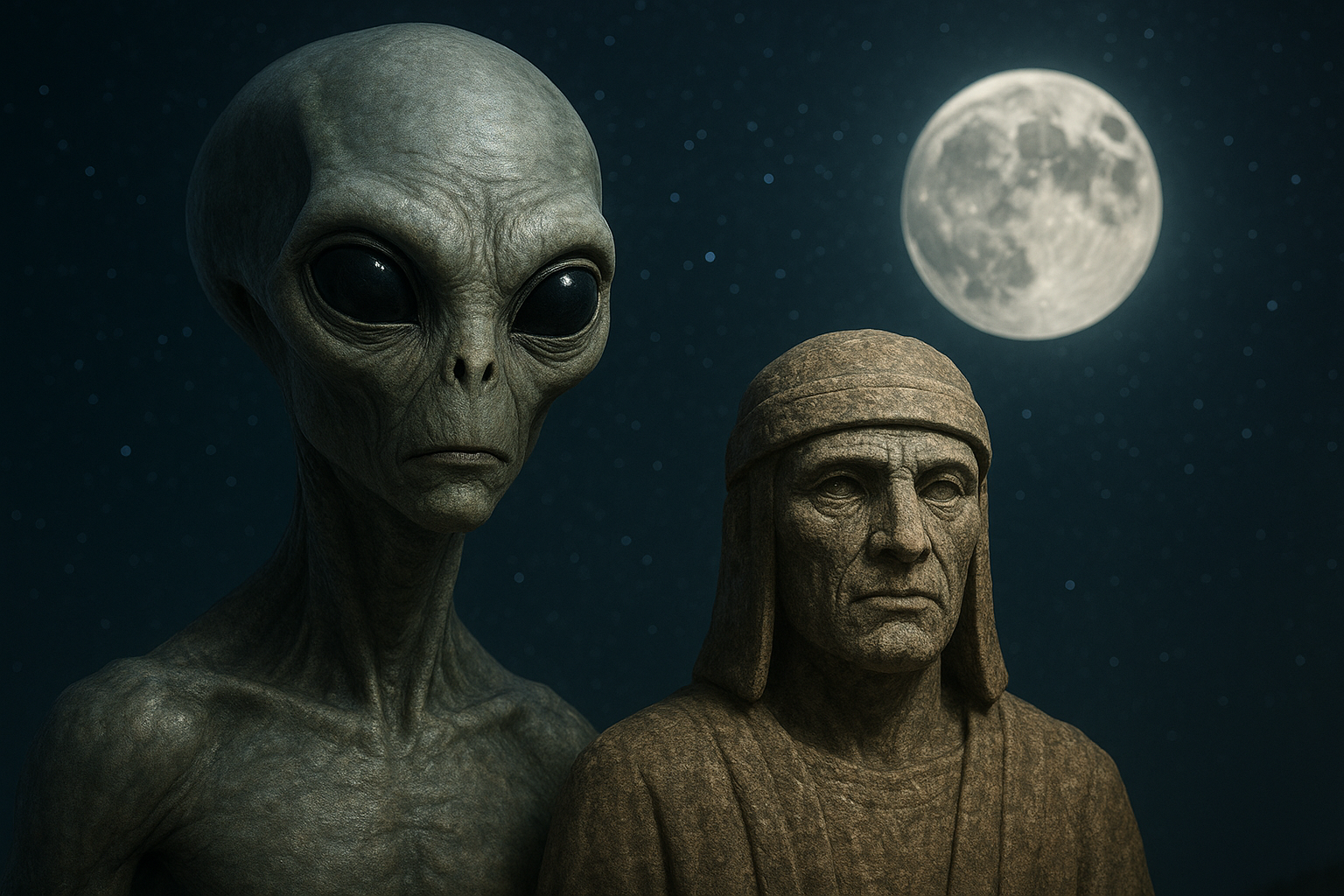
    For centuries, humanity has been captivated by the mystery of extraterrestrial life. The night sky, a canvas of cosmic wonder, holds infinite tales, many of which hint at the unsettling possibility that we are not alone. This notion of extraterrestrials, cloaked in the shadows, reignites age-old debates about their presence and potential influence on our world.

    The Historical Context

    Throughout history, there have been numerous accounts of strange phenomena that defy logical explanation. Ancient civilizations often attributed these occurrences to gods or celestial beings. The Mahabharata, an ancient Indian epic, describes flying chariots and weapons of mass destruction eerily similar to modern technology. Could these texts be interpreted as ancient evidence of alien contact?

    Modern-Day Sightings

    In the 20th and 21st centuries, the rise of technology brought forth a wave of UFO sightings, propelling the search for extraterrestrial life into the scientific and public mainstream. In 2021, the Office of the Director of National Intelligence released a report acknowledging unidentified aerial phenomena (UAPs) recorded by the military. This marked a pivotal moment in how extraterrestrial encounters are perceived, challenging skepticism with credible evidence.

    “Unidentified Aerial Phenomena (UAP) continue to pose a mystery. The report issued by the ODNI on UAPs highlights the need for further study and surveillance.”

    Influence in the Dark

    The concept of extraterrestrial influence in darkness goes beyond physical sightings. It delves into deeper psychological and historical realms, suggesting that our very evolution might have been subtly guided by shadows from above. Influential polymath Stephen Hawking speculated on this in an interview, warning, “If aliens visit us, the outcome might be much as when Columbus landed in America, which didn’t turn out well for the Native Americans.”

    The Way Forward

    As technology advances, the search for extraterrestrial life marches on. Projects like SETI (Search for Extraterrestrial Intelligence) harness vast networks of radio telescopes aiming to detect alien communications. The recent discovery of potential biosignatures in the atmosphere of planets within the habitable zone fuels hope—as well as concern—about the nature of alien life.

    In conclusion, while definitive evidence of extraterrestrial influence remains elusive, the shadows they cast tantalize the imagination. Whether as mentors, invaders, or mere cosmic bystanders, the mystery of alien shadows remains one of humanity’s most profound inquiries.

  • Astrobiology Mysteries – Life and Myth in Science

    Astrobiology Mysteries – Life and Myth in Science

    Astrobiology Mysteries: Life and Myth in Science

    Astrobiology is an interdisciplinary scientific field that seeks to understand the potential for life beyond Earth. It bridges the gap between astrophysics, biology, geology, and even philosophy, as it grapples with some of humanity’s oldest questions: Are we alone? If not, what forms might extraterrestrial life take?

    The Science of Astrobiology

    Astrobiology examines the origins, evolution, distribution, and future of life in the universe. Its practitioners study extremophiles—organisms that live in Earth’s most hostile environments—as analogs for potential extraterrestrial life forms. For example, bacteria thriving in the scalding hot springs of Yellowstone National Park provide insights into potential Martian life.

    Challenges and Techniques

    The search for life beyond Earth involves several hurdles:

    • Detection of Biosignatures: Scientists use telescopes and space probes to identify potential biosignatures, such as methane or oxygen in exoplanet atmospheres. The James Webb Space Telescope, for instance, is a powerful tool for this work (NASA).
    • Planetary Protection: Protecting other planets from contamination by Earth life forms—and vice versa—is vital in samples and missions.
    • Interdisciplinary Research: Astrobiology thrives on collaboration across scientific disciplines, blending techniques from chemistry, physics, and geology.

    Popular Myths in Astrobiology

    Science fiction has both hindered and fueled public perception of astrobiology. Myths often abound:

    • Aliens as Humanoids: Popular culture often depicts aliens as humanoid figures. However, real extraterrestrial life forms could be radically different due to diverse evolutionary pressures.
    • Instant Contact: Films suggest immediate and direct communication with extraterrestrial life, overlooking the astronomical distances and potential communication barriers, a challenge highlighted by SETI Institute’s ongoing efforts (SETI).
    • UFOs and Government Secrets: Conspiracy theories about UFOs and government cover-ups provide tantalizing narratives but often lack empirical evidence.

    Recent Discoveries and Theoretical Models

    Recent discoveries have fueled the speculative fire:

    “The discovery of extremophiles thriving in Antarctica’s subglacial lakes or within the radioactive remains of Chernobyl expands the horizons of where life might exist in the cosmos.”

    —David Morrison, Senior Scientist at NASA Ames Research Center

    Exoplanets: The NASA Exoplanet Archive includes thousands of confirmed planets orbiting distant stars, some within the so-called habitable zone, where liquid water might exist.

    Europa and Enceladus: These icy moons of Jupiter and Saturn, respectively, possess subsurface oceans that could harbor life, prompting missions like Europa Clipper to investigate further.

    Future Prospects and Philosophical Questions

    Astrobiology isn’t just about finding life but understanding our place in the cosmos.

    “If we find life beyond Earth, it prompts us to question what it means to be ‘alive’ and whether life is a cosmic inevitability.”

    —Carl Sagan, well-known for his ability to communicate science to the masses

    With advancements in technology and interstellar exploration, the horizon for astrobiology broadens. The next decades might determine whether astrobiology remains a field of potential and curiosity or becomes a new chapter in understanding life.

    Conclusion

    Amidst myths and scientific rigor, astrobiology represents humanity’s quest to answer profound questions about life beyond our pale blue dot. As Carl Sagan famously remarked, “Somewhere, something incredible is waiting to be known.” The search continues.

  • Alien Epics – Extraterrestrial Legends Across the Ages

    Alien Epics – Extraterrestrial Legends Across the Ages

    Alien Epics: Extraterrestrial Legends Across the Ages

    Throughout human history, tales of beings from beyond Earth have captivated our imaginations. Across cultures and centuries, narratives about extraterrestrial entities have been woven into the fabric of folklore, religion, and science. Whether these are interpreted as mythical, supernatural, or based in potential reality, they offer insights into human creativity and curiosity about the unknown.

    Ancient Observations and Mythologies

    • Sumerian Civilizations: Among the first known civilizations, the Sumerians of Mesopotamia are often cited in discussions about ancient alien theories. The Sumerian texts refer to the Anunnaki, deities whose name translates to “those who came from the heavens to Earth.” Some theorists suggest that the Anunnaki were actually extraterrestrial visitors who influenced Sumerian culture and technological development.
    • Indian Epics: The Mahabharata and the Ramayana, two of India’s epic tales, contain accounts of flying vehicles called Vimanas. These texts describe these crafts as piloted by gods, suggesting incredible technological devices not dissimilar to modern interpretations of spaceships. According to Ancient Aliens scholar Giorgio A. Tsoukalos, “Vimanas were perhaps the first UFOs—objects flying in the sky that carried beings not from Earth” (Ancient Aliens, History Channel).
    • Aboriginal Dreamtime: In Australian Aboriginal culture, Dreamtime myriads of creation myths feature celestial beings that descended from the stars to shape the world. The Wandjina spirits, known for their distinct large eyes and absence of mouths in Aboriginal rock art, have been speculated by some to represent ancient alien visitors.

    Medieval Interpretations and Mysteries

    • The Green Children of Woolpit: In 12th-century England, the legend of the Green Children speaks of two children with green skin found in Woolpit, Suffolk. They spoke an unknown language and claimed to come from a subterranean world called “Saint Martin’s Land.” Scholar Paul Harris in “The Green Children of Woolpit: A Medieval Mystery in Castles and Myths” explores the idea that these children might represent encounters with another dimension or realm, reflecting medieval interpretations of otherworldly beings.
    • Renaissance Celestial Phenomena: In 1561, residents of Nuremberg, Germany, reportedly observed a mass sighting of celestial objects. The event was illustrated in a broadsheet by Hans Glaser, which depicted spheres, crosses, and cylinders “fighting” in the sky. Some modern UFO enthusiasts consider this one of the earliest potential sightings of an extraterrestrial event, though historians often cite it as a misinterpretation of atmospheric phenomena or comets.

    Modern Narratives and Speculation

    • The War of the Worlds: H.G. Wells’ 1898 novel, The War of the Worlds, arguably set the stage for modern extraterrestrial narratives. This seminal work portrays a Martian invasion and crystallized many common tropes of alien storytelling. Wells wrote at a time when scientific understanding of Mars was burgeoning, fueling both fears and fascination with the idea of otherworldly life.
    • The Roswell Incident: Perhaps one of the most infamous events in UFO lore, the 1947 crash near Roswell, New Mexico, kickstarted widespread public interest in potential government cover-ups of alien encounters. What was initially reported as a “flying disc” was later retracted as a weather balloon by the U.S. military, leading to decades of speculation and conspiracy theories.
    • Area 51: Surrounding the mystery of Roswell is the intrigue of Area 51, a high-security military base in Nevada often associated with alien research and reverse engineering of extraterrestrial technology. Although the U.S. government only officially acknowledged Area 51 as a site of flight testing and development in the 1990s, it has remained at the center of alien lore and conspiracy theories.

    Extraterrestrial Influences and Popular Culture

    The 20th and 21st centuries have seen an explosion of alien narratives in popular culture. Movies such as E.T. the Extra-Terrestrial, Star Wars, and Independence Day explore themes of alien contact, invasion, and co-existence, tapping into deeply rooted human stories about “the other” and projecting our hopes and fears about advanced powers beyond our comprehension.

    “Science fiction is the only genre that enables society to look into the future, seeing how things might develop, and examine how society might change,” says author Arthur C. Clarke. These narratives have not only entertained but also inspired real-world explorations of space and the potential for life beyond Earth.

    Scientific Pursuits and the Search for Extraterrestrial Life

    • The Search for Extraterrestrial Intelligence (SETI): Efforts like SETI have sought to detect signals from other civilizations, using sophisticated technology to scan the skies. Although definitive evidence remains elusive, scientists, including the famed astrobiologist Dr. Carl Sagan, have posited that the vastness of the universe suggests that intelligent life likely exists elsewhere.
    • Exoplanet Discoveries: Since the 1990s, thousands of exoplanets have been discovered, some of which reside in the so-called “habitable zone” where conditions may support life. These discoveries have reignited questions about the potential for alien life and pushed the boundaries of our understanding of the universe.

    The Future of Alien Epics

    The stories about extraterrestrial life, whether mythological musings from ancient cultures or hi-tech imaginings of modern storytellers, reflect humanity’s enduring quest for knowledge and self-understanding. As our technology and scientific methods evolve, so too will our alien epics—driven by curiosity, cultural shifts, and the mysterious allure of the stars.

    While we await definitive answers, these legends and narratives continue to inspire generations of dreamers, scientists, and those who gaze toward the heavens. In the end, the epic tales surrounding extraterrestrials are less about proving their existence and more about exploring the expansive limits of human imagination.

  • Angelic Parables – Lessons From the Celestial Realm

    Angelic Parables – Lessons From the Celestial Realm

    Throughout history, humans have woven intricate stories that highlight the virtues and teachings of celestial beings. These angelic parables have served as moral compasses, guiding humanity through the complexities of life. By drawing wisdom from the celestial realm, these tales often present profound insights into human nature and the spiritual journey.

    The Role of Angels in Parables

    Angelic figures have frequently appeared in religious texts and folklore, symbolizing messengers of divine wisdom and conduits of moral guidance. In Christianity, for instance, the Bible contains several references to angels acting as bearers of significant messages. Gabriel, an archangel, is famously known for announcing the birth of Jesus to Mary, emphasizing his role in delivering divine plans.

    The concept of parables, however, extends beyond religious scriptures and often thrives in various cultural narratives. These symbolic stories, imbued with angelic elements, serve as reflections on ethical dilemmas, human virtues, and the divine order.

    Timeless Lessons From Angelic Narratives

    • The Power of Compassion: A recurring theme in angelic parables is the transformative power of compassion. These stories frequently depict angels showing mercy and understanding, urging humans to cultivate empathy towards one another. As the Talmud notes, “The highest form of wisdom is kindness.”
    • The Value of Humility: Angels often represent humility, reminding us of our place within the grand tapestry of creation. In many narratives, pride is portrayed as a barrier to spiritual enlightenment, echoing the sentiment of John 3:30, “He must become greater; I must become less.”
    • The Pursuit of Faith: Angelic beings are epitomes of faith, assisting humans in moments of doubt and uncertainty. These celestial guides encourage believers to sustain their trust in the divine plan, even when earthly concerns cast shadows of doubt.

    A Modern Perspective on Angelic Parables

    In today’s context, angelic parables continue to resonate with audiences by offering solace and insight amidst the chaos of modern life. These tales remain a beacon of hope, illuminating the path to moral and spiritual fulfillment. As C.S. Lewis poignantly remarked in his book Mere Christianity, “You have never talked to a mere mortal. Nations, cultures, arts, civilizations—these are mortal, and their life is to ours as the life of a gnat.”

    Ultimately, angelic parables inspire us to strive for a harmonious existence, reminding us of our connection to the celestial and the eternal lessons it imparts.

  • Alien Theology – Extraterrestrial Influence on Human Belief

    Alien Theology – Extraterrestrial Influence on Human Belief

    Alien Theology: Extraterrestrial Influence on Human Belief

    Throughout the history of humanity, there has been a profound curiosity about the cosmos and our place within it. Alien theology—the study of how encounters, or imagined encounters, with extraterrestrial life have shaped human beliefs—offers a fascinating perspective on this curiosity. From ancient myths to modern religions, evidence of alien influence abounds, challenging traditional narratives and offering new interpretations of spirituality.

    Historical Context: Ancient Myths and Alien Deities

    Before the dawn of contemporary religions, many ancient civilizations documented interactions with beings from the skies. These narratives often describe celestial visitors with god-like qualities.

    • The Sumerians: One of the earliest recorded civilizations, the Sumerians wrote of beings known as the Anunnaki, described in ancient texts such as the Enuma Elish. Many believe these deities came to Earth from the heavens and played crucial roles in shaping humanity.
    • India’s Vedic Texts: Ancient Indian scriptures mention “Vimanas,” flying chariots used by the gods. These descriptions bear striking similarities to modern accounts of UFOs, suggesting possible extraterrestrial interpretations.
    • Native American Legends: Numerous indigenous tribes have myths that describe star people or sky gods descending to Earth, sometimes imparting knowledge or guidance to humans.

    “The phenomenon of myth creation is a collaboration of cosmic imagination mingling with cultural inheritance. Sky-related narratives in many cultures suggest more than mere coincidence.” — History

    Modern Religions and UFOs: A Twentieth-Century Synthesis

    The modern age primarily reshaped the discourse around alien theology through sightings of UFOs and increased interest in extraterrestrial life. This era sparked new conversations about humanity’s spiritual connections with aliens.

    • The Raelian Movement: Founded in the 1970s by Claude Vorilhon, also known as Rael, this religion explicitly believes that life on Earth was created by an extraterrestrial species known as the Elohim. Raelians argue that the Elohim’s teachings are echoed in the world’s religious texts.
    • Scientology: Established by science fiction writer L. Ron Hubbard, Scientology includes belief in past extraterrestrial civilizations and events impacting present-day human spirituality. Although more a science-fiction-based religion, it reflects some alignment with alien theological concepts.
    • Heaven’s Gate: A more extreme case, this cult believed that an approaching spacecraft was linked to an apocalyptic event. Although it ended tragically, the belief structure of Heaven’s Gate underlined the merging of UFO phenomena with religious end-times prophecy.

    Professor Michael Swords, in his examination of UFOs and religion, noted, “The influence of extraterrestrial themes on religiosity reflects a broader pattern—people have always integrated contemporary phenomena into their existential explanations.” — UFO Evidence

    Extraterrestrial Encounters and Their Impact on Belief Systems

    Documented encounters with supposed extraterrestrial entities have sometimes led to substantial shifts in personal and communal belief systems. This shift underscores the power of direct or indirect alien influence on theology.

    Abduction Narratives

    Accounts of alien abductions often come with transformative spiritual revelations. Those who claim to have been abducted frequently report experiences that challenge existing paradigms, often leading to revised spiritual perspectives or the creation of new belief systems.

    Contactee Movements

    During the mid-20th century, the contactee movement gained traction. Ordinary individuals claimed to have made direct contact with benevolent aliens, often returning with messages of peace, environmental stewardship, and spiritual enlightenment. These contacts were believed by some to be new forms of divine intervention.

    Scientific Perspectives: Are We Alone?

    While theologians and philosophers ponder the spiritual implications, scientists continue to explore the question: “Are we alone in the universe?” The search for extraterrestrial intelligence (SETI) has been monitoring space for signals indicating conscious life. The potential discovery of extraterrestrial life would inevitably impact religious beliefs worldwide by challenging the anthropocentric view of life in the cosmos.

    A NASA study in 2014 gathered theologians to discuss the potential impact of finding alien life, reflecting the agency’s understanding of the substantial cultural and religious ramifications such a discovery would entail.

    Astrobiologist Dr. Stephen J. Dick once stated, “The impact of discovering intelligent extraterrestrial life would be profound, fundamentally altering our interpretations of humanity’s identity and cosmic role.” — Space

    Conclusion: Aliens, Belief, and the Future

    The relationship between extraterrestrial life and human belief systems remains a rich field for exploration. Through the lenses of history, religion, and science, we see a tapestry woven with speculation and wonder. As our understanding of the universe expands, so too does the potential for alien revelations to reshape spiritual and theological constructs.

    Alien theology, in its numerous manifestations, asks us to reconsider the narratives that define human spirituality. It invites believers, skeptics, and scholars alike to explore the boundaries of human understanding and the possibilities that lie beyond our earthly existence.

    “As we discover more about our universe, we may find not just answers to the question of alien life, but also discover new dimensions to spirituality once thought beyond our reach.” — National Geographic

    The journey towards understanding is as infinite as the universe itself, and alien theology provides a compelling framework to explore this frontier of thought.

  • The Eternal Return – Death as Endless Cycle

    The Eternal Return – Death as Endless Cycle

    In the vast tapestry of philosophical and spiritual beliefs that mankind has woven over millennia, few concepts are as enigmatic and thought-provoking as the idea of The Eternal Return. This notion posits that the universe and all existence within it are perpetually recurring, cycling through endless regenerations of birth, life, death, and rebirth. Found in diverse traditions and philosophies, from ancient Hindu texts to Nietzsche’s existential musings, the concept of The Eternal Return continues to provoke thought and spark debate.

    The Roots of an Endless Cycle

    The origins of the Eternal Return can be traced back to early civilizations, reflecting humanity’s quest to understand life and the cosmos. In Hindu cosmology, time is cyclical, comprising vast ages known as Yugas. Each cycle concludes with a dissolution (or Pralaya), only to begin anew.

    • The Rigveda, an ancient Indian sacred collection of Vedic Sanskrit hymns, contemplates the universe as a great ‘cosmic egg’ that bursts open, creating the world anew repeatedly.
    • Similarly, in Buddhism, the cycle of death and rebirth, known as Samsara, is governed by Karma, or the law of cause and effect.

    According to Indian philosophy scholar Wendy Doniger, there is a strong emphasis on the eternal nature of this cycle, where one’s actions dictate the course of future rebirths until enlightenment is achieved, thereby breaking the cycle. In her book “The Implied Spider”, Doniger states:

    “This cosmic rebirth is not merely a repetitious grind, but a process rife with the potential for transformative change.”

    Western Interpretations and Nietzsche’s Vision

    In Western philosophy, the Eternal Return gained prominence in the works of German philosopher Friedrich Nietzsche. Nietzsche’s eternal recurrence is more than a metaphysical or cosmological theory; it’s a profound existential proposition. In “The Gay Science”, Nietzsche wrote:

    “What if some day or night a demon were to steal after you into your loneliest loneliness and say… this life as you now live it and have lived it, you will have to live once more and innumerable times more; and there will be nothing new in it.”

    This idea challenges us to live as if each moment recurs eternally, encouraging a form of existential authenticity. For Nietzsche, embracing this return rather than resisting it moves one toward an existence full of meaning and purpose.

    Scientific Echoes: Entropy and the Eternal Return

    The concept of The Eternal Return isn’t only a philosophical and cultural construct; it draws interesting parallels from the realm of modern science. The law of entropy in thermodynamics denotes that systems tend to move toward a state of disorder. However, theoretical physics also contemplates the possibility of cyclical universes.

    • Eternal recurrence hypotheses suggest that given an infinite amount of time, the universe’s finite particles might eventually repeat every possible configuration.
    • Sir Roger Penrose, a noted mathematician, has postulated theories of “conformal cyclic cosmology,” suggesting an infinite sequence of aeons or universe cycles.

    Though these scientific theories do not provide a consensus on cyclical cosmology, they illustrate our ongoing quest to understand the universe’s mysteries and, by extension, the nature of life and death within it.

    Rebirth in Culture and Literature

    The theme of an endless cycle of life and death has resonated deeply within literature and popular culture. Writers, artists, and filmmakers have all drawn upon this philosophical paradigm to explore themes of identity, fate, and redemption.

    • The film “Groundhog Day” employs the concept of cyclical time as a narrative device, transforming a comedic premise into a poignant exploration of personal growth and self-discovery.
    • In Gabriel Garcia Marquez’s “One Hundred Years of Solitude”, the cyclical patterns of the Buendía family’s history illustrate the inescapable repetition of both triumphs and tragedies, mirroring broader existential patterns.

    Sartre once marveled at the possibility, saying:

    “If… you had to repeat your life ad infinitum, would you grasp the value of choice? Each decision, magnified, contains the weight of a moral universe.”

    Modern Reflections and Tomorrow’s Thoughts

    The Eternal Return continues to provide a rich field for contemplation, challenging us to confront our own beliefs about time, existence, and the afterlife. For some, the cyclical view spurs a reevaluation of ethical living under the constant shadow of recurrence. For others, it offers solace, suggesting continuity beyond the veil of death.

    As science advances and our understanding of the universe evolves, this ancient idea persists, urging us to see life not as a linear journey with a fixed endpoint, but as an ever-turning spiral that offers endless horizons of growth and rebirth. Perhaps, as we traverse the cosmic dance of time, we, too, echo the philosopher’s musing: is it in the knowing of the cycle that we find liberation?

    Whether seen through the kaleidoscope of philosophy, the lens of science, or the storytelling of culture, The Eternal Return invites us to ponder deeply on existence’s mysteries, posing enduring questions that challenge and inspire the human soul.

    For those who find resonance in this concept, life becomes a series of opportunities to embrace, explore, and resonate profoundly with the eternal song of the universe.

  • Dust to Dust – Mysticism of Returning to Earth

    Dust to Dust – Mysticism of Returning to Earth

    Dust to Dust: Mysticism of Returning to Earth

    The ancient cycle of life and death has fascinated humanity since the dawn of time. It is a story not just of endings but of beginnings too, as eloquently captured in the phrase, “for dust thou art, and unto dust shalt thou return.” This mysterious transformation is the heart of many spiritual and cultural traditions, each imbuing the process with its own mysticism and significance.

    The Cycle of Life and Death

    The concept of returning to dust is more than a biological process; it is a spiritual journey echoed throughout world religions and philosophies. From the earliest times, humans have recognized their connection to the earth. As the poet Kahlil Gibran observed, “In one drop of water are found all the secrets of all the oceans; in one aspect of You are found all the aspects of existence.” This beautifully encapsulates the interconnectivity of life and reminds us of our inevitable return to the earth.

    Ancient Traditions and Beliefs

    • Egyptian Afterlife: The ancient Egyptians believed in a meticulous journey after death requiring intricate rituals. The idea was not only to preserve the body through mummification but also to prepare the soul for its eventual return to the earth through various reincarnations. The cycle was seen as an opportunity for transformation.
    • Hindu Cremation Rituals: Hinduism views the body as a temporary vessel for the soul. Upon death, the body is cremated, symbolizing the release of the soul. The ashes are then immersed in a holy river, which is believed to help free the soul from the cycle of reincarnation and assist its return to the earth.
    • Indigenous Earth Burials: Many indigenous cultures hold a deep reverence for the land. They view the earth as the Great Mother, and returning to her in death is seen as a natural and sacred transition. These beliefs are manifested in ceremonies that celebrate the land-to-earth connection.

    Modern Interpretations and Environmentalism

    In today’s world, returning to the earth is taking on new dimensions. The environmental movement has begun to influence how societies view death and the afterlife. Green burials are becoming increasingly popular, emphasizing simplicity and minimal impact on the earth.

    These environmentally friendly funerals avoid embalming chemicals and often utilize biodegradable coffins or natural burial sites to allow the body to decompose naturally. As leading environmentalist Bill McKibben notes, “The burial is a return to a circle of life rather than the end of an industrial process.”

    Philosophical Insights

    Philosophers and spiritual thinkers continue to explore the notion of returning to the earth with renewed vigor, emphasizing it as a transformative process. Existential philosopher Jean-Paul Sartre believed that death gives life its ultimate value by providing an endpoint that defines our actions and relationships. This notion echoes the cycles found in nature, suggesting a harmony between living and dying.

    In his seminal work, The Denial of Death, Ernest Becker discusses how mankind’s fear of death is a fundamental element driving behavior and culture. Yet, within this fear lies the opportunity for a deeper understanding of life’s interconnectedness with nature. He writes, “The human condition is that man lives paradoxically in time and yet also outside of it.”

    The Comfort of Returning to Earth

    There is a profound solace in the idea of returning to the earth. It symbolizes a return to one’s origins, a dissolution of individuality into the broader ecosystem. This is not just an end but a continuation and a renewal of one’s existence in a different form.

    For many, the idea that their life will continue to nourish the earth and that they will become part of the universe’s fabric offers a comforting existential resolution. This concept was poignantly described by Carl Sagan when he wrote, “The cosmos is also within us, we’re made of star-stuff. We are a way for the cosmos to know itself.”

    A Final Embrace

    The mysticism of returning to earth is more than a poetic notion or religious belief; it is a tangible reality that binds us all. As humanity grapples with its place in the cosmos and its impact on the Earth, understanding our final return as an intrinsic part of nature’s cycle has never been more important.

    Ultimately, embracing our transformation from dust to dust can provide a more harmonious existence with the planet and a touchstone for finding meaning in both life and death. In this way, our return to the earth becomes not just an end but a final embrace, a coming-home to our truest form.

  • The Silence of Catacombs – Underground Cities of the Dead

    The Silence of Catacombs – Underground Cities of the Dead

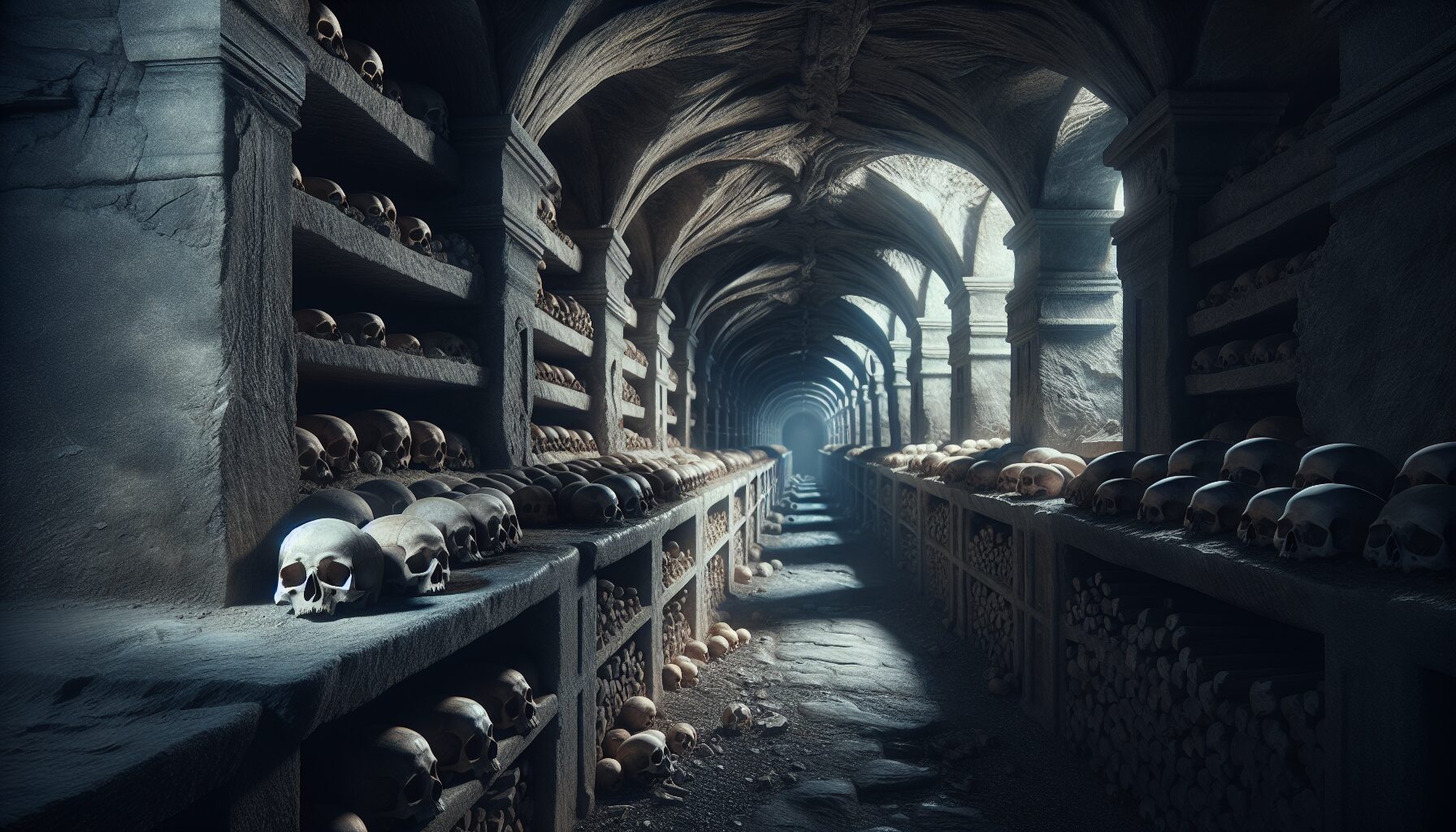
    In the heart of many cities around the world lie hidden passages, ossuaries, and labyrinthine tunnels that whisper stories from the past. Known as catacombs, these underground cities of the dead are steeped in history, mystery, and the awe-inspiring silence of eternity. They serve as haunting reminders of the juxtaposition between life and death, weaving together tales that span across centuries.

    The Origins of Catacombs

    Catacombs have existed for millennia, initially serving as subterranean burial sites for ancient peoples. The concept of burying the deceased below ground was driven by various factors, including religious beliefs, the scarcity of land, and epidemics that necessitated quick and efficient interment solutions. The word “catacomb” is thought to originate from the Latin ad catacumbas, a reference to a location in Rome where early Christian burials took place.

    One of the most famous examples is the Catacombs of Rome, which served as both a burial site and a place of refuge for Christians facing persecution in the early centuries A.D.

    Architectural Marvels

    The catacombs are architectural wonders in their own right, showcasing the ingenuity and craftsmanship of historical architects and laborers. Some feature elaborate stonework, meticulously carved tombs, and intricate murals that depict religious scenes, daily life, and even warnings for the living. One remarkable feature of these catacombs, as noted by Atlas Obscura, is the Paris Catacombs’ intricately arranged bones, turning death into an arresting form of art.

    Notable Catacombs Around the World

    • The Catacombs of Paris: Beneath the bustling streets of Paris lies a labyrinthine network of tunnels extending over 200 miles. Originally quarries, these tunnels became the final resting place for over six million people as cemeteries ran out of space during the 18th century.
    • Rome’s Catacombs: As the cradle of Christianity, Rome houses numerous catacombs where early Christians buried their dead, decorated with frescoes and symbols of their faith.
    • The Catacombs of San Francisco: Not to be confused with the Californian city, this catacomb in Lima, Peru, lies beneath the Monastery of San Francisco and is famous for its bone displays that form geometric patterns.
    • Odessa Catacombs: This extensive network in Ukraine is a mixture of natural caves and man-made tunnels, stretching approximately 1,500 miles and offering both historical intrigue and the perils of getting lost.

    Cultural and Religious Significance

    Catacombs have always held cultural and religious significance. For early Christians, they were not only burial sites but also places of worship and refuge. According to Smithsonian Magazine, “These sacred spaces were used to commemorate the deceased with prayer and respect, reinforcing a community’s common faith” (Smithsonian).

    In modern times, catacombs serve as portals to the past, providing historians, archaeologists, and the curious with a tangible connection to ancient customs and traditions. They allow us to understand how different cultures viewed death and the afterlife, showcasing humanity’s eternal quest for meaning in the face of mortality.

    The Silence and Solitude

    “Beneath the vibrant life above, the catacombs echo the quietude of the past; a tranquil reassurance that speaks of history, life, and the infinite silence that binds us all,” remarked historian and travel writer Emma Shaw.

    The silence of catacombs is profound. Walking through their dimly lit corridors, one is enveloped in an otherworldly calm, a stark contrast to the chaos of modern life just above the surface. This solemn stillness allows for reflection, encouraging visitors to ponder life’s transient nature and the persistence of memory.

    Conclusion

    The catacombs, these underground cities of the dead, offer more than just historical insight—they provide a unique perspective on life’s fleeting nature. Through their silent tunnels, they echo stories of resilience, faith, and humanity’s perpetual connection with those who came before. Whether for historical exploration, spiritual reflection, or the thrill of adventure, the quiet specter of the catacombs continues to draw visitors from around the globe, ensuring their vital place in the tapestry of human history.

  • Liminal Spaces – Where Death Touches the Living

    Liminal Spaces – Where Death Touches the Living

    Liminal Spaces – Where Death Touches the Living

    Liminal Spaces – Where Death Touches the Living

    The concept of liminal spaces intrigues, mystifies, and sometimes terrifies. These are the thresholds, the in-between realms where the boundaries separating life from death blur. Often discussed in both metaphysical and psychological contexts, liminal spaces provide a unique lens through which we can examine the intersections of life and mortality.

    Understanding Liminal Spaces

    Derived from the Latin word limen meaning threshold, liminal spaces refer to places or phases that exist between the known and the unknown. According to anthropologist Arnold van Gennep, who introduced the term in his work on rites of passage, these spaces are transitional phases demanding a transformation or change.

    Physically, liminal spaces might include corridors, staircases, or empty parking lots—places that are designed for transition rather than permanent occupation. The eeriness of these spaces often stems from their association with movement towards a new phase, and possibly, towards death.

    Liminality in Life and Death

    In exploring how death touches the living within liminal spaces, we delve into how people experience these spaces both metaphorically and literally. Hospitals, for example, are physical liminal spaces where people frequently encounter birth, illness, and death. They serve as poignant reminders of the transient nature of existence.

    “From the moment of birth, we take our first step on a journey that ultimately leads to death. Liminal spaces are where that journey is most keenly felt.”

    — Anonymous

    On another level, certain cultural rituals transform physical spaces into rites of passage, altering their liminality. Funerals and wakes, for instance, convert typical venues into sacred spaces for communing with the departed, offering the living a space to process death.

    The Psychological Perspective

    Beyond the physical spaces, liminality can also be a state of mind. Psychologically, individuals might find themselves in a liminal state during times of intense change or crisis. These mental spaces often offer profound opportunities for growth and reflection as one navigates the boundary between former and future selves.

    According to a paper in the Journal of Analytical Psychology, entering a liminal state can facilitate deep self-awareness and transformation, much like the theories proposed by notable psychologist Carl Jung in his exploration of the shadow self.

    Cultural Depictions of Liminal Spaces

    Many cultures have long embraced liminal spaces within their myths and spiritual practices. For the ancient Greeks, the River Styx represented a liminal zone where souls crossed from the living world to the underworld. In Irish folklore, Samhain—the precursor to modern Halloween—is considered a liminal time when the veil between the living and the dead is thinnest, allowing spirits to pass through.

    Similarly, in Mexican culture, Día de los Muertos or Day of the Dead celebrates a liminal period when deceased souls are believed to revisit the earth. Here, death is less an endpoint and more a continuation of a cultural dialogue, celebrating life through honoring departed loved ones.

    Modern Interpretations

    In recent years, the concept of liminal spaces has sparked interest on digital platforms and in artistic circles, where creators explore themes of urban abandonment and nostalgia. These discussions highlight the haunting beauty and unsettling nature associated with unfinished or transient places.

    As we deepen our understanding of these spaces, it is crucial to appreciate both their physical and metaphysical implications. Liminal spaces—where death brushes past the living—urge us both to ponder the transient nature of life and also to cherish the boundaries crossed with each new experience, guiding us onward through the uncharted territories of our existence.