Tag: life

  • Symbols of the Skull – Archetype of Death in All Cultures

    Symbols of the Skull – Archetype of Death in All Cultures

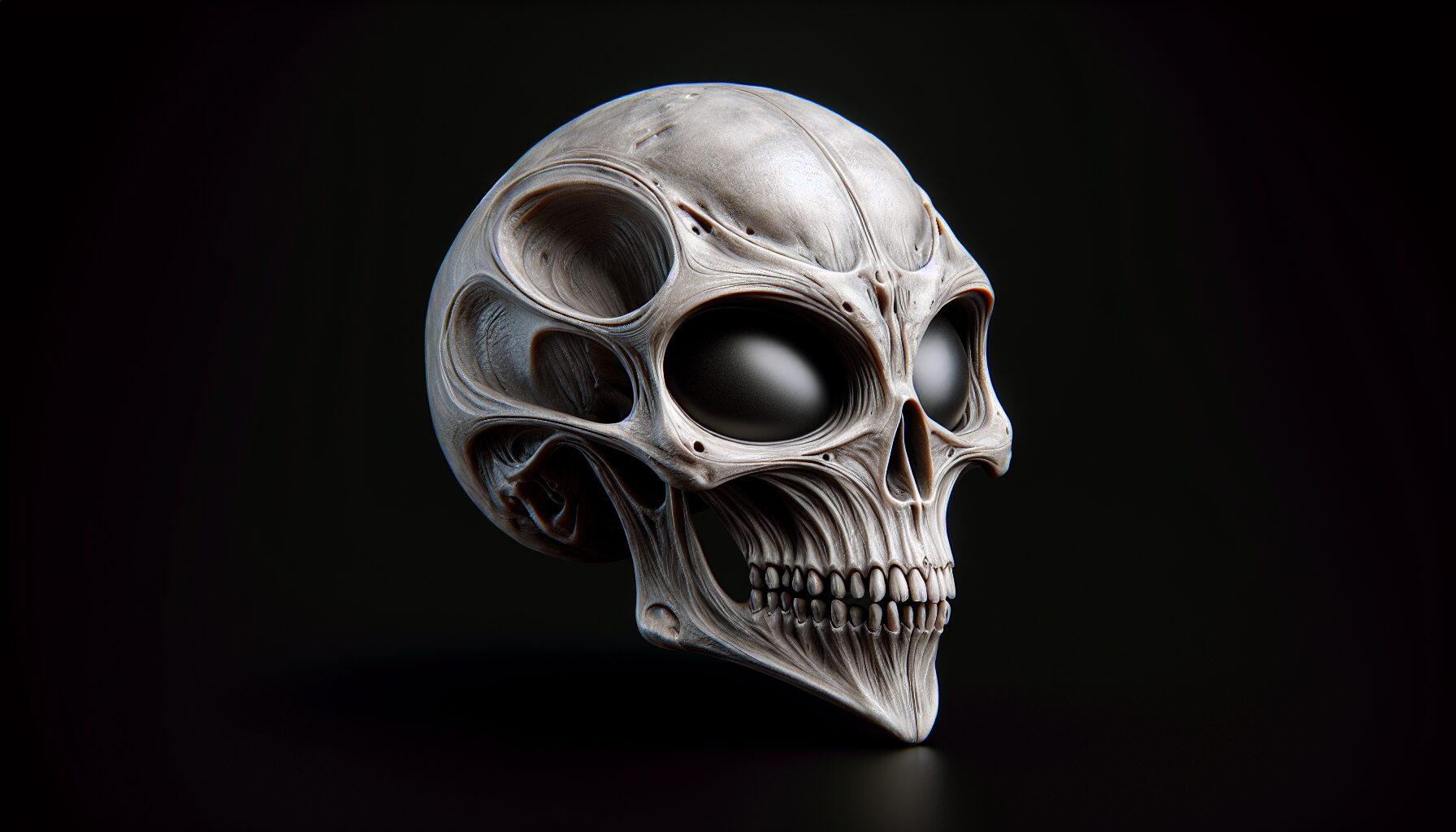
    The human skull, one of the most powerful and universally recognized symbols, has exuded an unsettling fascination across different cultures for centuries. Representing death, mortality, and the ephemeral nature of life, the skull has a profound impact on art, religion, and popular culture worldwide. It is a symbol often intertwined with the concept of memento mori, a Latin phrase meaning “remember that you must die,” serving as a stark reminder of humanity’s inevitable fate.

    The Skull in Western Culture

    In Western cultures, the skull is often associated with the grim visage of death and danger. It’s a staple in pirate lore, expressed poignantly through the Jolly Roger—a flag adorned with a skull and crossbones, signaling danger to any seafarer. The symbolism is further entrenched in art and literature during the Renaissance, where skulls appear in vanitas paintings to convey the transience of earthly pleasures and the certainty of death.

    Eastern Interpretations

    When moving eastward, the interpretations of the skull become more nuanced. In Hinduism and Buddhism, the skulls often represent the cyclic nature of life, death, and rebirth. Deities like Kali, the fearsome Hindu goddess, are depicted adorned with necklaces of skulls, symbolizing the destruction of ego and the liberation of the soul.

    “The skull is not only a symbol of death but also a reminder of life, a call to make the most out of our fleeting existence.” – Unknown

    Indigenous and Tribal Beliefs

    Many indigenous and tribal cultures have a more integrated approach to the skull’s symbolism. In ancient Mesoamerican civilizations, such as the Aztec and Maya, skulls played a crucial role in rituals and beliefs surrounding the afterlife. During the Day of the Dead in Mexico, calaveras (skulls) are decorated and celebrated, reflecting an acceptance and reverence for the deceased as part of the life cycle.

    Modern Culture and the Skull

    In contemporary times, the skull has transcended its classical connections with death to become an emblem of rebellion and nonconformity, often used in fashion and music. It signifies a rejection of societal norms and serves as a counterculture icon, appearing in everything from runway shows to rock band logos.

    Ultimately, the skull’s pervasive presence across cultures underscores a universal human confrontation with mortality, inviting each culture to interpret its meaning through the lens of their unique experiences and philosophies. Whether revered, feared, or celebrated, the skull remains a potent symbol that challenges us to reflect on the brevity of life and the reality of death.

  • Time as Cemetery – Hours and Years as Silent Tombstones

    Time as Cemetery – Hours and Years as Silent Tombstones

    Time as Cemetery: Hours and Years as Silent Tombstones

    The passage of time is an enigmatic force, an ever-present yet intangible entity that governs the rhythm of our lives. Often, it is likened to a cemetery, with hours and years serving as silent tombstones that mark the moments of existence we leave behind. This metaphor highlights the transitory nature of human experience, inviting us to contemplate the footprints we etch into the sands of time.

    From early philosophers to contemporary thinkers, the notion of time has been both revered and feared. In Hamlet, Shakespeare immortalizes this sentiment with the words, “Time is out of joint” [1], suggesting an intrinsic instability, an essence of being forever in motion yet anchored to a profound stillness.

    The Cemetery of Time

    “The life of the dead is placed in the memory of the living.” – Marcus Tullius Cicero

    Each moment, each hour that passes, acts as a gravestone marking the end of what was once a living, breathing segment of our lives. The years pile up like layers of an ancient burial site, where experiences, emotions, and dreams lie interred beneath the surface of our consciousness.

    • Hours as Milestones: Just as gravestones serve as testament to a life once lived, hours mark the milestones of human endeavor and mundane routine. They encapsulate moments of triumph and despair, of love and loss, surviving only through memory and record.
    • Years as Epigraphs: If hours are tombstones, then years are their inscriptions—brief summaries of a chapter in life. Whether marked by significant change or the quiet monotony of the everyday, each year leaves an indelible impression upon our existence.

    Reflections in the Tombstones of Time

    The metaphor of time as a cemetery encourages introspection about how we choose to fill these hours and years. Are the tombstones ephemeral testaments of wasted potential, or do they herald a legacy of meaning and purpose?

    Time’s silent cemetery compels us to reflect on what endures beyond the grave of the now. As Albert Einstein poetically observed, “Time is an illusion” [2], casting doubt on the permanence of its essence and encouraging us to seek value in the fleeting present.

    In contemplating the silent tombstones of hours and years, we are reminded to live fully in between them—to craft our epitaphs with the ink of intention, ultimately rendering time not as a graveyard of forgotten moments, but as a garden of eternal significance.


    References:

    1. Shakespeare, Hamlet, Act 1, Scene 5, Folger Digital Texts
    2. When Time Bends, Life is Forever Young, The New York Times
  • The Skeleton Dance – Ritualized Death in Tibetan Tantra

    The Skeleton Dance – Ritualized Death in Tibetan Tantra

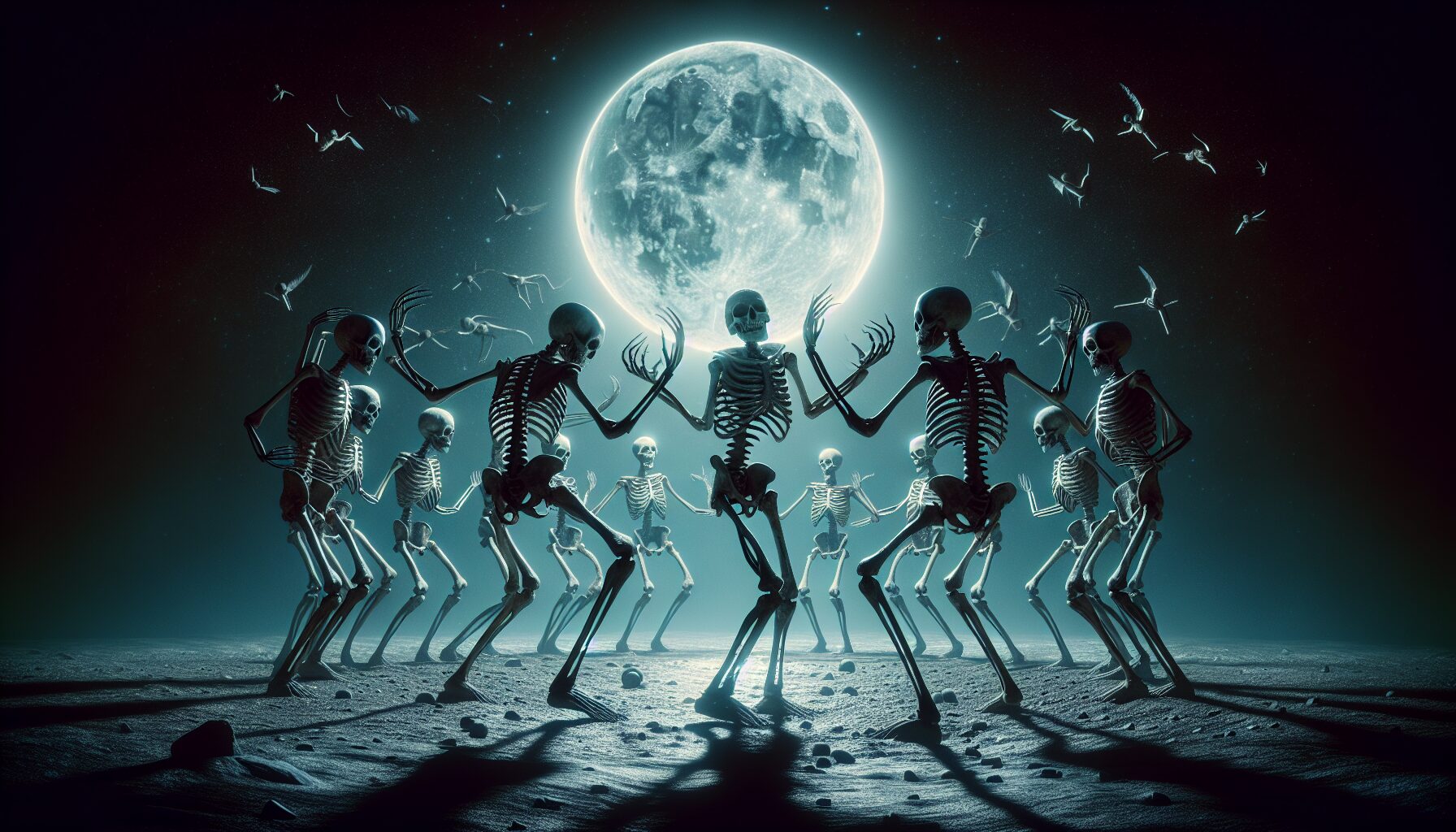
    In the high-altitude enclaves of the Tibetan Himalayas, spiritual practices blend the formidable power of nature with an intricate tapestry of cultural traditions. One of the most captivating manifestations of this synthesis is the Skeleton Dance, a ritual deeply embedded in the Tibetan tantric tradition. This dance serves as a symbolic representation of death, rebirth, and the transitory nature of life.

    Origins and Meaning

    The Skeleton Dance, or “Durdak Garcham”, is traditionally performed by monks during the annual Tibetan Buddhist ceremony known as Cham. This ritual is performed with vibrant masks and costumes, aiming to vanquish evil spirits. At its core, the dance represents the impermanence of life and the constant cycle of life and death.

    According to Buddhist teachings, accepting the inevitability of death is essential in transcending fear and facilitating spiritual enlightenment. The Royal Library of Britannica states, “Unlike Western perspectives that often fear death, Tibetan Buddhism encourages an embrace of mortality, viewing death not as an end but as a transitional state.”

    The Dance of the Skeletons

    The performers, usually monks, don impressively intricate costumes that transform them into eerie apparitions of skeletons. Each movement is deliberate and filled with symbolic meaning, intended to invoke contemplation among the spectators. The dancers move rhythmically to the beat of drums and the resonant chimes of cymbals, communicating the transient nature of life.

    A vivid portrayal of life’s fragility, the Skeleton Dance underscores the idea that death is a mere transition rather than a cessation. By confronting the audience with the inevitability of death, the dance aims to awaken them to the beauty and importance of ethical living.

    Symbolism in the Dance

    • Costumes: The skeleton costumes symbolize both literal and metaphorical death. The stark white bones against a dark background are a reminder of mortality lurking behind the facade of life.
    • Movements: The ethereal movements of the skeletons symbolize the fleeting nature of existence, reflecting the constant change inherent in life.
    • Music: The rhythm created by the instruments mimics the heartbeat of life, with intermittent silences representing deathly pauses, an acknowledgment of the cycle of life and rebirth.

    Ritual Function and Cultural Impact

    The Skeleton Dance fulfills a crucial role in the spiritual festivals of Tibetan Buddhism, particularly those marking the Lunar New Year. Its primary function is purgative—cleansing the spiritual ether of malevolent forces through the dance’s powerful symbolism and ritual purification.

    “In Tibetan Buddhism, the ritual dance is not just a performance but a means of achieving spiritual insight. It functions as a meditative exercise which holds the power to transform both performer and audience,” says renowned Tibetan scholar Dr. Lobsang Sangye.

    Throughout the years, the Skeleton Dance has garnered significant interest from anthropologists, spiritual seekers, and tourists alike. Its captivating symbolism continues to educate the global community on Tibetan culture and spiritual beliefs, offering a glimpse into a world where life and death coexist seamlessly.

    Modern Interpretations and Influences

    While primarily practiced in the secluded monasteries of Tibet, the Skeleton Dance has begun to transcend its traditional boundaries, influencing various art forms around the world. Modern interpretations by performance art troupes and filmmakers attest to its enduring legacy.

    Moreover, as discussions around death become increasingly open in Western cultures, there is a growing appreciation for the Skeleton Dance’s ability to demystify and depersonalize mortality. This has sparked dialogue on how such traditions might contribute to modern-day understandings of life and death.

    In Conclusion

    The Skeleton Dance stands as a powerful testament to the rich cultural and spiritual traditions of Tibetan Buddhism. It invites viewers to engage with difficult questions of mortality through the captive spectacle of dance, allowing for a deeper understanding and acceptance of life’s impermanence.

    By bridging the realms of life and death through ritual and art, the Skeleton Dance elevates the human condition, reminding us all of the fleeting nature of life. It’s more than just a dance; it is a profound meditation on existence itself—a timeless ritual that continues to inspire and transform.

  • Tombs as Portals – Architecture for the Dead

    Tombs as Portals – Architecture for the Dead

    Tombs as Portals: Architecture for the Dead

    The concept of the tomb as more than just a resting place for the dead has been a subject of fascination across cultures and eras. Viewed as portals to other realms, tombs encompass architectural and artistic genius, reflecting beliefs about life, death, and the possibility of an afterlife. This article explores how tombs serve not merely as monuments but as metaphysical gateways connecting the earthly and the divine.

    The Genesis of Tombs as Portals

    From the earliest civilizations, tombs were conceived as gateways to the afterlife. In ancient Egypt, the construction of tombs was a complex procedure, laden with religious symbolism and ritual. Pharaohs viewed their tombs, particularly the pyramids, as vehicles that would carry their spirits to the heavens. As noted by Egyptologist Zahi Hawass, “The pyramid was a resurrection machine, a way to reach the afterlife by ascending the sun’s beams.” (National Geographic)

    Similarly, the Chinese emperors of the Han Dynasty considered their tombs as replicas of their earthly palaces. The famous Terracotta Army, guarding the tomb of the first Emperor of China, Qin Shi Huang, is a testament to the belief that the next life mirrored earthly life. These structures were not merely graves but were meant to ensure protection and continuity in the beyond.

    Architectural Designs and Their Symbolism

    • Pyramids and Ziggurats: The step design of ziggurats and the geometrical perfection of pyramids were intended to bridge earth and sky, facilitating the ascension of the soul.
    • Mausoleums: These grand structures often include elaborate entrances meant to signify portals. The Taj Mahal, apart from its undeniable beauty, is aligned with cosmic and astronomical principles, conceptualizing both an earthly and a celestial connection.
    • Rock-cut tombs: In India, the Ajanta and Ellora caves combine spiritual narrative and architecture, offering a passage through mural depictions of spiritual journeys.

    Tombs in Myth and Legend

    Throughout history, the stories surrounding monumental tombs have added layers to their role as portals. In Mesoamerican culture, the tomb of King Pakal in Palenque is often associated with the imagery of rebirth, his sarcophagus lid depicting the king’s journey to the underworld.

    In European lore, the discovery of tutankhamun’s tomb inspired legends of a “curse” meant to protect the pharaoh’s portal to the hereafter. The Gothic tradition in the West added a macabre romanticism to crypts and catacombs, reinforcing the idea of tombs as junctions between worlds.

    Innovations in Modern Tomb Design

    Contemporary architects continue to reimagine tombs as modern-day portals, fusing technology with ancient ideologies. Noteworthy are projects envisioned by architects who integrate ecology and spirituality in their designs.

    • The Memorial Necrópole Ecumênica: Located in Brazil, this vertical cemetery challenges the traditional notion, using space efficiently while maintaining a sacred ambiance.
    • The “Sky Burial” concept: Drawing inspiration from Tibetan practices, this environmentally conscious design proposes transforming bodily remains into plant-nourishing elements, symbolizing life-uber-death.

    Impact on Art and Culture

    The representation of tombs in art and literature frequently alludes to their transformative nature. Shakespeare’s references to tombs in plays like Hamlet often underscore the cryptic and mystic journey associated with death. In contemporary cinema, films such as Indiana Jones and The Mummy perpetuate the archetype of the tomb as a mystical gateway.

    Additionally, visual artists over the centuries have embraced this portal theme, capturing the voyage from life to eternity in their work. For example, Salvador Dalí’s paintings often explore themes of mortality and eternity, invoking the symbolic architecture of tombs.

    Conclusion

    Tombs as portals provide an enduring narrative that bridges the tangible and the spiritual, embodying humanity’s quest for understanding life and the afterlife. They stand as remarkable testaments to cultural beliefs, artistic expression, and architectural innovation. Celebrating this intersection of art, culture, and spirituality not only enhances our understanding of history but also our aspirations for the future.

    “Death is a mystery, and burial is a secret.” – Stephen King

    As we advance, the profound respect and awe for tombs continue to evoke conversations about existence and legacy, urging us to ponder our place in the continuum of life and beyond.

  • Meditating on Death – Ancient Practices of Impermanence

    Meditating on Death – Ancient Practices of Impermanence

    Across cultures and epochs, the contemplation of death has been a profound practice to gain wisdom and serenity. Such meditations on impermanence encourage a deeper appreciation for life, urging individuals to live with intention. This article explores some ancient practices that have continued to offer solace and insight into the fleeting nature of existence.

    Tibetan Buddhism and the Bardo Thödol

    Among Tibetan Buddhists, the Bardo Thödol, commonly known in the West as the Tibetan Book of the Dead, offers profound teachings on the transitional states between death and rebirth. According to Encyclopaedia Britannica, the text serves as a guide for the deceased during the state of transition, called bardo. This practice not only prepares the living to confront mortality but offers a vision of life’s transitory beauty.

    Stoic Reflections on Mortality

    The Stoics, ancient philosophers of Greece and Rome, often reflected on death to cultivate wisdom. Marcus Aurelius, in his Meditations, advises, “You could leave life right now. Let that determine what you do and say and think.” Through daily reminders of death, known as Memento Mori, stoics embraced the impermanence of life to instill courage and clarity in their actions. Such teachings continue to captivate modern seekers of wisdom.

    The Egyptian Practice of Ritual Mourning

    For ancient Egyptians, death was a journey, not an end. They held elaborate rituals to prepare for the afterlife, but also practiced personal mourning as a meditation on loss and transformation. According to the History Channel, the preservation of bodies through mummification further highlighted their belief in the ongoing process of death and rebirth. Engaging in these practices allowed them to maintain a deep connection with both the deceased and the sacred journey of life.

    Japanese Zen Buddhism and Impermanence

    In Japanese Zen Buddhism, the concept of Mono no Aware—the pathos of things—emphasizes the beauty of transience. This aesthetic, drawn from Japanese poetry and art, encourages mindfulness of life’s ephemeral nature. As author William R. Lafleur notes in his work on Zen practices, “The beauty of life lies in its impermanent stages.” Such insights foster a nurturing appreciation for every fleeting moment of existence.

    “You could leave life right now. Let that determine what you do and say and think.” – Marcus Aurelius

    By embracing these ancient practices, individuals can embark on a journey toward understanding life’s impermanence. Such reflections not only bring solace to those contemplating the end but also illuminate the preciousness of every moment we have.

  • Sky Burial – Feeding Death to the Vultures of Heaven

    Sky Burial – Feeding Death to the Vultures of Heaven

    High up in the Tibetan plateau, where the sky stretches endlessly and the air is thin with the whispers of ancient rituals, lies a practice both profound and deeply spiritual: the sky burial. Known locally as “jhator,” this sacred rite reflects a unique understanding of life, death, and the cyclical nature inherent to both.

    “The Tibetans have learned to see death as a bridge to a better life, and the sky burial is a heartfelt acknowledgment of that journey,”

    Sky burial is a funerary tradition primarily observed by the Tibetan Buddhists, a people who perceive the earthly body as an empty vessel once life has departed. This ritual serves not only as a means to dispose of the body but also as an act of charity, offering sustenance to the creatures who are integral to their highland ecosystem: the vultures.

    • Symbolic Rebirth: The practice underscores the belief in samsara, the cycle of death and rebirth. The body’s consumption by vultures is seen as an act of returning to nature, an important step in the deceased’s spiritual journey.
    • Practicality and History: In the rocky terrains of Tibet, traditional burial or cremation is often impractical. The historical context adds a layer of practicality to this ethereal tradition.
    • Ecosystem Connection: The ritual is deeply connected to the surrounding ecology. Vultures, regarded as heavenly emissaries, help maintain the environmental balance by consuming carrion that could otherwise spread disease.

    The process is carefully orchestrated. Monks or designated attendants commence by ritually preparing the body, which is often draped in white cloth, symbolizing purity. Chanting sacred mantras, the monks invite the vultures, who descend upon the scene with the quiet dignity that seems almost reverent.

    Despite its apparent starkness, the sky burial is viewed not with horror but with reverence. It is a gentle reminder of impermanence, nudging the living towards mindfulness and compassion. In a world often marked by the fear of death, this practice boldly embraces it, fostering a serene acceptance of life’s ultimate passage.

    For those unacquainted with Tibetan rituals, sky burial might initially provoke unease. Yet, in understanding its spiritual essence, one finds profound beauty in the cycle of life and death. As NPR noted, “In vulture’s flight from mountain to sky, the soul is said to take its journey to the heavens.” In this cycle, the sky burial stands as a poignant tribute to the timelessness of life itself, a ceremony that feeds both the earth and the heavens.

  • Ritual Cremation – Fire as Passage Beyond Life

    Ritual Cremation – Fire as Passage Beyond Life

    Ritual Cremation – Fire as Passage Beyond Life

    Introduction

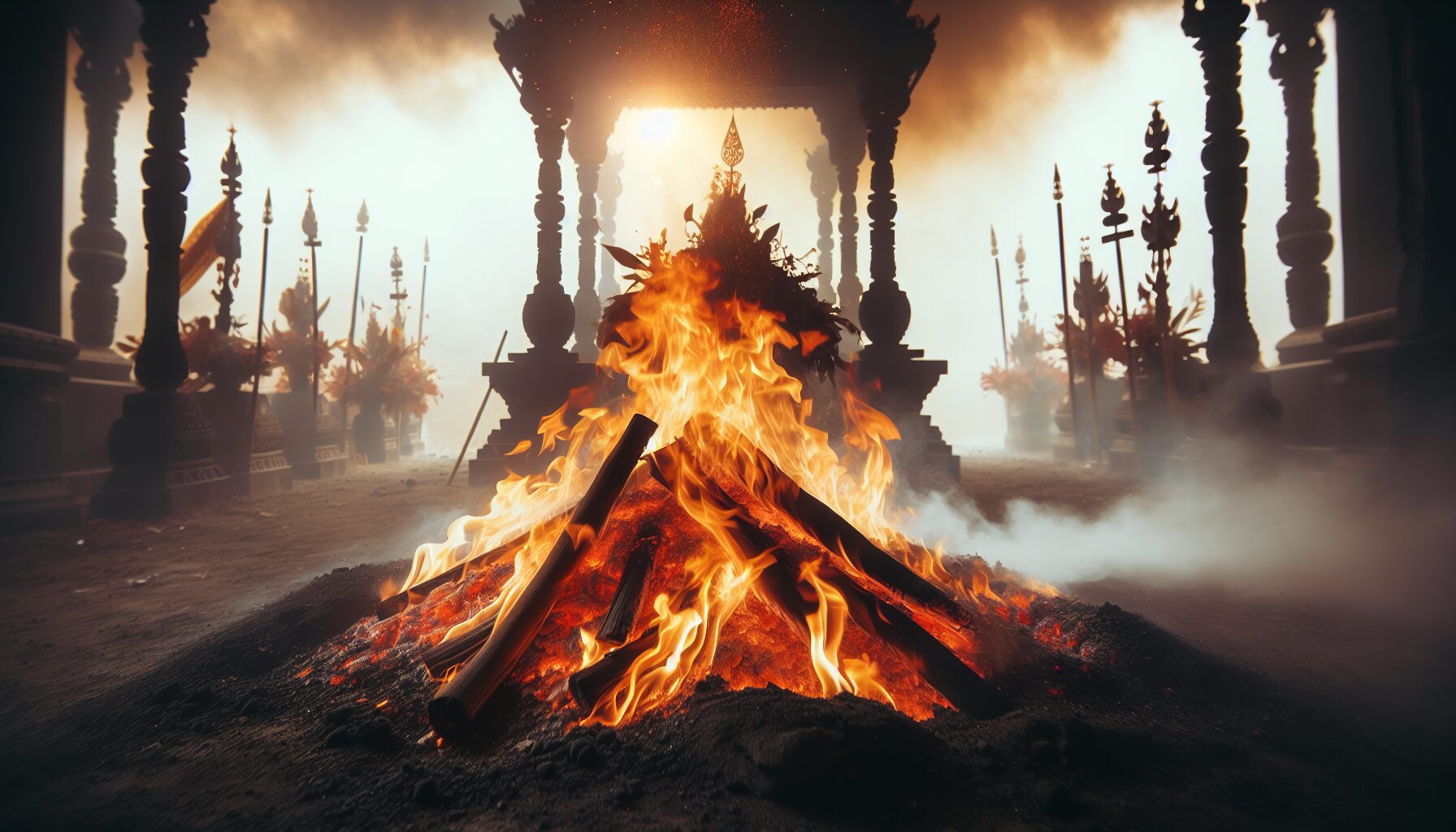
    Throughout history, fire has been perceived as both a formidable and sacred element. Its role transcends mere utility; it symbolizes transformation, purification, and the eternal cycle of life and death. Among its significant cultural implications is the practice of ritual cremation, a rite that has profound spiritual and historical significance across various cultures.

    Historical Background

    The tradition of cremation dates back many thousands of years. Archaeological discoveries suggest cremation practices were conducted as early as the Stone Age, approximately 20,000 years ago. Evidence of such practices has been found in archaeological sites around the world, from the early Aryan tribes of Europe to ancient civilizations in Asia.

    According to the Archaeological Institute of America, one of the oldest evidence of cremation has been discovered at the site of Lake Mungo in Australia where human remains were cremated around 40,000 years ago. In Europe, cremation became widespread by the time of the Bronze Age.

    Cultural Significance

    The spiritual implications of ritual cremation are deeply embedded in many religions and cultures. Each culture attributes unique meanings and practices associated with the act.

    Hinduism

    • The Cycle of Samsara: In Hinduism, cremation is intertwined with the concept of Samsara, or the cycle of life, death, and rebirth. The fire acts as a purifying force, liberating the soul from the physical body. The sacred fire is often seen as a bridge for the soul to reach the afterlife or gain reincarnation.
    • Ritual Process: The cremation process itself is filled with ritualistic acts. The eldest son traditionally lights the pyre, and prayers are recited to ensure the proper passage of the soul.

    Buddhism

    • Impermanence: Reflective of the Buddhist belief in impermanence, cremation symbolizes the transient nature of life. The decomposing body through fire reinforces the understanding that life is temporary and ever-changing.
    • The Middle Path: In some Buddhist traditions, cremation is seen as following the ‘middle path’ between earth burial and sky burial, reinforcing balance and harmony.

    Western Traditions

    • Roman and Greek Practices: In ancient Rome and Greece, cremation was associated with honoring the esteemed dead, especially warriors and philosophers. It was considered a noble and proper way to deal with the dead.
    • Modern Adoption: Today, cremation in the West is often chosen for pragmatic reasons, yet it retains the symbolism of returning dust to dust, restoring the body to the natural cycle of life.

    The Science of Cremation

    While the cultural aspects of cremation are profound, the scientific process is both fascinating and intricate. Modern techniques involve the use of specialized furnaces called cremators, which operate at temperatures ranging from 1400 to 1800 degrees Fahrenheit (760 to 982 degrees Celsius), sufficient to ensure the complete disintegration of the body’s organic components.

    According to The Cremation Society of America, this process typically lasts between one and three hours, depending on the size and weight of the body, after which only bone fragments remain. These fragments are then processed into a fine ash.

    Environmental and Ethical Considerations

    In the face of climate change and environmental awareness, ritual cremation has been scrutinized for its carbon footprint. The burning of a single body can release significant amounts of carbon dioxide, contributing to greenhouse gases.

    “Cremation has been known to release approximately 540 pounds of CO2 into the air per body,” says environmental expert, Dr. Lucy Anderson in Journal of Environmental Studies.

    In response, eco-friendly options are being developed. Water cremation, also known as alkaline hydrolysis, involves decomposing the body in a pressurized liquid, reducing environmental impact significantly.

    Conclusion

    Ritual cremation stands as a testimony to humanity’s quest to reconcile with death, offering a vessel for the soul’s passage beyond mortal life. It is a profound tradition that embodies peace, transformation, and spiritual liberation, with each culture imbuing its unique significance. As societies continue to evolve, so too do these age-old practices, adapting to new values and environmental realities while maintaining their timeless essence.

  • Dark Forest Theory – Survival Through Universal Death

    Dark Forest Theory – Survival Through Universal Death

    The search for extraterrestrial life has captivated human imagination for centuries. Among the plethora of theories attempting to answer why we have not encountered any signs of alien civilizations, the Dark Forest Theory offers a particularly sobering perspective. It postulates that intelligent life in the universe avoids contact with others out of a fear of existential threat, leading to a universe that resembles a dark forest where survival depends on remaining undetected.

    Understanding the Dark Forest Theory

    The Dark Forest Theory gains its foundation from the science fiction novel The Dark Forest by Chinese author Liu Cixin. It is the second book in his renowned trilogy, The Three-Body Problem, which has gained international acclaim for its intricate exploration of the Fermi Paradox.

    The theory suggests that the universe is akin to a dark forest where predators (advanced civilizations) lurk. Each civilization is like a silent hunter, wary of making noise for fear of revealing their position to other potentially hostile creatures. The theory emerges from the following premises:

    • Existential Risk: Intelligent civilizations inherently face existential threats from other civilizations.
    • Lack of Trust: Given the vast distances and differing evolutionary paths, there exists a profound lack of trust among civilizations.
    • Survival Strategy: As a defensive strategy, civilizations opt to remain hidden to ensure their survival.

    The Cosmic Perspective

    Astrophysicists and theorists have long debated the Fermi Paradox, which questions why, given the vast number of stars and potentially habitable planets, we have not detected any signs of extraterrestrial life. The Dark Forest Theory offers a potential solution: perhaps other civilizations choose to remain silent to avoid detection.

    As the prominent astrophysicist Neil DeGrasse Tyson mentioned in an interview with Space.com, “The realization that we might be huddled in a dark forest where survival depends on not making any noise gives new gravity to the Drake Equation and our search for life.”

    Survival Through Anonymity

    In a dark forest, the safest path is often one of anonymity. A civilization aware of other potential threats would likely avoid transmitting their presence through radio signals or other detectable forms of communication. This leads to a deafening silence across the cosmos as every civilization becomes preoccupied with its survival.

    This notion is supported by various experts, including astrophysicist David Kipping. In a Scientific American article, Kipping highlights, “If survival depends on remaining undetected, then shouting our existence into the void becomes an act both reckless and foolhardy.”

    The Civilizational Game Theory

    Game theory provides insights into the kinds of decisions civilizations might make. In a scenario where two players are unaware of each other’s intentions, mutual suspicion can lead to both opting for silence. This mirrors the prisoner’s dilemma but applied on a cosmic scale.

    If a civilization assumes others are hostile until proven otherwise, caution dictates they maintain radio silence. The cost of revealing themselves could mean annihilation should they encounter an especially aggressive civilization.

    Counterarguments and Criticisms

    While the Dark Forest Theory is compelling, it is not without detractors. Critics argue that such a perspective underestimates the potential for peaceful co-existence built upon communication and diplomacy.

    “To presume that all life will inherently seek to annihilate external threats fails to account for the possibility of cooperation and mutual benefit among civilizations,” notes noted cosmologist Lisa Kaltenegger in a recent Nature article.

    Additionally, some posit that the theory’s pessimistic outlook is a product of human projection, reflecting our own historical conflicts rather than an objective extrapolation of potential extraterrestrial motives.

    The Future of Cosmic Communication

    Given the implications of the Dark Forest Theory, humanity’s approach to searching for extraterrestrial intelligence (SETI) is fraught with ethical and existential dilemmas.

    • Active SETI: Some scientists advocate for active SETI, where we don’t just listen for signs of life but also broadcast signals to make contact. Yet, knowing the risks outlined by the Dark Forest Theory, should we expose our existence?
    • Steering Galactic Policy: As we venture deeper into space exploration, discussions on establishing a unified policy on extraterrestrial communication gain urgency. These discussions must balance curiosity with caution.
    • Technological Advancements: As communication technologies evolve, so too will our abilities to hide or reveal our presence to the cosmos.

    Ultimately, the Dark Forest Theory urges us to ponder our cosmic solitude in new, unsettling ways. It challenges our perception of the universe not as a celestial community, but rather as a vast expanse filled with potential dangers.

    Conclusion

    In conclusion, the Dark Forest Theory provides a poignant narrative about the possible behaviors of alien civilizations, warning us about the perils of carelessness in cosmic communication. Whether it accurately reflects the universe remains to be seen, but it undeniably enriches our understanding of the complex dynamics at play.

    As humanity stands at the threshold of deeper space exploration, we are compelled to reflect on our role within this silent, shadowy expanse. The key question remains: Will we choose to break the silence of the forest, or will we maintain our anonymity, ever aware of the potential dangers looming in the dark?
  • Extraterrestrial Immortality – Myths of Eternal Beings

    Extraterrestrial Immortality – Myths of Eternal Beings

    Extraterrestrial Immortality: Myths of Eternal Beings

    The concept of extraterrestrial life has forever fueled our imagination, with countless stories exploring beings from other worlds. Among the most captivating of these tales is the idea of extraterrestrial immortality. The notion that otherworldly creatures might possess the secret to eternal life raises both curiosity and existential questions about our place in the universe.

    An Ancient Fascination

    From the annals of mythology to modern science fiction, immortality has been a recurring theme. Ancient cultures, such as the Egyptians and Greeks, often depicted gods and celestial beings possessing eternal life. These stories served as both moral lessons and reflections of human desires and fears surrounding death and the unknown realms beyond our earthly existence.

    In works like The Epic of Gilgamesh, one of the oldest surviving pieces of literature, the quest for immortality is central. Gilgamesh’s journey reflects an age-old human pursuit for eternal life—echoing modern-day aspirations and perpetuating myths that extraterrestrial beings might have already achieved this transcendence.

    Modern Mythology and Science Fiction

    Contemporary media continues to explore the idea of extraterrestrial immortality. In the realm of science fiction, countless narratives depict extraterrestrials as timeless entities. Films and television series, such as Doctor Who and Star Trek, explore the coexistence of mortal humans with near-immortal aliens, probing the ethical and psychological effects of such interactions.

    Ray Bradbury, in The Martian Chronicles, discusses the transformation and ultimate transcendence in extraterrestrial contexts. “We earth men have a talent for ruining big, beautiful things,” Bradbury writes, highlighting our transient nature in contrast with the suspected perpetual wisdom of alien life forms (Wikipedia).

    Scientific Interpretations

    The scientific community has taken keen interest in the study of longevity and potential immortality. Though the possibility of extraterrestrial life forms achieving timelessness remains speculative, research into biology and technology continues to pave the way for understanding potential mechanisms for extending life.

    Prominent physicist and futurist Michio Kaku suggests that advanced extraterrestrials might manipulate biological and technological elements to achieve long lifespans, potentially akin to immortality. “Extraterrestials a million years ahead might be immortal,” posits Kaku, urging us to consider the possibilities of what advanced sciences could entail (Michio Kaku’s Website).

    Philosophical and Ethical Considerations

    The potential existence of immortal extraterrestrial beings invites profound philosophical and ethical questions. Would immortality change the essence of what it means to be sentient? How might the existence of immortal beings affect human identity and our understanding of life and death?

    “If aliens exist, they may not just be smarter—some might be immortal. But would that be living?” – Maria Popova, Brain Pickings

    The intersection of immortality and extraterrestrial life sparks debates on the values we place on mortality, creativity, and the human spirit. Questions about control, power, and the morality of eternal life further complicate the discussion as we attempt to imagine living in a universe with beings that defy the temporal limitations that define Earthly experiences.

    Conclusion

    While the reality of immortal extraterrestrial life remains firmly in the realm of speculation, its implications continue to inspire both awe and trepidation. Exploring these narratives enriches our understanding of the universe and challenges us to ponder fundamental questions about existence, impermanence, and the human condition.

    As we continue to gaze at the stars and dream of possibilities beyond our planet, the mythology of extraterrestrial immortality serves not only as a source of wonder but as a mirror reflecting our own hopes, fears, and aspirations.

  • The Alien Skull – Archetype of the Other’s Death

    The Alien Skull – Archetype of the Other’s Death

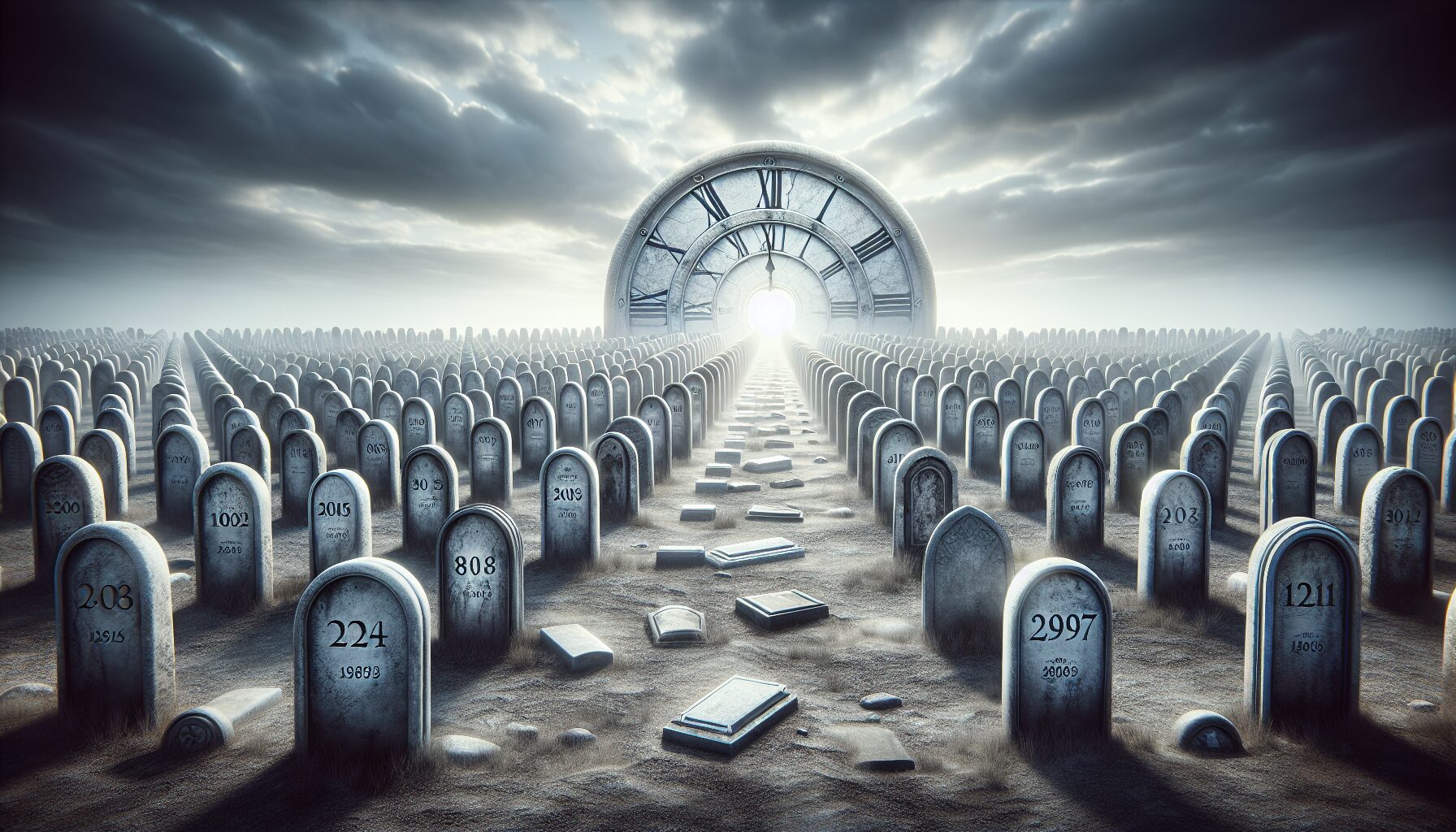
    The concept of the alien skull has intrigued and disturbed humanity for centuries. As an enduring archetype, it serves as a profound symbol of the “Other”—the unknown, the unfamiliar, and ultimately, the realm of death and what lies beyond.

    The Alien Skull as a Symbol

    The skull, in general, epitomizes death. When depicted in the context of an alien entity, it becomes a fusion of fear, curiosity, and the mystery of the unknown universe. From ancient times, cultures have been fascinated with the notion of extraterrestrial life, often depicting such beings with exaggerated cranial structures, which has perpetuated the alien skull as an enduring symbol.

    Joseph Campbell, an eminent scholar of mythology, noted that, “the alien represents the death of the normal way of understanding the world, it is the ultimate Other.” (The Joseph Campbell Foundation) This quote highlights the alien’s role in challenging human perception, forcing an encounter with the unfamiliar which often results in a metaphoric ‘death’ of old ideas and beliefs.

    Encountering the Unknown

    Alien skulls have become iconographic in art, literature, and media, standing as emblems of the confrontation with the unexplored. They serve as the quintessential image evoking the uneasy balance between fascination and dread. As humans gaze into the eye sockets of these hypothetical skulls, they peer into the void, confronting existential questions about life, mortality, and identity.

    “The alien skull is much more than a relic from space, it is the ultimate memento mori, a reminder of our own mortality and the fragility of life as we know it.”
    Dr. Elisa Fernandez, Anthropologist

    Modern Interpretations and Depictions

    In contemporary science fiction, alien skulls are often depicted in various forms—from the sleek, elongated craniums of the classic ‘greys’ to the rugged, bony structures of more monstrous creations. These depictions, whether in films like ‘Alien‘ or games such as ‘Halo,’ continue to capture the public imagination, serving as a canvas upon which human fears and fascination with the cosmos can be projected.

    Through these narratives, we are continually reminded that the alien skull is not merely a symbol of something foreign but also a reflection of our eternal quest to understand the very nature of existence.

    In analyzing the alien skull, we recognize it as both a literal and figurative archetype of death—the end of certainty, the unsettling presence of the unknown, and the death of the familiar.